Link Copied!
Carl L. Becker Quotes (1873-1945)
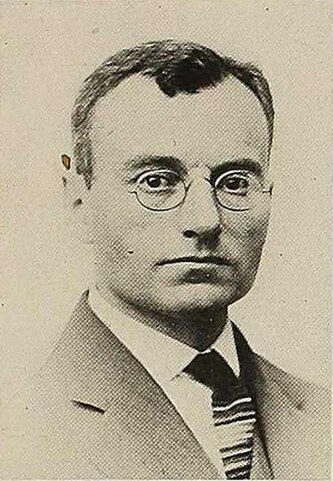


About Carl L. Becker
Carl Lotus Becker (September 7, 1873, near Waterloo, Iowa, U.S. – April 10, 1945, Ithaca, N.Y.) was an American historian of early American intellectual history and on the Enlightenment.
Best Carl L. Becker Quotes
Shortest
Earliest
Explore our curated collection of the most famous and impactful Carl L. Becker quotes.

“To ask whether the natural rights philosophy of the Declaration of Independence is true or false is essentially a meaningless question.”


“The questions we ask are "What?" and "How?" What are the facts and how are they related? If sometimes, in a moment of absent-mindedness or idle diversion, we ask the question "Why?" the answer escapes us.”
“The primary purpose of the Declaration was not to declare independence, but to proclaim to the world the reasons for declaring independence. It was intended as a formal justification of an act already accomplished.”
“Great as our differences are, all of us—professors, politicians, preachers—would no doubt find that we had much in common after all if it were possible to meet in the flesh some distinguished representatives from a former age.”
“Samuel Adams had not inherited poverty nor had he, after all, exactly embraced it, but had as it were naturally drifted into it through indifference to worldly gain, the indifference which men of single and fixed purpose have for all irrelevant matters.”


“What they needed, in addition to many specific grievances against their particular king, was a fundamental presupposition against kings in general. What they needed was a theory of government that provided a place for rebellion, that made it respectable, and even meritorious under certain circumstances.”
“The average Briton, as well as honorable and right honorable members of the House, had known that England possessed colonies and had understood that colonies, as a matter of course, existed to supply him with sugar and rice, indigo and tobacco, and in return to buy at a good price whatever he might himself wish to sell.”
“Scarce a month had elapsed since the law was to have gone into effect before it was clear to the discerning that, for all their professions, most of the "better sort" were not genuine Sons of Liberty at all, but timid sycophants, pliant instruments of despotism, far more intent upon the ruin of Mr. Adams and of America in general than any minister could be shown to be.”
“We have, among innumerable other works, the Summa theologica, surely one of the most amazing and stupendous products of the human mind. ...never before or since has the wide world been so neatly boxed and compassed, so completely and confidently understood, every detail of it fitted, with such subtle and loving precision, into a consistent and convincing whole.”
“The duty on British teas was slight. Americans might have paid the duty without increasing the price of their much prized luxury; ministers might have collected the same duty in England to the advantage of the Exchequer. That Britain should have insisted on this peppercorn in acknowledgement of her right, that America should have refused it in vindication of her liberty, may be taken as a high tribute from two eminently practical peoples to the power of abstract ideas.”
“No one, in the year 1770, was better fitted than Samuel Adams, either by talent and temperament or the circumstances of his position, to push the continent into a rebellion. Unlike most of his patriot friends, he had neither private business nor private profession to fall back upon when public affairs grew tame, his only business being, as one might say, the public business, his only profession the definition and defense of popular rights. ...the serious business of a man who during ten years had abandoned all private pursuits and had embraced poverty to become a tribune of the people.”

“During the summer of 1765 the happy phrase of Isaac Barré—"these sons of liberty"—was everywhere repeated, and was put on as a kind of protective coloring by strong patriots, who henceforth thought of themselves as Sons of Liberty and no traitors at all. Rather were they traitors who would in any way justify an act of tyranny; most of all those so-called Americans, accepting the office of Stamp Master, who cunningly aspired to make a farthing profit out of the hateful business of enslaving their own countrymen.”
“Men of repute, including the staunchest patriots such as Samuel Adams and Jonathan Mayhew, expressed their abhorrence of mobs and of all licentious proceedings in general; but many were nevertheless disposed to think, with good Deacon Tudor, that in this particular instance "the universal Obhorrance of the Stamp Act was the cause of the Mob's riseing." It would be well to punish the mob, but punishing the mob would not cure the evil which was the cause of the mob...”

“Government had not even denied the expediency of taxing America, the total repeal of the Stamp Act and the modification of the Sugar Act having been carried on a consideration of the inexpediency of these particular taxes only. Taxes not open to the same objection might in future be found, and doubtless must be found, inasmuch as the troops were still retained in America and the Quartering Act continued in force there.”
“If Americans were not always aware that they were rich men individually, they were at all events well instructed, by old-world visitors who came to observe them with a certain air of condescension, that collectively at least their material prosperity was a thing to be envied even by more advanced and more civilized peoples. Therefore any man called upon to pay a penny tax and finding his pocket bare might take a decent pride in the fact, which none need doubt since foreigners like Peter Kalm found it so, that "the English colonies in this part of the world have increased so much in ...their riches, that they almost vie with old England."”
“Three days after Richard Henry Lee introduced the Resolution of Independence, it was voted to appoint a committee to "prepare a declaration to the effect of the said first resolution." The committee, appointed on the following day, consisted of Thomas Jefferson, John Adams, Benjamin Franklin, Roger Sherman, and Robert R. Livingston. On the 28 of June, the committee reported to Congress the draft of a declaration which, with modifications, was finally agreed to by Congress on the 4 of July. This is the document which is popularly known as the Declaration of Independence.”
“From the days of Anne Hutchinson, Boston never lacked clubs; and the Caulkers' Club was the prototype of many, rather more secular and political than religious or transcendental, which flourished in the years preceding the Revolution. John Adams, in that Diary which tells us so much that we wish to know, gives us a peep inside one of these clubs, the "Caucus Club,"… "There they smoke tobacco till you cannot see from one end of the garret to the other. There they drink flip, I suppose, and there they choose a moderator who puts questions to the vote regularly; and selectmen, assessors, collectors, wardens, fire-wards, and representatives are regularly chosen before they are chosen in the town.”
“June 7, 1776, Richard Henry Lee, on behalf of the Virginia delegation, submitted to the Continental Congress three resolutions, of which the first declared that "these United Colonies are, and of right ought to be, free and independent States, that they are absolved from all allegiance to the British Crown, and that all political connection between them and the State of Great Britain is, and ought to be, totally dissolved. This resolution, which may conveniently be called the Resolution of Independence, was finally voted by the Continental Congress on the 2 of July, 1776. Strictly speaking, this was the official declaration of independence; and if we were a nation of antiquaries we should no doubt find an incongruity in celebrating the anniversary of our independence on the 4 of July.”
“A million and a half of people spread over the Atlantic seaboard might be thought no great number; but it was a new thing in the world. ...which had in fact been carefully noted by Benjamin Franklin in a pamphlet on The Increase of Mankind, Peopling of Countries, etc.—that within three-quarters of a century the population of the continental colonies had doubled every twenty-five years, whereas the population of Old England during a hundred years past had not doubled once and now stood at only some six and a half millions. ...With these facts in mind, one might indeed say that a people with so much vitality and expansive power was abundantly able to pay taxes; but perhaps it was also a fair inference, if any one was disposed to press the matter, that unless it was so minded, such a people was already, or assuredly soon would be, equally able not to pay them.”
Carl L. Becker Quotes by Topic
Find exactly what you are looking for by browsing this categorized list of Carl L. Becker quotes by topic.
Carl L. Becker on Agriculture
Carl L. Becker on History
“Take one of Voltaire's swift shining shafts of wit: "History is after all only a pack of tricks we play on the dead." Ah, yes, how true it is, we say; and we are astonished that Voltaire could have been so profound. Then we realize that he did not really mean it. To him it was a witticism intended to brand dishonest historians, whereas we perceive that it formulated, in the neatest possible way, a profound truth — the truth that all historical writing, even the most honest, is unconsciously subjective, since every age is bound, in spite of itself, to make the dead perform whatever tricks it finds necessary for its own peace of mind.”

Carl L. Becker on Cornell University
“This was what was finished on October 7, 1868- this idea of Cornell University. Seventy-five years later there is nothing we could wish to add to it, or anything we could wish to take away. And it is after all the idea that was then, as it is now, the important thing, since it was and is the source of all the rest. In response to this idea the first crude buildings were erected, the first books and apparatus were collected, and the first faculty was assembled. In response to this idea the first students came to be enrolled. And on this seventy-fifth anniversary we shall do well to remember that it is not the buildings however splendid, or the quadrangles however beautiful, but this idea brought to birth by Ezra Cornell and Andrew Dickson White- the idea of an institution freed from obligation to religious or political or social prejudice, and devoted to the advancement of knowledge in all fruitful fields of inquiry- it was this idea that then have and still gives to Cornell University whatever high significance and enduring value it may have for learning and for the life of man.”

What Carl L. Becker Said About Others
Discover personal opinions Carl L. Becker shared regarding contemporaries.
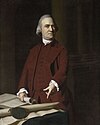
Carl L. Becker on Samuel Adams 3 quotes
“Samuel Adams had not inherited poverty nor had he, after all, exactly embraced it, but had as it were naturally drifted into it through indifference to worldly gain, the indifference which men of single and fixed purpose have for all irrelevant matters.”
Carl L. Becker on Alfred North Whitehead
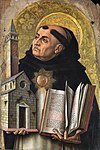
Carl L. Becker on Thomas Aquinas
“We have, among innumerable other works, the Summa theologica, surely one of the most amazing and stupendous products of the human mind. ...never before or since has the wide world been so neatly boxed and compassed, so completely and confidently understood, every detail of it fitted, with such subtle and loving precision, into a consistent and convincing whole.”
Carl L. Becker on Historian
“Take one of Voltaire's swift shining shafts of wit: "History is after all only a pack of tricks we play on the dead." Ah, yes, how true it is, we say; and we are astonished that Voltaire could have been so profound. Then we realize that he did not really mean it. To him it was a witticism intended to brand dishonest historians, whereas we perceive that it formulated, in the neatest possible way, a profound truth — the truth that all historical writing, even the most honest, is unconsciously subjective, since every age is bound, in spite of itself, to make the dead perform whatever tricks it finds necessary for its own peace of mind.”
Quotes About Carl L. Becker
Gain deeper perspective through quotes about Carl L. Becker from others.
William Hardy McNeill on Carl L. Becker
“From Carl Becker's Heavenly City of the Eighteenth-Century Philosophers I learned that even the most revolutionary ideas remain closely connected with what the revolutionaries were trying to reject.”
About Carl L. Becker
Carl Lotus Becker (September 7, 1873, near Waterloo, Iowa, U.S. – April 10, 1945, Ithaca, N.Y.) was an American historian of early American intellectual history and on the Enlightenment.
QuotesCosmos Cross-Civilizational Archive
Explore Related Wisdom Pillars, Worldviews & Canonical Works
Discover how humanity's greatest philosophers, sacred scriptures, and literary masterpieces address the core questions of existence.
30 Wisdom Pillars
22 Worldviews & Traditions
Canonical Books & Scriptures