Link Copied!
Carl Gustav Jacob Jacobi Quotes (1804-1851)
Philosopher, Mathematician
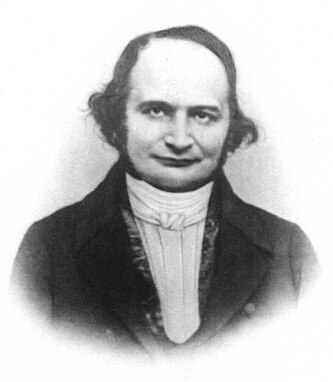
About Carl Gustav Jacob Jacobi
Carl Gustav Jacob Jacobi (/dʒəˈkoʊbi/; German: jaˈkoːbi; 10 December 1804 – 18 February 1851) was a German mathematician who made fundamental contributions to elliptic functions, dynamics, differential equations, determinants, and number theory.
Best Carl Gustav Jacob Jacobi Quotes
Shortest
Earliest
Explore our curated collection of the most famous and impactful Carl Gustav Jacob Jacobi quotes.
“Any progress in the theory of partial differential equations must also bring about a progress in Mechanics.”

“Wherever Mathematics is mixed up with anything, which is outside its field, you will find attempts to demonstrate these merely conventional propositions a priori, and it will be your task to find out the false deduction in each case.”
“It is true that M. Fourier had the opinion that the principal end of mathematics was the public utility and the explanation of natural phenomena; but such a philosopher as he is should have known that the unique end of science is the honor of the human mind, and that from this point of view a question of number is as important as a question of the system of the world.”

“History knew a midnight, which we may estimate at about the year 1000 A.D., when the human race lost the arts and sciences even to the memory. The last twilight of paganism was gone, and the new day had not yet begun. Whatever was left of culture in the world was found only in the Saracens, and a Pope eager to learn studied in disguise in their universities, and so became the wonder of the West. At last Christendom, tired of praying to the dead bones of the martyrs, flocked to the tomb of the Saviour Himself, only to find for a second time that the grave was empty and that Christ was risen from the dead. Then mankind too rose from the dead. It returned to the activities and the business of life; there was a feverish revival in the arts and in the crafts. The cities flourished, a new citizenry was founded. Cimabue rediscovered the extinct art of painting; Dante, that of poetry. Then it was, also, that great courageous spirits like Abelard and Saint Thomas Aquinas dared to introduce into Catholicism the concepts of Aristotelian logic, and thus founded scholastic philosophy. But when the Church took the sciences under her wing, she demanded that the forms in which they moved be subjected to the same unconditioned faith in authority as were her own laws. And so it happened that scholasticism, far from freeing the human spirit, enchained it for many centuries to come, until the very possibility of free scientific research came to be doubted. At last, however, here too daylight broke, and mankind, reassured, determined to take advantage of its gifts and to create a knowledge of nature based on independent thought. The dawn of the day in history is know as the Renaissance or the Revival of Learning.”
Carl Gustav Jacob Jacobi Quotes by Topic
Find exactly what you are looking for by browsing this categorized list of Carl Gustav Jacob Jacobi quotes by topic.
Carl Gustav Jacob Jacobi on Differential equation
“Any progress in the theory of partial differential equations must also bring about a progress in Mechanics.”

Carl Gustav Jacob Jacobi on History of science
“Great courageous spirits like Abelard and Saint Thomas Aquinas dared to introduce into Catholicism the concepts of Aristotelian logic, and thus founded scholastic philosophy. But when the Church took the sciences under her wing, she demanded that the forms in which they moved be subjected to the same unconditioned faith in authority as were her own laws. And so it happened that scholasticism, far from freeing the human spirit, enchained it for many centuries to come, until the very possibility of free scientific research came to be doubted. At last, however, here too daylight broke, and mankind, reassured, determined to take advantage of its gifts and to create a knowledge of nature based on independent thought. The dawn of the day in history is known as the Renaissance or the Revival of Learning.”

Carl Gustav Jacob Jacobi on Middle Ages
“History knew a midnight, which we may estimate at about the year 1000 A.D., when the human race lost the arts and sciences even to the memory. The last twilight of paganism was gone, and yet the new day had not begun. Whatever was left of culture in the world was found only in the Saracens, and a Pope eager to learn studied in disguise in their unversities, and so became the wonder of the West. At last Christendom, tired of praying to the dead bones of the martyrs, flocked to the tomb of the Saviour Himself, only to find for a second time that the grave was empty and that Christ was risen from the dead. Then mankind too rose from the dead. It returned to the activities and the business of life; there was a feverish revival in the arts and in the crafts. The cities flourished, a new citizenry was founded. Cimabue rediscovered the extinct art of painting; Dante, that of poetry. Then it was, also, that great courageous spirits like Abelard and Saint Thomas Aquinas dared to introduce into Catholicism the concepts of Aristotelian logic, and thus founded scholastic philosophy. But when the Church took the sciences under her wing, she demanded that the forms in which they moved be subjected to the same unconditioned faith in authority as were her own laws. And so it happened that scholasticism, far from freeing the human spirit, enchained it for many centuries to come, until the very possibility of free scientific research came to be doubted. At last, however, here too daylight broke, and mankind, reassured, determined to take advantage of its gifts and to create a knowledge of nature based on independent thought. The dawn of the day in history is know as the Renaissance or the Revival of Learning.”
Carl Gustav Jacob Jacobi on Renaissance
“History knew a midnight, which we may estimate at about the year 1000 A.D., when the human race lost the arts and sciences even to the memory. The last twilight of paganism was gone, and yet the new day had not begun. Whatever was left of culture in the world was found only in the Saracens, and a Pope eager to learn studied in disguise in their unversities, and so became the wonder of the West. At last Christendom, tired of praying to the dead bones of the martyrs, flocked to the tomb of the Saviour Himself, only to find for a second time that the grave was empty and that Christ was risen from the dead. Then mankind too rose from the dead. It returned to the activities and the business of life; there was a feverish revival in the arts and in the crafts. The cities flourished, a new citizenry was founded. Cimabue rediscovered the extinct art of painting; Dante, that of poetry. Then it was, also, that great courageous spirits like Abelard and Saint Thomas Aquinas dared to introduce into Catholicism the concepts of Aristotelian logic, and thus founded scholastic philosophy. But when the Church took the sciences under her wing, she demanded that the forms in which they moved be subjected to the same unconditioned faith in authority as were her own laws. And so it happened that scholasticism, far from freeing the human spirit, enchained it for many centuries to come, until the very possibility of free scientific research came to be doubted. At last, however, here too daylight broke, and mankind, reassured, determined to take advantage of its gifts and to create a knowledge of nature based on independent thought. The dawn of the day in history is know as the Renaissance or the Revival of Learning.”
What Carl Gustav Jacob Jacobi Said About Others
Discover personal opinions Carl Gustav Jacob Jacobi shared regarding contemporaries.
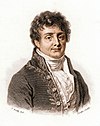
Carl Gustav Jacob Jacobi on Joseph Fourier
“It is true that M. Fourier had the opinion that the principal end of mathematics was the public utility and the explanation of natural phenomena; but such a philosopher as he is should have known that the unique end of science is the honor of the human mind, and that from this point of view a question of number is as important as a question of the system of the world.”
Quotes About Carl Gustav Jacob Jacobi
Gain deeper perspective through quotes about Carl Gustav Jacob Jacobi from others.
W. W. Rouse Ball on Carl Gustav Jacob Jacobi 3 quotes
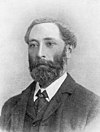
“His [Lagrange's] lectures on differential calculus form the basis of his Theorie des fonctions analytiques which was published in 1797. ...its object is to substitute for the differential calculus a group of theorems based upon the development of algebraic functions in series. A somewhat similar method had been previously used by John Landen in his Residual Analysis... Lagrange believed that he could... get rid of those difficulties, connected with the use of infinitely large and infinitely small quantities, to which philosophers objected in the usual treatment of the differential calculus. ...Another treatise in the same lines was his Leçons sur le calcul des fonctions, issued in 1804. These works may be considered as the starting-point for the researches of Cauchy, Jacobi, and Weierstrass.”
Florian Cajori on Carl Gustav Jacob Jacobi 7 quotes
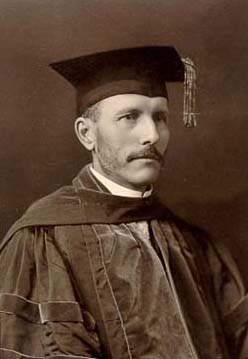
“The most important of Legendre's works is his Functions elliptiques, issued in two volumes in 1825 and 1826. He took up the subject where Euler, Landen, and Lagrange had left it, and for forty years was the only one to cultivate this new branch of analysis, until at last Jacobi and Abel stepped in with admirable new discoveries.”
Morris Kline on Carl Gustav Jacob Jacobi
“C. J. Jacobi was especially distressed because on several occasions when he came to Gauss to relate some new discoveries the latter pulled out from his desk drawer some papers that contained the very same discoveries. Jacobi resolved to get even. ...Gauss opened his desk drawer and pulled out some papers ...Jacobi then remarked, "It is a pity that you did not publish this work since you have published so may poorer papers."”
David Eugene Smith on Carl Gustav Jacob Jacobi
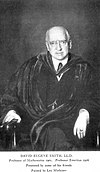
“Aside from Cauchy, the greatest contributory to the theory [of determinants] was Carl Gustav Jacob Jacobi. With him the word "determinant" received its final acceptance. He early used the functional determinant which Sylvester has called the Jacobian, and in his famous memoirs in Crelle's Journal for 1841 he considered these forms as well as that class of alternating functions which Sylvester has called alternants.”
Dirk Jan Struik on Carl Gustav Jacob Jacobi 3 quotes
“In 1829, the year that Abel died, Carl Gustav Jacob Jacobi published his "Fundamenta nova theoriae functionum ellipticarum." Jacobi based his theory of elliptic functions on four functions defined by infinite series and called theta functions. ...The addition theorems of elliptic functions can also be considered as special applications of Abel's theorem on the sum of integrals of algebraic equations. The question now arose whether hyper-elliptic integrals could be inverted in the way elliptic integrals had been inverted to yield elliptic functions. The solution was found by Jacobi in 1832 when he published his result that the inversion could be performed with functions of more than one variable. Thus the theory of Abelian functions of p variables was born, which became an important branch of Nineteenth century mathematics.”
About Carl Gustav Jacob Jacobi
Carl Gustav Jacob Jacobi (/dʒəˈkoʊbi/; German: jaˈkoːbi; 10 December 1804 – 18 February 1851) was a German mathematician who made fundamental contributions to elliptic functions, dynamics, differential equations, determinants, and number theory.