Link Copied!
James Joseph Sylvester Quotes (1814-1897)
Leader, Mathematician
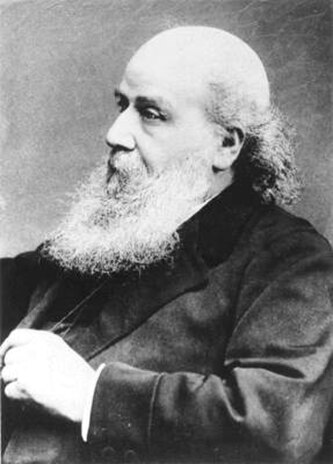


About James Joseph Sylvester
James Joseph Sylvester (3 September 1814 – 15 March 1897) was an English mathematician, and a leader in American mathematics in the second half of the 19th century.
Best James Joseph Sylvester Quotes
Shortest
Earliest
Explore our curated collection of the most famous and impactful James Joseph Sylvester quotes.
“Number, place, and combination . . . the three intersecting but distinct spheres of thought to which all mathematical ideas admit of being referred.”
“As the prerogative of Natural Science is to cultivate a taste for observation, so that of Mathematics is, almost from the starting point, to stimulate the faculty of invention.”

“It seems to be expected of every pilgrim up the slopes of the mathematical Parnassus, that he will at some point or other of his journey sit down and invent a definite integral or two towards the increase of the common stock.”
“It has been said that to appreciate what virtue and morals mean, men must live virtuous and moral lives. It is equally true, that a knowledge of the objects of science is not to be attained by any scheme of definitions, however carefully contrived. He who would know what geometry is, must venture boldly into its depths and learn to think and feel as a geometer.”
“As a public teacher of mere striplings, I am often amazed by the facility and absence of resistance with which the principles of the infinitesimal calculus are accepted and assimilated by the present race of learners. When I was young, a boy of sixteen or seventeen who knew his infinitesimal calculus would have been almost pointed at in the streets as a prodigy, like Dante, as a man who had seen hell. Now-a-days, our Woolwich cadets at the same age, talk with glee of tangents and asymptotes and points of contrary flexure and discuss questions of double maxima and minima, or ballistic pendulums, or motion in a resisting medium, under the familiar and ignoble name of sums.”

“It always seems to me absurd to speak of a complete proof of a theorem being rigorously demonstrated. An incomplete proof is no proof and a mathematical truth not rigorously demonstrated is not demonstrated at all. I do not mean to deny that there are mathematical truths, morally certain, which defy and will probably to the end of time to defy proof, as, e.g. that every indecomposable integer polynomial function must represent an infinitude of primes. I have sometimes thought that the profound mystery which envelops our conceptions relative to prime numbers depends upon the limitation of our faculties in regard to time, which like space may be in its essence poly-dimensional, and that this and such sort of truths would become self-evident to a being whose mode of perception is according to superficially as distinguished from our own limitation to linearly extended time.”
“Most, if not all, of the great ideas of modern mathematics have had their origin in observation. Take, for instance, the arithmetical theory of forms, of which the foundation was laid in the diophantine theorems of Fermat, left without proof by their author, which resisted all efforts of the myriad-minded Euler to reduce to demonstration, and only yielded up their cause of being when turned over in the blow-pipe flame of Gauss’s transcendent genius; or the doctrine of double periodicity, which resulted from the observation of Jacobi of a purely analytical fact of transformation; or Legendre’s law of reciprocity; or Sturm’s theorem about the roots of equations, which, as he informed me with his own lips, stared him in the face in the midst of some mechanical investigations connected (if my memory serves me right) with the motion of compound pendulums; or Huyghen’s method of continued fractions, characterized by Lagrange as one of the principal discoveries of that great mathematician, and to which he appears to have been led by the construction of his Planetary Automaton; or the new algebra, speaking of which one of my predecessors (Mr. Spottiswoode) has said, not without just reason and authority, from this chair, “that it reaches out and indissolubly connects itself each year with fresh branches of mathematics, that the theory of equations has become almost new through it, algebraic 31 geometry transfigured in its light, that the calculus of variations, molecular physics, and mechanics” (he might, if speaking at the present moment, go on to add the theory of elasticity and the development of the integral calculus) “have all felt its influence.”

James Joseph Sylvester Quotes by Topic
Find exactly what you are looking for by browsing this categorized list of James Joseph Sylvester quotes by topic.
James Joseph Sylvester on Euclid’s Elements 2 quotes
“The early study of Euclid made me a hater of geometry, … and yet, in spite of this repugnance, which had become a second nature in me, whenever I went far enough into any mathematical question, I found I touched, at last, a geometrical bottom.”
James Joseph Sylvester on Observation
“Most, if not all, of the great ideas of modern mathematics have had their origin in observation.”
Quotes About James Joseph Sylvester
Gain deeper perspective through quotes about James Joseph Sylvester from others.
G. B. Halsted on James Joseph Sylvester
Florian Cajori on James Joseph Sylvester
“Professor Sylvester's first high class at the new university Johns Hopkins consisted of only one student, G. B. Halsted, who had persisted in urging Sylvester to lecture on the modern algebra. The attempt to lecture on this subject led him into new investigations in quantics.”
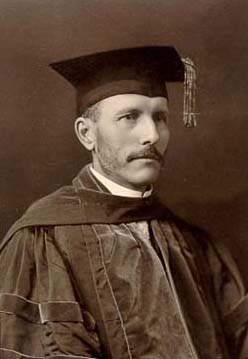
About James Joseph Sylvester
James Joseph Sylvester (3 September 1814 – 15 March 1897) was an English mathematician, and a leader in American mathematics in the second half of the 19th century.