Great courageous spirits like Abelard and Saint Thomas Aquinas dared to introduce into Catholicism the concepts of Aristotelian logic, and thus founded scholastic philosophy. But when the Church took the sciences under her wing, she demanded that the forms in which they moved be subjected to the same unconditioned faith in authority as were her own laws. And so it happened that scholasticism, far from freeing the human spirit, enchained it for many centuries to come, until the very possibility of free scientific research came to be doubted. At last, however, here too daylight broke, and mankind, reassured, determined to take advantage of its gifts and to create a knowledge of nature based on independent thought. The dawn of the day in history is known as the Renaissance or the Revival of Learning.
What It Means
This is a placeholder explanation generated by the low-overhead model. It interprets "Great courageous spirits like Abelard and Saint Thomas Aquinas dared to introduce into Catholicism the concepts of Aristotelian logic, and thus founded scholastic philosophy. But when the Church took the sciences under her wing, she demanded that the forms in which they moved be subjected to the same unconditioned faith in authority as were her own laws. And so it happened that scholasticism, far from freeing the human spirit, enchained it for many centuries to come, until the very possibility of free scientific research came to be doubted. At last, however, here too daylight broke, and mankind, reassured, determined to take advantage of its gifts and to create a knowledge of nature based on independent thought. The dawn of the day in history is known as the Renaissance or the Revival of Learning." in the context of "Carl Gustav Jacob Jacobi, "Über Descartes Leben und seine Methode die Vernunft Richtig zu Leiten und die Wahrheit in den Wissenschaften zu Suchen," "About Descartes' Life and Method of Reason.." (Jan 3, 1846) C. G. J. Jacobi's Gesammelte werke Vol. 7 p.309, as quoted by ** Tobias Dantzig, Number: The Language of Science (1930)." to mean that wisdom is timeless.

Tags
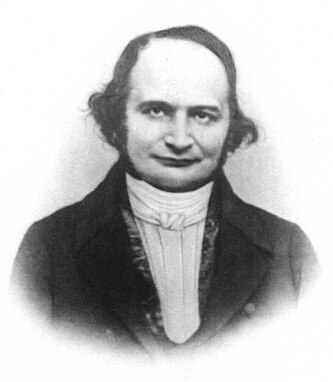
About Carl Gustav Jacob Jacobi