It is true that M. Fourier had the opinion that the principal end of mathematics was the public utility and the explanation of natural phenomena; but such a philosopher as he is should have known that the unique end of science is the honor of the human mind, and that from this point of view a question of number is as important as a question of the system of the world.
What It Means
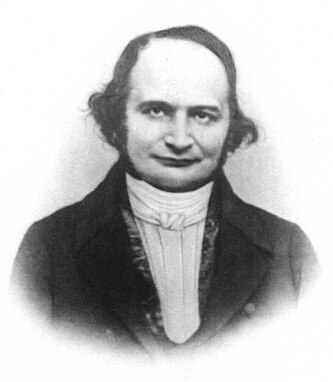
This is a placeholder explanation generated by the low-overhead model. It interprets "It is true that M. Fourier had the opinion that the principal end of mathematics was the public utility and the explanation of natural phenomena; but such a philosopher as he is should have known that the unique end of science is the honor of the human mind, and that from this point of view a question of number is as important as a question of the system of the world." in the context of "Carl Gustav Jacob Jacobi, Letter to Legendre (July 2, 1830) in response to Fourier's report to the Paris Academy Science that mathematics should be applied to the natural sciences, as quoted in Science (March 10, 1911) Vol. 33, p.359, with additional citations and dates from H. Pieper, "Carl Gustav Jacob Jacobi," Mathematics in Berlin (2012) p.46" to mean that wisdom is timeless.
Tags
About Carl Gustav Jacob Jacobi