W. W. Rouse Ball on Carl Gustav Jacob Jacobi
← Back to Carl Gustav Jacob Jacobi Profile
“His [Lagrange's] lectures on differential calculus form the basis of his Theorie des fonctions analytiques which was published in 1797. ...its object is to substitute for the differential calculus a group of theorems based upon the development of algebraic functions in series. A somewhat similar method had been previously used by John Landen in his Residual Analysis... Lagrange believed that he could... get rid of those difficulties, connected with the use of infinitely large and infinitely small quantities, to which philosophers objected in the usual treatment of the differential calculus. ...Another treatise in the same lines was his Leçons sur le calcul des fonctions, issued in 1804. These works may be considered as the starting-point for the researches of Cauchy, Jacobi, and Weierstrass.”
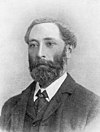
“Jacobi's most celebrated investigations are those on elliptic functions, the modern notation in which is substantially due to him, and the theory of which he established simultaneously with Abel, but independently of him. Jacobi's results are given in his treatise on elliptic functions, published in 1829, and in some later papers in Crelle's Journal; they are earlier than Weierstrass's researches... The correspondence between Legendre and Jacobi on elliptic functions has been reprinted in the first volume of Jacobi's collected works. Jacobi, like Abel, recognised that elliptic functions were not merely a group of theorems on integration, but that they were types of a new kind of function, namely, one of double periodicity; hence he paid particular attention to the theory of the theta function.”
“I ought also to mention his papers on Abelian transcendants; his investigations on the theory of numbers... his important memoirs on the theory of differential equations, both ordinary and partial; his development of the calculus of variations; and his contributions to the problem of three bodies, and other particular dynamical problems. Most of the results of the researches last named are included in his Vorlesungen über Dynamik.”