Link Copied!
Cao Xueqin Quotes (1715-1764)
Author, Writer


About Cao Xueqin
Cáo Xuěqín (Chinese: 曹雪芹; 4 June 1715 or 1724 – 12 February 1763 or 1 February 1764) was a Chinese writer during the Qing dynasty. He is best known as the author of Dream of the Red Chamber, one of the Four Great Classical Novels of Chinese literature.
Best Cao Xueqin Quotes
Shortest
Earliest
Explore our curated collection of the most famous and impactful Cao Xueqin quotes.
“假作真时真亦假,无为有处有还无。
• Jia zuo zhen shi zhen yi jia,
Wu wei you chu you huan wu.”
• Jia zuo zhen shi zhen yi jia,
Wu wei you chu you huan wu.”

“侬今葬花人笑痴,他年葬侬知是谁?
• Let others laugh flower-burial to see:
Another year who will be burying me?”
• Let others laugh flower-burial to see:
Another year who will be burying me?”

“家富人宁,终有个家亡人散各奔腾。
• Fall'n the great house once so secure in wealth,
Each scattered member shifting for himself.”
• Fall'n the great house once so secure in wealth,
Each scattered member shifting for himself.”
“If anyone is in a hurry to read my novel, all he's got to do is keep me daily supplied with roast duck and good Shaoxing wine, and I'll be happy to oblige him.”



“满纸荒唐言,一把辛酸泪!
都云作者痴,谁解其中味?
• Man zhi huangtang yan, yi ba xinsuan lei!
Dou yun zuozhe chi, shei jie qizhong wei?”
都云作者痴,谁解其中味?
• Man zhi huangtang yan, yi ba xinsuan lei!
Dou yun zuozhe chi, shei jie qizhong wei?”
“女兒是水作的骨肉,男人是泥作的骨肉。我見了女兒,我便清爽;見了男子,便覺濁臭逼人。
• Girls are made of water and boys are made of mud. When I am with girls I feel fresh and clean, but when I am with boys I feel stupid and nasty.”
• Girls are made of water and boys are made of mud. When I am with girls I feel fresh and clean, but when I am with boys I feel stupid and nasty.”

“今风尘碌碌,一事无成。忽念及当日所有之女子,一一细考较去,觉其行止见识,皆出于我之上。何我堂堂之须眉,诚不若彼裙钗哉?实愧则有余,悔又无益之大无可如何之日也!当此,则自欲将已往所赖天恩祖德,锦衣纨绔之时,饫甘餍肥之日,背父兄教育之恩,负师友规谈之德,以至今日一技无成,半生潦倒之罪,编述一集,以告天下人:我之罪固不免,然闺阁中本自历历有人,万不可因我之不肖,自护己短,一并使其泯灭也。
• Having made an utter failure of my life, I found myself one day, in the midst of my poverty and wretchedness, thinking about the female companions of my youth. As I went over them one by one, examining and comparing them in my mind's eye, it suddenly came over me that those slips of girls – which is all they were then – were in every way, both morally and intellectually, superior to the 'grave and mustachioed signior' I am now supposed to have become. The realization brought with it an overpowering sense of shame and remorse, and for a while I was plunged in the deepest despair. There and then I resolved to make a record of all the recollections of those days I could muster – those golden days when I dressed in silk and ate delicately, when we still nestled in the protecting shadow of the Ancestors and Heaven still smiled on us. I resolved to tell the world how, in defiance of all my family's attempts to bring me up properly and all the warnings and advice of my friends, I had brought myself to this present wretched state, in which, having frittered away half a lifetime, I find myself without a single skill with which I could earn a decent living. I resolved that, however unsightly my own shortcomings might be, I must not, for the sake of keeping them hid, allow those wonderful girls to pass into oblivion without a memorial.”
• Having made an utter failure of my life, I found myself one day, in the midst of my poverty and wretchedness, thinking about the female companions of my youth. As I went over them one by one, examining and comparing them in my mind's eye, it suddenly came over me that those slips of girls – which is all they were then – were in every way, both morally and intellectually, superior to the 'grave and mustachioed signior' I am now supposed to have become. The realization brought with it an overpowering sense of shame and remorse, and for a while I was plunged in the deepest despair. There and then I resolved to make a record of all the recollections of those days I could muster – those golden days when I dressed in silk and ate delicately, when we still nestled in the protecting shadow of the Ancestors and Heaven still smiled on us. I resolved to tell the world how, in defiance of all my family's attempts to bring me up properly and all the warnings and advice of my friends, I had brought myself to this present wretched state, in which, having frittered away half a lifetime, I find myself without a single skill with which I could earn a decent living. I resolved that, however unsightly my own shortcomings might be, I must not, for the sake of keeping them hid, allow those wonderful girls to pass into oblivion without a memorial.”
Cao Xueqin Quotes by Topic
Find exactly what you are looking for by browsing this categorized list of Cao Xueqin quotes by topic.
Cao Xueqin on The Story of the Western Wing 2 quotes
“'...if I do let you look, you must promise not to tell anyone. It's marvellous stuff. Once you start reading it, you'll even stop wanting to eat!' He handed the book to her, and Dai-yu put down her things and looked. The more she read, the more she liked it, and before very long she had read several acts. She felt the power of the words and their lingering fragrance. Long after she had finished reading, when she had laid down the book and was sitting there rapt and silent, the lines continued to ring on in her head. 'Well,' said Bao-yu, 'is it good?' Dai-yu smiled and nodded.”
Cao Xueqin on Kite
Cao Xueqin on Dream of the Red Chamber
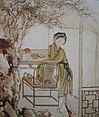
“The memorial to my beloved girls could at one and the same time serve as a source of harmless entertainment and as a warning to those who were in the same predicament as myself but who were still in need of awakening.”
Cao Xueqin on Journey to the West
“It was time to talk about choosing the plays and Grandmother Jia called on Bao-chai to begin. Bao-chai made a show of declining; but it was her birthday, and in the end she gave in and selected a piece about Monkey from The Journey to the West. Grandmother Jia was pleased.”
Cao Xueqin on Go (game)
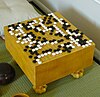
“Life for Bao-yu after his removal into the garden became utterly and completely satisfying. Every day was spent in the company of his maids and cousins in the most amiable and delightful occupations, such as reading, practising calligraphy, strumming on the qin, playing Go, painting, composing verses, embroidering in coloured silks, competitive flower-collecting, making flower-sprays, singing, word games and guess-fingers. In a word, he was blissfully happy.”
What Cao Xueqin Said About Others
Discover personal opinions Cao Xueqin shared regarding contemporaries.
Cao Xueqin on Women
“Girls are made of water and boys are made of mud. When I am with girls I feel fresh and clean, but when I am with boys I feel stupid and nasty.”

Cao Xueqin on Qiu Yuan
“'Whether their ladyships and the young ladies are enjoying themselves or not,' said Bao-yu, 'what concern is it of mine?' Aroma laughed. 'Seeing that they're all doing their best to be agreeable, couldn't you try to do likewise? Surely it's much better all round if everyone will give and take a bit?' 'What do you mean, "give and take a bit"? ... They can give and take a bit if they like. My destiny is a different one: naked and friendless through the world to roam.' A tear stole down his cheek as he recalled the line from the aria. He continued to ponder its words and to savour their meaning, and ended up by bursting into tears and crying outright.”
Quotes About Cao Xueqin
Gain deeper perspective through quotes about Cao Xueqin from others.
Yurui on Cao Xueqin
“Wherever he was, he made it spring.”
Cyril Birch on Cao Xueqin
“Ts'ao Hsüeh-ch'in's forte is the unhurried exploration of every nuance of a situation.”
Dun Min on Cao Xueqin
“Proud bones such as yours the world finds rare; These are the crags of a true eccentric. You wield your brush like a roof beam, propelled by wine; From out your bosom pour rugged rocks.”
David Hawkes on Cao Xueqin
“The idea that the worldling's 'reality' is illusion and that life itself is a dream from which we shall eventually awake is of course a Buddhist one; but in Xueqin's hands it becomes a poetical means of demonstrating that his characters are both creatures of his imagination and at the same time the real companions of his golden youth. To that extent it can be thought of as a literary device rather than as a deeply held philosophy, though it is really both.”
C. T. Hsia on Cao Xueqin
“Ostensibly, [Cao Xueqin] has written a Taoist or Zen Buddhist comedy, showing mankind's hopeless involvement in desire and pain and the liberation of at least a few select individuals besides the hero. But only ostensibly, because the reader cannot but feel that the reality of suffering as depicted in the novel stirs far deeper layers of his being than the reality of Taoist wisdom; he cannot but respond to the author's vast sympathy for young and old, innocent and scheming, self-denying and self-indulgent. [...] In devoting his creative career to tracing the history of Baoyu and the Jia clan, Cao Xueqin is therefore the tragic artist caught between nostalgia for, and tormented determination to seek liberation from, the world of red dust.”
About Cao Xueqin
Cáo Xuěqín (Chinese: 曹雪芹; 4 June 1715 or 1724 – 12 February 1763 or 1 February 1764) was a Chinese writer during the Qing dynasty. He is best known as the author of Dream of the Red Chamber, one of the Four Great Classical Novels of Chinese literature.
QuotesCosmos Cross-Civilizational Archive
Explore Related Wisdom Pillars, Worldviews & Canonical Works
Discover how humanity's greatest philosophers, sacred scriptures, and literary masterpieces address the core questions of existence.
30 Wisdom Pillars
22 Worldviews & Traditions
Canonical Books & Scriptures