Link Copied!
Camille Pissarro Quotes (1830-1903)
Painter
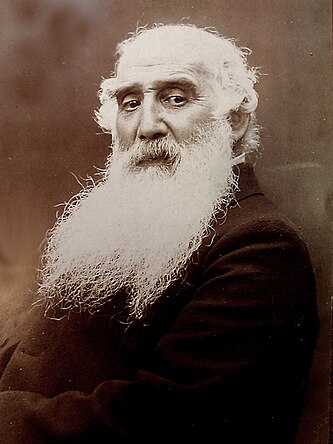
About Camille Pissarro
Jacob Abraham Camille Pissarro (10 July 1830 – 13 November 1903) was a Danish-French Impressionist and Neo-Impressionist landscape-painter with important contributions to both Impressionism and Post-Impressionism.
Best Camille Pissarro Quotes
Shortest
Earliest
Explore our curated collection of the most famous and impactful Camille Pissarro quotes.
“Never paint except with the three primary colors [red, blue, and yellow] and their derivatives.”

“Work is a wonderful regulator of mind and body. I forget all sorrow, grief, bitterness, and I even ignore them altogether in the joy of working.”
“Lighten your palette [his remark to Cézanne circa 1873, to encourage Cézanne to use bright colors], paint only with the three primary colours and their derivatives.”
“advice to a young painter, (1896); as quoted in Painting Outside the lines, Patterns of Creativity in Modern Art, ed. David W. Galenson, Harvard University Press, 30 Jun 2009, pp. 84-85, note 40.”

“Work at the same time upon water, sky, branches, ground, keeping everything going on an equal basis and unceasingly rework until you have got it. Paint generously and unhesitatingly, for it is best not to lose the first impression.”
“Don't be afraid of putting on color, refine the work little by little. Don't proceed according to rules and principles, but paint what you observe and feel.. .One must have only one master – nature; she is the one always be consulted.”

“What I have suffered you cannot imagine. But what I'm going through [circa 1878] now is even worse, much more so than when I was young.. ..because now I feel as if I have no future. Even so, if I had to do it again, I still think I wouldn't hesitate.”
“I began to understand my sensations, to know what I wanted, at around the age of forty.. ..but only vaguely. At fifty, that is in 1880, I formulated the idea of unity, without being able to render it. At sixty, I am beginning to see the possibility of rendering it.”
“I wish it to be thoroughly under stood that it is Mr. Seurat, an artist of great worth, who has been the first to conceive the idea of applying the scientific theory after making a profound study of it. I have only followed, like my confreres, the example set by Seurat.”
“P.S. If you happen to see Seurat or if you write to Signac, tell them that I have tried the mixture of cadmium (well recommended by Contet) , with red, white and Veronese green. It becomes black in four or five days from the Veronese green. Even blacker than the chrome yellow mixture. Tell this to Contet.”
“Yesterday Sisley was looking for me everywhere. Madame Latouche told me that he wanted some information about the technique of painting fans. Well, this means my fans are spoken of.. .I only fear one thing: that they will finally say that's all I am good for! [fans!]”
“It is only by drawing often, drawing everything, drawing incessantly, that one fine day you discover to your surprise that you have rendered something in its true character.. .So much the better if it is painful for you to take even the first step, the more toilsome the work, the stronger you will emerge from it.. .I repeat, guard against facility.”
“I recognize fully that you do not draw well, my dear Lucien [his son, also painter]. I told you any number of times that it is essential to have known forms in the eye and in the hand. It is only by drawing often, drawing everything, drawing incessantly, that one fine day you discover to your surprise that you have rendered something in its true character.”
“I work mostly in the studio; as I mentioned several times, the leaves are burgeoning and change so rapidly that I have been unable to prepare a single sketch. I am making little watercolors and pastels, I think they will come out all right; in the studio I am preparing five or six canvases, I work on one after another, I am getting used to working that way.”
“The weather is superb except for a very keen wind which causes me to lose much time. - I am doing a portrait of your mother in pastel, it seems it is not adequate as a likeness, it is too old, too red, not fine enough, in short, it won't do. This surprises me not at all. You know that everyone accepts the one I made pretty obvious, but that is not much good either.”
“Sisley, I hear, is seriously ill. He is a great and beautiful artist, in my opinion he is a master equal to the greatest. I have seen works of his of rare amplitude and beauty, among others an 'Inundation' [in the Camondo collection], which is a masterpiece.”
“[ Seurat's pointilist style ].. ..inhibits me and hinders the development of spontaneity of sensation. http://www.artnet.com/auction-houses/lesliehindman-auctioneers/artist-camille-pissarro/”
“One can do such lovely things with so little. Subjects that are too beautiful end by appearing theatrical – take Switzerland, for example. Think of all the beautiful little things Corot did at Gisors; two willows, a little water, a bridge, like the picture in the Universal Exhibition. What a masterpiece!.. .Everything is beautiful, all that matters is to be able to interpret.”
“I can quite understand the effort he is making; it is a very good thing not to want to go on repeating oneself. But he has concentrated all his attention on line; the figures stand out against each other without any sort of relationship, and so the whole thing is meaningless. Renoir is no draughtman, and without the lovely colours he used to use so instinctively, he is incoherent.”

“Tell [Père] Tanguy to send me some paints. What I need most are ten tubes of white, two of chrome yellow, one bright red, one brown lac, one ultramarine, five Veronese green, one cobalt j I have on hand only one tube of white ... I expect to begin to paint again from nature, and I need the colors.”

“The weather today is frightful, rain and wind. You must be having the same at Epping; it's a pity. It had been so fine for the last few days and I had begun to grind away from nature. This is infuriating, for it's the loveliest time of the year, September and October. I can't stand the summer any more, with its heavy, monotonous green, its dry distances where everything can be seen, the torment of the great heat.. .Artistic sensations revive in September and October, but then it rains and blows!”

“..I saw Gauguin; he told me his theories about art and assured me that the young [artists] would find salvation by replenishing themselves at remote and savage sources. I told him that this art did not belong to him, that he was a civilized man and hence it was his function to show us harmonious things. We parted, each unconvinced. Gauguin is certainly not without talent, but how difficult it is for him to find his own way! He is always poaching on someone's ground; now he is pillaging the savages of Oceania.”
“Each one of us [artists] has several facets. The surface often appears more important than what is inside, hence the errors of those who judge carelessly. How many times has that not happened to me! The surface is often complete in some people from the very beginning, but not the possession of their own sensations. From this come errors. Some natures achieve the surface very slowly j this is the least danger an artist runs. So one should not think of the surface or the appearance, but concentrate on what is inner!”
Camille Pissarro Quotes by Topic
Find exactly what you are looking for by browsing this categorized list of Camille Pissarro quotes by topic.
Camille Pissarro on Impressionism 10 quotes
“I am settled in France, and as for the rest of my history as a painter, it is bound up with the impressionistic group.”
Camille Pissarro on Beauty
“Blessed are they who see beautiful things in humble places where other people see nothing!”
Camille Pissarro on Painting
“Look for the kind of nature that suits your temperament. The motif should be observed more for shape and color than for drawing. There is no need to tighten the form which can be obtained without that. Precise drawing is dry and hampers the impression of the whole, it destroys all sensations. Do not define too closely the outlines of things; it is the brushstroke of the right value and color which should produce the drawing. In a mass, the greatest difficulty is not to give the contour in detail, but to paint what is within. Paint the essential character of things, try to convey it by any means whatsoever, without bothering about technique.—When painting, make a choice of subject, see what is lying at the right and what at the left, and work on everything simultaneously. Don't work bit by bit but paint everything at once by placing tones everywhere, with brushstrokes of the right color and value, while noticing what is alongside. Use small brushstrokes and try to put down your perceptions immediately. The eye should not be fixed on one point, but should take in everything, while observing the reflections which the colors produce on their surroundings. Work at the same time upon the sky, water, branches, ground, keeping everything going on an equal basis and unceasingly rework until you have got it. Cover the canvas at the first go, then work at it until you can see nothing more to add. Observe the aerial perspective as well, from the foreground to the horizon, the reflection of the sky, of foilage. Don't be afraid of putting on color, refine the work little by little.—Don't proceed according to rules and principles, but paint what you observe and feel. Paint generously and unhesitatingly, for it is best not to lose the first impression you feel. Don't be timid in front of nature: one must be bold, at the risk of being deceived and making mistakes. One must have only one master—nature; she is the one always to be consulted.”

What Camille Pissarro Said About Others
Discover personal opinions Camille Pissarro shared regarding contemporaries.
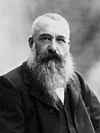
Camille Pissarro on Claude Monet 7 quotes
“I received a letter from Monet, who is in despair because he has not succeeded with the canvases on which he worked most furiously, as happened with those I did at Gisors. - My work is going better, but I am only beginning.”
Camille Pissarro on Pierre-Auguste Renoir 5 quotes
“Renoir is a great success on the [Paris'] Salon; I think he is 'launched'. All the better! It's a very hard life, being poor.”

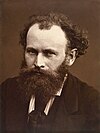
Camille Pissarro on Édouard Manet 2 quotes
“I am sending you 'Le Figaro' [daily Paris' newspaper], you will read M. Wolff's stupid piece on our poor friend Manet [who died a few days earlier]. I do not have to tell you how indignant I am at the manner in which this gentleman treats the pure-bred artist who shed such glory on this country in an epoch dominated by commercialism. The article in 'L'Intransigeant' is very fine, very just, and worthy of its subject, but the artist's works tell us more about him than anything the journalists can write.”
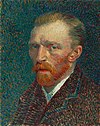
Camille Pissarro on Vincent van Gogh
“I received a letter from the brother-in-law of Theo van Gogh. He writes that Theo is calmer and that it will be possible to send him to Holland. The Vingt [art-exhibition in Belgium] are to include van Gogh's works in their exhibition as are the 'Independents' [in Paris] who will have one room for [w:Albert Dubois-Pillet|Dubois-Pillet]], and one for Vincent.”
Camille Pissarro on Wynford Dewhurst
“This Mr. Dewhurst has not understood the Impressionist movement in the very least. All he sees in it is a technical method... He also says that before going to London we knew nothing whatsoever about light; but we have studies that prove the contrary. He omits the influence of Claude Lorrain, Corot, all the 18th-century painters, Chardin most of all. But what he fails to realize is that while Turner and Constable were of service to us, they confirmed our suspicion that those painters had not understood 'The Analysis of Shadows', which in the case of Turner are always a deliberate effect, a plain dark patch. As to the division of tones, Turner confirmed us its value as a method, but not as a means of accuracy or truth to nature. In any case, the 18th century was our tradition. It seems to me that Turner too, had looked at Claude Lorrain. I am even inclined to think there is a picture by Turner, 'Sunset', hung side by side with a Claude.”

Quotes About Camille Pissarro
Gain deeper perspective through quotes about Camille Pissarro from others.
Anthea Callen on Camille Pissarro
“Pisarro explained the Neo-Impressionist theories to his dealer Durand-Ruel in a letter written towards the end of 1886. He stressed the importance of Seurat's role as inventor of the theory, and described the new function of colour, which replaced the mechanical mixtures of pigments with optical mixtures, where colours partially fused in the spectator's eye. The component parts of each optical colour mixture were to be painted in separate touches so that they retained their colour purity. When colours were mixed on the palette, they could only be combined with close neighbors on the colour circle, so as to avoid excessive dulling of the hues. Pissaro noted that the great colour theorists who had influenced Seurat's thinking were Chevreul, the Scott Maxwell, and the American Ogden Rood. Optical colour mixtures, they argued, were more luminous than mixed pigments.”
Paul Cezanne on Camille Pissarro 2 quotes
“If I dared, I should say that your letter is imprinted with sadness. The picture business isn't going well; I fear that your morale may be colored a little grey, but I'am sure that it's only a passing phase.. .I imagine that you would be delighted with the country where I am now.. ..in L'Estaque, by the sea..”
Paul Cézanne on Camille Pissarro 3 quotes
“That is why, perhaps, all of us derive Pissarro. He had the good luck to be born in the West Indies, where he learned how to draw without a teacher. He told me all about it. In 1865 he was already cutting out black, bitumen, raw sienna and the ocher's. That's a fact. Never paint with anything but the three primary colours and their derivatives, he used to say me. Yes, he was the first Impressionist.”

Jules Desclozeau on Camille Pissarro
“M. Camille Pissarro has painted a field bathed in sunlight, whose forms, colors and reflections are admirably synthesized. It is more field than any field we have ever seen. We cannot understand what interest the brutal paintings of M. Claude Monet and the simplicist works of M. Renoir can have. Both these artists have taken the wrong path.”
About Camille Pissarro
Jacob Abraham Camille Pissarro (10 July 1830 – 13 November 1903) was a Danish-French Impressionist and Neo-Impressionist landscape-painter with important contributions to both Impressionism and Post-Impressionism.
QuotesCosmos Cross-Civilizational Archive
Explore Related Wisdom Pillars, Worldviews & Canonical Works
Discover how humanity's greatest philosophers, sacred scriptures, and literary masterpieces address the core questions of existence.
30 Wisdom Pillars
22 Worldviews & Traditions
Canonical Books & Scriptures