Link Copied!
Boris Berman Quotes (1948-)
Musician, Composer
Best Boris Berman Quotes
Shortest
Earliest
Explore our curated collection of the most famous and impactful Boris Berman quotes.
“Many pages of Prokofiev’s oeuvre continue the important tradition of Russian music based on fairy tale–inspired imagery.”
“Prokofiev had a particular talent for creating a fully identifiable mood within the first notes of a piece, passage, or theme.”

“One of the most winning characteristics of Prokofiev’s music is its indomitable energy. In expressing this quality, stability of tempo is particularly important.”
“Prokofiev’s music is usually based on a firm sense of tonality. Whatever tonal uncertainty and ambiguity one experiences, mainly in developmental passages, they are mostly short-lived.”

“Examining the musical language of Prokofiev in a more detailed way, we must acknowledge that for him melody was always the most important element of music, one that determined the quality of the composition”
“Prokofiev was especially active as a pianist during his years in the United States. The titles of numerous reviews seem to refer as much to his compositions as to his performances: “A titan of a pianist,” “Volcanic eruption at the keyboard,” “Russian chaos in music,” among others.”
“Prokofiev’s playing of lyrical music is especially noteworthy. His phrasing can be exquisitely beautiful in its dynamic molding (second theme of the Andante assaifrom Sonata No. 4; the middle section of Vision fugitive,op. 22, no. 11), and his polyphonic voicing can be clear and expressive (Sonatina pastorale, op. 59, no. 3).”
“It is essential that a pianist meticulously observe the composer’s indications regarding tempo, dynamics, and articulation. These are all crucial in creating full characterizations of individual themes and passages. Far too often one hears unidiomatic performances of Prokofiev’s music in which speed and loudness seem to be the only parameters that matter to the pianist.”
“Prokofiev was not alone among the leading composers of the twentieth century in changing his style repeatedly in the course of his career: Stravinsky, Schoenberg, Bartók, and others modified their musical language drastically at various stages of their creative lives. In Prokofiev’s case, he always maintained certain stylistic facets throughout the transformations of his musical language.”

“Within the vast, virtually limitless piano repertoire, the piano sonatas of Sergei Prokofiev occupy a special place. Apart from Alexander Scriabin early in the century, Prokofiev was the only major twentieth-century composer to pay such consistent attention to the form, … They are a constant presence in concert programs and are considered an indispensable part of the repertoire by almost every serious concert pianist.”

“Prokofiev’s creative path traversed many countries and was affected by wars and revolutions. Life brought him into contact with some of the most prominent and influential artistic figures of his time. Observing the magnificent panorama of Prokofiev’s oeuvre, one sees that the composer’s musical style evolved significantly over the course of his creative life. The reasons for the changes of direction have been much discussed and debated.”

“Prokofiev had a lifelong love of the sonata form. Ever since learning the basic rules during his childhood years, he strove to master them; … In 1941, describing his Sonatinas op. 54 (1931), he remarked, “I liked the idea of writing a simple work in such a superior form as sonata.” One can learn a lot about the composer’s growth by tracing his progress from the early sonatas, which cautiously dare to bend the textbook rules, to the masterful treatment of the form in his late works.”
“In spite of the many valuable books available today, the state of Prokofiev scholarship cannot be considered adequate: suffice it to say that the detailed catalogue of his works has not been updated since it was published in 1961. At present, there is no edition of the Prokofiev sonatas free of errors. I have tried to do my best in pointing out some obvious mistakes, as well as certain doubtful readings. Many questions cannot be answered with certainty, as the manuscripts for some of the sonatas have been lost; those that have survived are not easily available for inspection. To get to some of them, I was fortunate to have the help of Russian colleagues in overcoming the restrictions of the current gatekeepers in Russia.”
“Young Prokofiev was attentive to new musical trends. We can find traces of various influences in his early compositions. Some of the piano works from the set Visions fugitives,op. 22 (1915–17), are reminiscent of Debussy; the Andante assai section of the First Piano Concerto, op. 10 (1911–12), sounds like Rachmaninov; and the harmonies of the symphonic poem Osen neye(Autumnor Autumnal Sketch), op. 8 (1910), harken back to Scriabin. These, however, were rather passing influences. Others proved to be more enduring.
One of them was the fairy-tale streak in Russian music. Russians have always been fond of fairy tales, which to this day continue to be an important part of every child’s upbringing. ...
Another significant influence was the Classical style.”
One of them was the fairy-tale streak in Russian music. Russians have always been fond of fairy tales, which to this day continue to be an important part of every child’s upbringing. ...
Another significant influence was the Classical style.”

“The playing of Soviet pianists of the younger generation differed significantly from the composer’s performing style, as discussed above. (Here I am referring to the generation of Richter and Gilels or younger, as opposed to Prokofiev’s coevals such as Neuhaus and Samuil Feinberg, who also had Prokofiev’s works in their repertoires.) Since we know that Prokofiev appreciated their playing, does it mean that he accepted their approach? Should we regard the new generation’s playing as a distortion of the composer’s intentions or as a natural evolution of interpretive style?
I believe that Prokofiev, having been exposed to the new performing style of the Soviet pianists, accepted at least some of its qualities. We can mention assertive muscular playing, open expressivity, and a gripping commitment to the music among those traits that brought recognition to Soviet pianists and assured their success in the international arena. These characteristics were concordant with the evolving compositional style of Prokofiev, whose later works became both more virile (often heroic) and expressive in a warmer and more open way.”
I believe that Prokofiev, having been exposed to the new performing style of the Soviet pianists, accepted at least some of its qualities. We can mention assertive muscular playing, open expressivity, and a gripping commitment to the music among those traits that brought recognition to Soviet pianists and assured their success in the international arena. These characteristics were concordant with the evolving compositional style of Prokofiev, whose later works became both more virile (often heroic) and expressive in a warmer and more open way.”
Boris Berman Quotes by Topic
Find exactly what you are looking for by browsing this categorized list of Boris Berman quotes by topic.
Boris Berman on Piano Sonata No. 9 (Prokofiev) 3 quotes
“Sviatoslav Richter’s recording contains several deviations from the sonata’s printed score, which was published after Prokofiev’s death. I had long suspected that Richter might have been following the manuscript, which was in his possession. However, I was in no position to confirm this until recently, when I had an opportunity to examine the manuscript. Thus, for the first time I am able to say with confidence that Richter’s playing corresponds fully with the manuscript.”
Boris Berman on Piano Sonata No. 8 (Prokofiev)
“The Eighth is the most expansive of Prokofiev’s sonatas; the first move ment in particular unfolds in an unhurried fashion. The composer initially intended the sonata to consist of four movements, not three.”

Boris Berman on Piano Sonata No. 6 (Prokofiev)
“In fact, one could argue that in the Sixth Prokofiev turned toward the Romantic concept of the sonata, with its traditional exploration of the conflict between the individual and fate or other impersonal forces beyond one’s control. The mechanistic qualities of Prokofiev’s music, familiar to us from his earlier works, play the crucial role in this drama; they collide with the warmly human thematic material, suppressing and brutalizing it. The carnival atmosphere or the “masques” of the early sonatas and the objective neoclassicism of the Fifth are abandoned, never to return in Prokofiev’s subsequent works in this genre.”
What Boris Berman Said About Others
Discover personal opinions Boris Berman shared regarding contemporaries.
Boris Berman on Sviatoslav Richter
“Of all the pianists with whom Prokofiev worked during the Soviet period of his life, he clearly preferred Richter. One of the testaments to this, de scribed here for the first time, is a note in Prokofiev’s handwriting preserved in Richter’s archive. It seems to be a draft of a congratulatory cable—the text lacks punctuation marks—that says, “Warm salute to pianist best in Soviet Union and round whole globe the Prokofievs.””

Boris Berman on Lev Oborin
“Prokofiev’s piano music has always played an important role in my own work as both a performer and a teacher. While a student at the Moscow Tchaikovsky Conservatory, I had the privilege of studying with Lev Oborin. This remarkable pianist premiered both of Prokofiev’s sonatas for violin and piano with David Oistrakh, preparing them under the composer’s guidance. Prokofiev’s works were heard very often in Oborin’s studio, as well as in his own concerts.”
About Boris Berman
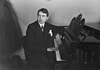
Boris Berman (born Moscow, April 3, 1948) is a Russian pianist and pedagogue.
QuotesCosmos Cross-Civilizational Archive
Explore Related Wisdom Pillars, Worldviews & Canonical Works
Discover how humanity's greatest philosophers, sacred scriptures, and literary masterpieces address the core questions of existence.
30 Wisdom Pillars
22 Worldviews & Traditions
Canonical Books & Scriptures