Bernard Lewis. "Islam and the West: A Conversation with Bernard Lewis." The Pew Forum on Religion & Public Life (April 27, 2006), Washington, D.C.: Hay-Adams Hotel.
“
What we have now come to regard as typical of Middle Eastern regimes is not typical of the past. The regime of Saddam Hussein, the regime of Hafiz al Assad, this kind of government, this kind of society, has no roots either in the Arab or in the Islamic past. It is due and let me be quite specific and explicit it is due to an importation from Europe, which comes in two phases.
— Bernard Lewis on Saddam Hussein
What It Means
This is a placeholder explanation generated by the low-overhead model. It interprets "What we have now come to regard as typical of Middle Eastern regimes is not typical of the past. The regime of Saddam Hussein, the regime of Hafiz al Assad, this kind of government, this kind of society, has no roots either in the Arab or in the Islamic past. It is due and let me be quite specific and explicit it is due to an importation from Europe, which comes in two phases." in the context of "Bernard Lewis. "Islam and the West: A Conversation with Bernard Lewis." The Pew Forum on Religion & Public Life (April 27, 2006), Washington, D.C.: Hay-Adams Hotel." to mean that wisdom is timeless.
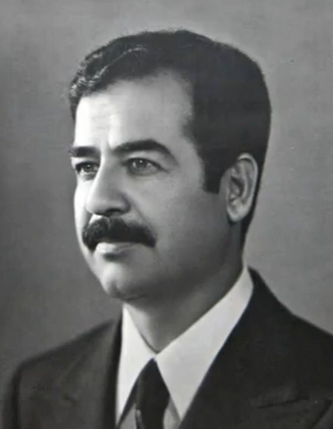
Source: Wikiquote: "Saddam Hussein" (About Saddam Hussein)
The 'What it means' explanation text was generated by Google Gemini Flash (accessed January 18, 2026). https://gemini.google.com/app
Tags

About Bernard Lewis
Bernard Lewis (31 May 1916 – 19 May 2018) was a British historian specializing in oriental studies.
About Bernard Lewis
Bernard Lewis (31 May 1916 – 19 May 2018) was a British historian specializing in oriental studies.
View all quotes →