Link Copied!
Bernard Lewis Quotes (1916-2018)
Theologian








About Bernard Lewis
Bernard Lewis (31 May 1916 – 19 May 2018) was a British historian specializing in oriental studies.
Best Bernard Lewis Quotes
Shortest
Earliest
Explore our curated collection of the most famous and impactful Bernard Lewis quotes.
“The surest test of one's understanding of a text in another language is translating it into one's own.”

“You know the expression "My country, right or wrong." Well, these days, Americans are apt to think, "My country, wrong."”
“[G]enerally speaking, Muslim tolerance of unbelievers was far better than anything available in Christendom, until the rise of secularism in the 17th century.”

“The overwhelming majority of classical theologians, jurists, and traditionalists [i.e., specialists in the hadith] . . . understood the obligation of jihad in a military sense.”

“As medieval Christian man could only conceive of religion in terms of a trinity, so his modern descendant can only conceive of politics in terms of a theology or, as we now say, ideology, of left-wing and right-wing forces and factions.”
“In classical Arabic and in the other classical languages of Islam there are no pairs of terms corresponding to lay and ecclesiastical, spiritual and temporal, secular and religious, because these pairs of words express a Christian dichotomy which has no equivalent in the world of Islam.”

“WELT: Hat bisher jemand Ihre These, wonach Europa am Ende des Jahrhunderts islamisch sein werde, entkräften können?
Lewis: Ein Argument wäre, daß Moslems bald das demographische Muster Europas übernehmen. Aber ich sagte ohnehin, sofern die aktuellen Trends der Immigration und Demographie bleiben, dann wird Europa islamisch werden. Freilich gab es bislang keine große Änderung in diesen Trends.”
Lewis: Ein Argument wäre, daß Moslems bald das demographische Muster Europas übernehmen. Aber ich sagte ohnehin, sofern die aktuellen Trends der Immigration und Demographie bleiben, dann wird Europa islamisch werden. Freilich gab es bislang keine große Änderung in diesen Trends.”
“Muslim fighters are commanded not to kill women, children, or the aged unless they attack first; not to torture or otherwise ill-treat prisoners; to give fair warning of the opening of hostilities or their resumption after a truce; and to honor agreements. ... At no time did the classical jurists offer any approval or legitimacy to what we nowadays call terrorism. Nor indeed is there any evidence of the use of terrorism as it is practiced nowadays.”
“Europa wird sich als Teil des arabischen Westens sein, des Maghrebs. Dafür sprechen Migration und Demographie. Europäer heiraten spät und haben keine oder nur wenige Kinder. Aber es gibt die starke Immigration: Türken in Deutschland, Araber in Frankreich und Pakistaner in England. Diese heiraten früh und haben viele Kinder. Nach den aktuellen Trends wird Europa spätestens Ende des 21. Jahrhunderts muslimische Mehrheiten in der Bevölkerung haben.”
“What is never discussed at all it is never considered is an offense committed by a non-Muslim in a non-Muslim country. That, according to the unanimous opinion of all of the doctors of the holy law is no concern of Islamic law, which brings us back to the case of Denmark. Does this mean that Denmark, along with the rest of Europe is now considered part of the Islamic lands, and that the Danes, like the rest, are therefore dhimmis, non-Muslim subjects of the Muslim state? I think this is an interesting question, which can lead to several possible lines of inquiry.”
“I think that the way that Ahmadinejad is talking now shows quite clearly his contempt for the Western world in general and the United States in particular. They feel they are dealing with, as Osama bin Laden put it, an effete, degenerate, pampered enemy incapable of real resistance. And they are proceeding on that assumption. Remember that they have no understanding or experience of the free debate of an open society. Where we see free debate and criticism, they see fear, weakness and division; they proceed accordingly, and every day brings new evidence of that from Iran.”

“I have not suggested that we should launch an armed attack on Iran. I don't think that's necessary. I don't think we should do anything that would either offend or tickle Iranian national pride. We're doing both at the present time. We're offending them by saying you mustn't have nuclear weapons, and we're tickling them by allowing their leaders to present themselves as defying the mighty West, standing alone and successfully defying the United States. I think that's the wrong way to do it. There are other things that one can do to indicate displeasure and to help those there who want a big change.”

“We think of the defeat and collapse of the Soviet Union as a Western victory in the Cold War, and some of us credit President Reagan more particularly with that victory. For Osama bin Laden and his followers, this was a Muslim victory in the jihad. And if one looks at what actually happened, this is not an implausible interpretation. It was, after all, the Taliban in Afghanistan that drove the Red Army to defeat and collapse. And, as he put it, "We have now dealt successfully with the more deadly, the more dangerous of the two infidel powers. Dealing with the soft, pampered, and degenerate Americans will be easy."”

“The Iranian revolution was a real revolution, not just a coup d'etat or a putsch or whatever. It was a genuine revolution in the sense that the French and the Russian revolutions were revolutions. It brought a massive change, social, economic, ideological not just a change of regime. Like for the French and Russian revolutions in their day, Khomeini had had a tremendous impact everywhere they had a shared universe of discourse, that is to say, the Muslim world. Just as the French and Russian revolutions in their day, and for some time after, had such an impact, so did the Iranian revolution, and it was not limited to the Shi'a world.”
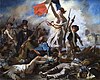
“In the 19th century you had two important events in Europe: the unification of Italy and the unification of Germany, and both of these had a tremendous impact in the Arab world. They saw in this, a model for what they should be able to do, and they tried for a long time to do it. Nasserism is probably the final phase of that movement and, as you know, it failed. Now all the Arab states are independent but no union of Arab states has ever worked. They always fall apart through internal dissension.”
“We are accustomed to talking of church and state, and a whole series of pairs of words that go with them lay and ecclesiastical, secular and religious, spiritual and temporal, and so on. These pairs of words simply do not exist in classical Islamic terminology, because the dichotomy that these words express is unknown. They are used in the modern languages. In Arabic, they borrow the terminology used by Christian Arabs. They are fortunate in having a substantial Christian population using Arabic, and they therefore have a good part of the modern terminology at their disposal, in their own language. In Turkish, Persian, Urdu and other languages of Islam, they had to invent new words.”

“I am inclined to believe in the sincerity of Ahmadinejad. I think that he really believes the apocalyptic language that he is using. Remember that Muslims, like Christians and Jews, have a sort of end-of-time scenario in which a Messianic figure will appear. In their case, in the case of the Shiites, the hidden imam who will emerge from hiding, who will fight against the powers of evil, the anti-Christ in Christianity, Gog and Magog in Judaism, and the Dajjal in Islam, a role in which we are being cast now. And he really seems to believe that the apocalyptic age has come, that this is the final struggle that will lead to the final victory and the establishment of the kingdom of heaven on earth.”
“The three major Middle Eastern religions are significantly different in their relations with the state and their attitudes to political power. Judaism was associated with the state and was then disentangled from it; its new encounter with the state at the present time raises problems which are still unresolved. Christianity, during the first formative centuries of its existence, was separate from and indeed antagonistic to the state with which it only later became involved. Islam from the lifetime of its founder was the state, and the identity of religion and government is indelibly stamped on the memories and awareness of the faithful from their own sacred writings, history, and experience.”

“I feel that while we are indeed engaged in a war against terror, it is inadequate and even misleading. If Churchill had informed the country in 1940, we are engaged in a war against bomber aircraft and submarines, that would have been an accurate statement but not a very helpful one. To say we are engaged in a war against terror is of the same order. Terror is a tactic. It's a method of waging war. It is not a cause, it is not an adversary, it is not anything that one can identify as an opponent, and I think we need to be more specific in fighting a war. It's useful to know who the enemy is. I think you would agree.”

“For the Muslim, religion traditionally was not only universal but also central in the sense that it constituted the essential basis and focus of identity and loyalty. It was religion which distinguished those who belonged to the group and marked them off from those outside the group. A Muslim Iraqi would feel far closer bonds with a non-Iraqi Muslim than with a non-Muslim Iraqi. Muslims of different countries, speaking different languages, share the same memories of a common and sacred past, the same awareness of corporate identity, the same sense of a common predicament and destiny. It is not nation or country which, as in the West, forms the historic basis of identity, but the religio-political community, and the imported Western idea of ethnic and territorial nationhood remains, like secularism, alien and incompletely assimilated.”

“Islam is a very powerful but still an undirected force in politics. As a possible factor in international politics, the present prognosis is not very favorable. There have been many attempts at a pan-Islamic policy, none of which has made much progress. One reason for their lack of success is that those who have made the attempt have been so unconvincing. This still leaves the possibility of a more convincing leadership, and there is ample evidence in virtually all Muslim countries of the deep yearning for such a leadership and a readiness to respond to it. The lack of an educated modern leadership has so far restricted the scope of Islam and inhibited religious movements from being serious contenders for power. But it is already very effective as a limiting factor and may yet become a powerful domestic political force if the right kind of leadership emerges.”

“Islam is one of the world's great religions. Let me be explicit about what I, as a historian of Islam who is not a Muslim, mean by that. Islam has brought comfort and peace of mind to countless millions of men and women. It has given dignity and meaning to drab and impoverished lives. It has taught people of different races to live in brotherhood and people of different creeds to live side by side in reasonable tolerance. It inspired a great civilization in which others besides Muslims lived creative and useful lives and which, by its achievement, enriched the whole world. But Islam, like other religions, has also known periods when it inspired in some of its followers a mood of hatred and violence. It is our misfortune that part, though by no means all or even most, of the Muslim world is now going through such a period, and that much, though again not all, of that hatred is directed against us.”
“Ultimately, the struggle of the fundamentalists is against two enemies, secularism and modernism. The war against secularism is conscious and explicit, and there is by now a whole literature denouncing secularism as an evil neo-pagan force in the modern world and attributing it variously to the Jews, the West, and the United States. The war against modernity is for the most part neither conscious nor explicit, and is directed against the whole process of change that has taken place in the Islamic world in the past century or more and has transformed the political, economic, social, and even cultural structures of Muslim countries. Islamic fundamentalism has given an aim and a form to the otherwise aimless and formless resentment and anger of the Muslim masses at the forces that have devalued their traditional values and loyalties and, in the final analysis, robbed them of their beliefs, their aspirations, their dignity, and to an increasing extent even their livelihood.”

“The evidence for the growth of anti-black prejudice comes in the main from two groups of sources. The first of these is literary, especially poetry and anecdote. Several Arabic poets, of the pre-Islamic and early Islamic periods, are described as "black" and are known collectively, to the literary tradition, as aghribat al-'Arab-"the crows of the Arabs."' Some of them-mostly preIslamic-were Arabs of swarthy complexion; others were of mixed Arab and African parentage. For the latter, and still more for the pure Africans, blackness was an affliction. In many verses and narratives, they are quoted as suffering from insult and discrimination, as showing resentment at this, and yet in some way as accepting the inferior status resulting from their African ancestry. One such was the poet Suhaym (d. 660), born a slave and of African origin. His name, obviously a nickname, might be translated as "little black man." In one poem he laments: 'If my color were pink, women would love me. But the lord has marred me with blackness.'”
“Insulting the Prophet is something that has been going on in Europe for a very long time. In Dante's Inferno, if you're interested in the 28th Canto, where Dante is being taken on his conducted tour of hell and guided by Virgil, he comes across the Prophet Mohammed in the course of his eternal damnation. He is punished I quote Dante's words, as a seminator di scandalo e di scisma, a sower of scandal and of schism. Now, this is very insulting. In the great Cathedral of Bologna there is a wonderful set of pictures painted, if I remember rightly, in the 15th century depicting scenes from Dante's Inferno, including some very graphic pictures of Mohammed being tortured in hell by the devil very graphic.Nobody did anything about this. A couple of years ago, the leaders of the Italian-Muslim community sent a polite request to the cathedral saying these are insulting to Muslims; would they mind covering those pictures. The cathedral administration said they would consider it. Nothing happened. The pictures are still in view.”
Bernard Lewis Quotes by Topic
Find exactly what you are looking for by browsing this categorized list of Bernard Lewis quotes by topic.
Bernard Lewis on Nizaris 4 quotes
“The emergence of the new monarchies, in which one man could determine the politics and religion of the state, made assassination an effective as well as an acceptable weapon.”

Bernard Lewis on History of slavery in the Muslim world 2 quotes
“In one of the sad paradoxes of human history, it was the humanitarian reforms brought by Islam that resulted in a vast development of the slave trade inside, and still more outside, the Islamic empire.”

Bernard Lewis on Islam 2 quotes
“In most Muslim countries Islam is still the ultimate criterion of group identity and loyalty. It is Islam which distinguishes between self and other, between insider and outsider, between brother and stranger.”
Bernard Lewis on Trust
Bernard Lewis on Jihad
“The overwhelming majority of classical theologians, jurists, and traditionalists [i.e., specialists in the hadith] . . . understood the obligation of jihad in a military sense.”

Bernard Lewis on Arabic
“In classical Arabic and in the other classical languages of Islam there are no pairs of terms corresponding to lay and ecclesiastical, spiritual and temporal, secular and religious, because these pairs of words express a Christian dichotomy which has no equivalent in the world of Islam.”
Bernard Lewis on Islamic fundamentalism
“The emancipation of women, more than any other single issue, is the touchstone of difference between modernization and westernization. The emancipation of women is westernization; both for traditional conservatives and radical fundamentalists it is neither necessary nor useful but noxious, a betrayal of true Islamic values.”

Bernard Lewis on Religious conversion
“...it is the duty of those who have accepted them [Allah's word and message] to strive unceasingly to convert or at least to subjugate those who have not. This obligation is without limit of time or space. It must continue until the whole world has either accepted the Islamic faith or submitted to the power of the Islamic state.”

Bernard Lewis on Religious intolerance
“...it is the duty of those who have accepted them [Allah's word and message] to strive unceasingly to convert or at least to subjugate those who have not. This obligation is without limit of time or space. It must continue until the whole world has either accepted the Islamic faith or submitted to the power of the Islamic state.”

Bernard Lewis on Eurabia
“Europe will be part of the Arab West, the Maghreb. This is what migration will mean for demography. Europeans marry late and have little or no children. But it has strong immigration: Turks in Germany, Arabs in France and Pakistanis in England. They marry early and have many children. According to the current trends Europe will have Muslim majorities in the population at the end of the 21st century at the latest.”

Bernard Lewis on Abrahamic religions
“The three major Middle Eastern religions are significantly different in their relations with the state and their attitudes to political power. Judaism was associated with the state and was then disentangled from it; its new encounter with the state at the present time raises problems which are still unresolved. Christianity, during the first formative centuries of its existence, was separate from and indeed antagonistic to the state with which it only later became involved. Islam from the lifetime of its founder was the state, and the identity of religion and government is indelibly stamped on the memories and awareness of the faithful from their own sacred writings, history, and experience.”

Bernard Lewis on Islamic views on slavery
“Though slavery was maintained, the Islamic dispensation enormously improved the position of the Arabian slave, who was now no longer merely a chattel but was also a human being with a certain religious and hence a social status and with certain quasi-legal rights. The early caliphs who ruled the Islamic community after the death of the Prophet also introduced some further reforms of a humanitarian tendency. The enslavement of free Muslims was soon discouraged and eventually prohibited. It was made unlawful for a freeman to sell himself or his children into slavery, and it was no longer permitted for freemen to be enslaved for either debt or crime, as was usual in the Roman world and, despite attempts at reform, in parts of Christian Europe until at least the sixteenth century.”

What Bernard Lewis Said About Others
Discover personal opinions Bernard Lewis shared regarding contemporaries.
Bernard Lewis on Ruhollah Khomeini
Bernard Lewis on Women in Islam
“The emancipation of women, more than any other single issue, is the touchstone of difference between modernization and westernization. The emancipation of women is westernization; both for traditional conservatives and radical fundamentalists it is neither necessary nor useful but noxious, a betrayal of true Islamic values.”

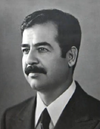
Bernard Lewis on Saddam Hussein
“What we have now come to regard as typical of Middle Eastern regimes is not typical of the past. The regime of Saddam Hussein, the regime of Hafiz al Assad, this kind of government, this kind of society, has no roots either in the Arab or in the Islamic past. It is due and let me be quite specific and explicit it is due to an importation from Europe, which comes in two phases.”
Bernard Lewis on Ibn Khaldun
“While it is true that many Muslim scholars who composed their works in Arabic, both in the religious and in the intellectual sciences, have been of non-Arab descent, Ibn Khaldūn's use of the term Arab in his history seems to indicate a class of people and not a group. Most scholars believe that, in many instances, Ibn Khaldūn uses the name Arab to mean bedouin. Other scholars, such as Mohamed Chafik, deny this.”

Bernard Lewis on Gamal Abdel Nasser
“In the 19th century you had two important events in Europe: the unification of Italy and the unification of Germany, and both of these had a tremendous impact in the Arab world. They saw in this, a model for what they should be able to do, and they tried for a long time to do it. Nasserism is probably the final phase of that movement and, as you know, it failed. Now all the Arab states are independent but no union of Arab states has ever worked. They always fall apart through internal dissension.”

Bernard Lewis on Muslim world
“To the modern Western mind, it is not conceivable that men would fight and die in such numbers over mere differences of religion; there have to be some other “genuine” reasons underneath the religious veil. We are prepared to allow religiously defined conflicts to accredited eccentrics like the Northern Irish, but to admit that an entire civilization can have religion as its primary loyalty is too much. Even to suggest such a thing is regarded as offensive by liberal opinion, always ready to take protective umbrage on behalf of those whom it regards as its wards. This is reflected in the present inability, political, journalistic, and scholarly alike, to recognize the importance of the factor of religion in the current affairs of the Muslim world and in the consequent recourse to the language of left-wing and right-wing, progressive and conservative, and the rest of the Western terminology, the use of which in explaining Muslim political phenomena is about as accurate and as enlightening as an account of a cricket match by a baseball correspondent.”
Bernard Lewis on Muhammad
“On 8 June 632, according to the tradional biography, the Prophet died after a short illness. He had achieved a great deal. To the pagan peoples of western Arabia he had brought a new religion which, with its monotheism and its ethical doctrines, stood on an incomparably higher level than the paganism it replaced. He had provided that religion with a revelation which was to become in the centuries to follow the guide to thought and count of countless millions of Believers. But he had done more than that; he had established a community and a well organized and armed state, the power and prestige of which made it a dominant factor in Arabia. What then is the final significance of the career of the Arabian Prophet? For the tradiotional Muslim the question scarcely arises. Muhammad was the last and greatest of the Apostles of God, sent as the Seal of Prophecy to bring the final revelation of god's word to mankind. His career and success were fore-ordained and inevitable and needed no the pious fantasy of later generations of believers clothed the dim figure of the Prophet with a rich and multi-coloured fabric of fable, legend, and miracle, not realizing that by diminishing his essential historic humanity they were robbing him of one of his most attractive qualities.”
Quotes About Bernard Lewis
Gain deeper perspective through quotes about Bernard Lewis from others.
Pascal Bruckner on Bernard Lewis
“In Europe, the Palestinian question has quietly relegitimated hatred of the Jews. Here we can certainly agree with Bernard Lewis when he says that for many of their supporters, “the Arabs are in truth nothing more than a stick for beating the Jews.””

Dominic Green on Bernard Lewis
“Lewis was a superb historian, probably the last in the line of the Western Orientalists. He educated millions through his books, rather than indoctrinating dozens through his lectures. He got the big questions right, and correctly foresaw the moral and political breakdown of the Islamic world. But when it came to the invasion of Iraq, his professional opinion was wrong. It could have been worse. Most of the time, historians don’t even predict the past correctly.”
About Bernard Lewis
Bernard Lewis (31 May 1916 – 19 May 2018) was a British historian specializing in oriental studies.