Link Copied!
Arthur Waley Quotes (1889-1966)
Poet
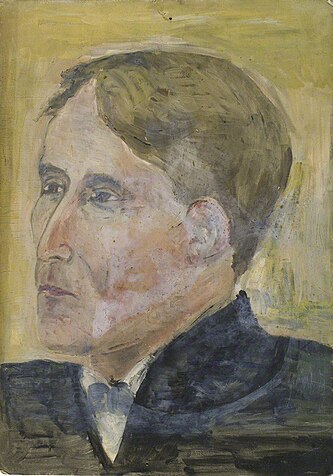

About Arthur Waley
Arthur David Waley (born Arthur David Schloss, 19 August 1889 – 27 June 1966) was an English Orientalist and sinologist who achieved both popular and scholarly acclaim for his translations of Chinese and Japanese poetry.
Best Arthur Waley Quotes
Shortest
Earliest
Explore our curated collection of the most famous and impactful Arthur Waley quotes.
“I would rather be dead.”
“It is in general the unexplored that attracts us.”
“A handful of one's country's soil is worth more than ten thousand pounds of foreign gold.”
“Ceaseless as the interminable voices of the bell-cricket, all night till dawn my tears flow.”
“'Nothing in the world is difficult,' said the Patriarch, 'it is only our own thoughts that make things seem so.'”
“Since the classical language has an easy grammar and limited vocabulary, a few months should suffice for the mastering of it.”


“Anything whatsoever may become the subject of a novel, provided only that it happens in this mundane life and not in some fairyland beyond our human ken.”
“I have not used rhyme, because what is really, in the long run, of most interest to American readers is what the poems say; and if one uses rhyme, it is impossible not to sacrifice sense to sound.”
“When translating prose dialogue one ought to make the characters say things that people talking English could conceivably say. One ought to hear them talking, just as a novelist hears his characters talk.”
“To the European poet the relation between man and woman is a thing of supreme importance and mystery. To the Chinese, it is something commonplace, obvious—a need of the body, not a satisfaction of the emotions.”

“Tripitaka stepped lightly ashore. He had discarded his earthly body; he was cleansed from the corruption of the senses, from the fleshly inheritance of those bygone years. His was now the transcendent wisdom that leads to the Further Shore, the mastery that knows no bounds.”

“'Insensate groom! What crime is there that you have not committed? You have stolen peaches and stolen wine, upset the high feast, purloined Lao Tzu's elixir, and then taken more wine for your banquet here. You have piled up sin upon sin; do you not realize what you have done?' 'Quite true,' said Monkey, 'all quite true. What are you going to do about it?'”
“Suddenly they saw a body in the water, drifting rapidly down stream. Tripitaka stared at it in consternation. Monkey laughed. 'Don't be frightened, Master,' he said. 'That's you.' And Pigsy said, 'It's you, it's you.' Sandy clapped his hands. 'It's you, it's you,' he cried. The ferryman too joined in the chorus. 'There you go!' he cried. 'My best congratulations.'”
“'To hope for [immortality],' said the Patriarch, 'would be like trying to fish the moon out of the water.'
'There you go again!' said Monkey. 'What pray do you mean by fishing the moon out of the water?'
'When the moon is in the sky,' said the Patriarch, 'it is reflected in the water. It looks just like a real thing, but if you try to catch hold of it, you find it is only an illusion.'”
'There you go again!' said Monkey. 'What pray do you mean by fishing the moon out of the water?'
'When the moon is in the sky,' said the Patriarch, 'it is reflected in the water. It looks just like a real thing, but if you try to catch hold of it, you find it is only an illusion.'”
“There was a rock that since the creation of the world had been worked upon by the pure essences of Heaven and the fine savours of Earth, the vigour of sunshine and the grace of moonlight, till at last it became magically pregnant and one day split open, giving birth to a stone egg, about as big as a playing ball. Fructified by the wind it developed into a stone monkey, complete with every organ and limb.”

“I have a theory of my own about what this art of the novel is, and how it came into being. To begin with, it does not simply consist in the author's telling a story about the adventures of some other person. On the contrary, it happens because the storyteller's own experience of men and things, whether for good or ill—not only what he has passed through himself, but even events which he has only witnessed or been told of—has moved him to an emotion so passionate that he can no longer keep it shut up in his heart.”
“'Master, we can start now; I have killed them all.'
'I am very sorry to hear it,' said Tripitaka. 'One has no right to kill robbers, however violent and wicked they may be. The most one may do is to bring them before a magistrate. It would have been quite enough in this case if you had driven them away. Why kill them? You have behaved with a cruelty that ill becomes one of your sacred calling.'
'If I had not killed them,' said Monkey, 'they would have killed you.'
'A priest,' said Tripitaka, 'should be ready to die rather than commit acts of violence.'”
Arthur Waley Quotes by Topic
Find exactly what you are looking for by browsing this categorized list of Arthur Waley quotes by topic.
Arthur Waley on Journey to the West 2 quotes
“Monkey is unique in its combination of beauty with absurdity, of profundity with nonsense. Folk-lore, allegory, religion, history, anti-bureaucratic satire and pure poetry—such are the singularly diverse elements out of which the book is compounded.”
Arthur Waley on Dream of the Red Chamber
“Dream of the Red Chamber, so revolutionary in many ways, is nevertheless easily recognizable as the descendant of these [All Men Are Brothers, Monkey, and Romance of Three Kingdoms] three great popular romances. It has their inordinate length (it is certain that The Red Chamber, as planned by Tsao, ran to at least a hundred chapters), their lack of faith in the interestingness of the everyday world, leading to the conviction that a realistic story must necessarily be set in a supernatural framework. It has the story-teller's tendency to put far more art into the technique of the individual séance or chapter, than into the construction of the work as a whole. It has the same moralizing tendency; for, as I have said, Chinese fiction is always on the defensive—is always, with an eye on official Puritanism, trying to prove that, like serious and approved literature, it has a "message." In The Red Chamber indeed this message is reserved for the later chapters, which Tsao did not live to complete. But we know that the edifying final episodes (for example, Pao-Yu's entry into the Buddhist Church) were part of the author's original plan. But the Dream of the Red Chamber is unlike all previous Chinese novels in that Tsao, instead of embroidering upon existing legends or histories, describes a group of people wholly unknown to the reader; and stranger innovation still, these people (as Dr. Hu Shih has proved) are the author and his family. All realistic novels are, of course, autobiographical, the writer's knowledge of realities being drawn chiefly from his own experience. But The Red Chamber is autobiographical in a more complete sense. Indeed, one even feels that, were it not for the rigid framework imposed by tradition, Tsao might easily have fallen into the error of transcribing with too careful a fidelity the monotonies of actual life. [...] It is in his accounts of dreams that as an imaginative writer Tsao Hsueh-Chin rises to his greatest heights; and it is in these passages that we feel most clearly the symbolic or universal value of his characters—Pao-Yu, the hero, standing for Imagination and Poetry; his father, for all those sordid powers of pedantry and restriction that hamper the artist in his passage through life.”
What Arthur Waley Said About Others
Discover personal opinions Arthur Waley shared regarding contemporaries.
Arthur Waley on Wang Chi-chen
“The translation is singularly accurate, and the work of adaptation skillfully performed.”
Quotes About Arthur Waley
Gain deeper perspective through quotes about Arthur Waley from others.
William Empson on Arthur Waley
“A large capacity to accept the assumptions of any world-view, without assuming any merit for our own, is the basic virtue of Waley's mind.”

David Hawkes on Arthur Waley 3 quotes
“He belonged not only to the world of oriental studies, but to the world of literature.”
Kenneth Rexroth on Arthur Waley
“Waley is a special case. He is a fine poet who has deliberately limited himself, as a kind of rigorous aesthetic discipline—a little like the self-imposed rigors of Paul Valéry—to translation from the Chinese and Japanese.”

About Arthur Waley
Arthur David Waley (born Arthur David Schloss, 19 August 1889 – 27 June 1966) was an English Orientalist and sinologist who achieved both popular and scholarly acclaim for his translations of Chinese and Japanese poetry.
QuotesCosmos Cross-Civilizational Archive
Explore Related Wisdom Pillars, Worldviews & Canonical Works
Discover how humanity's greatest philosophers, sacred scriptures, and literary masterpieces address the core questions of existence.
30 Wisdom Pillars
22 Worldviews & Traditions
Canonical Books & Scriptures