Link Copied!
Arnold Hano Quotes (1922-2021)
King, Novelist

About Arnold Hano
Arnold Philip Hano ((March 2, 1922 – October 24, 2021) was an American editor, novelist, biographer and journalist, best known for his non-fiction work, A Day in the Bleachers, a critically acclaimed eyewitness account of Game 1 of the 1954 World Series, centered around its pivotal play, Willie Mays' famous catch and throw.
Best Arnold Hano Quotes
Shortest
Earliest
Explore our curated collection of the most famous and impactful Arnold Hano quotes.
“When you think of natural ballplayers, only two come into mind, Babe Ruth and Willie Mays.”

“He's not really a difficult interview. You just have to catch the essence and rhythm of what he's saying. I'd ask him how baseball has changed over the past 25 years and he'd start telling me about his life as a dental student in Kansas City.”
“He always threw to the right base. We say that about most outfielders. Ruth always threw to the right base. DiMaggio always threw to the right base. The others maybe did, maybe didn’t. Mays most of the time threw to the right base, but Ruth always threw to the right base.”
“Is there a solution? Probably not. Yet there is a glimmer of hope, and on my last days here, I offer it to you, gratis. Incorporate every township and village in the county. Take them out of the county's jurisdiction. Give the county supervisors nothing to do. They do it so well; why deprive them?”

“All the great people and great things in life are failures. It is in doing what we cannot do but must try to do that humans rise to their exalted fulfillment. Maglie had tried to do with an old man’s arm and back what a young man might not have been able to do as well. Of such failures is greatness made.”
“She snorted. My wife has three ways of showing disapproval. She harangues loud and long when she is not very sure of her position. Or she may be entirely silent when she is terribly sure. This is usually an act of kindness on her part, as though she were dealing with a dumb animal. Or, lastly, she may snort. This means, I have at last learned, that she disagrees, that she thinks I am a dumb animal, and by God, kindness can go just so far.”

“I enjoyed that interview. He's a guy who not only says what he means but backs it up, too. I'll never forget the night I interviewed him. It was a rainy night at his house in L.A. and I kept looking outside on the lawn. He had this big black Doberman he called Rommel, and it sat out there in the rain eating a chaise lounge.”

“Jim Thompson. Dead 14 years next month. The Academy Awards are upon us, and as I write this, I do not know what's been nominated for what. But I have a hunch this is the year of Thompson. I believe somebody famous will stand there to thank God and Swifty Lazar, if you can tell the difference, and then with a stifled sob, add a special thanks to Jim Thompson. And people will stand and cheer his name. I only hope Alberta is right, and that Jimmy hears the applause. But I doubt it. Jim Thompson stories seldom have happy endings.”
“He wanted to win so badly it killed him. But before it killed him, it elevated the game of baseball, at the Polo Grounds, to a grim spectacle of play-war. The analogy fits McGraw. He reminds you more of a battlefield general than he does a sportsman, and if he reminds you of a general, it would be a man who combined the fury of a Patton and the spectacular, yet knowledgeable, flair of MacArthur. Perhaps this desire to win occasionally overflowed its normal limits and became an obsession; perhaps the grimness darkened the sport at times. This was his weakness, for McGraw was not infallible; McGraw was not perfect. Perfection is lifeless, mechanical, uncaring. McGraw was never uncaring. If he was anything, he was a man who cared.”
“In that one moment, during an era in which sluggers threatened to take over the sport, Carl Hubbell had restored to pitching its true eminence. The man with skill in his arm, courage in his heart, and craft in his brain, could still set down the brute man with the club. It meant more than a man striking out great hitters; it stood for baseball's interpretation of man's growth. We have come away from men with clubs and dim brains. Hubbell's performance those five outs was baseball's way of representing all this, of representing the contest between brains and brawn. Never was brawn so thoroughly routed.”

“He reacts to many things bitterly, this pleasant, smiling young man, who is 32 years old, married now, with two sons, a sports hero here and back home in Puerto Rico. Clemente reacts to things bitterly because he is an honest man, and a feeling one. Baseball has become a game of automatons performing in mechanical ways. Scoreboards now tell you when to cheer. The words "Go-go-go" light up, and you obediently recite, "Go-go-go." A bugle sounds, and reflexively you murmur, "Charge!" Roberto Clemente is a throwback, as are many of his Latin cohorts—which means he has his flaws. Anger can twist him almost helpless with rage. But it has also made him not only a leader of men—automatons are poor leaders—but also a spokesman for his people. He spoke out, during 1966, in an Associated Press dispatch of August 23...”
“Sometimes in his last years they’d take him out after maybe seven innings and put in Sammy Byrd or some other right fielder for defensive purposes because he was getting pretty out of shape. And we kids, we knew better, we knew the rule, but we’d yell “We want the Babe! We want the Babe!” from the seventh inning until the ninth inning. Once in a while he’d come out of the dugout and he’d lift up his cap or do something like that. We knew he couldn’t come back into the lineup, but that didn’t stop us. That’s the way we were. We loved him, and he loved us, which was very nice. A great combination. I’d see him in his great polo coat on Broadway sometimes, with his jaunty cap, and his wife and daughter walking along. He was just wonderful.”
“Mantle played ball almost under a shroud of depression, because he always thought he was going to die an early death. But Mays probably thinks he's going to live forever. Mantle acted like a man who was doomed. Mays never did, even though he played long beyond his ability. I talked to Willie after the 1973 World Series, in which he looked terrible. I said, "What were you doing out there, Willie?" "Oh, I was having fun!" he told me. Mantle never had fun. Mays, on the other hand, seemed to be inoculated from all the pressure. He simply went beyond the usual frames of reference. If I were writing this, I'd say that he went beyond the usual frames of reverence. That's the way we all felt, and I think it was true for not only the press, but also for managers and other players. And this bled into the other pages of the newspaper.”
“The impregnability of his stonewall defense rested on his ability to reach the ball, and then throw it. Now he could move less well; now he was not coming up with the ball with that "perfect technique" Eddie Brannick had once admired, his body beautifully balanced, the ball directly in front of him. Now it was a movement full of desperate lunges. Fortunately he had his great arm, so even off-balance, he was throwing out runners, and each time he'd throw—though it had happened hundreds of prior times—the fans at the Polo Grounds, or elsewhere around the league, would gasp at the low blur that streaked across the diamond, dead on target. But he had more than a powerful arm. He had courage. And on he played, in pain and out.”
“I’m the luckiest fan in the history of the world. When I was a copy boy at the Daily News, I was sitting in the Ebbets Field press box when that ball got away from Mickey Owen. I won a limerick contest and I sat in right field and watched Don Larsen pitch his perfect game. Now, I had to be smart to write the limerick, but Larsen had been bombed in the previous outing in that Series, he could’ve been bombed again. It could’ve been an 11–9 ballgame.”
“Jim Dilley, the father of the Laguna Greenbelt, used to take roses to the secretaries of the county Board of Supervisors when he'd go to do battle over open space with the secretaries' bosses. Jim Dilley was a nice man, kind and gentle. He smoked a pipe. His eyes twinkled as though he knew a joke the rest of us didn't. But he's dead, and the Board is still alive, and that is a joke on us of monstrous proportions. I'm not nice, kind or gentle. The Board keeps rubber-stamping building permits, and this is my goodbye to these shores. After 36 years, my wife and I will soon leave Orange County for Costa Rica, to join the Peace Corps, and that, too, is a joke. We traipse off to bring peace to Costa Rica, which hasn't had an army since 1948.”
“The huge church is burrowed into ancient mountains. By elevator you rise up through the mountain to the foot of a giant cross that soars nearly 500 feet into an intense blue sky, its arms spreading 300 feet. The four Evangelists who crouched at the base are 28 feet high, carved out of stone. All Spain comes to the Valley of the Fallen for its moment of meditation. It is a wondrous work, but it never lets you forget that it marks one of man's most ghastly works—war. But war—like all pain—is soon forgotten. New generations are born. And in Madrid you see families together, voluble, chattering, touching each other, husbands, wives, children. They smile at each other, and at you. And you smile back. For that is the true Madrid. It embraces you. It loves you. Soon, you love it back.”

“Jim was a big sheepdog of a man, 6-feet-4, 250 pounds, softhearted, soft-spoken. I never heard him use a dirty word; I never heard him tell a salacious story. Yet his novels are full of such words and stories; he seemed to have a need to dig deeply into the dark depraved nature of man. Nobody did it better. But then, anything he did, he did better. Two years ago, crippled by strokes, he appeared in a film, "Farewell, My Lovely," playing the cuckolded judge. When his wife in the film, played by Charlotte Rampling, carries on with Robert Mitchum in front of him, there is a look on his face that is part bewilderment, part despair and all forgiveness. He was that way, turning up the dark corners of the soul with love and forgiveness.”
“Nobody ever wrote so well so fast as Jim. One year he wrote, and we published, nine novels. It was an obsession. Back in 1941, his father had been in an asylum in Oklahoma City, begging Jim to get him out. Jim needed money to get him out, so he said to his father, "Give me a month, and I'll raise the money." His father brightened, because Jim never went back on his word. Jim took a bus to New York City and went door to door to the publishing houses, asking for money for a hotel room, a rented typewriter and meals so he could write a novel. Finally, at Modern Age, they took a chance, and in 10 days he wrote a novel. But things being what they are in publishing, it was a month plus one day before Jim got his advance. The same day, a telegram arrived. His father had committed suicide, ripping the excelsior out of his mattress and stuffing it down his throat. When Jim would drink he would sometimes cry and say, "Why couldn't he have waited another day? Didn't he trust me?"”
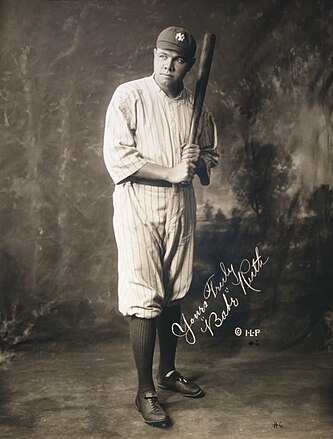
“So we went to see Babe Ruth pitch the last game of the 1933 season. The Senators had already clinched the pennant, the Giants had clinched in the other league, so this was just a nothing game. I thought maybe he’d make an appearance, pitch an inning or two or three – he pitched a complete game. He hadn’t pitched a complete game since 1930, and then he pitched a complete game. And before that he had pitched two four-inning stints for the Yankees, so he pitched four times. So he pitched a complete game, he gave up twelve hits, it was not a great pitching performance, but the Yankees won, 7-5. He didn’t strike out a soul. Years later I saw him on Broadway. I went up to him and said, “Hi, Babe.” He said, “Hi, kid.” That’s the way he treated everybody. I said, “You know, I saw you pitch your last game at the Stadium.” This was maybe eight years later or so. I said, “How come you didn’t strike out anybody?” And he said, “I wanted those other eight guys to earn their money!” And that was Ruth.”

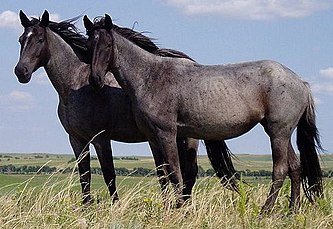
“"It was not always so," he said slowly. "When I was a boy—stealing horses was not a crime. It was the way of a brave man, a warrior. Horses then served the purposes of the tribe." He could tell them more, but what he could tell them would perhaps disgust them, confuse them. He had told them enough. Tomacito could have told how Indian tribes rode horses, and when the horses grew old and useless, or when the tribe grew desperate for hunger or for shelter, they drank their horses' blood, stripped their hides for teepees, ate the flesh. Cruel, yes, but necessary. They bought horses, traded for horses, and if they had to—and often they had to—they stole horses. The Spaniards came, and then the white man, and they had horses, and the Indians had none, in the beginning. The white man and the Spaniard, on horses, chased the Indian from his own land. The Indians, on foot, were easy to chase, to hunt down, and kill. With horses, the Indians could stand and fight and die, or run and hide and live a little longer. It was an unfair fight from the start, even with horses, but without horses, it wasn't a fight at all. It was a massacre.”
“One day I saw the combative Giants shortstop Billy Jurges confront umpire George Magerkurth, on a call Jurges violently objected to, the two men standing jaw to jaw, raging invective at each other. A faint spray of saliva emitted from Magerkurth's mouth; Jurges stepped back and uncorked his own oyster of spittle, right in the umpire's face. Magerkurth slugged Jurges, who slugged him back, and the two men rolled on the infield grass, clawing at each other until they were pried apart. Jurges, of course, was tossed out of the game and suspended for a spell, his place at shortstop taken over by the mild-mannered prematurely gray utility infielder, Lou Chiozza. The very next day, Chiozza ran out to short left field, chasing a pop fly, while in rushed Joe Moore, from his left field post. The result was a noisy collision, which sent Chiozza to the hospital, marking the first and only time one player's spittle had broken another player's leg.”
“Nor was my attendance at the Polo Grounds limited to baseball games. I sat in the lower left field stands to watch the championship professional football game between the undefeated Chicago Bears led by Bronc Nagurski and the New York Giants. Because the field was so icy slick—the temperature dipped to four degrees above zero that Sunday afternoon—the Giants' owner Wellington Mara had a minion at halftime break into Manhattan College's gymnasium and steal the school's basketball sneakers. Clad in sneakers and suddenly able to keep from sliding all over the joint, the Giants turned a 13-3 deficit into a 30-13 victory. All this despite an advisory to his teammates from a former Chicago linebacker named George Halas, "Step on their toes! Step on their toes!"”

“Now it was Liddle, jerking into motion as Wertz poised at the plate, and then the motion smoothed out and the ball came sweeping in to Wertz, a shoulder-high pitch, a fast ball that probably would have been a fast curve, except that Wertz was coming around and hitting it, hitting it about as hard as I have ever seen ball hit, on a high line to dead center field. For whatever it is worth, I have seen such hitters as Babe Ruth, Lou Gehrig, Ted Williams, Jimmy Foxx, Ralph Kiner, Hack Wilson, Johnny Mize, and lesser-known but equally long hitters as Wally Berger and Bob Seeds send the batted ball tremendous distances. None, that I recall, ever hit a ball any harder than this one by Wertz in my presence.”
Arnold Hano Quotes by Topic
Find exactly what you are looking for by browsing this categorized list of Arnold Hano quotes by topic.
Arnold Hano on Horses 2 quotes
“"It was not always so," he said slowly. "When I was a boy—stealing horses was not a crime. It was the way of a brave man, a warrior. Horses then served the purposes of the tribe." He could tell them more, but what he could tell them would perhaps disgust them, confuse them. He had told them enough. Tomacito could have told how Indian tribes rode horses, and when the horses grew old and useless, or when the tribe grew desperate for hunger or for shelter, they drank their horses' blood, stripped their hides for teepees, ate the flesh. Cruel, yes, but necessary. They bought horses, traded for horses, and if they had to—and often they had to—they stole horses. The Spaniards came, and then the white man, and they had horses, and the Indians had none, in the beginning. The white man and the Spaniard, on horses, chased the Indian from his own land. The Indians, on foot, were easy to chase, to hunt down, and kill. With horses, the Indians could stand and fight and die, or run and hide and live a little longer. It was an unfair fight from the start, even with horses, but without horses, it wasn't a fight at all. It was a massacre.”
What Arnold Hano Said About Others
Discover personal opinions Arnold Hano shared regarding contemporaries.
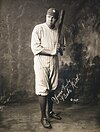
Arnold Hano on Babe Ruth 2 quotes
“He always threw to the right base. We say that about most outfielders. Ruth always threw to the right base. DiMaggio always threw to the right base. The others maybe did, maybe didn’t. Mays most of the time threw to the right base, but Ruth always threw to the right base.”
Quotes About Arnold Hano
Gain deeper perspective through quotes about Arnold Hano from others.
Roger Kahn on Arnold Hano
“When this book first appeared in the enchanted island of the 1950s, I was struck both by Arnold Hano's writing style and his daring. The writing is what amateurs call effortless. Reading A Day in the Bleachers, you concentrate on the day, the game, the ball players, the fans, without much awareness of a man at a typewriter grunting and straining through the non-anesthetized labor that precedes the birth of a book. The scene and Mr. Hano's comments simply flow. Everyone who has written seriously knows that sustaining a flowing style is about as effortless as cleaning the Augean stables with a water pistol. [...] This book is about the bleachers, the people on the wooden benches and the ball players beyond. It is about a time and a team and a ball park that are gone. It is the first, and perhaps the best, of all the books written from the point of view of the man in the stands and I am glad to see it get a second chance.”

About Arnold Hano
Arnold Philip Hano ((March 2, 1922 – October 24, 2021) was an American editor, novelist, biographer and journalist, best known for his non-fiction work, A Day in the Bleachers, a critically acclaimed eyewitness account of Game 1 of the 1954 World Series, centered around its pivotal play, Willie Mays' famous catch and throw.
QuotesCosmos Cross-Civilizational Archive
Explore Related Wisdom Pillars, Worldviews & Canonical Works
Discover how humanity's greatest philosophers, sacred scriptures, and literary masterpieces address the core questions of existence.
30 Wisdom Pillars
22 Worldviews & Traditions
Canonical Books & Scriptures