Arnold Hano on Horses
← Back to Arnold Hano Profile
“"It was not always so," he said slowly. "When I was a boy—stealing horses was not a crime. It was the way of a brave man, a warrior. Horses then served the purposes of the tribe." He could tell them more, but what he could tell them would perhaps disgust them, confuse them. He had told them enough. Tomacito could have told how Indian tribes rode horses, and when the horses grew old and useless, or when the tribe grew desperate for hunger or for shelter, they drank their horses' blood, stripped their hides for teepees, ate the flesh. Cruel, yes, but necessary. They bought horses, traded for horses, and if they had to—and often they had to—they stole horses. The Spaniards came, and then the white man, and they had horses, and the Indians had none, in the beginning. The white man and the Spaniard, on horses, chased the Indian from his own land. The Indians, on foot, were easy to chase, to hunt down, and kill. With horses, the Indians could stand and fight and die, or run and hide and live a little longer. It was an unfair fight from the start, even with horses, but without horses, it wasn't a fight at all. It was a massacre.”
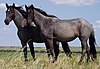
“You have seen bigger horses than his thirteen and a half, perhaps fourteen hands, his nine hundred pounds. You have seen handsomer profiles than this Roman nose, slightly convex. Burrs cling to his long sweeping tail. His coat is dark and unglossed. Yet look again, while he is still, for he will not be still long. Sense the vitality in those muscles, trembling beneath the skin; see the pride in that high head, hear the haughty command to his voice. For this is a wild horse, my friend. Once he claimed the western range. Then they took his range away from him. But nothing, no one claims him. He feels the wind and the air with his nose, with his ears, with his very soul, and what he feels is good. He tosses his head, once, quickly, and behind him his harem of six mares trot up to join him, and behind them, a yearling colt, a filly and two stork-legged foals. Coats dusty and chewed, tails spiked with bits of the desert, sage and nettle and leftover pine needles from winter climbs down from timberland. The Barb-nosed stallion led his family down to the waterhole. Not Barb from barbed wire, though perhaps the chewed skin was from barbed wire, but Barb from the Spanish horses from which he descended, brought to the New World over four hundred years ago, from the Barbary states of North Africa, Tunisia, Morocco, Algeria, Fez, [[]w:Tripoli|Tripoli]]. Indians stole them from the Spaniards; the Barbs stole themselves free from the Indians. Running wild, a few still run free.”