Link Copied!
Antonio Gramsci Quotes (1891-1937)
Writer, Politician, Leader
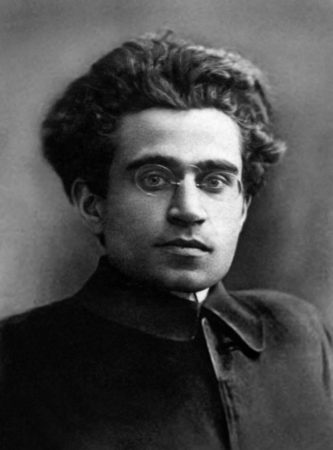


About Antonio Gramsci
Antonio Gramsci (23 January 1891 – 27 April 1937) was an Italian writer, politician and political theorist. A founding member and onetime leader of the Communist Party of Italy, he was imprisoned by Mussolini's Fascist regime.
Best Antonio Gramsci Quotes
Shortest
Earliest
Explore our curated collection of the most famous and impactful Antonio Gramsci quotes.
“I’m a pessimist because of intelligence, but an optimist because of will.”

“All men are intellectuals: but not all men have in society the function of intellectuals.”
“La crisi consiste appunto nel fatto che il vecchio muore e il nuovo non può nascere: in questo interregno si verificano i fenomeni morbosi piú svariati.”
“Revolutionaries see history as a creation of their own spirit, as being made up of a continuous series of violent tugs at the other forces of society - both active and passive, and they prepare the maximum of favourable conditions for the definitive tug (revolution).”
“Economy and ideology. The claim (presented as an essential postulate of historical materialism) that every fluctuation of politics and ideology can be presented and expounded as an immediate expression of the structure, must be contested in theory as primitive infantilism, and combated in practice with the authentic testimony of Marx, the author of concrete political and historical works.”

“For two years I have lived outside the world: in a dream world. One by one, I let each strand tying me to the world and to my fellow men be cut. I live entirely for the mind, for the heart not at all …. I turned myself into a bear, inside and outside … other people did not exist for me. For perhaps two years, I didn’t laugh once and I didn’t cry … but I never hurt anyone but myself.”

“The history of education shows that every class which has sought to take power has prepared itself for power by an autonomous education. The first step in emancipating oneself from political and social slavery is that of freeing the mind. I put forward this new idea: popular schooling should be placed under the control of the great workers’ unions. The problem of education is the most important class problem.”

“We can see that in putting the question "what is man?" what we mean is: what can man become? That is, can man dominate his own destiny, can he "make himself," can he create his own life? We maintain therefore that man is a process and, more exactly, the process of his actions. If you think about it, the question itself "what is man?" is not an abstract or "objective" question. It is born of our reflection about ourselves and about others, and we want to know, in relation to what we have thought and seen, what we are and what we can become; whether we really are, and if so to what extent, "makers of our own selves," of our life and of our destiny. And we want to know this "today," in the given conditions of today, the conditions of our daily life, not of any life or any man”

“When I was a child the boys of the town never came near me except to make fun of me. I was almost always alone. Sometimes, finding me by chance among them, they hurled themselves against me, and not only with words. One day – and while he told me this his great eyes shone with an inner light - … they started to throw stones at me with more violence than usual, with the evilness which is found among children and the weak. I lost patience, and grabbing stones I too started to defend myself with such energy that my attackers were put to flight. Mario, I succeeded in beating them: I terrified them to such an extent that from that day they respected me and no longer annoyed me. I ran to my mother … and told her of my first victorious battle: she kissed me tenderly and it was the best prize that I could have wanted.”
“I can’t think why Delio [son] has not been told that I’m in prison, and why no one reflected that he might then find out about it indirectly, that is, in the most disagreeable way for a child, who then begins to doubt the truthfulness of those educating him, to think about it on his own account and draw apart. At least, that was my experience as a child: I remember it perfectly . . . I believe in treating children as rational creatures with whom it is possible to discuss even the most serious matters. This makes a very profound impression on them, it strengthens their character and above all it avoids leaving their development at the mercy of random environmental pressures and casual, impersonal encounters. It really is very strange how grown-ups forget they were children themselves, and make no use of their own experiences. For my part, I recall vividly how offended I was at every discovery of a subterfuge, even if it was meant to keep painful facts from me, and how this shut me up within myself and made me withdraw.”

“It is all a matter of comparing one’s own life with something worse and consoling oneself with the relativity of human fortunes. When I was eight or nine I had an experience which came clearly to mind when I read your advice. I used to know a family in a little village near mine: father, mother and sons: they were small landowners and had an inn. Very energetic people, especially the woman. I knew (I had heard) that besides the sons we knew, this woman had another son nobody had seen, who was spoken of in whispers, as if he were a great disgrace for the mother, an idiot, a monster or worse. I remember that my mother referred to this woman often as a martyr, who made great sacrifices for this son, and put up with great sorrows. One Sunday morning about ten, I was sent to this woman’s: I had to deliver some crocheting and get the money. I found her shutting the door, dressed up to go out to mass, she had a hamper under her arm. On seeing me she hesitated then decided. She told me to accompany her to a certain place, and that she would take delivery and give me the money on our return. She took me out of the village, into an orchard filled with rubbish and plaster; in one corner there was a sort of pig sty, about four feet high, and windowless, with only a strong door. She opened the door and I could hear an animal-like howling. Inside was her son, a robust boy of 18, who couldn’t stand up and hence scraped along on his seat to the door, as far as he was permitted to move by a chain linked to his waist and attached to the ring in the wall. He was covered with filth, and his eyes shone red, like those of a nocturnal animal. His mother dumped the contents of her basket – a mixed mess of household leftovers – into a stone trough. She filled another trough with water, and we left. I said nothing to my mother about what I had seen, so great an impression it had made on me, and so convinced was I that nobody would believe me. Nor when I later heard of the misery which had befallen that poor mother, did I interrupt to talk of the misery of the poor human wreck who had such a mother.”
Antonio Gramsci Quotes by Topic
Find exactly what you are looking for by browsing this categorized list of Antonio Gramsci quotes by topic.
Antonio Gramsci on History 3 quotes
View all 3 quotes on History →Antonio Gramsci on Truth
Antonio Gramsci on Bureaucracy
“The bureaucracy is the most dangerously hidebound and conservative force; if it ends up by constituting a compact body, which stands on its own and feels itself independent of the mass of members, the party ends up by becoming anachronist and at moments of acute crisis it is voided of its social content and left as though suspended in mid-air.”

Antonio Gramsci on Historical materialism
“Economy and ideology. The claim (presented as an essential postulate of historical materialism) that every fluctuation of politics and ideology can be presented and expounded as an immediate expression of the structure, must be contested in theory as primitive infantilism, and combated in practice with the authentic testimony of Marx, the author of concrete political and historical works.”

Antonio Gramsci on Education
“The history of education shows that every class which has sought to take power has prepared itself for power by an autonomous education. The first step in emancipating oneself from political and social slavery is that of freeing the mind. I put forward this new idea: popular schooling should be placed under the control of the great workers’ unions. The problem of education is the most important class problem.”
Antonio Gramsci on Working-class culture
“The history of education shows that every class which has sought to take power has prepared itself for power by an autonomous education. The first step in emancipating oneself from political and social slavery is that of freeing the mind. I put forward this new idea: popular schooling should be placed under the control of the great workers’ unions. The problem of education is the most important class problem.”
Quotes About Antonio Gramsci
Gain deeper perspective through quotes about Antonio Gramsci from others.
Perry Anderson on Antonio Gramsci
“The international disputes which united and divided Luxemburg, Lenin, Lukács, Gramsci, Bordiga or Trotsky on these issues represent the last great strategic debate in the European workers’ movement. Since then, there has been little significant theoretical development of the political problems of revolutionary strategy in metropolitan capitalism that has had any direct contact with the masses. The structural divorce between original Marxist theory and the main organizations of the working class in Europe has yet to be historically resolved. The May-June revolt in France, the upheaval in Portugal, the approaching dénouement in Spain, presage the end of this long divorce, but have not accomplished it. The classical debates, therefore, still remain in many respects the most advanced limit of reference we possess today. It is thus not mere archaism to recall the strategic confrontations which occurred four or five decades ago. To reappropriate them, on the contrary, is a step towards a Marxist discussion that has the—necessarily modest—hope of assuming an ‘initial shape’ of correct theory today. Régis Debray has spoken, in a famous paragraph, of the constant difficulty of being contemporary with our present. In Europe at least, we have yet to be sufficiently contemporary with our past.”

Prosecutor at Gramsci on Antonio Gramsci
“We must prevent this brain from functioning for twenty years.”
Nadine Gordimer on Antonio Gramsci
“I always think of a line from Gramsci, "living in the interregnum."”

Margaret Randall Introduction on Antonio Gramsci
“Antonio Gramsci wisely wrote: "When a politician puts pressure on the art of his time to express a particular cultural world, his activity is one of politics, not of artistic criticism. If the cultural world for which one is fighting is a living and necessary fact, its expansiveness will be irresistible and it will find its artists."”
Adrienne Rich on Antonio Gramsci
“Antonio Gramsci wrote of the culture of the future that "new" individual artists can't be manufactured: art is a part of society-but that to imagine a new socialist society is to imagine a new kind of art that we can't foresee from where we now stand. "One must speak," Gramsci wrote, "of a struggle for a new culture, that is, for a new moral life that cannot but be intimately connected to a new intuition of life, until it becomes a new way of feeling and seeing reality and, therefore, a world intimately ingrained in 'possible artists' and 'possible works of art."”

Misattributed Quotes
Quotes mistakenly credited to Antonio Gramsci
About Antonio Gramsci
Antonio Gramsci (23 January 1891 – 27 April 1937) was an Italian writer, politician and political theorist. A founding member and onetime leader of the Communist Party of Italy, he was imprisoned by Mussolini's Fascist regime.
QuotesCosmos Cross-Civilizational Archive
Explore Related Wisdom Pillars, Worldviews & Canonical Works
Discover how humanity's greatest philosophers, sacred scriptures, and literary masterpieces address the core questions of existence.
30 Wisdom Pillars
22 Worldviews & Traditions
Canonical Books & Scriptures