Link Copied!
Anthony Eden Quotes (1897-1977)
Politician, King


About Anthony Eden
Robert Anthony Eden, 1st Earl of Avon, KG, MC, PC (12 June 1897 – 14 January 1977) was a British Conservative politician who served three periods as Foreign Secretary and then a short term as Prime Minister of the United Kingdom from 1955 to 1957. He served as British Foreign Secretary under Prime Minister Winston Churchill during World War II, having previously resigned the office in opposition of Prime Minister Neville Chamberlain's appeasement of Nazi Germany. His brief premiership ended after he ordered an invasion of Egypt alongside France and Israel during the Suez Crisis, leading to international condemnation of the UK and an acceleration of the decolonization of the British Empire.
Best Anthony Eden Quotes
Shortest
Earliest
Explore our curated collection of the most famous and impactful Anthony Eden quotes.
“Wolfe has said: "War is an option of difficulties."”

“[It] has had the effect of making us the 49th state [of America].”
“Il serait impertinent pour un pays n’ayant pas subi l’occupation de porter un jugement sur un autre l’ayant subi.”

“There can be only one peace which will be acceptable to the people of this country. That is a peace which takes every precaution in our power to see to it that neither Germany nor Japan has any avoidable opportunity of starting this business again.”

“At core Conservatism stands for the individual, his right to liberty, to justice, to respect for his own distinctive personality. It regards the family as the basic social unit—(cheers)—and the sanctity of family life as vital to the health of the State.”
“We are not a Party of unbridled, brutal capitalism, and never have been. Although we believe in personal responsibility and personal initiative in business, we are not the political children of the "laissez-faire" school. We opposed them decade after decade.”

“Although [in 1937] we might still hope to prevent the divisions of Europe into Fascist and anti-Fascist camps, our real affinities and interests, strategic as well as political, lay with France, a fact which some of my colleagues were most reluctant to recognise.”
“It is the measure of the unknown that makes rearmament inevitable, and I can earnestly tell the House that it has been, in this present dispute, our own disarmament to the edge of risk—fortunately not beyond—which has produced an element of inevitable uncertainty.”
“The hon. Gentleman the Member for Limehouse said that the chief problems of the Conference were security and disarmament. I would call them the French demand for security and the German demand for equality.”

“All my life, I've been a man of peace, working for peace, striving for peace, negotiating for peace. I've been a League of Nations man and a United Nations man and I'm still the same man with the same convictions, the same devotion to peace. I couldn't be other even if I wished. But I'm utterly convinced that the action we have taken is right.”
“If we had allowed things to drift, everything would have gone from bad to worse. Nasser would have become a kind of Moslem Mussolini, and our friends in Iraq, Jordan, Saudi Arabia, and even Iran would gradually have been brought down. His efforts would have spread westwards, and Libya and North Africa would have been brought under his control.”
“Our quarrel is not with Egypt, still less with the Arab world. It is with Colonel Nasser. He has shown that he is not a man who can be trusted to keep an agreement. Now he has torn up all his country's promises to the Suez Canal Company and has even gone back on his own statements.”
“We cannot agree that an act of plunder which threatens the livelihood of many nations should be allowed to succeed. And we must make sure that the life of the great trading nations of the world cannot in the future be strangled at any moment by some interruption to the free passage of the Canal.”

“The essential at the present time is that we should pursue a straight and steady course in support of the League of Nations and of the collective peace system. It may be that we can do, and should do, something more to strengthen peace, but this is not so important as that we should make clear to any potential breaker of the peace that he can count on our active opposition.”
“The British public is not anti-German at present but it would be opposed to any country which showed the intention of breaking the peace. A great many people in England think that French rigidity has helped Hitler's rise. People in England are neither pro-French nor anti-German. If they were finally convinced that Germany intended to break the peace, they would align themselves accordingly.”

“Mr. Greenwood, when moving the Amendment yesterday, told us that the war would shake many strongly held views. I fear that this war will do very much more than that. The war will bring about changes which may be fundamental and revolutionary in the economic and social life of this country. On that we are all agreed.”

“I am sure that this policy of non-intervention is the only one which the Government of this country at this moment should pursue, and that it has the support of the great mass of the people of this country who, deeply as they deplore—and they do deplore—the causes of this strife in Spain, believe it to be the first duty of their Government to limit that strife to the great but unhappy country where it now takes place.”

“He was confident that there was no nation at the present time which looked upon the armaments of this country with suspicion. On the contrary, if there was anxiety at all in respect of our armaments, it was rather a doubt lest, having reduced them so far in a world which had been increasing its armaments, we should not be in a position to fulfil the commitments which we had undertaken. These were the responsibilities which no Government could ignore.”
“The lead we had given in post-War years by the successive reductions in the size of our Air Force had not been followed, nor had it really helped us to reach international agreement... Britain was essentially a stabilising and not an unsettling influence in European affairs. An undue weakness in her defence, if over long maintained in a world that was increasing its armaments, would be no aid to peace.”
“I do not believe that we can make progress in European appeasement if we allow the impression to gain currency abroad that we yield to constant pressure. I am certain in my own mind that progress depends above all on the temper of the nation, and that temper must find expression in a firm spirit. This spirit I am confident is there. Not to give voice it is I believe fair neither to this country nor to the world.”

“Supposing that the hon. Member for Bishop Auckland is right when he tells us that General Franco must not be allowed to win. If that is the view of hon. Gentlemen opposite, I repeat that it is no good talking about the opening of frontiers. If that is your view, you have to take action to ensure a certain result, and the only action which would be effective is actual intervention on our own part. Unless you are to do that it is no use speaking in such a threatening way.”

“We must continue, we will continue, to work by every means in our power to increase the authority of the League, but this cannot absolve us from the duty of recognising that all countries do not share this aim. You may be a member of the fire brigade yourself, but would you be wise to rely upon it exclusively in an emergency if some of the members had already given notice that they would not come to play their part when sent for? Surely, then, there would be an obligation upon you, while responding whenever the alarm-bell rang, to ensure at the same time that the fire-escape was working in your own house.”
Anthony Eden Quotes by Topic
Find exactly what you are looking for by browsing this categorized list of Anthony Eden quotes by topic.
Anthony Eden on Conservative Party (UK) 3 quotes
“At core Conservatism stands for the individual, his right to liberty, to justice, to respect for his own distinctive personality. It regards the family as the basic social unit—(cheers)—and the sanctity of family life as vital to the health of the State.”

Anthony Eden on Conservatism
“At core Conservatism stands for the individual, his right to liberty, to justice, to respect for his own distinctive personality. It regards the family as the basic social unit—(cheers)—and the sanctity of family life as vital to the health of the State.”

Anthony Eden on Treaty of Versailles
“Many hon. Members, I know, have studied the relevant documents which have been issued about German activities immediately after the last war. They show—I do not think anybody can doubt it—a devastating indictment of the complete absence of German sincerity from the very beginning in fulfilling any of the disarmament stipulations of the Treaty of Versailles. I believe it to be a fact that over the whole range of the disarmament stipulations of that Treaty the German military authorities practised ingenious, universal, and, let us admit it, to a certain extent successful evasion and obstruction at all possible points.”

What Anthony Eden Said About Others
Discover personal opinions Anthony Eden shared regarding contemporaries.
Anthony Eden on Benito Mussolini 4 quotes
“Mussolini has the mentality of a gangster.”

Anthony Eden on Joseph Stalin 4 quotes
“We were confident that Russia recognised that the continued integrity, tranquillity and prosperity of British territories were an advantage to peace. Mr. Molotov replied that I had accurately defined the attitude of the Soviet Government towards His Majesty's Government. The Soviet Government had no desire to interfere in any way in the internal affairs of the British Empire. Stalin confirmed this.”

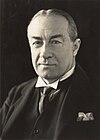
Anthony Eden on Stanley Baldwin 4 quotes
“If the Conservative Party jettisons Mr. Baldwin it will sacrifice its greatest electoral asset... So long as Mr. Baldwin leads the Conservative Party so long will its "right" wing be unable to dominate the party's counsels and narrow its purposes—of this the Trade Disputes Bill was a sufficient example... Nor, with Mr. Baldwin as its Leader, will the Conservative Party ever sink to become the creature of millionaire newspaper owners or a mere appanage of big business.”
Anthony Eden on Adolf Hitler 3 quotes
“I was most unfavourably impressed by Hitler's personality. Unlike Stalin as I was to know him, or Mussolini, he appeared negative to me, certainly not compelling; he was also rather shifty. Stalin and Mussolini were, in their separate ways, men whose personality would be felt in any company. Hitler was essentially the man who would pass in the crowd.”

Anthony Eden on Gamal Abdel Nasser 2 quotes
“There is now doubt in our minds that Nasser, whether he likes it or not, is now effectively in Russian hands, just as Mussolini was in Hitler's. It would be as ineffective to show weakness to Nasser now in order to placate him as it was to show weakness to Mussolini.”

Anthony Eden on Nevile Henderson 2 quotes
“It was an international misfortune that we should have been represented in Berlin at this time by a man who, so far from warning the Nazis, was constantly making excuses for them, often in their company. Henderson kept his hostility for the Czechs. He grew to see himself as the man predestined to make peace with the Nazis. Sincerely believing this to be possible, he came to regard me, and others at the Foreign Office who shared my opinions, as obstacles to his purpose.”

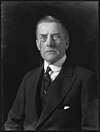
Anthony Eden on Austen Chamberlain
“Warm-hearted, considerate and generous...incapable of a mean action and conscientious to a fault.”
Anthony Eden on Winston Churchill
“All my thoughts are with you on this day which is so essentially your day. It is you who have led, uplifted and inspired us through the worst days. Without you this day could not have been.”

Anthony Eden on H. H. Asquith
“In my first year in the House of Commons, Mr. Asquith was leader of the Liberal Party and I give him pride of place among the parliamentary debaters of that time. His speeches were models of lucidity and brevity, with the English language at its best. In an age when prolixity was already becoming a substitute for conviction, he never wasted a word.”

Quotes About Anthony Eden
Gain deeper perspective through quotes about Anthony Eden from others.
Perry Anderson on Anthony Eden
“Did it have to come to this? The paradox is that when Europe was less united, it was in many ways more independent. The leaders who ruled in the early stages of integration had all been formed in a world before the global hegemony of the United States, when the major European states were themselves imperial powers, whose foreign policies were self-determined. These were people who had lived through the disasters of the Second World War, but were not crushed by them. This was true not just of a figure like De Gaulle, but of Adenauer and Mollet, of Eden and Heath, all of whom were quite prepared to ignore or defy America if their ambitions demanded it. Monnet, who did not accept their national assumptions, and never clashed with the US, still shared their sense of a future in which Europeans could settle their own affairs, in another fashion. Down into the 1970s, something of this spirit lived on even in Giscard and Schmidt, as Carter discovered. But with the neo-liberal turn of the 1980s, and the arrival in power in the 1990s of a postwar generation, it faded. The new economic doctrines cast doubt on the state as a political agent, and the new leaders had never known anything except the Pax Americana. The traditional springs of autonomy were gone.”

Correlli Barnett on Anthony Eden 4 quotes
“The most passionate advocate of absolute fidelity to the Covenant of the League in dealing with the Abyssinian question was, appropriately enough, the Minister for League-of-Nations Affairs, Anthony Eden. Eden, at thirty-seven, was the young man of the Cabinet, a representative of the new generation of public-school officer present here among ageing Victorians, a veteran of the trenches; idealistic, sensitive; something of a Brooke or a Sassoon. His were the kind of delicately and sensitively handsome features which would have well ornamented the wicket on the night when there was a breathless hush in the close, with ten to make and the last man in. The brave cause of the League could have hardly found a more appropriate standard-bearer; and, as Vansittart wrote, Eden's instincts "harboured few enthusiasms except for the League".”
Brian Bond on Anthony Eden
“Eden...in the last year of his life, aged 79, and very ill, produced a minor classic in Another World. He found the writing hard going but exciting and exhilarating. Whereas his previous autobiographical volumes had been very long and lacking in sparkle, this was a concise and beautifully written little book which might easily have been the work of a young man. It is vivid, moving, even funny at times, but never sentimental. It is also remarkably modest and understated, making no mention at all of the author's winning of the Military Cross and other commendations for gallantry. As Eden's biographer justly concludes: "In a lifetime of achievement against the odds, perhaps this was the most wonderful of all."”
Rab Butler on Anthony Eden
“Anthony's father was a mad baronet and his mother a very beautiful woman. That's Anthony—half mad baronet, half beautiful woman.”

Alexander Cadogan on Anthony Eden
John Campbell on Anthony Eden
“Eden’s brief premiership was already in trouble before the fiasco of Suez brought it to an end. Despite winning his own mandate in the summer of 1955, Eden was in several respects unfit to be Prime Minister. He was insecure, hypersensitive, and prone to bursts of temper; his health – both psychological and physical (following a botched bile duct operation) was poor; and he had no experience of home affairs or knowledge of Whitehall beyond the Foreign Office.”
Winston Churchill on Eden on Anthony Eden
“There seemed one strong young figure standing up against long, dismal, drawling tides of drift and surrender, of wrong measurements and feeble impulses. ... He seemed to me at this moment to embody the life-hope of the British nation, the grand old British race that had done so much for men, and had yet some more to give. Now he was gone.”
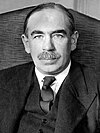
John Maynard Keynes on Anthony Eden
“I still feel much happier with Eden as Foreign Secretary than I should with Brailsford, and so, I expect, do you.”
Martin Luther King Jr. on Anthony Eden
“I remember we passed by 10 Downing Street. That’s the place where the prime minister of England lives. And I remember that a few years ago a man lived there by the name of Winston Churchill. One day he stood up before the world and said, “I did not become his Majesty’s First Minister to preside over the liquidation of the British Empire.” And I thought about the fact that a few weeks ago a man by the name of Anthony Eden lived there. And out of all of his knowledge of the Middle East, he decided to rise up and march his armies with the forces of Israel and France into Egypt. And there they confronted their doom, because they were revolting against world opinion. Egypt, a little country. Egypt, a country with no military power. They could have easily defeated Egypt. But they did not realize that they were fighting more than Egypt. They were attacking world opinion, they were fighting the whole Asian-African bloc, which is the bloc that now thinks and moves and determines the course of the history of the world.”

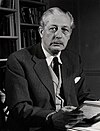
Harold Macmillan on Anthony Eden 2 quotes
“Eden's position, first as Under-Secretary for Foreign Affairs and then as Lord Privy Seal, was commanding. His fine war record, his charm, his versatility, his pre-eminence in debate, his appeal to men and women of all parties: all these made him an outstanding figure.”
Margaret MacMillan on Anthony Eden
“What is undeniable is that the Munich analogy has had a strong hold over statesmen and -women ever since and has been applied liberally to justify a whole range of policies. Anthony Eden, the British prime minister who succeeded Churchill, employed the analogy to disastrous effect when he tried to deal with Gamal Abdel Nasser, the Egyptian dictator in 1936. Like many leaders in what was then called the Third World, Nasser was prepared to take assistance from both sides in the Cold War. He bought arms from Communist Czechoslovakia but also tried to get a loan from the United States to build the Aswan Dam on the Nile. John Foster Dulles, the American secretary of state, was unable to get the loan 'through Congress. In retaliation and to raise the funds he needed, Nasser nationalized the Suez Canal, which up to that point had been owned and managed by the British. Eden's reaction was unequivocal. As British foreign secretary in the 1930s, he had dealt with the dictators. Now he and the world were facing the same thing again. As he wrote in his memoirs, ‘'Success in a number of adventures involving the breaking of agreements in Abyssinia, in the Rhineland, in Austria, in Czechoslovakia, in Albania had persuaded Hitler and Mussolini that the democracies had not the will to resist, that they could march with the certitude of success from signpost to signpost along the road which led to world dominion.... As my colleagues and I surveyed the scene in those autumn months of 1936, we were determined that the like should not come again.” But Nasser was no Hitler intent on conquering his neighbours. Rather, he was a nationalist who badly needed resources to develop his own country and stake out a position of leadership in the Middle East. The British action in collusion with the French and the Israelis to seize the Canal Zone was not only badly conceived; it rallied the Egyptians and the wider Arab world to Nasser’s side. Furthermore, it infuriated the Americans who, far from seeing a repeat of the 1930s, worried about the moral impact on other Third World countries.”

Sir Charles Petrie on Anthony Eden
“Eden ha[s] put his country in a position where she sustained the greatest diplomatic reverse since Bismarck in similar circumstances had called Palmerston's bluff in the matter of Schleswig-Holstein...Further damage was done when Russia proved by her action in Spain, that she was not a good European as Mr. Eden had assured the world was the case.”
David Reynolds on Anthony Eden
“Unlike Chamberlain’s summits, the leaders came to Yalta with detailed briefing books and a body of specialist advisors, including all three foreign ministers, and in many cases they acted on policies already laid down. The deals on prisoners of war, for instance, or Soviet territorial demands in Asia had already been established in outline, while Maisky’s presentation on reparations followed the lines of a report he had drawn up over the winter. At a number of key points, however, the leaders took their own line. Stalin rejected the advice of Beria and others to offer the West more fig leaves on the Polish government. Ignoring his advisors, FDR succumbed to British pressure to accept three Soviet votes in the UN. And Churchill batted aside Eden’s apt questions about why the Western Allies needed to buy Soviet entry into the Far Eastern war. But the British foreign secretary was very effective in obtaining a greater role for postwar France than any of the Big Three, left alone, would have preferred. In September 1938, Halifax had— belatedly—exerted influence in Cabinet, but he never appeared at the conference table. Eden, in contrast, was a real presence at Yalta—vocal if rejected over the Far East, influential over France, and backing up Churchill robustly on Germany. He was far more significant at Yalta than his counterparts, particularly Stettinius. As Eden and Cadogan remarked, Stalin was indeed a skilful negotiator, letting the others do the talking and saving his succinct remarks for the right moment. Nevertheless Churchill’s more bombastic approach should not be underrated: it wore down the other two over France and German reparations. And Roosevelt pushed harder on Poland than the myths might suggest”
Lord Vansittart on Anthony Eden 3 quotes
“He was ambitious, but not self-seeking, if by that we mean search for a self rarely found. Baldwin strongly recommended him to me; his mind was less capacious than his master's, but he used it to better advantage. Zealous, affable, intelligent, he had inherited from his father a temper mitigated by the restraints which careers impose on youth. He thus possessed early the making of "a good House of Commons manner". Desirous and deserving of praise, he avoided suspicions of brilliance or originality and pruned protusions with sense. He said the right thing so often that he seemed incapable of saying anything else.”
About Anthony Eden
Robert Anthony Eden, 1st Earl of Avon, KG, MC, PC (12 June 1897 – 14 January 1977) was a British Conservative politician who served three periods as Foreign Secretary and then a short term as Prime Minister of the United Kingdom from 1955 to 1957. He served as British Foreign Secretary under Prime Minister Winston Churchill during World War II, having previously resigned the office in opposition of Prime Minister Neville Chamberlain's appeasement of Nazi Germany. His brief premiership ended after he ordered an invasion of Egypt alongside France and Israel during the Suez Crisis, leading to international condemnation of the UK and an acceleration of the decolonization of the British Empire.
QuotesCosmos Cross-Civilizational Archive
Explore Related Wisdom Pillars, Worldviews & Canonical Works
Discover how humanity's greatest philosophers, sacred scriptures, and literary masterpieces address the core questions of existence.
30 Wisdom Pillars
22 Worldviews & Traditions
Canonical Books & Scriptures