Link Copied!
Annie Dillard Quotes (1945-)
Actor, Author



About Annie Dillard
Annie Dillard (born 30 April 1945) is an American author born in Pittsburgh, Pennsylvania. She won the Pulitzer Prize for her non-fiction narrative Pilgrim at Tinker Creek in 1974. She has since published ten other books. Her most recent is the novel The Maytrees (June 2007).
Best Annie Dillard Quotes
Shortest
Earliest
Explore our curated collection of the most famous and impactful Annie Dillard quotes.
“No claims of any and all revelations could be so far-fetched as a single giraffe.”
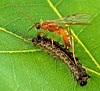
“For most creatures, being parasitized is a way of life—if you call that living.”
“Whenever a work's structure is intentionally one of its own themes, another of its themes is art.”

“Like any child, I slid into myself perfectly fitted, as a diver meets her reflection in a pool. Her fingertips enter the fingertips on the water, her wrists slide up her arms. The diver wraps herself in her reflection wholly, sealing it at the toes, and wears it as she climbs rising from the pool, and ever after.”
“Even such sophisticated mammals as the great predator cats occasionally eat their cubs. A mother cat will be observed licking the area around the umbilical cord of the helpless newborn. She licks, she licks, she licks until something snaps in her brain, and she begins eating, starting there, at the vulnerable belly.”
“Evolution loves death more than it loves you or me. This is easy to write, easy to read, and hard to believe. The words are simple, the concept clear—but you don't believe it, do you? Nor do I. How could I, when we're both so lovable? Are my values then so diametrically opposed to those that nature preserves? This is the key point.”
“In another book I learn that ten percent of all the world's species are parasitic insects. It is hard to believe. What if you were an inventor, and you made ten percent of your inventions in such a way that they could only work by harassing, disfiguring, or totally destroying the other ninety percent? These things are not well enough known.”
“I am a sacrifice bound with cords to the horns of the world's rock altar, waiting for worms. I take a deep breath, I open my eyes. Looking, I see there are worms in the horns of the altar like live maggots in amber, there are shells of worms in the rock and moths flapping at my eyes. A wind from no place rises. A sense of the real exults me; the cords loose; I walk on my way.”
“The world which lay under darkness and stillness following the closing of the lid was not the world we know. The event was over. Its devastation lay around about us. The clamoring mind and heart stilled, almost indifferent, certainly disembodied, frail, and exhausted. The hills were hushed, obliterated. Up in the sky, like a crater from some distant cataclysm, was a hollow ring.”

“Each of these butterflies, the fruit of two or three broods of this summer, had hatched successfully from one of those emerald cases that Teale's caterpillar had been about to form when the parasitic larvae snapped it limp, eating their way out of its side. They had hatched, many of them, just before a thunderstorm, when winds lifted the silver leaves of trees and birds sought the shelter of shrubbery, uttering cries.”
“After the one extravagant gesture of creation in the first place, the universe has continued to deal exclusively in extravagances, flinging intricacies and colossi down aeons of emptiness, heaping profusions on profligacies with ever-fresh vigor. The whole show has been on fire from the word go. I come down to the water to cool my eyes. But everywhere I look I see fire; that which isn't flint is tinder, and the whole world sparks and flames.”
“[M]any carnivorous animals devour their prey alive. The usual method seems to be to subdue the victim by downing or grasping it so it can't flee, then eating it whole or in a series of bloody bites. Frogs eat everything whole, stuffing prey into their mouths with their thumbs. People have seen frogs with their wide jaws so full of live dragonflies they couldn't close them. Ants don't even have to catch their prey: in the spring they swarm over newly hatched, featherless birds in the nest and eat them tiny bite by bite.”
“You are an ichneumon. You mated and your eggs are fertile. If you can't find a caterpillar on which to lay your eggs, your young will starve. When the eggs hatch, the young will eat any body in which they find themselves, so if you don't kill them by emitting them broadcast over the landscape, they'll eat you alive. But if you let them drop over the fields you will probably be dead yourself, of old age, before they even hatch to starve, and the whole show will be over and done, and a wretched one it was. You feel them coming, and coming, and you struggle to rise….”

“This view requires that a monstrous world running on chance and death, careening blindly from nowhere to nowhere, somehow produced wonderful us. I came from the world, I crawled out of a sea of amino acids, and now I must whirl around and shake my fist at that sea, and cry Shame! If I value anything at all, then I must blindfold my eyes when I near the randomly shaped Swiss Alps. We must as a culture disassemble our telescopes and settle down to backslapping. We little blobs of soft tissue crawling around on this one planet's skin are right, and the whole universe is wrong.”
“How we spend our days is, of course, how we spend our lives. What we do with this hour, and that one, is what we are doing. A schedule defends from chaos and whim. It is a net for catching days. It is a scaffolding on which a worker can stand and labor with both hands at sections of time. A schedule is a mock-up of reason and order—willed, faked, and so brought into being; it is a peace and a haven set into the wreck of time; it is a lifeboat on which you find yourself, decades later, still living. Each day is the same, so you remember the series afterward as a blurred and powerful pattern.”
“Outright predators, of course, I understand. I am among them. There is no denying that the feats of predators can be just as gruesome as those of the unlovely parasites: the swathing and sipping of trapped hummingbirds by barn spiders, the occasional killing and eating of monkeys by chimpanzees. If I were to eat as the delicate ladybug eats, I would go through in just nine days the entire population of Boys Town. Nevertheless, the most rapacious lurk and charge of any predator is not nearly so sinister as the silent hatching of barely visible, implanted eggs. With predators, at least you have a chance.”
“Let me repeat that these parasitic insects comprise ten percent of all known animal species. How can this be understood? Certainly we give our infants the wrong idea about their fellow creatures in the world. Teddy bears should come with tiny stuffed bearlice; ten percent of all baby bibs and rattles sold should be adorned with colorful blowflies, maggots, and screw-worms. What kind of devil's tithe do we pay? What percentage of the world's species that are not insects are parasitic? Could it be, counting bacteria and viruses, that we live in a world in which half the creatures are running from—or limping from—the other half?”
“I am a frayed and nibbled survivor in a fallen world, and I am getting along. I am aging and eaten and have done my share of eating too. I am not washed and beautiful, in control of a shining world in which everything fits, but instead am wandering awed about on a splintered wreck I've come to care for, whose gnawed trees breathe a delicate air, whose bloodied and scarred creatures are my dearest companions, and whose beauty beats and shines not in its imperfections but overwhelmingly in spite of them, under the wind-rent clouds, upstream and down. Simone Weil says simply, "Let us love the country of here below. It is real; it offers resistance to love."”
“On the whole, I do not find Christians, outside the catacombs, sufficiently sensible of the conditions. Does anyone have the foggiest idea what sort of power we so blithely invoke? Or, as I suspect, does no one believe a word of it? The churches are children playing on the floor with their chemistry sets, mixing up a batch of TNT to kill a Sunday morning. It is madness to wear ladies' straw hats and velvet hats to church; we should all be wearing crash helmets. Ushers should issue life preservers and signal flares; they should lash us to our pews. For the sleeping god may wake some day and take offense, or the waking god may draw us out to where we can never return.”
“Any three-year-old can see how unsatisfactory and clumsy is this whole business of reproducing and dying by the billions. We have not yet encountered any god who is as merciful as a man who flicks a beetle over on its feet. There is not a people in the world that behaves as badly as praying mantises. But wait, you say, there is no right and wrong in nature; right and wrong is a human concept. Precisely: we are moral creatures, then, in an amoral world. The universe that suckled us is a monster that does not care if we live or die—does not care if it itself grinds to a halt. It is fixed and blind, a robot programmed to kill. We are free and seeing; we can only try to outwit it at every turn to save our skins.”
“[T]he world is a monster. Any three-year-old can see how unsatisfactory and clumsy is this whole business of reproducing and dying by the billions. We have not yet encountered any god who is as merciful as a man who flicks a beetle over on its feet. There is not a people in the world who behaves as badly as praying mantises. But wait, you say, there is no right and wrong in nature; right and wrong is a human concept. Precisely: we are moral creatures, then, in an amoral world. The universe that suckled us is a monster that does not care if we live or die—does not care if it itself grinds to a halt. It is fixed and blind, a robot programmed to kill. We are free and seeing; we can only try to outwit it at every turn to save our skins.”
“The egg of a parasite chalcid wasp, a common small wasp, multiplies unassisted, making ever more identical eggs. The female lays a single fertilized egg in the flaccid tissues of its live prey, and that one egg divides and divides. As many as two thousand new parasitic wasps will hatch to feed on the host's body with identical hunger. Similarly—only more so—Edwin Way Teale reports that a lone aphid, without a partner, breeding "unmolested" for one year, would produce so many living aphids that, although they are only a tenth of an inch long, together they would extend into space twenty-five hundred light-years. Even the average goldfish lays five thousand eggs, which she will eat as fast as the lays, if permitted. The sales manager of Ozark Fisheries in Missouri, which raises commercial goldfish for the likes of me, said, "We produce, measure, and sell our product by the ton." The intricacy of Ellery and aphids multiplied mindlessly into tons and light-years is more than extravagance; it is holocaust, parody, glut.”
“I think of the fox that Park Service Ranger Gene Parker told me about. The fox sprawled naked and pink-skinned in a mountain field, unable to rise, dying of mange. I think of the swimming bluegill I saw at the Lawsons', upstream in Tinker Creek on the other side of Tinker Mountain. One of its eyes was blinded by an overgrowth of white water mold, a white that spread halfway down its back in filmy lumps like soaked cotton batting. It had been injured, perhaps when a fisherman had hooked it and tossed it back, perhaps when a flood dashed it on rocks, and the fungus had spread from the injured site. I think of Loren Eiseley's description of a scientist he met in the field, who was gleefully bearing a bloody jar squirming with yard after yard of some unthinkable parasite he had just found in the belly of a rabbit. Suddenly the lives of the parasites—some sort of hellish hagiography—come to mind. I remember the bloodworms and flukes, whose parasitic life cycles require the living bodies of as many as four hosts. How many of the grasshoppers that hurtled around me in the Lucas meadow bore inside their guts the immense coiled larvae of horsehair worms?”

Annie Dillard Quotes by Topic
Find exactly what you are looking for by browsing this categorized list of Annie Dillard quotes by topic.
Annie Dillard on Wild animal suffering 7 quotes
“The intricacy of Ellery and aphids multiplied mindlessly into tons and light-years is more than extravagance; it is holocaust, parody, glut.”
Annie Dillard on Floaters
“At first the amoebae look like muscae volitantes, those curled moving spots you seem to see in your eyes when you stare at a distant wall. Then I see the amoebae as drops of water congealed, blusish, translucent, like chips of sky in the bowl.”

Annie Dillard on Parasitism
“Let me repeat that these parasitic insects comprise ten percent of all known animal species. How can this be understood? Certainly we give our infants the wrong idea about their fellow creatures in the world. Teddy bears should come with tiny stuffed bearlice; ten percent of all baby bibs and rattles sold should be adorned with colorful blowflies, maggots, and screw-worms. What kind of devil’s tithe do we pay? What percentage of the world’s species that are not insects are parasitic? Could it be, counting bacteria and viruses, that we live in a world in which half the creatures are running from—or limping from—the other half?”

Annie Dillard on Insect suffering
“The egg of a parasite chalcid wasp, a common small wasp, multiplies unassisted, making ever more identical eggs. The female lays a single fertilized egg in the flaccid tissues of its live prey, and that one egg divides and divides. As many as two thousand new parasitic wasps will hatch to feed on the host's body with identical hunger. Similarly—only more so—Edwin Way Teale reports that a lone aphid, without a partner, breeding "unmolested" for one year, would produce so many living aphids that, although they are only a tenth of an inch long, together they would extend into space twenty-five hundred light-years. Even the average goldfish lays five thousand eggs, which she will eat as fast as the lays, if permitted. The sales manager of Ozark Fisheries in Missouri, which raises commercial goldfish for the likes of me, said, "We produce, measure, and sell our product by the ton." The intricacy of Ellery and aphids multiplied mindlessly into tons and light-years is more than extravagance; it is holocaust, parody, glut.”
About Annie Dillard
Annie Dillard (born 30 April 1945) is an American author born in Pittsburgh, Pennsylvania. She won the Pulitzer Prize for her non-fiction narrative Pilgrim at Tinker Creek in 1974. She has since published ten other books. Her most recent is the novel The Maytrees (June 2007).
QuotesCosmos Cross-Civilizational Archive
Explore Related Wisdom Pillars, Worldviews & Canonical Works
Discover how humanity's greatest philosophers, sacred scriptures, and literary masterpieces address the core questions of existence.
30 Wisdom Pillars
22 Worldviews & Traditions
Canonical Books & Scriptures