Link Copied!
André Weil Quotes (1906-1998)
Philosopher, Leader, Mathematician

About André Weil
André Weil (6 May 1906 – 6 August 1998) was one of the greatest mathematicians of the 20th century, whether measured by his research work, its influence on future work, exposition or breadth. He is known for his foundational work in number theory and algebraic geometry. He was a founding member, and de facto the early leader, of the influential Bourbaki group. The philosopher Simone Weil was his sister.
Best André Weil Quotes
Shortest
Earliest
Explore our curated collection of the most famous and impactful André Weil quotes.
“God exists since mathematics is consistent, and the Devil exists since we cannot prove it.”
“We should ask our fellow physicists to invent a principle of anti-interference, which would bring light out of two obscurities (Leray and Grothendieck).”
“An important point is that the p-adic field, or respectively the real or complex field, corresponding to a prime ideal, plays exactly the role, in arithmetic, that the field of power series in the neighborhood of a point plays in the theory of functions: that is why one calls it a local field.”
“[

“I began to combine this ordinary form of touring with a specifically mathematical variety. I had formed the ambition of becoming, like Hadamard, a "universal" mathematician: the way I expressed it was that I wished to know more than non-specialists and less than specialists about every mathematical topic. Naturally, I did not achieve either goal.”
“Hopf, back from Amsterdam, was teaching Brouwer's topology. He had helped arrange lodgings for me quite close to where he lived, rather far from the center of town, and together we would take the long tram ride to the university. One day I asked him what he would do when he got tired of topology. He replied in all seriousness: "But I'll never get tired of topology!"”

“About ancient mathematics (whether Greek or Mesopotamian) and medieval mathematics (Western or Oriental), the would-be historian must of necessity confine himself to the description of a comparatively small number of islands accidentally emerging from an ocean of ignorance, and to tenuous conjectural reconstructions of the submerged continents which at one time must have bridged the gaps between them.”
“First rank scientists recruit first rank scientists, but second rank scientists tend to recruit third rank scientists, third rank scientists recruit fifth rank, and so on. If the director of the Department is genuinely interested in preserving the high quality of his Institute, he must exercise all of his power to put things in their right place, otherwise the deterioration process is destined to diverge indefinitely.”
“In comparison with the wise man, the saint is perhaps just a specialist - a specialist in holiness; whereas the wise man has no specialty. This is not to say, far from it, that Dehn was not a mathematician of great talent; he left behind a body of work of very high quality. But for such a man, truth is all one, and mathematics is but one of the mirrors in which it is reflected - perhaps more purely than it is elsewhere.”

“Both the Jews and the brahmins of southern India are communities that, for twenty centuries, have devoted themselves tirelessly to the most abstract subtleties of grammar and theology. For the Jews it was the study of the Talmud, a task often passed down from father to son; for the brahmins, it was the Brahmanas and the Upanishads. It is hardly surprising that the younger generations, when their time came, turned toward the sciences, and preferably the most abstract among them: this trend was merely the natural extension of millennial traditions.”
“Mozart's music, even at its most beautiful, often gives an impression of some being who, though very far above us in his incomprehensible serenity, nevertheless stops to remember us for a brief instant and comes within our reach, with gentle mockery and tender pity, to transcribe a fleeting message for us. But sometimes, in certain quartets and quintets, and in certain parts of The Magic Flute, this same being, without a thought for us, communicates with his fellow beings, and what we hear then is a world unknown to us, a world of which we are allowed only a furtive glimpse.”
“The major classic texts in analysis (Jordan, Goursat) which we had at first set out to replace aimed to set forth in a few volumes everything a beginning mathematician should know before specializing. At the end of the nineteenth century, such a claim could still be made seriously; by now it had become absurd. ... it soon became apparent that there was no alternative but to give up any idea of writing a text for college-level instruction. Above all it was important to lay a foundation that was broad enough to support the essential core of modern mathematics...”
“It is hard for you to appreciate that modern mathematics has become so extensive and so complex that it is essential, if mathematics is to stay as a whole and not become a pile of little bits of research, to provide a unification, which absorbs in some simple and general theories all the common substrata of the diverse branches if the science, suppressing what is not so useful and necessary, and leaving intact what is truly the specific detail of each big problem. This is the good one can achieve with axiomatics (and this is no small achievement). This is what Bourbaki is up to.”
“Kantian ethic, or what passes for it today, has always seemed to me to be the height of arrogance and folly. Claiming always to behave according to the precepts of universal maxims is either totally inept or totally hypocritical; one can always find a maxim to justify whatever behavior one chooses. I could not count the times (for example, when I tell people I never vote in elections) that I have heard the objection: "But if everyone were to behave like you..." - to which I usually reply that this possibility seems to me so implausible that I do not feel obligated to take it into account.”
“(April 7) My mathematics work is proceeding beyond my wildest hopes, and I am even a bit worried - if it's only in prison that I work so well, will I have to arrange to spend two or three months locked up every year? In the meantime, I am contemplating writing a report to the proper authorities, as follows: "To the Director of Scientific Research: Having recently been in a position to discover through personal experience the considerable advantages afforded to pure and distinterested research by a stay in the establishments of the Penitentiary System, I take the liberty of, etc. etc."”

“... the geometry over p-adic fields, and more generally over complete local rings, can provide us only with local data; and the main tasks of algebraic geometry have always been understood to be of a global nature. It is well known that there can be no global theory of algebraic varieties unless one makes them "complete", by adding to them suitable "points at infinity," embedding them, for example, in projective spaces. In the theory of curves, for instance, one would not otherwise obtain such basic facts as that the number of poles and zeros of a function are equal, of that the sum of residues of a differential is 0.”
“I had also, unsuccessfully, looked for the works of Saint John of the Cross. The flashing beauty of his poems would probably have moved me more than did Saint Theresa, but it was not until much later that I came to know his work. I read a little of Saint Theresa and became quickly convinced that mystic thought is at bottom the same in all times and places: reading Suzuki's popular works on Zen was soon to confirm this conclusion. ... Speaking of a saint whose behavior was somewhat eccentric, one of the monks remarked gently: "But Christianity is madness" ("el cristianismo es una locum"). This perfectly orthodox statement often comes to mind when I think about my sister's life.”
“[On meeting Raymond Paley] At first, we seemed to be on completely different wavelengths. Finally, it became apparent to me that he worked fruitfully only when competing with others: having the rest of the pack at his side spurred him to greater efforts as he tried to surpass them. In contrast, my style was to seek out topics that I felt exposed me to no competition whatsoever, leaving me free to reflect undisturbed for years. No doubt every scientific discipline has room for such differences of temperament. What does it matter if a given researcher is motivated primarily by hopes of winning the Nobel prize? Sometimes it seems to me that Ganesh, the Hindu god of knowledge, chooses the bait, noble or vulgar, best suited to each of his followers.”

“Every mathematician worthy of the name has experienced, if only rarely, the state of lucid exaltation in which one thought succeeds another as if miraculously, and in which the unconscious (however one interprets this word) seems to play a role. In a famous passage, Poincaré describes how he discovered Fuchsian functions in such a moment. About such states, Gauss is said to have remarked as follows: "Procreare jucundum (to conceive is a pleasure)"; he added, however, "sed parturire molestum (but to give birth is painful)." Unlike sexual pleasure, this feeling may last for hours at a time, even for days. Once you have experienced it, you are eager to repeat it but unable to do so at will, unless perhaps by dogged work which it seems to reward with its appearance. It is true that the pleasure experienced is not necessarily in proportion with the value of the discoveries with which it is associated.”

“Awaiting me upon my return to Strasbourg were Henri Cartan and the course on "differential and integral calculus," which was our joint responsibility. ... One point that concerned him was the degree to which we should generalize Stokes' formula in our teaching. ... In his book on invariant integrals, Elie Cartan, following Poincare in emphasizing the importance of this formula, proposed to extend its domain of validity. Mathematically speaking, the question was of a depth that far exceeded what we were in a position to suspect. ... One winter day toward the end of 1934,1 thought of a brilliant way of putting an end to my friend's persistent questioning. We had several friends who were responsible for teaching the same topics in various universities. "Why don't we get together and settle such matters once and for all, and you won't plague me with your questions any more?" Little did I know that at that moment Bourbaki was born.”
“Already while at the Ecole Normale, I had been deeply struck by the damage wreaked upon mathematics in France by World War I. This war had created a vacuum that my own and subsequent generations were hard pressed to fill. In 1914, the Germans had wisely sought to spare the cream of their young scientific elite and, to a large extent, these people had been sheltered. In France a misguided notion of equality in the face of sacrifice - no doubt praiseworthy in intent - had led to the opposite policy, whose disastrous consequences can be read, for example, on the monument to the dead of the Ecole Normale. Those were cruel losses; but there was more besides. Four or more years of military life, whether close to death or far away from it - but in any case far from science -, are not good preparation for resuming the scientific life: very few of those who survived returned to science with the keenness they had felt for it. This was a fate that I thought it my duty, or rather my dharma, to avoid.”

“In establishing the tasks to be undertaken by Bourbaki, significant progress was made with the adoption of the notion of structure, and of the related notion of isomorphism. Retrospectively these two concepts seem ordinary and rather short on mathematical content, unless the notions of morphism and category are added. At the time of our early work these notions cast new light upon subjects which were still shrouded in confusion: even the meaning of the term "isomorphism" varied from one theory to another. That there were simple structures of group, of topological space, etc., and then also more complex structures, from rings to fields, had not to my knowledge been said by anyone before Bourbaki, and it was something that needed to be said. As for the choice of the word "structure," my memory fails me; but at that time, I believe, it had already entered the working vocabulary of linguists, a milieu with which I had maintained ties (in particular with Émile Benveniste).”
What André Weil Said About Others
Discover personal opinions André Weil shared regarding contemporaries.
André Weil on Solomon Lefschetz 2 quotes
“I would read Lefschetz's book on analysis situs and algebraic geometry - the book about which Hodge used to say that all the important statements were true and all the others false.”

André Weil on Ferdinand Eisenstein 2 quotes
“As Eisenstein shows, his method for constructing elliptic functions applies beautifully to the simpler case of trigonometric functions. Moreover, this case provides not merely an illuminating introduction to his theory, but also the simplest proofs for a series of results, originally discussed by Euler.”

André Weil on Shiing-Shen Chern
“I have no doubt that future historians of differential geometry will rank Chern as the worthly successor of Elie Cartan in that field.”
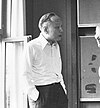
André Weil on Alexander Grothendieck
“We should ask our fellow physicists to invent a principle of anti-interference, which would bring light out of two obscurities (Leray and Grothendieck).”

André Weil on Ossip Zadkine
“He had such a keen sense of color, it was said, that he would pack a tie to match his pale complexion on days when he was seasick. In any case, one calm day he was kind enough to open up his portfolios, which were full of impressive drawings.”

André Weil on Vito Volterra
“On my way home in May 1932, when I stopped in Rome to see Vito Volterra and explained my 92 Andre Weil formula to him, he jumped up out of his chair and ran to the back of the apartment, crying to his wife: "Virginia! Virginia! Il signor Weil ha dimostrato un gran bel teorema!" ("Mr. Weil has proved a very beautiful theorem!")”
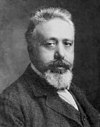
André Weil on Bernhard Riemann
“Riemann was the first; I read his inaugural dissertation and his major work on Abelian functions. Starting out thus was a stroke of luck for which I have always been grateful. These are not hard to read, as long as one realizes that every word is loaded with meaning: there is perhaps no other mathematician whose writing matches Riemann's for density.”

André Weil on Emil Nolde
“In Hamburg, I was not able to find Artin. On the other hand, I did visit a large exhibit of Nolde's work, which left a lasting impression upon me. Later, back in Paris, I spoke enthusiastically of him to several friends who were devotees of modern painting. One of them, who ran a well-known art gallery, cut me short: "He has never been exhibited in Paris." Apparently, this settled his hash.”

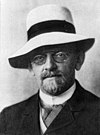
André Weil on David Hilbert
“Hilbert was on the verge of retirement. He was the dignified chairman of the mathematical society's meetings, though he no longer came up with those caustic quips that people would repeat afterwards, imitating as best they could his Baltic accent. It is a pity these were not recorded before it was too late. The samples cited in English translation, in Constance Reid's biography of Hilbert, give only the palest idea of his biting wit.”
André Weil on Jacques Hadamard
“All those who were acquainted with Hadamard know that until the end of his very long life, he retained an extraordinary freshness of mind and character: in many respects, his reactions remained those of a fourteen-year-old boy. His kindness knew no bounds. The warmth with which Hadamard received me in 1921 eliminated all distance between us. He seemed to me more like a peer, infinitely more knowledgeable but hardly any older; he needed no effort at all to make himself accessible to me.”

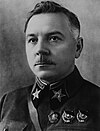
André Weil on Kliment Voroshilov
“When my neighbor, who spoke German tolerably well, introduced himself as a former Soviet general, I was somewhat surprised, even under these circumstances in which virtually nothing came as a surprise. ... He told me all kinds of stories, of which the best (one he claimed to have witnessed firsthand) was about Trotsky, who was irked by Voroshilov's arrogant behavior toward him. Trotsky took advantage of a council of war over which he was presiding in Petrograd and, raising his voice, addressed Voroshilov thus: "Commander of the Tsaritsyn front! Comrade Voroshilov!," then, as if giving orders, "ATTEN-TION!" At this, according to the story, Voroshilov, frozen on the spot, stood to attention, and this marked the end of his insolence. Se non è vero... ["Even if it's not true, it's a good story."]”
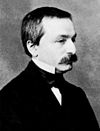
André Weil on Leopold Kronecker
“Now it is time for us to realize that, in his Grundzüge, Kronecker did not merely intend to give his own treatment of the basic problems of ideal-theory which form the main subject of Dedekind's life-work. His aim was a higher own. He was, in fact, attempting to describe and to initiate a new branch of mathematics, which would contain both number-theory and algebraic geometry as special cases. This grandiose conception has been allowed to fade out of our sight, partly because of the intrinsic difficulties of carrying it out, partly owing to historical accidents and to the temporary successes of the partisans of purity and of Dedekind. It will be the main purpose of this lecture to try to rescue it from oblivion, to revive it, and to describe the few modern results which may be considered as belonging to the Kroneckerian program.”
Quotes About André Weil
Gain deeper perspective through quotes about André Weil from others.
Amir D. Aczel on André Weil
“Alexandre Grothendieck was very different from Weil in the way he approached mathematics: Grothendieck was not just a mathematician who could understand the discipline and prove important results—he was a man who could create mathematics. And he did it alone.”
Barry Mazur on André Weil
“In his thesis, Weil generalized Mordell's theorem on the finite generation of the group of rational points on an elliptic curve, to abelian varieties of any dimension. Weil then hoped to use this finite generation result for the rational points on the jacobian of a curve to go on to show that when a curve of genus > 1 is imbedded in its jacobian, only a finite number of the rational points of the jacobian can lie on the curve. Not finding a way to do this, he decided to call his proof of finite generation (the "theorem of Mordell-Weill") a thesis, despite Hadamard's advice not to be satisfied with half a result!”
Source on André Weil
“Sometimes my sister and I dream of having a run-of-the-mill father. He would make coffee and toss salads. He would not prefer his work to us, and he would tell us instead: "How pretty you look, my dear, tell me what you did today." He would speak to us with words of affectionate banality.”
About André Weil
André Weil (6 May 1906 – 6 August 1998) was one of the greatest mathematicians of the 20th century, whether measured by his research work, its influence on future work, exposition or breadth. He is known for his foundational work in number theory and algebraic geometry. He was a founding member, and de facto the early leader, of the influential Bourbaki group. The philosopher Simone Weil was his sister.