Link Copied!
Alexander Fraser Tytler Quotes (1747-1813)
Writer, King
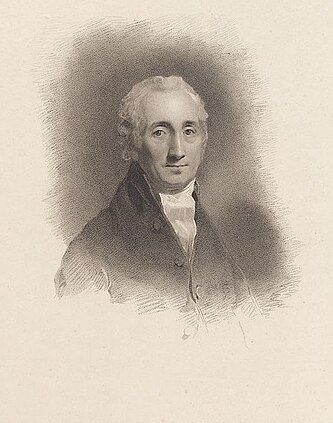


About Alexander Fraser Tytler
Alexander Fraser Tytler, Lord Woodhouselee (October 15, 1747 – January 5, 1813) was a Scottish-born British lawyer and writer.
Best Alexander Fraser Tytler Quotes
Shortest
Earliest
Explore our curated collection of the most famous and impactful Alexander Fraser Tytler quotes.
“An ordinary translator sinks under the energy of his original: the man of genius frequently rises above it.”
“In Latin two negatives make an affirmative; but it is otherwise in Greek, they only give force to the negation ...”
“The English language is not incapable of an elliptical mode of expression; but it does not admit of it to the same degree as the Latin.”
“It is always a fault when the translator adds to the sentiment of the original author, what does not strictly accord with his characteristic mode of thinking, or expressing himself.”
“Next in importance to a faithful transfusion of the sense and meaning of an author, is an assimilation of the style and manner of writing in the translation to that of the original.”

“The utility of translations is universally felt, and therefore there is a continual demand for them. But this very circumstance has thrown the practice of translation into mean and mercenary hands.”
“We may certainly, from the foregoing observations, conclude, that is impossible to do complete justice to any species of poetical compositin in a prose translation; in other words, that none but a poet can translate a poet.”
“But if authors, even of taste and genius, be found at times to have made an injudicious use of that liberty which is allowed in the translation of poetry, we must expect to see it miserably abused indeed, where those talents are evidently wanting.”
“I. ... the Translation should give a complete transcript of the ideas of the original work.
II. ... the style and manner of writing should be of the same character with that of the original.
III. ... the Translation should have all the ease of original composition.”
II. ... the style and manner of writing should be of the same character with that of the original.
III. ... the Translation should have all the ease of original composition.”
“If the order in which I have classed the three general laws of translation be their just and natural arrangement, which I think will hardly be denied, it will follow, that in all cases where a sacrifice is necessary to be made of one of those laws to another, a due regard ought to be paid to their rank and comparative importance.”
“The Greek language, from the frequency and familiarity of ellipsis, allows a conciseness of expression which is scarcely attainable in any other tongue, and perhaps least of all in the English. ...
The Latin language, too, though in an inferior degree to the Greek, admits of a brevity, which cannot be successfully imitated in the English.”
The Latin language, too, though in an inferior degree to the Greek, admits of a brevity, which cannot be successfully imitated in the English.”

“The familiar style of epistolary correspondence is rarely attainable even in original composition. It consists in a delicate medium between the perfect freedom of ordinary conversation and the regularity of written dissertation or narrative. It is extremely difficult to attain this delicate medium in a translation: because the writer has neither a freedom of choice in the sentiments, nor in the mode of expressing them.”

“... a translator may discern the general character of his author's style, and yet fail remarkably in the imitation of it. Unless he is possessed of the most correct taste, he will be in continual danger of presenting an exaggerated picture or a caricatura of his orginal. The distinction between good and bad writing is often of so very slender a nature, and the shadowing of difference so extremely delicate, that a very nice perception alone can at all times define the limits.”
“It is not, perhaps, unreasonable to conclude, that a pure and perfect democracy is a thing not attainable by man, constituted as he is of contending elements of vice and virtue, and ever mainly influenced by the predominant principle of self-interest. It may, indeed, be confidently asserted, that there never was that government called a republic, which was not ultimately ruled by a single will, and, therefore, (however bold may seem the paradox,) virtually and substantially a monarchy.”

Alexander Fraser Tytler Quotes by Topic
Find exactly what you are looking for by browsing this categorized list of Alexander Fraser Tytler quotes by topic.
Alexander Fraser Tytler on Democracy 2 quotes
“A Democracy cannot exist as a permanent form of Government. It can only exist until the voters discover they can vote themselves largess out of the public treasury. From that moment on the majority always votes for the candidate promising the most benefits from the public treasury with the result that Democracy always collapses over a loose fiscal policy, always to be followed by a Dictatorship and a Monarchy.”

Alexander Fraser Tytler on Nationalism
“Patriotism always exists in the greatest degree in rude nations, and in an early period of society.”

Alexander Fraser Tytler on Patriotism
“Patriotism always exists in the greatest degree in rude nations, and in an early period of society.”

About Alexander Fraser Tytler
Alexander Fraser Tytler, Lord Woodhouselee (October 15, 1747 – January 5, 1813) was a Scottish-born British lawyer and writer.
QuotesCosmos Cross-Civilizational Archive
Explore Related Wisdom Pillars, Worldviews & Canonical Works
Discover how humanity's greatest philosophers, sacred scriptures, and literary masterpieces address the core questions of existence.
30 Wisdom Pillars
22 Worldviews & Traditions
Canonical Books & Scriptures