Link Copied!
Alexander Calder Quotes (1898-1976)
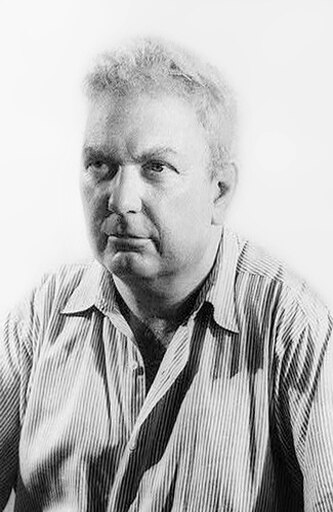
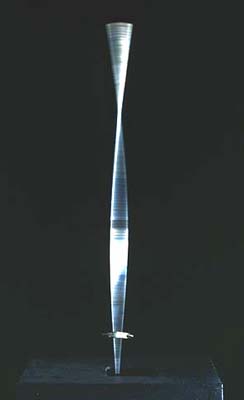
About Alexander Calder
Alexander Calder (August 22, 1898 – November 11, 1976) was an American sculptor known as the originator of the mobile, a type of Kinetic art made with delicately balanced or suspended components which move in response to motor power or air currents.
Best Alexander Calder Quotes
Shortest
Earliest
Explore our curated collection of the most famous and impactful Alexander Calder quotes.
“It is a matter of harmonizing these movements, thus arriving at a new possibility for beauty.”
“The aesthetic value of these objects cannot be arrived at by reasoning. Familiarization is necessary.”


“As truly serious art must follow the greater laws, and not only appearances, I try to put all the elements in motion in my mobile sculptures.”
“Question: How did the mobiles start?
The mobiles started when I went to see [[w:Piet Mondrian|Mondrian [in Paris, 1930]. I was impressed by several colored rectangles he had on the wall. Shortly after that I made some mobiles.”
The mobiles started when I went to see [[w:Piet Mondrian|Mondrian [in Paris, 1930]. I was impressed by several colored rectangles he had on the wall. Shortly after that I made some mobiles.”
“Wherever there is a main issue the elimination of other things which are not essential will make for a stronger result. In the earlier static abstract sculptures I was most interested in space, vectoral quantities, and centers of differing densities.”


“What I mean is that the idea of detached bodies floating in space, of different sizes and densities, perhaps of different colors and temperatures, and surrounded and interlarded with wisps of gaseous condition, and some at rest, while others move in peculiar manners, seems to me the ideal source of form.”

“I say nuclei, for to me whatever sphere, or other form, I use in these constructions does not necessarily mean a body of that size, shape or color, but may mean a more minute system of bodies, an atmospheric condition, or even a void. I.E. the idea that one can compose any things of which he can conceive.”
“Before, the wire studies were subjective, portraits, caricatures, stylized representations of beasts and humans. But these recent things have been viewed from a more objective angle and although their present size is diminutive, I feel that there is no limitation to the scale to which they can be enlarged....”
“Question: How do you get that subtle balance in your work?
You put a disk here and then you put another disk that is a triangle at the other end and then you balance them on your finger and keep on adding. I don't use rectangles - they stop. You can use them; I have at times, but only when I want to block, to constipate movement.”
You put a disk here and then you put another disk that is a triangle at the other end and then you balance them on your finger and keep on adding. I don't use rectangles - they stop. You can use them; I have at times, but only when I want to block, to constipate movement.”
“One of the canons of the futuristic painters, as propounded by Modigliani, was that objects behind other objects should not be lost to view, but should be shown through the others by making the latter transparent. The wire sculpture accomplishes this in a most decided manner.”
“The two motor driven "mobiles" which I am exhibiting [August, 1933] are from among the more successful of my earliest attempts at plastic objects in motion. The orbits are all circular arcs or circles. The supports have been painted to disappear against a white background to leave nothing but the moving elements, their forms and colors, and their orbits, speeds and accelerations.”
“The admission of approximation is necessary, for one cannot hope to be absolute in his precision. He cannot see, or even conceive of a thing from all possible points of view, simultaneously. While he perfects the front, the side, or rear may be weak; then while he strengthens the other facade he may be weakening that originally the best. There is no end to this. To finish the work he must approximate.”

“Marcel Duchamp's 'Nude descending the stairs' is the result of the desire for motion. Here he has also eliminated representative form. This avoids the connotation of ideas which would interfere with the success of the main issue - the sense of movement.”
“My entrance into the field of abstract art came about as the result of a visit to the studio of Piet Mondrian in Paris in 1930. I was particularly impressed by some rectangles of color he had tacked on his wall in a pattern after his nature. I told him I would like to make them [Mondrian's flat painting] oscillate, he objected. I went home and tried to paint abstractly - but in two weeks I was back again among plastic materials.”
“To me the most important thing in composition is disparity. Thus black and white are the strong colors, with a spot of red to mark the other corner of a triangle which is by no means equilateral, isosceles, or right. To vary this still further use yellow, then, later, blue. Anything suggestive of symmetry is decidedly undesirable, except possibly where an approximate symmetry is used in a detail to enhance the inequality with the general scheme.”
“Question, Léger once called you a realist. How do you feel about this?
Yes, I think I am a realist. Because I make what I see. It's only the problem of seeing it. If you can imagine a thing, conjure it up in space - then you can make it, and tout de suite you're a realist. The universe is real but you can't see it. You have to imagine it. Once you imagine it, you can be realistic about reproducing it.”
Yes, I think I am a realist. Because I make what I see. It's only the problem of seeing it. If you can imagine a thing, conjure it up in space - then you can make it, and tout de suite you're a realist. The universe is real but you can't see it. You have to imagine it. Once you imagine it, you can be realistic about reproducing it.”
“I started [in Paris, 1920's, making toys] right away, using wire as my main material as well as working with others like string, leather, fabric and wood. Wood combined with wire (with which I could make the heads, tails and feet of animals as well as articulating parts) was almost always my medium of choice. One friend of mine suggested that I should make bodies entirely of wire, and that is how I started to make what I called 'Wire Sculpture'. In Montparnasse, I became known as the 'King of Wire'.”

“It was more or less directly as a result of my visit to Piet Mondrian’s studio in 1930, and the sight of all his rectangles of color deployed on the wall, that my first work in the abstract was based on the concept of stellar relationships. Since then there have been variations from this theme, but I always seem to come back to it, in some form or other. For though the lightness of a pierced or serrated solid or surface is extremely interesting the still greater lack of weight of deployed nuclei is much more so.”
Alexander Calder Quotes by Topic
Find exactly what you are looking for by browsing this categorized list of Alexander Calder quotes by topic.
Alexander Calder on Kinetic art
“How can art be realized?
Out of volumes, motion, spaces bounded by the great space, the universe.
Out of different masses, tight, heavy, middling—indicated by variations of size or color—directional line—vectors which represent speeds, velocities, accelerations, forces, etc. . . .—these directions making between them meaningful angles, and senses, together defining one big conclusion or many.
Spaces, volumes, suggested by the smallest means in contrast to their mass, or even including them, juxtaposed, pierced by vectors, crossed by speeds.
Nothing at all of this is fixed.
Each element able to move, to stir, to oscillate, to come and go in its relationships with the other elements in its universe.
It must not be just a fleeting moment but a physical bond between the varying events in life.
Not extractions,
But abstractions
Abstractions that are like nothing in life except in their manner of reacting.”

Quotes About Alexander Calder
Gain deeper perspective through quotes about Alexander Calder from others.
Fernand Leger on Alexander Calder
“His need for fantasy broke the connection; he started to "play" with his materials: wood, plaster, iron wire, especially iron wire...a time both picturesque and witty..”
André Masson on Alexander Calder
“I fled, a fortunate fugitive, / Lying with the work of one alive / The day and the night unfurled in the presence / of mobile wings - algae - leaves. / Greetings forger of gigantic dragonflies / Diviner of mercury your fountain revealed / A water heavy as tears. But a carousel of little crimson moons thrills me / It brings to mind a translucent circus / It is a leaf traversed by the sun. / One green day you saw a red bird / in pursuit of a yellow bird; you [Calder] know that we are bound to nature / that we belong to the earth.”
George W Rickey on Alexander Calder
“Such artists [as Calder] design with 'movement itself' as distinct from a movement which is incidental or accessory...without changing the form. Their movement is as intrinsic as that of a gramophone record or an airplane in flight; without it the object would be something else.”
Jean-Paul Sartre on Alexander Calder 2 quotes
“Calder's constructions are not imitative of nature; I know no less deceptive art than his. Sculpture suggests movement, painting suggests depth or light. A "mobile" does not "suggest" anything: it captures genuine living movements and shapes them. "Mobiles" have no meaning, make you think of nothing but themselves. They are, that is all; they are absolutes. There is more of the unpredictable about them than in any other human creation. No human brain, not even their creator's, could possibly foresee all the complex combinations of which they are capable. A general destiny of movement is sketched for them, and then they are left to work it out for themselves. What they may do at a given moment will be determined by the time of day, the sun, the temperature or the wind..”

David Smith on Alexander Calder
“I knew metal working before I knew Calder, and Calder is one of our great men and he is earlier by a few years than any of the rest of us [in American Abstract Expressionism ]. Calder had worked in Paris quite a bit in the early days, though he did go to school here in New York at the Art Students League.. .After my first year in college I had worked on the assembly line in the Studebaker plants up in Indiana..”

James Johnson Sweeney on Alexander Calder 3 quotes
“The evolution of Calder's work epitomizes the evolution of plastic art in the present [20th] century...First we have a reduction of volumes to contour lines - a sort of spatial calligraphy in wire.. .Then a growing interest in the bases of plastic organization - texture contrasts, primary colors, simple rhythms. Finally a new fusion of these elements into forms.. .And it is in the ability to effect this fusion that Calder's quality lies.. .Tatlin's and Obmochu's constructions remained architecture and machines. Calder personalizes his 'mobiles' with a lyricism entirely his own - a freshness, gaiety and charm.”
About Alexander Calder
Alexander Calder (August 22, 1898 – November 11, 1976) was an American sculptor known as the originator of the mobile, a type of Kinetic art made with delicately balanced or suspended components which move in response to motor power or air currents.