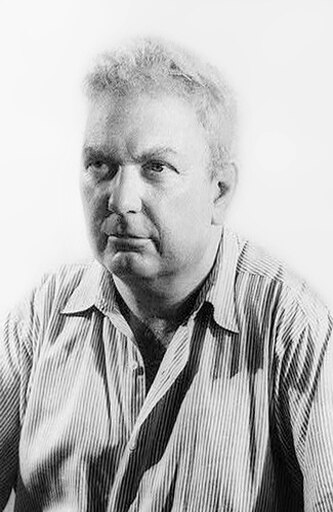
The evolution of Calder's work epitomizes the evolution of plastic art in the present [20th] century...First we have a reduction of volumes to contour lines - a sort of spatial calligraphy in wire.. .Then a growing interest in the bases of plastic organization - texture contrasts, primary colors, simple rhythms. Finally a new fusion of these elements into forms.. .And it is in the ability to effect this fusion that Calder's quality lies.. .Tatlin's and Obmochu's constructions remained architecture and machines. Calder personalizes his 'mobiles' with a lyricism entirely his own - a freshness, gaiety and charm.
What It Means
This is a placeholder explanation generated by the low-overhead model. It interprets "The evolution of Calder's work epitomizes the evolution of plastic art in the present [20th] century...First we have a reduction of volumes to contour lines - a sort of spatial calligraphy in wire.. .Then a growing interest in the bases of plastic organization - texture contrasts, primary colors, simple rhythms. Finally a new fusion of these elements into forms.. .And it is in the ability to effect this fusion that Calder's quality lies.. .Tatlin's and Obmochu's constructions remained architecture and machines. Calder personalizes his 'mobiles' with a lyricism entirely his own - a freshness, gaiety and charm." in the context of "James Johnson Sweeney; from his essay 'Mobiles by Alexander Calder', Pierre Matisse Gallery, New York, 1934" to mean that wisdom is timeless.
Tags
About Alexander Calder