Link Copied!
Albert Barnes Quotes (1798-1870)
Theologian
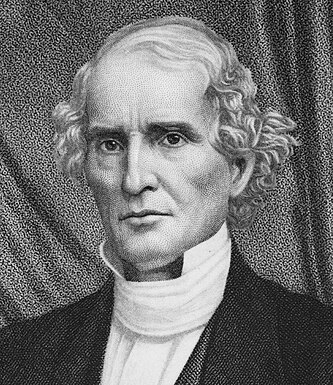


About Albert Barnes
Albert Barnes (1 December 1798 – 24 December 1870) was an American theologian, who graduated from Hamilton College, Clinton, New York, in 1820, and from Princeton Theological Seminary in 1823. Barnes was ordained as a Presbyterian minister by the presbytery of Elizabethtown, New Jersey, in 1825, and was the pastor successively of the Presbyterian Church in Morristown, New Jersey (1825–1830), and of the First Presbyterian Church of Philadelphia (1830–1867).
Best Albert Barnes Quotes
Shortest
Earliest
Explore our curated collection of the most famous and impactful Albert Barnes quotes.
“Life is great if properly viewed in any aspect; it is mainly great when viewed in connection with the world to come.”



“It is, in a great measure, by raising up and endowing great minds that God secures the advance of human affairs, and the accomplishment of His own plans on earth.”
“When life has been well spent; when there is a conscience without reproach; when there is faith in the Saviour; when there is a well-founded hope of heaven, there can be nothing that should disquiet us.”
“It is not the profession of religion which creates the obligation for the performance of duty; for that existed before any such profession was made. The profession of religion only recognises the obligation.”

“While we seek to fill up life in a way that will best secure the ends of our existence here, our whole plan and course of action should be such as will not hinder but serve our preparation for a future world.”

“Christianity may produce agitation, anger, tumult as at Ephesus; but the diffusion of the pure gospel of Christ, and the establishment of the institutions of honesty and virtue, at whatever cost, is a blessing to mankind.”

“The Bible, as a revelation from God, was not designed to give us all the information we might desire, nor to solve all the questions about which the human soul is perplexed, but to impart enough to be a safe guide to the haven of eternal rest.”
“God calls you — alike by Scripture, by your reason, by your conscience, by the events of His providence, by heavenly influences — to consecrate all you have to His service and the good of man; Heaven appeals to you, and the world appeals to you, not to live in vain.”

“Yes, it is a truth that for a good man,— honored, beloved, useful,— with all around him that God ever gives to His children here;— nay, with all that God could give him of earth, it would be " gain " to die. Heaven is a better, a happier, a more desirable world than this is or can be.”

“Our earthly possessions will indeed perish in the final wreck of all things; but let the ship perish, let all we have sink in the deep, if we may come "safe to land." From these storms and billows — these dangerous seas — these tempestuous voyages — may we all be brought at last, safe to heaven.”
“As no one can adventure nearer the throne of God by virtue of his rank, his wealth, or his talent, so no one is kept farther from that throne by his low condition, or by his poverty of wealth, of learning, or of intellect. The prince and the sage are not more welcome to heaven than the poor and ignorant.”

“It has become a settled principle that nothing which is good and true can be destroyed by persecution, but that the effect ultimately is to establish more firmly, and to spread more widely, that which it was designed to overthrow. It has long since passed into a proverb that "the blood of the martyrs is the seed of the church."”
“One of the best maxims in determining our course in life is, to select, at the outset, that in which virtue and principle will be least likely to be put to a test, and in which, from the nature of the calling, a man may bring around him such associations and influences as will be an auxiliary in keeping him in the path of virtue.”
“Life, if we would mark it, is made up of thousands of suggestions from some unseen quarter, prompting us to duty; starting some thought of what is wise and right and just and good; inclining us to thoughtfulness, to meditation, to prayer; making the soul dissatisfied with its present course, and drawing it along in the path of duty, benevolence, and peace.”

“Are angels my attendants? Then I should walk worthy of ray companionship. Am I so soon to go and dwell with angels? Then I should be pure. Are these feet so soon to tread the courts of heaven? Is this tongue so soon to unite with heavenly beings in praising God? Are these eyes so soon to look on the throne of eternal glory, and on the ascended Redeemer? Then these feet and eyes and lips should be pure and holy; and I should be dead to the world, and live for heaven.”
“The idea of preaching the gospel to all nations alike, regardless of nationality, of internal divisions as to rank and color, complexion and religion, constituted the beginning of a new era in history. You cannot preach the gospel in its purity over the world, without proclaiming the doctrine of civil and religious liberty,— without overthrowing the barriers reared between nations and clans and classes of men,— without ultimately undermining the thrones of despots, and breaking off the shackles of slavery, — without making men everywhere free.”

“Great talents are not, before God, a substitute for love for Himself; the possession of a profound intellect does not free any man from the obligations resting on the heart for purity and holiness; a reputation for attainments in science does not settle the question whether he is righteous before his Maker; refined manners are not, in the sight of God, a substitute for the graces of the Spirit; God does not justify man on the ground of human learning; attainments in chemistry, anatomy, geology, botany, astronomy, or skill in sculpture and painting, — these do not prepare a man to die.”
“I entreat you to devote one solemn hour of thought to a crucified Saviour — a Saviour expiring in the bitterest agony. Think of the cross, the nails, the open wounds, the anguish of His soul. Think how the Son of God became a man of sorrows and acquainted with grief, that you might live forever. Think as you lie down upon your bed to rest, how your Saviour was lifted up from the earth to die. Think amid your plans and anticipations of future gaiety, what the redemption of your soul has cost, and how the dying Saviour would wish you to act. His wounds plead that you will live for better things.”

“When we come to die, we shall be alone. From all our worldly possessions we shall be about to part. Worldly friends — the friends drawn to us by our position, our wealth, or our social qualities, — will leave us as we enter the dark valley. From those bound to us by stronger ties — our kindred, our loved ones, children, brothers, sisters, and from those not less dear to us who have been made our friends because they and we are the friends of the same Saviour, — from them also we must part. Yet not all will leave us. There is One who "sticketh closer than a brother" — One who having loved His own which are in the world loves them to the end.”
“That any should suffer forever, lingering on in hopeless despair, and rolling amidst infinite torments without the possibility of alleviation and without end; that since God can save men and will save a part, he has not proposed to save all — these are real, not imaginary, difficulties... My whole soul pants for light and relief on these questions. But I get neither; and in the distress and anguish of my own spirit, I confess that I see no light whatever. I see not one ray to disclose to me why sin came into the world; why the earth is strewn with the dying and the dead; and why man must suffer to all eternity. I have never seen a particle of light thrown on these subjects, that has given a moment's ease to my tortured mind... I confess, when I look on a world of sinners and sufferers — upon death-beds and grave-yards — upon the world of woe filled with hosts to suffer for ever: when I see my friends, my family, my people, my fellow citizens when I look upon a whole race, all involved in this sin and danger — and when I see the great mass of them wholly unconcerned, and when I feel that God only can save them, and yet he does not do so, I am stuck dumb. It is all dark, dark, dark to my soul, and I cannot disguise it.”

Albert Barnes Quotes by Topic
Find exactly what you are looking for by browsing this categorized list of Albert Barnes quotes by topic.
Albert Barnes on Life 2 quotes
“Life is great if properly viewed in any aspect; it is mainly great when viewed in connection with the world to come.”

Albert Barnes on Impenitence 2 quotes
“God calls you — alike by Scripture, by your reason, by your conscience, by the events of His providence, by heavenly influences— to consecrate all you have to His service and the good of man; Heaven appeals to you, and the world appeals to you, not to live in vain.”

Albert Barnes on Piety
Albert Barnes on Greatness
“It is, in a great measure, by raising up and endowing great minds that God secures the advance of human affairs, and the accomplishment of His own plans on earth.”
Albert Barnes on Chemistry
Albert Barnes on Duty
“It is not the profession of religion which creates the obligation for the performance of duty; for that existed before any such profession was made. The profession of religion only recognises the obligation.”
Albert Barnes on Obligation
“It is not the profession of religion which creates the obligation for the performance of duty; for that existed before any such profession was made. The profession of religion only recognises the obligation.”
Albert Barnes on Heaven
“Yes, it is a truth that for a good man,— honored, beloved, useful,— with all around him that God ever gives to His children here;— nay, with all that God could give him of earth, it would be " gain " to die. Heaven is a better, a happier, a more desirable world than this is or can be.”

Albert Barnes on Poverty
“As no one can adventure nearer the throne of God by virtue of his rank, his wealth, or his talent, so no one is kept farther from that throne by his low condition, or by his poverty of wealth, of learning, or of intellect. The prince and the sage are not more welcome to heaven than the poor and ignorant.”

Albert Barnes on Persecution
“It has become a settled principle that nothing which is good and true can be destroyed by persecution, but that the effect ultimately is to establish more firmly, and to spread more widely, that which it was designed to overthrow. It has long since passed into a proverb that "the blood of the martyrs is the seed of the church."”
Albert Barnes on Employment
“One of the best maxims in determining our course in life is, to select, at the outset, that in which virtue and principle will be least likely to be put to a test, and in which, from the nature of the calling, a man may bring around him such associations and influences as will be an auxiliary in keeping him in the path of virtue.”
Albert Barnes on Gospel
“The idea of preaching the gospel to all nations alike, regardless of nationality, of internal divisions as to rank and color, complexion and religion, constituted the beginning of a new era in history. You cannot preach the gospel in its purity over the world, without proclaiming the doctrine of civil and religious liberty,— without overthrowing the barriers reared between nations and clans and classes of men,— without ultimately undermining the thrones of despots, and breaking off the shackles of slavery, — without making men everywhere free.”

Albert Barnes on Son of God
“I entreat you to devote one solemn hour of thought to a crucified Saviour — a Saviour expiring in the bitterest agony. Think of the cross, the nails, the open wounds, the anguish of His soul. Think how the Son of God became a man of sorrows and acquainted with grief, that you might live forever. Think as you lie down upon your bed to rest, how your Saviour was lifted up from the earth to die. Think amid your plans and anticipations of future gaiety, what the redemption of your soul has cost, and how the dying Saviour would wish you to act. His wounds plead that you will live for better things.”
Albert Barnes on Death
“When we come to die, we shall be alone. From all our worldly possessions we shall be about to part. Worldly friends — the friends drawn to us by our position, our wealth, or our social qualities, — will leave us as we enter the dark valley. From those bound to us by stronger ties — our kindred, our loved ones, children, brothers, sisters, and from those not less dear to us who have been made our friends because they and we are the friends of the same Saviour, — from them also we must part. Yet not all will leave us. There is One who "sticketh closer than a brother" — One who having loved His own which are in the world loves them to the end.”

About Albert Barnes
Albert Barnes (1 December 1798 – 24 December 1870) was an American theologian, who graduated from Hamilton College, Clinton, New York, in 1820, and from Princeton Theological Seminary in 1823. Barnes was ordained as a Presbyterian minister by the presbytery of Elizabethtown, New Jersey, in 1825, and was the pastor successively of the Presbyterian Church in Morristown, New Jersey (1825–1830), and of the First Presbyterian Church of Philadelphia (1830–1867).
QuotesCosmos Cross-Civilizational Archive
Explore Related Wisdom Pillars, Worldviews & Canonical Works
Discover how humanity's greatest philosophers, sacred scriptures, and literary masterpieces address the core questions of existence.
30 Wisdom Pillars
22 Worldviews & Traditions
Canonical Books & Scriptures