Link Copied!
Alan Ryan Quotes (1940-)
Philosopher, Author
About Alan Ryan
Alan James Ryan FBA (born 9 May 1940) is a British philosopher. He was Professor of Politics at the University of Oxford. He was also Warden of New College, Oxford from 1996 to 2009. He retired as Professor Emeritus in September 2015 and lives in Summertown, Oxford.
Best Alan Ryan Quotes
Shortest
Earliest
Explore our curated collection of the most famous and impactful Alan Ryan quotes.
“The one thing we can say is that if Socrates really expected to get a definitive answer to his question, 'What is justice?' when talking to his friends on their way back to the Piraeus, he has been disappointed. It remains a contentious and disputed subject.”
“Mankind has always argued about justice and injustice, while social scientists and politicians have endlessly discussed the conditions which make justice more or less attainable. These essays discuss a more philosophical issue-what justice is and why it matters. Although their authors were philosophers, few of them were 'professional ' philosophers...”

“Justice stands in an awkward relationship with utility. The general practice of justice conduces to human welfare, probably more than anything else. The old tag sums up justice as 'honeste vivere, neminem laedere, suum cuique tribuere' … Yet, justice seems also to conflict with utility and even with the general welfare, let alone the welfare of particular people.”
“I am uncomfortable with the thought that serious thinkers about politics may retire into the ivory tower and write difficult—if often very interesting—essays and books for their colleagues alone, leaving debates over the prospects of modern political life to the punditry of contributors to the op-ed pages, or the shouting matches that pass for political debate on some television channels.”
“This is appropriate. Justice is the most 'political' or institutional of the virtues. The legitimacy of a state rests upon its claim to do justice. … Doing justice is not the primary purpose of the family, the classroom, the small business, even though a father, teacher, or employer ought to behave justly towards children, pupils, or employees when rearing them, teaching them, . and employing them.”
“I say cowardice, because the standards which is Isaiah Berlin himself has set for anyone who undertakes such an enterprise are dauntingly high. His ability to catch the allegiances and the emotional tone of the authors he has written about, as well as his ability to meet the commentator's first duty to the subtleties of their thought, has always meant that their per sonalities and ideas alike have remained in tact and alive.”

“John Rawls says that justice is the 'first virtue' of social institutions, meaning that it is more fundamental than any other, and that we cannot expect individuals to accept social regulation, and engage in social co-operation unless the terms on which society operates are seen as reasonably just. To talk as though Plato and Aristotle saw justice as a matter of the terms of social and political co-operation may suggest a modern and individualist perspective foreign to both. Yet it is not wholly misleading.”

“Together with the histories of Polybius and Livy, Cicero’s polemical speeches and writings, and his personal correspondence, form some of the most important historical resources for understanding the Roman legal and political system. Here we focus only on his political theory narrowly construed, part of his program to adapt Greek philosophy to Roman social and political purposes, bypassing even the extended defense of the role of oratory in political life that became something like a handbook for the study of rhetoric.”
“Cicero’s style is a key to the success of De officiis, and not just the literary style, but the political and intellectual style. Regulus aside, the demands of duty generally stretch only as far as the well-educated, well-to-do man is likely to follow. Thus, he insists, in a famous metaphor that Machiavelli later stood on its head, that courage is necessary but the courage of a human being is not the ferocity of the lion, just as wisdom is necessary but the intelligence of the human being is not the cunning of the fox.”

“The very idea of a Christian political theology is problematic. If human beings are only transitorily on earth, and earth is but a vale of tears through which we must pass on our way to paradise, earthly politics loses almost all value. Life in the polis cannot be the good life for man, since fulfillment lies in the hereafter; here below, we must prepare for eternity. Earthly happiness for rational persons consists in whatever confidence they may entertain about the life hereafter. This “abstentionist” vision is in some ways at odds with the involvement of Christ in the everyday life of the community in which he spent his short life.”

“Much of the time, the question goes unasked in prosperous liberal democracies like Britain or the United States, because most of us see political equality as exhausted by “one person, one vote” and dig no deeper; we know that one person, one vote coexists with the better-off and better-organized buying influence through lobbying, campaign contributions, and use of the mass media, but we find ourselves puzzled to balance a belief that everyone has the right to use his or her resources to influence government—which is certainly one form of political equality—with our sense that excessive inequality of political resources undermines democracy.”
“Plato was accused by some of his twentieth-century critics of racism, totalitarianism, fascism, and other political crimes with a very contemporary flavor. These accusations are too anachronistic to be taken seriously; whatever explains Hitler and Mussolini, it is not the dialogues of Plato. The more plausible complaint is that Plato does not take seriously the inescapability of politics in some form. Plato’s metaphysics is fascinating; so is his conviction that the just man does better than the unjust man, no matter what earthly fate befalls him. His political thinking often amounts to an injunction to abolish the conflicts that politics exists to resolve and fantasies about how it might be done.”

“Aristotle’s perspective is not ours. Modern political discussion is imbued with a concern for individual human rights; we look to institutions to hold accountable those who wield power over their fellows, so that the rights of individuals are respected. Aristotle does not. Because he sees the world in teleological terms, he asks—as Plato did—how we can ensure that the state functions as it should. The excellence of the citizenry and the excellence of the constitution are understood in that light. Hence, of course, Aristotle’s focus on the collective intelligence and collective good sense of collectives; if “the many” are not to be trusted, it remains true that many heads are better than one.”

“Aristotle’s enthusiasm for the preservation of social distinction and his emphasis on the social position of the “high-souled” man remind us that even in his favored politeia, with as many respectable and steady men of the middle class admitted to political participation as is possible, Aristotle hankered after the rule of true, that is, natural aristocrats. If that attitude is not unknown two and a half millennia later, his unconcern with those left out of this vision of the world—women, ordinary working people, foreigners, slaves—is happily rather less common. But we shall not see much sympathy for ordinary lives and ordinary happiness for many centuries yet, certainly not in the work of Cicero.”
“Cicero bent Greek ideas to his vision of the idealized Roman Republic, and his understanding of the mores—the morality and social attachments—of the gentlemanly statesmen who would hold power in a just republic. Readers familiar with Machiavelli’s Prince will hear curious echoes of that work in Cicero’s advice; curious because the pieties of Cicero’s advice to the would-be statesman were satirized by Machiavelli sixteen hundred years later. If his philosophy was Greek and eclectic, Cicero owed his constitutional theory to Polybius; he was born soon after Polybius died, and read his history. And Cicero greatly admired Polybius’s friend and employer Scipio the Younger. There are obvious differences of tone. Polybius celebrated Rome’s achievement of equipoise, while Cicero lamented the ruin of the republic. Cicero’s account of republican politics veers between a “constitutional” emphasis on the way that good institutions allow a state to function by recruiting men of good but not superhuman character, and a “heroic” emphasis on the role of truly great men in reconstituting the state when it has come to ruin. Cicero’s vanity was so notorious that everyone knew he had himself in mind as this hero—had he not saved the republic before when he quelled the conspiracy of Catiline?”

“Political thought as we understand it began in Athens because the Athenians were a trading people who looked at their contemporaries and saw how differently they organized themselves. If they had not lived where they did and organized their economic lives as they did, they could not have seen the contrast. Given the opportunity, they might not have paid attention to it. The Israelites of the Old Testament narrative were very conscious of their neighbors, Egyptian, Babylonian, and other, not least because they were often reduced to slavery or near-slavery by them. That narrative makes nothing of the fact that Egypt was a bureaucratic theocracy; it emphasizes that the Egyptians did not worship Yahweh. The history of Old Testament politics is the history of a people who did their best to have no politics. They saw themselves as under the direct government of God, with little room to decide their own fate except by obeying or disobeying God’s commandments. Only when God took them at their word and allowed them to choose a king did they become a political society, with familiar problems of competition for office and issues of succession. For the Jews, politics was a fall from grace. For the Greeks, it was an achievement. Many besides Plato thought it a flawed achievement; when historians and philosophers began to articulate its flaws, the history of political thought began among the argumentative Athenians.”

“Justice is closely connected to respect for rights. Modern writers discuss both subjects together with no suggestion that one might discuss one with the other. It was not always so. Greek political theory and Roman Law had sophisticated ideas about justice in its various aspects, but did not embrace our conception of individual rights. This may seem counter-intuitive. How could a society recognize someone as the owner of a piece of property without acknowledging an individual right? How does legitimate one-man rule, monarchy, differ from its illegitimate parody, tyranny, unless the lawful king has a right to the authority he exercises that the tyrant does not?
The answer is that property and authority were defined by law rather than our notion of individual rights. To own property was to be the person to whom the law accorded the privileges and immunities that locally defined ownership. To be a legitimate ruler was to be the person the law designated to rule. It is a commonplace that ancient notions of law accorded far more power over property to the family and other groups than modern notions of private property do. Even under the Roman Law, where ownership had an 'absolute' and sovereign character, property was not understood in the modern way; when the law told the judge to give a man his ius, this primarily meant that he should be treated as the law required. The 'subjective' understanding of rights, whereby the right-holder may stand on his rights or not as he chooses, was not a Roman notion.”
The answer is that property and authority were defined by law rather than our notion of individual rights. To own property was to be the person to whom the law accorded the privileges and immunities that locally defined ownership. To be a legitimate ruler was to be the person the law designated to rule. It is a commonplace that ancient notions of law accorded far more power over property to the family and other groups than modern notions of private property do. Even under the Roman Law, where ownership had an 'absolute' and sovereign character, property was not understood in the modern way; when the law told the judge to give a man his ius, this primarily meant that he should be treated as the law required. The 'subjective' understanding of rights, whereby the right-holder may stand on his rights or not as he chooses, was not a Roman notion.”

Alan Ryan Quotes by Topic
Find exactly what you are looking for by browsing this categorized list of Alan Ryan quotes by topic.
Alan Ryan on Athenian democracy 3 quotes
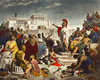
“The contrast between the Persian state—and by the same token the late Imperial Roman, Bismarckian, or modern European state—and the Greek polis is far from the only theme that dominates this story. A familiar contrast is between Athenian and Roman notions of freedom and citizenship. The Athenians practiced a form of unfiltered direct democracy that the Romans thought a recipe for chaos; the Romans gave ordinary free and male persons a role in politics, but a carefully structured and controlled one.”
Alan Ryan on Democracy 2 quotes
“From Machiavelli to the present, thinkers have distinguished between the adept elite and the incompetent many. We may think that anyone who draws such a distinction and in such terms can be no friend to democracy; that is not true.”

Alan Ryan on Republic (Plato) 2 quotes
“Plato's Republic is a treatise on justice, written as a dialogue between Socrates and some of his upper-class Athenian friends. Socrates was impressed by the way decent and upright fathers were disgraced by the pride and ambition of their sons.”

Alan Ryan on Laws (dialogue)
“To say that Plato has only one concern in his political writings is unfair to the dogged and detailed emphasis of Laws on how to organize a second-best state if the utopia of Republic cannot be achieved. Laws is rich in institutional detail; some of it reappears in Aristotle’s work, although he was as critical of Laws as he was of Republic.”

Alan Ryan on Nature
“Modern readers find several of Aristotle’s views deeply repugnant. The two most obvious are his views on slavery and his views on the intellectual and political capacity of women. Unsurprisingly, these are connected. The relation of master to inferior—of the male head of household to wife and slaves—is a basic and natural human relationship.”

Alan Ryan on Public participation
“The modern anxiety about popular participation in political life has a long history, but has taken a distinctive form. Greek city-states were plagued by civil war between oligarchs and democrats; the last hundred years of the Roman Republic were marked by conflicts between populares and optimates, the (proclaimed) defenders of the interests of the people and the upper classes.”
Alan Ryan on Direct democracy
“The contrast between the Persian state—and by the same token the late Imperial Roman, Bismarckian, or modern European state—and the Greek polis is far from the only theme that dominates this story. A familiar contrast is between Athenian and Roman notions of freedom and citizenship. The Athenians practiced a form of unfiltered direct democracy that the Romans thought a recipe for chaos; the Romans gave ordinary free and male persons a role in politics, but a carefully structured and controlled one.”

Alan Ryan on A Theory of Justice
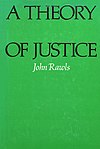
“The most famous modern assertion of the conflict between utilitarian and justice-based considerations is contained in John Rawls's masterpiece, A Theory of Justice... Rawls begins from Hume's and Mill's premisses, but reaches very different conclusions. Like them, he sees justice as regulating the results of social co-operation; unlike Plato, he does not think of justice as operating 'within the soul'. Justice is institutional and political; we co-operate with one another within an institutional framework, and that framework dictates the broad outlines of the results.”
Alan Ryan on Politics (Aristotle)
“Aristotle advised tyrants and oligarchs on how to preserve their position in the face of hostile public opinion; but the Politics was not a treatise on statecraft, and his advice is generally very unlike Machiavelli’s unabashed recommendation of violence and deceit. Politics was a treatise on the nature of the Greek polis, framed by a philosophical account of the nature of the good life. It explained why the skills and temperament of the statesman were useful, but it does not discuss them in detail or encourage the reader to acquire them. Aristotle’s ideal was, as he said, the rule of laws, not men. He theorized the political life, not the skills of statecraft. He made a persuasive case for the autonomy of the political realm, and for more everyday and down-to-earth values than those that Plato cared for; he provided a philosophical justification for the existence of statesmen and an account of why we should not seek to replace political leaders with philosopher-kings. Once he had explained the deficiencies of Plato’s attempted purification of political life, he needed no elaborate account of the role of philosophy in practical life, since his account of ethics and politics in the Nicomachean Ethics supplied it, along with a caution that such inquiries were not for young men but for those whose blood had cooled a little. Unlike Plato, he did not dismiss rhetoric as the art of making a bad case look good, but he made nothing of it in the Politics. The writer who made oratory central was Cicero.”

Alan Ryan on Statesman (dialogue)
“Polybius has no time for utopias that nobody has tried to put into practice. “As for Plato’s celebrated republic,” he observes, “I do not think it admissible that this should be brought into the argument about constitutions. For just as we do not allow artists or athletes who are not duly registered or have not been in training to take part in festivals or games, so we should not admit the Platonic constitution to this contest for the prize of merit unless some example can be provided of it in action.” In this light, Plato’s dialogue Statesman is an ironic commentary on statecraft, not a contribution to it. The participants in Plato’s dialogue discuss the definition of the statesman, and what he must know to be the master of his art. But that art is not that of preserving the republic against its corruption by ambitious men such as Alcibiades or Sulla or Caesar; and the Socratic statesman’s argumentative skills are not devoted to persuading the Roman Senate to agree to the execution of Catiline’s fellow conspirators on the basis that salus populi suprema lex est—the preservation of the republic legitimates an otherwise illegal act. The statesman of Plato’s imagination is the godlike superior of the human herd or flock that he superintends, and Socratic statecraft is the tending of souls. Socrates did not expect to carry conviction in Gorgias when he described himself as the only true statesman in Athens. In the sense at issue here, his craft is not statecraft at all, and he is not a statesman.”

What Alan Ryan Said About Others
Discover personal opinions Alan Ryan shared regarding contemporaries.
Alan Ryan on Karl Marx 3 quotes
View all 3 quotes on Karl Marx →
Alan Ryan on Aristotle 3 quotes
“Justice is of two kinds, justice in distribution and justice in rectification. ... Aristotle thinks primarily of setting things straight, and denies that rectificatory justice contains an element of 'tit for tat'.”

Alan Ryan on Plato 2 quotes
“Plato certainly shows something significant. It is on average better to be just. The unjust man must always fear that others will discover his in justices and defend themselves against him, and is exposed to anxieties the just man escapes.”
Alan Ryan on Socrates 2 quotes
“With the trial of Socrates, the history of Western political thinking begins. Socrates's death sparked off Plato's astonishing philosophical career. Only five of Plato's dialogues are centrally concerned with politics, though many bear on the practice of Athenian democracy.”

Alan Ryan on Polybius 2 quotes
“Polybius's picture of the motors of political change is persuasive if not taken rigidly, and it provides a rationalization of Roman history: leaders who rise by their talents will (at least initially) live like their fellows and arouse no hostility, while those who inherit a throne will separate themselves from everyone else and arouse envy. They will be opposed by men of the upper class affronted by the insolence of their king—or kings, since Polybius knew that Sparta and Rome had been ruled by a collective monarchy. When they are overthrown, their aristocratic supplanters will rule in their stead. That aristocracies degenerate into oligarchies is the most common complaint against aristocratic governments, and often leveled at their modern descendants, the elected aristocrats who occupy the seats of power in the modern democratic world. Readers will find less persuasive Polybius’s claim that when an oligarchy is overturned, democracy invariably follows. He says that the memory of the tyranny of kings will be too fresh in everyone’s mind for there to be a reversal of the cycle from oligarchy to monarchy, but this is empirically unconvincing; it turns the unusual experience of Athens and Rome into a principle. We are all too familiar with situations in which a disgusted public turns to a dictator, though it has to be said in Polybius’s favor that “oligarchy-democracy-dictatorship” is perhaps the most common cycle of all.”
Alan Ryan on John Stuart Mill
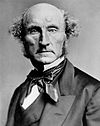
Alan Ryan on David Hume
“Hume's account of justice is part of a larger account of the moral and political virtues generally. Hume wrote as a philosophical anthropologist, not as a reformer, unlike Bentham and Mill who set out to reform our moral outlook rather than merely to explain it.”

Alan Ryan on Isaiah Berlin
“I am a great admirer of Isaiah Berlin, whose essays in the history of ideas provide one model for what I do here; nonetheless, there are moments in his work that make the reader wonder whether it is Montesquieu speaking or Berlin, or whether Machiavelli would have recognized the causes for which Berlin recruited him.”

Alan Ryan on William Beveridge
“The new liberals...wanted an "unservile state" which took on only those welfare functions which would liberate the citizenry into citizenship. Lord Beveridge was a fine example of the breed, imbued with what Mrs Thatcher might hail as Victorian values, particularly a strong sense of social responsibility and a tremendous emphasis on the relationship between freedom, knowledge and self-control.”

Alan Ryan on Leo Strauss
“To understand nature, human nature, and the imperatives of social life, it was essential to throw out this meaningless rubbish and begin on scientific foundations. No account that sees Hobbes as other than a secular, materialistic utilitarian is an account of Hobbes at all, which is why Leo Strauss’s attempt to present Hobbes’s science as a mere tarting-up of old-fashioned conceptions of the state as a remedy for sin just misses the point.”

Alan Ryan on Cicero
“Cicero discusses justice as the second of the four cardinal virtues (wisdom, justice, courage, and temperance) whose presence constitutes moral goodness. Justice is the virtue that holds society together and allows us to pursue the common good for whose sake society exists. ... One interesting feature is his concern with in justice... The Stoic view that morality promotes the common good implies that we must try to restore the social relationship that has been violated.”

Alan Ryan on Michel Foucault
“It is, for instance, pretty suicidal for embattled minorities to embrace Michel Foucault, let alone Jacques Derrida. The minority view was always that power could be undermined by truth [...] Once you read Foucault as saying that truth is simply an effect of power, you've had it. [...] But American departments of literature, history and sociology contain large numbers of self-described leftists who have confused radical doubts about objectivity with political radicalism, and are in a mess.”

About Alan Ryan
Alan James Ryan FBA (born 9 May 1940) is a British philosopher. He was Professor of Politics at the University of Oxford. He was also Warden of New College, Oxford from 1996 to 2009. He retired as Professor Emeritus in September 2015 and lives in Summertown, Oxford.
QuotesCosmos Cross-Civilizational Archive
Explore Related Wisdom Pillars, Worldviews & Canonical Works
Discover how humanity's greatest philosophers, sacred scriptures, and literary masterpieces address the core questions of existence.
30 Wisdom Pillars
22 Worldviews & Traditions
Canonical Books & Scriptures