Link Copied!
Adolph Gottlieb Quotes (1903-1974)
Painter

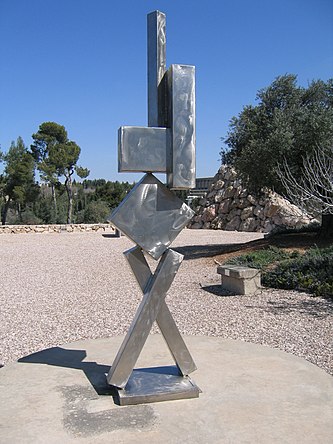
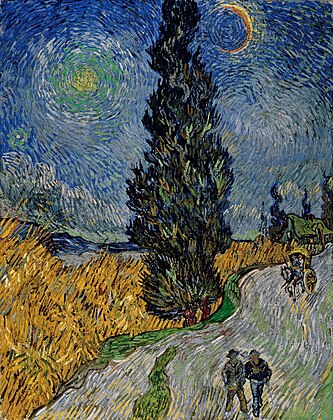
About Adolph Gottlieb
Adolph Gottlieb (March 14, 1903 – March 4, 1974) was an American abstract expressionist painter and sculptor.
Best Adolph Gottlieb Quotes
Shortest
Earliest
Explore our curated collection of the most famous and impactful Adolph Gottlieb quotes.


“To my mind certain so-called abstraction is not abstraction at all.. ..on the contrary it is realism of our time.”

“We were outcasts, roughly expressionist painters not acceptable to most dealers and collectors.(A reference to the TEN group of painters).”
“In times of violence, personal predilections for niceties of colour and form seem irrelevant. All primitive expression (like the myths) reveals the constant awareness of powerful forces, the immediate presence of terror and fear.”
“The role of the artist, of course, has always been that of image-maker. Different times require different images. Today when our aspirations have been reduced to a desperate attempt to escape from evil, and times are out of joint, our obsessive, subterranean and pictographic images are the expression of the neurosis which is our reality. To my mind certain so-called abstraction is not abstraction at all. On the contrary, it is the realism of our time.”
“See, I never understand why my paintings hold together because I don't have any tricks for doing it and that is usually what makes a painting academic. There were some well-known devices for making a painting work hold together, ave cohesion. This seemed to be organized. But I don't necessarily have to know what the mechanism is. For me, what it really is, is something you have in yourself that makes you feel, it gives the painting a feeling of unity, of oneness, and being of all of one piece.”

“I wanted to do something figurative. Well I couldn’t visualize a whole man.. .I felt that I wanted to make a painting primarily with painterly means. So I flattened out my canvas and made them roughly rectangular divisions, with lines going out in four directions. That is, vertically and horizontally.. .And then I would free associate, putting whatever came to my mind freely within these different rectangles... I thought of it as related tot the automatic writing the surrealists were interested in.”
“When I started doing the 'Bursts' [paintings Gottlieb started c. 1958] I began to do part of the painting horizontally. It was necessary to do that because I was working with a type of paint which had a particular viscosity, which flowed, and if it were on a vertical surface it would just run. If it were on a horizontal surface, I could control it... I was using a combination of brushes and knives, palette knives... and spatulas... I’ve tried everything, rollers, rags, I’ve put paint on with everything.”
“Well, I was interested in a subjective image [in the 1940's].. ..stemming perhaps from the subconscious. Because the external world as far as I was concerned had been totally explored in painting and there was a whole ripe new area in the inner world that we all have. Now in order to externalise this you have to use visual means and so the visual means may have some relation tot the external world. However what I was trying to focus on was what I experienced within my mind, within my feelings, rather than on the external world which I can see.”

“As for a few others, the vital task was a wedding of abstraction and surrealism. Out of these opposites something new could emerge, and Gorky’s work is a part of the evidence that this is true. What he felt, I suppose, was a sense of polarity, not of dichotomy; that opposites could exist simultaneously within a body, within a painting or within an entire art.. .These are the opposites poles in his work. Logic and irrationality; violence and gentleness; happiness and sadness, surrealism and abstraction. Out of these elements I think Gorky evolved his style.”
“People frequently ask why my canvases are compartmentalized. No one ever asks this about a house. A man with a large family would not choose to live in a one-room house.. .I am like a man with a large family and must have many rooms. The children of my imagination occupy the various compartments of my painting, each independent and occupying its own place. At the same time they have the proper atmosphere in which to function together, in harmony and as a unified group. One can say that my paintings are like a house, in which each occupant has a room of his own.’”

“For example, Rothko and I came to an agreement on the question of the subject matter; if we were to do something which could develop in some direction other than the accepted directions of that time, it would be necessary to use different subjects to begin with, and 1942, we embarked on a series of paintings that attempted to use mythological subject matter, preferably from Greek mythology. I did a series of paintings on the theme of Oedipus and Rothko did a series of paintings on other Greek themes… ..this offered a possibility of a way out [of a. o. Social Realism and Cubism ]”
“..more significant, perhaps, was the fact that during the war [1940-1945] many of the Surrealists came [from Europe] to America and we were able to see them as just other human beings like ourselves and not as mythical characters who had superhuman capacities and talents. I think that there was a feeling after meeting them [a.o. Marcel Duchamp, Andre Masson, André Breton, Max Ernst ] personally that, well, if these men can have these great achievements and talents, there is hope for us [younger American artists]”
“After doing the imaginary landscapes until say 1956, in ’57 I came out with the first Burst painting... There was a different type of space than I had ever used and it was a further clarification of what I was trying to do. The thing that was interesting that it was a return to a focal point, but it was a focal point with the kind of space that existed in traditional painting. Because this was like a solitary image or two images that were just floating in the canvas space. They had to hold the space and they also had to create all the movement – that took place within the rectangle.”
“I have always worked on the assumption that if something is valid and meaningful to me, it will also be valid and meaningful to many others. Not to everyone of course. On the basis of this assumption I do not think of an audience when I work, but only of my own reactions. By the same token I do not worry whether what I am doing is art or not. If what I paint is expressive, if it seems to communicate the feeling that is important to me, then I am not concerned if my work does not have marked earmarks of art. My work has been called abstract, surrealistic, totemistic and primitive.. ..I chose my own label and called my paintings 'Pictographs'..”
“By now it has become a formula to attach new ideas on the grounds of extremism and unintelligibility. Every phase of modern art has in turn been attacked on these grounds, until the new phase became acceptable. Although the present attacks are focused on those who emphasize the subjective side of abstract painting, the threat to other sections of the modern painting is implicit. The attacks are always focused on those who are considered the black sheep, for reasons of non-conformity. They are conspicuous, because they are different, and therefore may be easy targets. [Gottlieb's comment on the attacks on artistic freedom in the United States, 1948]”
“Now let acknowledge the fact that to explain the meaning of painting is difficult. And when the form and the content are really new, there is not even a vocabulary with which to attempt to explain the new work. This is a problem for critics and a difficult problem. I think it is about time for the critics to face this problem, as well as the fact that there are a few new forms and ideas in modern painting, that these have validity, that they are here to stay and will be developed whether opposed or not... They should investigate the serious ideas underlying the painting which they malign. [Gottlieb's quote on the attacks of critics on abstract art, 1948]”
“The true artist always refuses to conform to any standards others than his own. That’s why the attacks in Russia against Shostakovitch and Prokofiev are identical to the attacks that have been made here against American pioneers of abstract painting like Davis, Holty, or Morris. In Russia it was Malevich and Gabo, in this country at the moment it is people like Rothko, Baziotes, Pollock, my self and many others who are being attacked. The names may vary, but the methods, the motives; the objects of attack are essentially the same. Only meritocracy is forever immune, because it is forever ready to conform. [quote of Gottlieb, on the attacks on artistic freedom in 1948]”
“I was looking for some sort of systematic way of getting down these subjective images and I had always admired, particularly admired the early Italian painters who proceeded the Renaissance and I very much liked some of the altarpieces in which there would be, for example the story of Christ told in a series of boxes.. .And it seemed to me this was a very rational method of conveying something. So I decided to try it. But I was not interested in telling, in giving something its chronological sequence. What I wanted to do was give something, to present what material I was interested in simultaneously so that you would get an instantaneous impact from it. So I made boxes..”
“I was looking for some sort of systematic way of getting down these subjective images and I had always admired, particularly admired the early Italian painters who proceeded the Renaissance and I very much liked some of the altarpieces in which there would be, for example the story of Christ told in a series of boxes.. .And it seemed to me this was a very rational method of conveying something. So I decided to try it. But I was not interested in telling, in giving something its chronological sequence. What I wanted to do was give something, to present what material I was interested in simultaneously so that you would get an instantaneous impact from it. So, I made boxes..”
“[David Sylvester asked Gottlieb, he is aware of the impact of the city New York on his painting:] Definitely I am. When I was in Paris last spring, my original plan was to go for four months and to paint there, and a number of people urged me to stay. That wanted to see what would happen, how my painting would change. But I felt strongly after being there less than a month that it was necessary for me to come back to New York, because I feel a certain rhythm in New York I don't feel in Paris.. ..there is a tempo in the life of New York which is exhilarating and I feel that this gets into one's painting. It's the pulse, not the look. I'am not involved with the external appearance of the city; it’s the vibrations.]”
Adolph Gottlieb Quotes by Topic
Find exactly what you are looking for by browsing this categorized list of Adolph Gottlieb quotes by topic.
Adolph Gottlieb on Abstract expressionism 2 quotes
“We had certain common assumptions. We hung around together and we also talked a lot about painting. The one thing we did agree upon was that a certain group of painters respected each other's work and I think that the same group of painters still respect.. .I think that's why we have been able to remain friendly. even though we may disagree on specific works or have certain reservations about the other man's point of view.. .That is why a particular group has more or less gone through this period of approximately fifteen year as a group.”
Adolph Gottlieb on Modern art
“By now it has become a formula to attach new ideas on the grounds of extremism and unintelligibility. Every phase of modern art has in turn been attacked on these grounds, until the new phase became acceptable. Although the present attacks are focused on those who emphasize the subjective side of abstract painting, the threat to other sections of the modern painting is implicit. The attacks are always focused on those who are considered the black sheep, for reasons of non-conformity. They are conspicuous, because they are different, and therefore may be easy targets. ( his comment on the attacks on artistic freedom in 1948)”
Quotes About Adolph Gottlieb
Gain deeper perspective through quotes about Adolph Gottlieb from others.
Elaine de Kooning on Adolph Gottlieb
“[explaining the close connection between Gottlieb-Newman-Rothko:] They were friends. They all were protégées of Milton Avery's, the three of them. They all adored Milton Avery. Oh, I don't know if they adored him, but they revered him.. ..And Milton Avery was the big powerful mover in their lives. Of the three in terms of professionalism, Gottlieb was the most professional always. He never took unto himself this role of, "I have the key to the absolute," a term that Barney Newman was very fond of invoking. They knew each other all along. And if I'm not mistaken, all three of them were married to school teachers.”
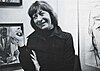
About Adolph Gottlieb
Adolph Gottlieb (March 14, 1903 – March 4, 1974) was an American abstract expressionist painter and sculptor.
QuotesCosmos Cross-Civilizational Archive
Explore Related Wisdom Pillars, Worldviews & Canonical Works
Discover how humanity's greatest philosophers, sacred scriptures, and literary masterpieces address the core questions of existence.
30 Wisdom Pillars
22 Worldviews & Traditions
Canonical Books & Scriptures