Link Copied!
Adam Hanieh Quotes (0-)
King
Best Adam Hanieh Quotes
Shortest
Earliest
Explore our curated collection of the most famous and impactful Adam Hanieh quotes.
“Without the mitigation effects offered through quarantine and isolation, the actual progress of the disease in the rest of the world will certainly be much more devastating than the harrowing scenes witnessed to date in China, Europe, and the United States. Moreover, workers involved in informal and precarious labor often live in slums and overcrowded housing — ideal conditions for the explosive spread of the virus.”
“We are entering an alarming situation where many poorer countries will face increasingly burdensome debt repayments while simultaneously attempting to manage an unprecedented public health crisis – all in the context of a very deep global recession. And let us not harbor any illusions that these intersecting crises might bring an end to structural adjustment or the emergence of some kind of "global social democracy." As we have repeatedly seen over the last decade, capital frequently seizes moments of crisis as a moment of opportunity — a chance to implement radical change that was previously blocked or appeared impossible.”
“Even inside Europe there is extreme unevenness in the capacity of states to deal with this crisis — as the juxtaposition of Germany and Greece illustrates — but a much greater disaster is about to envelop the rest of the world. In response, our perspective on this pandemic must become truly global, based on an understanding of how the public health aspects of this virus intersect with larger questions of political economy (including the likelihood of a prolonged and severe global economic downturn). This is not the time to pull up the (national) hatches and speak simply of the fight against the virus inside our own borders.”

“As with all so-called humanitarian crises, it is essential to remember that the social conditions found across most of the countries of the South are the direct product of how these states are inserted into the hierarchies of the world market. Historically, this included a long encounter with Western colonialism, which has continued, into contemporary times, with the subordination of poorer countries to the interests of the world’s wealthiest states and largest transnational corporations. Since the mid-1980s, repeated bouts of structural adjustment — often accompanied by Western military action, debilitating sanctions regimes, or support for authoritarian rulers — have systematically destroyed the social and economic capacities of poorer states, leaving them ill-equipped to deal with major crises such as COVID-19.”
“In this sense, the COVID-19 crisis has sharply underscored the irrational nature of health care systems structured around corporate profit — the almost universal cutbacks to public hospital staffing and infrastructure (including critical care beds and ventilators), the lack of public health provision and the prohibitive cost of access to medical services in many countries, and the ways in which the property rights of pharmaceutical companies serve to restrict widespread access to potential therapeutic treatments and the development of vaccines. However, the global dimensions of COVID-19 have figured less prominently in much of the left discussion.”

“It is not enough to speak of solidarity and mutual self-help in our own neighborhoods, communities, and within our national borders — without raising the much greater threat that this virus presents to the rest of the world. Of course, high levels of poverty, precarious conditions of labor and housing, and a lack of adequate health infrastructure also threaten the ability of populations across Europe and the United States to mitigate this infection. But grassroots campaigns in the South are building coalitions that tackle these issues in interesting and internationalist ways. Without a global orientation, we risk reinforcing the ways that the virus has seamlessly fed into the discursive political rhetoric of nativist and xenophobic movements — a politics deeply seeped in authoritarianism, an obsession with border controls, and a "my country first" national patriotism.”
“The imminent public health crisis facing poorer countries as a consequence of COVID-19 will be further deepened by an associated global economic downturn that is almost certain to exceed the scale of 2008. It is too early to predict the depth of this slump, but many leading financial institutions are expecting this to be the worst recession in living memory. [...] Closely connected to this are the measures put in place by governments and central banks since 2008, most notably the policies of quantitative easing and repeated interest-rate cuts. These policies aimed at propping up share prices through massively increasing the supply of ultra-cheap money to financial markets. They meant a very significant growth in all forms of debt — corporate, government, and household.”
“In the face of the COVID-19 tsunami, our lives are changing in ways that were inconceivable just a few short weeks ago. Not since the 2008–9 economic collapse has the world collectively shared an experience of this kind: a single, rapidly mutating global crisis, structuring the rhythm of our daily lives within a complex calculus of risk and competing probabilities. In response, numerous social movements have put forward demands that take seriously the potentially disastrous consequences of the virus, while also tackling the incapacity of capitalist governments to adequately address the crisis itself. These demands include questions of worker safety, the necessity of neighborhood-level organizing, income and social security, the rights of those on zero-hour contracts or in precarious employment, and the need to protect renters and those living in poverty.”
“One microcosm of this can be seen in the Gaza Strip, where over 70 percent of the population are refugees living in one of the most densely packed areas in the world. The first two cases of COVID-19 were identified in Gaza on March 20 (a lack of testing equipment, however, has meant that only 92 people out of the 2-million-strong population have been tested for the virus). Reeling from thirteen years of Israeli siege and the systematic destruction of essential infrastructure, living conditions in the Strip are marked by extreme poverty, poor sanitation, and a chronic lack of drugs and medical equipment (there are, for example, only sixty-two ventilators in Gaza, and just fifteen of these are currently available for use). Under blockade and closure for most of the past decade, Gaza has been shut to the world long before the current pandemic. The region could be the proverbial canary in the COVID-19 coalmine — foreshadowing the future path of the infection among refugee communities across the Middle East and elsewhere.”
“Similarly disastrous scenarios face the many millions of people currently displaced through war and conflict. The Middle East, for example, is the site of the largest forced displacement since the Second World War, with massive numbers of refugees and internally displaced people as a result of the ongoing wars in countries such as Syria, Yemen, Libya, and Iraq. Most of these people live in refugee camps or overcrowded urban spaces, and often lack the rudimentary rights to health care typically associated with citizenship. The widespread prevalence of malnutrition and other diseases (such as the reappearance of cholera in Yemen) make these displaced communities particularly susceptible to the virus itself.”

“Yet, while we rightly point to the lack of ICU beds, ventilators, and trained medical staff across many Western states, we must recognize that the situation in most of the rest of the world is immeasurably worse. Malawi, for example, has about 25 ICU beds for a population of 17 million people. There are less than 2.8 critical care beds per 100,000 people on average across South Asia, with Bangladesh possessing around 1,100 such beds for a population of over 157 million (0.7 critical care beds per 100,000 people). In comparison, the shocking pictures coming out of Italy are occurring in an advanced health care system with an average 12.5 ICU beds per 100,000 (and the ability to bring more online). The situation is so serious that many poorer countries do not even have information on ICU availability. [...] Of course, the question of ICU and hospital capacity is one part of a much larger set of issues including a widespread lack of basic resources (e.g., clean water, food, and electricity), adequate access to primary medical care, and the presence of other comorbidities (such as high rates of HIV and tuberculosis). Taken as a whole, all of these factors will undoubtedly mean a vastly higher prevalence of critically ill patients (and hence overall fatalities) across poorer countries as a result of COVID-19.”

“Debates around how best to respond to COVID-19 in Europe and the United States have illustrated the mutually reinforcing relationship between effective public health measures and conditions of labor, precarity, and poverty. Calls for people to self-isolate when sick — or the enforcement of longer periods of mandatory lockdowns — are economically impossible for the many people who cannot easily shift their work online, or those in the service sector who work in zero-hour contracts or other kinds of temporary employment. Recognizing the fundamental consequences of these work patterns for public health, many European governments have announced sweeping promises around compensation for those made unemployed or forced to stay at home during this crisis. It remains to be seen how effective these schemes will be, and to what degree they will actually meet the needs of the very large numbers of people who will lose their jobs as a result of the crisis. Nonetheless, we must recognize that such schemes will simply not exist for most of the world's population. In countries where the majority of the labor force is engaged in informal work or depends upon unpredictable daily wages — much of the Middle East, Africa, Latin America, and Asia — there is no feasible way that people can choose to stay home or self-isolate. This must be viewed alongside the fact that there will almost certainly be very large increases in the "working poor" as a direct result of the crisis.”
“Foregrounding these historical and global dimensions helps make clear that the enormous scale of the current crisis is not simply a question of viral epidemiology and a lack of biological resistance to a novel pathogen. The ways that most people across Africa, Latin America, the Middle East, and Asia will experience the coming pandemic is a direct consequence of a global economy systemically structured around the exploitation of the resources and peoples of the South. In this sense, the pandemic is very much a social and human-made disaster — not simply a calamity arising from natural or biological causes. One clear example of how this disaster is human-made is the poor state of public health systems across most countries in the South, which tend to be underfunded and lacking in adequate medicines, equipment, and staff. This is particularly significant for understanding the threat presented by COVID-19 due to the rapid and very large surge in serious and critical cases that typically require hospital admission as a result of the virus (currently estimated at around 15–20 percent of confirmed cases). This fact is now widely discussed in the context of Europe and the United States, and lies behind the strategy of "flattening the curve" in order to alleviate the pressure on hospital critical care capacity.”

Adam Hanieh Quotes by Topic
Find exactly what you are looking for by browsing this categorized list of Adam Hanieh quotes by topic.
Adam Hanieh on COVID-19 pandemic 8 quotes
“In the face of the COVID-19 tsunami, our lives are changing in ways that were inconceivable just a few short weeks ago. Not since the 2008–9 economic collapse has the world collectively shared an experience of this kind: a single, rapidly mutating global crisis, structuring the rhythm of our daily lives within a complex calculus of risk and competing probabilities. In response, numerous social movements have put forward demands that take seriously the potentially disastrous consequences of the virus, while also tackling the incapacity of capitalist governments to adequately address the crisis itself. These demands include questions of worker safety, the necessity of neighborhood-level organizing, income and social security, the rights of those on zero-hour contracts or in precarious employment, and the need to protect renters and those living in poverty.”

Adam Hanieh on Capital
“As we have repeatedly seen over the last decade, capital frequently seizes moments of crisis as a moment of opportunity — a chance to implement radical change that was previously blocked or appeared impossible.”
Adam Hanieh on Neocolonialism
“As with all so-called humanitarian crises, it is essential to remember that the social conditions found across most of the countries of the South are the direct product of how these states are inserted into the hierarchies of the world market. Historically, this included a long encounter with Western colonialism, which has continued, into contemporary times, with the subordination of poorer countries to the interests of the world’s wealthiest states and largest transnational corporations. Since the mid-1980s, repeated bouts of structural adjustment — often accompanied by Western military action, debilitating sanctions regimes, or support for authoritarian rulers — have systematically destroyed the social and economic capacities of poorer states, leaving them ill-equipped to deal with major crises such as COVID-19.”

Adam Hanieh on Humanitarian crisis
“As with all so-called humanitarian crises, it is essential to remember that the social conditions found across most of the countries of the South are the direct product of how these states are inserted into the hierarchies of the world market. Historically, this included a long encounter with Western colonialism, which has continued, into contemporary times, with the subordination of poorer countries to the interests of the world’s wealthiest states and largest transnational corporations. Since the mid-1980s, repeated bouts of structural adjustment — often accompanied by Western military action, debilitating sanctions regimes, or support for authoritarian rulers — have systematically destroyed the social and economic capacities of poorer states, leaving them ill-equipped to deal with major crises such as COVID-19.”
Adam Hanieh on Social Security (United States)
“In the face of the COVID-19 tsunami, our lives are changing in ways that were inconceivable just a few short weeks ago. Not since the 2008–9 economic collapse has the world collectively shared an experience of this kind: a single, rapidly mutating global crisis, structuring the rhythm of our daily lives within a complex calculus of risk and competing probabilities. In response, numerous social movements have put forward demands that take seriously the potentially disastrous consequences of the virus, while also tackling the incapacity of capitalist governments to adequately address the crisis itself. These demands include questions of worker safety, the necessity of neighborhood-level organizing, income and social security, the rights of those on zero-hour contracts or in precarious employment, and the need to protect renters and those living in poverty.”

Adam Hanieh on Strikes during the COVID-19 pandemic
“In the face of the COVID-19 tsunami, our lives are changing in ways that were inconceivable just a few short weeks ago. Not since the 2008–9 economic collapse has the world collectively shared an experience of this kind: a single, rapidly mutating global crisis, structuring the rhythm of our daily lives within a complex calculus of risk and competing probabilities. In response, numerous social movements have put forward demands that take seriously the potentially disastrous consequences of the virus, while also tackling the incapacity of capitalist governments to adequately address the crisis itself. These demands include questions of worker safety, the necessity of neighborhood-level organizing, income and social security, the rights of those on zero-hour contracts or in precarious employment, and the need to protect renters and those living in poverty.”

Adam Hanieh on Debt
“The imminent public health crisis facing poorer countries as a consequence of COVID-19 will be further deepened by an associated global economic downturn that is almost certain to exceed the scale of 2008. It is too early to predict the depth of this slump, but many leading financial institutions are expecting this to be the worst recession in living memory. [...] Closely connected to this are the measures put in place by governments and central banks since 2008, most notably the policies of quantitative easing and repeated interest-rate cuts. These policies aimed at propping up share prices through massively increasing the supply of ultra-cheap money to financial markets. They meant a very significant growth in all forms of debt — corporate, government, and household. [...] We are entering an alarming situation where many poorer countries will face increasingly burdensome debt repayments while simultaneously attempting to manage an unprecedented public health crisis – all in the context of a very deep global recession.”

Adam Hanieh on Middle East
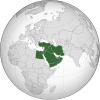
“Foregrounding these historical and global dimensions helps make clear that the enormous scale of the current crisis is not simply a question of viral epidemiology and a lack of biological resistance to a novel pathogen. The ways that most people across Africa, Latin America, the Middle East, and Asia will experience the coming pandemic is a direct consequence of a global economy systemically structured around the exploitation of the resources and peoples of the South. In this sense, the pandemic is very much a social and human-made disaster — not simply a calamity arising from natural or biological causes. [...] The Middle East, for example, is the site of the largest forced displacement since the Second World War, with massive numbers of refugees and internally displaced people as a result of the ongoing wars in countries such as Syria, Yemen, Libya, and Iraq. Most of these people live in refugee camps or overcrowded urban spaces, and often lack the rudimentary rights to health care typically associated with citizenship. The widespread prevalence of malnutrition and other diseases (such as the reappearance of cholera in Yemen) make these displaced communities particularly susceptible to the virus itself. [...] One microcosm of this can be seen in the Gaza Strip, where over 70 percent of the population are refugees living in one of the most densely packed areas in the world. [...] Under blockade and closure for most of the past decade, Gaza has been shut to the world long before the current pandemic. The region could be the proverbial canary in the COVID-19 coalmine — foreshadowing the future path of the infection among refugee communities across the Middle East and elsewhere.”
Adam Hanieh on Precarity
“Debates around how best to respond to COVID-19 in Europe and the United States have illustrated the mutually reinforcing relationship between effective public health measures and conditions of labor, precarity, and poverty. Calls for people to self-isolate when sick — or the enforcement of longer periods of mandatory lockdowns — are economically impossible for the many people who cannot easily shift their work online, or those in the service sector who work in zero-hour contracts or other kinds of temporary employment. Recognizing the fundamental consequences of these work patterns for public health, many European governments have announced sweeping promises around compensation for those made unemployed or forced to stay at home during this crisis. It remains to be seen how effective these schemes will be, and to what degree they will actually meet the needs of the very large numbers of people who will lose their jobs as a result of the crisis. Nonetheless, we must recognize that such schemes will simply not exist for most of the world’s population. In countries where the majority of the labor force is engaged in informal work or depends upon unpredictable daily wages — much of the Middle East, Africa, Latin America, and Asia — there is no feasible way that people can choose to stay home or self-isolate. This must be viewed alongside the fact that there will almost certainly be very large increases in the “working poor” as a direct result of the crisis. [...] Without the mitigation effects offered through quarantine and isolation, the actual progress of the disease in the rest of the world will certainly be much more devastating than the harrowing scenes witnessed to date in China, Europe, and the United States. Moreover, workers involved in informal and precarious labor often live in slums and overcrowded housing — ideal conditions for the explosive spread of the virus.”

About Adam Hanieh
Adam Hanieh is a development studies academic based in the United Kingdom.
QuotesCosmos Cross-Civilizational Archive
Explore Related Wisdom Pillars, Worldviews & Canonical Works
Discover how humanity's greatest philosophers, sacred scriptures, and literary masterpieces address the core questions of existence.
30 Wisdom Pillars
22 Worldviews & Traditions
Canonical Books & Scriptures