Link Copied!
Ilan Stavans Quotes (1961-)
Writer






About Ilan Stavans
Ilan Stavans (born Ilan Stavchansky, 1961) is a writer and academic who born in Mexico and now lives in the USA. He writes and speaks on American, Hispanic, and Jewish cultures.
Best Ilan Stavans Quotes
Shortest
Earliest
Explore our curated collection of the most famous and impactful Ilan Stavans quotes.


“Because you live in two or three worlds doesn't mean you don't live in any of them.”
“Immigrant life in general is miserable, as one sees in the literature produced by those who experienced the journey.”

“Reading a classic, I believe, ought to entail an element of foreignness...Classics are windows into an epoch, not only in content but in form.”

“I don't think Latinos are a separate nation in the U.S. 'We are entering, belonging and sharing that melting pot with many other minority groups.”

“no translator is godlike; on the contrary, all are miserably human, meaning imperfect in their quest. Therefore, the practice of translation exists, as it should, in a state of constant renewal.”

“it is essential that we recognize that in the conquering efforts of the American English language, there is also a cemetery, a series of silences of other languages that have succumbed in the process.”
“Translators open the window to the past to welcome fresh air. They are surveyors of what is significant somewhere else and want to bring that significance home. As we make room for new voices from the world, we must diversify the database of translators.”

“The best conditions for fine criticism to emerge are rather simple: an atmosphere where ideas and stories aren’t in opposition but in partnership, where the act and art of thinking becomes a compelling narrative not about a particular point but about life itself.”
“In Mexico, I was a Jew. In the U.S., I became a Mexican, but all these dichotomies helped me to see that you can be an outsider and an insider simultaneously. You become a member of another minority, but not fully. Here I'm a Mexican in the U.S. I'm a Latino. I'm a Jew. I'm an American.”
“There has been for many years resentment of Spain as the conqueror, but a lot of things about modern Spain have changed, he said. We should talk about the Hispanic world as a much more dynamic body made up of Spain, Latin America, the Spanish-speaking Caribbean and Latinos in the U.S.”

“The relationship we develop with a classic is like a lifelong friendship: it goes through ups and downs. Whenever we reopen the book, we are different, and, as a result, what we read is too. This, I think, is another definition of a literary classic: like a mirror, it reflects what is in front of it.”
“Du Bois, in The Souls of Black Folk, argued that the theme of the twentieth century was the color line. In my view, the theme of the twenty-first century is immigration. Everything rotates around it: climate change, Covid-19, populism from Trump to other “aspirational” dictators, global finance, etc.”
“Translators have always been agents of change. The Muslim translators of the School in Toledo, in the twelfth century, for example, and later on under Alfonso El Sabio, brought Aristotle, Ptolemy, and Hippocrates into Europe. Or Lucretius’s De rerum natura. Without these translators, there would not be a connection with the classical past.”

“It is crucial that, as culture seeks to represent nonwhite voices, our conception of perennial literature undergoes an expansion. We need to make classics from Asia, Africa, and Latin America available to underrepresented readerships. That means recalibrating our definition of a literary classic and explicitly reaching out to translators for new, undiscovered classics.”
“An accessible language is a language that is beautiful. It is a language of understanding, not of pretension. To be accessible is to write not from Mount Sinai but from below, where the people are. The critic has the exact same words (in English, there are close to a million, according to the editors of the OED) available to write poetry, fiction, theater, autobiography, et cetera.”

“I feel Noah’s ark, the Tower of Babel, the story of Abraham’s calling, Isaac’s Akedah, and Jacob’s ordeal and Moses’ liberation odyssey are imprinted in my DNA. I come from a Jewish-Mexican family in which culture was a form of religion. If pressed, I confess not to remember a specific moment during which I read Genesis. But that’s what the classics are: we get them not through reading but by osmosis.”
“Unfortunately, criticism has been kidnapped by the academy, which has overwhelmed with rubbish. The academic essay — e.g., the tenure-track essay — is written for an audience of three or four lonely readers — for whom literature long ago ceased to be about pleasure — in order to become part of a profession. Yes, the worse that might happen to literature is institutionalization. For literature is free: free to make up things, free to associate, free to rebel.”
“It's a significant fact that upon arriving to Ellis Island, the first thing supposedly immigrants or future immigrants see is that sonnet engraved in the pedestal of the Statue of Liberty by Emma Lazarus. That includes the line, Give me your poor, your tired, your huddled masses. These are the rejects. This is the refuge of the other nations that have been coming here. And yet it is in English that that sonnet receives those newcomers, a language many of them not yet know.”
“I tell my students that education isn’t about facts. It isn’t about theories, either. It is about tracking your thoughts, about witnessing how stories are formed in your mind. It is about allowing the mind not to be clogged, about letting it see not what it does but how it does it. The rules of criticism are the same as the rules of other types of literature. These rules boil down to one: finding the right words to tell the right narrative at the right time. Nothing else matters.”
Ilan Stavans Quotes by Topic
Find exactly what you are looking for by browsing this categorized list of Ilan Stavans quotes by topic.
Ilan Stavans on Immigration 2 quotes
“Immigrant life in general is miserable, as one sees in the literature produced by those who experienced the journey.”

Ilan Stavans on Les Misérables
“Reading a classic, I believe, ought to entail an element of foreignness. If you delve into Les Misérables in French, you cannot fail to first recognize, and then, hopefully, to thrive in, the somewhat stilted nature of Victor Hugo’s language.”

Ilan Stavans on 21st century
“Du Bois, in The Souls of Black Folk, argued that the theme of the twentieth century was the color line. In my view, the theme of the twenty-first century is immigration. Everything rotates around it: climate change, Covid-19, populism from Trump to other “aspirational” dictators, global finance, etc.”

Ilan Stavans on The Little Prince
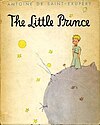
“The first time I read The Little Prince? At the age of eight, it came with a strong endorsement from my mother...The illustrations seemed childish to me. To be honest, the narrative still feels infantile. Clearly, I didn’t get the allegorical nature of classics. The little prince wasn’t Everyman, a mythological hero in the middle of a journey. I needed to grow up to realize that the book was, well, more than just a book: it was a canvas on which readers could project themselves. That’s what classics are: more than just an accumulation of pages, they are the stuff our personal dreams are made of. I’ve now translated Antoine de Saint-Exupéry’s volume into Spanglish, which to me is a way to say thank you.”
Ilan Stavans on Torah study
“I hardly remember reading the Torah in school. On the rare occasion we did, it was always as a series of mythical stories: a plotline with characters, good and evil, who behave all the time like the rest of us, trying to find meaning in life when none is available. Years later, when I was already an adult, I remember feeling struck by the religious emphasis in just about every episode. How could I have missed it? My gut feeling is that our teachers were ambivalent about it, too. They liked storytelling, and that's what they stressed. Today I'm grateful to them for introducing me to the Bible not as a Halakhic (legal) manual but as a depository of collective memory. For that reason, my relationship with it isn't tyrannical.”

What Ilan Stavans Said About Others
Discover personal opinions Ilan Stavans shared regarding contemporaries.
Ilan Stavans on Sholem Aleichem 2 quotes
“his masterpiece, "Tevye the Dairyman"”

Ilan Stavans on Angelina Muñiz-Huberman 2 quotes
“Her work is influenced by the stories and essays of Jorge Luis Borges and by the culture of Spain's "Golden Age," in particular, by the works of Cervantes, Francisco de Quevedo and Luis de Góngora.”

Ilan Stavans on Yiddish 2 quotes
“The language's fate would be entangled with one of the world's most brutal tragedies—millions of those Yiddish speakers were murdered by the Nazis and their collaborators in the Holocaust during the Second World War—but it also flowered almost everywhere that Jews settled, before and after the war: Yiddish newspapers and books were published in Montreal and Montevideo, Cairo and Melbourne, Paris and Cape Town (not to mention Warsaw and New York)”
Ilan Stavans on Miguel de Cervantes
“Is there a better book about dreaming oneself into a new life?”

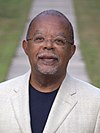
Ilan Stavans on Henry Louis Gates Jr.
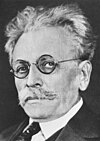
Ilan Stavans on Isaac Leib Peretz
“the triumvirate of Yiddish masters, S. Y. Abramovitch, Sholem Aleichem, and I. L. Peretz”

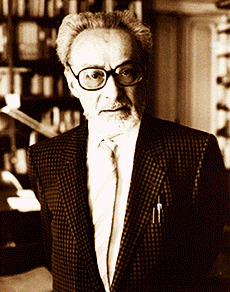
Ilan Stavans on Natalia Ginzburg
“The novels and essays of Natalia Ginzburg (among them, The Manzoni Family and The Little Virtues) address both her Sephardic ancestry and her leftist political philosophy.”

Quotes About Ilan Stavans
Gain deeper perspective through quotes about Ilan Stavans from others.
Marjorie Agosín on Ilan Stavans
“pioneer in the validation of Jewish writings from Latin America”

About Ilan Stavans
Ilan Stavans (born Ilan Stavchansky, 1961) is a writer and academic who born in Mexico and now lives in the USA. He writes and speaks on American, Hispanic, and Jewish cultures.