“I am finished.”
— Winston Churchill, Early career
















































































































































Explore our curated collection of the most famous and impactful Winston Churchill quotes.
“I am finished.”
“A sheep in sheep's clothing.”

“The hour has come; kill the Hun.”
“And now go and set Europe ablaze”

“I am shocked by this wicked crime.”

“It is the end of the British Empire.”

“"Keep England White" is a good slogan.”
“War is mainly a catalogue of blunders.”
“There is less there than meets the eye.”
“The price of greatness is responsibility.”

“Take away that pudding – it has no theme.”
“We are stripped bare by the curse of plenty.”
“To jaw-jaw is always better than to war-war.”
“We must build a kind of United States of Europe.”
“Like chasing a quinine pill around a cow pasture.”
“No hour of life is lost that is spent in the saddle.”
“We are all worms. But I do believe I am a glow-worm.”

“I never "worry" about action, but only about inaction.”

“The empires of the future are the empires of the mind.”
“I hate nobody except Hitler — and that is professional.”

“The shores of History are strewn with the wrecks of Empires.”
“One might as well legalise sodomy as recognise the Bolsheviks.”
“We do not covet anything from any nation except their respect.”
“We shape our buildings, and afterwards our buildings shape us.”
“Fascism and Communism... Polar opposites—no, polar the same!"”

Find exactly what you are looking for by browsing this categorized list of Winston Churchill quotes by topic.
“Give us the tools, and we will finish the job.”
“Thus, by every device from the stick to the carrot, the emaciated Austrian donkey is made to pull the Nazi barrow up an ever-steepening hill.”
“When I warned them [the French] that Britain would fight on alone whatever they did, their generals told their Prime Minister and his divided Cabinet, "In three weeks England will have her neck wrung like a chicken." Some chicken! Some neck!”
“The Story of the Second English Civil War is short and simple. King, Lords and Commons, landlords, merchants, the City and the countryside, bishops and presbyters, the Scottish army, the Welsh people, and the English Fleet, all now turned against the New Model Army. The Army beat the lot.”
“By the end of 1648 it was all over. Cromwell was Dictator. The Royalists were crushed; Parliament was a tool; the Constitution was a figment; the Scots were rebuffed, the Welsh back in their mountains; the Fleet was reorganized, London overawed. King Charles, at Carisbrooke Castle, where the donkey treads the water wheel, was left to pay the bill. It was mortal.”
“Marston Moor was the largest and also the bloodiest battle of the war. Little quarter was given and there were four thousand slain. Newcastle's "white-coats" fought to the death, and fell where they stood. They had boasted that they would dye these white coats with the blood of the foe. They were indeed reddened, but with their own blood. Night alone ended the pursuit. A disaster of the first magnitude had smitten the King's cause. His Northern army was shattered and the whole of the North was lost. The prestige of Rupert's cavalry was broken. The Marquis, brokenhearted, fled into exile. Rupert, whom nothing could appal, gathered up the remnants of his army and led them safely south to Shrewsbury.”
“Nothing will bring American sympathy along with us so much as American blood shed in the field.”
“No compromise on the main purpose; no peace till victory; no pact with unrepentant wrong -- that is the Declaration of July 4th, 1918.”
“I think a curse should rest on me — because I love this war. I know it's smashing and shattering the lives of thousands every moment — and yet — I can't help it — I enjoy every second of it.”
“British democracy approves the principles of movable party heads and unwaggable national tails.”
“Britain and France had to choose between war and dishonour. They chose dishonour. They will have war.”
“When I warned them that Britain would fight on alone whatever they did, their generals told their Prime Minister and his divided Cabinet, 'In three weeks England will have her neck wrung like a chicken'. Some chicken! Some neck!”
“''''It is not given to us to peer into the mysteries of the future. Still, I avow my hope and faith, sure and inviolate, that in the days to come the British and American peoples will for their own safety and for the good of all walk together side by side in majesty, in justice, and in peace.'''”
“No American will think it wrong of me if I proclaim that to have the United States at our side was to me the greatest joy. I could not foretell the course of events. I do not pretend to have measured accurately the martial might of Japan, but now at this very moment I knew the United States was in the war, up to the neck and in to the death. So we had won after all! ... Hitler's fate was sealed. Mussolini's fate was sealed. As for the Japanese, they would be ground to powder.”
“I may confess, however, that I do not feel quite like a fish out of water in a legislative assembly where English is spoken. I am a child of the House of Commons. I was brought up in my father's house to believe in democracy. "Trust the people." That was his message. I used to see him cheered at meetings and in the streets by crowds of workingmen way back in those aristocratic Victorian days when as Disraeli said "the world was for the few, and for the very few." Therefore I have been in full harmony all my life with the tides which have flowed on both sides of the Atlantic against privilege and monopoly and I have steered confidently towards the Gettysburg ideal of government of the people, by the people, for the people.”
“To jaw-jaw is always better than to war-war.”
“The eagle has ceased to scream, but the parrots will now begin to chatter. The war of the giants is over and the pigmies will now start to squabble.”
“Let us learn our lessons. … Never believe any war will be smooth and easy or that anyone who embarks on that strange voyage can measure the tides and hurricanes he will encounter. The statesman who yields to war fever must realize that once the signal is given, he is no longer the master of policy but the slave of unforeseeable and uncontrollable events… incompetent or arrogant commanders, untrustworthy allies, hostile neutrals, malignant fortune, ugly surprise, awful miscalculations.”
“The atomic bomb is the Second Coming in Wrath.”
“Be careful above all things not to let go of the atomic weapon until you are sure, and more than sure, that other means of preserving peace are in your hands.”
“May there not be methods of using explosive energy incomparably more intense than anything heretofore discovered? Might not a bomb no bigger than an orange be found to possess a secret power to destroy a whole block of buildings—nay, to concentrate the force of a thousand tons of cordite and blast a township at a stroke? Could not explosives even of the existing type be guided automatically in flying machines by wireless or other rays, without a human pilot, in ceaseless procession upon a hostile city, arsenal, camp or dockyard?”
“I have not become the King's First Minister in order to preside over the liquidation of the British Empire.”
“The late M. Venizelos observed that in all her wars England—he should have said Britain, of course—always wins one battle—the last.”
“When I warned them that Britain would fight on alone whatever they did, their generals told their Prime Minister and his divided Cabinet, 'In three weeks England will have her neck wrung like a chicken'. Some chicken! Some neck!”
“Vive la France! Long live also the forward march of the common people in all the lands towards their just and true inheritance, and towards the broader and fuller age.”
“I avow my faith that we are marching towards better days. Humanity will not be cast down. We are going on swinging bravely forward along the grand high road and already behind the distant mountains is the promise of the sun.”
“The day may dawn when fair play, love for one's fellow men, respect for justice and freedom, will enable tormented generations to march forth triumphant from the hideous epoch in which we have to dwell. Meanwhile, never flinch, never weary, never despair.”
“It [fascism] is not a sign-post which would direct us here, for I firmly believe that our long experienced democracy will be able to preserve a parliamentary system of government with whatever modifications may be necessary from both extremes of arbitrary rule.”
“Fascism was the shadow or ugly child of communism . . . As Fascism sprang from Communism, so Nazism developed from Fascism. Thus were set on foot those kindred movements which were destined soon to plunge the world into more hideous strife, which none can say has ended with their destruction.”
“Italy has shown that there is a way of fighting the subversive forces which can rally the masses of the people, properly led, to value and wish to defend the honour and stability of stabilized society. She has provided the necessary antidote to the Russian poison. Hereafter no great nation will be unprovided with an ultimate means of protection against the cancerous growth of Bolshevism.”
“One of the greatest difficulties I meet with in trying to hold on to the old position is the German talk that the anti-communist countries should stand together. I am sure if France sent airplanes, etc. to the present Madrid Government, and the Germans and Italians pushed in from the other angle, the dominant forces here would be pleased with Germany and Italy, and estranged from France. I hope you will not mind my writing this, which I do, of course, entirely on my own account. I do not like to hear people talking of England, Germany, and Italy teaming up against European Communism. It is too easy to be good. I am sure that an absolutely rigid neutrality, with the strongest protest against any breach of it, is the only correct and safe course at the present time. A day may come, if there is a stalemate, when the League of Nations may intervene to wind up the horrors. But even that is very doubtful.”
“At the end of July, 1936, the increasing degeneration of the parliamentary regime in Spain, and the growing strength of the movements for a Communist, or alternately an Anarchist, revolution, led to a military revolt which had long been preparing. It is part of the Communist doctrine and drillbook, laid down by Lenin himself, that Communists should aid all movements towards the Left and help into office weak Constitutional, Radical, or Socialist Governments. These they should undermine, and from their falling hands snatch absolute power, and found the Marxist State. In fact, a perfect reproduction of the Kerensky period in Russia was taking place in Spain. But the strength of Spain had not been shattered by foreign war. The Army still maintained a measure of cohesion. Side by side with the Communist conspiracy there was elaborated in secret a deep military counterplot. Neither side could claim with justice the title-deeds of legality, and Spaniards of all classes were bound to consider the life of Spain.”
“When, after General Sanjurjo had perished in an air crash, General Franco raised the standard of revolt, he was supported by the Army, including the rank and file. The Church, with the noteworthy exception of the Dominicans, and nearly all the elements of the Right and Centre, adhered to him, and he became immediately the master of several important provinces. The Spanish sailors killed their officers and took what became the Communist side. In the collapse of civilised Government, the Communist sect obtained control, and acted in accordance with their drill. Bitter civil war now began. Wholesale cold-blooded massacres of their political opponents, and of the well-to-do, were perpetrated by the Communists, who had seized power. These were repaid with interest by the forces under Franco. All Spaniards went to their deaths with remarkable composure, and great numbers on both sides were shot. The military cadets defended their college at Alcazar in Toledo with the utmost tenacity, and Franco's troops, forcing their way up from the south, leaving a trail of vengeance behind them in every Communist village, presently achieved their relief. This episode deserves the notice of historians.”
“The empires of the future are the empires of the mind.”
“Of this I am quite sure, that if we open a quarrel between the past and the present, we shall find that we have lost the future.”
“We must all turn our backs upon the horrors of the past. We must look to the future. We cannot afford to drag forward cross the years that are to come the hatreds and revenges which have sprung from the injuries of the past.”
“The problems of victory are more agreeable than the problems of defeat, but they are no less difficult.”
“You ask, what is our aim? I can answer in one word: It is victory, victory at all costs, victory in spite of all terror, victory, however long and hard the road may be; for without victory, there is no survival.”
“I would say to the House, as I said to those who have joined this Government: "I have nothing to offer but blood, toil, tears and sweat".… You ask, what is our aim? I can answer in one word: It is victory, victory at all costs, victory in spite of all terror, victory, however long and hard the road may be; for without victory, there is no survival.”
“We contend that for a nation to try to tax itself into prosperity is like a man standing in a bucket and trying to lift himself up by the handle.”
“Governments create nothing and have nothing to give but what they have first taken away — you may put money in the pockets of one set of Englishmen, but it will be money taken from the pockets of another set of Englishmen, and the greater part will be spilled on the way. Every vote given for Protection is a vote to give Governments the right of robbing Peter to pay Paul and charging the public a handsome commission on the job.”
“It has been said, “What does it mean—it is taxpayers’ money.” It is money taken from the pockets of the people of the country; it is taken from the necessities and comforts of the working classes. Agriculture, steel, iron, shipbuilding, are all suffering too, and in some cases and in many parts, the conditions both of hours and labour are worse in those industries than they are in the coal industry, or parts of it. How can you justify the whole country being forced to pay this particular levy almost indefinitely, when there is no prospect of any solution?”
“The rescue of India from ages of barbarism, tyranny, and internecine war and its slow but ceaseless forward march to civilisation constitute upon the whole the finest achievement of our history.”
“During the 1935 Parliament debates on the Government of India Act, Sir Winston Churchill opposed any policy tending towards decolonization on the following ground: 'We have as much right to be in India as anyone there, except perhaps for the Depressed Classes [= the SC/ STs], who are the native stock.'”
“Why is it that the principles of Government and lessons of history which we have learnt in our experience with the great self-governing dominions, which we have learnt in Canada, in South Africa and in Ireland, apply only in a limited degree to India? It is because the problem of Indian government is primarily a technical one. In India far more than in any other community in the world moral, political and economic considerations are outweighed by the importance of technical and administrative apparatus. Here you have nearly three hundred and fifty millions of people, lifted to a civilisation and to a level of peace, order, sanitation and progress far above anything they could possibly have achieved themselves or could maintain. This wonderful fact is due to the guidance and authority of a few thousands of British officials responsible to Parliament who have for generations presided over the development of India. If that authority is injured or destroyed, the whole efficiency of the services, defensive, administrative, medical, hygienic, judicial; railway, irrigation, public works and famine prevention, upon which the Indian masses depend for their culture and progress, will perish with it. India will fall back quite rapidly through the centuries into the barbarism and privations of the Middle Ages. The question at stake is not therefore the gratification of the political aspirations towards self-government of a small number of intellectuals. It is, on the contrary, the practical, technical task of maintaining the peace and life of India by artificial means upon a much higher standard than would otherwise be possible. To let the Indian people fall, as they would, to the level of China, would be a desertion of duty on the part of Great Britain.”
“Everyone is in favor of free speech. Hardly a day passes without its being extolled, but some people's idea of it is that they are free to say what they like, but if anyone else says anything back, that is an outrage.”
“The stations of uncensored expression are closing down; the lights are going out; but there is still time for those to whom freedom and parliamentary government mean something, to consult together. Let me, then, speak in truth and earnestness while time remains.”
“People say we ought not to allow ourselves to be drawn into a theoretical antagonism between Nazidom and democracy; but the antagonism is here now. It is this very conflict of spiritual and moral ideas which gives the free countries a great part of their strength. You see these dictators on their pedestals, surrounded by the bayonets of their soldiers and the truncheons of their police. On all sides they are guarded by masses of armed men, cannons, aeroplanes, fortifications, and the like — they boast and vaunt themselves before the world, yet in their hearts there is unspoken fear. They are afraid of words and thoughts; words spoken abroad, thoughts stirring at home — all the more powerful because forbidden — terrify them. A little mouse of thought appears in the room, and even the mightiest potentates are thrown into panic. They make frantic efforts to bar our thoughts and words; they are afraid of the workings of the human mind. Cannons, airplanes, they can manufacture in large quantities; but how are they to quell the natural promptings of human nature, which after all these centuries of trial and progress has inherited a whole armoury of potent and indestructible knowledge?”
“The power of the Executive to cast a man into prison without formulating any charge known to the law, and particularly to deny him the judgment of his peers, is in the highest degree odious and is the foundation of all totalitarian government whether Nazi or Communist.”
“Fascism was the shadow or ugly child of communism… As Fascism sprang from Communism, so Nazism developed from Fascism. Thus were set on foot those kindred movements which were destined soon to plunge the world into more hideous strife, which none can say has ended with their destruction.”
“We are confronted with another theme. It is not a new theme; it leaps out upon us from the Dark Ages – racial persecution, religious intolerance, deprivation of free speech, the conception of the citizen as a mere soulless fraction of the State. To this has been added the cult of war. Children are to be taught in their earliest schooling the delights and profits of conquest and aggression. A whole mighty community has been drawn painfully, by severe privations, into a warlike frame. They are held in this condition, which they relish no more than we do, by a party organisation, several millions strong, who derive all kinds of profits, good and bad, from the upkeep of the regime. Like the Communists, the Nazis tolerate no opinion but their own. Like the Communists, they feed on hatred. Like the Communists, they must seek, from time to time, and always at shorter intervals, a new target, a new prize, a new victim. The Dictator, in all his pride, is held in the grip of his Party machine. He can go forward; he cannot go back. He must blood his hounds and show them sport, or else, like Actaeon of old, be devoured by them. All-strong without, he is all-weak within. As Byron wrote a hundred years ago: “These Pagod things of Sabre sway, with fronts of brass and feet of clay.””
“The power of the Executive to cast a man into prison without formulating any charge known to the law, and particularly to deny him the judgment of his peers, is in the highest degree odious and is the foundation of all totalitarian government whether Nazi or Communist.”
“No one must, however, underrate the power and efficiency of a totalitarian state. Where the whole population of a great country, amiable, good-hearted, peace-loving people are gripped by the neck and by the hair by a Communist or a Nazi tyranny – for they are the same things spelt in different ways – the rulers for the time being can exercise a power for the purposes of war and external domination before which the ordinary free parliamentary societies are at a grievous practical disadvantage. We have to recognise this. And then, on top of all, comes this wonderful mastery of the air which our century has discovered, but of which, alas, mankind has so far shown itself unworthy. Here is this air power with its claim to torture and terrorise the women and children, the civil population of neighbouring countries. This combination of medieval passion, a party caucus, the weapons of modern science, and the blackmailing power of air-bombing, is the most monstrous menace to peace, order and fertile progress that has appeared in the world since the Mongol invasions of the thirteenth century.”
“We are confronted with another theme. It is not a new theme; it leaps out upon us from the Dark Ages – racial persecution, religious intolerance, deprivation of free speech, the conception of the citizen as a mere soulless fraction of the State. To this has been added the cult of war. Children are to be taught in their earliest schooling the delights and profits of conquest and aggression. A whole mighty community has been drawn painfully, by severe privations, into a warlike frame. They are held in this condition, which they relish no more than we do, by a party organisation, several millions strong, who derive all kinds of profits, good and bad, from the upkeep of the regime. Like the Communists, the Nazis tolerate no opinion but their own. Like the Communists, they feed on hatred. Like the Communists, they must seek, from time to time, and always at shorter intervals, a new target, a new prize, a new victim. The Dictator, in all his pride, is held in the grip of his Party machine. He can go forward; he cannot go back. He must blood his hounds and show them sport, or else, like Actaeon of old, be devoured by them. All-strong without, he is all-weak within. As Byron wrote a hundred years ago: “These Pagod things of Sabre sway, with fronts of brass and feet of clay.””
“The House of Lords, in rejecting the Budget which provides for the national expenditure of the year, are refusing, for the first time since the great Rebellion, aids and supplies to the Crown, and by that fact and by their intrusion upon finance they commit an act of violence against the British Constitution. There is no precedent of any kind for the rejection of a Budget Bill by the House of Lords in all the long annals of the British Parliament, or, before that, in the still more venerable annals of the English Parliament. The custom of centuries forbids their intrusion upon finance.”
“The House of Lords have only been tolerated all these years because they were thought to be in a comatose condition which preceded dissolution. They have got to dissolution now. That this body, utterly unrepresentative, utterly unreformed, should come forward and claim the right to make and unmake Governments, should lay one greedy paw on the prerogatives of the sovereign and another upon the established and most fundamental privileges of the House of Commons is a spectacle which a year ago no one would have believed could happen; which fifty years ago no Peer would have dared suggest; and which two hundred years ago would not have been discussed in the amiable though active manner of a political campaign, but would have been settled by charges of cavalry and the steady advance of iron-clad pikemen.”
“Why should five hundred or six hundred titled persons govern us, and why should their children govern our children for ever? I invite a reply from the apologists and the admirers of the House of Lords. I invite them to show any ground of reason, or of logic, or of expediency or practical common sense in defence of the institution which has taken the predominant part during the last few days in the politics of our country. There is no defence, and there is no answer, except that the House of Lords...has survived out of the past. It is a lingering relic of a feudal order. It is the remains, the solitary reminder of a state of things and of a balance of forces which has wholly passed away. I challenge the defenders, the backers, and the instigators of the House of Lords—I challenge them to justify and defend before the electors of the country the character and composition of the hereditary assembly.”
“In November 1835 the Americans in Texas erected an autonomous state and raised the Lone Star flag. The Mexicans, under Santa Anna, marched northwards. At the Mission House of the Alamo in March 1836 a small body of Texans, fighting to the last man, was exterminated in one of the epic fights of American history by a superior Mexican force. The whole Province was aroused. Under the leadership of General Sam Houston from Tennessee a force was raised, and in savage fighting the Mexican army of Santa Anna was in its turn destroyed and its commander captured at San Jacinto River. The Texans had stormed the positions with the cry “Remember the Alamo!” The independence of Texas was recognised by Santa Anna. His act was repudiated later by the Mexican Government, but their war effort was exhausted, and the Texans organised themselves into a republic, electing Sam Houston as President.”
“The westward tide rolled on, bearing with it new problems of adjustment. The generation of the 1840’s saw their culmination. During these years there took place the annexation of Texas, a war with Mexico, the conquest of California, and the settlement of the Oregon boundary with Great Britain. Adventurous Americans in search of land and riches had been since 1820 crossing the Mexican boundary into the Texas country, which belonged to the Republic of Mexico, freed from Spain - in 1821. While this community was growing, American sailors on the Pacific coast, captains interested in the China trade, established themselves in the ports of the Mexican Province of California. Pioneers pushed their way overland in search of skins and furs, and by 1826 reached the mission stations of the Province. The Mexicans, alarmed at the appearance of these settlers, vainly sought to stem the flood; for Mexican Governments were highly unstable, and in distant Provinces their writ hardly ran. But there appeared on the scene a new military dictator, Santa Anna, determined to strengthen Mexican authority, and at once a revolt broke out.”
“For the next ten years the question of the admission of Texas as a state of the Union was a burning issue in American politics. As each new state demanded entry into the Union so the feeling for and against slavery ran higher. The great Abolitionist journalist, William Lloyd Garrison, called for a secession of the Northern states if the slave state of Texas was admitted to the Union. The Southerners, realising that Texan votes would give them a majority in the Senate if this vast territory was admitted as a number of separate states, clamoured for annexation. The capitalists of the East were committed, through the formation of land companies, to exploit Texas, and besides the issue of dubious stocks by these bodies vast quantities of paper notes and bonds of the new Texan Republic were floated in the United States. The speculation in these helped to split the political opposition of the Northern states to the annexation. Even more important was the conversion of many Northerners to belief in the “Manifest Destiny” of the United States. This meant that their destiny was ! to spread across the whole of the North American continent. The Democratic Party in the election of 1844 called for the occupation of Oregon as well as the annexation of Texas, thus holding out to the North the promise of Oregon as a counterweight to Southern Texas. The victory of the Democratic candidate, James K. Polk, was interpreted as a mandate for admitting Texas, and this was done by joint resolution of Congress in February 1845.”
“New discord has arisen in Europe of late years from the fact that Germany is not satisfied with the result of the late War. I have indicated several times that Germany got off lightly after the Great War. I know that that is not always a fashionable opinion, but the facts repudiate the idea that a Carthaginian peace was in fact imposed upon Germany. No division was made of the great masses of the German people. No portion of Germany inhabited by Germans was detached, except where there was the difficulty of disentangling the population of the Silesian border. No attempt was made to divide Germany as between the northern and southern portions which might well have tempted the conquerors at that time. No State was carved out of Germany. She underwent no serious territorial loss, except the loss of Alsace and Lorraine, which she herself had seized only 50 years before. The great mass of the Germans remained united after all that Europe had passed through, and they are more vehemently united to-day than ever before. You may talk of the War indemnity; what has happened there? I suppose that the Germans paid, in round terms, £1,000,000,000. But they had borrowed £2,000,000,000 at the same time, and there are no signs of their paying back.”
“On Armistice Day, the German armies had marched homeward in good order. “They fought well,” said Marshal Foch, Generalissimo of the Allies, with the laurels bright upon his brow, speaking in soldierly mood: “let them keep their weapons.” But he demanded that the French frontier should henceforth be the Rhine. Germany might be disarmed; her military system shivered in fragments; her fortresses dismantled: Germany might be impoverished; she might be loaded with measureless indemnities; she might become a prey to internal feuds: but all this would pass in ten years or in twenty. The indestructible might “of all the German tribes” would rise once more and the unquenched fires of warrior Prussia glow and burn again. But the Rhine, the broad, deep, swift-flowing Rhine, once held and fortified by the French Army, would be a barrier and a shield behind which France could dwell and breathe for generations. Very different were the sentiments and views of the English-speaking world, without whose aid France must have succumbed. The territorial provisions of the Treaty of Versailles left Germany practically intact. She still remained the largest homogeneous racial block in Europe. When Marshal Foch heard of the signing of the Peace Treaty of Versailles he observed with singular accuracy: “This is not Peace. It is an Armistice for twenty years.””
“The economic clauses of the Treaty were malignant and silly to an extent that made them obviously futile. Germany was condemned to pay reparations on a fabulous scale. These dictates gave expression to the anger of the victors, and to the belief of their peoples that any defeated nation or community can ever pay tribute on a scale which would meet the cost of modern war. The multitudes remained plunged in ignorance of the simplest economic facts, and their leaders, seeking their votes, did not dare to undeceive them. The newspapers, after their fashion, reflected and emphasised the prevailing opinions. Few voices were raised to explain that payment of reparations can only be made by services or by the physical transportation of goods in wagons across land frontiers or in ships across salt water; or that when these goods arrive in the demanding countries, they dislocate the local industry except in very primitive or rigorously controlled societies. In practice, as even the Russians have now learned, the only way of pillaging a defeated nation is to cart away any movables which are wanted, and to drive off a portion of its manhood as permanent or temporary slaves. But the profit gained from such processes bears no relation to the cost of the war. No one in great authority had the wit, ascendancy, or detachment from public folly to declare these fundamental, brutal facts to the electorates; nor would anyone have been believed if he had. The triumphant Allies continued to assert that they would squeeze Germany “till the pips squeaked.” All this had a potent bearing on the prosperity of the world and the mood of the German race.”
“History will be kind to me, for I intend to write it.”
“Want of foresight, unwillingness to act when action would be simple and effective, lack of clear thinking, confusion of counsel until the emergency comes, until self-preservation strikes its jarring gong—these are the features which constitute the endless repetition of history.”
“Never in the field of human conflict was so much owed by so many to so few.”
“Never give in — never, never, never, in nothing great or small, large or petty, never give in except to convictions of honour and good sense. Never yield to force; never yield to the apparently overwhelming might of the enemy.”
“There are few virtues which the Poles do not possess and there are few errors they have ever avoided.”
“The soul of Poland is indestructible... she will rise again as a rock, which may for a spell be submerged by a tidal wave, but which remains a rock.”
“I do not hold that we should rearm in order to fight. I hold that we should rearm in order to parley.”
“Today is Trinity Sunday. Centuries ago words were written to be a call and a spur to the faithful servants of Truth and Justice: "Arm yourselves, and be ye men of valor, and be in readiness for the conflict; for it is better for us to perish in battle than to look upon the outrage of our nation and our altar. As the Will of God is in Heaven, even so let it be."”
“Say what you have to say and the first time you come to a sentence with a grammatical ending--sit down.”
“THIS DOCUMENT IS THE PROPERTY OF HIS BRITANNIC MAJESTY'S GOVERNMENT - SECRET - 9 August 1940 - WAR CABINET - BREVITY. -
Memorandum by the Prime Minister.
To do our work, we all have to read a mass of papers. Nearly all of them are far too long. This wastes time, while energy has to be spent in looking for the essential points.
I ask my colleagues and their staffs to see to it that their Reports are shorter.
(i) The aim should be Reports which set out the main points in a series of short, crisp paragraphs.
(ii) If a Report relies on detailed analysis of some complicated factors, or on statistics, these should be set out in an Appendix.
(iii) Often an occasion is best met by submitting not a full-dress Report, but an Aide-memoire consisting of headings only, which can be expanded orally if needed.
(iv) Let us have an end of such phrases as these, "It is also of importance to bear in mind the following considerations......", or "Consideration should be given to the possibility of carrying into effect......" Most of these woolly phrases are mere padding, which can be left out altogether, or replaced by a single word. Let us not shrink from using the short expressive phrase, even if it is conversational.
Reports drawn up on the lines I propose may at first seem rough as compared with the flat surface of officialese jargon. But the saving in time will be great, while the discipline of setting out the real points concisely will prove an aid to clearer thinking.
W.S.C.
10 Downing Street. 9th August 1940”
“I came back from the land of dreams to reality and the hideous fact that Natal is invaded and assailed by the Boer.”
“What is the true and original root of Dutch aversion to British rule? It is the abiding fear and hatred of the movement that seeks to place the native on a level with the white man … the Kaffir is to be declared the brother of the European, to be constituted his legal equal, to be armed with political rights.”
“The inherent vice of capitalism is the unequal sharing of blessings. The inherent virtue of Socialism is the equal sharing of miseries.”
“Socialism is a philosophy of failure, the creed of ignorance, and the gospel of envy, its inherent virtue is the equal sharing of misery.”
“Never give in, never give in, never, never, never, never—in nothing, great or small, large or petty—never give in except to convictions of honour and good sense.”
“We shall fight on the beaches, we shall fight on the landing grounds, we shall fight in the fields and in the streets, we shall fight in the hills; we shall never surrender, and even if, which I do not for a moment believe, this island or a large part of it were subjugated and starving, then our Empire beyond the seas, armed and guarded by the British Fleet, would carry on the struggle, until, in God's good time, the New World, with all its power and might, steps forth to the rescue and the liberation of the old.”
“But if we fail, then the whole world...will sink into the abyss of a new Dark Age, made more sinister, and perhaps more protracted, by the lights of perverted science.”
“It is arguable whether the human race have been gainers by the march of science beyond the steam engine. Electricity opens a field of infinite conveniences to ever greater numbers, but they may well have to pay dearly for them. But anyhow in my thought I stop short of the internal combustion engine which has made the world so much smaller. Still more must we fear the consequences of entrusting a human race so little different from their predecessors of the so-called barbarous ages such awful agencies as the atomic bomb. Give me the horse.”
“If England had not resisted German militarism, in my view the German hegemony of Europe would have been established and our island would have had to face a united Continental army. It is the same old story from the days of Marlborough and Napoleon.”
“It seems a mad business to confront these dictators without weapons or military force, and at the same time try to tame and cow the spirit of our people with peace films, anti-recruiting propaganda and resistance to defence measures. Unless the free and law-respecting nations are prepared to organise, arm and combine, they are going to be smashed up. This is going to happen quite soon. But I believe we still have a year to combine and marshal superior forces in defence of the League and its Covenant.”
“So we must beware of a tyranny of opinion which tries to make only one side of a question the one which may be heard. Everyone is in favour of free speech. Hardly a day passes without its being extolled, but some people’s idea of it is that they are free to say what they like, but if anyone says anything back, that is an outrage.”
“But arms – instrumentalities, as President Wilson called them – are not sufficient by themselves. We must add to them the power of ideas. People say we ought not to allow ourselves to be drawn into a theoretical antagonism between Nazidom and democracy; but the antagonism is here now. It is this very conflict of spiritual and moral ideas which gives the free countries a great part of their strength. You see these dictators on their pedestals, surrounded by the bayonets of their soldiers and the truncheons of their police. On all sides they are guarded by masses of armed men, cannons, aeroplanes, fortifications, and the like – they boast and vaunt themselves before the world, yet in their hearts there is unspoken fear. They are afraid of words and thoughts; words spoken abroad, thoughts stirring at home – all the more powerful because forbidden – terrify them. A little mouse of thought appears in the room, and even the mightiest potentates are thrown into panic. They make frantic efforts to bar our thoughts and words; they are afraid of the workings of the human mind. Cannons, airplanes, they can manufacture in large quantities; but how are they to quell the natural promptings of human nature, which after all these centuries of trial and progress has inherited a whole armoury of potent and indestructible knowledge?”
“One woman who managed to corner him, the story runs, said in a treacly gushing voice:
"Doesn't it thrill you, Mr. Churchill, to know that every time you make a speech the hall is packed to overflowing?"
"It is quite flattering", Mr. Churchill replied, "but whenever I feel this way I always remember that if instead of making a political speech I was being hanged, the crowd would be twice as big".”
“I was very glad that Mr. Attlee described my speeches in the war as expressing the will not only of Parliament but of the whole nation. Their will was resolute and remorseless and, as it proved, unconquerable. It fell to me to express it, and if I found the right words you must remember that I have always earned my living by my pen and by my tongue. It was a nation and race dwelling all round the globe that had the lion heart. I had the luck to be called upon to give the roar.”
“Nothing is more dangerous in wartime than to live in the temperamental atmosphere of a Gallup Poll, always feeling one's pulse and taking one's temperature. I see that a speaker at the week-end said that this was a time when leaders should keep their ears to the ground. All I can say is that the British nation will find it very hard to look up to leaders who are detected in that somewhat ungainly posture.”
“In part, again, these changes are unconscious. Public opinion is formed and expressed by machinery. The newspapers do an immense amount of thinking for the average man and woman. In fact they supply them with such a continuous stream of standardized opinion, borne along upon an equally inexhaustible flood of news and sensation, collected from every part of the world every hour of the day, that there is neither the need nor the leisure for personal reflection. All this is but a part of a tremendous educating process. But it is an education which passes in at one ear and out at the other. It is an education at once universal and superficial. It produces enormous numbers of standardized citizens, all equipped with regulation opinions, prejudices and sentiments, according to their class or party. It may eventually lead to a reasonable, urbane and highly serviceable society. It may draw in its wake a mass culture enjoyed by countless millions to whom such pleasures were formerly unknown. We must not forget the enormous circulations at cheap prices of the greatest books of the world, which is a feature of modern life in civilized countries, and nowhere more than in the United States. But this great diffusion of knowledge, information and light reading of all kinds may, while it opens new pleasures to humanity and appreciably raises the general level of intelligence, be destructive of those conditions of personal stress and mental effort to which the masterpieces of the human mind are due.”
“This revelation of the secrets of nature, long mercifully withheld from man, should arouse the most solemn reflections in the mind and conscience of every human being capable of comprehension. We must indeed pray that these awful agencies will be made to conduce to peace among the nations, and that instead of wreaking measureless havoc upon the entire globe, may become a perennial fountain of world prosperity.”
“To quell the Japanese resistance man by man and conquer the country yard by yard might well require the loss of a million American lives and half that number of British- or more, if we could get them there: for we were resolved to share the agony. Now all this nightmare picture had vanished. In its place was the vision- fair and bright indeed it seemed- of the end of the whole war in one or two violent shocks... The Japanese people, whose courage I had always admired, might find in the apparition of this almost supernatural weapon an excuse...”
“Twenty to twenty-five! These are the years! Don't be content with things as they are…. Don't take No for an answer. Never submit to failure. Do not be fobbed off with mere personal success or acceptance. You will make all kinds of mistakes; but as long as you are generous and true, and also fierce, you cannot hurt the world or even seriously distress her. She was made to be wooed and won by youth. She has lived and thrived only by repeated subjugations.”
“We have all seen with a sense of nausea the abject, squalid, shameless avowal made in the Oxford Union. We are told that we ought not to treat it seriously. The Times talked of "the children's hour". I disagree. It is a very disquieting and disgusting symptom. One can almost feel the curl of contempt upon the lips of the manhood of Germany, Italy, and France when they read the message sent out by Oxford University in the name of Young England.
Let them be assured that it is not the last word. But before they blame, as blame they should, these callow ill-tutored youths, they must be sure that they have not been set a bad example by people much older and much higher up.”
“The Communist parties, which were very small in all these Eastern States of Europe, have been raised to pre-eminence and power far beyond their numbers and are seeking everywhere to obtain totalitarian control. Police governments are prevailing in nearly every case, and so far, except in Czechoslovakia, there is no true democracy. Turkey and Persia are both profoundly alarmed and disturbed at the claims which are being made upon them and at the pressure being exerted by the Moscow Government.”
“From Stettin in the Baltic to Trieste in the Adriatic, an iron curtain has descended across the Continent. Behind that line lie all the capitals of the ancient states of Central and Eastern Europe. Warsaw, Berlin, Prague, Vienna, Budapest, Belgrade, Bucharest and Sofia, all these famous cities and the populations around them lie in what I must call the Soviet sphere, and all are subject in one form or another, not only to Soviet influence but to a very high and, in many cases, increasing measure of control from Moscow. Athens alone - Greece with its immortal glories - is free to decide its future at an election under British, American and French observation. The Russian-dominated Polish Government has been encouraged to make enormous and wrongful inroads upon Germany, and mass expulsions of millions of Germans on a scale grievous and undreamed-of are now taking place.”
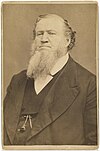
“Among the many settlements which lay dotted over the whole of the American continent the strangest perhaps was the Mormon colony at Salt Lake City. In the spring of 1847 members of this revivalist and polygamist sect started from the state of Illinois under their prophet leader, Brigham Young, to find homes free from molestation in the West. By the summer they reached the country round Salt Lake, and two hours after their arrival they had begun establishing their homes and ploughing up the soil.”
“Within three years a flourishing community of eleven thousand souls, combining religious fervour, philoprogenitiveness, and shrewd economic sense, had been established by careful planning in the Salt Lake country, and in 1850 the territory received recognition by the Federal Government under the name of Utah. The colony was established in a key position on the trail which led both to Oregon and California. The sale of food and goods to the travellers and adventurers who moved in both directions along this route brought riches to the Mormon settler, and Salt Lake City, soon tainted, it is true, by the introduction of more lawless and unbelieving elements, became one of the richest cities in America.”
“Thus the institution of slavery was not only defended by every argument of self-interest, but many a Southern pulpit championed it as a system ordained by the Creator and sanctified by the Gospel of Christ. It had not always been so. During the Revolution against King George III many Southerners had expressed the hope that slavery would eventually be abolished. But as time passed “the peculiar institution” became, in the words of Morison and Commager, “so necessary that it ceased to appear evil.””
“It is almost impossible for us nowadays to understand how profoundly and inextricably Negro slavery was interwoven into the whole life, economy, and culture of the Southern states. The tentacles of slavery spread widely through the Northern “free” states, along every channel of business dealing and many paths of political influence. One assertion alone reveals the powerlessness of the community to shake itself free from the frightful disease which had become part of its being. It was said that over six hundred and sixty thousand slaves were held by ministers of the Gospel and members of the different Protestant Churches. Five thousand Methodist ministers owned two hundred and nineteen thousand slaves; six thousand five hundred Baptists owned a hundred and twenty-five thousand; one thousand four hundred Episcopalians held eighty-eight thousand; and so on.”
“From Stettin in the Baltic to Trieste in the Adriatic, an iron curtain has descended across the Continent. Behind that line lie all the capitals of the ancient states of Central and Eastern Europe. Warsaw, Berlin, Prague, Vienna, Budapest, Belgrade, Bucharest and Sofia, all these famous cities and the populations around them lie in what I must call the Soviet sphere, and all are subject in one form or another, not only to Soviet influence but to a very high and, in many cases, increasing measure of control from Moscow.”
“An attempt is being made by the Russians in Berlin to build up a quasi-Communist party in their zone of Occupied Germany by showing special favors to groups of left-wing German leaders. At the end of the fighting last June, the American and British Armies withdrew westwards, in accordance with an earlier agreement, to a depth at some points of 150 miles upon a front of nearly four hundred miles, in order to allow our Russian allies to occupy this vast expanse of territory which the Western Democracies had conquered. If now the Soviet Government tries, by separate action, to build up a pro-Communist Germany in their areas, this will cause new serious difficulties in the British and American zones, and will give the defeated Germans the power of putting themselves up to auction between the Soviets and the Western Democracies. Whatever conclusions may be drawn from these facts - and facts they are - this is certainly not the Liberated Europe we fought to build up. Nor is it one which contains the essentials of permanent peace.”
“From Stettin in the Baltic to Trieste in the Adriatic, an iron curtain has descended across the Continent. Behind that line lie all the capitals of the ancient states of Central and Eastern Europe. Warsaw, Berlin, Prague, Vienna, Budapest, Belgrade, Bucharest and Sofia, all these famous cities and the populations around them lie in what I must call the Soviet sphere, and all are subject in one form or another, not only to Soviet influence but to a very high and, in many cases, increasing measure of control from Moscow.”
“The second cardinal tragedy [of World War I] was the complete break-up of the Austro-Hungarian Empire by the Treaties of St. Germain and Trianon. For centuries this surviving embodiment of the Holy Roman Empire had afforded a common life, with advantages in trade and security, to a large number of peoples, none of whom in our own time had the strength or vitality to stand by themselves in the face of pressure from a revivified Germany or Russia. All these races wished to break away from the federal or imperial structure, and to encourage their desires was deemed a liberal policy. The Balkanisation of Southeastern Europe proceeded apace, with the consequent relative aggrandisement of Prussia and the German Reich, which, though tired and war-scarred, was intact and locally overwhelming. There is not one of the peoples or provinces that constituted the Empire of the Hapsburgs to whom gaining their independence has not brought the tortures which ancient poets and theologians had reserved for the damned. The noble capital of Vienna, the home of so much long-defended culture and tradition, the centre of so many roads, rivers, and railways, was left stark and starving, like a great emporium in an impoverished district whose inhabitants have mostly departed.”
“The Chinese said of themselves several thousand years ago: "China is a sea that salts all the waters that flow into it." There's another Chinese saying about their country which is much more modern—it dates only from the fourth century. This is the saying: "The tail of China is large and will not be wagged." I like that one. The British democracy approves the principles of movable party heads and unwaggable national tails. It is due to the working of these important forces that I have the honor to be addressing you at this moment.”
“There is a hush over all Europe, nay, over all the world, broken only by the dull thud of Japanese bombs falling on Chinese cities, on Chinese Universities or near British and American ships. But then, China is a long way off, so why worry? The Chinese are fighting for what the founders of the American Constitution in their stately language called: “Life, liberty and the pursuit of happiness.” And they seem to be fighting very well. Many good judges think they are going to win. Anyhow, let’s wish them luck! Let’s give them a wave of encouragement – as your President did last week, when he gave notice about ending the commercial treaty. After all, the suffering Chinese are fighting our battle, the battle of democracy. They are defending the soil, the good earth, that has been theirs since the dawn of time against cruel and unprovoked aggression. Give them a cheer across the ocean – no one knows whose turn it may be next. If this habit of military dictatorships’ breaking into other people’s lands with bomb and shell and bullet, stealing the property and killing the proprietors, spreads too widely, we may none of us be able to think of summer holidays for quite a while.”
“Westward lay the march of American Empire. Within thirty years of the establishment of the Union nine new states had been formed in the Mississippi valley, and two in the borders of New England. As early as 1769 men like Daniel Boone had pushed their way into the Kentucky country, skirmishing with the Indians. But the main movement over the mountains began during the War of Independence. The migration of the eighteenth century took two directions: the advance westward towards the Ohio, with its settlement of Kentucky and Tennessee, and the occupation of the north-west forest regions, the fur-traders’ domain, beyond Lake Erie.”
“The colonisation of New England and the eastern coastline of America had been mainly the work of powerful companies, aided by the English Crown or by feudal proprietors with chartered rights. But here in the new lands of the West any man with an axe and a rifle could carve for himself a rude frontier home. By 1790 there were thirty-five thousand settlers in the Tennessee country, and double that number in Kentucky. By 1800 there were a million Americans west of the mountain ranges of the Alleghenies. From these new lands a strong, self-reliant Western breed took its place in American life. Modem American democracy was bom and cradled in the valley of the Mississippi. The foresight of the first independent Congress of the United States had proclaimed for all time the principle that when new territories gained a certain population they should be admitted to statehood upon an equality with the existing partners of the Union. It is a proof of the quality and power of the Westerners that eleven of the eighteen Presidents of the United States between 1828 and 1901 were either bom or passed the greater part of their lives in the valley of the Mississippi.”
“I may confess, however, that I do not feel quite like a fish out of water in a legislative assembly where English is spoken. I am a child of the House of Commons. I was brought up in my father's house to believe in democracy. "Trust the people." That was his message. I used to see him cheered at meetings and in the streets by crowds of workingmen way back in those aristocratic Victorian days when as Disraeli said "the world was for the few, and for the very few." Therefore I have been in full harmony all my life with the tides which have flowed on both sides of the Atlantic against privilege and monopoly and I have steered confidently towards the Gettysburg ideal of government of the people, by the people, for the people.”
“I have only two or three sentences to add. They will convey to the House my deep gratitude to this House of Commons, which has proved itself the strongest foundation for waging war that has ever been seen in the whole of our long history. We have all of us made our mistakes, but the strength of the Parliamentary institution has been shown to enable it at the same moment to preserve all the title-deeds of democracy while waging war in the most stern and protracted form. I wish to give my hearty thanks to men of all Parties, to everyone in every part of the House where they sit, for the way in which the liveliness of Parliamentary institutions has been maintained under the fire of the enemy, and for the way in which we have been able to persevere-and we could have persevered much longer if need had been-till all the objectives which we set before us for the procuring of the unlimited and unconditional surrender of the enemy had been achieved. I recollect well at the end of the last war, more than a quarter of a century ago, that the House, when it heard the long list of the surrender terms, the armistice terms, which had been imposed upon the Germans, did not feel inclined for debate or business, but desired to offer thanks to Almighty God, to the Great Power which seems to shape and design the fortunes of nations and the destiny of man; and I therefore beg, Sir, with your permission to move: That this House do now attend at the Church of St. Margaret, Westminster, to give humble and reverent thanks to Almighty God for our deliverance from the threat of German domination.”
“Up till the year 1934, the power of the conquerors remained unchallenged in Europe and indeed throughout the world. There was no moment in these sixteen years when the three former allies, or even Britain and France with their associates in Europe, could not, in the name of the League of Nations and under its moral and international shield, have controlled by a mere effort of the will the armed strength of Germany. Instead, until 1931 the victors, and particularly the United States, concentrated their efforts upon extorting by vexatious foreign controls their annual reparations from Germany. The fact that these payments were made only from far larger American loans reduced the whole process to the absurd. Nothing was reaped except illwill. On the other hand, the strict enforcement at any time till 1934 of the disarmament clauses of the Peace Treaty would have guarded indefinitely, without violence or bloodshed, the peace and safety of mankind. But this was neglected while the infringements remained petty, and shunned as they assumed serious proportions. Thus the final safeguard of a long peace was cast away. The crimes of the vanquished find their background and their explanation, though not, of course, their pardon, in the follies of the victors. Without these follies crime would have found neither temptation nor opportunity.”
“The League of Nations had no sooner been created than it received an almost mortal blow. The United States abandoned President Wilson’s offspring. The President himself, ready to do battle for his ideals, suffered a paralytic stroke just as he was setting forth on his campaign, and lingered henceforward a futile wreck for a great part of two long and vital years, at the end of which his party and his policy were swept away by the Republican Presidential victory of 1920. Across the Atlantic on the morrow of the Republican success isolationist conceptions prevailed. Europe must be left to stew in its own juice, and must pay its lawful debts. At the same time tariffs were raised to prevent the entry of the goods by which alone these debts could be discharged. At the Washington Conference of 1921, far-reaching proposals for naval disarmament were made by the United States, and the British and American Governments proceeded to sink their battleships and break up their military establishments with gusto. It was argued in odd logic that it would be immoral to disarm the vanquished unless the victors also stripped themselves of their weapons. The finger of Anglo-American reprobation was presently to be pointed at France, deprived alike of the Rhine frontier and of her treaty guarantee, for maintaining, even on a greatly reduced scale, a French Army based upon universal service.”
“The pearl of Africa.”
“Success always demands a greater effort.”
“We shape our buildings, thereafter they shape us.”
“Attitude is a little thing that makes a big difference.”
“A small lie needs a bodyguard of bigger lies to protect it.”
“We make a living by what we do, but we make a life by what we give.”
“"The only traditions of the Royal Navy are rum, sodomy and the lash."”
“Anyone can rat, but it takes a certain amount of ingenuity to re-rat.”
“If we win, nobody will care. If we lose, there will be nobody to care.”
“India is a geographical term. It is no more a united nation than the equator.”
“In War: Resolution
In Defeat: Defiance
In Victory: Magnanimity
In Peace: Good Will”
“For myself I am an optimist — it does not seem to be much use being anything else.”
“British democracy approves the principles of movable party heads and unwaggable national tails.”
“British democracy approves the principles of movable party heads and unwaggable national tails.”
“Without tradition, art is a flock of sheep without a shepherd. Without innovation, it is a corpse.”
“Eventually, the Moslems will become master, because they are warriors, while the Hindus are windbags.”
“There are few virtues which the Poles do not possess and there are few errors they have ever avoided.”
“Dogs look up to you, cats look down on you. Give me a pig! He looks you in the eye and treats you as an equal.”
“All the greatest things are simple, and many can be expressed in a single word: Freedom; Justice; Honour; Duty; Mercy; Hope.”
“The gift of a common tongue is a priceless inheritance and it may well some day become the foundation of a common citizenship.”
“Of this I am quite sure, that if we open a quarrel between the past and the present, we shall find that we have lost the future.”
“The inherent vice of capitalism is the unequal sharing of blessings. The inherent virtue of Socialism is the equal sharing of miseries.”
“If this long island story of ours is to end at last, let it end only when each one of us lies choking in his own blood upon the ground.”
“I am a child of the House of Commons. I was brought up in my father's house to believe in democracy. "Trust the people"—that was his message.”
“When I am abroad, I always make it a rule never to criticize or attack the government of my own country. I make up for lost time when I come home.”
“Nothing can be more abhorrent to democracy than to imprison a person or keep him in prison because he is unpopular. This is really the test of civilisation.”
“Unless some effective supranational government can be set up and brought quickly into action, the prospects of peace and human progress are dark and doubtful.”
“Criticism may not be agreeable, but it is necessary. It fulfills the same function as pain in the human body. It calls attention to an unhealthy state of things.”
“But if we fail, then the whole world...will sink into the abyss of a new Dark Age, made more sinister, and perhaps more protracted, by the lights of perverted science.”
“I cannot forecast to you the action of Russia. It is a riddle, wrapped in a mystery, inside an enigma; but perhaps there is a key. That key is Russian national interest.”
“I cannot forecast to you the action of Russia. It is a riddle, wrapped in a mystery, inside an enigma; but perhaps there is a key. That key is Russian national interest.””
“The reserve of modern assertions is sometimes pushed to extremes, in which the fear of being contradicted leads the writer to strip himself of almost all sense and meaning.”
“We must beware of trying to build a society in which nobody counts for anything except a politician or an official, a society where enterprise gains no reward and thrift no privileges.”
“A shadow has fallen upon the scenes so lately lighted by the Allied victory.... From Stettin in the Baltic to Trieste in the Adriatic an iron curtain has descended across the Continent.”
“It [Chinese Labour in South Africa] could not, in the opinion of His Majesty's Government, be classified as slavery in the extreme acceptance of the word without some risk of terminological inexactitude.”
“It [Chinese Labour in South Africa] could not, in the opinion of His Majesty's Government, be classified as slavery in the extreme acceptance of the word without some risk of terminological inexactitude.”
“Men who take up arms against the State must expect at any moment to be fired upon. Men who take up arms unlawfully cannot expect that the troops will wait until they are quite ready to begin the conflict.”
“Moslems may show splendid qualities. Thousands become the brave and loyal soldiers of the Queen; all know how to die; but the influence of the religion paralyses the social development of those who follow it.”
“The more emotional Pathans are powerless to resist. All rational considerations are forgotten. Seizing their weapons, they become Ghazis—as dangerous and as sensible as mad dogs: fit only to be treated as such.”
“I set out upon...Gibbon's Decline and Fall of the Roman Empire [and] was immediately dominated both by the story and the style....I devoured Gibbon. I rode triumphantly through it from end to end and enjoyed it all.”
“We must all turn our backs upon the horrors of the past. We must look to the future. We cannot afford to drag forward cross the years that are to come the hatreds and revenges which have sprung from the injuries of the past.”
“Never give in — never, never, never, never, in nothing great or small, large or petty, never give in except to convictions of honour and good sense. Never yield to force; never yield to the apparently overwhelming might of the enemy.”
“...throughout the world, except in the abodes of the guilty, goes out to the British airmen who, undaunted by odds, unwearied in their constant challenge and mortal danger, are turning the tide of world war by their prowess and their devotion.”
“The fact that in Mohammedan law every woman must belong to some man as his absolute property, either as a child, a wife, or a concubine, must delay the final extinction of slavery until the faith of Islam has ceased to be a great power among men.”
“What is a fine person or a beauteous face, Unless deportment give them decent grace; Blessed with all other requisites to please, To want the striking elegance of ease; Awkward, embarrassed, stiff, without the skill Of moving gracefully, or standing.”
“No one in England has ever wished to prevent the fullest expression of Scottish or Welsh traditions and customs. Indeed, their manifestation is regarded with pleasure and pride by the English people. We have reaped great advantages from this tolerant mood.”
“Civilisation will not last, freedom will not survive, peace will not be kept, unless a very large majority of mankind unite together to defend them and show themselves possessed of a constabulary power before which barbaric and atavistic forces will stand in awe.”
“The power of the Executive to cast a man into prison without formulating any charge known to the law, and particularly to deny him the judgment of his peers, is in the highest degree odious and is the foundation of all totalitarian government whether Nazi or Communist.”
“Indeed it is evident that Christianity, however degraded and distorted by cruelty and intolerance, must always exert a modifying influence on men's passions, and protect them from the more violent forms of fanatical fever, as we are protected from smallpox by vaccination.”
“Alexander the Great remarked that the people of Asia were slaves because they had not learned to pronounce the word “No.” Let that not be the epitaph of the English-speaking peoples or of Parliamentary democracy, or of France, or of the many surviving liberal States of Europe.”
“Many forms of Government have been tried and will be tried in this world of sin and woe. No one pretends that democracy is perfect or all-wise. Indeed, it has been said that democracy is the worst form of government except all those other forms that have been tried from time to time.”
“It is a good thing for an uneducated man to read books of quotations. Bartlett's Familiar Quotations is an admirable work, and I studied it intently. The quotations when engraved upon the memory give you good thoughts. They also make you anxious to read the authors and look for more.”
“There must be what Mr. Gladstone many years ago called "a blessed act of oblivion". We must all turn our backs upon the horrors of the past. We must look to the future. We cannot afford to drag forward across the years that are to come the hatreds and revenges which have sprung from the injuries of the past.”
“What is the true and original root of Dutch [i.e. Boer] aversion to British rule? It is the abiding fear and hatred of the movement that seeks to place the native on a level with the white man … the Kaffir is to be declared the brother of the European, to be constituted his legal equal, to be armed with political rights.”
“I consider that every workman is well advised to join a trade union. I cannot conceive how any man standing undefended against the powers that be in this world could be so foolish, if he can possibly spare the money from the maintenance of his family, not to associate himself with an organisation to protect the rights and interests of labour.”
“We must never cease to proclaim in fearless tones the great principles of freedom and the rights of man which are the joint inheritance of the English-speaking world and which through Magna Carta, the Bill of Rights, the Habeas Corpus, trial by jury, and the English common law find their most famous expression in the American Declaration of Independence.”
“We discern across the centuries a commanding and versatile intelligence, wielding with equal force the sword of war and of justice; using in defence arms and policy; cherishing religion, learning, and art in the midst of adversity and danger; welding together a nation, and seeking always across the feuds and hatreds of the age a peace which would smile upon the land.”
“This revelation of the secrets of nature, long mercifully withheld from man, should arouse the most solemn reflections in the mind and conscience of every human being capable of comprehension. We must indeed pray that these awful agencies will be made to conduce to peace among the nations, and that instead of wreaking measureless havoc upon the entire globe, may become a perennial fountain of world prosperity.”
“Still, if you will not fight for the right when you can easily win without bloodshed; if you will not fight when your victory will be sure and not too costly; you may come to the moment when you will have to fight with all the odds against you and only a precarious chance of survival. There may even be a worse case. You may have to fight when there is no hope of victory, because it is better to perish than live as slaves.”
“Land monopoly is not the only monopoly, but it is by far the greatest of monopolies -- it is a perpetual monopoly, and it is the mother of all other forms of monopoly. Unearned increments in land are not the only form of unearned or undeserved profit, but they are the principal form of unearned increment, and they are derived from processes which are not merely not beneficial, but positively detrimental to the general public.”
“Men and kings must be judged in the testing moments of their lives. Courage is rightly esteemed the first of human qualities, because, as has been said, it is the quality which guarantees all others. Courage, physical and moral, King Alfonso has proved on every occasion of personal danger or political stress. Many years ago in the face of a difficult situation Alfonso made the proud declaration, no easy boast in Spain, “I was born on the throne, I shall die on it.”
• Variant: '''Courage is rightly esteemed the first of human qualities, because, as has been said, 'it is the quality which guarantees all others.'''' Winston Churchill, Great Contemporaries, "Alfonso XIII" (1937).”
“After a while we were left all alone against the most tremendous military power that has been seen. We were all alone for a whole year. There we stood, alone. Did anyone want to give in? Were we down-hearted? The lights went out and the bombs came down. But every man, woman and child in the country had no thought of quitting the struggle. London can take it. So we came back after long months from the jaws of death, out of the mouth of hell, while all the world wondered.”
“There is not one of the peoples or provinces that constituted the Empire of the Hapsburgs to whom gaining their independence has not brought the tortures which ancient poets and theologians had reserved for the damned. The noble capital of Vienna, the home of so much long-defended culture and tradition, the centre of so many roads, rivers, and railways, was left stark and starving, like a great emporium in an impoverished district whose inhabitants have mostly departed.”
“I do not agree that the dog in a manger has the final right to the manger even though he may have lain there for a very long time. I do not admit that right. I do not admit for instance, that a great wrong has been done to the Red Indians of America or the black people of Australia. I do not admit that a wrong has been done to these people by the fact that a stronger race, a higher-grade race, a more worldly wise race to put it that way, has come in and taken their place.”
“I do not agree that the dog in a manger has the final right to the manger even though he may have lain there for a very long time. I do not admit that right. I do not admit for instance, that a great wrong has been done to the Red Indians of America or the black people of Australia. I do not admit that a wrong has been done to these people by the fact that a stronger race, a higher-grade race, a more worldly wise race to put it that way, has come in and taken their place.”
“We sang "Onward, Christian Soldiers" indeed, and I felt that this was no vain presumption, but that we had the right to feel that we were serving a cause for the sake of which a trumpet has sounded from on high. When I looked upon that densely packed congregation of fighting men of the same language, of the same faith, of the same fundamental laws, of the same ideals ... it swept across me that here was the only hope, but also the sure hope, of saving the world from measureless degradation.”
“In their loss of purpose, in their abandonment even of the themes they most sincerely espoused, Britain, France, and most of all, because of their immense power and impartiality, the United States, allowed conditions to be gradually built up which led to the very climax they dreaded most. They have only to repeat the same well-meaning, short-sighted behaviour towards the new problems which in singular resemblance confront us today to bring about a third convulsion from which none may live to tell the tale.”
“Here are wide tracts of fertile soil watered by abundant rains. The temperate sun warms the life within the soil. The cooling breeze refreshes the inhabitant. The delicious climate stimulates the vigour of the European. The highway of the sea awaits the produce of his labour. All Nature smiles, and here at last is a land where white men may rule and prosper. As yet only the indolent Kaffir enjoys its bounty, and, according to the antiquated philosophy of Liberalism, it is to such that it should forever belong.”
“From Stettin in the Baltic to Trieste in the Adriatic, an iron curtain has descended across the Continent. Behind that line lie all the capitals of the ancient states of Central and Eastern Europe. Warsaw, Berlin, Prague, Vienna, Budapest, Belgrade, Bucharest and Sofia, all these famous cities and the populations around them lie in what I must call the Soviet sphere, and all are subject in one form or another, not only to Soviet influence but to a very high and, in many cases, increasing measure of control from Moscow.”
“From Stettin in the Baltic to Trieste in the Adriatic, an iron curtain has descended across the Continent. Behind that line lie all the capitals of the ancient states of Central and Eastern Europe. Warsaw, Berlin, Prague, Vienna, Budapest, Belgrade, Bucharest and Sofia, all these famous cities and the populations around them lie in what I must call the Soviet sphere, and all are subject in one form or another, not only to Soviet influence but to a very high and, in many cases, increasing measure of control from Moscow.”
“From Stettin in the Baltic to Trieste in the Adriatic, an iron curtain has descended across the Continent. Behind that line lie all the capitals of the ancient states of Central and Eastern Europe. Warsaw, Berlin, Prague, Vienna, Budapest, Belgrade, Bucharest and Sofia, all these famous cities and the populations around them lie in what I must call the Soviet sphere, and all are subject in one form or another, not only to Soviet influence but to a very high and, in many cases, increasing measure of control from Moscow.”
“From Stettin in the Baltic to Trieste in the Adriatic, an iron curtain has descended across the Continent. Behind that line lie all the capitals of the ancient states of Central and Eastern Europe. Warsaw, Berlin, Prague, Vienna, Budapest, Belgrade, Bucharest and Sofia, all these famous cities and the populations around them lie in what I must call the Soviet sphere, and all are subject in one form or another, not only to Soviet influence but to a very high and, in many cases, increasing measure of control from Moscow.”
“Is this a call to war? Does anyone pretend that preparation for resistance to aggression is unleashing war? I declare it to be the sole guarantee of peace. We need the swift gathering of forces to confront not only military but moral aggression; the resolute and sober acceptance of their duty by the English-speaking peoples and by all the nations, great and small, who wish to walk with them. Their faithful and zealous comradeship would almost between night and morning clear the path of progress and banish from all our lives the fear which already darkens the sunlight to hundreds of millions of men.”
“But it is not only in Europe that these oppressions prevail. China is being torn to pieces by a military clique in Japan; the poor, tormented Chinese people there are making a brave and stubborn defence. The ancient empire of Ethiopia has been overrun. The Ethiopians were taught to look to the sanctity of public law, to the tribunal of many nations gathered in majestic union. But all failed; they were deceived, and now they are winning back their right to live by beginning again from the bottom a struggle on primordial lines. Even in South America, the Nazi regime begins to undermine the fabric of Brazilian society.”
“The colonisation of Australia and New Zealand, and the acquisition of South Africa in the decline of Holland, created the new and wider British Empire still based upon sea-power and comprising a fifth of the human race, over which Queen Victoria, in the longest reign of British history, presided. In this period moral issues arising from Christian ethics became prominent. The slave trade, from which Britain had so shamelessly profited in the past, was suppressed by the Royal Navy. By a terrible internal struggle, at the cost of nearly a million lives, slavery was extirpated from the United States; above all, the Union was preserved.”
“From Stettin in the Baltic to Trieste in the Adriatic, an iron curtain has descended across the Continent. Behind that line lie all the capitals of the ancient states of Central and Eastern Europe. Warsaw, Berlin, Prague, Vienna, Budapest, Belgrade, Bucharest and Sofia, all these famous cities and the populations around them lie in what I must call the Soviet sphere, and all are subject in one form or another, not only to Soviet influence but to a very high and, in many cases, increasing measure of control from Moscow. Athens alone - Greece with its immortal glories - is free to decide its future at an election under British, American and French observation.”
“I may confess, however, that I do not feel quite like a fish out of water in a legislative assembly where English is spoken. I am a child of the House of Commons. I was brought up in my father's house to believe in democracy. "Trust the people." That was his message. I used to see him cheered at meetings and in the streets by crowds of workingmen way back in those aristocratic Victorian days when as Disraeli said "the world was for the few, and for the very few." Therefore I have been in full harmony all my life with the tides which have flowed on both sides of the Atlantic against privilege and monopoly and I have steered confidently towards the Gettysburg ideal of government of the people, by the people, for the people.”
“For many generations, Norway, with its homely, rugged population engaged in trade, shipping, fishing, and agriculture, had stood outside the turmoil of world politics. Far off were the days when the Vikings had sallied forth to conquer or ravage a large part of the then-known world. The Hundred Years' War, the Thirty Years' War, the wars of William III and Marlborough, the Napoleonic convulsion, and later conflicts had left Norway―though separated from Denmark―unmoved and unscathed. A large proportion of the people had hitherto thought of neutrality and neutrality alone. A tiny army and a population with no desires except to live peaceably in their own mountainous and semi-Arctic country now fell victims to the new German aggression.”
“Dictatorship – the fetish worship of one man – is a passing phase. A state of society where men may not speak their minds, where children denounce their parents to the police, where a business man or small shopkeeper ruins his competitor by telling tales about his private opinions; such a state of society cannot long endure if brought into contact with the healthy outside world. The light of civilised progress with its tolerances and co-operation, with its dignities and joys, has often in the past been blotted out. But I hold the belief that we have now at last got far enough ahead of barbarism to control it, and to avert it, if only we realise what is afoot and make up our minds in time. We shall do it in the end. But how much harder our toil for every day’s delay!”
“Let me just direct your attention once more upon these untouchables, fifty or sixty millions of them, that is to say more than the whole population of the British Isles; all living their lives in acceptance of the validity of the awful curse pronounced upon them by the Brahmins. A multitude as big as a nation, men, women and children deprived of hope and of the status of humanity. Their plight is worse than that of slaves, because they have been taught to consent not only to a physical but to a psychic servitude and prostration. I have asked myself whether if Christ came again into this world, it would not be to the untouchables of India that he would first go, to give them the tidings that not only are all men equal in the sight of God, but that for the weak and poor and downtrodden a double blessing is reserved.”
“There was every reason to believe that Sweden would be the next victim of Germany or Russia, or perhaps even both. If Sweden came to the aid of her agonised neighbor, the military situation would be for the time being transformed. The Swedes had a good army. They could enter Norway easily. They could be at Trondheim in force before the Germans. We could join them there. But what would be the fate of Sweden in the months that followed? Hitler's vengeance would lay them low, and the Bear would maul them from the East. On the other hand the Swedes could purchase neutrality by supplying the Germans with all the iron ore they wanted throughout the approaching summer. For Sweden the choice was a profitable neutrality or subjugation. She could not be blamed because she did not view the issue from the standpoint of our unready but now eager island.”
“From the days of Spartacus-Weishaupt to those of Karl Marx, and down to Trotsky (Russia), Bela Kun (Hungary), Rosa Luxembourg (Germany), and Emma Goldman (United States), this world-wide conspiracy for the overthrow of civilisation and for the reconstitution of society on the basis of arrested development, of envious malevolence, and impossible equality, has been steadily growing. It played, as a modern writer, Mrs. Webster, has so ably shown, a definitely recognisable part in the tragedy of the French Revolution. It has been the mainspring of every subversive movement during the Nineteenth Century; and now at last this band of extraordinary personalities from the underworld of the great cities of Europe and America have gripped the Russian people by the hair of their heads and have become practically the undisputed masters of that enormous empire.”
“From Stettin in the Baltic to Trieste in the Adriatic, an iron curtain has descended across the Continent. Behind that line lie all the capitals of the ancient states of Central and Eastern Europe. Warsaw, Berlin, Prague, Vienna, Budapest, Belgrade, Bucharest and Sofia, all these famous cities and the populations around them lie in what I must call the Soviet sphere, and all are subject in one form or another, not only to Soviet influence but to a very high and, in many cases, increasing measure of control from Moscow. Athens alone – Greece with its immortal glories – is free to decide its future at an election under British, American and French observation. The Russian-dominated Polish Government has been encouraged to make enormous and wrongful inroads upon Germany, and mass expulsions of millions of Germans on a scale grievous and undreamed-of are now taking place.”
“Those who are prone, by temperament and character, to seek sharp and clear-cut solutions of difficult and obscure problems, who are ready to fight whenever some challenge comes from a foreign power, have not always been right. On the other hand, those whose inclination is to bow their heads, to seek patiently and faithfully for peaceful compromise, are not always wrong. On the contrary, in the majority of instances they may be right, not only morally, but from a practical standpoint. How many wars have been averted by patience and persisting good will! Religion and virtue alike lend their sanctions to meekness and humility, not only between men but between nations. How many wars have been precipitated by firebrands! How many misunderstandings which led to wars could have been removed by temporizing! How often have countries fought cruel wars and then after a few years found themselves not only friends but allies!”
“I have asked myself whether if Christ came again into this world, it would not be to the untouchables of India that he would first go, to give them the tidings that not only are all men equal in the sight of God, but that for the weak and poor and downtrodden a double blessing is reserved. Certainly the success of Christianity and missionary enterprise has been greater among the untouchables than among any other class of the Indian population. The very act of accepting Christianity by one of these poor creatures involves a spiritual liberation from this obsession of being unclean; and the curse falls from their minds as by a miracle. They stand erect, captains of their fate in the broad sunlight of the world. There are also nearly five million Indian Christians in India, a large proportion of whom can read and write, and some of whom have shown themselves exceptionally gifted. It will be a sorry day when the arm of Britain can no longer offer them the protection of an equal law.”
“The export of aluminium into Italy was strictly forbidden; but aluminium was almost the only metal that Italy produced in quantities beyond her own needs. The importation of scrap iron and iron ore into Italy was sternly vetoed in the name of public justice. But as the Italian metallurgical industry made but little use of them, and as steel billets and pig iron were not interfered with, Italy suffered no hindrance. Thus, the measures pressed with so great a parade were not real sanctions to paralyse the aggressor, but merely such half-hearted sanctions as the aggressor would tolerate, because in fact, though onerous, they stimulated Italian war spirit. The League of Nations, therefore, proceeded to the rescue of Abyssinia on the basis that nothing must be done to hamper the invading Italian armies. These facts were not known to the British public at the time of the election. They earnestly supported the policy of the sanctions, and believed that this was a sure way of bringing the Italian assault upon Abyssinia to an end.”
“The export of aluminium into Italy was strictly forbidden; but aluminium was almost the only metal that Italy produced in quantities beyond her own needs. The importation of scrap iron and iron ore into Italy was sternly vetoed in the name of public justice. But as the Italian metallurgical industry made but little use of them, and as steel billets and pig iron were not interfered with, Italy suffered no hindrance. Thus, the measures pressed with so great a parade were not real sanctions to paralyse the aggressor, but merely such half-hearted sanctions as the aggressor would tolerate, because in fact, though onerous, they stimulated Italian war spirit. The League of Nations, therefore, proceeded to the rescue of Abyssinia on the basis that nothing must be done to hamper the invading Italian armies. These facts were not known to the British public at the time of the election. They earnestly supported the policy of the sanctions, and believed that this was a sure way of bringing the Italian assault upon Abyssinia to an end.”
“An attempt is being made by the Russians in Berlin to build up a quasi-Communist party in their zone of Occupied Germany by showing special favors to groups of left-wing German leaders. At the end of the fighting last June, the American and British Armies withdrew westwards, in accordance with an earlier agreement, to a depth at some points of 150 miles upon a front of nearly four hundred miles, in order to allow our Russian allies to occupy this vast expanse of territory which the Western Democracies had conquered. If now the Soviet Government tries, by separate action, to build up a pro-Communist Germany in their areas, this will cause new serious difficulties in the British and American zones, and will give the defeated Germans the power of putting themselves up to auction between the Soviets and the Western Democracies. Whatever conclusions may be drawn from these facts - and facts they are - this is certainly not the Liberated Europe we fought to build up. Nor is it one which contains the essentials of permanent peace.”
“During all this time, farther to the north, another territory had been coming into being. The “Oregon Trail” had brought many men from the more crowded states of the North-East to find their homes and establish their farms along the undefined Canadian frontier to the Pacific. With the prospect of war in the South for the acquisition of Texas and California, the American Government was not anxious to embark upon a quarrel with Great Britain upon its Northern frontier. There was strong opposition by the Southerners to the acquisition of Oregon, where the Northern pioneers were opposed to slavery. Oregon would be another “free soil state.” Negotiations were opened with Britain, and in spite of electioneering slogans of “Fifty-four-forty or fight” the boundary was settled in June 1846 by peaceful diplomacy along the forty-ninth parallel. This solution owed much to the accommodating nature of the Foreign Secretary in Peel’s Government, Lord Aberdeen. The controversy now died down, and in 1859 the territory of Oregon reached statehood.”
“During all this time, farther to the north, another territory had been coming into being. The “Oregon Trail” had brought many men from the more crowded states of the North-East to find their homes and establish their farms along the undefined Canadian frontier to the Pacific. With the prospect of war in the South for the acquisition of Texas and California, the American Government was not anxious to embark upon a quarrel with Great Britain upon its Northern frontier. There was strong opposition by the Southerners to the acquisition of Oregon, where the Northern pioneers were opposed to slavery. Oregon would be another “free soil state.” Negotiations were opened with Britain, and in spite of electioneering slogans of “Fifty-four-forty or fight” the boundary was settled in June 1846 by peaceful diplomacy along the forty-ninth parallel. This solution owed much to the accommodating nature of the Foreign Secretary in Peel’s Government, Lord Aberdeen. The controversy now died down, and in 1859 the territory of Oregon reached statehood.”
“America was swelling rapidly in numbers as well as in area. Between 1790 and 1820 the population increased from four to nine and a half millions. Thereafter it almost doubled every I twenty years. Nothing like such a rate of growth had before been noted in the world, though it was closely paralleled in contemporary England. The settlement of great bodies of men in the West was eased by the removal of the Indian tribes from the regions east of the Mississippi. They had been defeated when they fought as allies of Britain in the war of 1812. Now it became Federal policy to eject them. The lands thus thrown open were made available in smaller units and at lower prices than in earlier years to the incoming colonists — for we might as well use this honourable word about them, unpopular though it may now be. Colonisation, in the true sense, was the task that engaged the Western pioneers. Farmers from stony New England were tilling the fertile empty territories to the south of the Great Lakes, while in the South the Black Belt of Alabama and Mississippi proved fruitful soil for the recent art of large-scale cotton cultivation.”
“America was swelling rapidly in numbers as well as in area. Between 1790 and 1820 the population increased from four to nine and a half millions. Thereafter it almost doubled every I twenty years. Nothing like such a rate of growth had before been noted in the world, though it was closely paralleled in contemporary England. The settlement of great bodies of men in the West was eased by the removal of the Indian tribes from the regions east of the Mississippi. They had been defeated when they fought as allies of Britain in the war of 1812. Now it became Federal policy to eject them. The lands thus thrown open were made available in smaller units and at lower prices than in earlier years to the incoming colonists — for we might as well use this honourable word about them, unpopular though it may now be. Colonisation, in the true sense, was the task that engaged the Western pioneers. Farmers from stony New England were tilling the fertile empty territories to the south of the Great Lakes, while in the South the Black Belt of Alabama and Mississippi proved fruitful soil for the recent art of large-scale cotton cultivation.”
“America was swelling rapidly in numbers as well as in area. Between 1790 and 1820 the population increased from four to nine and a half millions. Thereafter it almost doubled every I twenty years. Nothing like such a rate of growth had before been noted in the world, though it was closely paralleled in contemporary England. The settlement of great bodies of men in the West was eased by the removal of the Indian tribes from the regions east of the Mississippi. They had been defeated when they fought as allies of Britain in the war of 1812. Now it became Federal policy to eject them. The lands thus thrown open were made available in smaller units and at lower prices than in earlier years to the incoming colonists — for we might as well use this honourable word about them, unpopular though it may now be. Colonisation, in the true sense, was the task that engaged the Western pioneers. Farmers from stony New England were tilling the fertile empty territories to the south of the Great Lakes, while in the South the Black Belt of Alabama and Mississippi proved fruitful soil for the recent art of large-scale cotton cultivation.”
“But perhaps we are wrong. Perhaps our memory deceives us. Dr. Goebbels and his Propaganda Machine have their own version of what happened twenty-five years ago. To hear them talk, you would suppose that it was Belgium that invaded Germany! There they were, these peaceful Prussians, gathering in their harvests, when this wicked, Belgium – set on by England and the Jews – fell upon them; and would no doubt have taken Berlin, if Corporal Adolf Hitler had not come to the rescue and turned the tables. Indeed, the tale goes further. After four years of war by land and sea, when Germany was about to win an overwhelming victory, the Jews got at them again, this time from the rear. Armed with President Wilson’s Fourteen Points they stabbed, we are told, the German armies in the back, and induced them to ask for an armistice, and even persuaded them, in an unguarded moment, to sign a paper saying that it was they and not the Belgians who had been the ones to begin the War. Such is history as it is taught in topsy-turvydom. And now it is holiday again, and where are we now? Or, as you sometimes ask in the United States – where do we go from here?”
“But perhaps we are wrong. Perhaps our memory deceives us. Dr. Goebbels and his Propaganda Machine have their own version of what happened twenty-five years ago. To hear them talk, you would suppose that it was Belgium that invaded Germany! There they were, these peaceful Prussians, gathering in their harvests, when this wicked, Belgium – set on by England and the Jews – fell upon them; and would no doubt have taken Berlin, if Corporal Adolf Hitler had not come to the rescue and turned the tables. Indeed, the tale goes further. After four years of war by land and sea, when Germany was about to win an overwhelming victory, the Jews got at them again, this time from the rear. Armed with President Wilson’s Fourteen Points they stabbed, we are told, the German armies in the back, and induced them to ask for an armistice, and even persuaded them, in an unguarded moment, to sign a paper saying that it was they and not the Belgians who had been the ones to begin the War. Such is history as it is taught in topsy-turvydom. And now it is holiday again, and where are we now? Or, as you sometimes ask in the United States – where do we go from here?”
“It is a curious fact that the Russian Bolsheviks, in carrying by compulsion mass conceptions to their utmost extreme, seem to have lost not only the guidance of great personalities, but even the economic fertility of the process itself. The Communist theme aims at universal standardization. The individual becomes a function: the community is alone of interest: mass thoughts dictated and propagated by the rulers are the only thoughts deemed respectable. No one is to think of himself as an immortal spirit, clothed in the flesh, but sovereign, unique, indestructible. No one is to think of himself even as that harmonious integrity of mind, soul and body, which, take it as you will, may claim to be the Lord of Creation. Subhuman goals and ideals are set before these Asiastic millions. The Beehive? No, for there must be no queen and no honey, or at least no honey for others. In Soviet Russia we have a society which seeks to model itself upon the Ant. There is not one single social or economic principle or concept in the philosophy of the Russian Bolshevik which has not been realized, carried into action, and enshrined in immutable laws a million years ago by the White Ant.”
“But that is not all. To abandon India to the rule of the Brahmins would be an act of cruel and wicked negligence. It would shame for ever those who bore its guilt. These Brahmins who mouth and patter the principles of Western Liberalism, and pose as philosophic and democratic politicians, are the same Brahmins who deny the primary rights of existence to nearly sixty millions of their own fellow countrymen whom they call ‘untouchable’, and whom they have by thousands of years of oppression actually taught to accept this sad position. They will not eat with these sixty millions, nor drink with them, nor treat them as human beings. They consider themselves contaminated even by their approach. And then in a moment they turn round and begin chopping logic with John Stuart Mill, or pleading the rights of man with Jean Jacques Rousseau. While any community, social or religious, endorses such practices and asserts itself resolved to keep sixty millions of fellow countrymen perpetually and eternally in a state of sub-human bondage, we cannot recognise their claim to the title-deeds of democracy. Still less can we hand over to their unfettered sway those helpless millions they despise.”
“How dreadful are the curses which Mohammedanism lays on its votaries! Besides the fanatical frenzy, which is as dangerous in a man as hydrophobia in a dog, there is this fearful fatalistic apathy. The effects are apparent in many countries. Improvident habits, slovenly systems of agriculture, sluggish methods of commerce, and insecurity of property exist wherever the followers of the Prophet rule or live. A degraded sensualism deprives this life of its grace and refinement; the next of its dignity and sanctity. The fact that in Mohammedan law every woman must belong to some man as his absolute property must delay the final extinction of slavery until the faith of Islam has ceased to be a great power among men. Individual Moslems may show splendid qualities. Thousands become the brave and loyal soldiers of the Queen; all know how to die; but the influence of the religion paralyses the social development of those who follow it. No stronger retrograde force exists in the world. Far from being moribund, Mohammedanism is a militant and proselytizing faith. It has already spread throughout Central Africa, raising fearless warriors at every step; and were it not that Christianity is sheltered in the strong arms of science the civilisation of modern Europe might fall, as fell the civilisation of ancient Rome.”
“But arms – instrumentalities, as President Wilson called them – are not sufficient by themselves. We must add to them the power of ideas. People say we ought not to allow ourselves to be drawn into a theoretical antagonism between Nazidom and democracy; but the antagonism is here now. It is this very conflict of spiritual and moral ideas which gives the free countries a great part of their strength. You see these dictators on their pedestals, surrounded by the bayonets of their soldiers and the truncheons of their police. On all sides they are guarded by masses of armed men, cannons, aeroplanes, fortifications, and the like – they boast and vaunt themselves before the world, yet in their hearts there is unspoken fear. They are afraid of words and thoughts; words spoken abroad, thoughts stirring at home – all the more powerful because forbidden – terrify them. A little mouse of thought appears in the room, and even the mightiest potentates are thrown into panic. They make frantic efforts to bar our thoughts and words; they are afraid of the workings of the human mind. Cannons, airplanes, they can manufacture in large quantities; but how are they to quell the natural promptings of human nature, which after all these centuries of trial and progress has inherited a whole armoury of potent and indestructible knowledge?”
“But arms – instrumentalities, as President Wilson called them – are not sufficient by themselves. We must add to them the power of ideas. People say we ought not to allow ourselves to be drawn into a theoretical antagonism between Nazidom and democracy; but the antagonism is here now. It is this very conflict of spiritual and moral ideas which gives the free countries a great part of their strength. You see these dictators on their pedestals, surrounded by the bayonets of their soldiers and the truncheons of their police. On all sides they are guarded by masses of armed men, cannons, aeroplanes, fortifications, and the like – they boast and vaunt themselves before the world, yet in their hearts there is unspoken fear. They are afraid of words and thoughts; words spoken abroad, thoughts stirring at home – all the more powerful because forbidden – terrify them. A little mouse of thought appears in the room, and even the mightiest potentates are thrown into panic. They make frantic efforts to bar our thoughts and words; they are afraid of the workings of the human mind. Cannons, airplanes, they can manufacture in large quantities; but how are they to quell the natural promptings of human nature, which after all these centuries of trial and progress has inherited a whole armoury of potent and indestructible knowledge?”
“One thing has struck me as very strange, and that is the resurgence of the one-man power after all these centuries of experience and progress. It is curious how the English-speaking peoples have always had this horror of one-man power. They are quite ready to follow a leader for a time, as long as he is serviceable to them; but the idea of handing themselves over, lock, stock and barrel, body and soul, to one man, and worshiping him as if he were an idol? That has always been odious to the whole theme and nature of our civilization. The architects of the American Constitution were as careful as those who shaped the British Constitution to guard against the whole life and fortunes, and all the laws and freedom of the nation, being placed in the hands of a tyrant. Checks and counter-checks in the body politic, large devolutions of State government, instruments and processes of free debate, frequent recurrence to first principles, the right of opposition to the most powerful governments, and above all ceaseless vigilance, have preserved, and will preserve, the broad characteristics of British and American institutions. But in Germany, on a mountain peak, there sits one man who in a single day can release the world from the fear which now oppresses it; or in a single day can plunge all that we have and are into a volcano of smoke and flame.”
“There is another question which arises out of this. Can peace, goodwill, and confidence be built upon submission to wrong-doing backed by force? One may put this question in the largest form. Has any benefit or progress ever been achieved by the human race by submission to organised and calculated violence? As we look back over the long story of the nations we must see that, on the contrary, their glory has been founded upon the spirit of resistance to tyranny and injustice, especially when these evils seemed to be backed by heavier force. Since the dawn of the Christian era a certain way of life has slowly been shaping itself among the Western peoples, and certain standards of conduct and government have come to be esteemed. After many miseries and prolonged confusion, there arose into the broad light of day the conception of the right of the individual; his right to be consulted in the government of his country; his right to invoke the law even against the State itself. Independent Courts of Justice were created to affirm and inforce this hard-won custom. Thus was assured throughout the English-speaking world, and in France by the stern lessons of the Revolution, what Kipling called, “Leave to live by no man’s leave underneath the law.” Now in this resides all that makes existence precious to man, and all that confers honour and health upon the State.”
“The League of Nations had no sooner been created than it received an almost mortal blow. The United States abandoned President Wilson’s offspring. The President himself, ready to do battle for his ideals, suffered a paralytic stroke just as he was setting forth on his campaign, and lingered henceforward a futile wreck for a great part of two long and vital years, at the end of which his party and his policy were swept away by the Republican Presidential victory of 1920. Across the Atlantic on the morrow of the Republican success isolationist conceptions prevailed. Europe must be left to stew in its own juice, and must pay its lawful debts. At the same time tariffs were raised to prevent the entry of the goods by which alone these debts could be discharged. At the Washington Conference of 1921, far-reaching proposals for naval disarmament were made by the United States, and the British and American Governments proceeded to sink their battleships and break up their military establishments with gusto. It was argued in odd logic that it would be immoral to disarm the vanquished unless the victors also stripped themselves of their weapons. The finger of Anglo-American reprobation was presently to be pointed at France, deprived alike of the Rhine frontier and of her treaty guarantee, for maintaining, even on a greatly reduced scale, a French Army based upon universal service.”
“The League of Nations had no sooner been created than it received an almost mortal blow. The United States abandoned President Wilson’s offspring. The President himself, ready to do battle for his ideals, suffered a paralytic stroke just as he was setting forth on his campaign, and lingered henceforward a futile wreck for a great part of two long and vital years, at the end of which his party and his policy were swept away by the Republican Presidential victory of 1920. Across the Atlantic on the morrow of the Republican success isolationist conceptions prevailed. Europe must be left to stew in its own juice, and must pay its lawful debts. At the same time tariffs were raised to prevent the entry of the goods by which alone these debts could be discharged. At the Washington Conference of 1921, far-reaching proposals for naval disarmament were made by the United States, and the British and American Governments proceeded to sink their battleships and break up their military establishments with gusto. It was argued in odd logic that it would be immoral to disarm the vanquished unless the victors also stripped themselves of their weapons. The finger of Anglo-American reprobation was presently to be pointed at France, deprived alike of the Rhine frontier and of her treaty guarantee, for maintaining, even on a greatly reduced scale, a French Army based upon universal service.”
“The issue of slavery was soon to trouble the relations of the North and South. In 1819 a Bill was tabled in Congress to admit Missouri as a state to the Union. This territory lay inside the bounds of the Louisiana Purchase, where the future of slavery had not so far been decided by Federal law. As the people of Missouri proposed to allow slavery in their draft constitution the Northerners looked upon this Bill as an aggressive move to increase the voting power of the South. A wild campaign of mutual recrimination followed. But with the increasing problem of the West facing them both, North and South could not afford to quarrel, and the angry sectional strife stirred up by this Bill ended in a compromise which was to hold until the middle of the century. Missouri was admitted as a slave-holding state, and slavery was prohibited north of latitude 36° 30' within the existing territories of the Union which did not yet enjoy statehood. As part of the compromise Maine, which had just severed itself from Massachusetts, was admitted as a free state, making the division between slave and free equal, being twelve each. Far-seeing men realised the impending tragedy of this division. John Quincy Adams noted in his diary, “I considered it at once as the knell of the Union. I take it for granted that the present question is a mere preamble — a title-page to a great, tragic volume.””
“The migration of the eighteenth century took two directions: the advance westward towards the Ohio, with its settlement of Kentucky and Tennessee, and the occupation of the north-west forest regions, the fur-traders’ domain, beyond Lake Erie. The colonisation of New England and the eastern coastline of America had been mainly the work of powerful companies, aided by the English Crown or by feudal proprietors with chartered rights. But here in the new lands of the West any man with an axe and a rifle could carve for himself a rude frontier home. By 1790 there were thirty-five thousand settlers in the Tennessee country, and double that number in Kentucky. By 1800 there were a million Americans west of the mountain ranges of the Alleghenies. From these new lands a strong, self-reliant Western breed took its place in American life. Modem American democracy was bom and cradled in the valley of the Mississippi. The foresight of the first independent Congress of the United States had proclaimed for all time the principle that when new territories gained a certain population they should be admitted to statehood upon an equality with the existing partners of the Union. It is a proof of the quality and power of the Westerners that eleven of the eighteen Presidents of the United States between 1828 and 1901 were either bom or passed the greater part of their lives in the valley of the Mississippi.”
“While all these untoward events were taking place, amid a ceaseless chatter of well-meant platitudes on both sides of the Atlantic, a new and more terrible cause of quarrel than the imperialism of czars and kaisers became apparent in Europe. The Civil War in Russia ended in the absolute victory of the Bolshevik Revolution. The Soviet armies which advanced to subjugate Poland were indeed repulsed in the Battle of Warsaw, but Germany and Italy nearly succumbed to Communist propaganda and designs. Hungary actually fell for a while under the control of the Communist dictator, Bela Kun. Although Marshal Foch wisely observed that “Bolshevism had never crossed the frontiers of victory,” the foundations of European civilisation trembled in the early post-war years. Fascism was the shadow or ugly child of Communism. While Corporal Hitler was making himself useful to the German officer class in Munich by arousing soldiers and workers to fierce hatred of Jews and Communists, on whom he laid the blame of Germany’s defeat, another adventurer, Benito Mussolini, provided Italy with a new theme of government which, while it claimed to save the Italian people from Communism, raised himself to dictatorial power. As Fascism sprang from Communism, so Nazism developed from Fascism. Thus were set on foot those kindred movements which were destined soon to plunge the world into even more hideous strife, which none can say has ended with their destruction.”
“While all these untoward events were taking place, amid a ceaseless chatter of well-meant platitudes on both sides of the Atlantic, a new and more terrible cause of quarrel than the imperialism of czars and kaisers became apparent in Europe. The Civil War in Russia ended in the absolute victory of the Bolshevik Revolution. The Soviet armies which advanced to subjugate Poland were indeed repulsed in the Battle of Warsaw, but Germany and Italy nearly succumbed to Communist propaganda and designs. Hungary actually fell for a while under the control of the Communist dictator, Bela Kun. Although Marshal Foch wisely observed that “Bolshevism had never crossed the frontiers of victory,” the foundations of European civilisation trembled in the early post-war years. Fascism was the shadow or ugly child of Communism. While Corporal Hitler was making himself useful to the German officer class in Munich by arousing soldiers and workers to fierce hatred of Jews and Communists, on whom he laid the blame of Germany’s defeat, another adventurer, Benito Mussolini, provided Italy with a new theme of government which, while it claimed to save the Italian people from Communism, raised himself to dictatorial power. As Fascism sprang from Communism, so Nazism developed from Fascism. Thus were set on foot those kindred movements which were destined soon to plunge the world into even more hideous strife, which none can say has ended with their destruction.”
“While all these untoward events were taking place, amid a ceaseless chatter of well-meant platitudes on both sides of the Atlantic, a new and more terrible cause of quarrel than the imperialism of czars and kaisers became apparent in Europe. The Civil War in Russia ended in the absolute victory of the Bolshevik Revolution. The Soviet armies which advanced to subjugate Poland were indeed repulsed in the Battle of Warsaw, but Germany and Italy nearly succumbed to Communist propaganda and designs. Hungary actually fell for a while under the control of the Communist dictator, Bela Kun. Although Marshal Foch wisely observed that “Bolshevism had never crossed the frontiers of victory,” the foundations of European civilisation trembled in the early post-war years. Fascism was the shadow or ugly child of Communism. While Corporal Hitler was making himself useful to the German officer class in Munich by arousing soldiers and workers to fierce hatred of Jews and Communists, on whom he laid the blame of Germany’s defeat, another adventurer, Benito Mussolini, provided Italy with a new theme of government which, while it claimed to save the Italian people from Communism, raised himself to dictatorial power. As Fascism sprang from Communism, so Nazism developed from Fascism. Thus were set on foot those kindred movements which were destined soon to plunge the world into even more hideous strife, which none can say has ended with their destruction.”
“While all these untoward events were taking place, amid a ceaseless chatter of well-meant platitudes on both sides of the Atlantic, a new and more terrible cause of quarrel than the imperialism of czars and kaisers became apparent in Europe. The Civil War in Russia ended in the absolute victory of the Bolshevik Revolution. The Soviet armies which advanced to subjugate Poland were indeed repulsed in the Battle of Warsaw, but Germany and Italy nearly succumbed to Communist propaganda and designs. Hungary actually fell for a while under the control of the Communist dictator, Bela Kun. Although Marshal Foch wisely observed that “Bolshevism had never crossed the frontiers of victory,” the foundations of European civilisation trembled in the early post-war years. Fascism was the shadow or ugly child of Communism. While Corporal Hitler was making himself useful to the German officer class in Munich by arousing soldiers and workers to fierce hatred of Jews and Communists, on whom he laid the blame of Germany’s defeat, another adventurer, Benito Mussolini, provided Italy with a new theme of government which, while it claimed to save the Italian people from Communism, raised himself to dictatorial power. As Fascism sprang from Communism, so Nazism developed from Fascism. Thus were set on foot those kindred movements which were destined soon to plunge the world into even more hideous strife, which none can say has ended with their destruction.”
“In part, again, these changes are unconscious. Public opinion is formed and expressed by machinery. The newspapers do an immense amount of thinking for the average man and woman. In fact they supply them with such a continuous stream of standardized opinion, borne along upon an equally inexhaustible flood of news and sensation, collected from every part of the world every hour of the day, that there is neither the need nor the leisure for personal reflection. All this is but a part of a tremendous educating process. But it is an education which passes in at one ear and out at the other. It is an education at once universal and superficial. It produces enormous numbers of standardized citizens, all equipped with regulation opinions, prejudices and sentiments, according to their class or party. It may eventually lead to a reasonable, urbane and highly serviceable society. It may draw in its wake a mass culture enjoyed by countless millions to whom such pleasures were formerly unknown. We must not forget the enormous circulations at cheap prices of the greatest books of the world, which is a feature of modern life in civilized countries, and nowhere more than in the United States. But this great diffusion of knowledge, information and light reading of all kinds may, while it opens new pleasures to humanity and appreciably raises the general level of intelligence, be destructive of those conditions of personal stress and mental effort to which the masterpieces of the human mind are due.”
“Once upon a time all the animals in the zoo decided that they would disarm, and they arranged to have a conference to arrange the matter. So the Rhinoceros said when he opened the proceedings that the use of teeth was barbarous and horrible and ought to be strictly prohibited by general consent. Horns, which were mainly defensive weapons, would, of course, have to be allowed. The Buffalo, the Stag, the Porcupine, and even the little Hedgehog all said they would vote with the Rhino, but the Lion and the Tiger took a different view. They defended teeth and even claws, which they described as honourable weapons of immemorial antiquity. The Panther, the Leopard, the Puma, and the whole tribe of small cats all supported the Lion and the Tiger. Then the Bear spoke. He proposed that both teeth and horns should be banned and never used again for fighting by any animal. It would be quite enough if animals were allowed to give each other a good hug when they quarreled. No one could object to that. It was so fraternal, and that would be a great step towards peace. However, all the other animals were very offended with the Bear, and the Turkey fell into a perfect panic.
The discussion got so hot and angry, and all those animals began thinking so much about horns and teeth and hugging when they argued about the peaceful intentions that had brought them together that they began to look at one another in a very nasty way. Luckily the keepers were able to calm them down and persuade them to go back quietly to their cages, and they began to feel quite friendly with one another again.”
“Still less can we hand over to their unfettered sway those helpless millions they despise. Side by side with this Brahmin theocracy and the immense Hindu population – angelic and untouchable castes alike – there dwell in India seventy millions of Moslems, a race of far greater physical vigour and fierceness, armed with a religion which lends itself only too readily to war and conquest. While the Hindu elaborates his argument, the Moslem sharpens his sword. Between these two races and creeds, containing as they do so many gifted arid charming beings in all the glory of youth, there is no intermarriage. The gulf is impassable. If you took the antagonisms of France and Germany, and the antagonisms of Catholics and Protestants, and compounded them and multiplied them ten-fold, you would not equal the division which separates these two races intermingled by scores of millions in the cities and plains of India. But over both of them the impartial rule of Britain has hitherto lifted its appeasing sceptre. Until the Montagu-Chelmsford reforms began to raise the question of local sovereignty and domination, they had got used to dwelling side by side in comparative toleration. But step by step, as it is believed we are going to clear out or be thrust out of India, so this tremendous rivalry and hatred of races springs into life again. It is becoming more acute every day. Were we to wash our hands of all responsibility and divest ourselves of all our powers, as our sentimentalists desire, ferocious civil wars would speedily break out between the Moslems and the Hindus. No one who knows India will dispute this.”
“In the summer of 1919, the Allied armies stood along the Rhine, and their bridgeheads bulged deeply into defeated, disarmed, and hungry Germany. The chiefs of the victor Powers debated and disputed the future in Paris. Before them lay the map of Europe to be redrawn almost as they might resolve. After fifty-two months of agony and hazards the Teutonic Coalition lay at their mercy, and not one of its four members could offer the slightest resistance to their will. Germany, the head and forefront of the offence, regarded by all as the prime cause of the catastrophe which had fallen upon the world, was at the mercy or discretion of conquerors, themselves reeling from the torment they had endured. Moreover, this had been a war, not of governments, but of peoples. The whole life-energy of the greatest nations had been poured out in wrath and slaughter. The war leaders assembled in Paris had been borne thither upon the strongest and most furious tides that have ever flowed in human history. Gone were the days of the Treaties of Utrecht and Vienna, when aristocratic statesmen and diplomats, victor and vanquished alike, met in polite and courtly disputation, and, free from the clatter and babel of democracy, could reshape systems upon the fundamentals of which they were all agreed. The peoples, transported by their sufferings and by the mass teachings with which they had been inspired, stood around in scores of millions to demand that retribution should be exacted to the full. Woe betide the leaders now perched on their dizzy pinnacles of triumph if they cast away at the conference table what the soldiers had won on a hundred blood-soaked battlefields.”
“The victors imposed upon the Germans all the long-sought ideals of the liberal nations of the West. They were relieved from the burden of compulsory military service and from the need of keeping up heavy armaments. The enormous American loans were presently pressed upon them, though they had no credit. A democratic constitution, in accordance with all the latest improvements, was established at Weimar. Emperors having been driven out, nonentities were elected. Beneath this flimsy fabric raged the passions of the mighty, defeated, but substantially uninjured German nation. The prejudice of the Americans against monarchy, which Mr. Lloyd George made no attempt to counteract, had made it clear to the beaten Empire that it would have better treatment from the Allies as a republic than as a monarchy. Wise policy would have crowned and fortified the Weimar Republic with a constitutional sovereign in the person of an infant grandson of the Kaiser, under a council of regency. Instead, a gaping void was opened in the national life of the German people. All the strong elements, military and feudal, which might have rallied to a constitutional monarchy and for its sake respected and sustained the new democratic and parliamentary processes, were for the time being unhinged. The Weimar Republic, with all its liberal trappings and blessings, was regarded as an imposition of the enemy. It could not hold the loyalties or the imagination of the German people. For a spell they sought to cling as in desperation to the aged Marshal Hindenburg. Thereafter mighty forces were adrift; the void was open, and into that void after a pause there strode a maniac of ferocious genius, the repository and expression of the most virulent hatreds that have ever corroded the human breast – Corporal Hitler.”
“There had been fearful slaughters of soldiers in the First World War, and much of the accumulated treasure of the nations was consumed. Still, apart from the excesses of the Russian Revolution, the main fabric of European civilisation remained erect at the close of the struggle. When the storm and dust of the cannonade passed suddenly away, the nations despite their enmities could still recognise each other as historic racial personalities. The laws of war had on the whole been respected. There was a common professional meeting-ground between military men who had fought one another. Vanquished and victors alike still preserved the semblance of civilised states. A solemn peace was made which, apart from unenforceable financial aspects, conformed to the principles which in the nineteenth century had increasingly regulated the relations of enlightened peoples. The reign of law was proclaimed, and a World Instrument was formed to guard us all, and especially Europe, against a renewed convulsion. In the Second World War every bond between man and man was to perish. Crimes were committed by the Germans, under the Hitlerite domination to which they allowed themselves to be subjected, which find no equal in scale and wickedness with any that have darkened the human record. The wholesale massacre by systematised processes of six or seven millions of men, women, and children in the German execution camps exceeds in horror the rough-and-ready butcheries of Genghis Khan, and in scale reduces them to pigmy proportions. Deliberate extermination of whole populations was contemplated and pursued by both Germany and Russia in the Eastern war. The hideous process of bombarding open cities from the air, once started by the Germans, was repaid twenty-fold by the ever-mounting power of the Allies, and found its culmination in the use of the atomic bombs which obliterated Hiroshima and Nagasaki. We have at length emerged from a scene of material ruin and moral havoc the like of which had never darkened the imagination of former centuries. After all that we suffered and achieved, we find ourselves still confronted with problems and perils not less but far more formidable than those through which we have so narrowly made our way.”
“There had been fearful slaughters of soldiers in the First World War, and much of the accumulated treasure of the nations was consumed. Still, apart from the excesses of the Russian Revolution, the main fabric of European civilisation remained erect at the close of the struggle. When the storm and dust of the cannonade passed suddenly away, the nations despite their enmities could still recognise each other as historic racial personalities. The laws of war had on the whole been respected. There was a common professional meeting-ground between military men who had fought one another. Vanquished and victors alike still preserved the semblance of civilised states. A solemn peace was made which, apart from unenforceable financial aspects, conformed to the principles which in the nineteenth century had increasingly regulated the relations of enlightened peoples. The reign of law was proclaimed, and a World Instrument was formed to guard us all, and especially Europe, against a renewed convulsion. In the Second World War every bond between man and man was to perish. Crimes were committed by the Germans, under the Hitlerite domination to which they allowed themselves to be subjected, which find no equal in scale and wickedness with any that have darkened the human record. The wholesale massacre by systematised processes of six or seven millions of men, women, and children in the German execution camps exceeds in horror the rough-and-ready butcheries of Genghis Khan, and in scale reduces them to pigmy proportions. Deliberate extermination of whole populations was contemplated and pursued by both Germany and Russia in the Eastern war. The hideous process of bombarding open cities from the air, once started by the Germans, was repaid twenty-fold by the ever-mounting power of the Allies, and found its culmination in the use of the atomic bombs which obliterated Hiroshima and Nagasaki. We have at length emerged from a scene of material ruin and moral havoc the like of which had never darkened the imagination of former centuries. After all that we suffered and achieved, we find ourselves still confronted with problems and perils not less but far more formidable than those through which we have so narrowly made our way.”
“There had been fearful slaughters of soldiers in the First World War, and much of the accumulated treasure of the nations was consumed. Still, apart from the excesses of the Russian Revolution, the main fabric of European civilisation remained erect at the close of the struggle. When the storm and dust of the cannonade passed suddenly away, the nations despite their enmities could still recognise each other as historic racial personalities. The laws of war had on the whole been respected. There was a common professional meeting-ground between military men who had fought one another. Vanquished and victors alike still preserved the semblance of civilised states. A solemn peace was made which, apart from unenforceable financial aspects, conformed to the principles which in the nineteenth century had increasingly regulated the relations of enlightened peoples. The reign of law was proclaimed, and a World Instrument was formed to guard us all, and especially Europe, against a renewed convulsion. In the Second World War every bond between man and man was to perish. Crimes were committed by the Germans, under the Hitlerite domination to which they allowed themselves to be subjected, which find no equal in scale and wickedness with any that have darkened the human record. The wholesale massacre by systematised processes of six or seven millions of men, women, and children in the German execution camps exceeds in horror the rough-and-ready butcheries of Genghis Khan, and in scale reduces them to pigmy proportions. Deliberate extermination of whole populations was contemplated and pursued by both Germany and Russia in the Eastern war. The hideous process of bombarding open cities from the air, once started by the Germans, was repaid twenty-fold by the ever-mounting power of the Allies, and found its culmination in the use of the atomic bombs which obliterated Hiroshima and Nagasaki. We have at length emerged from a scene of material ruin and moral havoc the like of which had never darkened the imagination of former centuries. After all that we suffered and achieved, we find ourselves still confronted with problems and perils not less but far more formidable than those through which we have so narrowly made our way.”
Discover personal opinions Winston Churchill shared regarding contemporaries.
“What is the Prime Minister going to do? I spoke the other day, after he had been defeated in an important division about his wonderful skill in falling without hurting himself. He falls, but up he comes again, smiling, a little dishevelled but still smiling. But this is a juncture, a situation, which will try to the fullest the peculiar arts in which he excites. I remember when I was a child, being taken to the celebrated Barnum's Circus which contained an exhibition of freaks and monstrosities, but the exhibit on the programme which I most admired to see was the one described as "The Boneless Wonder". My parents judged that that spectacle would be too revolting and demoralizing for my youthful eyes, and I have waited fifty years to see the boneless wonder sitting on the Treasury Bench.”
“In the wake of the collapse of the stock market came, during the years between 1929 and 1932, an unrelenting fall in prices and consequent cuts in production causing widespread unemployment. The consequences of this dislocation of economic life became world-wide. A general contraction of trade in the face of unemployment and declining production followed. Tariff restrictions were imposed to protect the home markets. The general crisis brought with it acute monetary difficulties, and paralysed internal credit. This spread ruin and unemployment far and wide throughout the globe. Mr. MacDonald’s Government, with all their promises behind them, saw unemployment during 1930 and 1931 bound up in their faces from one million to nearly three millions. It was said that in the United States ten million persons were without work. The entire banking system of the great Republic was thrown into confusion and temporary collapse. Consequential disasters fell upon Germany and other European countries. However, nobody starved in the English-speaking world.”
“The British Government which resulted from the general election of 1931 was in appearance one of the strongest, and in fact one of the weakest, in British records. Mr. Ramsay MacDonald, the Prime Minister, had severed himself, with the utmost bitterness on both sides, from the Socialist Party which it had been his life’s work to create. Henceforward he brooded supinely at the head of an administration which, though nominally National, was in fact overwhelmingly Conservative. Mr. Baldwin preferred the substance to the form of power, and reigned placidly in the background. The Foreign Office was filled by Sir John Simon, one of the leaders of the Liberal contingent. The main work of the Administration at home was done by Mr. Neville Chamberlain, who soon succeeded Mr. Snowden as Chancellor of the Exchequer. The Labour Party, blamed for its failure in the financial crisis and sorely stricken at the polls, was led by the extreme pacifist, Mr. George Lansbury. During the period of almost five years of this Administration, from January, 1931, to November, 1935, the entire situation on the Continent of Europe was reversed.”
“Baldwin, Stanley … confesses putting party before country, 169-70; ...”
“I wish Stanley Baldwin no ill, but it would have been much better if he had never lived.”
“He occasionally stumbled over the truth, but hastily picked himself up and hurried on as if nothing had happened.”
“By the end of 1648 it was all over. Cromwell was Dictator. The Royalists were crushed; Parliament was a tool; the Constitution was a figment; the Scots were rebuffed, the Welsh back in their mountains; the Fleet was reorganized, London overawed. King Charles, at Carisbrooke Castle, where the donkey treads the water wheel, was left to pay the bill. It was mortal.”
“Above all, the conscience of man must recoil from the monster of a faction-god projected from the mind of an ambitious, interested politician on whose lips "righteousness" and "mercy" were mockery. Not even the hard pleas of necessity or the safety of the State can be invoked. Cromwell in Ireland, disposing of overwhelming strength and using it with merciless wickedness, debased the standards of human conduct and sensibly darkened the journey of mankind. Cromwell's Irish massacres find numberless compeers in the history of all countries during and since the Stone Age. It is therefore only necessary to strip men capable of such deeds of all title to honour, whether it be the light which plays around a great captain of war or the long repute which covers the severities of a successful prince or statesman.”
“We must not be led by Victorian writers into regarding this triumph of the Ironsides and of Cromwell as a kind of victory for democracy and the Parliamentary system over Divine Right and Old World dreams. It was the triumph of some twenty thousand resolute, ruthless, disciplined, military fanatics over all that England has ever willed or wished. Long years and unceasing irritations were required to reverse it. Thus the struggle, in which we have in these days so much sympathy and part, begun to bring about a constitutional and limited monarchy, had led only to the autocracy of the sword. The harsh, erratic, lightning-charged being, whose erratic, opportunist, self-centred course is laid bare upon the annals, was now master, and the next twelve years are the record of his well-meant, puzzling plungings and surgings.”
“By the end of 1648 it was all over. Cromwell was Dictator. The Royalists were crushed; Parliament was a tool; the Constitution was a figment; the Scots were rebuffed, the Welsh back in their mountains; the Fleet was reorganized, London overawed. King Charles, at Carisbrooke Castle, where the donkey treads the water wheel, was left to pay the bill. It was mortal.”
“A strange destiny had engulfed this King of England. None had resisted with more untimely stubbornness the movement of his age. He had been in his heyday the convinced opponent of all we now call our Parliamentary liberties. Yet as misfortunes crowded upon him he increasingly became the physical embodiment of the liberties and traditions of England. His mistakes and wrong deeds had arisen not so much from personal cravings for arbitrary power as from the conception of kingship to which he was born and which had long been the settled custom of the land. In the end he stood against an army which had destroyed all Parliamentary government, and was about to plunge England into a tyranny at once more irresistible and more petty than any seen before or since.”
“Plainly the fruit of the victory that could most easily be gathered was the head of the king. True, he had never moved from Carisbrooke, but was he not the mainspring of the whole of this vast movement of England against the Army, its rule, even its pay? Was he not the pivot upon which all public opinion turned? Did he not embody all those courses which the Ironsides either hated or could not unravel? Was he not a trophy gained by march and battle? At a moment of great hesitancy in matters of government, when everything was fluid and uncertain, here was a supreme act which all could understand and upon which the Army could unite. The execution of Charles Stuart, "the Man of Blood," could alone satisfy the soldiers and enable their leaders to hold their obedience.”
“From the moment Lord Randolph Churchill became Chancellor of the Exchequer responsible in large measure for the affairs of the nation, he ceased in vital matters to be a Tory. He adopted with increasing zest the Gladstonian outlook, with the single exception of Irish Home Rule; and in all social and labour questions he was far beyond what the Whig or middle-class Liberal of that epoch could have tolerated.”
“In these later years Lord Randolph Churchill was drawn increasingly towards a Collectivist view of domestic politics. Almost every speech which he made from 1889 to 1891 gives evidence of the steady development of his opinions. His interest in the problems of the labouring classes grew warmer and keener as time passed... His answer to a deputation of miners who waited in succession on him and Mr. Gladstone to urge the enforcement of an eight hours’ day in the coal trade was accepted by them as far more favourable to their desires than anything that fell from the Liberal leader.”
“Tory Democracy was necessarily a compromise (perilously near a paradox in the eye of a partisan) between widely different forces and ideas: ancient permanent institutions becoming the instruments of far-reaching social reforms: order conjoined with liberty; stability and yet progress; the Tory party and daring legislation! Yet narrow as was the path along which he moved, multitudes began to follow. Illogical and unsymmetrical as the idea might seem—an idea not even novel—it grew vital and true at his touch. At a time when Liberal formulas and Tory inertia seemed alike chill and comfortless, he warmed the heart of England and strangely stirred the imagination of her people.”
“During the whole of 1686 and 1687 James held Parliament in abeyance, and used his dispensing power to introduce Roman Catholics into key positions. Whigs and Tories drew closer together. James was uniting the party that had challenged his brother with the party that had rallied so ardently his brother's defence. He now embarked on a political maneoevre at once audacious, crafty, and miscalculated. Hitherto he had striven only to relieve his Catholic subjects. If Whigs and Tories were combined he would match them by a coalition of Papists and Nonconformists under the armed power of the Crown. In William Penn, the Quaker courtier and founder of the state of Pennsylvania across the seas, influential in both this and the former reign, he found a powerful and skilled agent. Thus did the King break down the national barriers of his throne and try to shore it up with novel, ill-assorted, and inadequate props.”
“But now successive desertions smote the unhappy prince. Lord Cornbury, eldest son of the Earl of Clarendon, an officer of the Royal Dragoons, endeavoured to carry three regiments of horse to William's camp. James, warned from many quarters, meditated Churchill's arrest. On the night of November 23, having failed to carry any large part of the Army with them, Churchill and the Duke of Grafton, with about four hundred officers and troopers, quitted the royal camp. At the same time the Princess Anne, attended by Sarah Churchill, and guided by Bishop Compton, fled from Whitehall and hastened northwards. And now revolt broke out all over the country. Danby was in arms in Yorkshire, Devonshire in Derbyshire, Delamere in Cheshire. Lord Bath delivered Plymouth to William. Byng, later an admiral, representing the captains of the Fleet, arrived at his headquarters to inform him that the Navy and Portsmouth were at his disposal. City after city rose in rebellion. By one spontaneous, tremendous convulsion the English nation repudiated James.”
“James ascended the throne with all the ease of Richard Cromwell. He took every measure which forethought could enjoin to grasp the royal power, and his earliest declarations carried comfort to an anxious land. He tried to dispel the belief that he was vindictive or inclined to arbitrary rule. "I have often heretofore ventured my life in defence of this nation, and I shall go as far as any man in preserving it in all its just rights and liberties." He declared himself resolved to maintain in both State and Church a system of government established by law. "The laws of England," he said, "are sufficient to make the King a great monarch." He would maintain the rights and prerogative of the Crown, and would not invade any man's property. He is even reported to have said that "as regards his private religious opinions, no one should perceive that he entertained them." Nevertheless, from the moment he felt himself effectively King, on the second Sunday after his accession, he went publicly to Mass in his chapel. The Duke of Norfolk, who carried the sword of state before him, stopped at the door. "My lord," said the King, "your father would have gone farther." "Your Majesty's father would not have gone so far," rejoined the Duke.”
“During these long violent months of war we had come closer together than at any time in our twenty years of friendly relationship amid the ups and downs of politics. I greatly admired his fortitude and firmness of spirit. I felt when I served under him that he would never give in: and I knew when our positions were reversed that I could count upon the aid of a loyal and unflinching comrade.”
“It fell to Neville Chamberlain in one of the supreme crises of the world to be contradicted by events, to be disappointed in his hopes, and to be deceived and cheated by a wicked man. But what were these hopes in which he was disappointed? What were these wishes in which he was frustrated? What was that faith that was abused? They were surely among the most noble and benevolent instincts of the human heart-the love of peace, the toil for peace, the strife for peace, the pursuit of peace, even at great peril, and certainly to the utter disdain of popularity or clamour.”
“Neville Chamberlain, on the other hand, was alert, businesslike, opinionated, and self-confident in a very high degree. Unlike Baldwin, he conceived himsef to be able to comprehend the whole field of Europe, and indeed the world. Instead of a vague but none the less deep-seated intuition, we had now a narrow, sharp-edged efficiency within the limits of the policy in which he believed. Both as Chancellor of the Exchequer and as Prime Minister, he kept the tightest and most rigid control upon military expenditure. He was throughout this period the masterful opponent of all emergency measures. He had formed decided judgments about all the political figures of the day, both at home and abroad, and felt himself capable of dealing with them. His all-pervading hope was to go down to history as the Great Peacemaker; and for this he was prepared to strive continually in the teeth of facts, and face great risks for himself and his country. Unhappily, he ran into tides the force of which he could not measure, and met hurricanes from which he did not flinch, but with which he could not cope. In these closing years before the war, I should have found it easier to work with Baldwin, as I knew him, than with Chamberlain; but neither of them had any wish to work with me except in the last resort.”
“The union of Western and Southern politicians had had their revenge upon the North. The Radicalism of the frontier had won a great political contest. Jackson’s occupation of the Presidency had finally broken the “era of good feelings” which had followed the war with Britain, and by his economic policy he had split the old Republican Party of Jefferson. The Radicalism of the West was looked upon with widespread suspicion throughout the Eastern states, and Jackson’s official appointments had not been very happy. The election in 1836 of Jackson’s lieutenant, Van Buren, meant the continuation of Jacksonian policy, while the old General himself returned in triumph to. his retirement in Tennessee. The first incursions of the West into high politics had revealed the slumbering forces of democracy on the frontier and shown the inexperience of their leaders in such affairs.”
“There were wild scenes at Washington at the inauguration of the new President, dubbed by his opponent Adams as “the brawler from Tennessee.” But to the men of the West Jackson was their General, marching against the political monopoly of the moneyed classes. The complications of high politics caused difficulties for the backwoodsman. His simple mind, suspicious of his opponents, made him open to influence by more partisan and self-seeking politicians. In part be was guided by Martin Van Buren, his Secretary of State. But he relied even more heavily for advice on political cronies of his own choosing, who were known as the “Kitchen Cabinet,” because they were not office-holders. Jackson was led to believe that his first duty was to cleanse the stables of the previous regime. His dismissal of a large number of civil servants brought the spoils system, long prevalent in many states, firmly into the Federal machine.”
“The West grouped itself around the figure of the frontier General Andrew Jackson, who claimed to represent the true Jeffersonian principles of democracy against the corrupt moneyed interests of the East. Adams received the support of those classes who feared majority rule and viewed with alarm the growing power of the farmers and settlers of the frontier. The issue between the two factions was joined in 1828, when Jackson stood as rival candidate against Adams’s re-election. In the welter of this election two new parties were born, the Democrats and the National Republicans, later called the Whigs. It was the fiercest campaign since Jefferson had driven the elder Adams from office in 1800. As the results came in it was seen that Adams had won practically nothing outside New England, and that in the person of Andrew Jackson the West had reached controlling power. Here at last was an American President who had no spiritual contacts whatever with the Old World or its projection on the Atlantic shore, who represented at the White House the spirit of the American frontier. To many it seemed that democracy had triumphed indeed.”
“He is the true 'organizer of victory.'”
“Hitherto I had thought of Marshall as a rugged soldier and a magnificent organizer and builder of armies — the American Carnot. But now I saw that he was a statesman with a penetrating and commanding view of the whole scene.”
“There are few men whose qualities of mind and character have impressed me so deeply as those of General Marshall. He is a great American but he is far more than that. In war he was as wise and understanding in counsel as he was resolute in action. In peace he was the architect who planned the restoration of our battered European economy and at the same time laboured tirelessly to establish a system of Western defense. He has always fought victoriously against defeatism, discouragement, and disillusion. Succeeding generations must not be allowed to forget his achievements and his example.”
“There, but for the grace of God, goes God.”
“He has all the virtues I dislike and none of the vices I admire.”
“Stafford Cripps was a man of force and fire. His intellectual and moral passions were so strong that they not only inspired but not seldom dominated his actions. They were strengthened and also governed by the workings of a powerful, lucid intelligence, and by a deep and lively Christian faith. He strode through life with a remarkable indifference to material satisfactions or worldly advantages. I suppose there are few hon. Members in any part of the House who have not differed violently from him at this time or that, and yet there is none who did not regard him with respect and with admiration, not only for his abilities, but for his character.”
“Pétain has always been an anti-British defeatist, and is now a dotard.”
“[On 16 June 1940] Paul Reynaud was quite unable to overcome the unfavourable impression which the proposal of Anglo-French Union created. The defeatist section, led by Marshal Pétain, refused even to examine it. ... Weygand had convinced Pétain without much difficulty that England was lost. High French military authorities had advised: "In three weeks England will have her neck wrung like a chicken." To make a union with Great Britain was, according to Pétain, "fusion with a corpse".”
“At seven o'clock [on 11 June 1940] we entered into conference. ... I urged the French Government to defend Paris. I emphasised the enormous absorbing power of the house-to-house defence of a great city upon an invading army. I recalled to Marshal Pétain the nights we had spent together in his train at Beauvais after the British Fifth Army disaster in 1918, and how he, as I put it, not mentioning Marshal Foch, had restored the situation. I also reminded him how Clemenceau had said: "I will fight in front of Paris, in Paris, and behind Paris." The Marshal replied very quietly and with dignity that in those days he had a mass of manoeuvre of upwards of sixty divisions; now there was none. He mentioned that there were then sixty British divisions in the line. Making Paris into a ruin would not affect the final event.”
“Salisbury's caustic, far-ranging common sense supplemented Disraeli's darting vision.”
“There was a tremendous air about this wise old Statesman. Lord Salisbury, for all his resistance to modern ideas, and perhaps in some way because of it, played a greater part in gathering together the growing strength of the British Empire for a time of trial which few could foresee and none could measure, than any other historic figure that can be cited.”
“Whatever may have been lost at the time has been gained by posterity, for Lord Salisbury's letters have a character and interest apart from and even superior to the important matters with which they deal. A wit at once shrewd and genial; an insight into human nature penetrating, comprehensive, rather cynical; a vast knowledge of affairs; the quick thoughts of a moody, fertile mind, expressed in language that always preserves a spice and flavour of its own, are qualities which must exert an attraction upon a generation to whom the politics of the '85 Government will be dust.”
“I greatly admire the keen and vigorous way in which you are driving forward a good cause. I am in entire sympathy with your general mood.”
“Will you let me take this opportunity of saying how much I enjoyed and admired your play Strife. It is a fine piece of work which will long survive the silly chatter of the day.”
“There can be no question that your admirable play [Justice] bore a most important part in creating that atmosphere of sympathy and interest which is so noticeable upon this subject at the present time.”
“The truth is that Clemenceau embodied and expressed France. As much as any single human being, miraculously magnified, can ever be a nation, he was France.”
“In the fear, anger, and disarray of the French people the rugged, dominating figure of Clemenceau, with his world-famed authority, and his special British and American contacts, was incontinently discarded. "Ingratitude towards their great men," writes Plutarch, "is the mark of strong peoples." It was imprudent of France to indulge this trait when she was so grievously weakened. There was little compensating strength to be found in the revival of the group intrigues and ceaseless changes of Governments and Ministers which were the characteristic of the Third Republic, however profitable they were to those engaged in them.”
“France had been bled white by the war. The generation that had dreamed since 1870 of a war of revenge had triumphed, but at a deadly cost in national life-strength. It was a haggard France that greeted the dawn of victory. Deep fear of Germany pervaded the French nation on the morrow of their dazzling success. It was this fear that had prompted Marshal Foch to demand the Rhine frontier for the safety of France against her far larger neighbour. But the British and American statesmen held that the absorption of German-populated districts in French territory was contrary to the Fourteen Points and to the principles of nationalism and self-determination upon which the Peace Treaty was to be based. They therefore withstood Foch and France. They gained Clemenceau by promising: first, a joint Anglo-American guarantee for the defence of France; secondly, a demilitarised zone; and thirdly, the total, lasting disarmament of Germany. Clemenceau accepted this in spite of Foch’s protests and his own instincts. The Treaty of Guarantee was signed accordingly by Wilson and Lloyd George and Clemenceau. The United States Senate refused to ratify the treaty. They repudiated President Wilson’s signature. And we, who had deferred so much to his opinions and wishes in all this business of peacemaking, were told without much ceremony that we ought to be better informed about the American Constitution.”
“Winston described LG as the greatest political genius of the day. He says LG has more political insight than any other statesman. He told me that he and LG had resolved upon the necessity for a constructive social policy.”
“I must, however, say that I did not think the speech of my right hon. Friend was particularly helpful at a period of what he himself called discouragement and disheartenment. It was not the sort of speech which one would have expected from the great war leader of former days, who was accustomed to brush aside despondency and alarm, and push on irresistibly towards the final goal. It was the sort of speech with which, I imagine, the illustrious and venerable Marshal Petain might well have enlivened the closing days of M. Reynaud's Cabinet.”
“He was the greatest master of the art of getting things done and of putting things through that I ever knew; in fact no British politician in my day has possessed half his competence as a mover of men and affairs. When the English history of the first quarter of the twentieth century is written, it will be seen that the greater part of our fortunes in peace and in war were shaped by this one man. It was he who gave to orthodox Liberalism the entirely new inflexion of an ardent social policy. All the great schemes of insurance have entered for ever into the life of the British people, originated or flowed from him. He it was who cast our finances intently upon the line of progressive taxation of wealth as an equalizing factor in the social system. He it was who in the darkest year of the War seized the supreme power and wielded it undauntedly till overwhelming victory was won. He it was who for good or for ill settled the Irish question, or at least shifted it out of the main path of the British Empire.”
“I say today that unless the right hon. Gentleman changes his policy and methods and moves without the slightest delay, he will be as great a curse to this country in time of peace, as he was a squalid nuisance in time of war.”
“[H]e has chosen the very moment of bringing the National Health Service into being to speak of at least half of the British nation as “lower than vermin” and to give vent to the “burning hatred” by which his mind is seared. We speak of the Minister of Health, but ought we not rather to say the Minister of Disease? For is not morbid hatred a form of mental and moral disease and indeed a highly infectious form?”
“The Socialists dilate upon the National Insurance Scheme, Family Allowances, improved education, welfare foods, food subsidies, and so forth. They point to the benefits flowing to the people from these schemes and particularly to the housewives and children... All these schemes were devised and set in motion in days before the Socialists came to office. They all date from the National Coalition Government of which I was the head. I have worked at national insurance schemes almost all my life and am responsible for several of the largest measures ever passed. The main principles of the new Health Schemes were hammered out in the days of the Coalition Government, before the party and personal malignancy of Mr Bevan plunged health policy into its present confusion.”
“The conditions of the Transvaal ordinance ... cannot in the opinion of His Majesty's Government be classified as slavery; at least, that word in its full sense could not be applied without a risk of terminological inexactitude.”
“Only at Government House did I find the Man of No Illusions, the anxious but unwearied Pro-Consul, understanding the faults and virtues of both sides, measuring the balance of rights and wrongs, and determined - more determined than ever, for is it not the only hope for the future of South Africa? - to use his knowledge and power to strengthen the Imperial ties.”
“Lord Milner has gone from South Africa, probably forever. The public service knows him no more. Having exercised great authority he now exercises no authority. Having held high employment he now has no employment. Having disposed of events which have shaped the course of history, he is now unable to deflect in the smallest degree the policy of the day. Having been for many years, or at least for many months, the arbiter of the fortunes of men who are 'rich beyond the dreams of avarice', he is today poor, and honorably poor. After twenty years of exhausting service under the Crown he is today a retired Civil Servant, without pension or gratuity of any kind whatever... Lord Milner has ceased to be a factor in public life.”
“The personality of George III was now exercising a preponderant influence upon events. He was one of the most conscientious sovereigns who ever sat upon the English throne. Simple in his tastes and unpretentious in manner, he had the superficial appearance of a typical yeoman. But his mind was Hanoverian, with an infinite capacity for mastering main principles. He possessed great moral courage and an inveterate obstinacy, and his stubbornness lent weight to the stiffening attitude of his Government. His responsibility for the final breach is a high one.”
“The temper of the new ruler was adverse. George III had very clear ideas of what he wanted and where he was going. He meant to be King, such a King as all his countrymen would follow and revere. Under the long Whig regime the House of Commons had become an irresponsible autocracy. Would not the liberties of the country be safer in the hands of a monarch, young, honourable, virtuous, and appearing thoroughly English, than a faction governing the land through a packed and corrupt House of Commons? Let him make an end of government by families, choose his own ministers and stand by them, and end once and for all the corruption of political life. But in such a monarchy what was the place for a man like Pitt, who owed nothing to corruption, nothing to the Crown, and everything to the people and to his personal domination of the House of Commons? So long as he was in power he would divide the kingdom with Caesar. He could not help it. His profound reverence for the person and office of George III could not conceal from either of them the fact that Pitt was a very great man and the King a very limited man.”
“Not all the Opposition Members were so foolish or extreme, but in the King's mind all were traitors. George III grew stubborn and even more intent. He closed his ears to moderate counsel and refused to admit into his Government those men of both parties who, like many American Loyalists, foresaw and condemned the disasters into which his policy was tottering and were horrified at the civil war between the Mother Country and her colonies. Even Lord North was half-hearted, and only his loyalty to the King and his sincere old-fashioned belief, shared by many politicians of the day, that a Minister's duty was to carry out the personal wishes of the sovereign stopped him from resigning much sooner than he did. Though technically responsible as First Lord of the Treasury and Chancellor of the Exchequer, he had no grip on the conduct of affairs and allowed the King and the departmental Ministers to control the day-to-day work of government. George III tirelessly struggled to superintend the details of the war organisation, but he was incapable of co-ordinating the activities of his Ministers. These were of poor quality. The Admiralty was headed by Wilke's comrade in debauch, the Earl of Sandwich. His reputation has been mauled, but recent research has shown that at least the Fleet was in much better condition than the Army. Rarely has British strategy fallen into such a multitude of errors. Every maxim and principle of war was either violated or disregarded.”
“It is not necessary in this account to follow year by year this complex and formidable development with all its passions and villainies, and all its ups and downs. The pale sunlight of Locarno shone for a while upon the scene. The spending of the profuse American loans induced a sense of returning prosperity. Marshal Hindenburg presided over the German State; and Stresemann was his Foreign Minister. The stable, decent majority of the German people, responding to their ingrained love of massive and majestic authority, clung to him till his dying gasp. But other powerful factors were also active in the distracted nation to which the Weimar Republic could offer no sense of security and no satisfactions of national glory or revenge.”
“The Pact of Locarno was concerned only with peace in the West, and it was hoped that what was called “An Eastern Locarno” might be its successor. We should have been very glad if the danger of some future war between Germany and Russia could have been controlled in the same spirit and by similar measures as the possibility of war between Germany and France. Even the Germany of Stresemann was, however, disinclined to close the door on German claims in the East, or to accept the territorial treaty position about Poland, Danzig, the Corridor, and Upper Silesia. Soviet Russia brooded in her isolation behind the cordon sanitaire of anti-Bolshevik states. Although our efforts were continued, no progress was made in the East. I did not at any time close my mind to an attempt to give Germany greater satisfaction on her eastern frontier. But no opportunity arose during these brief years of hope.”
“The German Government succeeded by a dead-lift effort in procuring the assent of the Reichstag to the “Young Plan” by no more than 224 votes to 206. Stresemann, the Foreign Minister, who was now a dying man, gained his last success in the agreement for the complete evacuation of the Rhineland by the Allied armies, long before the Treaty required. But the German masses were largely indifferent to the remarkable concessions of the victors. Earlier, or in happier circumstances, these would have been acclaimed as long steps upon the path of reconciliation and a return to true peace. But now the ever-present overshadowing fear of the German masses was unemployment. The middle classes had already been ruined and driven into violent courses by the flight from the mark. Stresemann’s internal political position was undermined by the international economic stresses, and the vehement assaults of Hitler’s Nazis and Hugenberg’s capitalist magnates led to his overthrow. On March 28, 1930, Bruening, the leader of the Catholic Centre Party, became Chancellor.”
“In defeat, unbeatable; in victory, unbearable.”
“I cannot, of course, commit myself to any particular details. Reports are coming in in rapid succession. So far the Commanders who are engaged report that everything is proceeding according to plan. And what a plan! This vast operation is undoubtedly the most complicated and difficult that has ever taken place. It involves tides, wind, waves, visibility, both from the air and the sea standpoint, and the combined employment of land, air and sea forces in the highest degree of intimacy and in contact with conditions which could not and cannot be fully foreseen. There are already hopes that actual tactical surprise has been attained, and we hope to furnish the enemy with a succession of surprises during the course of the fighting. The battle that has now begun will grow constantly in scale and in intensity for many weeks to come, and I shall not attempt to speculate upon its course. This I may say, however. Complete unity prevails throughout the Allied Armies. There is a brotherhood in arms between us and our friends of the United States. There is complete confidence in the supreme commander, General Eisenhower, and his lieutenants, and also in the commander of the Expeditionary Force, General Montgomery. The ardour and spirit of the troops, as I saw myself, embarking in these last few days was splendid to witness. Nothing that equipment, science or forethought could do has been neglected, and the whole process of opening this great new front will be pursued with the utmost resolution both by the commanders and by the United States and British Governments whom they serve.”
“[T]hey told me how Mr. Gladstone read Homer for fun, which I thought served him right”
“I even managed to squeeze into the Distinguished Strangers’ Gallery when Mr. Gladstone wound up the second reading of the Home Rule Bill. Well do I remember the scene and some of its incidents. The Grand Old Man looked like a great white eagle at once fierce and splendid. His sentences rolled forth majestically and everyone hung upon his lips and gestures, eager to cheer or deride. He was at the climax of a tremendous passage about how the Liberal Party had always carried every cause it had espoused to victory. He made a slip. “And there is no cause,” he exclaimed (Home Rule), “for which the Liberal Party has suffered so much or descended so low.” How the Tories leapt and roared with delight! But Mr. Gladstone, shaking his right hand with fingers spread claw-like, quelled the tumult and resumed, “But we have risen again...””
“[Bevin is] far the most distinguished man the Labour Party have thrown up in my time.”
“Ernest Bevin had many of the strongest characteristics of the English race. His manliness, his common sense, his rough simplicity, sturdiness and kind heart, easy geniality and generosity, all are qualities which we who live in the southern part of this famous island regard with admiration.”
“He had all the canine virtues in a remarkable degree – courage, fidelity, vigilance, love of chase.”
“If he was with you on Monday, he would be the same on Tuesday. And on Thursday, when things looked blue, he would still be marching forward with strong reinforcements.”
“The morning had been golden; the noontide was bronze; and the evening lead. But all were solid, and each was polished till it shone after its fashion.”
“"All civilization", said Lord Curzon, quoting Renan, "all civilization has been the work of aristocracies". ... It would be much more true to say "The upkeep of aristocracies has been the hard work of all civilizations".”
“A fierce, resolute Asquith, fighting with all his powers would have conquered easily. But the whole trouble arose from the fact that there was no fierce resolute A. to win this war or any other.”
“It was reserved for Mr. Asquith to cast away a second opportunity. After the general election men of all parties turned cordially and even eagerly to a veteran statesman whose sterling qualities, though tried by both extremes of fortune, have always commanded respect. But Mr. Asquith would not help. He proclaimed himself first and last a party man. Assuming airs of superiority for which there was little warrant, Mr. Asquith and his friends declared that all common action with Conservatives was improper, immoral, degrading in the last degree, and not to be thought of in any circumstances. Farther than that, they would place and keep a Socialist minority in office and beg in the most humane manner for any crumb which might fall from their table. Under this guidance the Liberal party deliberately cast away their opportunity of rendering an immense service to the public, and delivered themselves over bound hand and foot to their implacable Socialist foes. How swift are time’s revenges? Only a few months have passed, but now they can appreciate the almost fatal consequences of their failure to place country before party at a fateful juncture.”
“I deem him one of the greatest beings alive in our time... We shall never see his like again. His name will live in history. It will live in the annals of war... It will live in the legends of Arabia.”
“The world looks with some awe upon a man who appears unconcernedly indifferent to home, money, comfort, rank, or even power and fame. The world feels not without a certain apprehension, that here is some one outside its jurisdiction; someone before whom its allurements may be spread in vain; some one strangely enfranchised, untamed, untrammelled by convention, moving independent of the ordinary currents of human action.”
“Mr. Gandhi has gone very high in my esteem since he stood up for the untouchables ... I do not care whether you are more or less loyal to Great Britain ... Tell Mr. Gandhi to use the powers that are offered and make the thing a success.”
“It is alarming and also nauseating to see Mr. Gandhi, a seditious middle temple lawyer, now posing as a fakir of a type well known in the east, striding half-naked up the steps of the viceregal palace, while he is still organizing and conducting a defiant campaign of civil disobedience, to parley on equal terms with the representative of the king-emperor.”
“The surrender of the Belgian Army compelled the British at the shortest notice to cover a flank to the sea more than 30 miles in length. Otherwise all would have been cut off, and all would have shared the fate to which King Leopold had condemned the finest Army his country had ever formed.”
“That was the prospect a week ago. But another blow which might well have proved final was yet to fall upon us. The King of the Belgians had called upon us to come to his aid. Had not this Ruler and his Government severed themselves from the Allies, who rescued their country from extinction in the late war, and had they not sought refuge in what was proved to be a fatal neutrality, the French and British Armies might well at the outset have saved not only Belgium but perhaps even Poland. Yet at the last moment, when Belgium was already invaded, King Leopold called upon us to come to his aid, and even at the last moment we came. He and his brave, efficient Army, nearly half a million strong, guarded our left flank and thus kept open our only line of retreat to the sea. Suddenly, without prior consultation, with the least possible notice, without the advice of his Ministers and upon his own personal act, he sent a plenipotentiary to the German Command, surrendered his Army, and exposed our whole flank and means of retreat.”
“Victory over Spain was the most shining achievement of Elizabeth's reign, but by no means the only one. The repulse of the Armada had subdued religious dissension at home. Events which had swung England toward Puritanism while the Catholic danger was impending swung her back to the Anglican settlement when the peril vanished in the smoke of the burning Armada at Gravelines.”
“With 1588 the crisis of the reign was past. England had emerged from the Armada year as a first-class Power. She had resisted the weight of the mightiest empire that had been seen since Roman times. Her people awoke to a consciousness of their greatness, and the last years of Elizabeth's reign saw a welling up of national energy and enthusiasm focused upon the person of the Queen. In the year following the Armada, the first three books were published of Spenser's Faerie Queene, in which Elizabeth is hymned as Gloriana. Poets and courtiers alike paid their homage to the sovereign who symbolized the great achievement. Elizabeth had schooled a generation of Englishmen.”
“For, after all, survey the remaining forces of civilisation; they are overwhelming. If only they were united in a common conception of right and duty, there would be no war. On the contrary, the German people, industrious, faithful, valiant, but alas! lacking in the proper spirit of civic independence, liberated from their present nightmare, would take their honoured place in the vanguard of human society. Alexander the Great remarked that the people of Asia were slaves because they had not learned to pronounce the word “No.” Let that not be the epitaph of the English-speaking peoples or of Parliamentary democracy, or of France, or of the many surviving liberal States of Europe.”
“The victors imposed upon the Germans all the long-sought ideals of the liberal nations of the West. They were relieved from the burden of compulsory military service and from the need of keeping up heavy armaments. The enormous American loans were presently pressed upon them, though they had no credit. A democratic constitution, in accordance with all the latest improvements, was established at Weimar. Emperors having been driven out, nonentities were elected. Beneath this flimsy fabric raged the passions of the mighty, defeated, but substantially uninjured German nation. The prejudice of the Americans against monarchy, which Mr. Lloyd George made no attempt to counteract, had made it clear to the beaten Empire that it would have better treatment from the Allies as a republic than as a monarchy. Wise policy would have crowned and fortified the Weimar Republic with a constitutional sovereign in the person of an infant grandson of the Kaiser, under a council of regency. Instead, a gaping void was opened in the national life of the German people. All the strong elements, military and feudal, which might have rallied to a constitutional monarchy and for its sake respected and sustained the new democratic and parliamentary processes, were for the time being unhinged. The Weimar Republic, with all its liberal trappings and blessings, was regarded as an imposition of the enemy. It could not hold the loyalties or the imagination of the German people. For a spell they sought to cling as in desperation to the aged Marshal Hindenburg. Thereafter mighty forces were adrift; the void was open, and into that void after a pause there strode a maniac of ferocious genius, the repository and expression of the most virulent hatreds that have ever corroded the human breast – Corporal Hitler.”
“There is another grave matter which overshadows our minds tonight. In a few minutes we are going to sing "God Save the King". I shall sing it with more heartfelt fervour than I have ever sung it in my life. I hope and pray that no irrevocable decision will be taken in haste, but that time and public opinion will be allowed to play their part, and that a cherished and unique personality may not be incontinently severed from the people he loves so well. I hope that Parliament will be allowed to discharge its function in these high constitutional questions. I trust that our King may be guided by the opinions that are now for the first time being expressed by the British nation and the British Empire, and that the British people will not in turn be found wanting in generous consideration for the occupant of the Throne”
“It is not relevant to this account to describe the brief but intensely violent controversy that followed. I had known King Edward VIII since he was a child, and had in 1910 as Home Secretary read out to a wonderful assembly the Proclamation creating him Prince of Wales at Carnarvon Castle. I felt bound to place my personal loyalty to him upon the highest plane. Although during the summer I had been made fully aware of what was going forward, I in no way interfered or communicated with him at any time. However, presently in his distress he asked the Prime Minister for permission to consult me. Mr. Baldwin gave formal consent, and on this being conveyed to me I went to the King at Fort Belvedere. I remained in contact with him till his abdication, and did my utmost to plead both to the King and to the public for patience and delay. I have never reprented of this—indeed, I could do no other.”
“He was really a tender-hearted man, who would not have hurt a gnat unless his party and the Treasury told him to do so, and then only with compunction. ... We must imagine with what joy Mr. Snowden was welcomed at the Treasury by the permenant officials. All British Chancellors of the Exchequer have yielded themselves, some spontaneously, some unconsciously, some reluctantly to that compulsive intellectual atmosphere. But there was the High Priest entering the sanctuary. The Treasury mind and the Snowden mind embraced each other with the fervour of two long-separated kindred lizards, and the reign of joy began. He was a preaching friar with no Superior to obey but his intellect. ... The British democracy should be proud of Philip Snowden. He was a man capable of maintaining the structure of Society while at the same time championing the interests of the masses.”
“It is always difficult for an administration or party which is founded upon attacking capital to preserve the confidence and credit so important to the highly artificial economy of an island like Britain. Mr. MacDonald’s Labour-Socialist Government were utterly unable to cope with the problems which confronted them. They could not command the party discipline or produce the vigour necessary even to balance the budget. In such conditions a Government, already in a minority and deprived of all financial confidence, could not survive. The failure of the Labour Party to face this tempest, the sudden collapse of British financial credit, and the break-up of the Liberal Party, with its unwholesome balancing power, led to a national coalition. It seemed that only a Government of all parties was capable of coping with the crisis. Mr. MacDonald and his Chancellor of the Exchequer, on a strong patriotic emotion, attempted to carry the mass of the Labour Party into this combination. Mr. Baldwin, always content that others should have the function so long as he retained the power, was willing to serve under Mr. MacDonald. It was an attitude which, though deserving respect, did not correspond to the facts. Mr. Lloyd George was still recovering from an operation – serious at his age; and Sir John Simon led the bulk of the Liberals into the all-party combination.”
“The union of Western and Southern politicians had had their revenge upon the North. The Radicalism of the frontier had won a great political contest. Jackson’s occupation of the Presidency had finally broken the “era of good feelings” which had followed the war with Britain, and by his economic policy he had split the old Republican Party of Jefferson. The Radicalism of the West was looked upon with widespread suspicion throughout the Eastern states, and Jackson’s official appointments had not been very happy. The election in 1836 of Jackson’s lieutenant, Van Buren, meant the continuation of Jacksonian policy, while the old General himself returned in triumph to. his retirement in Tennessee. The first incursions of the West into high politics had revealed the slumbering forces of democracy on the frontier and shown the inexperience of their leaders in such affairs.”
“There were wild scenes at Washington at the inauguration of the new President, dubbed by his opponent Adams as “the brawler from Tennessee.” But to the men of the West Jackson was their General, marching against the political monopoly of the moneyed classes. The complications of high politics caused difficulties for the backwoodsman. His simple mind, suspicious of his opponents, made him open to influence by more partisan and self-seeking politicians. In part be was guided by Martin Van Buren, his Secretary of State. But he relied even more heavily for advice on political cronies of his own choosing, who were known as the “Kitchen Cabinet,” because they were not office-holders. Jackson was led to believe that his first duty was to cleanse the stables of the previous regime. His dismissal of a large number of civil servants brought the spoils system, long prevalent in many states, firmly into the Federal machine.”
“It remained to persuade Mexico to recognise this state of affairs, and also to fix the boundaries of Texas. President Polk was determined to push them as far south as possible, and war was inevitable. It broke out in May 1846. Meanwhile a similar train of events was unfolding on the other side of the continent. All this time American penetration of the West had continued, often with grim experiences of starvation and winter snows. Nothing could stop the migration towards the Pacific. The lure of the rich China trade and the dream of controlling the Western Ocean brought the acquisition of California to the fore, and gave her even more importance in American eyes than Texas. In June 1846 the American settlers in California, instigated from Washington, raised the Bear Flag as their standard of revolt and declared their independence on the Texan model. Soon afterwards American forces arrived and the Stars and Stripes replaced the Bear.”
“For the next ten years the question of the admission of Texas as a state of the Union was a burning issue in American politics. As each new state demanded entry into the Union so the feeling for and against slavery ran higher. The great Abolitionist journalist, William Lloyd Garrison, called for a secession of the Northern states if the slave state of Texas was admitted to the Union. The Southerners, realising that Texan votes would give them a majority in the Senate if this vast territory was admitted as a number of separate states, clamoured for annexation. The capitalists of the East were committed, through the formation of land companies, to exploit Texas, and besides the issue of dubious stocks by these bodies vast quantities of paper notes and bonds of the new Texan Republic were floated in the United States. The speculation in these helped to split the political opposition of the Northern states to the annexation. Even more important was the conversion of many Northerners to belief in the “Manifest Destiny” of the United States. This meant that their destiny was to spread across the whole of the North American continent. The Democratic Party in the election of 1844 called for the occupation of Oregon as well as the annexation of Texas, thus holding out to the North the promise of Oregon as a counterweight to Southern Texas. The victory of the Democratic candidate, James K. Polk, was interpreted as a mandate for admitting Texas, and this was done by joint resolution of Congress in February 1845.”
“The first step was to elect a President, and General Washington, the commander of the Revolution, was the obvious choice. Disinterested and courageous, far-sighted and patient, aloof yet direct in manner, inflexible once his mind was made up, Washington possessed the gifts of character for which the situation called. He was reluctant to accept office. Nothing would have pleased him more than to remain in equable but active retirement at Mount Vernon, improving the husbandry of his estate. But, as always, he answered the summons of duty. Gouverneur Morris was right when he emphatically wrote to him, "The exercise of authority depends on personal character. Your cool, steady temper is indispensably necessary to give firm and manly tone to the new Government." There was much confusion and discussion on titles and precedence, which aroused the mocking laughter of critics. But the prestige of Washington lent dignity to the new, untried office. On April 30, 1789, in the recently opened Federal Hall in New York, he was solemnly inaugurated as the first President of the United States. A week later the French States-General met at Versailles. Another great revolution was about to burst upon a bewildered world.”
“George Washington holds one of the proudest titles that history can bestow. He was the Father of his Nation. Almost alone his staunchness in the War of Independence held the American Colonies to their united purpose. His services after victory had been won were no less great. His firmness and example while first President restrained the violence of faction and postponed a national schism for sixty years. His character and influence steadied the dangerous leanings of Americans to take sides against Britain or France. He filled his office with dignity and inspired his administration with much of his own wisdom. To his terms as President are due the smooth transition of the Federal Government, the establishment of national credit, and the foundation of a foreign policy. By refusing to stand for a third term he set a tradition in American politics which has only been departed from by President Franklin Roosevelt in the Second World War. For two years Washington lived quietly at his country seat on the Potomac, riding round his plantations, as he had long wished to do. Amid the snows of the last days of the eighteenth century he took to his bed. On the evening of December 14, 1799, he turned to the physician at his side, murmuring, "Doctor, I die hard, but I am not afraid to go." Soon afterward he passed away.”
“On Armistice Day, the German armies had marched homeward in good order. "They fought well," said Marshal Foch, Generalissimo of the Allies, with the laurels bright upon his brow, speaking in soldierly mood: "let them keep their weapons." But he demanded that the French frontier should henceforth be the Rhine. Germany might be disarmed; her military system shivered in fragments; her fortresses dismantled: Germany might be impoverished; she might be loaded with measureless indemnities; she might become a prey to internal feuds: but all this would pass in ten years or in twenty. The indestructible might "of all the German tribes" would rise once more and the unquenched fires of warrior Prussia glow and burn again. But the Rhine, the broad, deep, swift-flowing Rhine, once held and fortified by the French Army, would be a barrier and a shield behind which France could dwell and breathe for generations. Very different were the sentiments and views of the English-speaking world, without whose aid France must have succumbed. The territorial provisions of the Treaty of Versailles left Germany practically intact. She still remained the largest homogeneous racial block in Europe. When Marshal Foch heard of the signing of the Peace Treaty of Versailles he observed with singular accuracy: "This is not Peace. It is an Armistice for twenty years."”
“France had been bled white by the war. The generation that had dreamed since 1870 of a war of revenge had triumphed, but at a deadly cost in national life-strength. It was a haggard France that greeted the dawn of victory. Deep fear of Germany pervaded the French nation on the morrow of their dazzling success. It was this fear that had prompted Marshal Foch to demand the Rhine frontier for the safety of France against her far larger neighbour. But the British and American statesmen held that the absorption of German-populated districts in French territory was contrary to the Fourteen Points and to the principles of nationalism and self-determination upon which the Peace Treaty was to be based. They therefore withstood Foch and France. They gained Clemenceau by promising: first, a joint Anglo-American guarantee for the defence of France; secondly, a demilitarised zone; and thirdly, the total, lasting disarmament of Germany. Clemenceau accepted this in spite of Foch’s protests and his own instincts. The Treaty of Guarantee was signed accordingly by Wilson and Lloyd George and Clemenceau. The United States Senate refused to ratify the treaty. They repudiated President Wilson’s signature. And we, who had deferred so much to his opinions and wishes in all this business of peacemaking, were told without much ceremony that we ought to be better informed about the American Constitution.”
“I cannot, of course, commit myself to any particular details. Reports are coming in in rapid succession. So far the Commanders who are engaged report that everything is proceeding according to plan. And what a plan! This vast operation is undoubtedly the most complicated and difficult that has ever taken place. It involves tides, wind, waves, visibility, both from the air and the sea standpoint, and the combined employment of land, air and sea forces in the highest degree of intimacy and in contact with conditions which could not and cannot be fully foreseen. There are already hopes that actual tactical surprise has been attained, and we hope to furnish the enemy with a succession of surprises during the course of the fighting. The battle that has now begun will grow constantly in scale and in intensity for many weeks to come, and I shall not attempt to speculate upon its course. This I may say, however. Complete unity prevails throughout the Allied Armies. There is a brotherhood in arms between us and our friends of the United States. There is complete confidence in the supreme commander, General Eisenhower, and his lieutenants, and also in the commander of the Expeditionary Force, General Montgomery. The ardour and spirit of the troops, as I saw myself, embarking in these last few days was splendid to witness. Nothing that equipment, science or forethought could do has been neglected, and the whole process of opening this great new front will be pursued with the utmost resolution both by the commanders and by the United States and British Governments whom they serve.”
“The outstanding feature has been the landings of the airborne troops, which were on a scale far larger than anything that has been seen so far in the world. These landings took place with extremely little loss and with great accuracy. Particular anxiety attached to them, because the conditions of light prevailing in the very limited period of the dawn-just before the dawn-the conditions of visibility made all the difference. Indeed, there might have been something happening at the last minute which would have prevented airborne troops from playing their part. A very great degree of risk had to be taken in respect of the weather. But General Eisenhower's courage is equal to all the necessary decisions that have to be taken in these extremely difficult and uncontrollable matters. The airborne troops are well established, and the landings and the follow-ups are all proceeding with much less loss-very much less-than we expected. Fighting is in progress at various points. We captured various bridges which were of importance, and which were not blown up. There is even fighting proceeding in the town of Caen, inland. But all this, although a very valuable first step-a vital and essential first step-gives no indication of what may be the course of the battle in the next days and weeks, because the enemy will now probably endeavour to concentrate on this area, and in that event heavy fighting will soon begin and will continue without end, as we can push troops in and he can bring other troops up. It is, therefore, a most serious time that we enter upon. Thank God, we enter upon it with our great Allies all in good heart and all in good friendship.”
“The greatest woman of our age.”
“He is the liberal conscience of the party.”
“Mr. Gladstone read Homer for fun, which I thought served him right.”
“It's a masterpiece of understatement but then we're rather good at understatement, aren't we?”
“This man has overcome two of the greatest failings in human nature -he knows neither fear nor hatred.”
“"Papandreou must remain Prime Minister; never has such a small country been governed by such a great mind."”
“I wish you to go on with your delicate manner of answering Parliamentary Questions without giving anything away.”
“... Mustapha Kemal's Army ... celebrated their triumph by the burning of Smyrna to ashes and by a vast massacre of its Christian population...”
“If anything happened to that man ... I couldn't stand it. He is the truest friend; he has the farthest vision; he is the greatest man I have ever known.”
“Halifax's virtues have done more harm in the world than the vices of hundreds of other people. And yet when I meet him, I can't help having friendly talk.”
“Faced with the alternative of saying goodbye to the gold standard, and therefore to his own employment, and goodbye to other people's employment, Mr. Churchill characteristically selected the latter course.”
“I loved dining with Joe Chamberlain; he was a sparkling animal, attractive and fascinating, but he was a disrupter, a bad element. The Conservative Party was mad to adopt the raw doctrine of Imperial Preference.”
“Lenin was sent into Russia by the Germans in the same way that you might send a phial containing a culture of typhoid or cholera to be poured into the water supply of a great city, and it worked with amazing accuracy.”
“The supreme law-giver, who received from God that remarkable code upon which the religious, moral, and social life of the nation was so securely founded… [and] one of the greatest human beings with the most decisive leap forward ever discernable in the human story.”
“This plaque commemorates a great Australian and a distinguished champion of the whole Commonwealth and Empire in war and in peace. In his long lifetime he helped to mould the Australia of to-day. His pugnacious and imposing character made him one of the best known and best loved public men.”
“In all this rallying of the forces which stand for peaceful and tolerant solutions of world problems, M. Blum has rendered a high personal service. Indeed, it was not in the power of any other Frenchman at this particularly juncture in the life of France or of Europe to do so much for the common good.”
“There seemed one strong young figure standing up against long, dismal, drawling tides of drift and surrender, of wrong measurements and feeble impulses. ... He seemed to me at this moment to embody the life-hope of the British nation, the grand old British race that had done so much for men, and had yet some more to give. Now he was gone.”
“We discern across the centuries a commanding and versatile intelligence, wielding with equal force the sword of war and of justice; using in defence arms and policy; cherishing religion, learning, and art in the midst of adversity and danger; welding together a nation, and seeking always across the feuds and hatreds of the age a peace which would smile upon the land.”
“Villars was a being into every atom of whose texture vanity and valour entered in equal proportions. Both were serviceable to his country in those dark days. He boasted, he postured, he gesticulated, but at the same time he organized, inspired, and acted. His self-admiration was matched by his patriotism. He was a greathearted braggart. When disasters befell the armies on other fronts he was heard to exclaim, “I can't be everywhere.” His indomitable ardour in facing adversity and the foe was of the highest service to his country.”
“Havoc and ruin had been around him all of his days, either impending on himself or dealt by him to others. Certainly in Molotov the Soviet machine had found a capable and in many ways characteristic representative — always the faithful Party man and Communist disciple. How glad I am at the end of my life not to have had to endure the stresses which he has suffered; better to never have been born. In the conduct of foreign affairs, Mazarin, Talleyrand, Metternich, would welcome him to their company, if there be another world to which Bolsheviks allow themselves to go.”
“The colonisation of Australia and New Zealand, and the acquisition of South Africa in the decline of Holland, created the new and wider British Empire still based upon sea-power and comprising a fifth of the human race, over which Queen Victoria, in the longest reign of British history, presided. In this period moral issues arising from Christian ethics became prominent. The slave trade, from which Britain had so shamelessly profited in the past, was suppressed by the Royal Navy. By a terrible internal struggle, at the cost of nearly a million lives, slavery was extirpated from the United States; above all, the Union was preserved.”
“Individual Muslims may show splendid qualities. Thousands become the brave and loyal soldiers of the Queen; all know how to die; but the influence of the religion paralyses the social development of those who follow it. No stronger retrograde force exists in the world. Far from being moribund, Mohammedanism is a militant and proselytizing faith. It has already spread throughout Central Africa, raising fearless warriors at every step; and were it not that Christianity is sheltered in the strong arms of science, the science against which it had vainly struggled, the civilization of modern Europe might fall, as fell the civilization of ancient Rome.”
“In a book which gained a vast publicity, particularly in the United States, he exposed and denounced "a Carthaginian Peace." He showed in successive chapters of unanswerable good sense the monstrous character of the financial and economic clauses. On all these matters his opinion is good. Carried away, however, by his natural indignation at the economic terms which were to be solemnly enacted, lie wrapped the whole structure of the Peace Treaties in one common condemnation. His qualifications to speak on the economic aspects were indisputable; but on the other and vastly more important side of the problem he could judge no better than many others.”
“What I then learned makes it necessary to considerably modify the earlier chapter dealing with the Gordon episode. I feel that it will be impossible for me to sacrifice all the fine phrases and pleasing paragraphs I have written about Gordon, but Cromer was very bitter about him and begged me not to pander to the popular belief on the subject. Of course there is no doubt that Gordon as a political figure was absolutely hopeless. He was so erratic, capricious, utterly unreliable, his mood changed so often, his temper was abominable, he was frequently drunk, and yet with all he had a tremendous sense of honour and great abilities, and a still greater obstinacy.”
“The American advance was rapidly gathering momentum. The Mexican army of the North was twice beaten by General Zachary Taylor, a future President. A force under General Winfield Scott was landed at Vera Cruz and marched on Mexico City. The capital fell to the Americans after a month of street fighting in September 1847. On this expedition a number of young officers distinguished themselves. They included Captain Robert E. Lee, Captain George B. McClellan, Lieutenant Ulysses S. Grant, and Colonel Jefferson Davis. Mexico sued for peace, and by the treaty which followed she was obliged not only to recognise the annexation of Texas, but also to cede California, Arizona, and New Mexico.”
“The American advance was rapidly gathering momentum. The Mexican army of the North was twice beaten by General Zachary Taylor, a future President. A force under General Winfield Scott was landed at Vera Cruz and marched on Mexico City. The capital fell to the Americans after a month of street fighting in September 1847. On this expedition a number of young officers distinguished themselves. They included Captain Robert E. Lee, Captain George B. McClellan, Lieutenant Ulysses S. Grant, and Colonel Jefferson Davis. Mexico sued for peace, and by the treaty which followed she was obliged not only to recognise the annexation of Texas, but also to cede California, Arizona, and New Mexico.”
“A number of social problems arose. I had been told that neither smoking nor alcoholic beverages were allowed in the [Saudi] Royal Presence. As I was the host at luncheon I raised the matter at once, and said to the interpreter that if it was the religion of His Majesty [Ibn Saud] to deprive himself of smoking and alcohol I must point out that my rule of life prescribed as an absolutely sacred rite smoking cigars and also the drinking of alcohol before, after, and if need be during all meals and in the intervals between them. The King graciously accepted the position. His own cup-bearer from Mecca offered me a glass of water from its sacred well, the most delicious I had ever tasted.”
“This story of a valiant heart tested to destruction took rank when it was first published a few months after the Armistice, as one of the most moving of the novels produced by the war. It was at that time a little swept aside by the revulsion of the public mind from anything to do with the awful period just ended. But on rereading it nine years later it seems to hold its place, and indeed a permanent place, in war literature. It was one of those cries of pain wrung from the fighting troops by the prolonged and measureless torment through which they passed; and like the poems of Siegfried Sassoon should be read in each generation, so that men and women may rest under no illusion about what war means.”
“No one should judge the career of the Emperor William II without asking the question, "What should I have done in his position?" Imagine yourself brought up from childhood to believe that you were appointed by God to be the ruler of a mighty nation, and that the inherent virtue of your blood raised you far above ordinary mortals. Imagine succeeding in the twenties to the garnered prizes, in provinces, in power and in pride, of Bismarck's three successive victorious wars. Imagine feeling the magnificent German race bounding beneath you in ever-swelling numbers, strength, wealth and ambition; and imagine on every side the thunderous tributes of crowd-loyalty and the skilled unceasing flattery of courtierly adulation.”
“In November 1835 the Americans in Texas erected an autonomous state and raised the Lone Star flag. The Mexicans, under Santa Anna, marched northwards. At the Mission House of the Alamo in March 1836 a small body of Texans, fighting to the last man, was exterminated in one of the epic fights of American history by a superior Mexican force. The whole Province was aroused. Under the leadership of General Sam Houston from Tennessee a force was raised, and in savage fighting the Mexican army of Santa Anna was in its turn destroyed and its commander captured at San Jacinto River. The Texans had stormed the positions with the cry “Remember the Alamo!” The independence of Texas was recognised by Santa Anna. His act was repudiated later by the Mexican Government, but their war effort was exhausted, and the Texans organised themselves into a republic, electing Sam Houston as President.”
“The British Government under Canning offered to co-operate with the United States in stopping the extension of this threatening principle of intervention to the New World. Britain announced that she recognised the sovereignty of the Latin republics in South America. Meanwhile President Monroe acted independently and issued his message to Congress proclaiming the principles later known as the Monroe Doctrine. This famous Doctrine, as has been related, was at once a warning against interference on the part of any European Powers in the New World and a statement of the intention of America to play no part in European politics. With this valedictory message America concentrated upon her own affairs. A new generation of politicians was rising. The old veterans, of the days of the Constitution had most of them vanished from the scene, though Jefferson and Madison lingered on in graceful retirement in their Virginian homes.”
“Lord Beaconsfield was the great enemy of Mr. Gladstone, and everybody called him 'Dizzy.' However, this time [1880] 'Dizzy' had been thoroughly beaten by Mr. Gladstone, so we were all flung out into Opposition and the country began to be ruined very rapidly. Everyone said it was 'going to the dogs.' And then on top of all this Lord Beaconsfield got very ill. He had a long illness; and as he was also very old, it killed him. I followed his illness from day to day with great anxiety, because everyone said what a loss he would be to his country and how no one else could stop Mr. Gladstone from working his wicked will upon us all. I was always sure Lord Beaconsfield was going to die, and at last the day came when all the people I saw went about with very sad faces because, as they said, a great and splendid Statesman, who loved our country and defied the Russians, had died of a broken heart because of the ingratitude with which he had been treated by the Radicals.”
“On January 21 they met in my room at the Colonial office, which, despite its enormous size, seemed overcharged with electricity. They both glowered magnificently, but after a short, commonplace talk I slipped away upon some excuse and left them together. What these two Irishmen, separated by such gulfs of religion, sentiment, and conduct, said to each other I cannot tell. But it took them a long time, and, as I did not wish to disturb them, mutton chops, etc. were tactfully introduced at about one o'clock. At four o'clock the Private Secretary reported signs of movement on the All-Ireland front and I ventured to look in. They announced to me complete agreement reduced to writing. They were to help each other in every way; they were to settle outstanding points by personal discussion; they were to stand ogether within the limits agreed against all disturbers of the peace.We three three then joined in the best of all pledges, to wit, 'To try to make things work'.”
“I set out upon the eight volumes of Dean Milman's edition of Gibbon's Decline and Fall of the Roman Empire. I was immediately dominated both by the story and the style. All through the long glistening middle hours of the Indian day, from when we quitted stables till the evening shadows proclaimed the hour of Polo, I devoured Gibbon. I rode triumphantly through it from end to end and enjoyed it all. I scribbled all my opinions on the margins of the pages, and very soon found myself a vehement partisan of the author against the disparagements of his pompous-pious editor. I was not even estranged by his naughty footnotes. On the other hand the Dean's apologies and disclaimers roused my ire. So pleased was I with The Decline and Fall that I began at once to read Gibbon's Autobiography, which luckily was bound up in the same edition. When I read his reference to his old nurse: "If there be any, as I trust there are some, who rejoice that I live, to that dear and excellent woman their gratitude is due," I thought of Mrs. Everest; and it shall be her epitaph.”
“James's foreign policy perhaps met the needs of the age for peace, but often clashed with its temper. When he came to the throne England was still technically at war with Spain. With Cecil's support hostilities were concluded and diplomatic relations renewed. In all the circumstances this may be deemed to have been a wise and prudent step. The main struggle had already shifted from the high seas to Europe. The house of Hapsburg, at the head of the Holy Roman Empire, still dominated the Continent from Vienna. The territories of the Emperor and of his cousin the King of Spain now stretched from Portugal to Poland, and their power was backed by the proselytising fervour of the Jesuits. The Commons and the country remained vehemently hostile to Spain, and viewed with alarm and anxiety the march of the Counter-Reformation. But James was unmoved. He regarded the Dutch as rebels against the Divine Right of Kings. The Spanish Ambassador, Count Gondomar, financed a pro-Spanish party at the new Court; learning nothing from Tudor experience, James proposed not merely an alliance with Spain, but a Spanish match for his son.”
“Among the many settlements which lay dotted over the whole of the American continent the strangest perhaps was the Mormon colony at Salt Lake City. In the spring of 1847 members of this revivalist and polygamist sect started from the state of Illinois under their prophet leader, Brigham Young, to find homes free from molestation in the West. By the summer they reached the country round Salt Lake, and two hours after their arrival they had begun establishing their homes and ploughing up the soil. Within three years a flourishing community of eleven thousand souls, combining religious fervour, philoprogenitiveness, and shrewd economic sense, had been established by careful planning in the Salt Lake country, and in 1850 the territory received recognition by the Federal Government under the name of Utah. The colony was established in a key position on the trail which led both to Oregon and California. The sale of food and goods to the travellers and adventurers who moved in both directions along this route brought riches to the Mormon settler, and Salt Lake City, soon tainted, it is true, by the introduction of more lawless and unbelieving elements, became one of the richest cities in America.”
“Westward lay the march of American Empire. Within thirty years of the establishment of the Union nine new states had been formed in the Mississippi valley, and two in the borders of New England. As early as 1769 men like Daniel Boone had pushed their way into the Kentucky country, skirmishing with the Indians. But the main movement over the mountains began during the War of Independence. The migration of the eighteenth century took two directions: the advance westward towards the Ohio, with its settlement of Kentucky and Tennessee, and the occupation of the north-west forest regions, the fur-traders’ domain, beyond Lake Erie. The colonisation of New England and the eastern coastline of America had been mainly the work of powerful companies, aided by the English Crown or by feudal proprietors with chartered rights. But here in the new lands of the West any man with an axe and a rifle could carve for himself a rude frontier home. By 1790 there were thirty-five thousand settlers in the Tennessee country, and double that number in Kentucky. By 1800 there were a million Americans west of the mountain ranges of the Alleghenies. From these new lands a strong, self-reliant Western breed took its place in American life.”
“The political activities of Henry Asquith's daughter, Lady Violet Bonham-Carter, are of course well-known. Her father—old, supplanted in power, his Party broken up, his authority flouted, even his long-faithful constituency estranged—found in his daughter a champion redoubtable even in the first rank of Party orators. The Liberal masses in the weakness and disarray of the Coalition period saw with enthusiasm a gleaming figure, capable of dealing with the gravest questions and the largest issues with passion, eloquence and mordant wit. In the two or three years when her father's need required it, she displayed force and talent equalled by no woman in British politics. One wildfire sentence from a speech in 1922 will suffice. Lloyd George's Government, accused of disturbing and warlike tendencies, had fallen. Bonar Law appealed for a mandate of ‘Tranquillity.’ "We have to choose," said the young lady to an immense audience, "between one man suffering from St. Vitus's Dance and another from Sleeping Sickness." It must have been the greatest of human joys for Henry Asquith in his dusk to find this wonderful being he had called into the world, armed, vigilant and active at his side. His children are his best memorial, and their lives recount and revive his qualities.”
“The League of Nations had no sooner been created than it received an almost mortal blow. The United States abandoned President Wilson’s offspring. The President himself, ready to do battle for his ideals, suffered a paralytic stroke just as he was setting forth on his campaign, and lingered henceforward a futile wreck for a great part of two long and vital years, at the end of which his party and his policy were swept away by the Republican Presidential victory of 1920. Across the Atlantic on the morrow of the Republican success isolationist conceptions prevailed. Europe must be left to stew in its own juice, and must pay its lawful debts. At the same time tariffs were raised to prevent the entry of the goods by which alone these debts could be discharged. At the Washington Conference of 1921, far-reaching proposals for naval disarmament were made by the United States, and the British and American Governments proceeded to sink their battleships and break up their military establishments with gusto. It was argued in odd logic that it would be immoral to disarm the vanquished unless the victors also stripped themselves of their weapons. The finger of Anglo-American reprobation was presently to be pointed at France, deprived alike of the Rhine frontier and of her treaty guarantee, for maintaining, even on a greatly reduced scale, a French Army based upon universal service.”
“The League of Nations had no sooner been created than it received an almost mortal blow. The United States abandoned President Wilson’s offspring. The President himself, ready to do battle for his ideals, suffered a paralytic stroke just as he was setting forth on his campaign, and lingered henceforward a futile wreck for a great part of two long and vital years, at the end of which his party and his policy were swept away by the Republican Presidential victory of 1920. Across the Atlantic on the morrow of the Republican success isolationist conceptions prevailed. Europe must be left to stew in its own juice, and must pay its lawful debts. At the same time tariffs were raised to prevent the entry of the goods by which alone these debts could be discharged. At the Washington Conference of 1921, far-reaching proposals for naval disarmament were made by the United States, and the British and American Governments proceeded to sink their battleships and break up their military establishments with gusto. It was argued in odd logic that it would be immoral to disarm the vanquished unless the victors also stripped themselves of their weapons. The finger of Anglo-American reprobation was presently to be pointed at France, deprived alike of the Rhine frontier and of her treaty guarantee, for maintaining, even on a greatly reduced scale, a French Army based upon universal service.”
“The King was only fifty-six, and in appearance lively and robust, but his exorbitant pleasures had undermined his constitution. To represent him as a mere voluptuary is to underrate both his character and his intellect. His whole life had been an unceasing struggle. The tragedy he had witnessed and endured in his youth, the adventures and privations of his manhood, the twenty-five years of baffling politics through which he maintained himself upon the throne, the hateful subjugations forced upon him by the Popish Plot, now in his last few years gave place to a serene experience. All the fires of England burned low, but there was a genial glow from the embers at which the wearing King warmed his hands. Halifax, now more than ever trusted, still urged him to the adventure of a new Parliament, and Charles might have consented, when suddenly in February 1685 an apoplectic stroke laid him low. The doctors of the day inflicted their tormenting remedies upon him in vain. With that air of superiority to death for which all mortals should be grateful he apologised for being "so unconscionable a time in dying." James was at hand to save his soul. Old Father Huddleston, the priest who had helped him in the days of the Boscobel oak, was brought up the backstairs to rally him to Rome and give the last sacrament. Apart from hereditary monarchy, there was not much in which Charles believed in this world or another. He wanted to be King, as was his right, and have a pleasant life. He was cynical rather than cruel, and indifferent rather than intolerant. His care for the Royal Navy is his chief claim upon the gratitude of his countrymen.”
“Poincaré, the strongest figure who succeeded Clemenceau, attempted to make an independent Rhineland under the patronage and control of France. This had no chance of success. He did not hesitate to try to enforce reparations on Germany by the invasion of the Ruhr. This certainly imposed compliance with the Treaties on Germany; but it was severely condemned by British and American opinion. As a result of the general financial and political disorganisation of Germany, together with reparation payments during the years 1919 to 1923, the mark rapidly collapsed. The rage aroused in Germany by the French occupation of the Ruhr led to a vast, reckless printing of paper notes with the deliberate object of destroying the whole basis of the currency. In the final stages of the inflation the mark stood at forty-three million millions to the pound sterling. The social and economic consequences of this inflation were deadly and far-reaching. The savings of the middle classes were wiped out, and a natural following was thus provided for the banners of National Socialism. The whole structure of German industry was distorted by the growth of mushroom trusts. The entire working capital of the country disappeared. The internal national debt and the debt of industry in the form of fixed capital charges and mortgages were, of course, simultaneously liquidated or repudiated. But this was no compensation for the loss of working capital. All led directly to the large-scale borrowings of a bankrupt nation abroad which were the feature of ensuing years. German sufferings and bitterness marched forward together – as they do today... ...A rift opened between Lloyd George and Poincaré, whose bristling personality hampered his firm and far-sighted policies.”
“By an overwhelming vote the Conservative Party determined to break with Lloyd George and end the National Coalition Government. The Prime Minister resigned that same afternoon. In the morning we had been friends and colleagues of all of these people. By nightfall they were our party foes, intent on driving us from public life. With the solitary and unexpected exception of Lord Curzon, all the prominent Conservatives who had fought the war with us, and the majority of all the Ministers, adhered to Lloyd George. These included Arthur Balfour, Austen Chamberlain, Robert Horne, and Lord Birkenhead, the four ablest figures in the Conservative Party. At the crucial moment I was prostrated by a severe operation for appendicitis, and in the morning when I recovered consciousness I learned that the Lloyd George government had resigned, and that I had lost not only my appendix but my office as Secretary of State for the Dominions and Colonies, in which I conceived myself to have had some Parliamentary and administrative success. Mr. Bonar Law, who had left us a year before for serious reasons of health, reluctantly became Prime Minister. He formed a Government of what one might call "the Second Eleven". Mr. Baldwin, the outstanding figure, was Chancellor of the Exchequer. The Prime Minister asked the King for a Dissolution. The people wanted a change. Mr. Bonar Law, with Mr. Baldwin at his side, and Lord Beaverbrook as his principal stimulant and mentor, gained a majority of seventy-three, with all the expectation of a five-year tenure of power. Early in the year 1923 Mr. Bonar Law resigned the Premiership and retired to die of his fell affliction. Mr. Baldwin succeeded him as Prime Minister, and Lord Curzon reconciled himself to the office of Foreign Secretary in the new administration.”
“We learned yesterday that the cause of the United Nations had suffered a most grievous loss. (Hear, hear.) It is my duty to express the feelings of this House, and to pay my tribute to the memory of a great Polish patriot and staunch ally General Sikorski. (Sympathetic cheers.) His death in the air crash at Gibraltar was one of the heaviest strokes we have sustained. From the first dark days of the Polish catastrophe and the brutal triumph of the German war machine until the moment of his death on Sunday night he was the symbol and the embodiment of that spirit which has borne the Polish nation through centuries of sorrow and is unquenchable by agony. When the organized resistance of the Polish Army in Poland was beaten down, General Sikorski's first thought was to organize all Polish elements in France to carry on the struggle, and a Polish army of over 80,000 men presently took its station on the French fronts. This army fought with the utmost resolution in the disastrous battles of 1940. Part fought its way out in good order into Switzerland, and is today interned there. Part marched resolutely to the sea, and reached this island. Here General Sikorski had to begin his work again. He persevered, unwearied and undaunted. The powerful Polish forces which have now been accumulated and equipped in this country and in the Middle East, to the latter of whom his last visit was paid, now await with confidence and ardor the tasks which lie ahead. General Sikorski commanded the devoted loyalty of the Polish people now tortured and struggling in Poland itself. He personally directed that movement of resistance which has maintained a ceaseless warfare against German oppression in spite of sufferings as terrible as any nation has ever endured. (Hear, hear.) This resistance will grow in power until, at the approach of liberating armies, It will exterminate the German ravagers of the homeland. I was often brought into contact with General Sikorski in those years of war. I had a high regard for him, and admired his poise and calm dignity amid so many trials and baffling problems. He was a man of remarkable pre-eminence, both as a statesman and a soldier, His agreement with Marshal Stalin of July 30th, 1941, was an outstanding example of his political wisdom. Until the moment of his death he lived in the conviction needs of the common struggle and in the faith that a better Europe will arise in which a great and independent Poland will play an honorable part. (Cheers.) We British here and throughout the Commonwealth and Empire, who declared war on Germany because of Hitler's invasion of Poland and in fulfillment of our guarantee, feel deeply for our Polish allies in their new loss. We express our sympathy to them, we express our confidence in their immortal qualities, and we proclaim our resolve that General Sikorski's work as Prime Minister and Commander-in-Chief shall not have been done in vain. (Cheers.) The House would, I am sure, wish also that its sympathy should be conveyed to Madame Sikorski, who dwells here in England, and whose husband and daughter have both been simultaneously killed on duty.”
Gain deeper perspective through quotes about Winston Churchill from others.
“Having...announced his "Four Years Plan", Churchill was sincere enough in his commitment to social reform. If a Churchill Government had been elected in 1945 some form of National Health Service would have been introduced, along with comprehensive social insurance and policies to maintain full employment.”
“Churchill's general conception of British history was also, in a sense, commonplace. It was a romantic Whig history: the story of the growth of liberty and representative institutions at home, in parallel with the rise of Britain as a great power overseas. The Glorious Revolution of 1688 and the Great Reform Act of 1832 were accompanied by Blenheim, Trafalgar and Waterloo. It was a story, besides, of great men: great parliamentarians like Hampden or Pitt, and great commanders like Cromwell or Nelson. But this was the point at which the national myth of Whig history merged into the family myth of Winston Churchill. Among the great men of history were Churchill's father, Lord Randolph, and his ancestor, John Churchill, the first duke of Marlborough. It was they who provided the link between Churchill's conceptions of British history, and his sense of personal destiny. The Glorious Revolution, and the rise of Britain as a great power, were exemplified for Churchill by the career of Marlborough. The rise of parliamentary democracy was exemplified by the career of Lord Randolph. Churchill came to see his own life as a re-enactment and continuation of theirs.”
“Political pundits have a saying that a great leader needs three things: brains, heart, and guts, or its modern variant, balls. Churchill, for example, had all three. Now start doing your own sums: FDR surely had all three; Nixon had brains and guts, but not much heart. Reagan had a good facsimile of a heart, but not much of a brain...”

“I can say here and now, with no hesitation whatever, that if it had not been for him this nation would not have survived the year 1940, and would not have steeled itself to meet its tasks in the years afterwards.”
“[T]he splendid leadership he gave this country and the Commonwealth from the moment he became Prime Minister in the Second World War—a leadership which not only saved the freedom and genius of Europe's most civilised peoples from eclipse, but also carried Britain triumphant with no more than a third of her former sacrifice of life through a Second World War half as long again as the First... Not one, in fact, of the great Englishmen who have possessed the priceless combination of political and military sense...has surpassed Churchill in the distinctive genius for statesmanship in peace and war on which the greatness of this little island has been built, namely, an infallible instinct for the balance of power indispensable to its security, alertness to any threatened disturbance of that balance however far ahead, and imaginative resource, when the balance has been disturbed, in righting it by the most effective and economical use of our always inadequate strength. It is due, I repeat, to this, the dominant element in his genius, that Western Europe is not at this moment a dependency of either Nazi Germany or Soviet Russia.”
“[The War] at once raised issues which transcended all party divisions and, obliterating all the questions of the passing hour, linked up the England of to-day with the England that fought the Spanish Armada, that humbled Louis XIV and wore down Napoleon. In that new, that eternal England, he by natural right came into his own. He is to-day the spirit of old England incarnate, with its unshakeable self-confidence, its grim gaiety, its unfailing sense of humour, its underlying moral earnestness, its unflinching tenacity. Against that inner unity of spirit between leader and nation the ill-cemented moral fabric of Hitler's perversion of the German soul must be shattered in the end.”
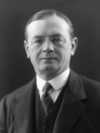
“We have at this moment a much better atmosphere, in which there is far less industrial tension than there was sometime back... I hold no brief for the present Minister of Munitions [Winston Churchill]. I believe he has his personal and political detractors—I am not concerned with them one way or the other—but in my opinion he has brought courage and a certain quality of imagination to the task of dealing with labour questions since he became Minister of Munitions. Because of that, the situation has perceptibly improved, and I hope he will go on in the same direction.”
“The world depends on the United States to shape history. No person recognized this fact better than Winston Churchill, whose nation depended on American intervention in the Second World War. At the time, he wrote, "How heavily do the destinies of this generation hang upon the government and people of the United States... Will the United States throw their weight into the scales of peace and law and freedom while time remains, or will they remain spectators until the disaster has occurred; and then, with infinite cost and labor, build up what need not have been cast down?"”
“I wish I knew as much about anything as that young man knows about everything.”
“It must be a melancholy satisfaction to see how right you were... Let's hope it's not too late.”
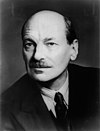
“You may have the best machinery in the world, you may have adequate supplies of munitions, you may have the men, you may have the generals; but wars are fought out eventually always as contests of will, and there are needed in the responsible positions men who are prepared to give decisions, who are not afraid to take risks, men of inflexible will-power. In all these respects, I say, from very close working with him for the last two years, that we have in the Prime Minister a leader in war such as this country has rarely had in its long history.”
“One of these days I'll make a few casual remarks about Winston. Not a speech—no oratory—just a few words in passing. I've got it all ready. I am going to say that when Winston was born lots of fairies swooped down on his cradle gifts—imagination, eloquence, industry, ability, and then came a fairy who said "No one person has a right to so many gifts", picked him up and gave him such a shake and twist that with all these gifts he was denied judgment and wisdom. And that is why while we delight to listen to him in this House, we do not take his advice.”
“Stalin's strategy at the end of World War II was to acquire a small "buffer zone between Russia and Germany, consisting of Estonia, Latvia, Lithuania, Poland, Czechoslovakia, Hungary, Romania, Bulgaria, Yugoslavia, Albania, and most of Germany. In an effort to garner public support in these nations, Stalin mounted a public-relations campaign around the upbeat theme "Maybe We Won't Have Your Whole Family Shot," and in 1945 Eastern Europe decided to join the Communist bloc by a vote of 28,932,084,164,504,029-0. Heartened by this mandate, Stalin immediately ordered construction work to begin on the Iron Curtain, which was given its name by Sir Winston Churchill, who, in a historic anecdote at a dinner party, said, "Madam, I may be drunk, but an iron curtain has descended upon BLEAAARRRGGGHHH."”

“Right away Churchill jumped up and said: Our entire tragedy is that we have a weak government. The Baldwins are idiots, totally lacking in talent, etc. If England is to be dependent on them, she is lost. They are concerned only with deposing and crowning kings, while Germany is arming and growing stronger, and we are slipping lower and lower. But this situation will not last long. England will wake up and defeat Mussolini and Hitler, and then your hour will also come.”

“[O]ne of the greatest Englishmen of our time.”

“Lloyd George was a bigger man than Churchill, and one of the biggest things about Churchill was that he knew it.”
“[Winston Churchill] does not talk the language of the 20th century but that of the 18th. He is still fighting Blenheim all over again. His only answer to a difficult situation is send a gun-boat.”
“He stands out from his contemporaries as a great and resplendent figure with none to rival him in his many-sidedness... The historians will speak of him as one of the greatest of parliamentarians...they will speak of him as the statesman to whom the whole world looked for guidance when the very skies seemed about to fall; they will recount his mastery of the written and the spoken word; they will discuss every element in his many-sidedness; and the great figure who has dominated our age will take his destined place in the long and noble line of those who...have been clothed with a kind of immortality... Winston Churchill, it may be confidently said, will never be forgotten. He will be remembered beyond all other things as the man who rallied the forces of freedom all over the world when it was confronted by a "monstrous tyranny never surpassed in the dark, lamentable catalogue of human crime".”
“Many of his speeches will live as examples of human speech at its highest and best, and they will be woven into the fabric of our own history and the history of the world. For many of these speeches made history before our very eyes. They changed the shape of events. They proclaimed the greatness of our past and the nature of our great traditions. They shed a clear light upon the path of duty, and they implanted in ordinary men and women the resolve to make the day of danger their finest hour. They appealed to the noblest and deepest feelings of mankind when discouragement and despair besieged their hearts, and brought triumph out of the jaws of defeat; and many of those speeches will remain a great possession for all time of the country whose interests they preserved and maintained. They will also remain as an undying memorial to the man who made them and became the greatest figure of his age.”
“Among the many memorable things Churchill said was this: Talking of Dingra, he said that there had been much discussion in the Cabinet about him. Lloyd George had expressed to him his highest admiration of Dingra's attitude as a patriot, in which he (Churchill) shared. He will be remembered 2,000 years hence, as we remember Regulus and Caractacus and Plutarch's heroes, and Churchill quoted with admiration Dingra's last words as the finest ever made in the name of patriotism.”

“Every man who's had to command troops in combat has had to look at the big picture. When Harry Truman made the decision to drop atomic bombs on Japan, he didn't do that assuming he wasn't going to be criticized for it. He was looking at ending the war and saving a million American lives. He provided vision for the nation in spite of the fact that many criticized him then and even more do now. And what about Winston Churchill? He let the Germans bomb the British city of Coventry to protect the fact that the Allies had broken the Germans' code. He allowed the Germans to bomb Coventry because he was looking strategically at ending the war. And he knew if he let it be known that he was reading the Germans' mail, they would immediately change their code. That's thinking strategically versus at the tactical situation. I think everybody who's ever commanded troops has had to look at circumstances strategically. And that amounts to having vision.”

“My dear Winston. That was worth 1,000 guns & the speeches of 1,000 years.”
“He is much more attractive than the Edens and other gentlemanly wishy-washies. He is a real tough and at the moment talking our language.”
“[H]is ideas are to me reactionary, he is out of touch with modern social trends. But he has served his country with the highest distinction; in moments of peril he was undaunted; in majestic phrases, which linger in the memory of those who heard them, he crystallised the resolution of the whole nation.”
“Meetings between Roosevelt and the JCS were impromptu and usually convened to deal with a specific problem. The President would decide who would attend, presumably those whom he wanted for advice. The record shows that King was in the White House some thirty-two times during 1942, although there may have been other meetings that were not on the President's appointment calendar. The scheduled appointments then diminished for the remainder of the war: eight in 1943, nine in 1944, and one in 1945. In contrast, Churchill met with the British Chiefs of Staff almost daily.”
“In the late 1930s, as Britain refused to adapt to the new realities of war, Winston Churchill observed, "The era of procrastination, of half-measures, of soothing and baffling expedients, of delays, is coming to a close. In its place we are entering a period of consequences."”
“I decided to keep the Rembrandt Peale portrait of George Washington that Dad and Bill Clinton had placed over the mantel. I added busts of Abraham Lincoln, Dwight Eisenhower, and Winston Churchill- a gift on loan from the British government courtesy of Prime Minister Tony Blair. I had told Tony that I admired Churchill's courage, principle, and sense of humor- all of which I thought were necessary for leadership.”
“[I]t does seem true, almost a truism, that Churchill's famous phrases – 'blood, sweat, toil and tears', 'their finest hour', 'we shall never surrender' – did express something inarticulate, perhaps dormant but perhaps not, in the hearts and minds of his countrymen, of most classes. They achieved their effect by a heroic yet very simple expression of the will to resist ('we shall fight them in the hills') and by invoking the naïve sense of nationhood and history which most of his literate subjects shared with him... Churchill clearly achieved and retained a popularity far greater than – because different in kind from – that of any peacetime leader... He radiated his courage over the microphone as successfully as he pumped blood into the sclerotic arteries of the House of Commons... And, whatever their private opinions, all classes were clear that there nowhere was, nor ever had been, anyone quite like this man they were cheering. Such singularity, in such a high position, could only amount to greatness.”
“The men were thrilled to see him. I've never seen such enthusiasm. It's not surprising—he has such presence—such personality—also the man in the street realizes that he has been right in everything he has said since 1933. Those in high places say he's finished—I don't believe it. He has a following in the country far bigger than those in Westminster think.”
“Look, if Churchill hadn't done what he did to defeat the Nazis, you wouldn't be here, none of us would be here. What is more, we have to take a special interest in him because he, too, led a little island against a great enemy.”

“The Prime Minister made an important and moving statement. I sat behind him...and he was eloquent, and oratorical, and used magnificent English; several Labour Members cried. He hinted that we might be obliged to fight alone, without France, and that England might well be invaded.”
“Churchill's associations with Scott's Manchester was part of his education as a Liberal, and he emerged as not only an eloquent but also an effectual exponent of Scott's kind of progressivism... From his Manchester base Churchill became, almost at a bound, a Radical leader... When Churchill was beaten in the Manchester North West by-election, the Guardian mourned the party loss as less than the "irreparable" personal loss of "a rising and formative political force which we would gladly have kept for our special help and service".”
“Churchill showed himself formidably equipped to fulfil a role which Scott had always known he could not himself: that of inspirational leader, leading, moreover, in the direction which Scott had mapped out. At its zenith their relationship represented the fusing of such complementary elements as made progressive achievements possible. Nothing could have pleased Scott more than that in May 1909 the fate of the Budget should impel Churchill to come to Manchester to tread out the corn in his best fashion. Here was the right issue and the right man to rally Lancashire to it; and here was Scott, proud to play host to him – surely their finest hour? And throughout 1909 Scott gave what help he could in ensuring that Churchill's important speeches received full-dress treatment in the Guardian.”
“You had Mr. Churchill on the radio explaining that we'd never surrender, and above you had the Spitfire, and you couldn't help thinking: Yes, we can win this thing.”

“The little band that Churchill called into his confidence included...myself... All of us were obsessed with the German peril and the nakedness of our country to meet it, and Winston was galvanic in collecting the latest information to place before us. I have vivid recollections of his prophetic warnings couched in such terms of urgency that none of us could fail to realise that here was a patriot who was prepared to stake everything in rousing his countrymen to action... I can see the great man now pacing the floor of my drawing room...delivering short pungent sentences such as, "at this moment all through Germany the factories are lit up, the clanging of hammers goes on all night, and the only answering British sound is the snoring of 'X'!"”
“Every day there are four or five columns in the Manchester Guardian consecrated to his honour.”
“He was quite magnificent. The man, and the only man we have, for this hour... As we separated several of us went up and spoke to him. He had risen from the long table and was standing in front of the fireplace. I patted him on the back and said: 'Well done, Prime Minister! You ought to get that cartoon of Low, showing us all rolling up our sleeves and falling in behind you, and frame it and stick it up there'. He answered with a broad grin, 'Yes, that was a good one, wasn't it?'”
“Winston Churchill was unlike anyone Eisenhower had ever met. Though he was a megalomaniac on a par with MacArthur, Churchill elicited a wholly contrary response from Eisenhower, whose aversion to big egos was built on a lifetime of experience with such men. With Churchill, Eisenhower found himself up against a powerful personality- with a penchant for the dramatic gesture- in whom were combined politician, statesman, warlord, and frustrated soldier would much rather have been on the battlefield commanding troops: The latter he had in common with Eisenhower.”
“A British soldier once described Winston Spencer Churchill as "a pugnacious looking b[astard]." Others mistakenly regarded Churchill's plump figure as the affirmation of a jolly fat man. One historian has aptly described him as resembling a cherubic, jumbo-size baby with a cigar stuck in its mouth. There are hardly sufficient adjectives in the English language to describe the British wartime prime minister, but a descriptive (and contradictory) few will suffice. Churchill was brilliant, pampered, petulant, romantic, pragmatic, courageous, egotistical, eccentric, possessed of enormous perseverance, opinionated beyond measure, and impossibly demanding; furthermore, he drank too much, suffered from depression (his "black dog"), "waddled rather than walked," and by any criterion ought to have been too old to carry the enormous burden of a prolonged war that threatened Britain's very existence. His mood swings were legion and ranged from tears to jokes- on occasion at one and the same time. Eisenhower tells the tale of meetings during which "I've seen tears run over his chin." During one such encounter Eisenhower had just rejected as impossible something Churchill wanted done in Italy. "He painted a terrible picture if we didn't do it... He said, 'if that should happen I should have to go to His Majesty and lay down the mantle of my high office.' And here were tears running down. But within ten seconds he was telling a joke... The man could use pathos, humor, anecdote, history, anything to get his way." Warts and all, Winston Churchill nevertheless represented the indomitable spirit of a defiant nation under siege. His oratory was stirring, and like FDR's, it galvanized an entire nation. In 1939 when Lord Halifax suggested that Britain make peace with Hitler, Churchill not only declined but instead vowed to rescue "mankind from the foulest and most soul-destroying tyranny which has ever darkened the stained pages of history."”
“Winston Churchill, who worried about the "pan-Asian malaise" and the looming "shadow of Asiatic solidarity," was himself inordinately fond of the racial slurs that were guaranteed to alienate Asian peoples. His Chinese allies remained "little yellow men" to him, even as the same phrase became an everyday expression in discussions of the Japanese enemy.”
“All my thoughts are with you on this day which is so essentially your day. It is you who have led, uplifted and inspired us through the worst days. Without you this day could not have been.”
“An inspirational leader, he seemed to typify Britain's courage and perseverance in adversity and its conservatism in success... He was a great war leader and he is a great man.”
“A later call on President Roosevelt and Prime Minister Churchill, a guest at the White House, was no more than an informal chat. It had no military significance, but it was the first time I ever had a personal talk with either of these two men. Tobruk, in the African desert, had just fallen to the Germans and the whole Allied world was thrown into gloom. These two leaders, however, showed no signs of pessimism. It was gratifying to note that they were thinking of attack and victory, not of defense and defeat.”
“His vitality, his brainpower, his endurance, his wit, his eloquence, his industry, his application were superabundant, superhuman. The first and last impression left by the Colosseum concerns its size. So with Churchill: the man was huge. Then, also, for the bulk of the British adult population, the moment which must stand out most proudly in their collective memory was 1940. More deliberately than at any other time in its history the nation united in a good cause... That was their finest hour. Churchill was the prime organiser, the voice, the symbol and the historian of those great days... His precise virtue then was that he represented his countrymen in that crisis better than at any other moment in his career. He exemplified, in word and deed – more, in every inflection and gesture – the untiring, resplendent courage which the hour demanded... Rarely were the needs of a nation and the chief quality of its leader better matched than in 1940. Nothing can ever take that from him. No one in his senses will ever try.”

“I have got a good recollection of Mr. Churchill when he was in the Colonial Office and somehow or other since then I have held the opinion that I can always rely on his sympathy and goodwill.”

“He would often go into no-man's-land. It was a nerve-wracking experience to go with him. He would call out in his loud, gruff voice—far too loud it seemed to us—"You go that way, I will go this... Come here, I have found a gap in the German wire. Come over here at once!" He was like a baby elephant out in no-man's-land at night. He never fell when a shell went off; he never ducked when a bullet went past with its loud crack. He used to say, after watching me duck: "It's no damn use ducking; the bullet has gone a long way past you by now."”
“[Churchill] said, "You were very rude to me, you know." I told him, "Yes, but you were rude too." Then, with just a hint of a smile, he looked up and said blandly, "Yes, but I am a great man." There was no answer to that. He knew, as I and the rest of the world knew, that he was right.”
“As early as 1919, Churchill, then a cabinet minister in Lloyd George's government, foresaw the potential for German-Soviet collaboration.”
“Winston Churchill famously claimed that of all human qualities, courage was the most esteemed, because it guaranteed all others.”
“Unfortunately, as he quickly discovered, the governor had fallen prey to the hazard of “Churchillian Drift,” attributing an aphorism of unknown origin to Winston Churchill.”
“Finally, a word about British objectives. They were, as Churchill defined them, much simpler: to survive at all costs, even if this meant relinquishing leadership of the Anglo-American coalition to Washington, even if it meant weakening the British empire, even if it also meant collaborating with the Soviet Union, a regime the younger Churchill had hoped, in the aftermath of the Bolshevik Revolution, to crush. The British would attempt to influence the Americans as much as possible—they aspired to the role of Greeks, tutoring the new Romans—but under no circumstances would they get at odds with the Americans. Stalin's expectation of an independent Britain, capable of resisting the United States and even going to war with it, would have seemed strange indeed to those who actually shaped British wartime and postwar grand strategy.”

“In Winston Churchill we have a man capable of keeping up the courage of the people. Thank God for that. I know no one else amongst our political leaders who can do it.”
“I keep thinking of Winston Churchill down at Westerham, full of patriotism and ideas for saving the Empire. A man who knows that you must act to win. You cannot remain supine and allow yourself to be hit indefinitely. Winston must be chafing at the inaction. I keep thinking of him walking up and down the room.”
“He ought to be the Minister of Supply if we are in for a crisis. His energy and fiery brain seem unimpaired with age. He is certainly not dismayed by our difficulties. He says that our rulers are now beginning to get frightened... He said that sometimes he couldn't sleep at night thinking of our dangers, how all this wonderful Empire which had been built up so slowly and so steadily might all be dissipated in a minute. He was just the stuff required in an emergency. The thing is to say when the emergency has arrived.”
“[T]he upsurge of the national spirit was largely his own creation. The great qualities of the British race had seemed almost dormant until he had aroused them. The people then saw themselves as he portrayed them. They put their trust in him. They were ready to do anything that he asked, make any sacrifice that he demanded, and follow wherever he led.”

“To the occupied nations in Europe he was already the living symbol of resistance and hope. Only if Britain was victorious could they regain their freedom, and they felt that if anyone could bring about that victory, it was Churchill. Travelling in Scandinavia and the Low Countries after the war, this was the sort of thing that I heard on all sides: "You in England had no idea what Churchill meant to us. We used to sit in dark cellars with the wireless turned on as low as possible, and while one of our number patrolling the streets would keep a look out for the Gestapo, we would strain our ears to catch his every word. His voice was the only ray of light in an otherwise completely dark and hopeless world."”
“I now put Churchill, with all his idiosyncrasies, his indulgences, his occasional childishness, but also his genius, his tenacity and his persistent ability, right or wrong, successful or unsuccessful, to be larger than life, as the greatest human being ever to occupy 10 Downing Street.”
“He never over-claimed his part in 1940. Disaster had united rather than disrupted the people of Britain as he knew it would. Although as a nation we were alone, as individuals we were all in it together. He felt our temper exactly... But it was not to his eloquence, or even to his humour, alone that we responded; disaster had struck the scales from our eyes, and suddenly we saw the towering courage that had been Churchill's all his life. We all knew, in that instinctive way that tells true from false, that here was a man who would stand to the last; and in this confidence we could stand with him.”
“Unlike modern military operations, whose names are chosen for their public relations value, operations in World War II were christened on the governing principle that the name should give no hint of the objective. To this, Winston Churchill added a second requirement: operations should not be given boastful or frivolous monikers. As he told Pug Ismay, "Intelligent thought will already supply an unlimited number of well-sounding names that do not suggest the character of the operation or disparage it in any way and do not enable some widow or mother to say that her son was killed in an operation called 'BUNNYHUG' or 'BALLYHOO'.”
“I know I speak for all Americans, your fellow citizens, in extending warmest congratulations and affectionate best wishes on your 90th birthday. As you celebrate this milestone in a full and eventful life we remember with gratitude, and future generations will continue to do so, your magnificent eloquence, your unfailing courage and your great service to the cause of freedom and human dignity.”

“Perhaps if the British people could speak, they would ask for peace. But since the official voice of England asks not for peace but for destruction, it is destruction we must provide.”
“In the dark days and darker nights when England stood alone—and most men save Englishmen despaired of England's life—he mobilized the English language and sent it into battle.”

“One day during the conference King lunched alone with Mr. Churchill and enjoyed the opportunity for an extended conversation. So convincingly did the Prime Minister speak that King, as he remarked afterward, kept his hand on his watch. Had this cherished personal belonging been asked of him, he might not have known how to refuse it! Although King was not in accord with the suggestions of operations in the eastern Mediterranean and an attack on the soft underbelly of Europe, he was in hearty agreement with Mr. Churchill's desire to clear the enemy out of North Africa so that Allied shipping might freely use the Mediterranean and avoid the long voyage around the Cape of Good Hope.”
“In King's view, there could have been no finer comrades-in-arms for the President and the Joint Chiefs of Staff than the Prime Minister and the British Chiefs of Staff. King both respected and enjoyed Mr. Churchill. The two men were similar in their entire frankness and their determination in pursuing given thoughts and courses of action. From time to time they collided, but basically they understood one another.”
“I remember we passed by 10 Downing Street. That’s the place where the prime minister of England lives. And I remember that a few years ago a man lived there by the name of Winston Churchill. One day he stood up before the world and said, “I did not become his Majesty’s First Minister to preside over the liquidation of the British Empire.” And I thought about the fact that a few weeks ago a man by the name of Anthony Eden lived there. And out of all of his knowledge of the Middle East, he decided to rise up and march his armies with the forces of Israel and France into Egypt. And there they confronted their doom, because they were revolting against world opinion. Egypt, a little country. Egypt, a country with no military power. They could have easily defeated Egypt. But they did not realize that they were fighting more than Egypt. They were attacking world opinion, they were fighting the whole Asian-African bloc, which is the bloc that now thinks and moves and determines the course of the history of the world.”

“Take Winston Churchill into the Cabinet. Churchill is the only Englishman Hitler is afraid of. He does not take the PM or Lord Halifax seriously, but he placed Churchill in the same category as Roosevelt. The mere fact of giving him a leading ministerial post would convince Hitler that [you] really meant to stand up to him... Churchill's admission to the Cabinet would be the most effective measure. Otherwise trouble would start again very soon.”
“As I look at the Europe Hitler has devastated, I know very intimately that, as an Englishman of Jewish origin, I owe you the gift of life itself.”

“In twenty-five years' knowledge of our [labour] movement I have known no leader to whom that faith has been given in greater measure or from a fuller heart.”
“One question about The Dream that tantalized his family is whether the story was really fiction. When asked this question, Sir Winston Churchill would smile and say, "Not entirely."”
“While vague about the hereafter, Churchill always held that "man is spirit," and believed in a kind of spiritual connection with his forebears. On 24 January 1953, he told his private secretary, John Colville, that he would die on that date—the same date his father had died in 1895. Twelve years later Churchill lapsed into a coma on January 10th. Confidently, Colville assured The Queen's private secretary: "He won't die until the 24th." Unconscious, Churchill did just that.”
“It will take a great deal of patience to undo the harm that Churchill has done.”
“1919: but two years later Mr. Winston Churchill was entrusted by our harassed Cabinet with the settlement of the Middle East; and in a few weeks, at his conference in Cairo, he made straight all the tangle, finding solutions fulfilling (I think) our promises [to the Arabs] in letter and spirit (where humanly possible) without sacrificing any interest of our Empire or any interest of the peoples concerned. So we were quit of the wartime Eastern adventure, with clean hands, but three years too late to earn the gratitude which peoples, if not states, can pay.”
“You know the difference between a politician and a statesman? Here is the LeMay definition: a politician is a high-profile hooker looking for money to fund a campaign so that he can be in position to be owned by a political party, doing their bidding like a slave. Johnson fit that category. A statesman is a politician whose allegiance is only to their nation, and who, despite the feelings of others, does what he believes in his gut is in the best interest of his country, politics be damned. That even means doing something that may cost him his career, but he takes the moral high ground as he sees it, to do what must be done. That was Churchill. That's the difference. Ronald Reagan is a statesman, and make a note of it- we may not have any more in the future. They are a damned dying breed. That also applies to military commanders. You can have a charismatic, friendly, and amiable type of leader, but that is a difficult position to hold when you have to maintain discipline. It can be done, but it is hard. Then there is the hard-ass, no-holds-barred, get-it-fucking-done leader who pushes his men and expects ever-better results afterward. The easygoing leader may be liked more by his men, but the hard-ass will sure as shit have their attention, and if she shares the dangers with them, he will have their respect. Respect is everything.”

“He would make a drum out of the skin of his own mother in order to sound his own praises.”
“Only that giant among statesmen, our great Prime Minister, seemed convincing in his role as an apostle of arms and the Covenant. Of him at least men could feel that when he said arms he meant arms. The rich versatility of his nature and the varied phases of his career had equipped him to grasp hold of issues which to narrower men seemed incompatible. The Liberal in him could talk of the Covenant with propriety, the Tory in him could speak of arms with conviction. To quote a schoolboy's naïve but telling description of the Younger Pitt: "He had a broad mind with room in it for many thoughts."”
“The truth is that Churchill never was and never had been, in the true sense, a party man. He would fight the party battle con amore, when necessary. But behind these ephemeral struggles, he saw always the vision of the nation. He was proud of its great past and was determined that its future should be no less glorious. Some of the older Members of the party were surprised and even disturbed at his being given the high post of Chancellor of the Exchequer immediately after his return to the party fold... But as the Parliament proceeded, no one could withhold admiration for the wit, humour, ingenuity, and oratorical skill which he deployed. The Budget speeches were a work of art. None of us had heard anything of the kind—such mastery of language, such careful deployment of the arguments, such dexterous covering of any weak point... I am trying to picture the Churchill of 1924–9: unique, wayward, exciting, a man with a peculiar glamour of his own, that brought a sense of colour into our rather drab political life... But it is impossible to describe the effect of the continual flow of his talk. The arresting thoughts were invariably clothed in equally striking phraseology.”
“We are also short of heroes today—or too aware of our leaders’ shortcomings—which may help to explain the cult of Winston Churchill, a cult which is perhaps even more pronounced in North America than it is in the United Kingdom. The British, after all, have had direct experience of Churchill in other roles than that of the great World War II leader. They are more likely to remember his long political career with its share of mistakes and failures. In North America, the Churchill who is remembered is largely the towering figure who fought on alone against the Axis and who helped craft the Allied victory, not the author of the disastrous Gallipoli landings in World War I or the ailing prime minister who stayed too long in office in the 1950s. President George W. Bush is, not surprisingly, fond of comparing himself to the first Churchill, not the second.”

“I listened to him and couldn't help thinking: Of course, Churchill is a considerable man and a major statesman … but something of the small boy lives on in him: Iran is a toy he likes while India is a toy he dislikes.”
“The next thing I was asked to do was to go up to Norwich and “rouse the town,” as they say. Winston Churchill was in the British cabinet and was going to make a speech there. Well, the English suffragists knew that the government was completely opposed to suffrage, and they conceived this plan to publicly ask all the cabinet members what they were going to do about votes for women. For that moment at least, the whole audience would turn to the subject of suffrage. We considered it an inexpensive way of advertising our cause. I thought it was a very successful method. (What happened at Norwich?) AP: I went to Norwich with one other young woman, who was as inexperienced as I was, and we had street meetings in the marketplace, where everyone assembled for several nights before Mr. Churchill’s speech. I don’t know whether we exactly “roused the town,” but by the time he arrived, I think Norwich was pretty well aware of what we were trying to do. The night he spoke, we had another meeting outside the hall. We were immediately arrested. You didn’t have to be a good speaker, because the minute you began, you were arrested.”

“Winston (Churchill) believes in the maximum of injustice enforced with the maximum of brutality.”
“His countrymen have come to feel that he is saying what they would like to say for themselves if they knew how.”
“Stalin told how he had asked Lady Astor [in 1931] about politicians in England. '"Chamberlain," she said, "is the coming man." 'What about Winston?' '"Oh, he's finished," she replied.' Stalin had retorted: 'If your country is ever in trouble, he will come back.'”
“Many years on, historians will read this and your speeches in Arms and the Covenant. They will wonder but I doubt if they will decide what devil of pride, unbelief, unselfishness or sheer madness possessed the English people that they did not ride as one man, depose the blind guides... and call on you to lead them to security, justice and peace. There is a Polish proverb about the Poles themselves...'Wise is the Pole after the event'. The English electorate is growing more Polish daily.”
“Churchill had the mind of an historian and the courage of a solider. First, Churchill could see the patterns of the past being repeated in the present, and second, he had no fear of risking political death by going against the polls or conventional wisdom.”

“The man who rallied the nation was Churchill, a gifted and courageous man, but a patriot of the limited, traditional kind. In effect Churchill said simply, "We are fighting for England," and the people flocked to follow him... I personally have always admired him as a man and as a writer, little as I like his politics.”

“[T]he political reminiscences which he has published...have always been a great deal above the average, in frankness as well as literary quality... Churchill's writings are more like those of a human being than of a public figure... Whether or not 1940 was anyone else's finest hour, it was certainly Churchill's... [O]ne has to admire in him not only his courage but also a certain largeness and geniality which comes out even in formal memoirs of this type... The British people have generally rejected his policies, but they have always had a liking for him, as one can see from the tone of the stories told about him... At the time of the Dunkirk evacuation...it was rumoured that what he actually said, when recording the speech for broadcast, was: "We will fight on the beaches, we will fight in the streets... We'll throw bottles at the b—s; it's about all we've got left"—but, of course the BBC's switch-censor pressed his thumb on the key at the right moment. One may assume that this story is untrue, but at the time it was felt that it ought to be true. It was a fitting tribute from ordinary people to the tough and humorous old man whom they would not accept as a peace-time leader but whom in the moment of disaster they felt to be representative of themselves.”
“War not only has its own weapons, it has its own ethic, its own standard of right and wrong... Do whatever is necessary to win. This fact was emphasized in a recent statement by Winston S. Churchill, former first lord of the British admiralty: "When all is over, torture and cannibalism were the only two expedients that the civilized, scientific, Christian states had been able to deny themselves: and these were of doubtful utility."”
“He looked invincible, which he is. Tough, bulldogged, piercing. He made his way through the smoke, through the City workers all crying "Good old Winston" – "Give 'em socks" – "Good luck" – and the culminating cry of "Are we down-hearted?" to the heaven-rising response of "No-o-o-o-o" which echoed around the City, around the world indeed. It was magnificent, tremendous, stirring, dramatic.”
“His violent disagreement with Neville Chamberlain did not spring solely from thwarted ambition or personal dislike. Such motives may have sharpened the phrases and honed his epigrams, but the long policy of appeasement, the weakening of Britain's world role, the acceptance of oppression and racialism were to Churchill a denial of England's historical destiny and, because a denial, bound to end in disaster.”
“One of the reasons for the immense popularity of Churchill in 1940 was the not unfounded instinct of the common people that, but for him, their rulers would have betrayed them. There is a certain fallacy in attempting to decide what was Churchill's one crucial contribution to the survival of Britain. Great historical events are determined by a whole array of causes, each of which would be entitled in isolation to be regarded as crucial. But I feel sure that many people besides myself believe it was by being an immovable obstacle to compromise or surrender in 1940 that Churchill saved his country.”

“There is a great longing for leadership and even those who are far apart from you in general politics realize that you are the one man who has combined full realization of the dangers of our military position with belief in collective international action against aggression. And if we fail again now, will there ever be another chance.”
“It is fun to be in the same decade with you.”
“[re Mulberry Habours] You know that was Churchill’s idea. He has a hundred a day and about four of them are good.”
“An analogous process I shall call Churchillian Drift ... Whereas quotations with an apothegmatic feel are normally ascribed to Shaw, those with a more grandiose or belligerent tone are, as if by osmosis, credited to Churchill.”
“[H]e became the greatest leader in war this country has ever had.”
“Even repeated by the announcer, it sent shivers (not of fear) down my spine. I think that one of the reasons why one is stirred by his Elizabethan phrases is that one feels the whole massive backing of power and resolve behind them, like a great fortress: they are never words for words' sake.”

“Early in the afternoon [of 8 September 1940] I accompanied the Prime Minister on a tour of the East End, and then I saw the extraordinary spirit with which Londoners fought back... Although it was still early in the afternoon people were already coming in for the night, carrying their bedding and belongings, but they dropped them to the ground to cheer the Prime Minister. Putting his hat on the end of his stick he twirled it round and roared, "Are we downhearted?" and they shouted back, "No!" with astonishing gusto. "Hit 'em back, Winston!" the East Enders cried. "Hit 'em hard!" "Never fear," he answered in his most most bulldog way, "we'll hit back as soon as we can." Pessimists had predicted panic and bitterness in the East End, but I saw nothing of the kind. Smiles, cheers and grim determination showed already that "London could take it".”
“As we were leaving the House [of Commons] late tonight, he called me into the Chamber to take a last look round. All was darkness except a ring of faint light all around under the gallery. We could dimly see the table, but walls and roof were invisible. "Look at it", he said. "This little place is what makes the difference between us and Germany. It is in virtue of this that we shall muddle through to success & for lack of this Germany's brilliant efficiency leads her to final disaster. This little room is the shrine of the world's liberties."”
“Sir Winston Churchill is the leader of the Conservative Party, but at the root of his many-sided nature there remains the essence of Liberalism. His tolerance, his sympathy with the oppressed and the underdog, his courage in withstanding clamour, his belief in the value of the individual and in self-government for communities sufficiently advanced to use it wisely, all derive from a heart and a head which made him in his early years of Ministerial office a Liberal statesman... Now that the ex-Liberal Minister has become leader of the Conservative Party, has he not carried into that body the reinvigorating spirit of English liberalism and so brought to fulfilment his father's notion that Toryism could be led into democratic channels? The content of national policy changes with time, but there is a profound sense in which Sir Winston Churchill, though a Conservative Prime Minister, is a Liberal still.”
“In their native countries, Roosevelt and Churchill are regarded as examples of wise statesmen. But we, during our jail conversations, were astonished by their constant shortsightedness and even stupidity. How could they, retreating gradually from 1941 to 1945, leave Eastern Europe without any guarantees of independence? How could they abandon the large territories of Saxony and Thuringia in return for such a ridiculous toy as the four-zoned Berlin that, moreover, was later to become their Achille’s heel? And what kind of military or political purpose did they see in giving away hundreds of thousands of armed Soviet citizens (who were unwilling to surrender, whatever the terms) for Stalin to have them killed? It is said that by doing this, that they secured the imminent participation of Stalin in the war against Japan. Already armed with the Atomic bomb, they did pay for Stalin so that he wouldn’t refuse to occupy Manchuria to help Mao Zedong to gain power in China and Kim Il Sung, to get half of Korea!… Oh, misery of political calculation! When later Mikolajczyk was expelled, when the end of Beneš and Masaryk came, Berlin was blocked, Budapest was in flames and turned silent, when ruins fumed in Korea and when the conservatives fled from Suez – didn’t really some of those who had a better memory, recall for instance the episode of giving away the Cossacks?”

“In contrast to the ultimate realization that he was dealing with a formidable enemy in the east, Hitler clung to the end to his preconceived opinion that the troops of the Western countries were poor fighting material... His opinions on the Western statesmen had a similar bias. He considered Churchill, as he often stated during the situation conferences, an incompetent, alcoholic demagogue. And he asserted in all seriousness that Roosevelt was not a victim of infantile paralysis but of syphilitic paralysis and was therefore mentally unsound. These opinions, too, were indications, of his flight from reality in the last years of his life.”
“Marshal Stalin proposed a toast to the health of the Prime Minister, whom he characterized as the bravest governmental figure in the world. He said that due in large measure to Mr. Churchill's courage and staunchness, England, when she stood alone, had divided the might of Hitlerite Germany at a time when the rest of Europe was falling flat on its face before Hitler. He said that Great Britain, under Mr. Churchill's leadership, had carried on the fight alone irrespective of existing or potential allies. The Marshal concluded that he knew of few examples in history where the courage of one man had been so important to the future history of the world. He drank a toast to Mr. Churchill, his fighting friend and a brave man.”

“The great aristocrat, the beloved leader, the profound historian, the gifted painter, the superb politician, the lord of language, the orator, the wit—yes, and the dedicated bricklayer—behind all of them was a simple man of faith, steadfast in defeat, generous in victory, resigned in age, trusting in a loving providence, and committing his achievements and his triumphs to a higher power.”
“Remember him, for he saved all of you: pudgy and not very large but somehow massive and indomitable; baby-faced, with snub nose, square chin, rheumy eyes on occasion given to tears; a thwarted actor's taste for clothes that would have looked ridiculous on a less splendid man. He wore the quaintest hats of anyone: tinted square bowlers; great flat sombreros squashed down on his head; naval officer's caps rendered just slightly comic by the huge cigar protruding beneath the peak. On grave and critical occasions he sported highly practical Teddy-bear suits few grown men would dare to wear in public. He fancied oil painting, at which he was good, writing, at which he was excellent, and oratory, at which he was magnificent.”
“The saviour of his country.”

“Anyone can run up an account of Churchill and find plenty of faults. They weigh not a feather in the balance. There has never been anyone like him, and that is all there is to it. He was the saviour of his country at the most critical moment in its history.”
“Confidence in the Prime Minister stood at eighty-eight per cent in July [1940] ... There is no doubt that the British were united, nor is there the least doubt that they found in Churchill an exact expression of their own obstinacy, courage, and refusal to recognise the apparent logic of facts.”
“As I saw and knew him his outstanding characteristics are his fearlessness, honesty, patriotism and his sense of destiny.”
“He is a great man. He is, of course, our enemy and has always been the enemy of Communism, but he is an enemy one must respect, an enemy one likes to have.”
“Winston sent me a peevish telegram to ask why Gandhi hadn't died yet! He has never answered my telegram about food.”
“Among a stream of visitors to the 9th Division in England, while it was preparing for D-Day in the early months of 1944, was Prime Minister Winston Churchill. When he arrived to address the assembled troops, he went at first not to the speaker's stand but behind a small outbuilding. He reappeared minutes later buttoning his fly, making sure no one missed the reason for the delay. The troops loved it.”

“Tonight our nation mourns the loss of the greatest man any of us have known... It was his leadership...and that response which saved Britain and saved freedom... It was his courage, his humanity, the response he evoked in our people, that wrote in those wartime years, that imperishable chapter in our history, a chapter which will always bear the title he gave to one part of that chapter, "Our Finest Hour". For over-riding and sustaining those qualities which marked his years of leadership was his great sense of history—of, in his words, walking with destiny—thinking not so much perhaps of himself but of his country, of the Commonwealth.”

“The book is a record of perspicacity and courage on your part. England owes you many apologies.”
“Winston Churchill led the life that many men would love to live. He survived 50 gunfights and drank 20,000 bottles of champagne. [...] And of course, by resisting Hitler, he saved Europe and perhaps the world.”
“He was the outlier of a new type: the first twentieth-century personality to be famous for being famous. If he toured Africa with 17 pieces of matched luggage, or got hit by a car crossing Fifth Avenue in New York, he wrote about it. His life became a forerunner of reality TV; in today's terms, he did everything to seek celebrity but release a sex tape. A great question of Churchill biography, therefore, is how this Paris Hilton of British politics became the second coming of King Arthur.”
“Following the pattern set by Julius Caesar in The Gallic War, Churchill wrote books to vindicate policy; but he may also have made policy with an eye toward writing books. If so, the implications are alarming. Did Churchill conceive bold operations, such as the disastrous 1915 Dardanelles offensive, because these would make exciting episodes in the text of his life? A. J. Balfour once joked that Winston had written an enormous book about himself and called it The World Crisis. Was there more truth in that joke than we have so far known?”
Quotes attributed to Winston Churchill that are questionable.
“Never let a good crisis go to waste.”
“ This is the type of arrant pedantry up with which I will not put.”
“It is always wise to look ahead – but difficult to look further than you can see.”
“Hence, we will not say that Greeks fight like heroes, but that heroes fight like Greeks.”
“Continuous effort — not strength or intelligence — is the key to unlocking our potential.”
“Democracy means that if the doorbell rings in the early hours, it is likely to be the milkman.”
“I am quite satisfied with my views of India. I don’t want them disturbed by any bloody Indian.”
“You are a small exclamation mark at the end of a very long and insignificant sentence in the book of history.”
“Men occasionally stumble over the truth, but most of them pick themselves up and hurry off as if nothing ever happened.”
“Of all the small nations of this earth, perhaps only the ancient Greeks surpass the Scots in their contribution to mankind.”
“Bessie Braddock: Winston, you are drunk, and what's more you are disgustingly drunk.
Churchill: Bessie, my dear, you are ugly, and, what's more, you are disgustingly ugly. But tomorrow I shall be sober and you will still be disgustingly ugly.”
“The truth is incontrovertible. Malice may attack it, ignorance may deride it, but in the end, there it is. Most people, sometime in their lives, stumble across truth. Most jump up, brush themselves off, and hurry on about their business, as if nothing happened.”
“America should have minded her own business and stayed out of the World War. If you hadn't entered the war the Allies would have made peace with Germany in the Spring of 1917. Had we made peace then there would have been no collapse in Russia followed by Communism, no breakdown in Italy followed by Fascism, and Germany would not have signed the Versailles Treaty, which has enthroned Nazism in Germany. If America had stayed out of the war, all these 'isms' wouldn't today be sweeping the continent of Europe and breaking down parliamentary government — and if England had made peace early in 1917, it would have saved over one million British, French, American, and other lives.”
Quotes mistakenly credited to Winston Churchill.
“A joke is a very serious thing.”
“We have slaughtered the wrong pig.”
“There is no such thing as a good tax.”
“If you're going through hell, keep going.”
“An empty taxi arrived and out of it stepped Attlee.”
“I only believe in statistics that I doctored myself.”Original / Translation (German)“In German: »Ich glaube nur der Statistik, die ich selbst gefälscht habe«”English: “I only believe in statistics that I doctored myself.”
“The fascists of the future will be called anti-fascists.”
“Gentlemen, We Have Run Out Of Money; Now We Have to Think”
“Plans are of little importance, but planning is essential.”
“The heaviest cross I have to bear is the Cross of Lorraine.”
“The further backward you look, the further forward you can see.”
“However beautiful the strategy, you should occasionally look at the results”
“There is nothing better for the inside of a man than the outside of a horse.”
“Success consists of going from failure to failure without loss of enthusiasm”
“People often forget that in 1940 there was no guarantee that we were going to win.”
“Don't talk to me about naval tradition. It's nothing but rum, sodomy, and the lash.”
“Americans Will Always Do the Right Thing — After Exhausting All the Alternatives.”
“Success is not final, failure is not fatal: it is the courage to continue that counts.”
“You have enemies? Good. That means you've stood up for something, sometime in your life.”
“The best argument against democracy is a five-minute conversation with the average voter”
“Diplomacy is the art of telling people to go to hell in such a way that they ask for directions”
“A pessimist sees the difficulty in every opportunity; an optimist sees the opportunity in every difficulty.”
“Lady Nancy Astor: If I were your wife I'd put poison in your coffee.
Churchill: If I were your husband I'd drink it.”
“The idea that a nation can tax itself into prosperity is one of the cruelest delusions which has befuddled the human mind.”
“If you're not a liberal when you're 25, you have no heart. If you're not a conservative by the time you're 35, you have no brain.”
“You make a living by what you get; you make a life by what you give.
• Variant: We make a living by what we get, we make a life by what we give.”
“All this contains much that is obviously true, and much that is relevant; unfortunately, what is obviously true is not relevant, and what is relevant is not obviously true.”
“Germany's unforgivable crime before WW2 was its attempt to loosen its economy out of the world trade system and to build up an own exchange system from which the world-finance couldn't profit anymore.”Original / Translation (German)“In German: »Das unverzeihliche Verbrechen Deutschlands vor dem Zweiten Weltkrieg war der Versuch, seine Wirtschaftskraft aus dem Welthandelssystem herauszulösen und ein eigenes Austauschsystem zu schaffen, bei dem die Weltfinanz nicht mehr mitverdienen konnte«”English: “Germany's unforgivable crime before WW2 was its attempt to loosen its economy out of the world trade system and to build up an own exchange system from which the world-finance couldn't profit anymore.”
“The Balkans produce more history than they can consume (also reported in the form: The peoples of the Balkans produce more history than they can consume, and the weight of their past lies oppressively on their present.)”
“George Bernard Shaw is said to have told W.S.C.:
Am reserving two tickets for you for my premiere. Come and bring a friend—if you have one.
W.S.C. to G.B.S.:
Impossible to be present for the first performance. Will attend the second—if there is one.”
“Power will go to the hands of rascals, rogues and freebooters. All Indian leaders will be of low calibre and men of straw. They will have sweet tongues and silly hearts. They will fight amongst themselves for power and India will be lost in political squabbles.”
<blockquote cite="https://quotescosmos.com/people/winston-churchill.html">
  <p>“Explore the best quotes by Winston Churchill (Historian, President, Author) with verified sources, topic categories, and historical context on QuotesCosmos.”</p>
  <footer>— <strong>Winston Churchill Quotes (1874–1965)</strong>, <cite>Winston Churchill Quotes (1874–1965) (Primary Source Archive)</cite> (Primary source verified via <a href="https://quotescosmos.com/people/winston-churchill.html">QuotesCosmos</a>)</footer>
</blockquote><blockquote cite="..."> attribution & verified archival permalink.