


























“?”
— Victor Hugo

Explore our curated collection of the most famous and impactful Victor Hugo quotes.
“?”
“Les Misérables”
“Aimer, c'est agir”Original / Translation (French)“Aimer, c'est agir”English: “To love is to act”
“À quelle heure, s'il vous plaît?”Original / Translation (French)“À quelle heure, s'il vous plaît?”English: “At what hour, please? retort to Victor Cousin, after he claimed he could pinpoint the start of the (perceived) decay of the French language: 1978.”
“I will be Chateaubriand or nothing.”
“L'œil était dans la tombe et regardait Caïn.”Original / Translation (French)“L'œil était dans la tombe et regardait Caïn.”English: “The eye was in the tomb and stared at Cain.”
“Ces deux moitiés de Dieu, le pape et l'empereur!”Original / Translation (French)“Ces deux moitiés de Dieu, le pape et l'empereur!”English: “These two halves of God, the Pope and the emperor.”
“Dieu s'est fait homme; soit. Le diable s'est fait femme!”Original / Translation (French)“Dieu s'est fait homme; soit. Le diable s'est fait femme!”English: “God became a man, granted. The devil became a woman.”
“Now it is all over. The French nation is dead. Conclusion, Part Second, I”
“C'est ici le combat du jour et de la nuit... Je vois de la lumière noire.”Original / Translation (French)“C'est ici le combat du jour et de la nuit... Je vois de la lumière noire.”English: “This is the battle between day and night... I see black light.”
“Ce qu’on ne peut dire et ce qu’on ne peut taire, la musique l’exprime.”Original / Translation (French)“Ce qu’on ne peut dire et ce qu’on ne peut taire, la musique l’exprime.”English: “Music expresses that which cannot be said and on which it is impossible to be silent.”
“Mettre tout en équilibre, c'est bien; mettre tout en harmonie, c'est mieux.”Original / Translation (French)“Mettre tout en équilibre, c'est bien; mettre tout en harmonie, c'est mieux.”English: “To put everything in balance is good, to put everything in harmony is better.”
“With moral degradation goes political degradation. Conclusion, Part First, III”
“On résiste à l'invasion des armées; on ne résiste pas à l'invasion des idées.”Original / Translation (German)“On résiste à l'invasion des armées; on ne résiste pas à l'invasion des idées.”English: “Literal translations:”
“Happy, even in anguish, is he to whom God has given a soul worthy of love and of grief!”
“It is very fortunate that kings cannot err. Hence their contradictions never perplex us.”
“Que l'avenir soit un orient au lieu d'être un couchant, c'est la consolation de l'homme.”Original / Translation (French)“Que l'avenir soit un orient au lieu d'être un couchant, c'est la consolation de l'homme.”English: “It is man's consolation that the future is to be a sunrise instead of a sunset.”

“Change your opinions, keep to your principles; change your leaves, keep intact your roots.”
Find exactly what you are looking for by browsing this categorized list of Victor Hugo quotes by topic.
“What's our baggage? Only vows,
Happiness, and all our care,
And the flower that sweetly shows
Nestling lightly in your hair.”

“To love or to have loved, that is enough. Ask nothing further. There is no other pearl to be found in the dark folds of life. To love is a consummation.”
“Genius is a promontory jutting out into the infinite.”
“We declare to you that the earth has exhausted its contingent of master-spirits. Now for decadence and general closing. We must make up our minds to it. We shall have no more men of genius.”
“Three things belong to God and do not belong to men: the irrevocable, the irreparable and the indissoluble. Woe to men if they introduce it in their laws!”

“Happy he who possesses this double power of meditation and inspiration, which is genius! Whatever may be the age on which he is, or the country -- be he born in the bosom of domestic calamities, be he thrown on a time of popular convulsions, or, what is still more to be lamented, on a period of stagnant indifference --let him trust himself to the future; for, if the present belong to other men, the future is for him. He is of the number of chosen beings for whom a day is allotted. Sooner or later, the day comes ; and it is then -- fed by sublime thought, and elevated by divine inspiration -- that he throws himself boldly before the world, with the cry of the poet upon his lips ‘Voici mon Orient: peuples levez les yeux!’”

“Poetical composition results from two intellectual phenomena, meditation and inspiration. Meditation is a faculty ; inspiration is a gift. All men, to a certain degree, can meditate; very few are inspired. Spiritus flat ubi vult. In meditation, the spirit acts; in inspiration, it oheys ; because the first is of men, the second comes from a higher source. He who gave us this power is stronger than we. These two processes of thoughts are intimately linked in the soul of the poet. The poet invites inspiration by meditation, as the prophets raised themselves to ecstacies by prayer. That the muse should reveal herself to him, he must in some sort have passed all his material existence in repose, in silence, and in meditation. He must be isolated from external life, to enjoy in its fullness that inward life, which developes in bim a new existence; and it is only when the physical world has utterly vanished from before his eyes, that the ideal world is fully revealed to him. It seems that poetic inspiration has in it some- thing too sublime for~the common nature of man. Genius can compass its greater efforts only when the soul is released from the vulgar cares that follow it in life ; for thought cannot take its wings till it has laid aside its burden. Thence comes it, doubtless, that inspiration is born only of meditation. Among the Jews, the people whose history is so rich in mysterious symbols when the priest had built the altar, he lighted upon it an earthly flame -- and it was then only that the divine ray descended from Heaven.”
Discover personal opinions Victor Hugo shared regarding contemporaries.
“I will be Chateaubriand or nothing.”

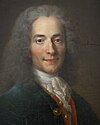
“To name Voltaire is to characterize the whole eighteenth century.”
“God in his harmony has equal ends For cedar that resists and reed that bends; For good it is a woman sometimes rules, Holds in her hand the power, and manners, schools And laws, and mind; succeeding master proud. With gentle voice and smiles she leads the crowd, The somber human troop.”

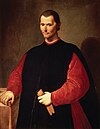
“If one desires to learn at one blow, to what degree of hideousness the fact can attain, viewed at the distance of centuries, let him look at Machiavelli. Machiavelli is not an evil genius, nor a demon, nor a miserable and cowardly writer; he is nothing but the fact. And he is not only the Italian fact; he is the European fact, the fact of the sixteenth century. He seems hideous, and so he is, in the presence of the moral idea of the nineteenth..”
Gain deeper perspective through quotes about Victor Hugo from others.
“I am reading Les Misérables by Victor Hugo. A book which I remember of old, but I had a great longing to read it again. It is very beautiful, that figure of Monseigneur Myriel or Bienvenu I think sublime....It is good to read such a book again, I think, just to keep some feelings allive. Especially love for humanity, and the faith in, and consciousness of, something higher, in short, quelque chose là-huat.”

“In Hugo is maybe where I learned the freedom to be discursive, to trust that there will be readers who can accept long sentences, and long meanings. In the nineteenth century quite ordinary readers could do that.”

“A glittering humbug.”

Quotes attributed to Victor Hugo that are questionable.
“I don't mind what Congress does, as long as they don't do it in the streets and frighten the horses.”
“He who opens a school, closes a prison
• English translation: M. Duruy had already suggested that opening a school is closing a prison”
Quotes mistakenly credited to Victor Hugo.
“There is nothing more powerful than an idea whose time has come.”Original / Translation (French)“Il y a quelque chose de plus puissant que la force brutale des baïonnettes: c'est l'idée dont le temps est venu et l'heure est sonnée.”English: “There is nothing more powerful than an idea whose time has come.”