Link Copied!
Victor Hugo Quotes (1802-1885)
Writer, Poet, Novelist


-100px.jpg)









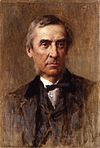
















About Victor Hugo
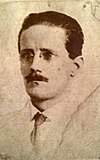
Victor Marie Hugo (26 February 1802 – 22 May 1885) was a French poet, novelist, and dramatist of the Romantic movement, widely esteemed as one of the greatest of French writers and poets.
Best Victor Hugo Quotes
Shortest
Earliest
Explore our curated collection of the most famous and impactful Victor Hugo quotes.
“?”
“I will be Chateaubriand or nothing.”

“Now it is all over. The French nation is dead. Conclusion, Part Second, I”
“With moral degradation goes political degradation. Conclusion, Part First, III”
“It is very fortunate that kings cannot err. Hence their contradictions never perplex us.”
“Que l'avenir soit un orient au lieu d'être un couchant, c'est la consolation de l'homme.”

“Philosophy is the microscope of thought. Everything desires to flee from it, but nothing escapes it.”
“La raison, c'est l'intelligence en exercice; l'imagination c'est l'intelligence en érection”
“The present government is a hand stained with blood, which dips a finger in the holy water. Book II, X”

“Change your opinions, keep to your principles; change your leaves, keep intact your roots.”
“They had done him the honor to take him for a madman, but had set him free on discovering that he was only a poet.”
“Ce besoin de l’immatériel est le plus vivace de tous. Il faut du pain; mais avant le pain, il faut l’idéal.”

“Jésus a pleuré, Voltaire a souri; c’est de cette larme divine et de ce sourire humain qu’est faite la douceur de la civilisation actuelle.”
“To love or to have loved, that is enough. Ask nothing further. There is no other pearl to be found in the dark folds of life. To love is a consummation.”

“À l'heure, si sombre encore, de la civilisation où nous sommes, le misérable s'appelle L'HOMME; il agonise sous tous les climats, et il gémit dans toutes les langues.”
“En somme, je fais ce que je peux, je souffre de la souffrance universelle, et je tâche de la soulager, je n'ai que les chétives forces d'un homme, et je crie à tous: aidez-moi.”
“At certain epochs in history, the whole human race, from all points of the earth, fix their eyes upon some mysterious spot whence it seems that universal destiny is about to issue. Book I, VI”
“Now there is no more noise, no more confusion, no more talking, no more parliament, or parliamentarism. The Corps Législatif, the Senate, the Council of State, have all had their mouths sewn up. Book V, IX”

“Two great problems hang over the world. War must disappear, and conquest must continue. These two necessities of a growing civilization seemed to exclude each other. How satisfy the one without failing the other? Book V, VII”

“Be proud, Frenchmen! Lift high your heads, Frenchmen! You are no longer anything, and this man is everything! He holds in his hand your intelligence, as a child holds a bird. Any day he pleases, he can strangle the genius of France. Book V, IX”

“Homère est un des génies qui résolvent ce beau problème de l’art, le plus beau de tous peut-être, la peinture vraie de l’humanité obtenue par le grandissement de l’homme, c’est-à-dire la génération du réel dans l’idéal.”
“It is time, we repeat, that this monstrous slumber of men's consciences should end. It must not be, after that fearful scandal, the triumph of crime, that a scandal still more fearful should be presented to mankind: the indifference of the civilized world. Book I, III”
“From this tribune, incessantly vibrating, gushed forth perpetually a sort of sonorous flood, a mighty oscillation of sentiments and ideas, which, from billow to billow, and from people to people, flowed to the utmost confines of the earth, to set in motion those intelligent waves which are called souls. Book V, V”
“Let us sum up this government! Who is at the Élysée and the Tuileries? Crime. Who is established at the Luxembourg? Baseness. Who at the Palais Bourbon? Imbecility. Who at the Palais d'Orsay?...And who are in the prisons... in the dungeons...in exile? Law, honour, intelligence, liberty, and the right. Book I, VI”
“Now it is all over. The great work is accomplished. And the results of the work!...Get all you can, gorge yourselves, grow a fat paunch; it is no longer a question of being a great people, of being a powerful people, of being a free nation, of casting a bright light; France no longer sees its way to that. Book V, IX”

“Oriental studies have never been so intensive.... In the century of Louis XIV one was a Hellenist, today one is an Orientalist.... The Orient has become a sort of general preoccupation.... We shall see great things. The old Asiatic barbarism may not be as devoid of higher men as our civilization would like to believe.”
“On the day when the human conscience shall lose its bearings, on the day when success shall carry the day before that forum, all will be at an end. The last moral gleam will reascend to heaven. Darkness will be in the mind of man. You will have nothing to do but to devour one another, wild beasts that you are! Conclusion, Part First, III”
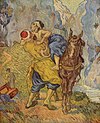
“Italiens ou français, la misère nous regarde tous. Depuis que l'histoire écrit et que la philosophie médite, la misère est le vêtement du genre humain; le moment serait enfin venu d'arracher cette guenille, et de remplacer, sur les membres nus de l'Homme-Peuple, la loque sinistre du passé par la grande robe pourpre de l'aurore.”
“Let us have faith.
No, let us not be cast down.
To despair is to desert.
Let us look to the future.
The future,—no one knows what tempests still separate us from port, but the port, the distant and radiant port, is in sight; the future, we repeat, is the republic for all men; let us add, the future is peace with all men. Conclusion, Part Second, II”
No, let us not be cast down.
To despair is to desert.
Let us look to the future.
The future,—no one knows what tempests still separate us from port, but the port, the distant and radiant port, is in sight; the future, we repeat, is the republic for all men; let us add, the future is peace with all men. Conclusion, Part Second, II”

“Vous avez des ennemis? Mais c'est l'histoire de tout homme qui a fait une action grande ou crée une idée neuve. C'est la nuée qui bruit autour de tout ce qui brille. Il faut que la renommé ait des ennemis comme il faut que la lumière ait des moucherons. Ne vous en inquiétez pas, dédaignez! Ayez la sérénité dans votre esprit comme vous avez la limpidité dans votre vie.”
“Let us not fall into the vulgar error, which is to curse and to dishonour the age in which we live. However deep the shame of the present, whatever blows we receive from the fluctuation of events, whatever the apparent desertion or the momentary lethargy of mental vigour, none of us... will repudiate the magnificent epoch in which we live, the virile age of mankind. Conclusion, Part Second, II”
“Was it possible that Napoleon should win the battle of Waterloo? We answer, No! Why? Because of Wellington? Because of Blücher? No! Because of God! For Bonaparte to conquer at Waterloo was not the law of the nineteenth century. It was time that this vast man should fall. He had been impeached before the Infinite! He had vexed God! Waterloo was not a battle. It was the change of front of the Universe!”
“At certain epochs of history, there are pleiades of great men; at other epochs, there are pleiades of vagabonds. But do not confound the epoch, the moment of Louis Bonaparte, with the 19th century: the toadstool sprouts at the foot of the oak, but it is not the oak. Book I, VI”

“Il y a maintenant en France dans chaque village un flambeau allumé, le maître d'école, et une bouche qui souffle dessus, le curé.
• Translation: There is now, in France, in each village, a lighted torch—the schoolmaster—and a mouth which blows upon it—the curé.
• Translation: In every French village there is now a lighted torch, the schoolmaster; and a mouth trying to blow it out, the priest.”
• Translation: There is now, in France, in each village, a lighted torch—the schoolmaster—and a mouth which blows upon it—the curé.
• Translation: In every French village there is now a lighted torch, the schoolmaster; and a mouth trying to blow it out, the priest.”

“From every agglomeration of men, from every city, from every nation, there inevitably arises a collective force. Place this collective force at the service of liberty, let it rule by universal suffrage, the city becomes a commune, the nation becomes a republic. This collective force is not, of its nature, intelligent. Belonging to all, it belongs to no one; it floats about, so to speak, outside of the people. Conclusion, Part First, II”

“O my country! it is at this moment, when I see you bleeding, inanimate, your head hanging, your eyes closed, your mouth open, and no words issuing therefrom, the marks of the whip upon your shoulders, the nails of the executioner's shoes imprinted upon your body, naked and ashamed, and like a thing deprived of life, an object of hatred, of derision, alas! it is at this moment, my country, that the heart of the exile overflows with love and respect for you! Conclusion, Part Second, II”

“Ce livre, les Misérables, n'est pas moins que votre miroir que le nôtre. Certains hommes, certaines castes, se révoltent contre ce livre, je le comprends. Les miroirs, ces diseurs de vérité, sont haïs; cela ne les empêche pas d'être utiles.
Quant à moi, j'ai écrit pour tous, avec un profond amour pour mon pays, mais sans me préoccuper de la France plus que d'un autre peuple. A mesure que j'avance dans la vie je me simplifie, et je deviens de plus en plus patriote de l'humanité.”
Quant à moi, j'ai écrit pour tous, avec un profond amour pour mon pays, mais sans me préoccuper de la France plus que d'un autre peuple. A mesure que j'avance dans la vie je me simplifie, et je deviens de plus en plus patriote de l'humanité.”
“The orator resumes: "And if it should happen some day that a man, having in his hand the five hundred thousand officeholders who constitute the government, and the four hundred thousand soldiers composing the army, if it should happen that this man should tear up the Constitution, should violate every law, break every oath, trample upon every right, commit every crime, do you know what your irremovable magistrates, instructors in the right, and guardians of the law, would do? They would hold their tongues." Book VIII, IV”
“Alas! of what is France thinking? Of a surety, we must awake this slumbering nation, we must take it by the arm, we must shake it, we must speak to it; we must scour the fields, enter the villages, go into the barracks, speak to the soldier who no longer knows what he is doing, speak to the labourer who has in his cabin an engraving of the Emperor, and who, for that reason, votes for everything they ask; we must remove the radiant phantom that dazzles their eyes; this whole situation is nothing but a huge and deadly joke. Book I, VI”
“We who combat them are "the eternal enemies of order." We are—for they can as yet find nothing but this worn-out word—we are demagogues. In the language of the Duke of Alva, to believe in the sacredness of the human conscience, to resist the Inquisition, to brave the state for one's faith, to draw the sword for one's country, to defend one's worship, one's city, one's home, one's house, one's family, and one's God, was called vagabondism... The man is a demagogue in the nineteenth century, who in the sixteenth would have been a vagabond. Book II, XI”
“This was the work that the nineteenth century had done among men, and was continuing in glorious, fashion to do,—that century of sterility, that century of domination, that century of decadence, that century of degradation, as it is called by the pedants, the rhetoricians, the imbeciles, and all that filthy brood of bigots, of knaves, and of sharpers, who sanctimoniously slaver gall upon glory, who assert that Pascal was a madman, Voltaire a coxcomb, and Rousseau a brute, and whose triumph it would be to put a fool's-cap upon the human race. Conclusion, Part Second, II”
“There was a nation among the nations, which was a sort of elder brother in this family of the oppressed, a prophet in the human tribe. This nation took the initiative of the whole human movement. It went on, saying, "Come!" and the rest followed. As a complement to the fraternity of men, in the Gospel, it taught the fraternity of nations. It spoke by the voice of its writers, of its poets, of its philosophers, of its orators, as by a single mouth, and its words flew to the extremities of the earth, to rest, like tongues of fire, upon the brow of all nations. It presided over the communion of intellects. Conclusion, Part Second, I”

“They determined, once for all, to make an end of the spirit of freedom and emancipation, and to drive back and repress for ever the upward tendency of mankind. To undo the labour of twenty generations; to kill in the nineteenth century, by strangulation... Luther, Descartes, and Voltaire, religious scrutiny, philosophical scrutiny, universal scrutiny; to crush throughout all Europe this immense vegetation of free thought, here a tender blade, there a sturdy oak; ...to resuscitate all they could of the Inquisition, and to stifle all they could of intelligence; to stultify youth, in other words to brutalize the future;... to say to nations: "Eat and think no more;".... Conclusion, Part Second, I”
“Cimourdain was one of those men who have a voice within them, and who listen to it. Such men seem absent-minded; they are not; they are all attention.
Cimourdain knew everything and nothing. He knew everything about science, and nothing at all about life. Hence his inflexibility. His eyes were bandaged like Homer's Themis. He had the blind certainty of the arrow, which sees only the mark and flies to it. In a revolution, nothing is more terrible than a straight line. Cimourdain went straight ahead, as sure as fate.
Cimourdain believed that, in social geneses, the extreme point is the solid earth; an error peculiar to minds which replace reason with logic.”
Cimourdain knew everything and nothing. He knew everything about science, and nothing at all about life. Hence his inflexibility. His eyes were bandaged like Homer's Themis. He had the blind certainty of the arrow, which sees only the mark and flies to it. In a revolution, nothing is more terrible than a straight line. Cimourdain went straight ahead, as sure as fate.
Cimourdain believed that, in social geneses, the extreme point is the solid earth; an error peculiar to minds which replace reason with logic.”
“Vous avez raison, monsieur, quand vous me dites que le livre les Misérables est écrit pour tous les peuples. Je ne sais s'il sera lu par tous, mais je l'ai écrit pour tous. Il s'adresse à l'Angleterre autant qu'à l'Espagne, à l'Italie autant qu'à la France, à l'Allemagne autant qu'à l'Irlande, aux républiques qui ont des esclaves aussi bien qu'aux empires qui ont des serfs. Les problèmes sociaux dépassent les frontières. Les plaies du genre humain, ces larges plaies qui couvrent le globe, ne s'arrêtent point aux lignes bleues ou rouges tracées sur la mappemonde. Partout où l'homme ignore et désespère, partout où la femme se vend pour du pain, partout où l'enfant souffre faute d'un livre qui l'enseigne et d'un foyer qui le réchauffe, le livre les Misérables frappe à la porte et dit: Ouvrez-moi, je viens pour vous.”
“This tribune was the terror of every tyranny and fanaticism, it was the hope of every one who was oppressed under Heaven. Whoever placed his foot upon that height, felt distinctly the pulsations of the great heart of mankind. There, providing he was a man of earnest purpose, his soul swelled within him, and shone without. A breath of universal philanthropy seized him, and filled his mind as the breeze fills the sail; so long as his feet rested upon those four planks, he was a stronger and a better man; he felt at that consecrated minute as if he were living the life of all the nations; words of charity for all men came to his lips; beyond the Assembly, grouped at his feet, and frequently in a tumult, he beheld the people, attentive, serious, with ears strained, and fingers on lips; and beyond the people, the human race, plunged in thought, seated in circles, and listening. Book V, V”
“Let us proclaim it aloud, let us proclaim it in our fall and in our defeat, this is the greatest of all ages! and do you know the reason why? because it is the mildest. This age, the immediate issue, the firstborn offspring, of the French Revolution, frees the slave in America, raises from his degradation the pariah in Asia, abolishes the suttee in India, and extinguishes in Europe the last brands of the stake, civilizes Turkey, carries the Gospel into the domain of the Koran, dignifies woman, subordinates the right of the strongest to that of the most just, suppresses pirates, mitigates sentences, makes the galleys healthy, throws the red-hot iron into the sewer, condemns the penalty of death, removes the ball and chain from the leg of the convict, abolishes torture, degrades and brands war, stifles Dukes of Alva and Charles the Ninths, and extracts the claws of tyrants. Conclusion, Part Second, II”
“Cimourdain was a pure-minded but gloomy man. He had "the absolute" within him. He had been a priest, which is a solemn thing. Man may have, like the sky, a dark and impenetrable serenity; that something should have caused night to fall in his soul is all that is required. Priesthood had been the cause of night within Cimourdain. Once a priest, always a priest.
Whatever causes night in our souls may leave stars. Cimourdain was full of virtues and truth, but they shine out of a dark background.
• Variant translation: What makes night within us may leave stars. Meaning:The absence of light does not extinguish the human spirit within, and even though their will be times that you will be tested of your ability you may come out even brighter than you were before. Even though you may have been left in the dark you willbe able to thrive through and become a shining star.”
Whatever causes night in our souls may leave stars. Cimourdain was full of virtues and truth, but they shine out of a dark background.
• Variant translation: What makes night within us may leave stars. Meaning:The absence of light does not extinguish the human spirit within, and even though their will be times that you will be tested of your ability you may come out even brighter than you were before. Even though you may have been left in the dark you willbe able to thrive through and become a shining star.”

“For four hundred years the human race has not made a step but what has left its plain vestige behind. We enter now upon great centuries. The sixteenth century will be known as the age of painters, the seventeenth will be termed the age of writers, the eighteenth the age of philosophers, the nineteenth the age of apostles and prophets. To satisfy the nineteenth century, it is necessary to be the painter of the sixteenth, the writer of the seventeenth, the philosopher of the eighteenth; and it is also necessary, like Louis Blane, to have the innate and holy love of humanity which constitutes an apostolate, and opens up a prophetic vista into the future. In the twentieth century war will be dead, the scaffold will be dead, animosity will be dead, royalty will be dead, and dogmas will be dead; but Man will live. For all there will be but one country—that country the whole earth; for all there will be but one hope—that hope the whole heaven.”
“There is... always, in a large population like that of France, a class which is ignorant, which suffers, covets, and struggles, placed between the brutish instinct which impels it to take, and the moral law which invites it to labour. In the grievous and oppressed condition in which it still is, this class, in order to maintain itself in probity and well-doing, requires all the pure and holy light that emanates from the Gospel; it requires that, on the one hand, the spirit of Jesus Christ, and, on the other, the spirit of the French Revolution, should address to it the same manly words, and should never cease to point out to it, as the only lights worthy of the eyes of man, the exalted and mysterious laws of human destiny,—self-denial, devotion, sacrifice, the labour which leads to material well-being, the probity which leads to inward well-being; even with this perennial instruction, at once divine and human, this class, so worthy of sympathy and fraternity, often succumbs. Conclusion, Part First, III”
“Un jour viendra où il n'y aura plus d'autres champs de bataille que les marchés s'ouvrant au commerce et les esprits s'ouvrant aux idées. Un jour viendra où les boulets et les bombes seront remplacés par les votes, par le suffrage universel des peuples, par le vénérable arbitrage d'un grand sénat souverain qui sera à l'Europe ce que le parlement est à l'Angleterre, ce que la diète est à l'Allemagne, ce que l'assemblée législative est à la France! Un jour viendra où l'on montrera un canon dans les musées comme on y montre aujourd'hui un instrument de torture, en s'étonnant que cela ait pu être! Un jour viendra où l'on verra ces deux groupes immenses, les États-Unis d'Amérique, les États-Unis d'Europe, placés en face l'un de l'autre, se tendant la main par-dessus les mers, échangeant leurs produits, leur commerce, leur industrie, leurs arts, leurs génies, défrichant le globe, colonisant les déserts, améliorant la création sous le regard du créateur, et combinant ensemble, pour en tirer le bien-être de tous, ces deux forces infinies, la fraternité des hommes et la puissance de Dieu!”
“Socialism, or the Red Republic, is all one; for it would tear down the tricolour and set up the red flag. It would make penny pieces out of the Column Vendome. It would knock down the statue of Napoleon and raise up that of Marat in its stead. It would suppress the Académie, the Ecole Polytechnique, and the Legion of Honour. To the grand device Liberty, Equality, and Fraternity, it would add "Ou la mort. It would bring about a general bankruptcy. It would ruin the rich without enriching the poor. It would destroy labour, which gives to each one his bread. It would abolish property and family. It would march about with the heads of the proscribed on pikes, fill the prisons with the suspected, and empty them by massacres. It would convert France into the country of gloom. It would strangle liberty, stifle the arts, silence thought, and deny God. It would bring into action these two fatal machines, one of which never works without the other—the assignat press and the guillotine. In a word, it would do in cold blood what the men of 1793 did in fever, and after the grand horrors which our fathers saw, we should have the horrible in all that was low and small.”

“This age proclaims the sovereignty of the citizen, and the inviolability of life; it crowns the people, and consecrates man. In art, it possesses all varieties of genius,—writers, orators, poets, historians, publicists, philosophers, painters, sculptors, musicians; majesty, grace, power, force, splendour, colour, form, style; it renews its strength in the real and in the ideal, and bears in its hand the two thunderbolts, the true and the beautiful. In science it accomplishes unheard-of miracles; it makes of cotton salt petre, of steam a horse, of the voltaic battery a workman, of the electric fluid a messenger, of the sun a painter; it waters itself with subterranean streams, pending the time when it shall warm itself with the central fire; it opens upon the two infinites those two windows, the telescope upon the infinitely great, the microscope upon the infinitely little, and it finds stars in the first abyss, and insects in the second, which prove to it the existence of God... It annihilates time, it annihilates space, it annihilates suffering; it writes a letter from Paris to London, and has an answer in ten minutes; it cuts off a man's leg, the man sings and smiles. Conclusion, Part Second, II”
“Behold, then, a new religion, a new society; upon this twofold foundation there must inevitably spring up a new poetry. Previously following therein the course pursued by the ancient polytheism and philosophy, the purely epic muse of the ancients had studied nature in only a single aspect, casting aside without pity almost everything in art which, in the world subjected to its imitation, had not relation to a certain type of beauty. A type which was magnificent at first, but, as always happens with everything systematic, became in later times false, trivial and conventional. Christianity leads poetry to the truth. Like it, the modern muse will see things in a higher and broader light. It will realize that everything in creation is not humanly beautiful, that the ugly exists beside the beautiful, the unshapely beside the graceful, the grotesque on the reverse of the sublime, evil with good, darkness with light. It will ask itself if the narrow and relative sense of the artist should prevail over the infinite, absolute sense of the Creator; if it is for man to correct God; if a mutilated nature will be the more beautiful for the mutilation; if art has the right to duplicate, so to speak, man, life, creation; if things will progress better when their muscles and their vigour have been taken from them; if, in short, to be incomplete is the best way to be harmonious. Then it is that, with its eyes fixed upon events that are both laughable and redoubtable, and under the influence of that spirit of Christian melancholy and philosophical criticism which we described a moment ago, poetry will take a great step, a decisive step, a step which, like the upheaval of an earthquake, will change the whole face of the intellectual world. It will set about doing as nature does, mingling in its creations — but without confounding them — darkness and light, the grotesque and the sublime; in other words, the body and the soul, the beast and the intellect; for the starting-point of religion is always the starting-point of poetry. All things are connected.
Thus, then, we see a principle unknown to the ancients, a new type, introduced in poetry; and as an additional element in anything modifies the whole of the thing, a new form of the art is developed. This type is the grotesque; its new form is comedy.”
Thus, then, we see a principle unknown to the ancients, a new type, introduced in poetry; and as an additional element in anything modifies the whole of the thing, a new form of the art is developed. This type is the grotesque; its new form is comedy.”

Victor Hugo Quotes by Topic
Find exactly what you are looking for by browsing this categorized list of Victor Hugo quotes by topic.
Victor Hugo on Love 3 quotes
View all 3 quotes on Love →Victor Hugo on Revolution 2 quotes
“The wind of revolutions is not tractable.”
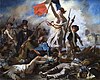
Victor Hugo on Genius 2 quotes
“Genius is a promontory jutting out into the infinite.”
Victor Hugo on Capital punishment 2 quotes
“Three things belong to God and do not belong to men: the irrevocable, the irreparable and the indissoluble. Woe to men if they introduce it in their laws!”

Victor Hugo on Inspiration 2 quotes
“Happy he who possesses this double power of meditation and inspiration, which is genius! Whatever may be the age on which he is, or the country -- be he born in the bosom of domestic calamities, be he thrown on a time of popular convulsions, or, what is still more to be lamented, on a period of stagnant indifference --let him trust himself to the future; for, if the present belong to other men, the future is for him. He is of the number of chosen beings for whom a day is allotted. Sooner or later, the day comes ; and it is then -- fed by sublime thought, and elevated by divine inspiration -- that he throws himself boldly before the world, with the cry of the poet upon his lips ‘Voici mon Orient: peuples levez les yeux!’”
What Victor Hugo Said About Others
Discover personal opinions Victor Hugo shared regarding contemporaries.
Victor Hugo on François-René de Chateaubriand
“I will be Chateaubriand or nothing.”

Victor Hugo on Voltaire
“To name Voltaire is to characterize the whole eighteenth century.”
Victor Hugo on Women
“God in his harmony has equal ends For cedar that resists and reed that bends; For good it is a woman sometimes rules, Holds in her hand the power, and manners, schools And laws, and mind; succeeding master proud. With gentle voice and smiles she leads the crowd, The somber human troop.”

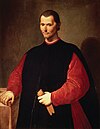
Victor Hugo on Niccolò Machiavelli
“If one desires to learn at one blow, to what degree of hideousness the fact can attain, viewed at the distance of centuries, let him look at Machiavelli. Machiavelli is not an evil genius, nor a demon, nor a miserable and cowardly writer; he is nothing but the fact. And he is not only the Italian fact; he is the European fact, the fact of the sixteenth century. He seems hideous, and so he is, in the presence of the moral idea of the nineteenth..”
Quotes About Victor Hugo
Gain deeper perspective through quotes about Victor Hugo from others.
Vincent van Gogh on Victor Hugo
“I am reading Les Misérables by Victor Hugo. A book which I remember of old, but I had a great longing to read it again. It is very beautiful, that figure of Monseigneur Myriel or Bienvenu I think sublime....It is good to read such a book again, I think, just to keep some feelings allive. Especially love for humanity, and the faith in, and consciousness of, something higher, in short, quelque chose là-huat.”

Charles Baudelaire on Victor Hugo

Hortense Calisher on Victor Hugo
“In Hugo is maybe where I learned the freedom to be discursive, to trust that there will be readers who can accept long sentences, and long meanings. In the nineteenth century quite ordinary readers could do that.”

Jean Cocteau on Victor Hugo
Thomas Carlyle on Victor Hugo
“A glittering humbug.”





Disputed Quotes
Quotes attributed to Victor Hugo that are questionable.
“He who opens a school, closes a prison
• English translation: M. Duruy had already suggested that opening a school is closing a prison”
• English translation: M. Duruy had already suggested that opening a school is closing a prison”
Misattributed Quotes
Quotes mistakenly credited to Victor Hugo
About Victor Hugo
Victor Marie Hugo (26 February 1802 – 22 May 1885) was a French poet, novelist, and dramatist of the Romantic movement, widely esteemed as one of the greatest of French writers and poets.