Link Copied!
Thomas Henry Huxley Quotes (1825-1895)
King























About Thomas Henry Huxley
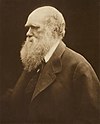
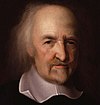
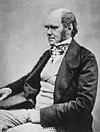
Thomas Henry Huxley (4 May, 1825 – 29 June 1895) was a British biologist. A prominent defender of Charles Darwin's theory of evolution, he was the grandfather of Julian, Aldous and Andrew Huxley. He was a critic of organised religion and devised the words "agnostic" and "agnosticism" to describe his own views.
Best Thomas Henry Huxley Quotes
Shortest
Earliest
Explore our curated collection of the most famous and impactful Thomas Henry Huxley quotes.
“That mysterious independent variable of political calculation, Public Opinion.”
“I do not advocate burning your ship to get rid of the cockroaches.”
“The man-like Apes... have certain characters of structure and of distribution in common.”
“Try to learn something about everything and everything about something.”
“Logical consequences are the scarecrows of fools and the beacons of wise men.”

“The great tragedy of Science — the slaying of a beautiful hypothesis by an ugly fact.”
“M. Comte's philosophy, in practice, might be compendiously described as Catholicism minus Christianity.”

“The method of scientific investigation is nothing but the expression of the necessary mode of working of the human mind.”
“Every living creature commences its existence under a form different from, and simpler than, that which it eventually attains.”
“Rousseau's writings are so admirably adapted to touch both these classes that the effect they produced, especially in France, is easily intelligible.”
“My reflection when I first made myself master of the central idea of the Origin was, "How extremely stupid of me not to have thought of that."”
“I neither deny nor affirm the immortality of man. I see no reason for believing in it, but, on the other hand, I have no means of disproving it.”
“The mediaeval university looked backwards: it professed to be a storehouse of old knowledge... The modern university looks forward: it is a factory of new knowledge.”

“There is but one hypothesis regarding the origin of species of animals in general which has any scientific existence—that propounded by Mr. Darwin.”
“It appears to us to be one of the many peculiar merits of that [Mr. Darwin's] hypothesis that it involves no belief in a necessary and continual progress of organisms.”
“Sound knowledge respecting the habits and mode of life of the man-like Apes has been even more difficult of attainment than correct information regarding their structure.”
“I am too much of a sceptic to deny the possibility of anything — especially as I am now so much occupied with theology — but I don't see my way to your conclusion.”
“To a person uninstructed in natural history, his country or sea-side stroll is a walk through a gallery filled with wonderful works of art, nine-tenths of which have their faces turned to the wall.”
“Life cannot exist without a certain conformity to the surrounding universe — that conformity involves a certain amount of happiness in excess of pain. In short, as we live we are paid for living.”
“Let us have "sweet girl graduates" by all means. They will be none the less sweet for a little wisdom; and the "golden hair" will not curl less gracefully outside the head by reason of there being brains within.”
“The chalk is no unimportant element in the masonry of the earth’s crust, and it impresses a peculiar stamp, varying with the conditions to which it is exposed, on the scenery of the districts in which it occurs.”
“Even in the important matter of cranial capacity, Men differ more widely from one another than they do from the Apes; while the lowest Apes differ as much, in proportion, from the highest, as the latter does from Man.”
“Becky Sharp's acute remark that it is not difficult to be virtuous on ten thousand a year, has its application to nations; and it is futile to expect a hungry and squalid population to be anything but violent and gross.”

“So far from a gradual progress towards perfection forming any necessary part of the Darwinian creed, it appears to us that it is perfectly consistent with indefinite persistence in one state, or with a gradual retrogression.”
“Whatever part of the animal fabric—whatever series of muscles, whatever viscera might be selected for comparison—the result would be the same—the lower Apes and the Gorilla would differ more than the Gorilla and the Man.”
“These examples... show that, in whatever proportion of its limbs the Gorilla differs from Man, the other Apes depart still more widely from the Gorilla and that, consequently, such differences of proportion can have no ordinal value.”
“There is no alleviation for the sufferings of mankind except veracity of thought and of action, and the resolute facing of the world as it is, when the garment of make-believe, by which pious hands have hidden its uglier features, is stripped off.”
“The only good that I can see in the demonstration of the truth of "Spiritualism" is to furnish an additional argument against suicide. Better live a crossing-sweeper than die and be made to talk twaddle by a "medium" hired at a guinea a séance.”
“The foundation of morality is to have done, once and for all, with lying; to give up pretending to believe that for which there is no evidence, and repeating unintelligible propositions about things beyond the possibilities of knowledge.”

“The question of questions for mankind—the problem which underlies all others, and is more deeply interesting than any other—is the ascertainment of the place which Man occupies in nature and of his relations to the universe of things.”
“If a well were sunk at our feet in the midst of the city of Norwich, the diggers would very soon find themselves at work in that white substance almost too soft to be called rock, with which we are all familiar as "chalk".”

“The known is finite, the unknown infinite; intellectually we stand on an islet in the midst of an illimitable ocean of inexplicability. Our business in every generation is to reclaim a little more land, to add something to the extent and the solidity of our possessions.”
“The fact is he made a prodigious blunder in commencing the attack, and now his only chance is to be silent and let people forget the exposure. I do not believe that in the whole history of science there is a case of any man of reputation getting himself into such a contemptible position.”
“If the hypothesis of evolution is true, living matter must have arisen from non-living matter; for by the hypothesis the condition of the globe was at one time such, that living matter could not have existed in it, life being entirely incompatible with the gaseous state.”

“Within the last fifty years, the extraordinary growth of every department of physical science has spread among us mental food of so nutritious and stimulating a character that a new ecdysis seems imminent.”
“For myself I say deliberately, it is better to have a millstone tied round the neck and be thrown into the sea than to share the enterprises of those to whom the world has turned, and will turn, because they minister to its weaknesses and cover up the awful realities which it shudders to look at.”
“As if to demonstrate, by a striking example, the impossibility of erecting any cerebral barrier between man and the apes, Nature has provided us, in the latter animals, with an almost complete series of gradations from brains little higher than that of a Rodent, to brains little lower than that of Man.”

“Lamarck, sagacious as many of his views were, mingled them with so much that was crude and even absurd, as to neutralize the benefit which his originality might have effected had he been a more sober and cautious thinker...”
“So far as cerebral structure goes... it is clear that Man differs less from the Chimpanzee or the Orang, than these do even from the Monkeys, and that the difference between the brains of the Chimpanzee and of Man is almost insignificant, when compared with that between the Chimpanzee brain and that of a Lemur.”
“The absolute justice of the system of things is as clear to me as any scientific fact. The gravitation of sin to sorrow is as certain as that of the earth to the sun, and more so–for experimental proof of the fact is within reach of us all–nay, is before us all in our own lives, if we had but the eyes to see it.”

“From the point of view of the moralist the animal world is on about the same level as a gladiator's show. The creatures are fairly well treated, and set to fight—whereby the strongest, the swiftest and the cunningest live to fight another day. The spectator has no need to turn his thumbs down, as no quarter is given.”
“I cannot say that I am in the slightest degree impressed by your bigness, or your material resources, as such. Size is not grandeur, and territory does not make a nation. The great issue, about which hangs true sublimity, and the terror of overhanging fate, is what are you going to do with all these things?”
“Social progress means a checking of the cosmic process at every step and the substitution for it of another, which may be called the ethical process; the end of which is not the survival of those who may happen to be the fittest, in respect of the whole of the conditions which obtain, but of those who are ethically the best.”

“Mathematics may be compared to a mill of exquisite workmanship, which grinds you stuff of any degree of fineness; but, nevertheless, what you get out depends upon what you put in; and as the grandest mill in the world will not extract wheat-flour from peascod, so pages of formulae will not get a definite result out of loose data.”
“Perhaps the most valuable result of all education is the ability to make yourself do the thing you have to do, when it ought to be done, whether you like it or not; it is the first lesson that ought to be learned; and, however early a man's training begins, it is probably the last lesson that he learns thoroughly.”
“Science has taught... me to be careful how I adopt a view which jumps with my preconceptions, and to require stronger evidence for such belief than for one to which I was previously hostile. My business is to teach my aspirations to conform themselves to fact, not to try and make facts harmonise with my aspirations.”
“Regarded anatomically, the resemblances between the foot of Man and the foot of the Gorilla are far more striking and important than the differences. ...be the differences between the hand and foot of Man and those of the Gorilla what they may—the differences between those of the Gorilla and those of the lower Apes are much greater.”
“We have always thought that Mr. Darwin has unnecessarily hampered himself by adhering so strictly to his favourite "Natura non facit saltum." We greatly suspect that she does make considerable jumps in the way of variation now and then, and that these saltations give rise to some of the gaps which appear to exist in the series of known forms.”
“If Man be separated by no greater structural barrier from the brutes than they are from one another—then it seems to follow that if any process of physical causation can be discovered by which the genera and families of ordinary animals have been produced, that process of causation is amply sufficient to account for the origin of Man.”
“The greater part of the substance of the following Essays has already been published in the form of Oral Discourses, addressed to widely different audiences, during the past three years. Upon the subject of the second Essay, I delivered six Lectures to the Working Men in 1860, and two, to the members of the Philosophical Institution of Edinburgh in 1862.”
“Missionaries, whether of philosophy or of religion, rarely make rapid way, unless their preachings fall in with the prepossessions of the multitude of shallow thinkers, or can be made to serve as a stalking-horse for the promotion of the practical aims of the still larger multitude, who do not profess to think much, but are quite certain they want a great deal.”
“I have never had the least sympathy with the a priori reasons against orthodoxy, and I have by nature and disposition the greatest possible antipathy to all the atheistic and infidel school. Nevertheless I know that I am, in spite of myself, exactly what the Christian would call, and, so far as I can see, is justified in calling, atheist and infidel.”
“The saying that a little knowledge is a dangerous thing is, to my mind, a very dangerous adage. If knowledge is real and genuine, I do not believe that it is other than a very valuable possession, however infinitesimal its quantity may be. Indeed, if a little knowledge is dangerous, where is the man who has so much as to be out of danger?”
“Whether we take these characters then, or such minor ones as those which are derivable from the proportional length of the spines in the cervical vertebrae, and the like, there is no doubt whatsoever as to the marked difference between Man and the Gorilla; but there is as little, that equally marked differences, of the very same order, obtain between the Gorilla and the lower apes.”
“The sceptics end in the infidelity which asserts the problem to be insoluble, or in the atheism which denies the existence of any orderly progress and governance of things: the men of genius propound solutions which grow into systems of Theology or of Philosophy, or veiled in musical language which suggests more than it asserts, take the shape of the Poetry of an epoch.”
“The man of science who commits himself to even one statement which turns out to be devoid of good foundation loses somewhat of his reputation among his fellows, and if he be guilty of the same error often he loses not only his intellectual, but his moral standing among them. For it is justly felt that errors of this kind have their root rather in the moral than in the intellectual nature.”

“Only two suppositions seem to be open to us — Either each species of crocodile has been specially created, or it has arisen out of some pre-existing form by the operation of natural causes.
Choose your hypothesis; I have chosen mine. I can find no warranty for believing in the distinct creation of a score of successive species of crocodiles in the course of countless ages of time.”
Choose your hypothesis; I have chosen mine. I can find no warranty for believing in the distinct creation of a score of successive species of crocodiles in the course of countless ages of time.”
“If some great Power would agree to make me always think what is true and do what is right, on condition of being turned into a sort of clock and wound up every morning before I got out of bed, I should instantly close with the offer. The only freedom I care about is the freedom to do right; the freedom to do wrong I am ready to part with on the cheapest terms to any one who will take it of me.”

“The consciousness of brutes would appear to be related to the mechanism of their body simply as a collateral product of its working, and to be as completely without any power of modifying that working as the steam-whistle which accompanies the work of a locomotive engine is without influence upon its machinery. Their volition, if they have any, is an emotion indicative of physical changes, not a cause of such changes.”
“Science seems to me to teach in the highest and strongest manner the great truth which is embodied in the Christian conception of entire surrender to the will of God. Sit down before fact as a little child, be prepared to give up every preconceived notion, follow humbly wherever and to whatever abysses nature leads, or you shall learn nothing. I have only begun to learn content and peace of mind since I have resolved at all risks to do this.”
“I have endeavoured to show that no absolute structural line of demarcation, wider than that between the animals which immediately succeed us in the scale, can be drawn between the animal world and ourselves; and I may add the expression of my belief that the attempt to draw a physical distinction is equally futile, and that even the highest faculties of feeling and of intellect begin to germinate in lower forms of life.”
“The students of physical science are not unfrequently told that their pursuits unfit them for the estimation of moral probability. And it may be so, for I am afraid that to those who are accustomed to severe reasoning, either in the province of Science or in that of Law, reasoning from 'moral probability' is apt to be regarded as a process of accumulating inconclusive arguments, in the hope that a great heap of them may, at least, look as firm as one good demonstration.”

“If the brutes have consciousness and no souls, then it is clear that, in them, consciousness is a direct function of material changes; while, if they possess immaterial subjects of consciousness, or souls, then, as consciousness is brought into existence only as the consequence of molecular motion of the brain, it follows that it is an indirect product of material changes. The soul stands related to the body as the bell of a clock to the works, and consciousness answers to the sound which the bell gives out when it is struck.”

“Each such answer to the great question, invariably asserted by the followers of its propounder, if not by himself, to be complete and final, remains in high authority and esteem, it may be for one century, or it may be for twenty: but, as invariably, Time proves each reply to have been a mere approximation to the truth—tolerable chiefly on account of the ignorance of those by whom it was accepted, and wholly intolerable when tested by the larger knowledge of their successors.”
“I can assure you that there is the greatest practical benefit in making a few failures early in life. You learn that which is of inestimable importance — that there are a great many people in the world who are just as clever as you are. You learn to put your trust, by and by, in an economy and frugality of the exercise of your powers, both moral and intellectual; and you very soon find out, if you have not found it out before, that patience and tenacity of purpose are worth more than twice their weight of cleverness.”
“Education is the instruction of the intellect in the laws of Nature, under which name I include not merely things and their forces, but men and their ways; and the fashioning of the affections and of the will into an earnest and loving desire to move in harmony with those laws. For me, education means neither more nor less than this. Anything which professes to call itself education must be tried by this standard, and if it fails to stand the test, I will not call it education, whatever may be the force of authority, or of numbers, upon the other side.”

“The antagonism between science and religion, about which we hear so much, appears to me to be purely factitious — fabricated, on the one hand, by short-sighted religious people who confound a certain branch of science, theology, with religion; and, on the other, by equally short-sighted scientific people who forget that science takes for its province only that which is susceptible of clear intellectual comprehension; and that, outside the boundaries of that province, they must be content with imagination, with hope, and with ignorance.”

“A man has no reason to be ashamed of having an ape for his grandfather. If there was an ancestor whom I should feel shame in recalling it would rather be a man — a man of restless and versatile intellect — who not content with an equivocal success in his own sphere of activity, plunges into scientific questions with which he has no real acquaintance, only to obscure them with aimless rhetoric, and distract the attention of his hearers from the real point at issue by eloquent digressions and skilled appeals to religious prejudice.”
“It cannot be doubted, I think, that Mr. Darwin has satisfactorily proved that what he terms selection, or selective modification, must occur, and does occur, in nature; and he has also proved to superfluity that such selection is competent to produce forms as distinct, structurally, as some genera even are. If the animated world presented us with none but structural differences, I should have no hesitation in saying that Mr. Darwin has demonstrated the existence of a true physical cause, amply competent to account for the origin of living species, and of man among the rest.”
“The whole analogy of natural operations furnishes so complete and crushing an argument against the intervention of any but what are termed secondary causes, in the production of all the phenomena of the universe; that, in view of the intimate relations between Man and the rest of the living world; and between the forces exerted by the latter and all other forces, I can see no excuse for doubting that all are co-ordinated terms of Nature's great progression, from the formless to the formed—from the inorganic to the organic—from blind force to conscious intellect and will.”
“Let us endeavour for a moment to disconnect our thinking selves from the mask of humanity; let us imagine ourselves scientific Saturnians, if you will, fairly acquainted with such animals as now inhabit the Earth, and employed in discussing the relations they bear to a new and singular 'erect and featherless biped,' which some enterprising traveller, overcoming the difficulties of space and gravitation, has brought from that distant planet for our inspection, well preserved, may be, in a cask of rum.”
“The whole analogy of natural operations furnishes so complete and crushing an argument against the intervention of any but what are termed secondary causes, in the production of all the phenomena of the universe; that, in view of the intimate relations between Man and the rest of the living world; and between the forces exerted by the latter and all other forces, I can see no excuse for doubting that all are co-ordinated terms of Nature's great progression, from the formless to the formed—from the inorganic to the organic—from blind force to conscious intellect and will.”
“I now propose briefly to... set forth, in a form intelligible to those who possess no special acquaintance with anatomical science, the chief facts upon which all conclusions respecting the nature and the extent of the bonds which connect man with the brute world must be based: I shall then indicate the one immediate conclusion which, in my judgment, is justified by those facts, and I shall finally discuss the bearing of that conclusion upon the hypotheses which have been entertained respecting the Origin of Man.”
“The student of development finds, not only that the chick commences its existence as an egg, primarily identical, in all essential respects, with that of the Dog, but that the yelk of this egg undergoes division—that the primitive groove arises, and that the contiguous parts of the germ are fashioned, by precisely similar methods into a young chick, which, at one stage of its existence, is so like the nascent Dog, that ordinary inspection would hardly distinguish the two. The history of the development of any other vertebrate animal, Lizard, Snake, Frog, or Fish, tells the same story.”
“Mr. Darwin's hypothesis is not, so far as I am aware, inconsistent with any known biological fact; on the contrary, if admitted, the facts of Development, of Comparative Anatomy, of Geographical Distribution, and of Palaeontology, become connected together, and exhibit a meaning such as they never possessed before; and I, for one, am fully convinced that if not precisely true, that hypothesis is as near an approximation to the truth as, for example, the Copernican hypothesis was to the true theory of the planetary motions.”
“The extent of the region of the uncertain, the number of the problems the investigation of which ends in a verdict of not proven, will vary according to the knowledge and the intellectual habits of the individual agnostic. I do not very much care to speak of anything as unknowable. What I am sure about is that there are many topics about which I know nothing, and which, so far as I can see, are out of reach of my faculties. But whether these things are knowable by any one else is exactly one of those matters which is beyond my knowledge, though I may have a tolerably strong opinion as to the probabilities of the case.”
“My convictions, positive and negative, on all the matters of which you speak, are of long and slow growth and are firmly rooted. But the great blow which fell on me seemed to stir them to their foundation, and had I lived a couple of centuries earlier I could have fancied a devil scoffing at me and them — and asking me what profit it was to have stripped myself of the hopes and consolations of the mass of mankind? To which my only reply was and is — Oh devil! Truth is better than much profit. I have searched over the grounds of my belief, and if wife and child and name and fame were all to be lost to me one after the other as the penalty, still I will not lie.”
“Most of us, shrinking from the difficulties and dangers which beset the seeker after original answers to these riddles, are contented to ignore them altogether, or to smother the investigating spirit under the featherbed of respected and respectable tradition. But, in every age, one or two restless spirits, blessed with that constructive genius, which can only build on a secure foundation, or cursed with the mere spirit of scepticism, are unable to follow in the well-worn and comfortable track of their forefathers and contemporaries, and unmindful of thorns and stumbling-blocks, strike out into paths of their own.”
“What is this wide-spread component of the surface of the earth? and whence did it come?
You may think this no very hopeful inquiry. You may not unnaturally suppose that the attempt to solve such problems as these can lead to no result, save that of entangling the inquirer in vague speculations, incapable of refutation and of verification.
If such were really the case, I should have selected some other subject than a "piece of chalk" for my discourse. But, in truth, after much deliberation, I have been unable to think of any topic which would so well enable me to lead you to see how solid is the foundation upon which some of the most startling conclusions of physical science rest.”
“Our reverence for the nobility of manhood will not be lessened by the knowledge, that Man, is in substance and in structure, one with the brutes; for, he alone possesses the marvellous endowment of intelligible and rational speech, whereby, in the secular period of his existence, he has slowly accumulated and organized the experience which is almost wholly lost with the cessation of every individual life in other animals; so that now he stands raised upon it as on a mountain top, far above the level of his humble fellows, and transfigured from his grosser nature by reflecting, here and there, a ray from the infinite source of truth.”
“History warns us, however, that it is the customary fate of new truths to begin as heresies and to end as superstitions; and, as matters now stand, it is hardly rash to anticipate that, in another twenty years, the new generation, educated under the influences of the present day, will be in danger of accepting the main doctrines of the 'Origin of Species' with as little reflection, and it may be with as little justification, as so many of our contemporaries, twenty years ago, rejected them. Against any such a consummation let us all devoutly pray; for the scientific spirit is of more value than its products, and irrationally held truths may be more harmful than reasoned errors.”
“Within the last half century, the labours of such men as Von Baer, Rathke, Reichert, Bischof, and Remak, have almost completely unravelled... the successive stages of development which... are now as well known to the embryologist as are the steps of the metamorphosis of the silk-worm moth to the school boy.”
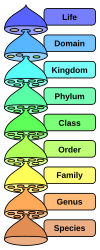
“Identical in the physical processes by which he originates—identical in the early stages of his formation—identical in the mode of his nutrition before and after birth, with the animals which lie immediately below him in the scale—Man, if his adult and perfect structure be compared with theirs, exhibits, as might be expected, a marvellous likeness of organization. He resembles them as they resemble one another—he differs from them as they differ from one another.—And, though these differences and resemblances cannot be weighed and measured, their value may be readily estimated; the scale or standard of judgment, touching that value, being afforded and expressed by the system of classification of animals now current among zoologists.”
“So far from the posterior lobe, the posterior cornu, and the hippocampus minor, being structures peculiar to and characteristic of man, as they have been over and over again asserted to be, even after the publication of the clearest demonstration of the reverse, it is precisely these structures which are the most marked cerebral characters common to man with the apes. They are among the most distinctly Simian peculiarities which the human organism exhibits.”
“It is true that if philosophers have suffered their cause has been amply avenged. Extinguished theologians lie about the cradle of every science as the strangled snakes beside that of Hercules; and history records that whenever science and orthodoxy have been fairly opposed, the latter has been forced to retire from the lists, bleeding and crushed if not annihilated; scotched, if not slain. But orthodoxy is the Bourbon of the world of thought. It learns not, neither can it forget; and though, at present, bewildered and afraid to move, it is as willing as ever to insist that the first chapter of Genesis contains the beginning and the end of sound science...”
“It is quite true that, to the best of my judgment, the argumentation which applies to brutes holds equally good of men; and, therefore, that all states of consciousness in us, as in them, are immediately caused by molecular changes of the brain-substance. It seems to me that in men, as in brutes, there is no proof that any state of consciousness is the cause of change in the motion of the matter of the organism. If these positions are well based, it follows that our mental conditions are simply the symbols in consciousness of the changes which takes place automatically in the organism; and that, to take an extreme illustration, the feeling we call volition is not the cause of a voluntary act, but the symbol of that state of the brain which is the immediate cause of that act.”
“In an ideal University, as I conceive it, a man should be able to obtain instruction in all forms of knowledge, and discipline in the use of all the methods by which knowledge is obtained. In such a University, the force of living example should fire the student with a noble ambition to emulate the learning of learned men, and to follow in the footsteps of the explorers of new fields of knowledge. And the very air he breathes should be charged with that enthusiasm for truth, that fanaticism of veracity, which is a greater possession than much learning; a nobler gift than the power of increasing knowledge; by so much greater and nobler than these, as the moral nature of man is greater than the intellectual; for veracity is the heart of morality.”
“A small beginning has led us to a great ending. If I were to put the bit of chalk with which we started into the hot but obscure flame of burning hydrogen, it would presently shine like the sun. It seems to me that this physical metamorphosis is no false image of what has been the result of our subjecting it to a jet of fervent, though nowise brilliant, thought to-night. It has become luminous, and its clear rays, penetrating the abyss of the remote past, have brought within our ken some stages of the evolution of the earth. And in the shifting "without haste, but without rest" of the land and sea, as in the endless variation of the forms assumed by living beings, we have observed nothing but the natural product of the forces originally possessed by the substance of the universe.”
“I really have no claim to rank myself among fatalistic, materialistic, or atheistic philosophers. Not among fatalists, for I take the conception of necessity to have a logical, and not a physical foundation; not among materialists, for I am utterly incapable of conceiving the existence of matter if there is no mind in which to picture that existence; not among atheists, for the problem of the ultimate cause of existence is one which seems to me to be hopelessly out of reach of my poor powers. Of all the senseless babble I have ever had occasion to read, the demonstrations of these philosophers who undertake to tell us all about the nature of God would be the worst, if they were not surpassed by the still greater absurdities of the philosophers who try to prove that there is no God.”
“In comparing civilized man with the animal world, one is as the Alpine traveller, who sees the mountains soaring into the sky and can hardly discern where the deep shadowed crags and roseate peaks end, and where the clouds of heaven begin. Surely the awe-struck voyager may be excused if, at first, he refuses to believe the geologist, who tells him that these glorious masses are, after all, the hardened mud of primeval seas, or the cooled slag of subterranean furnaces—of one substance with the dullest clay, but raised by inward forces to that place of proud and seemingly inaccessible glory. But the geologist is right; and due reflection on his teachings, instead of diminishing our reverence and our wonder, adds all the force of intellectual sublimity, to the mere aesthetic intuition of the uninstructed beholder.”
“I adopt Mr. Darwin's hypothesis, therefore, subject to the production of proof that physiological species may be produced by selective breeding; just as a physical philosopher may accept the undulatory theory of light, subject to the proof of the existence of the hypothetical ether; or as the chemist adopts the atomic theory, subject to the proof of the existence of atoms; and for exactly the same reasons, namely, that it has an immense amount of primâ facie probability: that it is the only means at present within reach of reducing the chaos of observed facts to order; and lastly, that it is the most powerful instrument of investigation which has been presented to naturalists since the invention of the natural system of classification and the commencement of the systematic study of embryology.”
“In a well worn metaphor, a parallel is drawn between the life of man and the metamorphosis of the caterpillar into the butterfly; but the comparison may be more just as well as more novel, if for its former term we take the mental progress of the race. History shows that the human mind, fed by constant accessions of knowledge, periodically grows too large for its theoretical coverings, and bursts them asunder to appear in new habiliments, as the feeding and growing grub, at intervals, casts its too narrow skin and assumes another, itself but temporary. Truly the imago state of Man seems to be terribly distant, but every moult is a step gained, and of such there have been many.”
“I do not mean to suggest that scientific differences should be settled by universal suffrage, but I do conceive that solid proofs must be met by something more than empty and unsupported assertions. Yet during the two years through which this preposterous controversy has dragged its weary length, Professor Owen has not ventured to bring forward a single preparation in support of his often-repeated assertions.
The case stands thus, therefore: Not only are the statements made by me in consonance with the doctrines of the best older authorities, and with those of all recent investigators, but I am quite ready to demonstrate them on the first monkey that comes to hand; while Professor Owen's assertions are not only in diametrical opposition to both old and new authorities, but he has not produced, and, I will add, cannot produce, a single preparation which justifies them.”
The case stands thus, therefore: Not only are the statements made by me in consonance with the doctrines of the best older authorities, and with those of all recent investigators, but I am quite ready to demonstrate them on the first monkey that comes to hand; while Professor Owen's assertions are not only in diametrical opposition to both old and new authorities, but he has not produced, and, I will add, cannot produce, a single preparation which justifies them.”

“A great chapter of the history of the world is written in the chalk. Few passages in the history of man can be supported by such an overwhelming mass of direct and indirect evidence as that which testifies to the truth of the fragment of the history of the globe, which I hope to enable you to read, with your own eyes, tonight.
Let me add, that few chapters of human history have a more profound significance for ourselves. I weigh my words well when I assert, that the man who should know the true history of the bit of chalk which every carpenter carries about in his breeches-pocket, though ignorant of all other history, is likely, if he will think his knowledge out to its ultimate results, to have a truer, and therefore a better, conception of this wonderful universe, and of man’s relation to it, than the most learned student who is deep-read in the records of humanity and ignorant of those of Nature.”
Let me add, that few chapters of human history have a more profound significance for ourselves. I weigh my words well when I assert, that the man who should know the true history of the bit of chalk which every carpenter carries about in his breeches-pocket, though ignorant of all other history, is likely, if he will think his knowledge out to its ultimate results, to have a truer, and therefore a better, conception of this wonderful universe, and of man’s relation to it, than the most learned student who is deep-read in the records of humanity and ignorant of those of Nature.”

“The improver of natural knowledge absolutely refuses to acknowledge authority, as such. For him, scepticism is the highest of duties; blind faith the one unpardonable sin. And it cannot be otherwise, for every great advance in natural knowledge has involved the absolute rejection of authority, the cherishing of the keenest scepticism, the annihilation of the spirit of blind faith; and the most ardent votary of science holds his firmest convictions, not because the men he most venerates hold them; not because their verity is testified by portents and wonders; but because his experience teaches him that whenever he chooses to bring these convictions into contact with their primary source, Nature — whenever he thinks fit to test them by appealing to experiment and to observation — Nature will confirm them. The man of science has learned to believe in justification, not by faith, but by verification.”

“The life, the fortune, and the happiness of every one of us, and, more or less, of those who are connected with us, do depend upon our knowing something of the rules of a game infinitely more difficult and complicated than chess. It is a game which has been played for untold ages, every man and woman of us being one of the two players in a game of his or her own. The chessboard is the world, the pieces are the phenomena of the universe, the rules of the game are what we call the laws of Nature. The player on the other side is hidden from us. We know that his play is always fair, just, and patient. But also we know, to our cost, that he never overlooks a mistake, or makes the smallest allowance for ignorance. To the man who plays well, the highest stakes are paid, with that sort of overflowing generosity with which the strong shows delight in strength. And one who plays ill is checkmated — without haste, but without remorse.”

“Even purely intellectual progress brings about its revenges. Problems settled in a rough and ready way by rude men, absorbed in action, demand renewed attention and show themselves to be still unread riddles when men have time to think. The beneficent demon, doubt, whose name is Legion and who dwells amongst the tombs of old faiths, enters into mankind and thenceforth refuses to be cast out. Sacred customs, venerable dooms of ancestral wisdom, hallowed by tradition and professing to hold good for all time, are put to the question. Cultured reflection asks for their credentials; judges them by its own standards; finally, gathers those of which it approves into ethical systems, in which the reasoning is rarely much more than a decent pretext for the adoption of foregone conclusions.”
“I cannot but think that he who finds a certain proportion of pain and evil inseparably woven up in the life of the very worms, will bear his own share with more courage and submission; and will, at any rate, view with suspicion those weakly amiable theories of the Divine government, which would have us believe pain to be an oversight and a mistake, — to be corrected by and by. On the other hand, the predominance of happiness among living things — their lavish beauty — the secret and wonderful harmony which pervades them all, from the highest to the lowest, are equally striking refutations of that modern Manichean doctrine, which exhibits the world as a slave-mill, worked with many tears, for mere utilitarian ends.
There is yet another way in which natural history may, I am convinced, take a profound hold upon practical life, — and that is, by its influence over our finer feelings, as the greatest of all sources of that pleasure which is derivable from beauty.”
There is yet another way in which natural history may, I am convinced, take a profound hold upon practical life, — and that is, by its influence over our finer feelings, as the greatest of all sources of that pleasure which is derivable from beauty.”
“Once in a generation, a Wallace may be found physically, mentally, and morally qualified to wander unscathed through the tropical wilds of America and of Asia; to form magnificent collections as he wanders; and withal to think out sagaciously the conclusions suggested by his collections: but, to the ordinary explorer or collector, the dense forests of equatorial Asia and Africa, which constitute the favourite habitation of the Orang, the Chimpanzee, and the Gorilla, present difficulties of no ordinary magnitude: and the man who risks his life by even a short visit to the malarious shores of those regions may well be excused if he shrinks from facing the dangers of the interior; if he contents himself with stimulating the industry of the better seasoned natives, and collecting and collating the more or less mythical reports and traditions with which they are too ready to supply him. In such a manner most of the earlier accounts of the habits of the man-like Apes originated...”

“When I reached intellectual maturity and began to ask myself whether I was an atheist, a theist, or a pantheist; a materialist or an idealist; Christian or a freethinker; I found that the more I learned and reflected, the less ready was the answer; until, at last, I came to the conclusion that I had neither art nor part with any of these denominations, except the last. The one thing in which most of these good people were agreed was the one thing in which I differed from them. They were quite sure they had attained a certain "gnosis," — had, more or less successfully, solved the problem of existence; while I was quite sure I had not, and had a pretty strong conviction that the problem was insoluble.
So I took thought, and invented what I conceived to be the appropriate title of "agnostic." It came into my head as suggestively antithetic to the "gnostic" of Church history, who professed to know so much about the very things of which I was ignorant. To my great satisfaction the term took.”
So I took thought, and invented what I conceived to be the appropriate title of "agnostic." It came into my head as suggestively antithetic to the "gnostic" of Church history, who professed to know so much about the very things of which I was ignorant. To my great satisfaction the term took.”

“Give me such evidence as would justify me in believing in anything else and I will believe that. Why should I not? It is not half so wonderful as the conservation of force, or the indestructibility of matter. Whoso clearly appreciates all that is implied in the falling of a stone can have no difficulty about any doctrine simply on account of its marvelousness But the longer I live, the more obvious it is to me that the most sacred act of a man's life is to say and to feel, 'I believe such and such to be true.' All the greatest rewards and all the heaviest penalties of existence cling about that act. The universe is one and the same throughout; and if the condition of my success in unraveling some little difficulty of anatomy or physiology is that I shall rigorously refuse to put faith in that which does not rest on sufficient evidence, I cannot believe that the great mysteries of existence will be laid open to me on other terms.... I know what I mean when I say I believe in the law of the inverse squares, and I will not rest my life and hopes upon weaker convictions. I dare not if I would.”
“Agnosticism is not properly described as a "negative" creed, nor indeed as a creed of any kind, except in so far as it expresses absolute faith in the validity of a principle which is as much ethical as intellectual. This principle may be stated in various ways, but they all amount to this: that it is wrong for a man to say that he is certain of the objective truth of any proposition unless he can produce evidence which logically justifies that certainty. This is what agnosticism asserts; and, in my opinion, it is all that is essential to agnosticism. That which agnostics deny and repudiate as immoral is the contrary doctrine, that there are propositions which men ought to believe, without logically satisfactory evidence; and that reprobation ought to attach to the profession of disbelief in such inadequately supported propositions. The justification of the agnostic principle lies in the success which follows upon its application, whether in the field of natural or in that of civil history; and in the fact that, so far as these topics are concerned, no sane man thinks of denying its validity.”
“I trust that I have now made amends for any ambiguity, or want of fulness, in my previous exposition of that which I hold to be the essence of the Agnostic doctrine. Henceforward, I might hope to hear no more of the assertion that we are necessarily Materialists, Idealists, Atheists, Theists, or any other ists, if experience had led me to think that the proved falsity of a statement was any guarantee against its repetition. And those who appreciate the nature of our position will see, at once, that when Ecclesiasticism declares that we ought to believe this, that, and the other, and are very wicked if we don't, it is impossible for us to give any answer but this: We have not the slightest objection to believe anything you like, if you will give us good grounds for belief; but, if you cannot, we must respectfully refuse, even if that refusal should wreck morality and insure our own damnation several times over. We are quite content to leave that to the decision of the future. The course of the past has impressed us with the firm conviction that no good ever comes of falsehood, and we feel warranted in refusing even to experiment in that direction.”
“The doctrine of continuity is too well established for it to be permissible to me to suppose that any complex natural phenomenon comes into existence suddenly, and without being preceded by simpler modifications; and very strong arguments would be needed to prove that such complex phenomena as those of consciousness, first make their appearance in man. We know, that, in the individual man, consciousness grows from a dim glimmer to its full light, whether we consider the infant advancing in years, or the adult emerging from slumber and swoon. We know, further, that the lower animals possess, though less developed, that part of the brain which we have every reason to believe to be the organ of consciousness in man; and as, in other cases, function and organ are proportional, so we have a right to conclude it is with the brain; and that the brutes, though they may not possess our intensity of consciousness, and though, from the absence of language, they can have no trains of thoughts, but only trains of feelings, yet have a consciousness which, more or less distinctly, foreshadows our own. I confess that, in view of the struggle for existence which goes on in the animal world, and of the frightful quantity of pain with which it must be accompanied, I should be glad if the probabilities were in favour of Descartes' hypothesis; but, on the other hand, considering the terrible practical consequences to domestic animals which might ensue from any error on our part, it is as well to err on the right side, if we err at all, and deal with them as weaker brethren, who are bound, like the rest of us, to pay their toll for living, and suffer what is needful for the general good.”
“It may be quite true that some negroes are better than some white men; but no rational man, cognisant of the facts, believes that the average negro is the equal, still less the superior, of the average white man. And, if this be true, it is simply incredible that, when all his disabilities are removed, and our prognathous relative has a fair field and no favour, as well as no oppressor, he will be able to compete successfully with his bigger-brained and smaller-jawed rival, in a contest which is to be carried on by thoughts and not by bites. The highest places in the hierarchy of civilisation will assuredly not be within the reach of our dusky cousins, though it is by no means necessary that they should be restricted to the lowest.
But whatever the position of stable equilibrium into which the laws of social gravitation may bring the negro, all responsibility for the result will henceforward lie between nature and him. The white man may wash his hands of it, and the Caucasian conscience be void of reproach for evermore. And this, if we look to the bottom of the matter, is the real justification for the abolition policy.
The doctrine of equal natural rights may be an illogical delusion; emancipation may convert the slave from a well-fed animal into a pauperised man; mankind may even have to do without cotton-shirts; but all these evils must be faced if the moral law, that no human being can arbitrarily dominate over another without grievous damage to his own nature, be, as many think, as readily demonstrable by experiment as any physical truth. If this be true, no slavery can be abolished without a double emancipation, and the master will benefit by freedom more than the freed-man.”
“The history of civilization details the steps by which men have succeeded in building up an artificial world within the cosmos. Fragile reed as he may be, man, as Pascal says, is a thinking reed: there lies within him a fund of energy, operating intelligently and so far akin to that which pervades the universe, that it is competent to influence and modify the cosmic process. In virtue of his intelligence the dwarf bends the Titan to his will. In every family, in every polity that has been established, the cosmic process in man has been restrained and otherwise modified by law and custom; in surrounding nature, it has been similarly influenced by the art of the shepherd, the agriculturist, the artisan. As civilization has advanced, so has the extent of this interference increased; until the organized and highly developed sciences and arts of the present day have endowed man with a command over the course of non-human nature greater than that once attributed to the magicians. ...a right comprehension of the process of life and of the means of influencing its manifestations is only just dawning upon us. We do not yet see our way beyond generalities; and we are befogged by the obtrusion of false analogies and crude anticipations. But Astronomy, Physics, Chemistry, have all had to pass through similar phases, before they reached the stage at which their influence became an important factor in human affairs. Physiology, Psychology, Ethics, Political Science, must submit to the same ordeal. Yet it seems to me irrational to doubt that, at no distant period, they will work as great a revolution in the sphere of practice.”
“Since Lord Brougham assailed Dr Young, the world has seen no such specimen of the insolence of a shallow pretender to a Master in Science as this remarkable production, in which one of the most exact of observers, most cautious of reasoners, and most candid of expositors, of this or any other age, is held up to scorn as a "flighty" person, who endeavours "to prop up his utterly rotten fabric of guess and speculation," and whose "mode of dealing with nature" is reprobated as "utterly dishonourable to Natural Science."
And all this high and mighty talk, which would have been indecent in one of Mr. Darwin's equals, proceeds from a writer whose want of intelligence, or of conscience, or of both, is so great, that, by way of an objection to Mr. Darwin's views, he can ask, "Is it credible that all favourable varieties of turnips are tending to become men?"; who is so ignorant of paleontology, that he can talk of the "flowers and fruits" of the plants of the Carboniferous epoch; of comparative anatomy, that he can gravely affirm the poison apparatus of the venomous snakes to be "entirely separate from the ordinary laws of animal life, and peculiar to themselves"…
Nor does the reviewer fail to flavour this outpouring of preposterous incapacity with a little stimulation of the odium theologicum. Some inkling of the history of the conflicts between Astronomy, Geology, and Theology, leads him to keep a retreat open by the proviso that he cannot "consent to test the truth of Natural Science by the word of Revelation;" but, for all that, he devotes pages to the exposition of his conviction that Mr. Darwin's theory "contradicts the revealed relation of the creation to its Creator," and is "inconsistent with the fulness of his glory."
If I confine my retrospect of the reception of the 'Origin of Species' to a twelvemonth, or thereabouts, from the time of its publication, I do not recollect anything quite so foolish and unmannerly as the Quarterly Review article...”
Thomas Henry Huxley Quotes by Topic
Find exactly what you are looking for by browsing this categorized list of Thomas Henry Huxley quotes by topic.
Thomas Henry Huxley on Luminiferous aether 6 quotes
“If this ether is a continuous substance... we have got back from the hypothesis of Dalton to that of Descartes. But there is much reason to believe that science is going to make a still further journey, and, in form, if not altogether in substance, to return to the point of view of Aristotle.”

Thomas Henry Huxley on Atomic theory 5 quotes
“The gradual reception of the undulatory theory of light necessitated the assumption of the existence of an 'ether' filling all space. But whether this ether was to be regarded as a strictly material and continuous substance was an undecided point, and hence the revived atomism escaped strangling in its birth. For it is clear, that if the ether is admitted to be a continuous material substance, Democritic atomism is at an end and Cartesian continuity takes its place.”

Thomas Henry Huxley on Force 4 quotes
“Newton expressly repudiated the notion of the existence of attractive forces, in the sense in which that term is ordinarily understood; and he refused to put forward any hypothesis as to the physical cause of the so-called 'attraction of gravitation.'”

Thomas Henry Huxley on History of the Inductive Sciences 3 quotes
“By a happy chance, the first edition of Whewell's 'History of the Inductive Sciences' was published in 1837, and it affords a very useful view of the state of things at the commencement of the Victorian epoch.”
Thomas Henry Huxley on Vacuum 3 quotes
“The primitive atomic theory, which has served as the scaffolding for the edifice of modern physics and chemistry, has been quietly dismissed. I cannot discover that any contemporary physicist or chemist believes in the real indivisibility of atoms, or in an interatomic matterless vacuum. Atoms appear to be used as mere names for physico-chemical units which have not yet been subdivided, and 'molecules' for physico-chemical units which are aggregates of the former. And these individualised particles are supposed to move in an endless ocean of a vastly more subtle matter—the ether.”

What Thomas Henry Huxley Said About Others
Discover personal opinions Thomas Henry Huxley shared regarding contemporaries.
Thomas Henry Huxley on Baruch Spinoza 5 quotes
“...Lately I have been re-reading Spinoza (much read and little understood in my youth). But that noblest of Jews must have planted no end of germs in my brains, for I see that what I have to say is in principle what he had to say, in modern language.”

Thomas Henry Huxley on Francis Bacon 3 quotes
“Descartes was an eminent mathematician, and it would seem that the bent of his mind led him to overestimate the value of deductive reasoning from general principles, as much as Bacon had underestimated it.”

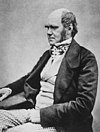
Thomas Henry Huxley on Charles Darwin 3 quotes
“None have fought better, and none have been more fortunate than Charles Darwin. He found a great truth, trodden underfoot, reviled by bigots, and ridiculed by all the world; he lived long enough to see it, chiefly by his own efforts, irrefragably established in science, inseparably incorporated with the common thoughts of men, and only hated and feared by those who would revile, but dare not. What shall a man desire more than this?”
Thomas Henry Huxley on Charles Lyell 2 quotes
“The publication of 'The Principles of Geology,' in 1830, constituted an epoch in geological science. But it also constituted an epoch in the modern history of the doctrines of evolution, by raising in the mind of every intelligent reader this question: If natural causation is competent to account for the not-living part of our globe, why should it not account for the living part?”

Thomas Henry Huxley on Universal suffrage
“I do not mean to suggest that scientific differences should be settled by universal suffrage, but I do conceive that solid proofs must be met by something more than empty and unsupported assertions.”

Quotes About Thomas Henry Huxley
Gain deeper perspective through quotes about Thomas Henry Huxley from others.
Clarence Edwin Ayres on Thomas Henry Huxley
“Huxleyism: the theory of the anthropoid descent of man and its inevitable consequences.”
Cyril Bibby on Thomas Henry Huxley
“Darwin's bulldog was patently a man of almost puritanical uprightness.”
Edward Clodd on Thomas Henry Huxley
Charles Darwin on Thomas Henry Huxley
This humorous remark closes a letter by Charles Darwin on Thomas Henry Huxley
“My good and kind agent for the propagation of the Gospel; i.e. the Devil's gospel.”


Misattributed Quotes
Quotes mistakenly credited to Thomas Henry Huxley
About Thomas Henry Huxley
Thomas Henry Huxley (4 May, 1825 – 29 June 1895) was a British biologist. A prominent defender of Charles Darwin's theory of evolution, he was the grandfather of Julian, Aldous and Andrew Huxley. He was a critic of organised religion and devised the words "agnostic" and "agnosticism" to describe his own views.