Link Copied!
Thomas Henry Huxley Quotes (1825-1895)
King



















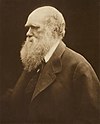






About Thomas Henry Huxley
Thomas Henry Huxley (4 May, 1825 – 29 June 1895) was a British biologist. A prominent defender of Charles Darwin's theory of evolution, he was the grandfather of Julian, Aldous and Andrew Huxley. He was a critic of organised religion and devised the words "agnostic" and "agnosticism" to describe his own views.
Best Thomas Henry Huxley Quotes
Shortest
Earliest
Explore our curated collection of the most famous and impactful Thomas Henry Huxley quotes.

“That mysterious independent variable of political calculation, Public Opinion.”
“I do not advocate burning your ship to get rid of the cockroaches.”
“The man-like Apes... have certain characters of structure and of distribution in common.”
“Try to learn something about everything and everything about something.”
“Logical consequences are the scarecrows of fools and the beacons of wise men.”

“The great tragedy of Science — the slaying of a beautiful hypothesis by an ugly fact.”
“M. Comte's philosophy, in practice, might be compendiously described as Catholicism minus Christianity.”

“The method of scientific investigation is nothing but the expression of the necessary mode of working of the human mind.”
“Every living creature commences its existence under a form different from, and simpler than, that which it eventually attains.”

“Rousseau's writings are so admirably adapted to touch both these classes that the effect they produced, especially in France, is easily intelligible.”
“My reflection when I first made myself master of the central idea of the Origin was, "How extremely stupid of me not to have thought of that."”

“I neither deny nor affirm the immortality of man. I see no reason for believing in it, but, on the other hand, I have no means of disproving it.”
“The mediaeval university looked backwards: it professed to be a storehouse of old knowledge... The modern university looks forward: it is a factory of new knowledge.”

“There is but one hypothesis regarding the origin of species of animals in general which has any scientific existence—that propounded by Mr. Darwin.”
“It appears to us to be one of the many peculiar merits of that [Mr. Darwin's] hypothesis that it involves no belief in a necessary and continual progress of organisms.”
Thomas Henry Huxley Quotes by Topic
Find exactly what you are looking for by browsing this categorized list of Thomas Henry Huxley quotes by topic.
Thomas Henry Huxley on Luminiferous aether 6 quotes
“If this ether is a continuous substance... we have got back from the hypothesis of Dalton to that of Descartes. But there is much reason to believe that science is going to make a still further journey, and, in form, if not altogether in substance, to return to the point of view of Aristotle.”

Thomas Henry Huxley on Atomic theory 5 quotes
“The gradual reception of the undulatory theory of light necessitated the assumption of the existence of an 'ether' filling all space. But whether this ether was to be regarded as a strictly material and continuous substance was an undecided point, and hence the revived atomism escaped strangling in its birth. For it is clear, that if the ether is admitted to be a continuous material substance, Democritic atomism is at an end and Cartesian continuity takes its place.”

Thomas Henry Huxley on Force 4 quotes
“Newton expressly repudiated the notion of the existence of attractive forces, in the sense in which that term is ordinarily understood; and he refused to put forward any hypothesis as to the physical cause of the so-called 'attraction of gravitation.'”

Thomas Henry Huxley on History of the Inductive Sciences 3 quotes
“By a happy chance, the first edition of Whewell's 'History of the Inductive Sciences' was published in 1837, and it affords a very useful view of the state of things at the commencement of the Victorian epoch.”
Thomas Henry Huxley on Vacuum 3 quotes
“The primitive atomic theory, which has served as the scaffolding for the edifice of modern physics and chemistry, has been quietly dismissed. I cannot discover that any contemporary physicist or chemist believes in the real indivisibility of atoms, or in an interatomic matterless vacuum. Atoms appear to be used as mere names for physico-chemical units which have not yet been subdivided, and 'molecules' for physico-chemical units which are aggregates of the former. And these individualised particles are supposed to move in an endless ocean of a vastly more subtle matter—the ether.”

Thomas Henry Huxley on Science 2 quotes
View all 2 quotes on Science →Thomas Henry Huxley on Agnosticism 2 quotes
“Agnosticism simply means that a man shall not say he knows or believes that for which he has no grounds for professing to believe.”
Thomas Henry Huxley on Teleology 2 quotes
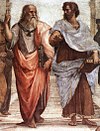
“In the old philosophy, a curious conjunction of ethical and physical prejudices had led to the notion that there was something ethically bad and physically obstructive about matter. Aristotle attributes all irregularities and apparent dysteleologies in nature to the disobedience, or sluggish yielding, of matter to the shaping and guiding influence of those reasons and causes which were hypostatised in his ideal 'Forms.'”
Thomas Henry Huxley on Scientific revolution 2 quotes
“In the early decades of the seventeenth century, the men of the Renaissance could show that they had already put out to good interest the treasure bequeathed to them by the Greeks. They had produced the astronomical system of Copernicus, with Kepler's great additions; the astronomical discoveries and the physical investigations of Galileo; the mechanics of Stevinus and the 'De Magnete' of Gilbert; the anatomy of the great French and Italian schools and the physiology of Harvey. In Italy, which had succeeded Greece in the hegemony of the scientific world, the Accademia dei Lyncei and sundry other such associations for the investigation of nature, the models of all subsequent academies and scientific societies, had been founded; while the literary skill and biting wit of Galileo had made the great scientific questions of the day not only intelligible, but attractive to the general public.”

Thomas Henry Huxley on Life
Thomas Henry Huxley on Freedom
“A man's worst difficulties begin when he is able to do as he likes.”

Thomas Henry Huxley on Truth
“History warns us … that it is the customary fate of new truths to begin as heresies and to end as superstitions.”

What Thomas Henry Huxley Said About Others
Discover personal opinions Thomas Henry Huxley shared regarding contemporaries.
Thomas Henry Huxley on Baruch Spinoza 5 quotes
“...Lately I have been re-reading Spinoza (much read and little understood in my youth). But that noblest of Jews must have planted no end of germs in my brains, for I see that what I have to say is in principle what he had to say, in modern language.”

Thomas Henry Huxley on Francis Bacon 3 quotes
“Descartes was an eminent mathematician, and it would seem that the bent of his mind led him to overestimate the value of deductive reasoning from general principles, as much as Bacon had underestimated it.”

Thomas Henry Huxley on Charles Darwin 3 quotes
“None have fought better, and none have been more fortunate than Charles Darwin. He found a great truth, trodden underfoot, reviled by bigots, and ridiculed by all the world; he lived long enough to see it, chiefly by his own efforts, irrefragably established in science, inseparably incorporated with the common thoughts of men, and only hated and feared by those who would revile, but dare not. What shall a man desire more than this?”
Thomas Henry Huxley on Charles Lyell 2 quotes
“The publication of 'The Principles of Geology,' in 1830, constituted an epoch in geological science. But it also constituted an epoch in the modern history of the doctrines of evolution, by raising in the mind of every intelligent reader this question: If natural causation is competent to account for the not-living part of our globe, why should it not account for the living part?”

Thomas Henry Huxley on Universal suffrage
“I do not mean to suggest that scientific differences should be settled by universal suffrage, but I do conceive that solid proofs must be met by something more than empty and unsupported assertions.”

Thomas Henry Huxley on René Descartes
“Descartes was an eminent mathematician, and it would seem that the bent of his mind led him to overestimate the value of deductive reasoning from general principles, as much as Bacon had underestimated it.”

Thomas Henry Huxley on Women
Thomas Henry Huxley on Charles George Gordon
“Of all the people whom I have met with in my life, he and Darwin are the two in whom I have found something bigger than ordinary humanity—an unequalled simplicity and directness of purpose—a sublime unselfishness.”

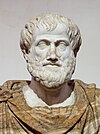
Thomas Henry Huxley on Aristotle
“In the old philosophy, a curious conjunction of ethical and physical prejudices had led to the notion that there was something ethically bad and physically obstructive about matter. Aristotle attributes all irregularities and apparent dysteleologies in nature to the disobedience, or sluggish yielding, of matter to the shaping and guiding influence of those reasons and causes which were hypostatised in his ideal 'Forms.'”
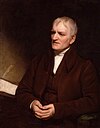
Thomas Henry Huxley on John Dalton
“Another immense service rendered by Dalton, as a corollary of the new atomic doctrine, was the creation of a system of symbolic notation, which not only made the nature of chemical compounds and processes easily intelligible and easy of recollection, but, by its very form, suggested new lines of inquiry. The atomic notation was as serviceable to chemistry as the binomial nomenclature and the classificatory schematism of Linnæus were to zoölogy and botany.”
Thomas Henry Huxley on Louis Agassiz
“Agassiz... was doomed to help the cause he hated. Agassiz not only maintained the fact of the progressive advance in organisation of the inhabitants of the earth at each successive geological epoch, but he insisted upon the analogy of the steps of this progression with those by which the embryo advances to the adult condition, among the highest forms of each group. In fact, in endeavoring to support these views he went a good way beyond the limits of any cautious interpretation of the facts then known.”

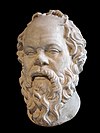
Thomas Henry Huxley on Socrates
“Agnosticism, in fact, is not a creed, but a method, the essence of which lies in the rigorous application of a single principle. That principle is of great antiquity; it is as old as Socrates; as old as the writer who said, 'Try all things, hold fast by that which is good'; it is the foundation of the Reformation, which simply illustrated the axiom that every man should be able to give a reason for the faith that is in him, it is the great principle of Descartes; it is the fundamental axiom of modern science.”
Thomas Henry Huxley on Isaac Newton
“Newton said that he made his discoveries by 'intending' his mind on the subject; no doubt truly. But to equal his success one must have the mind which he 'intended.' Forty lesser men might have intended their minds till they cracked, without any like result. It would be idle either to affirm or to deny that the last half-century has produced men of science of the calibre of Newton. It is sufficient that it can show a few capacities of the first rank, competent not only to deal profitably with the inheritance bequeathed by their scientific forefathers, but to pass on to their successors physical truths of a higher order than any yet reached by the human race. And if they have succeeded as Newton succeeded, it is because they have sought truth as he sought it, with no other object than the finding it.”

Quotes About Thomas Henry Huxley
Gain deeper perspective through quotes about Thomas Henry Huxley from others.
Clarence Edwin Ayres on Thomas Henry Huxley
“Huxleyism: the theory of the anthropoid descent of man and its inevitable consequences.”
Cyril Bibby on Thomas Henry Huxley
“Darwin's bulldog was patently a man of almost puritanical uprightness.”
Edward Clodd on Thomas Henry Huxley
Charles Darwin on Thomas Henry Huxley
This humorous remark closes a letter by Charles Darwin on Thomas Henry Huxley
“My good and kind agent for the propagation of the Gospel; i.e. the Devil's gospel.”
Fielding Hudson Garrison on Thomas Henry Huxley
“Huxley created laboratory instruction in England and left a host of devoted pupils. Professor Patrick Geddes relates that when he once happened to prove the master in error by a series of dissections, Huxley exclaimed: " 'Pon my work, you're right! You've got me! I was wrong!"”

Henrietta A. Huxley on Thomas Henry Huxley
“Thomas Henry Huxley may come to be remembered by the public merely as the man who held that we were descended from the ape, or as the apostle of Darwinism, or as the man who worsted Bishop Wilberforce at Oxford. To prevent such limitation, and to afford more intimate and valuable reasons for remembrance of this man of science and lover of his fellow-men, I have gathered together passages, on widely differing themes, from the nine volumes of his "Essays," from his "Scientific Memoirs" and his "Letters," to be published in a small volume, complete in itself, and of a size that can be carried in the pocket. ... I hope that these selections may attract the attention of the working man, whose cause my husband so ardently espoused, and to whom he was the first to reveal, by his free lectures, the loveliness of Nature, the many rainbow-coloured rays of science, and to show forth to his listeners how all these glorious rays unite in the one pure white light of holy truth.”
H. L. Mencken on Thomas Henry Huxley 3 quotes
“Huxley, I believe, was the greatest Englishman of the Nineteenth Century — perhaps the greatest Englishman of all time.”

Henry Fairfield Osborn on Thomas Henry Huxley 2 quotes
“From [1854] until 1885 Huxley's labours extended over the widest field of biology and philosophy ever covered by any naturalist with the single exception of Aristotle.”

Edward Bagnall Poulton on Thomas Henry Huxley
“The illustrious comparative anatomist, Huxley, Darwin's great general in the battles that had to be fought, but not a naturalist, far less a student of living nature.”
G. de Purucker on Thomas Henry Huxley 3 quotes
“The psychology of the times following the publication of Darwin's works was so strong that most thinking men could not then be brought to admit that there were any alternative explanations of the phenomena of progressive development in life — human, animal, or plant life — to the scheme of transformism which he set forth. This psychological phenomenon was brought about mainly by the efforts of two men...Thomas Henry Huxley and Ernst Heinrich Haeckel.”
Misattributed Quotes
Quotes mistakenly credited to Thomas Henry Huxley
About Thomas Henry Huxley
Thomas Henry Huxley (4 May, 1825 – 29 June 1895) was a British biologist. A prominent defender of Charles Darwin's theory of evolution, he was the grandfather of Julian, Aldous and Andrew Huxley. He was a critic of organised religion and devised the words "agnostic" and "agnosticism" to describe his own views.