Link Copied!
Thomas Carlyle Quotes (1795-1881)
Philosopher














































-100px.jpg)
















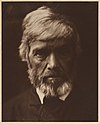









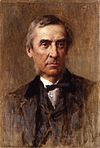
About Thomas Carlyle
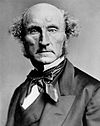
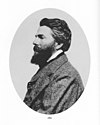
Thomas Carlyle (December 4 1795 – February 5 1881) was a Scottish essayist, historian and philosopher of great prominence during the Victorian era. His wife was Jane Welsh Carlyle.
Best Thomas Carlyle Quotes
Shortest
Earliest
Explore our curated collection of the most famous and impactful Thomas Carlyle quotes.
“The unspeakable Turk”

“A healthy hatred of scoundrels.”
“Every noble work is at first impossible.”
“Literary men are...a perpetual priesthood.”
“Literature is the Thought of thinking Souls.”

“To a shower of gold most things are penetrable.”

“History is the essence of innumerable biographies.”

“History a distillation of Rumour.”
“The barrenest of all mortals is the sentimentalist.”
“A mystic bond of brotherhood makes all men one.”

“The difference between Orthodoxy or Mydoxy and Heterodoxy or Thy-doxy.”

“Blessed is he who has found his work; let him ask no other blessedness.”
“Theocracy, Government of God, is precisely the thing to be struggled for!”

“Great souls are always loyally submissive, reverent to what is over them.”
“All greatness is unconscious, or it is little and naught.”
“A well-written Life is almost as rare as a well-spent one.”
“The true University of these days is a Collection of Books.”

“With what scientific stoicism he walks through the land of wonders, unwondering.”
“Certainly the Art of Writing is the most miraculous of all things man has devised.”
“A poet without love were a physical and metaphysical impossibility.”



“Wonder, indeed, is, on all hands, dying out: it is the sign of uncultivation to wonder.”

“It depends on what we read, after all manner of Professors have done their best for us.”
“The stupendous Fourth Estate, whose wide world-embracing influences what eye can take in?”
“The All of Things is an infinite conjugation of the verb To do.”
“Everywhere in life, the true question is not what we gain, but what we do.”

“One life; a little gleam of Time between two Eternities; no second chance to us for evermore!”

“So here hath been dawning
Another blue Day:
Think wilt thou let it
Slip useless away.”
Another blue Day:
Think wilt thou let it
Slip useless away.”
“"Genius" (which means transcendent capacity of taking trouble, first of all).”
“Do nothing, only keep agitating, debating; and things will destroy themselves.”
“Man is a tool-using animal...Without tools he is nothing, with tools he is all.”
“A Parliament speaking through reporters to Buncombe and the twenty-seven millions, mostly fools.”

“The three great elements of modern civilization, gunpowder, printing, and the Protestant religion.”

“"The people may eat grass": hasty words, which fly abroad irrevocable—and will send back tidings.”
“No man who has once heartily and wholly laughed can be altogether irreclaimably bad.”
“The fine arts once divorcing themselves from truth are quite certain to fall mad, if they do not die.”
“No sadder proof can be given by a man of his own littleness than disbelief in great men.”
“All that Mankind has done, thought, gained or been: it is lying as in magic preservation in the pages of Books.”
“Democracy is, by the nature of it, a self-canceling business; and it gives in the long run a net result of zero.”

“Aesop's Fly, sitting on the axle of the chariot, has been much laughed at for exclaiming: What a dust I do raise!”
“The Book had in a high degree excited us to self-activity, which is the best effect of any book.”
“I should say sincerity, a deep, great, genuine sincerity, is the first characteristic of all men in any way heroic.”

“He who takes not counsel of the Unseen and Silent, from him will never come real visibility and speech.”

“Unless some Hero-worship, in its new appropriate form, can return, this world does not promise to be very habitable long.”
“For is not a Symbol ever, to him who has eyes for it, some dimmer or clearer revelation of the God-like? ”


“[F]riend!—Will the ballot-box raise the Noblest to the chief place; does any sane man deliberately believe such a thing?”
“The highest ensign that men ever met and embraced under, the Cross itself, had no meaning save an accidental extrinsic one.”

“Work is the grand cure for all the maladies and miseries that ever beset mankind,—honest work, which you intend getting done.”

“[T]his same Man-of-Letters Hero must be regarded as our most important modern person. He, such as he may be, is the soul of all.”
“The Great Man here too, as always, is a Force of Nature. Whatsoever is truly great in him springs up from the inarticulate deeps.”
“Our grand business undoubtedly is, not to see what lies dimly at a distance, but to do what lies clearly at hand.”

“The panting breathless haste and vehemence of a man struggling in the thick of battle for life and salvation; this is the mood he is in!”
“To the very last, he had a kind of idea; that, namely, of la carrière ouverte aux talents,—the tools to him that can handle them.”
“"A fair day's wages for a fair day's work": it is as just a demand as governed men ever made of governing. It is the everlasting right of man.”
“Whoso belongs only to his own age, and reverences only its gilt Popinjays or smoot-smeared Mumbojumbos, must needs die with it.”
“Blessed is the healthy nature; it is the coherent, sweetly co-operative, not incoherent, self-distracting, self-destructive one!”
“This great maxim of Philosophy he had gathered by the teaching of nature alone: That man was created to work, not to speculate, or feel, or dream.”
“Burke said there were Three Estates in Parliament; but, in the Reporter's Gallery yonder, there sat a Fourth Estate more important far than they all.”
“Who would govern that can get along without governing? He that is fittest for it, is of all men the unwillingest unless constrained.”
“Can the man say, Fiat lux, Let there be light; and out of chaos make a world? Precisely as there is light in himself, will he accomplish this.”

“Hadst thou not Greek enough to understand thus much: The end of man is an Action, and not a Thought, though it were the noblest.”
“Whatsoever is not beaverish seems to go forth in the shape of talk. To such length is human intellect wasted or suppressed in this world!”
“It is the very joy of man's heart to admire, where he can; nothing so lifts him from all his mean imprisonments, were it but for moments, as true admiration.”

“The Soldier is perhaps one of the most difficult things to realise; but Governments, had they not realised him, could not have existed: accordingly he is here.”
“Yes, truly, it is a great thing for a Nation that it get an articulate voice; that it produce a man who will speak forth melodiously what the heart of it means!”
“At bottom, as was said above, we are to consider Luther as a Prophet Idol-breaker; a bringer-back of men to reality. It is the function of great men and teachers.”
“Great men are the inspired (speaking and acting) texts of that divine Book of Revelations, wherof a chapter is completed from epoch to epoch, and by some named History.”
“In books lies the soul of the whole Past Time; the articulate audible voice of the Past, when the body and material substance of it has altogether vanished like a dream.”

“I came hither [Craigenputtoch] solely with the design to simplify my way of life and to secure the independence through which I could be enabled to remain true to myself.”

“It can be said of him [Scott], when he departed he took a man's life along with him. No sounder piece of British manhood was put together in that eighteenth century of time.”
“It is no longer the moral, religious, spiritual condition of the people that is our concern, but their physical, practical, economical condition, as regulated by public laws.”
“The infinite, absolute character of Virtue has passed into a finite, conditional one; it is no longer a worship of the Beautiful and Good; but a calculation of the Profitable.”
“What is all Knowledge too but recorded Experience, and a product of History; of which, therefore, Reasoning and Belief, no less than Action and Passion, are essential materials?”

“What is all Knowledge too, but recorded Experience, and a product of History; of which, therefore, Reasoning and Belief, no less than Action and Passion, are essential materials.”
“Europe has made much; great cities, great empires, encyclopaedias, creeds, bodies of opinion and practice: but it has made little of the class of Dante's Thought.”
“Man is not the creature and product of Mechanism; but, in a far truer sense, its creator and producer: it is the noble People that makes the noble Government; rather than conversely.”
“Man's unhappiness, as I construe, comes of his greatness; it is because there is an Infinite in him, which with all his cunning he cannot quite bury under the Finite.”
“Everywhere the human soul stands between a hemisphere of light and another of darkness on the confines of two everlasting hostile empires, — Necessity and Free Will.”
“A spontaneous, passionate, yet just, true-meaning man! Full of wild faculty, fire and light; of wild worth, all uncultured; working out his life-task in the depths of the Desert there.”
“O reader, to what shifts is poor Society reduced, struggling to give still some account of herself, in epochs when Cash Payment has become the sole nexus of man to men!”

“We are firm believers in the maxim that for all right judgment of any man or thing it is useful, nay, essential, to see his good qualities before pronouncing on his bad.”
“It is a most earnest thing to be alive in this world; to die is not sport for a man. Man's life never was a sport to him; it was a stern reality, altogether a serious matter to be alive!”
“The uttered part of a man's life, let us always repeat, bears to the unuttered, unconscious part a small unknown proportion. He himself never knows it, much less do others.”
“No solitary miscreant, scarcely any solitary maniac, would venture on such actions and imaginations, as large communities of sane men have, in such circumstances, entertained as sound wisdom.”
“No nobler feeling than this of admiration for one higher than himself dwells in the breast of man. It is to this hour, and at all hours, the vivifying influence in man's life.”

“Battles, in these ages, are transacted by mechanism; with the slightest possible development of human individuality or spontaneity: men now even die, and kill one another, in an artificial manner.”
“We have oftener than once endeavoured to attach some meaning to that aphorism, vulgarly imputed to Shaftesbury, which however we can find nowhere in his works, that "ridicule is the test of truth."”
“It is now almost my sole rule of life to clear myself of cants and formulas, as of poisonous Nessus shirts.”
“No lie you can speak or act but it will come, after longer or shorter circulation, like a Bill drawn on Nature's Reality, and be presented there for payment, — with the answer, No effects.”
“Oceans of horse-hair, continents of parchment, and learned-sergeant eloquence, were it continued till the learned tongue wore itself small in the indefatigable learned mouth, cannot make unjust just.”
“The suffering man ought really 'to consume his own smoke'; there is no good in emitting smoke till you have made it into fire, — which, in the metaphorical sense too, all smoke is capable of becoming!”


“For being a man worth any thousand men, the response your Knox, your Cromwell gets, is an argument for two centuries whether he was a man at all. God's greatest gift to this Earth is sneeringly flung away.”

“For the Scepticism, as I said, is not intellectual only; it is moral also; a chronic atrophy and disease of the whole soul. A man lives by believing something; not by debating and arguing about many things.”

“In brief, all this Mammon-Gospel, of Supply-and-demand, Competition, Laissez-faire, and Devil take the hindmost, begins to be one of the shabbiest Gospels ever preached on Earth; or altogether the shabbiest.”
“Ever, as before, does Madness remain a mysterious-terrific, altogether infernal boiling-up of the Nether Chaotic Deep, through this fair-painted Vision of Creation, which swims thereon, which we name the Real.”
“These are the two vices that beset Government Offices; both of them originating in insufficient Intellect,—that sad insufficiency from which, directly or indirectly, all evil whatsoever springs!”
“Here numerous persons, with big wigs many of them, and austere aspect, whom I take to be Professors of the Dismal Science, start up in an agitated vehement manner: but the Premier resolutely beckons them down again”
“Innumerable are the illusions and legerdemain-tricks of Custom: but of all these, perhaps the cleverest is her knack of persuading us that the Miraculous, by simple repetition, ceases to be Miraculous.”
“He who first shortened the labor of copyists by device of movable types was disbanding hired armies, and cashiering most kings and senates, and creating a whole new democratic world: he had invented the art of printing.”
“[A]nd some others that I have seen, were perhaps among the first. There is no third rising. Time sweeps all away with it so fast at this epoch. The Scottish Church has been short-lived, and was late in reaching thither.'''”
“[I]s it not a right glorious thing, and set of things, this that Shakspeare has brought us? For myself, I feel that there is actually a kind of sacredness in the fact of such a man being sent into this Earth.”

“Truly it is a sad thing for a people, as for a man, to fall into Scepticism, into dilettantism, insincerity; not to know Sincerity when they see it. For this world, and for all worlds, what curse is so fatal?”
“We will not praise Mahomet's moral precepts as always of the superfinest sort; yet it can be said that there is always a tendency to good in them; that they are the true dictates of a heart aiming towards what is just and true.”
“Our “Theories of Taste,” as they are called, wherein the deep, infinite, unspeakable Love of Wisdom and Beauty, which dwells in all men, is “explained,” made mechanically visible, from “Association” and the like, ...”
“I feel that these old Northmen wore looking into Nature with open eye and soul: most earnest, honest; childlike, and yet manlike; with a great-hearted simplicity and depth and freshness, in a true, loving, admiring, unfearing way.”

“[T]hey indicate the saddest spiritual paralysis, and mere death-life of the souls of men: more godless theory, I think, was never promulgated in this Earth. A false man found a religion? Why, a false man cannot build a brick house!”
“Money is miraculous. What miraculous facilities has it yielded, will it yield us; but also what never-imagined confusions, obscurations has it brought in; down almost to total extinction of the moral-sense in large masses of mankind!”
“[I]n the learned professions as in the unlearned, and in human things throughout, in every place and in every time, the true function of intellect is not that of talking, but of understanding and discerning with a view to performing!”
“There are depths in man which go down the length of the lowest Hell, as there are heights which reach the highest Heaven; — for are not both Heaven and Hell made out of him, everlasting Miracle and Mystery that he is?”

“In the true Literary Man there is thus ever, acknowledged or not by the world, a sacredness: he is the light of the world; the world's Priest;—guiding it, like a sacred Pillar of Fire, in its dark pilgrimage through the waste of Time.”

“I say, it is the everlasting privilege of the foolish to be governed by the wise; to be guided in the right path by those who know it better than they. This is the first "right of man;" compared with which all other rights are as nothing.”
“Wise command, wise obedience: the capability of these two is the net measure of culture, and human virtue, in every man; all good lies in the possession of these two capabilities; all evil, wretchedness and ill-success in the want of these.”
“We shall either learn to know a Hero, a true Governor and Captain, somewhat better, when we see him; or else go on to be forever governed by the Unheroic;—had we ballot-boxes clattering at every street-corner, there were no remedy in these.”
“All great peoples are conservative; slow to believe in novelties; patient of much error in actualities; deeply and forever certain of the greatness that is in law, in custom once solemnly established, and now long recognized as just and final.”
“If you are in a strait, a very good indication as to choice—perhaps the best you could get—is a book you have a great curiosity about. You are then in the readiest and best of all possible conditions to improve by that book.”
“I plead guilty to valuing such a man beyond all other sorts of men. Smooth-shaven Respectabilities not a few one finds, that are not good for much. Small thanks to a man for keeping his hands clean, who would not touch the work but with gloves on!”
“[G]rave talk and grave humor with the doers of the craft. Building, walling, is an operation that beyond most other manual ones requires incessant consideration — even new invention. I have heard good judges say that he excelled in it all persons they had seen.”

“Our true Deity is Mechanism. It has subdued external Nature for us, and we think it will do all other things. We are Giants in physical power: in a deeper than metaphorical sense, we are Titans, that strive, by heaping mountain on mountain, to conquer Heaven also.”

“Talk never yet could guide any man's or nation's affairs; nor will it yours, except towards the Limbus Patrum, where all talk, except a very select kind of it, lodges at last.”
“In all cases, therefore, we will agree with the judicious Mrs. Glass: 'First catch your hare!' First get your man; all is got: he can learn to do all things, from making boots, to decreeing judgments, governing communities; and will do them like a man.”
“Considered as the last finish of education, or of human culture, worth and acquirement, the art of speech is noble, and even divine; it is like the kindling of a Heaven's light to show us what a glorious world exists, and has perfected itself, in a man.”

“I think he once told us his first short clothes were a hull made mostly or wholly of leather. We all only laughed, for it is now long ago. Thou dear father! Through what stern obstructions was thy way to manhood to be forced, and for us and for our travelling to be made smooth!”
“I called it a small light shining and shaping in the huge vortex of Norse darkness. Yet the darkness itself was alive; consider that. It was the eager inarticulate uninstructed Mind of the whole Norse People, longing only to become articulate, to go on articulating ever farther!”
“And wonderful it is to see how the Ideal or Soul, place it in what ugliest Body you may, will irradiate said Body with its own nobleness; will gradually, incessantly, mould, modify, new-form or reform said ugliest Body, and make it at last beautiful, and to a certain degree divine!”

“[S]uppose Odin to have been the inventor of Letters, as well as "magic," among that people! It is the greatest invention man has ever made! this of marking down the unseen thought that is in him by written characters. It is a kind of second speech, almost as miraculous as the first.”

“Find in any country the Ablest Man that exists there; raise him to the supreme place, and loyally reverence him: you have a perfect government for that country; no ballot-box, parliamentary eloquence, voting, constitution-building, or other machinery whatsoever can improve it a whit.”

“[I am] fast becoming a patriot of the most decided stamp. Scornfully as I used to speak and think of Scotland in my hours of bitterness and irritation, I never fail to stand up manfully in defence of it thro' thick and thin, whenever a renegade Scot takes upon him to abuse it.”
“With his sharp power of vision, resolute power of action, I doubt not he could have learned to write Books withal, and speak fluently enough;—he did harder things than writing of Books. This kind of man is precisely he who is fit for doing manfully all things you will set him on doing.”

“The inventive genius of great England will not forever sit patient with mere wheels and pinions, bobbins, straps and billy-rollers whirring in the head of it. The inventive genius of England is not a Beaver's, or a Spinner's or Spider's genius: it is a Man's genius, I hope, with a God over him!”
“Consider the great elements of human enjoyment, the attainments and possessions that exalt man's life to its present height, and see what part of these he owes to institutions, to Mechanism of any kind; and what to the instinctive, unbounded force, which Nature herself lent him.”
“Man, little as he may suppose it, is necessitated to obey superiors. He is a social being in virtue of this necessity; nay he could not be gregarious otherwise. He obeys those whom he esteems better than himself, wiser, braver; and will forever obey such; and even be ready and delighted to do it.”
“Civil government does by its nature include much that is mechanical, and must be treated accordingly. We term it indeed, in ordinary language, the Machine of Society, and talk of it as the grand working wheel from which all private machines must derive, or to which they must adapt, their movements.”
“What I called the perplexed jungle of Paganism sprang, we may say, out of many roots: every admiration, adoration of a star or natural object, was a root or fibre of a root; but Hero-worship is the deepest root of all; the tap-root, from which in a great degree all the rest were nourished and grown.”
“[T]he battling Reformer too is, from time to time, a needful and inevitable phenomenon. Obstructions are never wanting: the very things that were once indispensable furtherances become obstructions; and need to be shaken off, and left behind us,—a business often of enormous difficulty.”
“This great maxim of philosophy he had gathered by the teaching of nature alone — that man was created to work, not to speculate or feel or dream. Accordingly, he set his whole heart thitherwards. He did work wisely and unweariedly, and perhaps performed more with the tools he had than any man I now know.”
“Yet with every allowance, one feels it difficult to see how any mortal ever could consider this Koran as a Book written in Heaven, too good for the Earth; as a well-written book, or indeed as a book at all; and not a bewildered rhapsody; written, so far as writing goes, as badly as almost any book ever was!”
“To all men it is evident that the social interests of one hundred and fifty Millions of us depend on the mysterious industry there carried on; and likewise that the dissatisfaction with it is great, universal, and continually increasing in intensity,—in fact, mounting, we might say, to the pitch of settled despair.”
“I know not whether this book is worth anything, nor what the world will do with it, or misdo, or entirely forbear to do, as is likeliest; but this I could tell the world: You have not had for a hundred years any book that comes more direct and flamingly from the heart of a living man. Do what you like with it, you—.”
“Democracy, which means despair of finding any Heroes to govern you, and contented putting up with the want of them,—alas, thou too, mein Lieber, seest well how close it is of kin to Atheism, and other sad Isms: he who discovers no God whatever, how shall he discover Heroes, the visible Temples of God?”
“Not the external and physical alone is now managed by machinery, but the internal and spiritual also. Here too nothing follows its spontaneous course, nothing is left to be accomplished by old natural methods. Everything has its cunningly devised implements, its preestablished apparatus; it is not done by hand, but by machinery.”
“If you find many people who are hard and indifferent to you in a world that you consider to be unhospitable and cruel—as often, indeed, happens to a tender-hearted, stirring young creature—you will also find there are noble hearts who will look kindly on you, and their help will be precious to you beyond price.”
“But leaving this, let us remark one thing which is very plain: That whatever be the uses and duties, real or supposed, of a Secretary in Parliament, his faculty to accomplish these is a point entirely unconnected with his ability to get elected into Parliament, and has no relation or proportion to it, and no concern with it whatever.”
“[I]t is a most important social act; nay, at bottom, the one important social act. Given the men a People choose, the People itself, in its exact worth and worthlessness, is given. A heroic people chooses heroes, and is happy; a valet or flunkey people chooses sham-heroes, what are called quacks, thinking them heroes, and is not happy.”
“There is no act more moral between men than that of rule and obedience. Woe to him that claims obedience when it is not due; woe to him that refuses it when it is! God's law is in that, I say, however the Parchment-laws may run: there is a Divine Right or else a Diabolic Wrong at the heart of every claim that one man makes upon another.”

“Such parliamentary bagpipes I myself have heard play tunes, much to the satisfaction of the people.
While the galleries were all applausive of heart, and the Fourth Estate looked with eyes enlightened, as if you had touched its lips with a staff dipped in honey,—I have sat with reflections too ghastly to be uttered.”
While the galleries were all applausive of heart, and the Fourth Estate looked with eyes enlightened, as if you had touched its lips with a staff dipped in honey,—I have sat with reflections too ghastly to be uttered.”
“ Instruction, that mysterious communing of Wisdom with Ignorance, is no longer an indefinable tentative process, requiring a study of individual aptitudes, and a perpetual variation of means and methods, to attain the same end; but a secure, universal, straightforward business, to be conducted in the gross, by proper mechanism. ”
“All this of Liberty and Equality, Electoral suffrages, Independence and so forth, we will take, therefore, to be a temporary phenomenon, by no means a final one. Though likely to last a long time, with sad enough embroilments for us all, we must welcome it, as the penalty of sins that are past, the pledge of inestimable benefits that are coming.”
“An intellectual dapperling of these times boasts chiefly of his irresistible perspicacity, his “dwelling in the daylight of truth,” and so forth; which, on examination, turns out to be a dwelling in the rush-light of “closet logic,” and a deep unconsciousness that there is any other light to dwell in or any other objects to survey with it.”
“[I]t is our fatalest misery just now, not easily alterable, and yet urgently requiring to be altered, That no British man can attain to be a Statesman, or Chief of Workers, till he has first proved himself a Chief of Talkers: which mode of trial for a Worker, is it not precisely, of all the trials you could set him upon, the falsest and unfairest?”
“We have the greatest admiration for this learned doctor: with what scientific stoicism he walks through the land of wonders, unwondering; like a wise man through some huge, gaudy, imposing Vauxhall, whose fire-works, cascades and symphonies, the vulgar may enjoy and believe in,—but where he finds nothing real but the saltpetre, pasteboard and catgut.”
“The weakest living creature, by concentrating his powers on a single object, can accomplish something. The strongest, by dispensing his over many, may fail to accomplish anything. The drop, by continually falling, bores its passage through the hardest rock. The hasty torrent rushes over it with hideous uproar, and leaves no trace behind.”
“If we read History with any degree of thoughtfulness, we shall find that checks and balances of Profit and Loss have never been the grand agents with men, that they have never been roused into deep, thorough, all-pervading efforts by any computable prospect of Profit and Loss, for any visible, finite object; but always for some invisible and infinite one.”
“The latest Gospel in this world is, Know thy work and do it. 'Know thyself:' long enough has that poor 'self' of thine tormented thee; thou wilt never get to 'know' it, I believe! Think it not thy business, this of knowing thyself; thou art an unknowable individual: know what thou canst work at; and work at it, like a Hercules! That will be thy better plan.”
“To fall into mere unreasoning deliquium of love and admiration, was not good; but such unreasoning, nay irrational supercilious no-love at all is perhaps still worse!—It is a thing forever changing, this of Hero-worship: different in each age, difficult to do well in any age. Indeed, the heart of the whole business of the age, one may say, is to do it well.”
“The rudest heathen that worshipped Canopus, or the Caabah Black-Stone, he, as we saw, was superior to the horse that worshipped nothing at all! Nay there was a kind of lasting merit in that poor act of his; analogous to what is still meritorious in Poets: recognition of a certain endless divine beauty and significance in stars and all natural objects whatsoever.”

“On the whole, ought I not to rejoice that God was pleased to give me such a father; that from earliest years I had the example of a real man of God's own making continually before me? Let me learn of him. Let me write my books as he built his houses, and walk as blamelessly through this shadow world; if God so will, to rejoin him at last. Amen.”
“But greatly his most important culture he had gathered — and this, too, by his own endeavors — from the better part of the district, the religious men; to whom, as to the most excellent, his own nature gradually attached and attracted him. He was religious with the consent of his whole faculties. Without religion he would have been nothing.”
“[I]t is always a genial laughter. Not at mere weakness, at misery or poverty; never. No man who can laugh, what we call laughing, will laugh at these things. It is some poor character only desiring to laugh, and have the credit of wit, that does so. Laughter means sympathy.
Such laughter, like sunshine on the deep sea, is very beautiful to me.”
Such laughter, like sunshine on the deep sea, is very beautiful to me.”

“[F]limsy, desultory readers, who fly from foolish book to foolish book, and get good of none, and mischief of all—are not these as foolish, unhealthy eaters, who mistake their superficial false desire after spiceries and confectioneries for their real appetite, of which even they are not destitute, though it lies far deeper, far quieter, after solid nutritive food?”
“Mahomet can work no miracles; he often answers impatiently: I can work no miracles. I? "I am a Public Preacher;" appointed to preach this doctrine to all creatures. Yet the world, as we can see, had really from of old been all one great miracle to him. Look over the world, says he; is it not wonderful, the work of Allah; wholly "a sign to you," if your eyes were open!”
“I warmly second the advice of the wisest of men—"Don't be ambitious; don't be at all too desirous to success; be loyal and modest." Cut down the proud towering thoughts that you get into you, or see they be pure as well as high. There is a nobler ambition than the gaining of all California would be, or the getting of all the suffrages that are on the planet just now.”

“Has any man, or any society of men, a truth to speak, a piece of spiritual work to do; they can nowise proceed at once and with the mere natural organs, but must first call a public meeting, appoint committees, issue prospectuses, eat a public dinner; in a word, construct or borrow machinery, wherewith to speak it and do it. Without machinery, they were hopeless, helpless.”
“I will remark again, however, as a fact not unimportant to be understood, that the different sphere constitutes the grand origin of such distinction; that the Hero can be Poet, Prophet, King, Priest or what you will, according to the kind of world he finds himself born into. I confess, I have no notion of a truly great man that could not be all sorts of men.”
“Except by name, Jean Paul Friedrich Richter is little known out of Germany. The only thing connected with him, we think, that has reached this country is his saying,—imported by Madame de Staël, and thankfully pocketed by most newspaper critics, — "Providence has given to the French the empire of the land; to the English that of the sea; to the Germans that of—the air!"”
“The force that had been lent my father he honorably expended in manful well-doing. A portion of this planet bears beneficent traces of his strong hand and strong head. Nothing that he undertook to do but he did it faithfully and like a true man. I shall look on the houses he built with a certain proud interest. They stand firm and sound to the heart all over his little district.”
“[B]ooks—there is a good kind of a book and a bad kind of a book. I am not to assume that you are all ill acquainted with this; but I may remind you that it is a very important consideration at present. It casts aside altogether the idea that people have that if they are reading any book—that if an ignorant man is reading any book, he is doing rather better than nothing at all.”

“Originality is a thing we constantly clamour for, and constantly quarrel with; as if, observes our author himself, any originality but our own could be expected to content us! In fact all strange thing are apt, without fault of theirs, to estrange us at first view, and unhappily scarcely anything is perfectly plain, but what is also perfectly common.”
“To reconcile Despotism with Freedom:—well, is that such a mystery? Do you not already know the way? It is to make your Despotism just. Rigorous as Destiny; but just too, as Destiny and its Laws. The Laws of God: all men obey these, and have no 'Freedom' at all but in obeying them. The way is already known, part of the way;—and courage and some qualities are needed for walking on it!”
“My father's education was altogether of the worst and most limited. I believe he was never more than three months at any school. What he learned there showed what he might have learned. A solid knowledge of arithmetic, a fine antique handwriting — these, with other limited practical etceteras, were all the things he ever heard mentioned as excellent. He had no room to strive for more.”
“We are no longer instinctively driven to apprehend, and lay to heart, what is Good and Lovely, but rather to inquire, as onlookers, how it is produced, whence it comes, whither it goes. Our favourite Philosophers have no love and no hatred; they stand among us not to do, nor to create anything, but as a sort of Logic mills, to grind out the true causes and effects of all that is done and created.”
“I esteem the modern error, That all goes by self-interest and the checking and balancing of greedy knaveries, and that in short, there is nothing divine whatever in the association of men, a still more despicable error, natural as it is to an unbelieving century, than that of a "divine right" in people called Kings. I say, Find me the true Konning, King, or Able-man, and he has a divine right over me.”
“Thus Mr. Sale informs me, the old Arab Tribes would gather in liveliest gaudeamus, and sing, and kindle bonfires, and wreathe crowns of honour, and solemnly thank the gods that, in their Tribe too, a Poet had shewn himself. As indeed they well might; for what usefuller, I say not nobler and heavenlier thing could the gods, doing their very kindest, send to any Tribe or Nation, in any time or circumstances?”
“Complete, at the same time, was his confidence in his own judgment when it spoke to him decisively. He was one of those few that could believe and know as well as inquire and be of opinion. When I remember how much he admired intellectual force, how much he had of it himself, and yet how unconsciously and contentedly he gave others credit for superiority, I again see the healthy spirit of the genuine man.”
“[T]here is an irrepressible tendency in every man to develop himself according to the magnitude which Nature has made him of; to speak out, to act out, what nature has laid in him. This is proper, fit, inevitable; nay it is a duty, and even the summary of duties for a man. The meaning of life here on earth might be defined as consisting in this: To unfold your self, to work what thing you have the faculty for.”

“It is the property of every Hero, in every time, in every place and situation, that he come back to reality; that he stand upon things, and not shows of things. According as he loves, and venerates, articulately or with deep speechless thought, the awful realities of things, so will the hollow shows of things, however regular, decorous, accredited by Koreishes or Conclaves, be intolerable and detestable to him.”
“Philosophy complains that Custom has hoodwinked us, from the first; that we do everything by Custom, even Believe by it; that our very Axioms, let us boast of Free-thinking as we may, are oftenest simply such Beliefs as we have never heard questioned. Nay, what is Philosophy throughout but a continual battle against Custom; an ever-renewed effort to transcend the sphere of blind Custom, and so become Transcendental?”
“Consider, for example, the state of Science generally, in Europe, at this period. It is admitted, on all sides, that the Metaphysical and Moral Sciences are falling into decay, while the Physical are engrossing, every day, more respect and attention. In most of the European nations there is now no such thing as a Science of Mind; only more or less advancement in the general science, or the special sciences, of matter.”

“"By what method or methods can the able men from every rank of life be gathered, as diamond-grains from the general mass of sand: the able men, not the sham-able;—and set to do the work of governing, contriving, administering and guiding for us!" It is the question of questions. All that Democracy ever meant lies there: the attainment of a truer and truer Aristocracy, or Government again by the Best.”
“Cannot we understand how these men worshipped Canopus; became what we call Sabeans, worshipping the stars? Such is to me the secret of all forms of Paganism. Worship is transcendent wonder; wonder for which there is now no limit or measure; that is worship.
But now if all things whatsoever that we look upon are emblems to us of the Highest God, I add that more so than any of them is man such an emblem.”
But now if all things whatsoever that we look upon are emblems to us of the Highest God, I add that more so than any of them is man such an emblem.”

“The manner of men's Hero-worship, verily it is the innermost fact of their existence, and determines all the rest,—at public hustings, in private drawing-rooms, in church, in market, and wherever else. Have true reverence, and what indeed is inseparable therefrom, reverence the right man, all is well; have sham-reverence, and what also follows, greet with it the wrong man, then all is ill, and there is nothing.”

“The true Church of England, at this moment, lies in the Editors of its Newspapers. These preach to the people daily, weekly; admonishing kings themselves; advising peace or war, with an authority which only the first Reformers, and a long-past class of Popes, were possessed of; inflicting moral censure; imparting moral encouragement, consolation, edification; in all ways diligently “administering the Discipline of the Church.””

“They understood in their heart that it was indispensable to be brave; that Odin would have no favor for them, but despise and thrust them out, if they were not brave. Consider too whether there is not something in this! It is an everlasting duty, valid in our day as in that, the duty of being brave. Valor is still value. The first duty for a man is still that of subduing Fear. We must get rid of Fear; we cannot act at all till then.”

“Properly speaking, the Land belongs to these two: To the Almighty God; and to all His Children of Men that have ever worked well on it, or that shall ever work well on it. No generation of men can or could, with never such solemnity and effort, sell Land on any other principle: it is not the property of any generation, we say, but that of all the past generations that have worked on it, and of all the future ones that shall work on it.”

“[H]e seldom or never spoke except actually to convey an idea. Measured by quantity of words, he was a talker of fully average copiousness; by extent of meaning communicated, he was the most copious I have listened to. How in few sentences he would sketch you off an entire biography, an entire object or transaction, keen, clear, rugged, genuine, completely rounded In! His words came direct from the heart by the inspiration of the moment.”

“The man whom Nature has appointed to do great things is, first of all, furnished with that openness to Nature which renders him incapable of being insincere! To his large, open, deep-feeling heart Nature is a Fact: all hearsay is hearsay; the unspeakable greatness of this Mystery of Life, let him acknowledge it or not, nay even though he seem to forget it or deny it, is ever present to him,—fearful and wonderful, on this hand and on that.”
“The Hero as Divinity, the Hero as Prophet, are productions of old ages; not to be repeated in the new. They presuppose a certain rudeness of conception, which the progress of mere scientific knowledge puts an end to. There needs to be, as it were, a world vacant, or almost vacant of scientific forms, if men in their loving wonder are to fancy their fellow-man either a god or one speaking with the voice of a god. Divinity and Prophet are past.”
“The spoken Word, the written Poem, is said to be an epitome of the man; how much more the done Work. Whatsoever of morality and of intelligence; what of patience, perseverance, faithfulness, of method, insight, ingenuity, energy; in a word, whatsoever of Strength the man had in him will lie written in the Work he does. To work: why, it is to try himself against Nature, and her everlasting unerring Laws; these will tell a true verdict as to the man.”
“The young generations of the world, who had in them the freshness of young children, and yet the depth of earnest men, who did not think that they had finished off all things in Heaven and Earth by merely giving them scientific names, but had to gaze direct at them there, with awe and wonder: they felt better what of divinity is in man and Nature; they, without being mad, could worship Nature, and man more than anything else in Nature.”
“Descend where you will into the lower class, in Town or Country, by what avenue you will, by Factory Inquiries, Agricultural Inquiries, by Revenue Returns, by Mining-Labourer Committees, by opening your own eyes and looking, the same sorrowful result discloses itself: you have to admit that the working body of this rich English Nation has sunk or is fast sinking into a state, to which, all sides of it considered, there was literally never any parallel.”
“Is not every true Reformer, by the nature of him, a Priest first of all? He appeals to Heaven's invisible justice against Earth's visible force; knows that it, the invisible, is strong and alone strong. He is a believer in the divine truth of things; a seer, seeing through the shows of things; a worshipper, in one way or the other, of the divine truth of things; a Priest, that is. If he be not first a Priest, he will never be good for much as a Reformer.”
“Human virtue, if we went down to the roots of it, is not so rare. The materials of human virtue are everywhere abundant as the light of the sun: raw materials,—O woe, and loss, and scandal thrice and threefold, that they so seldom are elaborated, and built into a result! that they lie yet unelaborated, and stagnant in the souls of wide-spread dreary millions, fermenting, festering; and issue at last as energetic vice instead of strong practical virtue!”
“[F]or this also we will honour the poor Manchester Insurrection, and augur well of it. A deep unspoken sense lies in these strong men,— inconsiderable, almost stupid, as all they can articulate of it is. Amid all violent stupidity of speech, a right noble instinct of what is doable and what is not doable never forsakes them: the strong inarticulate men and workers, whom Fact patronises; of whom, in all difficulty and work whatsoever, there is good augury!”
“Cash Payment the sole nexus; and there are so many things which cash will not pay! Cash is a great miracle; yet it has not all power in Heaven, nor even on Earth. 'Supply and demand' we will honour also; and yet how many 'demands' are there, entirely indispensable, which have to go elsewhere than to the shops, and produce quite other than cash, before they can get their supply? On the whole, what astonishing payments does cash make in this world!”
“This poor amphibious Pope too gives loaves to the Poor; has in him more good latent than he is himself aware of. His poor Jesuits, in the late Italian Cholera, were, with a few German Doctors, the only creatures whom dastard terror had not driven mad: they descended fearless into all gulfs and bedlams; watched over the pillow of the dying, with help, with counsel and hope; shone as luminous fixed stars, when all else had gone out in chaotic night: honour to them!”
“On the dust of our heroic ancestors we too sit ballot-boxing, saying to one another, It is well, it is well! By inheritance of their noble struggles, we have been permitted to sit slothful so long. By noble toil, not by shallow laughter and vain talk, they made this English Existence from a savage forest into an arable inhabitable field for us; and we, idly dreaming it would grow spontaneous crops forever,—find it now in too questionable a state.”
“That, on the whole, if you have got the intrinsic qualities, you have got everything, and the preliminaries will prove attainable; but that if you have got only the preliminaries, you have yet got nothing. A man of real dignity will not find it impossible to bear himself in a dignified manner; a man of real understanding and insight will get to know, as the fruit of his very first study, what the laws of his situation are, and will conform to these.”
“His Religion is not an easy one: with rigorous fasts, lavations, strict complex formulas, prayers five times a day, and abstinence from wine, it did not "succeed by being an easy religion." As if indeed any religion, or cause holding of religion, could succeed by that! It is a calumny on men to say that they are roused to heroic action by ease, hope of pleasure, recompense, — sugar-plums of any kind, in this world or the next! In the meanest mortal there lies something nobler.”

“The habits of study acquired at Universities are of the highest importance in after-life. At the season when you are in young years the whole mind is, as it were, fluid, and is capable of forming itself into any shape that the owner of the mind pleases to order it to form itself into. The mind is in a fluid state, but it hardens up gradually to the consistency of rock or iron, and you cannot alter the habits of an old man, but as he has begun he will proceed and go on to the last.”

“But in the days that are now passing over us, even fools are arrested to ask the meaning of them; few of the generations of men have seen more impressive days. Days of endless calamity, disruption, dislocation, confusion worse confounded: if they are not days of endless hope too, then they are days of utter despair. For it is not a small hope that will suffice, the ruin being clearly, either in action or in prospect, universal. There must be a new world, if there is to be any world at all!”
“Where this will end? In the Abyss, one may prophecy; whither all Delusions are, at all moments, travelling; where this Delusion has now arrived. For if there be a Faith, from of old, it is this, as we often repeat, that no Lie can live for ever. The very Truth has to change its vesture, from time to time; and be born again. But all Lies have sentence of death written down against them, and Heaven's Chancery itself; and, slowly or fast, advance incessantly towards their hour.”
“I cannot call this Shakspeare a "Sceptic," as some do; his indifference to the creeds and theological quarrels of his time misleading them. No: neither unpatriotic, though he says little about his Patriotism; nor sceptic, though he says little about his Faith. Such "indifference" was the fruit of his greatness withal: his whole heart was in his own grand sphere of worship (we may call it such); these other controversies, vitally important to other men, were not vital to him.”
“To the wild deep-hearted man all was yet new, not veiled under names or formulas; it stood naked, flashing in on him there, beautiful, awful, unspeakable. Nature was to this man, what to the Thinker and Prophet it forever is, preternatural. This green flowery rock-built earth, the trees, the mountains, rivers, many-sounding seas;—that great deep sea of azure that swims overhead; the winds sweeping through it; the black cloud fashioning itself together, now pouring out fire, now hail and rain.”
“In the meanest mortal there lies something nobler. The poor swearing soldier, hired to be shot, has his "honor of a soldier," different from drill-regulations and the shilling a day. It is not to taste sweet things, but to do noble and true things, and vindicate himself under God's Heaven as a god-made Man, that the poorest son of Adam dimly longs. Show him the way of doing that, the dullest day-drudge kindles into a hero. They wrong man greatly who say he is to be seduced by ease.”
“Nay, am not I also the humble James Carlyle's work? I owe him much more than existence, I owe him a noble inspiring example (now that I can read it in that rustic character). It was he exclusively that determined on educating me; that from his small hard-earned funds sent me to school and college, and made me whatever I am or may become. Let me not mourn for my father, let me do worthily of him. So shall he still live even here in me, and his worth plant itself honorably forth into new generations.”
“From of old, a thousand thoughts, in his pilgrimings and wanderings, had been in this man: What am I? What is this unfathomable Thing I live in, which men name Universe? What is Life; what is Death? What am I to believe? What am I to do? The grim rocks of Mount Hara, of Mount Sinai, the stern sandy solitudes answered not. The great Heaven rolling silent overhead, with its blue-glancing stars, answered not. There was no answer. The man's own soul, and what of God's inspiration dwelt there, had to answer!”
“O thou who art able to write a Book, which once in the two centuries or oftener there is a man gifted to do, envy not him whom they name City-builder, and inexpressibly pity him whom they name Conqueror or City-burner! Thou too art a Conqueror and Victor; but of the true sort, namely over the Devil: thou too hast built what will outlast all marble and metal, and be a wonder-bringing City of the Mind, a Temple and Seminary and Prophetic Mount, whereto all kindreds of the Earth will pilgrim.”
“But oppression by your Mock-Superiors well shaken off, the grand problem yet remains to solve: That of finding government by your Real-Superiors! Alas, how shall we ever learn the solution of that, benighted, bewildered, sniffing, sneering, godforgetting unfortunates as we are? It is a work for centuries; to be taught us by tribulations, confusions, insurrections, obstructions; who knows if not by conflagration and despair! It is a lesson inclusive of all other lessons; the hardest of all lessons to learn.”
“Why not? What is to hinder this Samson from governing? There is in him what far transcends all apprenticeships; in the man himself there exists a model of governing, something to govern by! There exists in him a heart-abhorrence of whatever is incoherent, pusillanimous, unveracious,—that is to say, chaotic, _un_governed; of the Devil, not of God. A man of this kind cannot help governing! He has the living ideal of a governor in him; and the incessant necessity of struggling to unfold the same out of him.”
“Mahomet himself, after all that can be said about him, was not a sensual man. We shall err widely if we consider this man as a common voluptuary, intent mainly on base enjoyments, — nay on enjoyments of any kind. His household was of the frugalest; his common diet barley-bread and water: sometimes for months there was not a fire once lighted on his hearth. They record with just pride that he would mend his own shoes, patch his own cloak. A poor, hard-toiling, ill-provided man; careless of what vulgar men toil for.”
“World,—this man is not a slave with thee! None of thy promotions is necessary for him. His place is with the stars of Heaven: to thee it may be momentous, to him it is indifferent, whether thou place him in the lowest hut, or forty feet higher at the top of thy stupendous high tower, while here on Earth. The joys of Earth that are precious, they depend not on thee and thy promotions. Food and raiment, and, round a social hearth, souls who love him, whom he loves: these are already his. He wants none of thy rewards;”
“Mahomet was only fourteen; had no language but his own: much in Syria must have been a strange unintelligible whirlpool to him. But the eyes of the lad were open; glimpses of many things would doubtless be taken in, and lie very enigmatic as yet, which were to ripen in a strange way into views, into beliefs and insights one day. These journeys to Syria were probably the beginning of much to Mahomet. One other circumstance we must not forget: that he had no school-learning; of the thing we call school-learning none at all.”
“"Detect quacks"? Yes do, for Heaven's sake; but know withal the men that are to be trusted! Till we know that, what is all our knowledge; how shall we even so much as "detect"? For the vulpine sharpness, which considers itself to be knowledge, and "detects" in that fashion, is far mistaken. Dupes indeed are many: but, of all dupes, there is none so fatally situated as he who lives in undue terror of being duped.
The sincere alone can recognize sincerity. Not a Hero only is needed, but a world fit for him;”
The sincere alone can recognize sincerity. Not a Hero only is needed, but a world fit for him;”
“It is a greatness not of mere body and gigantic bulk, but a rude greatness of soul. There is a sublime uncomplaining melancholy traceable in these old hearts. A great free glance into the very deeps of thought. They seem to have seen, these brave old Northmen, what Meditation has taught all men in all ages, That this world is after all but a show,—a phenomenon or appearance, no real thing. All deep souls see into that,—the Hindoo Mythologist, the German Philosopher,—the Shakspeare, the earnest Thinker, wherever he may be.”
“Literature, the strange entity so called,—that indeed is here. If Literature continue to be the haven of expatriated spiritualisms, and have its Johnsons, Goethes and true Archbishops of the World, to show for itself as heretofore, there may be hope in Literature. If Literature dwindle, as is probable, into mere merry-andrewism, windy twaddle, and feats of spiritual legerdemain, analogous to rope-dancing, opera-dancing, and street-fiddling with a hat carried round for halfpence, or for guineas, there will be no hope in Literature.”
“No nation ever had so bad a neighbour as Germany has had in France for the last 400 years; bad in all manner of ways; insolent, rapacious, insatiable, unappeasable, continually aggressive. ... Germany, after 400 years of ill-usage, and generally ill-fortune, from that neighbour, has had at last the great happiness to see its enemy fairly down in this manner; and Germany, I do clearly believe, would be a foolish nation not to think of raising up some secure boundary-fence between herself and such a neighbour now that she has the chance.”

“There have been other Priests perhaps equally notable, in calmer times, for doing faithfully the office of a Leader of Worship; bringing down, by faithful heroism in that kind, a light from Heaven into the daily life of their people; leading them forward, as under God's guidance, in the way wherein they were to go. But when this same way was a rough one, of battle, confusion and danger, the spiritual Captain, who led through that, becomes, especially to us who live under the fruit of his leading, more notable than any other.”
“To me, in these circumstances, that of "Hero-worship" becomes a fact inexpressibly precious; the most solacing fact one sees in the world at present. There is an everlasting hope in it for the management of the world. Had all traditions, arrangements, creeds, societies that men ever instituted, sunk away, this would remain. The certainty of Heroes being sent us; our faculty, our necessity, to reverence Heroes when sent: it shines like a polestar through smoke-clouds, dust-clouds, and all manner of down-rushing and conflagration.”
“The seeing eye! It is this that discloses the inner harmony of things; what Nature meant, what musical idea Nature has wrapped up in these often rough embodiments. Something she did mean. To the seeing eye that something were discernible. Are they base, miserable things? You can laugh over them, you can weep over them; you can in some way or other genially relate yourself to them; — you can, at lowest, hold your peace about them, turn away your own and others' face from them, till the hour come for practically exterminating and extinguishing them!”
“We call that fire of the black thunder-cloud "electricity," and lecture learnedly about it, and grind the like of it out of glass and silk: but what is it? What made it? Whence comes it? Whither goes it? Science has done much for us; but it is a poor science that would hide from us the great deep sacred infinitude of Nescience, whither we can never penetrate, on which all science swims as a mere superficial film. This world, after all our science and sciences, is still a miracle; wonderful, inscrutable, magical and more, to whosoever will think of it.”
“But I liken common languid Times, with their unbelief, distress, perplexity, with their languid doubting characters and embarrassed circumstances, impotently crumbling down into ever worse distress towards final ruin;—all this I liken to dry dead fuel, waiting for the lightning out of Heaven that shall kindle it. The great man, with his free force direct out of God's own hand, is the lightning. His word is the wise healing word which all can believe in. All blazes round him now, when he has once struck on it, into fire like his own.”

“Why, reader, truly, if they asked thee or me, Which way we meant to vote?—were it not our likeliest answer: Neither way! I, as a Tenpound Franchiser, will receive no bribe; but also I will not vote for either of these men. Neither Rigmarole nor Dolittle shall, by furtherance of mine, go and make laws for this country. I will have no hand in such a mission. How dare I! If other men cannot be got in England, a totally other sort of men, different as light is from dark, as star-fire is from street-mud, what is the use of votings, or of Parliaments in England?”

“The crop of spiritual talent that is born to you, of human nobleness and intellect and heroic faculty, this is infinitely more important than your crops of cotton or corn, or wine or herrings or whale-oil, which the Newspapers record with such anxiety every season.
This is not quite counted by seasons, therefore the Newspapers are silent: but by generations and centuries, I assure you it becomes amazingly sensible; and surpasses, as Heaven does Earth, all the corn and wine, and whale-oil and California bullion, or any other crop you grow.”
This is not quite counted by seasons, therefore the Newspapers are silent: but by generations and centuries, I assure you it becomes amazingly sensible; and surpasses, as Heaven does Earth, all the corn and wine, and whale-oil and California bullion, or any other crop you grow.”
“I here, on the very threshold, protest against it in reference to Paganism, and to all other isms by which man has ever for a length of time striven to walk in this world. They have all had a truth in them, or men would not have taken them up. Quackery and dupery do abound; in religions, above all in the more advanced decaying stages of religions, they have fearfully abounded: but quackery was never the originating influence in such things; it was not the health and life of such things, but their disease, the sure precursor of their being about to die! Let us never forget this.”

“One comfort is, that Great Men, taken up in any way, are profitable company. We cannot look, however imperfectly, upon a great man, without gaining something by him. He is the living light-fountain, which it is good and pleasant to be near. The light which enlightens, which has enlightened the darkness of the world; and this not as a kindled lamp only, but rather as a natural luminary shining by the gift of Heaven; a flowing light-fountain, as I say, of native original insight, of manhood and heroic nobleness;—in whose radiance all souls feel that it is well with them.”
“[A] man of Intellect, of real and not sham Intellect, is by the nature of him likewise inevitably a man of nobleness, a man of courage, rectitude, pious strength; who, even because he is and has been loyal to the Laws of this Universe, is initiated into discernment of the same; to this hour a Missioned of Heaven; whom if men follow, it will be well with them; whom if men do not follow, it will not be well. Human Intellect, if you consider it well, is the exact summary of Human Worth; and the essence of all worth-ships and worships is reverence for that same.”

“Religion in most countries, more or less in every country, is no longer what it was, and should be,—a thousand-voiced psalm from the heart of Man to his invisible Father, the fountain of all Goodness, Beauty, Truth, and revealed in every revelation of these; but for the most part, a wise prudential feeling grounded on mere calculation; a matter, as all others now are, of Expediency and Utility; whereby some smaller quantum of earthly enjoyment may be exchanged for a far larger quantum of celestial enjoyment. Thus Religion too is Profit, a working for wages; not Reverence, but vulgar Hope or Fear.”

“But deepest of all illusory Appearances, for hiding Wonder, as for many other ends, are your two grand fundamental world-enveloping Appearances, SPACE and TIME. These, as spun and woven for us from before Birth itself, to clothe our celestial ME for dwelling here, and yet to blind it, — lie all-embracing, as the universal canvas, or warp and woof, whereby all minor Illusions, in this Phantasm Existence, weave and paint themselves. In vain, while here on Earth, shall you endeavor to strip them off; you can, at best, but rend them asunder for moments, and look through.”
“Our English careers to born genius are twofold. There is the silent or unlearned career of the Industrialisms, which are very many among us; and there is the articulate or learned career of the three professions, Medicine, Law (under which we may include Politics), and the Church. Your born genius, therefore, will first have to ask himself, Whether he can hold his tongue or cannot? True, all human talent, especially all deep talent, is a talent to do, and is intrinsically of silent nature; inaudible, like the Sphere Harmonies and Eternal Melodies, of which it is an incarnated fraction.”
“A great soul, any sincere soul, knows not what he is,—alternates between the highest height and the lowest depth; can, of all things, the least measure—Himself! What others take him for, and what he guesses that he may be; these two items strangely act on one another, help to determine one another. With all men reverently admiring him; with his own wild soul full of noble ardors and affections, of whirlwind chaotic darkness and glorious new light; a divine Universe bursting all into godlike beauty round him, and no man to whom the like ever had befallen, what could he think himself to be?”

“It has ever been held the highest wisdom for a man not merely to submit to Necessity,—Necessity will make him submit,—but to know and believe well that the stern thing which Necessity had ordered was the wisest, the best, the thing wanted there. To cease his frantic pretension of scanning this great God's-World in his small fraction of a brain; to know that it had verily, though deep beyond his soundings, a Just Law, that the soul of it was Good;—that his part in it was to conform to the Law of the Whole, and in devout silence follow that; not questioning it, obeying it as unquestionable.”

“Of America it would ill beseem any Englishman, and me perhaps as little as another, to speak unkindly, to speak unpatriotically, if any of us even felt so. Sure enough, America is a great, and in many respects a blessed and hopeful phenomenon. Sure enough, these hardy millions of Anglosaxon men prove themselves worthy of their genealogy... But as to a Model Republic, or a model anything, the wise among themselves know too well that there is nothing to be said... Their Constitution, such as it may be, was made here, not there... Cease to brag to me of America, and its model institutions and constitutions.”
“No Dilettantism in this Mahomet; it is a business of Reprobation and Salvation with him, of Time and Eternity: he is in deadly earnest about it! Dilettantism, hypothesis, speculation, a kind of amateur-search for Truth, toying and coquetting with Truth: this is the sorest sin. The root of all other imaginable sins. It consists in the heart and soul of the man never having been open to Truth; — "living in a vain show." Such a man not only utters and produces falsehoods, but is himself a falsehood. The rational moral principle, spark of the Divinity, is sunk deep in him, in quiet paralysis of life-death.”

“Every pitifulest whipster that walks within a skin has had his head filled with the notion that he is, shall be, or by all human and divine laws ought to be, 'happy.' His wishes, the pitifulest whipster's, are to be fulfilled for him; his days, the pitifulest whipster's, are to flow on in an ever-gentle current of enjoyment, impossible even for the gods. The prophets preach to us, Thou shalt be happy; thou shalt love pleasant things, and find them. The people clamor, Why have we not found pleasant things? ...God's Laws are become a Greatest Happiness Principle. There is no religion; there is no God; man has lost his soul.”
“Who is there that can recognize real intellect, and do reverence to it; and discriminate it well from sham intellect, which is so much more abundant, and deserves the reverse of reverence? He that himself has it!—One really human Intellect, invested with command, and charged to reform Downing Street for us, would continually attract real intellect to those regions, and with a divine magnetism search it out from the modest corners where it lies hid. And every new accession of intellect to Downing Street would bring to it benefit only, and would increase such divine attraction in it, the parent of all benefit there and elsewhere!”
“May not this religious reticence, in these devout good souls, be perhaps a merit, and sign of health in them? Jocelin, Eadmer, and such religious men, have as yet nothing of 'Methodism;' no Doubt or even root of Doubt. Religion is not a diseased self-introspection, an agonising inquiry: their duties are clear to them, the way of supreme good plain, indisputable, and they are traveling on it. Religion lies over them like an all-embracing heavenly canopy, like an atmosphere and life-element, which is not spoken of, which in all things is presupposed without speech. Is not serene or complete Religion the highest aspect of human nature.”
“Curious, if we will reflect on it, this of having no books. Except by what he could see for himself, or hear of by uncertain rumor of speech in the obscure Arabian Desert, he could know nothing. The wisdom that had been before him or at a distance from him in the world, was in a manner as good as not there for him. Of the great brother souls, flame-beacons through so many lands and times, no one directly communicates with this great soul. He is alone there, deep down in the bosom of the Wilderness; has to grow up so,—alone with Nature and his own Thoughts. But, from an early age, he had been remarked as a thoughtful man.”
“[A] million blockheads looking authoritatively into one man of what you call genius, or noble sense, will make nothing but nonsense out of him and his qualities, and his virtues and defects, if they look till the end of time. He understands them, sees what they are; but that they should understand him, and see with rounded outline what his limits are,—this, which would mean that they are bigger than he, is forever denied them. Their one good understanding of him is that they at last should loyally say, "We do not quite understand thee; we perceive thee to be nobler and wiser and bigger than we, and will loyally follow thee."”
“Consider how, even in the meanest sorts of Labour, the whole soul of a man is composed into a kind of real harmony, the instant he sets himself to work! Doubt, Desire, Sorrow, Remorse, Indignation, Despair itself, all these like helldogs lie beleaguering the soul of the poor dayworker, as of every man: but he bends himself with free valour against his task, and all these are stilled, all these shrink murmuring far off into their caves. The man is now a man. The blessed glow of Labour in him, is it not as purifying fire, wherein all poison is burnt up, and of sour smoke itself there is made bright blessed flame!”
“These things, which we state lightly enough here, are yet of deep import, and indicate a mighty change in our whole manner of existence. For the same habit regulates not our modes of action alone, but our modes of thought and feeling. Men are grown mechanical in head and in heart, as well as in hand. They have lost faith in individual endeavour, and in natural force, of any kind. Not for internal perfection, but for external combinations and arrangements, for institutions, constitutions, for Mechanism of one sort or other, do they hope and struggle. Their whole efforts, attachments, opinions, turn on mechanism, and are of a mechanical character.”
“For the whole Past, as I keep repeating, is the possession of the Present; the Past had always something true, and is a precious possession. In a different time, in a different place, it is always some other side of our common Human Nature that has been developing itself. The actual True is the sum of all these; not any one of them by itself constitutes what of Human Nature is hitherto developed. Better to know them all than misknow them. "To which of these Three Religions do you specially adhere?" inquires Meister of his Teacher. "To all the Three!" answers the other: "To all the Three; for they by their union first constitute the True Religion."”
“I care little about the sword: I will allow a thing to struggle for itself in this world, with any sword or tongue or implement it has, or can lay hold of. We will let it preach, and pamphleteer, and fight, and to the uttermost bestir itself, and do, beak and claws, whatsoever is in it; very sure that it will, in the long-run, conquer nothing which does not deserve to be conquered. What is better than itself, it cannot put away, but only what is worse. In this great Duel, Nature herself is umpire, and can do no wrong: the thing which is deepest-rooted in Nature, what we call truest, that thing and not the other will be found growing at last.”
“Every candid eye, I think, will read the Koran far otherwise than so. It is the confused ferment of a great rude human soul; rude, untutored, that cannot even read; but fervent, earnest, struggling vehemently to utter itself in words. With a kind of breathless intensity he strives to utter himself; the thoughts crowd on him pell-mell: for very multitude of things to say, he can get nothing said. The meaning that is in him shapes itself into no form of composition, is stated in no sequence, method, or coherence;—they are not shaped at all, these thoughts of his; flung out unshaped, as they struggle and tumble there, in their chaotic inarticulate state.”
“Constitution,—the apex of all its intelligences and mighty instincts and dumb longings: it is I? William Conqueror's big gifts, and Edward's and Elizabeth's; Oliver's lightning soul, noble as Sinai and the thunders of the Lord: these are mine, I begin to perceive,—to a certain extent. These heroisms have I,—though rather shy of exhibiting them. These; and something withal of the huge beaver-faculty of our Arkwrights, Brindleys; touches too of the phoenix-melodies and sunny heroisms of our Shakspeares, of our Singers, Sages and inspired Thinkers all this is in me, I will hope,—though rather shy of exhibiting it on common occasions.”
“Alas! such is the miseducation of these days, it is only among those that are called the uneducated classes — those educated by experience — that you can look for a Man. Even among these, such a sight is growing daily rarer. My father, in several respects, has not, that I can think of, left his fellow. Perhaps among Scottish peasants what Samuel Johnson was among English authors. I have a sacred pride in my peasant father, and would not exchange him, even now, for any king known to me. Gold and the guinea stamp — the Man and the clothes of the man. Let me thank God for that greatest of blessings, and strive to live worthily of it.”
“Insurrection, never so necessary, is a most sad necessity; and governors who wait for that to instruct them are surely getting into the fatalest courses,—proving themselves sons of Nox and Chaos, of blind Cowardice, not of seeing Valour! How can there be any remedy in insurrection? It is a mere announcement of the disease,—visible now even to sons of Night. Insurrection usually gains little; usually wastes how much. One of its worst kinds of waste, to say nothing of the rest, is that of irritating and exasperating men against each other, by violence done, which is always sure to be injustice done; for violence does even justice unjustly.”

“Such souls are, in these days, getting somewhat out of humour with the world. Your very Byron, in these days, is at least driven mad; flatly refuses fealty to the world. The world with its injustices, its golden brutalities, and dull yellow guineas, is a disgust to such souls: the ray of Heaven that is in them does at least pre-doom them to be very miserable here. Yes:—and yet all misery is faculty misdirected, strength that has not yet found its way. The black whirlwind is mother of the lightning. No smoke, in any sense, but can become flame and radiance! Such soul, once graduated in Heaven's stern University, steps out superior to your guinea.”
“Of this Shakspeare of ours, perhaps the opinion one sometimes hears a little idolatrously expressed is, in fact, the right one; I think the best judgement not of this country only, but of Europe at large, is slowly pointing to the conclusion, That Shakspeare is the chief of all Poets hitherto; the greatest intellect who, in our recorded world, has left record of himself in the way of Literature. On the whole, I know not such a power of vision, such a faculty of thought, if we take all the characters of it, in any other man. Such a calmness of depth; placid joyous strength; all things imaged in that great soul of his so true and clear, as in a tranquil unfathomable sea!”
“But the thing a man does practically believe (and this is often enough without asserting it even to himself, much less to others); the thing a man does practically lay to heart, and know for certain, concerning his vital relations to this mysterious Universe, and his duty and destiny there, that is in all cases the primary thing for him, and creatively determines all the rest. That is his religion; or, it may be, his mere scepticism and no-religion: the manner it is in which he feels himself to be spiritually related to the Unseen World or No-World; and I say, if you tell me what that is, you tell me to a very great extent what the man is, what the kind of things he will do is.”
“In that strange island Iceland,—burst up, the geologists say, by fire from the bottom of the sea; a wild land of barrenness and lava; swallowed many months of every year in black tempests, yet with a wild gleaming beauty in summertime; towering up there, stern and grim, in the North Ocean with its snow jokuls, roaring geysers, sulphur-pools and horrid volcanic chasms, like the waste chaotic battle-field of Frost and Fire;—where of all places we least looked for Literature or written memorials, the record of these things was written down.”
“What the Universities have mainly done—what I have found the University did for me, was that it taught me to read in various languages and various sciences, so that I could go into the books that treated of these things, and try anything I wanted to make myself master of gradually, as I found it suit me. Whatever you may think of all that, the clearest and most imperative duty lies on every one of you to be assiduous in your reading; and learn to be good readers, which is, perhaps, a more difficult thing than you imagine. Learn to be discriminative in your reading—to read all kinds of things that you have an interest in, and that you find to be really fit for what you are engaged in.”
“This worthy man, whose nephew is still minister of Eskdalemuir (and author of a book on the Jews), proved the greatest blessing to that household. My father would, in any case, have saved himself. Of the other brothers, it may be doubted whether William Brown was not the primary preserver. They all learned to he masons from him, or from one another; instead of miscellaneous laborers and hunters, became regular tradesmen, the best in all their district, the skilfullest and faithfullest, and the best-rewarded every way. Except my father, none of them attained a decisive religiousness. But they all had prudence and earnestness, love of truth, industry, and the blessings it brings.”

“If Governments neglect to invite what noble intellect there is, then too surely all intellect, not omnipotent to resist bad influences, will tend to become beaverish ignoble intellect; and quitting high aims, which seem shut up from it, will help itself forward in the way of making money and such like; or will even sink to be sham intellect, helping itself by methods which are not only beaverish but vulpine, and so "ignoble" as not to have common honesty.
The Government, taking no thought to choose intellect for itself, will gradually find that there is less and less of a good quality to choose from: thus, as in all impieties it does, bad grows worse at a frightful double rate of progression.”
The Government, taking no thought to choose intellect for itself, will gradually find that there is less and less of a good quality to choose from: thus, as in all impieties it does, bad grows worse at a frightful double rate of progression.”
“This Burns appeared under every disadvantage: uninstructed, poor, born only to hard manual toil; and writing, when it came to that, in a rustic special dialect, known only to a small province of the country he lived in. Had he written, even what he did write, in the general language of England, I doubt not he had already become universally recognized as being, or capable to be, one of our greatest men.
A wild impetuous whirlwind of passion and faculty slumbered quiet there; such heavenly melody dwelling in the heart of it. A noble rough genuineness; homely, rustic, honest; true simplicity of strength; with its lightning-fire, with its soft dewy pity;—like the old Norse Thor, the Peasant-god!”
A wild impetuous whirlwind of passion and faculty slumbered quiet there; such heavenly melody dwelling in the heart of it. A noble rough genuineness; homely, rustic, honest; true simplicity of strength; with its lightning-fire, with its soft dewy pity;—like the old Norse Thor, the Peasant-god!”
“He has now a second far greater success to gain: to seek out his real superiors, whom not the Tailor but the Almighty God has made superior to him, and see a little what he will do with these! Rebel against these also? Pass by with minatory eagle-glance, with calm-sniffing mockery, or even without any mockery or sniff, when these present themselves? The lion-hearted will never dream of such a thing. Forever far be it from him! His minatory eagle-glance will veil itself in softness of the dove: his lion- heart will become a lamb's; all is just indignation changed into just reverence, dissolved in blessed floods of noble humble love, how much heavenlier than any pride, nay, if you will, how much prouder!”
“Men do reverence men. Men do worship in that 'one temple of the world,' as Novalis calls it, the Presence of a Man! Hero-worship, true and blessed, or else mistaken, false and accursed, goes on everywhere and everywhen. In this world there is one godlike thing, the essence of all that was or ever will be of godlike in this world: the veneration done to Human Worth by the hearts of men. Hero-worship, in the souls of the heroic, of the clear and wise,—it is the perpetual presence of Heaven in our poor Earth: when it is not there, Heaven is veiled from us; and all is under Heaven's ban and interdict, and there is no worship, or worthship, or worth or blessedness in the Earth any more!—”
“Shall we say, for example, that Science and Art are indebted principally to the founders of Schools and Universities? Did not Science originate rather, and gain advancement, in the obscure closets of the Roger Bacons, Keplers, Newtons; in the workshops of the Fausts and the Watts; wherever, and in what guise soever Nature, from the first times downwards, had sent a gifted spirit upon the earth? Again, were Homer and Shakspeare members of any beneficed guild, or made Poets by means of it? Were Painting and Sculpture created by forethought, brought into the world by institutions for that end? No; Science and Art have, from first to last, been the free gift of Nature; an unsolicited, unexpected gift; often even a fatal one.”
“[F]ar be it from me to say or insinuate a word of disparagement against such characters as Hampden, Elliot, Pym; whom I believe to have been right worthy and useful men. I have read diligently what books and documents about them I could come at;—with the honestest wish to admire, to love and worship them like Heroes; but I am sorry to say, if the real truth must be told, with very indifferent success! At bottom, I found that it would not do. They are very noble men, these; step along in their stately way, with their measured euphemisms, philosophies, parliamentary eloquences, Ship-moneys, Monarchies of Man; a most constitutional, unblamable, dignified set of men. But the heart remains cold before them.”
“Henry of Essex's religion was the Inner Light or Moral Conscience of his own soul; such as is vouchsafed still to all souls of men;—which Inner Light shone here 'through such intellectual and other media' as there were; producing 'Phantasms,' Kircherean Visual-Spectra, according to circumstances! It is so with all men. The clearer my Inner Light may shine, through the less turbid media; the fewer Phantasms it may produce,—the gladder surely shall I be, and not the sorrier! Hast thou reflected, O serious reader, Advanced- Liberal or other, that the one end, essence, use of all religion past, present and to come, was this only: To keep that same Moral Conscience or Inner Light of ours alive and shining.”
“They have their belief, these poor Thibet people, that Providence sends down always an Incarnation of Himself into every generation. At bottom some belief in a kind of Pope! At bottom still better, belief that there is a Greatest Man; that he is discoverable; that, once discovered, we ought to treat him with an obedience which knows no bounds! This is the truth of Grand Lamaism; the "discoverability" is the only error here.
The Thibet priests have methods of their own of discovering what Man is Greatest, fit to be supreme over them. Bad methods: but are they so much worse than our methods,—of understanding him to be always the eldest-born of a certain genealogy? Alas, it is a difficult thing to find good methods for!”
The Thibet priests have methods of their own of discovering what Man is Greatest, fit to be supreme over them. Bad methods: but are they so much worse than our methods,—of understanding him to be always the eldest-born of a certain genealogy? Alas, it is a difficult thing to find good methods for!”
“All the gifted souls, of every rank, who are born to you in this generation. These are appointed, by the true eternal "divine right" which will never become obsolete, to be your governors and administrators; and precisely as you employ them, or neglect to employ them, will your State be favored of Heaven or disfavored. This noble young soul, you can have him on either of two conditions; and on one of them, since he is here in the world, you must have him. As your ally and coadjutor; or failing that, as your natural enemy: which shall it be? I consider that every Government convicts itself of infatuation and futility, or absolves and justifies itself before God and man, according as it answers this question.”
“Paganism we recognized as a veracious expression of the earnest awe-struck feeling of man towards the Universe; veracious, true once, and still not without worth for us. But mark here the difference of Paganism and Christianism; one great difference. Paganism emblemed chiefly the Operations of Nature; the destinies, efforts, combinations, vicissitudes of things and men in this world; Christianism emblemed the Law of Human Duty, the Moral Law of Man. One was for the sensuous nature: a rude helpless utterance of the first Thought of men,—the chief recognized virtue, Courage, Superiority to Fear. The other was not for the sensuous nature, but for the moral. What a progress is here, if in that one respect only—'''!”
“It is truly a lordly spectacle how this great soul takes in all kinds of men and objects, a Falstaff, an Othello, a Juliet, a Coriolanus; sets them all forth to us in their round completeness; loving, just, the equal brother of all. Novum Organum, and all the intellect you will find in Bacon, is of a quite secondary order; earthy, material, poor in comparison with this. Among modern men, one finds, in strictness, almost nothing of the same rank. Goethe alone, since the days of Shakspeare, reminds me of it. Of him too you say that he saw the object; you may say what he '''himself says of Shakspeare: 'His characters are like watches with dial-plates of transparent crystal; they show you the hour like others, and the inward mechanism also is all visible.'.”

“I knew Robert Burns, and I knew my father. Yet were you to ask me which had the greater natural faculty, I might perhaps actually pause before replying. Burns had an infinitely wider education, my father a far wholesomer. Besides, the one was a man of musical utterance; the other wholly a man of action, with speech subservient thereto. Never, of all the men I have seen, has one come personally in my way in whom the endowment from nature and the arena from fortune were so utterly out of all proportion. I have said this often, and partly know it. As a man of speculation — had culture ever unfolded him — he must have gone wild and desperate as Burns; hut he was a man of conduct, and work keeps all right. What strange shapable creatures we are!”
“All old Poems, Homer's and the rest, are authentically Songs. I would say, in strictness, that all right Poems are; that whatsoever is not sung is properly no Poem, but a piece of Prose cramped into jingling lines,—to the great injury of the grammar, to the great grief of the reader, for most part! What we wants to get at is the thought the man had, if he had any: why should he twist it into jingle, if he could speak it out plainly? It is only when the heart of him is rapt into true passion of melody, and the very tones of him, according to Coleridge's remark, become musical by the greatness, depth and music of his thoughts, that we can give him right to rhyme and sing; that we call him a Poet, and listen to him as the Heroic of Speakers,—whose speech is Song.”
“Get, by six hundred and fifty-eight votes, or by no vote at all, by the silent intimation of your own eyesight and understanding given you direct out of Heaven, and more sacred to you than anything earthly, and than all things earthly,—a correct image of the fact in question, as God and Nature have made it: that is the one thing needful; with that it shall be well with you in whatsoever you have to do with said fact. Get, by the sublimest constitutional methods, belauded by all the world, an incorrect image of the fact: so shall it be other than well with you; so shall you have laud from able editors and vociferous masses of mistaken human creatures; and from the Nature's Fact, continuing quite silently the same as it was, contradiction, and that only. What else?”

“For the Able Man, meet him where you may, is definable as the born enemy of Falsity and Anarchy, and the born soldier of Truth and Order: into what absurdest element soever you put him, he is there to make it a little less absurd, to fight continually with it till it become a little sane and human again. Peace on other terms he, for his part, cannot make with it; not he, while he continues able, or possessed of real intellect and not imaginary. There is but one man fraught with blessings for this world, fated to diminish and successively abolish the curses of the world; and it is he. For him make search, him reverence and follow; know that to find him or miss him, means victory or defeat for you, in all Downing Streets, and establishments and enterprises here below.”
“Had there not been a natural goodness and indestructible force in my father, I see not how be could have bodied himself forth from these mean impediments. I suppose good precepts were not wanting. There was the Bible to read. Old John Orr, the schoolmaster, used from time to time to lodge with them; be was religious and enthusiastic (though in practice irregular with drink). In my grandfather, also, there seems to have been a certain geniality; for instance, he and a neighbor, Thomas Hogg, read "Anson's Voyages;" also tho "Arabian Nights," for which latter my father, armed with zealous conviction, scrupled not to censure them openly. By one means and another, at an early age he had acquired principles, lights that not only flickered, but shone steadily to guide his way.”
“No, the Great Man does not boast himself sincere, far from that; perhaps does not ask himself if he is so: I would say rather, his sincerity does not depend on himself; he cannot help being sincere! The great Fact of Existence is great to him. Fly as he will, he cannot get out of the awful presence of this Reality. His mind is so made; he is great by that, first of all. Fearful and wonderful, real as Life, real as Death, is this Universe to him. Though all men should forget its truth, and walk in a vain show, he cannot. At all moments the Flame-image glares in upon him; undeniable, there, there!—I wish you to take this as my primary definition of a Great Man. A little man may have this, it is competent to all men that God has made: but a Great Man cannot be without it.”
“We have chosen Mahomet not as the most eminent Prophet; but as the one we are freest to speak of. He is by no means the truest of Prophets; but I do esteem him a true one. Farther, as there is no danger of our becoming, any of us, Mahometans, I mean to say all the good of him I justly can. It is the way to get at his secret: let us try to understand what he meant with the world; what the world meant and means with him, will then be a more answerable question. Our current hypothesis about Mahomet, that he was a scheming Impostor, a Falsehood incarnate, that his religion is a mere mass of quackery and fatuity, begins really to be now untenable to any one. The lies, which well-meaning zeal has heaped round this man, are disgraceful to ourselves only.”
“Behold therefore, this England of the Year 1200 was no chimerical vacuity or dreamland, peopled with mere vaporous Fantasms, Rymer's Foedera, and Doctrines of the Constitution, but a green solid place, that grew corn and several other things. The Sun shone on it; the vicissitude of seasons and human fortunes. Cloth was woven and worn; ditches were dug, furrowfields ploughed, and houses built. Day by day all men and cattle rose to labour, and night by night returned home weary to their several lairs. In wondrous Dualism, then as now, lived nations of breathing men; alternating, in all ways, between Light and Dark; between joy and sorrow, between rest and toil, between hope, hope reaching high as Heaven, and fear deep as very Hell. Not vapour Fantasms, Rymer's Foedera at all!”
“The science of the age, in short, is physical, chemical, physiological; in all shapes mechanical. Our favourite Mathematics, the highly prized exponent of all these other sciences, has also become more and more mechanical. Excellence in what is called its higher departments depends less on natural genius than on acquired expertness in wielding its machinery. Without undervaluing the wonderful results which a Lagrange or Laplace educes by means of it, we may remark, that their calculus, differential and integral, is little else than a more cunningly-constructed arithmetical mill; where the factors, being put in, are, as it were, ground into the true product, under cover, and without other effort on our part than steady turning of the handle. We have more Mathematics than ever; but less Mathesis.”
“ The Philosopher of this age is not a Socrates, a Plato, a Hooker, or Taylor, who inculcates on men the necessity and infinite worth of moral goodness, the great truth that our happiness depends on the mind which is within us, and not on the circumstances which are without us; but a Smith, a De Lolme, a Bentham, who chiefly inculcates the reverse of this,—that our happiness depends entirely on external circumstances; nay, that the strength and dignity of the mind within us is itself the creature and consequence of these. Were the laws, the government, in good order, all were well with us; the rest would care for itself! Dissentients from this opinion, expressed or implied, are now rarely to be met with; widely and angrily as men differ in its application, the principle is admitted by all.”
“"No man in this fashionable London of yours," friend Sauerteig would say, "speaks a plain word to me. Every man feels bound to be something more than plain; to be pungent withal, witty, ornamental. His poor fraction of sense has to be perked into some epigrammatic shape, that it may prick into me;—perhaps (this is the commonest) to be topsyturvied, left standing on its head, that I may remember it the better! Such grinning inanity is very sad to the soul of man. Human faces should not grin on one like masks; they should look on one like faces! I love honest laughter, as I do sunlight; but not dishonest: most kinds of dancing too; but the St.-Vitus kind not at all! A fashionable wit, ach Himmel, if you ask, Which, he or a Death's- head, will be the cheerier company for me? pray send not him!"”
“Undue cultivation of the inward or Dynamical province leads to idle, visionary, impracticable courses, and, especially in rude eras, to Superstition and Fanaticism, with their long train of baleful and well-known evils. Undue cultivation of the outward, again, though less immediately prejudicial, and even for the time productive of many palpable benefits, must, in the long-run, by destroying Moral Force, which is the parent of all other Force, prove not less certainly, and perhaps still more hopelessly, pernicious. This, we take it, is the grand characteristic of our age. By our skill in Mechanism, it has come to pass, that in the management of external things we excel all other ages; while in whatever respects the pure moral nature, in true dignity of soul and character, we are perhaps inferior to most civilised ages.”
“There is clear truth in the idea that a struggle from the lower classes of society, towards the upper regions and rewards of society, must ever continue. Strong men are born there, who ought to stand elsewhere than there.
For Men of Letters, as for all other sorts of men. How to regulate that struggle? There is the whole question. To leave it as it is, at the mercy of blind Chance; a whirl of distracted atoms, one cancelling the other; one of the thousand arriving saved, nine hundred and ninety-nine lost by the way; your royal Johnson languishing inactive in garrets, or harnessed to the yoke of Printer Cave; your Burns dying broken-hearted as a Gauger; your Rousseau driven into mad exasperation, kindling French Revolutions by his paradoxes: this, as we said, is clearly enough the worst regulation. The best, alas, is far from us!”
For Men of Letters, as for all other sorts of men. How to regulate that struggle? There is the whole question. To leave it as it is, at the mercy of blind Chance; a whirl of distracted atoms, one cancelling the other; one of the thousand arriving saved, nine hundred and ninety-nine lost by the way; your royal Johnson languishing inactive in garrets, or harnessed to the yoke of Printer Cave; your Burns dying broken-hearted as a Gauger; your Rousseau driven into mad exasperation, kindling French Revolutions by his paradoxes: this, as we said, is clearly enough the worst regulation. The best, alas, is far from us!”
“In the lowest broad strata of the population, equally as in the highest and narrowest, are produced men of every kind of genius; man for man, your chance of genius is as good among the millions as among the units;—and class for class, what must it be! From all classes, not from certain hundreds now but from several millions, whatsoever man the gods had gifted with intellect and nobleness, and power to help his country, could be chosen: O Heavens, could,—if not by Tenpound Constituencies and the force of beer, then by a Reforming Premier with eyes in his head, who I think might do it quite infinitely better. Infinitely better. For ignobleness cannot, by the nature of it, choose the noble: no, there needs a seeing man who is himself noble, cognizant by internal experience of the symptoms of nobleness.”
“Luther's merit in literary history is of the greatest: his dialect became the language of all writing. They are not well written, these Four-and-twenty Quartos of his; written hastily, with quite other than literary objects. But in no Books have I found a more robust, genuine, I will say noble faculty of a man than in these. A rugged honesty, homeliness, simplicity; a rugged sterling sense and strength. He dashes out illumination from him; his smiting idiomatic phrases seem to cleave into the very secret of the matter. Good humor too, nay tender affection, nobleness and depth: this man could have been a Poet too! He had to work an Epic Poem, not write one.
[T]here is a great free human heart in this man. The common speech of him has a rugged nobleness, idiomatic, expressive, genuine; gleams here and there with beautiful poetic tints.”
[T]here is a great free human heart in this man. The common speech of him has a rugged nobleness, idiomatic, expressive, genuine; gleams here and there with beautiful poetic tints.”
“The Age that admires talk so much can have little discernment for inarticulate work, or for anything that is deep and genuine. Nobody, or hardly anybody, having in himself an earnest sense for truth, how can anybody recognize an inarticulate Veracity, or Nature-fact of any kind; a Human Doer especially, who is the most complex, profound, and inarticulate of all Nature's Facts? Nobody can recognize him: till once he is patented, get some public stamp of authenticity, and has been articulately proclaimed, and asserted to be a Doer. To the worshipper of talk, such a one is a sealed book. An excellent human soul, direct from Heaven,—how shall any excellence of man become recognizable to this unfortunate? Not except by announcing and placarding itself as excellent,—which, I reckon, it above other things will probably be in no great haste to do.”
“Or indeed we may say again, it is in what I called Portrait-painting, delineating of men and things, especially of men, that Shakspeare is great. All the greatness of the man comes out decisively here. It is unexampled, I think, that calm creative perspicacity of Shakspeare. The thing he looks at reveals not this or that face of it, but its inmost heart and generic secret: it dissolves itself as in light before him, so that he discerns the perfect structure of it. Creative, we said: poetic creation, what is this too but seeing the thing sufficiently? The word that will describe the thing, follows of itself from such clear intense sight of the thing. And is not Shakspeare's morality, his valour, candour, tolerance, truthfulness; his whole victorious strength and greatness, which can triumph over such obstructions, visible there too? Great as the world!”
“Not a May-game is this man's life; but a battle and a march, a warfare with principalities and powers. No idle promenade through fragrant orange-groves and green flowery spaces, waited on by the choral Muses and the rosy Hours: it is a stern pilgrimage through burning sandy solitudes, through regions of thick-ribbed ice. He walks among men; loves men, with inexpressible soft pity,—as they cannot love him: but his soul dwells in solitude, in the uttermost parts of Creation. In green oases by the palm-tree wells, he rests a space; but anon he has to journey forward, escorted by the Terrors and the Splendours, the Archdemons and Archangels. All Heaven, all Pandemonium are his escort. The stars keen-glancing, from the Immensities, send tidings to him; the graves, silent with their dead, from the Eternities. Deep calls for him unto Deep.”

“I take the liberty of asserting that there is one valid reason, and only one, for either punishing a man or rewarding him in this world; one reason, which ancient piety could well define: That you may do the will and commandment of God with regard to him; that you may do justice to him. This is your one true aim in respect of him; aim thitherward, with all your heart and all your strength and all your soul, thitherward, and not elsewhither at all! This aim is true, and will carry you to all earthly heights and benefits, and beyond the stars and Heavens. All other aims are purblind, illegitimate, untrue; and will never carry you beyond the shop-counter, nay very soon will prove themselves incapable of maintaining you even there. Find out what the Law of God is with regard to a man; make that your human law, or I say it will be ill with you, and not well!”
“Were we required to characterise this age of ours by any single epithet, we should be tempted to call it, not an Heroical, Devotional, Philosophical, or Moral Age, but, above all others, the Mechanical Age. It is the Age of Machinery, in every outward and inward sense of that word; the age which, with its whole undivided might, forwards, teaches and practises the great art of adapting means to ends. Nothing is now done directly, or by hand; all is by rule and calculated contrivance. For the simplest operation, some helps and accompaniments, some cunning abbreviating process is in readiness. Our old modes of exertion are all discredited, and thrown aside. On every hand, the living artisan is driven from his workshop, to make room for a speedier, inanimate one. The shuttle drops from the fingers of the weaver, and falls into iron fingers that ply it faster.”

“Never till now, in the history of an Earth which to this hour nowhere refuses to grow corn if you will plough it, to yield shirts if you will spin and weave in it, did the mere manual two-handed worker (however it might fare with other workers) cry in vain for such "wages" as he means by "fair wages," namely food and warmth!
Insurrections!—The world, with its Wealth of Nations, Supply-and-demand and such like, has of late days been terribly inattentive to that question of work and wages. We will not say, the poor world has retrograded even here: we will say rather, the world has been rushing on with such fiery animation to get work and ever more work done, it has had no time to think of dividing the wages; and has merely left them to be scrambled for by the Law of the Stronger, law of Supply-and-demand, law of Laissez-faire, and other idle Laws and Un-laws.”
Insurrections!—The world, with its Wealth of Nations, Supply-and-demand and such like, has of late days been terribly inattentive to that question of work and wages. We will not say, the poor world has retrograded even here: we will say rather, the world has been rushing on with such fiery animation to get work and ever more work done, it has had no time to think of dividing the wages; and has merely left them to be scrambled for by the Law of the Stronger, law of Supply-and-demand, law of Laissez-faire, and other idle Laws and Un-laws.”
“Innumerable men had passed by, across this Universe, with a dumb vague wonder, such as the very animals may feel; or with a painful, fruitlessly inquiring wonder, such as men only feel;—till the great Thinker came, the original man, the Seer; whose shaped spoken Thought awakes the slumbering capability of all into Thought. It is ever the way with the Thinker, the spiritual Hero. What he says, all men were not far from saying, were longing to say. The Thoughts of all start up, as from painful enchanted sleep, round his Thought; answering to it, Yes, even so! Joyful to men as the dawning of day from night;—is it not, indeed, the awakening for them from no-being into being, from death into life? We still honor such a man; call him Poet, Genius, and so forth: but to these wild men he was a very magician, a worker of miraculous unexpected blessing for them; a Prophet, a God!”
“Much has been said of Mahomet's propagating his Religion by the sword. It is no doubt far nobler what we have to boast of the Christian Religion, that it propagated itself peaceably in the way of preaching and conviction. Yet withal, if we take this for an argument of the truth or falsehood of a religion, there is a radical mistake in it. The sword indeed: but where will you get your sword! Every new opinion, at its starting, is precisely in a minority of one. In one man's head alone, there it dwells as yet. One man alone of the whole world believes it; there is one man against all men. That he take a sword, and try to propagate with that, will do little for him. You must first get your sword! On the whole, a thing will propagate itself as it can. We do not find, of the Christian Religion either, that it always disdained the sword, when once it had got one.”
“[T]he most remarkable piece of reading that you may be recommended to take and try if you can study is a book by Goethe—one of his last books, which he wrote when he was an old man, about seventy years of age—I think one of the most beautiful he ever wrote, full of mild wisdom, and which is found to be very touching by those who have eyes to discern and hearts to feel it. It is one of the pieces in "Wilhelm Meister's Travels." I read it through many years ago; and, of course, I had to read into it very hard when I was translating it (applause), and it has always dwelt in my mind as about the most remarkable bit of writing that I have known to be executed in these late centuries. I have often said, there are ten pages of that which, if ambition had been my only rule, I would rather have written than have written all the books that have appeared since I came into the world.”
“A gifted noble people; a people of wild strong feelings, and of iron restraint over these: the characteristic of noble-mindedness, of genius.
They are not a loquacious people, taciturn rather; but eloquent, gifted when they do speak. An earnest, truthful kind of men. They are, as we know, of Jewish kindred: but with that deadly terrible earnestness of the Jews they seem to combine something graceful, brilliant, which is not Jewish. They had "Poetic contests" among them before the time of Mahomet.
One Jewish quality these Arabs manifest; the outcome of many or of all high qualities: what we may call religiosity. From of old they had been zealous worshippers, according to their light. They worshipped the stars, as Sabeans; worshipped many natural objects,—recognized them as symbols, immediate manifestations, of the Maker of Nature. It was wrong; and yet not wholly wrong.”
They are not a loquacious people, taciturn rather; but eloquent, gifted when they do speak. An earnest, truthful kind of men. They are, as we know, of Jewish kindred: but with that deadly terrible earnestness of the Jews they seem to combine something graceful, brilliant, which is not Jewish. They had "Poetic contests" among them before the time of Mahomet.
One Jewish quality these Arabs manifest; the outcome of many or of all high qualities: what we may call religiosity. From of old they had been zealous worshippers, according to their light. They worshipped the stars, as Sabeans; worshipped many natural objects,—recognized them as symbols, immediate manifestations, of the Maker of Nature. It was wrong; and yet not wholly wrong.”
“Let us honor all honest human power of contrivance in its degree. The beaver intellect, so long as it steadfastly refuses to be vulpine, and answers the tempter pointing out short routes to it with an honest "No, no," is truly respectable to me; and many a highflying speaker and singer whom I have known, has appeared to me much less of a developed man than certain of my mill-owning, agricultural, commercial, mechanical, or otherwise industrial friends, who have held their peace all their days and gone on in the silent state. If a man can keep his intellect silent, and make it even into honest beaverism, several very manful moralities, in danger of wreck on other courses, may comport well with that, and give it a genuine and partly human character; and I will tell him, in these days he may do far worse with himself and his intellect than change it into beaverism, and make honest money with it.”
“It must have been in his teens, perhaps rather early, that he and his elder brother John, with William Bell (afterwards of Wylie Hill, and a noted drover) and his brother, all met in the kiln at Eelief to play cards. The corn was dried then at home. There was a fire, therefore, aud perhaps it was both heat and light. The boys had played, perhaps, often enough for trifling stakes, and always parted in good humor. One night they came to some disagreement. My father spoke out what was in him about the folly, the sinfulness, of quarreling over a perhaps sinful amusement. The earnest mind persuaded other minds. They threw the cards into the fire, and (I think the younger Bell told my brother James) no one of the four ever touched a card again through life. My father certainly never hinted at such a game since I knew him. I cannot remember that I, at that age, had any such force of belief. Which of us can?”
“Mark at present so much; what the essence of Scandinavian and indeed of all Paganism is: a recognition of the forces of Nature as godlike, stupendous, personal Agencies,—as Gods and Demons. Not inconceivable to us. It is the infant Thought of man opening itself, with awe and wonder, on this ever-stupendous Universe. To me there is in the Norse system something very genuine, very great and manlike. A broad simplicity, rusticity, so very different from the light gracefulness of the old Greek Paganism, distinguishes this Scandinavian System. It is Thought; the genuine Thought of deep, rude, earnest minds, fairly opened to the things about them; a face-to-face and heart-to-heart inspection of the things,—the first characteristic of all good Thought in all times. Not graceful lightness, half-sport, as in the Greek Paganism; a certain homely truthfulness and rustic strength, a great rude sincerity, discloses itself here.”
“Probably some ninety-nine out of every hundred of our gifted souls, who have to seek a career for themselves, go this beaver road. Whereby the first half-result, national wealth namely, is plentifully realized; and only the second half, or wisdom to guide it, is dreadfully behindhand.
But now if the gifted soul be not of taciturn nature, be of vivid, impatient, rapidly productive nature, and aspire much to give itself sensible utterance,—I find that, in this case, the field it has in England is narrow to an extreme; is perhaps narrower than ever offered itself, for the like object, in this world before. Parliament, Church, Law: let the young vivid soul turn whither he will for a career, he finds among variable conditions one condition invariable, and extremely surprising, That the proof of excellence is to be done by the tongue. For heroism that will not speak, but only act, there is no account kept.”
But now if the gifted soul be not of taciturn nature, be of vivid, impatient, rapidly productive nature, and aspire much to give itself sensible utterance,—I find that, in this case, the field it has in England is narrow to an extreme; is perhaps narrower than ever offered itself, for the like object, in this world before. Parliament, Church, Law: let the young vivid soul turn whither he will for a career, he finds among variable conditions one condition invariable, and extremely surprising, That the proof of excellence is to be done by the tongue. For heroism that will not speak, but only act, there is no account kept.”

“Examine the man who lives in misery because he does not shine above other men; who goes about producing himself, pruriently anxious about his gifts and claims; struggling to force everybody, as it were begging everybody for God's sake, to acknowledge him a great man, and set him over the heads of men! Such a creature is among the wretchedest sights seen under this sun. A great man? A poor morbid prurient empty man; fitter for the ward of a hospital, than for a throne among men. I advise you to keep out of his way. He cannot walk on quiet paths; unless you will look at him, wonder at him, write paragraphs about him, he cannot live. It is the emptiness of the man, not his greatness. Because there is nothing in himself, he hungers and thirsts that you would find something in him. In good truth, I believe no great man, not so much as a genuine man who had health and real substance in him of whatever magnitude, was ever much tormented in this way.”
“A man's honest, earnest opinion is the most precious of all he possesses: let him communicate this, if he is to communicate anything. There is, doubtless a time to speak, and a time to keep silence; yet Fontenelle's celebrated aphorism, I might have my hand full of truth, and would open only my little finger, may be practiced to excess, and the little finger itself kept closed. That reserve, and knowing silence, long so universal among us, is less the fruit of active benevolence, of philosophic tolerance, than of indifference and weak conviction. Honest Scepticism, honest Atheism, is better than that withered lifeless Dilettantism and amateur Eclecticism, which merely toys with all opinions; or than that wicked Machiavelism, which in thought denying every thing, except that Power is Power, in words, for its own wise purposes, loudly believes every thing: of both which miserable habitudes the day, even in England, is wellnigh over.”
“It is all work and forgotten work, this peopled, clothed, articulate-speaking, high-towered, wide-acred World. The hands of forgotten brave men have made it a World for us; they,— honour to them; they, in spite of the idle and the dastard. This English Land, here and now, is the summary of what was found of wise, and noble, and accordant with God's Truth, in all the generations of English Men. Our English Speech is speakable because there were Hero-Poets of our blood and lineage; speakable in proportion to the number of these. This Land of England has its conquerors, possessors, which change from epoch to epoch, from day to day; but its real conquerors, creators, and eternal proprietors are these following, and their representatives if you can find them: All the Heroic Souls that ever were in England, each in their degree; all the men that ever cut a thistle, drained a puddle out of England, contrived a wise scheme in England, did or said a true and valiant thing in England.”
“In all European countries, especially in England, one class of Captains and commanders of men, recognizable as the beginning of a new real and not imaginary "Aristocracy," has already in some measure developed itself: the Captains of Industry;—happily the class who above all, or at least first of all, are wanted in this time. In the doing of material work, we have already men among us that can command bodies of men. And surely, on the other hand, there is no lack of men needing to be commanded: the sad class of brother-men whom we had to describe as "Hodge's emancipated horses," reduced to roving famine,—this too has in all countries developed itself; and, in fatal geometrical progression, is ever more developing itself, with a rapidity which alarms every one. On this ground, if not on all manner of other grounds, it may be truly said, the "Organization of Labor" (not organizable by the mad methods tried hitherto) is the universal vital Problem of the world.”
“And so in City after City, street-barricades are piled, and truculent, more or less murderous insurrection begins; populace after populace rises, King after King capitulates or absconds; and from end to end of Europe Democracy has blazed up explosive, much higher, more irresistible and less resisted than ever before; testifying too sadly on what a bottomless volcano, or universal powder-mine of most inflammable mutinous chaotic elements, separated from us by a thin earth-rind, Society with all its arrangements and acquirements everywhere, in the present epoch, rests! The kind of persons who excite or give signal to such revolutions—students, young men of letters, advocates, editors, hot inexperienced enthusiasts, or fierce and justly bankrupt desperadoes, acting everywhere on the discontent of the millions and blowing it into flame,—might give rise to reflections as to the character of our epoch. Never till now did young men, and almost children, take such a command in human affairs.”
“The more I reflect on it, the more I must admire how completely nature had taught him; how completely he was devoted to his work, to the task of his life, and content to let all pass by unheeded that had not relation to this. It is a singular fact, for example, that though a man of such openness and clearness, he had never, I believe, read three pages of Burns's poems. Not even when all about him became noisy and enthusiastic, I the loudest, on that matter, did he feel it worth while to renew his investigation of it, or once turn his face towards it. The poetry he liked (he did not call it poetry) was truth, and the wisdom of reality. Burns, indeed, could have done nothing for him. As high a greatness hung over his world as over that of Burns — the ever-present greatness of the Infinite itself. Neither was he, like Burns, called to rebel against the world, but to labor patiently at his task there, uniting the possible with the necessary to bring out the real, wherein also lay an ideal.”
“We are to remember what an umpire Nature is; what a greatness, composure of depth and tolerance there is in her. You take wheat to cast into the Earth's bosom; your wheat may be mixed with chaff, chopped straw, barn-sweepings, dust and all imaginable rubbish; no matter: you cast it into the kind just Earth; she grows the wheat, — the whole rubbish she silently absorbs, shrouds it in, says nothing of the rubbish. The yellow wheat is growing there; the good Earth is silent about all the rest, — has silently turned all the rest to some benefit too, and makes no complaint about it! So everywhere in Nature! She is true and not a lie; and yet so great, and just, and motherly in her truth. She requires of a thing only that it be genuine of heart; she will protect it if so; will not, if not so. There is a soul of truth in all the things she ever gave harbor to. Alas, is not this the history of all highest Truth that comes or ever came into the world?”

“From the lowest and broadest stratum of Society, where the births are by the million, there was born, almost in our own memory, a Robert Burns; son of one who "had not capital for his poor moor-farm of Twenty Pounds a year." Robert Burns never had the smallest chance to got into Parliament, much as Robert Burns deserved, for all our sakes, to have been found there. For the man—it was not known to men purblind, sunk in their poor dim vulgar element, but might have been known to men of insight who had any loyalty or any royalty of their own—was a born king of men: full of valor, of intelligence and heroic nobleness; fit for far other work than to break his heart among poor mean mortals, gauging beer! Him no Tenpound Constituency chose, nor did any Reforming Premier: in the deep-sunk British Nation, overwhelmed in foggy stupor, with the loadstars all gone out for it, there was no whisper of a notion that it could be desirable to choose him,—except to come and dine with you, and in the interim to gauge.”
“For what imaginable purpose was man made, if not to be "happy"? By victorious Analysis, and Progress of the Species, happiness enough now awaits him. Kings can become philosophers; or else philosophers Kings. Let but Society be once rightly constituted,—by victorious Analysis. The stomach that is empty shall be filled; the throat that is dry shall be wetted with wine. Labour itself shall be all one as rest; not grievous, but joyous Wheat-fields, one would think, cannot come to grow untilled; no man made clayey, or made weary thereby;—unless indeed machinery will do it? Gratuitous Tailors and Restaurateurs may start up, at fit intervals, one as yet sees not how. But if each will, according to rule of Benevolence, have a care for all, then surely—no one will be uncared for. Nay, who knows but by sufficiently victorious Analysis, "human life may be indefinitely lengthened," and men get rid of Death, as they have already done of the Devil? We shall then be happy in spite of Death and the Devil.”

“Religion was the pole-star for my father. Rude and uncultivated as he otherwise was, it made him and kept him "in all points a man." Oh! when I think that all the area in boundless space he had seen was limited to a circle of some fifty miles' diameter (he never in his life was farther or elsewhere so far from home as at Craigenputtoch), and all his knowledge of the boundless time was derived from his Bible and what the oral memories of old men could give him, and his own could gather; and yet, that he was such, I could take shame to myself. I feel to my father — so great though so neglected, so generous also towards me — a strange tenderness, and mingled pity and reverence peculiar to the case, infinitely soft and near my heart. Was he not a sacrifice to me? Had I stood in his place, could he not have stood in mine, and more? Thou good father! well may I forever honor thy memory. Surely that act was not without its reward. And was not nature great, out of such materials to make such a man?”
“The "imagination that shudders at the Hell of Dante," is not that the same faculty, weaker in degree, as Dante's own? No one but Shakspeare can embody, out of Saxo Grammaticus, the story of Hamlet as Shakspeare did: but every one models some kind of story out of it; every one embodies it better or worse. We need not spend time in defining. Where there is no specific difference, as between round and square, all definition must be more or less arbitrary. A man that has so much more of the poetic element developed in him as to have become noticeable, will be called Poet by his neighbors.
World-Poets too, those whom we are to take for perfect Poets, are settled by critics in the same way. One who rises so far above the general level of Poets will, to such and such critics, seem a Universal Poet; as he ought to do. And yet it is, and must be, an arbitrary distinction. All Poets, all men, have some touches of the Universal; no man is wholly made of that.”
World-Poets too, those whom we are to take for perfect Poets, are settled by critics in the same way. One who rises so far above the general level of Poets will, to such and such critics, seem a Universal Poet; as he ought to do. And yet it is, and must be, an arbitrary distinction. All Poets, all men, have some touches of the Universal; no man is wholly made of that.”

“Let the modern eye look earnestly on that old midnight hour in St. Edmundsbury Church, shining yet on us, ruddy-bright, through the depths of seven hundred years; and consider mournfully what our Hero-worship once was, and what it now is!
Our new Abbot has a right honest unconscious feeling, without insolence as without fear or flutter, of what he is and what others are. A courage to quell the proudest, an honest pity to encourage the humblest. Withal there is a noble reticence in this Lord Abbot: much vain unreason he hears; lays up without response. He is not there to expect reason and nobleness of others; he is there to give them of his own reason and nobleness. Is he not their servant, as we said, who can suffer from them, and for them; bear the burden their poor spindle-limbs totter and stagger under; and in virtue thereof govern them, lead them out of weakness into strength, out of defeat into victory!
He has a mild grave face; a thoughtful sternness, a sorrowful pity: but there is a terrible flash of anger in him too.”
Our new Abbot has a right honest unconscious feeling, without insolence as without fear or flutter, of what he is and what others are. A courage to quell the proudest, an honest pity to encourage the humblest. Withal there is a noble reticence in this Lord Abbot: much vain unreason he hears; lays up without response. He is not there to expect reason and nobleness of others; he is there to give them of his own reason and nobleness. Is he not their servant, as we said, who can suffer from them, and for them; bear the burden their poor spindle-limbs totter and stagger under; and in virtue thereof govern them, lead them out of weakness into strength, out of defeat into victory!
He has a mild grave face; a thoughtful sternness, a sorrowful pity: but there is a terrible flash of anger in him too.”
“Humor is properly the exponent of low things; that which first renders them poetical to the mind. The man of Humor sees common life, even mean life, under the new light of sportfulness and love ; whatever has existence has a charm for him. Humor has justly been regarded as the finest perfection of poetic genius. He who wants it, be his other gifts what they may, has only half a mind; an eye for what is above him, not for what is about him or below him. Now, among all writers of any real poetic genius, we cannot recollect one who, in this respect, exhibits such total deficiency as Schiller. In his whole writings there is scarcely any vestige of it, scarcely any attempt that way. His nature was without Humor; and he had too true a feeling to adopt any counterfeit in its stead. Thus no drollery or caricature, still less any barren mockery, which, in the hundred cases are all that we find passing current as Humor, discover themselves in Schiller. His works are full of labored earnestness; he is the gravest of all writers.”
“To the Arab Nation it was as a birth from darkness into light; Arabia first became alive by means of it. A poor shepherd people, roaming unnoticed in its deserts since the creation of the world: a Hero-Prophet was sent down to them with a word they could believe: see, the unnoticed becomes world-notable, the small has grown world-great; within one century afterwards, Arabia is at Grenada on this hand, at Delhi on that;—glancing in valor and splendor and the light of genius, Arabia shines through long ages over a great section of the world. Belief is great, life-giving. The history of a Nation becomes fruitful, soul-elevating, great, so soon as it believes. These Arabs, the man Mahomet, and that one century,—is it not as if a spark had fallen, one spark, on a world of what seemed black unnoticeable sand; but lo, the sand proves explosive powder, blazes heaven-high from Delhi to Grenada! I said, the Great Man was always as lightning out of Heaven; the rest of men waited for him like fuel, and then they too would flame.”
“Burns's Brother Gilbert, a man of much sense and worth, has told me that Robert, in his young days, in spite of their hardship, was usually the gayest of speech; a fellow of infinite frolic, laughter, sense and heart; far pleasanter to hear there, stript cutting peats in the bog, or such like, than he ever afterwards knew him. I can well believe it. This basis of mirth, a primal element of sunshine and joyfulness, coupled with his other deep and earnest qualities, is one of the most attractive characteristics of Burns. A large fund of Hope dwells in him; spite of his tragical history, he is not a mourning man. He shakes his sorrows gallantly aside; bounds forth victorious over them.
Burns's gifts, expressed in conversation, are the theme of all that ever heard him. All kinds of gifts: from the gracefulest utterances of courtesy, to the highest fire of passionate speech; loud floods of mirth, soft wailings of affection, laconic emphasis, clear piercing insight; all was in him.
Burns too could have governed, debated in National Assemblies; politicized, as few could.”
Burns's gifts, expressed in conversation, are the theme of all that ever heard him. All kinds of gifts: from the gracefulest utterances of courtesy, to the highest fire of passionate speech; loud floods of mirth, soft wailings of affection, laconic emphasis, clear piercing insight; all was in him.
Burns too could have governed, debated in National Assemblies; politicized, as few could.”

“On the whole, we will repeat that this Religion of Mahomet's is a kind of Christianity; has a genuine element of what is spiritually highest looking through it, not to be hidden by all its imperfections. The Scandinavian God Wish, the god of all rude men, — this has been enlarged into a Heaven by Mahomet; but a Heaven symbolical of sacred Duty, and to be earned by faith and well-doing, by valiant action, and a divine patience which is still more valiant. It is Scandinavian Paganism, and a truly celestial element superadded to that. Call it not false; look not at the falsehood of it, look at the truth of it. For these twelve centuries, it has been the religion and life-guidance of the fifth part of the whole kindred of Mankind. Above all things, it has been a religion heartily believed. These Arabs believe their religion, and try to live by it! No Christians, since the early ages, or only perhaps the English Puritans in modern times, have ever stood by their Faith as the Moslem do by theirs, — believing it wholly, fronting Time with it, and Eternity with it.”
“Transport yourselves into the early childhood of nations; the first beautiful morning-light of our Europe, when all yet lay in fresh young radiance as of a great sunrise, and our Europe was first beginning to think, to be! Wonder, hope; infinite radiance of hope and wonder, as of a young child's thoughts, in the hearts of these strong men! Strong sons of Nature; and here was not only a wild Captain and Fighter; discerning with his wild flashing eyes what to do, with his wild lion-heart daring and doing it; but a Poet too, all that we mean by a Poet, Prophet, great devout Thinker and Inventor,—as the truly Great Man ever is. A Hero is a Hero at all points; in the soul and thought of him first of all. This Odin, in his rude semi-articulate way, had a word to speak. A great heart laid open to take in this great Universe, and man's Life here, and utter a great word about it. A Hero, as I say, in his own rude manner; a wise, gifted, noble-hearted man. And now, if we still admire such a man beyond all others, what must these wild Norse souls, first awakened into thinking, have made of him!”
“Medicine, guarded too by preliminary impediments, and frightful medusa-heads of quackery, which deter many generous souls from entering, is of the half-articulate professions, and does not much invite the ardent kinds of ambition. The intellect required for medicine might be wholly human, and indeed should by all rules be,—the profession of the Human Healer being radically a sacred one and connected with the highest priesthoods, or rather being itself the outcome and acme of all priesthoods, and divinest conquests of intellect here below. As will appear one day, when men take off their old monastic and ecclesiastic spectacles, and look with eyes again! In essence the Physician's task is always heroic, eminently human: but in practice most unluckily at present we find it too become in good part beaverish,—yielding a money-result alone. And what of it is not beaverish,—does not that too go mainly to ingenious talking, publishing of yourself, ingratiating of yourself; a partly human exercise or waste of intellect, and, alas, a partly vulpine ditto;—making the once sacred... Human Healer, more impossible for us than ever!”

“And yet I will venture to believe that in no time, since the beginnings of Society, was the lot of those same dumb millions of toilers so entirely unbearable as it is even in the days now passing over us. It is not to die, or even to die of hunger, that makes a man wretched; many men have died; all men must die,—the last exit of us all is in a Fire-Chariot of Pain. But it is to live miserable we know not why; to work sore and yet gain nothing; to be heart-worn, weary, yet isolated, unrelated, girt in with a cold universal Laissez-faire: it is to die slowly all our life long, imprisoned in a deaf, dead, Infinite Injustice, as in the accursed iron belly of a Phalaris' Bull! This is and remains forever intolerable to all men whom God has made. Do we wonder at French Revolutions, Chartisms, Revolts of Three Days? The times, if we will consider them, are really unexampled.
Life was never a May-game for men: in all times the lot of the dumb millions born to toil was defaced with manifold sufferings, injustices, heavy burdens, avoidable and unavoidable; not play at all, but hard work that made the sinews sore, and the heart sore.”
Life was never a May-game for men: in all times the lot of the dumb millions born to toil was defaced with manifold sufferings, injustices, heavy burdens, avoidable and unavoidable; not play at all, but hard work that made the sinews sore, and the heart sore.”
“Between our Black West Indies and our White Ireland, between these two extremes of lazy refusal to work, and of famishing inability to find any work, what a world have we made of it, with our fierce Mammon-worships, and our benevolent philanderings, and idle godless nonsenses of one kind and another! Supply-and-demand, Leave-it-alone, Voluntary Principle, Time will mend it:—till British industrial existence seems fast becoming one huge poison-swamp of reeking pestilence physical and moral; a hideous living Golgotha of souls and bodies buried alive; such a Curtius' gulf, communicating with the Nether Deeps, as the Sun never saw till now. These scenes, which the Morning Chronicle is bringing home to all minds of men,—thanks to it for a service such as Newspapers have seldom done,—ought to excite unspeakable reflections in every mind. Thirty thousand outcast Needlewomen working themselves swiftly to death; three million Paupers rotting in forced idleness, helping said Needlewomen to die: these are but items in the sad ledger of despair.”
“For the Norse people, the Man now named Odin, and Chief Norse God, we fancy, was such a man. A Teacher, and Captain of soul and of body; a Hero, of worth immeasurable; admiration for whom, transcending the known bounds, became adoration. Has he not the power of articulate Thinking; and many other powers, as yet miraculous? So, with boundless gratitude, would the rude Norse heart feel. Has he not solved for them the sphinx-enigma of this Universe; given assurance to them of their own destiny there? By him they know now what they have to do here, what to look for hereafter. Existence has become articulate, melodious by him; he first has made Life alive!—We may call this Odin, the origin of Norse Mythology: Odin, or whatever name the First Norse Thinker bore while he was a man among men. His view of the Universe once promulgated, a like view starts into being in all minds; grows, keeps ever growing, while it continues credible there. In all minds it lay written, but invisibly, as in sympathetic ink; at his word it starts into visibility in all. Nay, in every epoch of the world, the great event, parent of all others, is it not the arrival of a Thinker in the world—!”
“The built house seems all so fit,– everyway as it should be, as if it came there by its own law and the nature of things,– we forget the rude disorderly quarry it was shaped from. The very perfection of the house, as if Nature herself had made it, hides the builder's merit. Perfect, more perfect than any other man, we may call Shakspeare in this: he discerns, knows as by instinct, what condition he works under, what his materials are, what his own force and its relation to them is. It is not a transitory glance of insight that will suffice; it is deliberate illumination of the whole matter; it is a calmly seeing eye; a great intellect, in short. How a man, of some wide thing that he has witnessed, will construct a narrative, what kind of picture and delineation he will give of it,– is the best measure you could get of what intellect is in the man. Which circumstance is vital and shall stand prominent; which unessential, fit to be suppressed; where is the true beginning, the true sequence and ending? To find out this, you task the whole force of insight that is in the man. He must understand the thing; according to the depth of his understanding, will the fitness of his answer be.”
“I began gradually to perceive this immense fact, which I really advise every one of you who read history to look out for and read for—if he has not found it—it was that the kings of England all the way from the Norman Conquest down to the times of Charles I. had appointed, so far as they knew, those who deserved to be appointed, peers. They were all Royal men, with minds full of justice and valour and humanity, and all kinds of qualities that are good for men to have who ought to rule over others. Then their genealogy was remarkable—and there is a great deal more in genealogies than is generally believed at present. I never heard tell of any clever man that came out of entirely stupid people. If you look around the families of your acquaintance, you will see such cases in all directions. I know that it has been the case in mine. I can trace the father, and the son, and the grandson, and the family stamp is quite distinctly legible upon each of them, so that it goes for a great deal—the hereditary principle in Government as in other things; and it must be recognised so soon as there is any fixity in things.”
“Two days after Emerson's visit, Carlyle wrote to his mother:—
"Three little happinesses have befallen us ... Our third happiness was the arrival of a certain young unknown friend, named Emerson, from Boston, in the United States, who turned aside so far from his British, French, and Italian travels to see me here! He had an introduction from Mill, and a Frenchman (Baron d'Eichtal's nephew) whom John knew at Rome. Of course we could do no other than welcome him; the rather as he seemed to be one of the most lovable creatures in himself we had ever looked on. He stayed till next day with us, and talked and heard talk to his heart's content, and left us all really sad to part with him. Jane says it is the first journey since Noah's Deluge undertaken to Craigenputtock for such a purpose. In any case, we had a cheerful day from it, and ought to be thankful."”
"Three little happinesses have befallen us ... Our third happiness was the arrival of a certain young unknown friend, named Emerson, from Boston, in the United States, who turned aside so far from his British, French, and Italian travels to see me here! He had an introduction from Mill, and a Frenchman (Baron d'Eichtal's nephew) whom John knew at Rome. Of course we could do no other than welcome him; the rather as he seemed to be one of the most lovable creatures in himself we had ever looked on. He stayed till next day with us, and talked and heard talk to his heart's content, and left us all really sad to part with him. Jane says it is the first journey since Noah's Deluge undertaken to Craigenputtock for such a purpose. In any case, we had a cheerful day from it, and ought to be thankful."”
“[I]n the whole world, that day, there was not a more entirely unimportant-looking pair of people than this Miner and his Wife. And yet what were all Emperors, Popes and Potentates, in comparison? There was born here, once more, a Mighty Man; whose light was to flame as the beacon over long centuries and epochs of the world; the whole world and its history was waiting for this man. It is strange, it is great.
I find it altogether suitable to Luther's function in this Earth, and doubtless wisely ordered to that end by the Providence presiding over him and us and all things, that he was born poor, and brought up poor, one of the poorest of men. He had to beg, as the school-children in those times did; singing for alms and bread, from door to door. Hardship, rigorous Necessity was the poor boy's companion.
A boy of rude figure, yet with weak health, with his large greedy soul, full of all faculty and sensibility, he suffered greatly.
A youth nursed up in wintry whirlwinds, in desolate darkness and difficulty, that he may step forth at last from his stormy Scandinavia, strong as a true man, as a god: a Christian Odin,—a right Thor once more, with his thunder-hammer, to smite asunder ugly enough Jotuns and Giant-monsters!”
I find it altogether suitable to Luther's function in this Earth, and doubtless wisely ordered to that end by the Providence presiding over him and us and all things, that he was born poor, and brought up poor, one of the poorest of men. He had to beg, as the school-children in those times did; singing for alms and bread, from door to door. Hardship, rigorous Necessity was the poor boy's companion.
A boy of rude figure, yet with weak health, with his large greedy soul, full of all faculty and sensibility, he suffered greatly.
A youth nursed up in wintry whirlwinds, in desolate darkness and difficulty, that he may step forth at last from his stormy Scandinavia, strong as a true man, as a god: a Christian Odin,—a right Thor once more, with his thunder-hammer, to smite asunder ugly enough Jotuns and Giant-monsters!”
“In several respects, I consider my father as one of the most interesting men I have known. He was a man of perhaps the very largest natural endowment of any it has been my lot to converse with. None of us will ever forget that bold glowing style of his, flowing free from his untutored soul, full of metaphors (though he knew not what a metaphor was) with, all manner of potent words which he appropriated and applied with a surprising accuracy you often would not guess whence; brief, energetic, and which I should say conveyed the most perfect picture — definite, clear, not in ambitious colors, but in full white sunliglit — of all the dialects I have ever listened to. Nothing did I ever hear him undertake to render visible which, did not become almost ocularly so. Never shall we again hear such speech as that was. The whole district knew of it and laughed joyfully over it, not knowing how other-wise to express the feeling it gave them; emphatic I have heard him beyond all men. In anger he had no need of oaths, his words were like sharp arrows that smote into the very heart. The fault was that he exaggerated (which tendency I also inherit), yet only in description and for the sake chiefly of humorous effect.”
“I must say, it [the Koran] is as toilsome reading as I ever undertook. A wearisome confused jumble, crude, incondite; endless iterations, long-windedness, entanglement; most crude, incondite; — insupportable stupidity, in short! Nothing but a sense of duty could carry any European through the Koran ... It is the confused ferment of a great rude human soul; rude, untutored, that cannot even read; but fervent, earnest, struggling vehemently to utter itself in words ... We said "stupid:" yet natural stupidity is by no means the character of Mahomet's Book; it is natural uncultivation rather. The man has not studied speaking; in the haste and pressure of continual fighting, has not time to mature himself into fit speech ... The man was an uncultured semi-barbarous Son of Nature, much of the Bedouin still clinging to him: we must take him for that. But for a wretched Simulacrum, a hungry Impostor without eyes or heart ... we will not and cannot take him. Sincerity, in all senses, seems to me the merit of the Koran; what had rendered it precious to the wild Arab men ... Curiously, through these incondite masses of tradition, vituperation, complaint, ejaculation in the Koran, a vein of true direct insight, of what we might almost call poetry, is found straggling.”
“Speak to any small man of a high, majestic Reformation, of a high majestic Luther; and forthwith he sets about “accounting” for it; how the “circumstances of the time” called for such a character, and found him, we suppose, standing girt and road-ready, to do its errand; how the “circumstances of the time” created, fashioned, floated him quietly along into the result; how, in short, this small man, had he been there, could have per formed the like himself! For it is the “force of circumstances” that does everything; the force of one man can do nothing. Now all this is grounded on little more than a metaphor. We figure Society as a “Machine,” and that mind is opposed to mind, as body is to body; whereby two, or at most ten, little minds must be stronger than one great mind. Notable absurdity! For the plain truth, very plain, we think is, that minds are opposed to minds in quite a different way; and one man that has a higher Wisdom, a hitherto unknown spiritual Truth in him, is stronger, not than ten men that have it not, or than ten thousand, but than all men that have it not; and stands among them with a quite ethereal, angelic power, as with a sword out of Heaven's own armory, sky-tempered, which no buckler, and no tower of brass, will finally withstand.”
“There is a science of Dynamics in man's fortunes and nature, as well as of Mechanics. There is a science which treats of, and practically addresses, the primary, unmodified forces and energies of man, the mysterious springs of Love, and Fear, and Wonder, of Enthusiasm, Poetry, Religion, all which have a truly vital and infinite character; as well as a science which practically addresses the finite, modified developments of these, when they take the shape of immediate “motives,” as hope of reward, or as fear of punishment.
Now it is certain, that in former times the wise men, the enlightened lovers of their kind, who appeared generally as Moralists, Poets or Priests, did, without neglecting the Mechanical province, deal chiefly with the Dynamical; applying themselves chiefly to regulate, increase and purify the inward primary powers of man; and fancying that herein lay the main difficulty, and the best service they could undertake. But a wide difference is manifest in our age. For the wise men, who now appear as Political Philosophers, deal exclusively with the Mechanical province; and occupying themselves in counting-up and estimating men's motives, strive by curious checking and balancing, and other adjustments of Profit and Loss, to guide them to their true advantage.”
Now it is certain, that in former times the wise men, the enlightened lovers of their kind, who appeared generally as Moralists, Poets or Priests, did, without neglecting the Mechanical province, deal chiefly with the Dynamical; applying themselves chiefly to regulate, increase and purify the inward primary powers of man; and fancying that herein lay the main difficulty, and the best service they could undertake. But a wide difference is manifest in our age. For the wise men, who now appear as Political Philosophers, deal exclusively with the Mechanical province; and occupying themselves in counting-up and estimating men's motives, strive by curious checking and balancing, and other adjustments of Profit and Loss, to guide them to their true advantage.”
“If the young aspirant is not rich enough for Parliament, and is deterred by the basilisks or otherwise from entering on Law or Church, and cannot altogether reduce his human intellect to the beaverish condition, or satisfy himself with the prospect of making money,—what becomes of him in such case, which is naturally the case of very many, and ever of more? In such case there remains but one outlet for him, and notably enough that too is a talking one: the outlet of Literature, of trying to write Books. Since, owing to preliminary basilisks, want of cash, or superiority to cash, he cannot mount aloft by eloquent talking, let him try it by dexterous eloquent writing. Here happily, having three fingers, and capital to buy a quire of paper, he can try it to all lengths and in spite of all mortals: in this career there is happily no public impediment that can turn him back; nothing but private starvation—which is itself a finis or kind of goal—can pretend to hinder a British man from prosecuting Literature to the very utmost, and wringing the final secret from her: "A talent is in thee; No talent is in thee." To the British subject who fancies genius may be lodged in him, this liberty remains; and truly it is, if well computed, almost the only one he has.”
“He thinks that Hero-worship, done differently in every different epoch of the world, is the soul of all social business among men; that the doing of it well, or the doing of it ill, measures accurately what degree of well-being or of ill- being there is in the world's affairs. He thinks that we, on the whole, do our Hero-worship worse than any Nation in this world ever did it before: that the Burns an Exciseman, the Byron a Literary Lion, are intrinsically, all things considered, a baser and falser phenomenon than the Odin a God, the Mahomet a Prophet of God. It is this Editor's clear opinion, accordingly, that we must learn to do our Hero-worship better; that to do it better and better, means the awakening of the Nation's soul from its asphyxia, and the return of blessed life to us,—Heaven's blessed life, not Mammon's galvanic accursed one. To resuscitate the Asphyxied, apparently now moribund, and in the last agony if not resuscitated: such and no other seems the consummation. 'Hero-worship,' if you will,—yes, friends; but, first of all, by being ourselves of heroic mind.
It is, O friends, that all of us, that many of us, should acquire the true eye for talent, which is dreadfully wanting at present! The true eye for talent presupposes the true reverence for it,—O Heavens, presupposes so many things!”
It is, O friends, that all of us, that many of us, should acquire the true eye for talent, which is dreadfully wanting at present! The true eye for talent presupposes the true reverence for it,—O Heavens, presupposes so many things!”
“At bottom, it is the Poet's first gift, as it is all men's, that he have intellect enough. He will be a Poet if he have: a Poet in word; or failing that, perhaps still better, a Poet in act. Whether he write at all; and if so, whether in prose or in verse, will depend on accidents: who knows on what extremely trivial accidents, — perhaps on his having had a singing-master, on his being taught to sing in his boyhood! But the faculty which enables him to discern the inner heart of things, and the harmony that dwells there (for whatsoever exists has a harmony in the heart of it, or it would not hold together and exist), is not the result of habits or accidents, but the gift of Nature herself; the primary outfit for a Heroic Man in what sort soever. To the Poet, as to every other, we say first of all, See. If you cannot do that, it is of no use to keep stringing rhymes together, jingling sensibilities against each other, and name yourself a Poet; there is no hope for you. If you can, there is, in prose or verse, in action or speculation, all manner of hope. The crabbed old Schoolmaster used to ask, when they brought him a new pupil, 'But are ye sure he's not a dunce?' Why, really one might ask the same thing, in regard to every man proposed for whatsoever function; and consider it as the one inquiry needful: Are ye sure he's.”
“I purpose now, while the impression is more pure and clear within me, to mark down the main things I can recollect of my father. To myself, if I live to after-years, it may be instructive and interesting, as the past grows ever holier the farther we leave it. My mind is calm enough to do it deliberately, and to do it truly. The thought of that pale earnest face which even now lies stiffened into death in that bed at Scotsbrig, with the Infinite all of worlds looking down on it, will certainly impel me. It is good to know how a true spirit will vindicate itself with truth and freedom through what obstructions soever; how the acorn cast carelessly into the wilder-ness will make room for itself and grow to be an oak. This is one of the cases belonging to that class, "the lives of remarkable men," in which it has been said, "paper and ink should least of all be spared." I call a man remarkable who becomes a true workman in this vineyard of the Highest. Be his work that of palace-building and kingdom-founding, or only of delving and ditching, to me it is no matter, or next to none. All human work is transitory, small in itself, contemptible. Only the worker thereof, and the spirit that dwelt in him, is significant. I proceed without order, or almost any forethought, anxious only to save what I have left and mark it as it lies in me.”
“What a People are the poor Thibet idolaters, compared with us and our "religions," which issue in the worship of King Hudson as our Dalai-Lama! They, across such hulls of abject ignorance, have seen into the heart of the matter; we, with our torches of knowledge everywhere brandishing themselves, and such a human enlightenment as never was before, have quite missed it. Reverence for Human Worth, earnest devout search for it and encouragement of it, loyal furtherance and obedience to it: this, I say, is the outcome and essence of all true "religions," and was and ever will be. We have not known this. No; loud as our tongues sometimes go in that direction, we have no true reverence for Human Intelligence, for Human Worth and Wisdom: none, or too little,—and I pray for a restoration of such reverence, as for the change from Stygian darkness to Heavenly light, as for the return of life to poor sick moribund Society and all its interests. Human Intelligence means little for most of us but Beaver Contrivance, which produces spinning-mules, cheap cotton, and large fortunes. Wisdom, unless it give us railway scrip, is not wise. True nevertheless it forever remains that Intellect is the real object of reverence, and of devout prayer, and zealous wish and pursuit, among the sons of men; and even, well understood, the one object.”
“The Working Man as yet sought only to know his craft; and educated himself sufficiently by ploughing and hammering, under the conditions given, and in fit relation to the persons given: a course of education, then as now and ever, really opulent in manful culture and instruction to him; teaching him many solid virtues, and most indubitably useful knowledges; developing in him valuable faculties not a few both to do and to endure,—among which the faculty of elaborate grammatical utterance, seeing he had so little of extraordinary to utter, or to learn from spoken or written utterances, was not bargained for; the grammar of Nature, which he learned from his mother, being still amply sufficient for him. This was, as it still is, the grand education of the Working Man. As for the Priest, though his trade was clearly of a reading and speaking nature, he knew also in those veracious times that grammar, if needful, was by no means the one thing needful, or the chief thing. By far the chief thing needful, and indeed the one thing then as now, was, That there should be in him the feeling and the practice of reverence to God and to men; that in his life's core there should dwell, spoken or silent, a ray of pious wisdom fit for illuminating dark human destinies;—not so much that he should possess the art of speech, as that he should have something to speak!”
“Clearness, emphatic clearness, was his highest category of man's thinking power. He delighted always to hear good argument. He would often say, I would like to hear thee argue with him." He said this of Jeffrey and me, with an air of such simple earnestness, not two years ago (1830), and it was his true feeling. I have often pleased him much by arguing with men (as many years ago I was prone to do) in his presence. He rejoiced greatly in my success, at all events in my dexterity and manifested force. Others of us he admired for our "activity," our practical valor and skill, all of us (generally speaking) for our decent demeanor in the world. It is now one of my greatest blessings (for which I would thank Heaven from the heart) that he lived to see me, through various obstructions, attain some look of doing well. He had "educated" me against much advice, I believe, and chiefly, if not solely, from his own noble faith. James Bell, one of our wise men, had told him, "Educate a boy, and he grows up to despise his ignorant parents." My father once told me this, and added, "Thou hast not done so; God be thanked for it." I have reason to think my father was proud of me (not vain, for he never, except when provoked, openly bragged of us); that here too he lived to see the pleasure of the Lord prosper in his hands. Oh, was it not a happiness for me! The fame of all this planet were not henceforth so precious.”
“Of all the Nations in the world at present we English are the stupidest in speech, the wisest in action. As good as a 'dumb' Nation, I say, who cannot speak, and have never yet spoken,— spite of the Shakspeares and Miltons who skew us what possibilities there are!—O Mr. Bull, I look in that surly face of thine with a mixture of pity and laughter, yet also with wonder and veneration. Thou complainest not, my illustrious friend; and yet I believe the heart of thee is full of sorrow, of unspoken sadness, seriousness,—profound melancholy (as some have said) the basis of thy being. Unconsciously, for thou speakest of nothing, this great Universe is great to thee. Not by levity of floating, but by stubborn force of swimming, shalt thou make thy way. The Fates sing of thee that thou shalt many times be thought an ass and a dull ox, and shalt with a god-like indifference believe it. My friend,—and it is all untrue, nothing ever falser in point of fact! Thou art of those great ones whose greatness the small passer-by does not discern. Thy very stupidity is wiser than their wisdom. A grand vis inertiae is in thee; how many grand qualities unknown to small men! Nature alone knows thee, acknowledges the bulk and strength of thee: thy Epic, unsung in words, is written in huge characters on the face of this Planet,—sea-moles, cotton-trades, railways, fleets and cities, Indian Empires, Americas, New- Hollands; legible throughout the Solar System!”
“If a soul is born with divine intelligence, and has its lips touched with hallowed fire, in consecration for high enterprises under the sun, this young soul will find the question asked of him by England every hour and moment: "Canst thou turn thy human intelligence into the beaver sort, and make honest contrivance, and accumulation of capital by it? If so, do it; and avoid the vulpine kind, which I don't recommend. Honest triumphs in engineering and machinery await thee; scrip awaits thee, commercial successes, kingship in the counting-room, on the stock-exchange;—thou shalt be the envy of surrounding flunkies, and collect into a heap more gold than a dray-horse can draw. "—"Gold, so much gold?" answers the ingenuous soul, with visions of the envy of surrounding flunkies dawning on him; and in very many cases decides that he will contract himself into beaverism, and with such a horse-draught of gold, emblem of a never-imagined success in beaver heroism, strike the surrounding flunkies yellow. This is our common course; this is in some sort open to every creature, what we call the beaver career; perhaps more open in England, taking in America too, than it ever was in any country before. And, truly, good consequences follow out of it: who can be blind to them? Half of a most excellent and opulent result is realized to us in this way; baleful only when it sets up (as too often now) for being the whole result.”
“Thou, O World, how wilt thou secure thyself against this man? Thou canst not hire him by thy guineas; nor by thy gibbets and law-penalties restrain him. He eludes thee like a Spirit. Thou canst not forward him, thou canst not hinder him. Thy penalties, thy poverties, neglects, contumelies: behold, all these are good for him. Come to him as an enemy; turn from him as an unfriend; only do not this one thing,—infect him not with thy own delusion: the benign Genius, were it by very death, shall guard him against this!—What wilt thou do with him? He is above thee, like a god. Thou, in thy stupendous three-inch pattens, art under him. He is thy born king, thy conqueror and supreme lawgiver: not all the guineas and cannons, and leather and prunella, under the sky can save thee from him. Hardest thickskinned Mammon-world, ruggedest Caliban shall obey him, or become not Caliban but a cramp. Oh, if in this man, whose eyes can flash Heaven's lightning, and make all Calibans into a cramp, there dwelt not, as the essence of his very being, a God's justice, human Nobleness, Veracity and Mercy,—I should tremble for the world. But his strength, let us rejoice to understand, is even this: The quantity of Justice, of Valour and Pity that is in him. To hypocrites and tailored quacks in high places, his eyes are lightning; but they melt in dewy pity softer than a mother's to the downpressed, maltreated; in his heart, in his great thought, is a sanctuary for all the wretched.”
“Alas, our noble men of genius, Heaven's real messengers to us, they also rendered nearly futile by the wasteful time;—preappointed they everywhere, and assiduously trained by all their pedagogues and monitors, to "rise in Parliament," to compose orations, write books, or in short speak words, for the approval of reviewers; instead of doing real kingly work to be approved of by the gods!
England, as I persuade myself, still contains in it many kings; possesses, as old Rome did, many men not needing "election" to command, but eternally elected for it by the Maker Himself. England's one hope is in these, just now. They are among the silent, I believe; mostly far away from platforms and public palaverings; not speaking forth the image of their nobleness in transitory words, but imprinting it, each on his own little section of the world, in silent facts, in modest valiant actions, that will endure forevermore. They must sit silent no longer. They are summoned to assert themselves; to act forth, and articulately vindicate, in the teeth of howling multitudes, of a world too justly maddened into all manner of delirious clamors, what of wisdom they derive from God.
England, and the Eternal Voices, summon them; poor England never so needed them as now. Up, be doing everywhere: the hour of crisis has verily come! In all sections of English life, the god-made king is needed; is pressingly demanded in most; in some, cannot longer, without peril as of conflagration, be dispensed with.”
England, as I persuade myself, still contains in it many kings; possesses, as old Rome did, many men not needing "election" to command, but eternally elected for it by the Maker Himself. England's one hope is in these, just now. They are among the silent, I believe; mostly far away from platforms and public palaverings; not speaking forth the image of their nobleness in transitory words, but imprinting it, each on his own little section of the world, in silent facts, in modest valiant actions, that will endure forevermore. They must sit silent no longer. They are summoned to assert themselves; to act forth, and articulately vindicate, in the teeth of howling multitudes, of a world too justly maddened into all manner of delirious clamors, what of wisdom they derive from God.
England, and the Eternal Voices, summon them; poor England never so needed them as now. Up, be doing everywhere: the hour of crisis has verily come! In all sections of English life, the god-made king is needed; is pressingly demanded in most; in some, cannot longer, without peril as of conflagration, be dispensed with.”
“Every colony, every agent for a matter colonial, has his tragic tale to tell you of his sad experiences in the Colonial Office; what blind obstructions, fatal indolences, pedantries, stupidities, on the right and on the left, he had to do battle with; what a world-wide jungle of red-tape, inhabited by doleful creatures, deaf or nearly so to human reason or entreaty, he had entered on; and how he paused in amazement, almost in despair; passionately appealed now to this doleful creature, now to that, and to the dead red-tape jungle, and to the living Universe itself, and to the Voices and to the Silences;—and, on the whole, found that it was an adventure, in sorrowful fact, equal to the fabulous ones by old knights-errant against dragons and wizards in enchanted wildernesses and waste howling solitudes; not achievable except by nearly superhuman exercise of all the four cardinal virtues, and unexpected favor of the special blessing of Heaven. His adventure achieved or found unachievable, he has returned with experiences new to him in the affairs of men. What this Colonial Office, inhabiting the head of Downing Street, really was, and had to do, or try doing, in God's practical Earth, he could not by any means precisely get to know; believes that it does not itself in the least precisely know. Believes that nobody knows;—that it is a mystery, a kind of Heathen myth; and stranger than any piece of the old mythological Pantheon; for it practically presides over the destinies of many millions of living men.”
“To such a one, already filled with intellectual substance, and possessing what we may call the practical gold-bullion of human culture, it was an obvious improvement that he should be taught to speak it out of him on occasion; that he should carry a spiritual banknote producible on demand for what of "gold-bullion" he had, not so negotiable otherwise, stored in the cellars of his mind. A man, with wisdom, insight and heroic worth already acquired for him, naturally demanded of the schoolmaster this one new faculty, the faculty of uttering in fit words what he had. A valuable superaddition of faculty:—and yet we are to remember it was scarcely a new faculty; it was but the tangible sign of what other faculties the man had in the silent state.
Can it be doubtful that this is still the rule of human education; that the human creature needs first of all to be educated not that he may speak, but that he may have something weighty and valuable to say! If speech is the bank-note of an inward capital of culture, of insight and noble human worth, then speech is precious, and the art of speech shall be honored. But if there is no inward capital; if speech represent no real culture of the mind, but an imaginary culture; no bullion, but the fatal and now almost hopeless deficit of such? Alas, alas, said bank-note is then a forged one; passing freely current in the market; but bringing damages to the receiver, to the payer, and to all the world, which are in sad truth infallible, and of amount incalculable.”
Can it be doubtful that this is still the rule of human education; that the human creature needs first of all to be educated not that he may speak, but that he may have something weighty and valuable to say! If speech is the bank-note of an inward capital of culture, of insight and noble human worth, then speech is precious, and the art of speech shall be honored. But if there is no inward capital; if speech represent no real culture of the mind, but an imaginary culture; no bullion, but the fatal and now almost hopeless deficit of such? Alas, alas, said bank-note is then a forged one; passing freely current in the market; but bringing damages to the receiver, to the payer, and to all the world, which are in sad truth infallible, and of amount incalculable.”

“Paris, which for sixty years past has been the City of Insurrections. The French People had plumed themselves on being, whatever else they were not, at least the chosen "soldiers of liberty," who took the lead of all creatures in that pursuit, at least; and had become, as their orators, editors and litterateurs diligently taught them, a People whose bayonets were sacred, a kind of Messiah People, saving a blind world in its own despite, and earning for themselves a terrestrial and even celestial glory very considerable indeed.
The French explosion, not anticipated by the cunningest men there on the spot scrutinizing it, burst up unlimited, complete, defying computation or control. Close following which, as if by sympathetic subterranean electricities, all Europe exploded, boundless, uncontrollable; and we had the year 1848, one of the most singular, disastrous, amazing, and, on the whole, humiliating years the European world ever saw.
[W]hat was peculiar and notable in this year for the first time, the Kings all made haste to go, as if exclaiming, "We are poor histrios, we sure enough;—did you want heroes? Don't kill us; we couldn't help it!" Not one of them turned round, and stood upon his Kingship, as upon a right he could afford to die for, or to risk his skin upon; by no manner of means. That, I say, is the alarming peculiarity at present. Democracy, on this new occasion, finds all Kings conscious that they are but Play-actors.
They fled precipitately, some of them with what we may call an exquisite ignominy,—in terror of the treadmill or worse.”
The French explosion, not anticipated by the cunningest men there on the spot scrutinizing it, burst up unlimited, complete, defying computation or control. Close following which, as if by sympathetic subterranean electricities, all Europe exploded, boundless, uncontrollable; and we had the year 1848, one of the most singular, disastrous, amazing, and, on the whole, humiliating years the European world ever saw.
[W]hat was peculiar and notable in this year for the first time, the Kings all made haste to go, as if exclaiming, "We are poor histrios, we sure enough;—did you want heroes? Don't kill us; we couldn't help it!" Not one of them turned round, and stood upon his Kingship, as upon a right he could afford to die for, or to risk his skin upon; by no manner of means. That, I say, is the alarming peculiarity at present. Democracy, on this new occasion, finds all Kings conscious that they are but Play-actors.
They fled precipitately, some of them with what we may call an exquisite ignominy,—in terror of the treadmill or worse.”
“For, in fact, I say the degree of vision that dwells in a man is a correct measure of the man. If called to define Shakspeare's faculty, I should say superiority of Intellect, and think I had included all under that. What indeed are faculties? We talk of faculties as if they were distinct, things separable; as if a man had intellect, imagination, fancy, &c., as he has hands, feet and arms. That is a capital error. Then again, we hear of a man's "intellectual nature," and of his "moral nature," as if these again were divisible, and existed apart. Necessities of language do perhaps prescribe such forms of utterance; we must speak, I am aware, in that way, if we are to speak at all. But words ought not to harden into things for us. It seems to me, our apprehension of this matter is, for most part, radically falsified thereby. We ought to know withal, and to keep forever in mind, that these divisions are at bottom but names; that man's spiritual nature, the vital Force which dwells in him, is essentially one and indivisible; that what we call imagination, fancy, understanding, and so forth, are but different figures of the same Power of Insight, all indissolubly connected with each other, physiognomically related; that if we knew one of them, we might know all of them. Morality itself, what we call the moral quality of a man, what is this but another side of the one vital Force whereby he is and works? All that a man does is physiognomical of him. You may see how a man would fight, by the way in which he sings; his courage, or want of courage, is visible in the word he utters, in the opinion he has formed, no less than in the stroke he strikes. He is one; and preaches the same Self abroad in all these ways.”
“Every toiling Manchester, its smoke and soot all burnt, ought it not, among so many world-wide conquests, to have a hundred acres or so of free greenfield, with trees on it, conquered, for its little children to disport in; for its all-conquering workers to take a breath of twilight air in? You would say so! A willing Legislature could say so with effect. A willing Legislature could say very many things! And to whatsoever 'vested interest,' or such like, stood up, gainsaying merely, "I shall lose profits,"—the willing Legislature would answer, "Yes, but my sons and daughters will gain health, and life, and a soul."—
forbid!"—The Legislature, even as it now is, could order all dingy Manufacturing Towns to cease from their soot and darkness; to let in the blessed sunlight, the blue of Heaven, and become clear and clean; to burn their coal-smoke, namely, and make flame of it. Baths, free air, a wholesome temperature, ceilings twenty feet high, might be ordained by Act of Parliament, in all establishments licensed as Mills. There are such Mills already extant;—honour to the builders of them! The Legislature can say to others: Go ye and do likewise; better if you can.
Nay interference has begun: there are already Factory Inspectors,—who seem to have no lack of work. Perhaps there might be Mine-Inspectors too:—might there not be Furrowfield Inspectors withal, and ascertain for us how on seven and sixpence a week a human family does live! Interference has begun; it must continue, must extensively enlarge itself, deepen and sharpen itself. Such things cannot longer be idly lapped in darkness, and suffered to go on unseen: the Heavens do see them; the curse, not the blessing of the Heavens is on an Earth that refuses to see them.”
forbid!"—The Legislature, even as it now is, could order all dingy Manufacturing Towns to cease from their soot and darkness; to let in the blessed sunlight, the blue of Heaven, and become clear and clean; to burn their coal-smoke, namely, and make flame of it. Baths, free air, a wholesome temperature, ceilings twenty feet high, might be ordained by Act of Parliament, in all establishments licensed as Mills. There are such Mills already extant;—honour to the builders of them! The Legislature can say to others: Go ye and do likewise; better if you can.
Nay interference has begun: there are already Factory Inspectors,—who seem to have no lack of work. Perhaps there might be Mine-Inspectors too:—might there not be Furrowfield Inspectors withal, and ascertain for us how on seven and sixpence a week a human family does live! Interference has begun; it must continue, must extensively enlarge itself, deepen and sharpen itself. Such things cannot longer be idly lapped in darkness, and suffered to go on unseen: the Heavens do see them; the curse, not the blessing of the Heavens is on an Earth that refuses to see them.”

“In looking at this wreck of Governments in all European countries, there is one consideration that suggests itself, sadly elucidative of our modern epoch. These Governments, we may be well assured, have gone to anarchy for this one reason inclusive of every other whatsoever, That they were not wise enough; that the spiritual talent embarked in them, the virtue, heroism, intellect, or by whatever other synonyms we designate it, was not adequate,—probably had long been inadequate, and so in its dim helplessness had suffered, or perhaps invited falsity to introduce itself; had suffered injustices, and solecisms, and contradictions of the Divine Fact, to accumulate in more than tolerable measure; whereupon said Governments were overset, and declared before all creatures to be too false.
This is a reflection sad but important to the modern Governments now fallen anarchic, That they had not spiritual talent enough. And if this is so, then surely the question, How these Governments came to sink for want of intellect? is a rather interesting one. Intellect, in some measure, is born into every Century; and the Nineteenth flatters itself that it is rather distinguished that way!
I rather guess, the intellect of the Nineteenth Century, so full of miracle to Heavyside and others, is itself a mechanical or beaver intellect rather than a high or eminently human one. A dim and mean though authentic kind of intellect, this; venerable only in defect of better. This kind will avail but little in the higher enterprises of human intellect, especially in that highest enterprise of guiding men Heavenward, which, after all, is the one real "governing" of them on this God's-Earth:—an enterprise not to be achieved by beaver intellect, but by other higher and highest kinds.”
This is a reflection sad but important to the modern Governments now fallen anarchic, That they had not spiritual talent enough. And if this is so, then surely the question, How these Governments came to sink for want of intellect? is a rather interesting one. Intellect, in some measure, is born into every Century; and the Nineteenth flatters itself that it is rather distinguished that way!
I rather guess, the intellect of the Nineteenth Century, so full of miracle to Heavyside and others, is itself a mechanical or beaver intellect rather than a high or eminently human one. A dim and mean though authentic kind of intellect, this; venerable only in defect of better. This kind will avail but little in the higher enterprises of human intellect, especially in that highest enterprise of guiding men Heavenward, which, after all, is the one real "governing" of them on this God's-Earth:—an enterprise not to be achieved by beaver intellect, but by other higher and highest kinds.”
“I shall now no more behold my dear father with these "bodily eyes. With him a whole threescore and ten years of the past has doubly died for me. It is as if a new leaf in the great hook of time were turned over. Strange time — endless time or of which I see neither end nor beginning. All rushes on. Man follows man. His life is as a tale that has been told; yet under Time does there not lie Eternity? Perhaps my father, all that essentially was my father, is even now near me, with me. Both he and I are with God. Perhaps, if it so please God, we shall in some higher state of being meet one another, recognize one another. As it is written. We shall be forever with God. The possibility, nay (in some way), the certainty, of perennial existence daily grows plainer to me. "The essence of whatever was, is, or shall be, even now is." God is great. God is good. His will be done, for it will be right. As it is, I can think peaceably of the departed love. All that was earthly, harsh, sinful, in our relation has fallen away; all that was holy in it remains. I can see my dear father's life in some measure as the sunk pillar on which mine was to rise and be built; the waters of time have now swelled up round his (as they will round mine); I can see it all transfigured, though I touch it no longer. I might almost say his spirit seems to have entered into me (so clearly do I discern and love him); I seem to myself only the continuation and second volume of my father. These days that I have spent thinking of him and of his end are the peaceablest, the only Sabbath that I have had in London. One other of the universal destinies of man has overtaken me. Thank Heaven, I know, and have known, what it is to be a son; to love a father, as spirit can love spirit. God give me to live to my father's honor and to His. And now, beloved father, farewell for the last time in this world of shadows I In the world of realities may the Great Father again bring us together in perfect holiness and perfect love! Amen!”
“The pious soul,—which, if you reflect, will mean the ingenuous and ingenious, the gifted, intelligent and nobly-aspiring soul,—such a soul, in whatever rank of life it were born, had one path inviting it; a generous career, whereon, by human worth and valor, all earthly heights and Heaven itself were attainable. In the lowest stratum of social thraldom, nowhere was the noble soul doomed quite to choke, and die ignobly.
The Church, poor old benighted creature, had at least taken care of that: the noble aspiring soul, not doomed to choke ignobly in its penuries, could at least run into the neighboring Convent, and there take refuge. Education awaited it there; strict training not only to whatever useful knowledge could be had from writing and reading, but to obedience, to pious reverence, self-restraint, annihilation of self,—really to human nobleness in many most essential respects. No questions asked about your birth, genealogy, quantity of money-capital or the like; the one question was, "Is there some human nobleness in you, or is there not?" The poor neat-herd's son, if he were a Noble of Nature, might rise to Priesthood, to High-priesthood, to the top of this world,—and best of all, he had still high Heaven lying high enough above him, to keep his head steady, on whatever height or in whatever depth his way might lie!
You made the born noble yours, welcoming him as what he was, the Sent of Heaven: you did not force him either to die or become your enemy; idly neglecting or suppressing him as what he was not, a thing of no worth. You accepted the blessed light; and in the shape of infernal lightning it needed not to visit you. How, like an immense mine-shaft through the dim oppressed strata of society, this Institution of the Priesthood ran; opening, from the lowest depths towards all heights and towards Heaven itself, a free road of egress and emergence towards virtuous nobleness, heroism and well-doing, for every born man.”
The Church, poor old benighted creature, had at least taken care of that: the noble aspiring soul, not doomed to choke ignobly in its penuries, could at least run into the neighboring Convent, and there take refuge. Education awaited it there; strict training not only to whatever useful knowledge could be had from writing and reading, but to obedience, to pious reverence, self-restraint, annihilation of self,—really to human nobleness in many most essential respects. No questions asked about your birth, genealogy, quantity of money-capital or the like; the one question was, "Is there some human nobleness in you, or is there not?" The poor neat-herd's son, if he were a Noble of Nature, might rise to Priesthood, to High-priesthood, to the top of this world,—and best of all, he had still high Heaven lying high enough above him, to keep his head steady, on whatever height or in whatever depth his way might lie!
You made the born noble yours, welcoming him as what he was, the Sent of Heaven: you did not force him either to die or become your enemy; idly neglecting or suppressing him as what he was not, a thing of no worth. You accepted the blessed light; and in the shape of infernal lightning it needed not to visit you. How, like an immense mine-shaft through the dim oppressed strata of society, this Institution of the Priesthood ran; opening, from the lowest depths towards all heights and towards Heaven itself, a free road of egress and emergence towards virtuous nobleness, heroism and well-doing, for every born man.”
“[N]ow there is the select small minority, in whom some sentiment of public spirit and human pity still survives, among whom, or not anywhere, the Good Cause may expect to find soldiers and servants: their method of proceeding, in these times, is also very strange. They embark in the "philanthropic movement;" they calculate that the miseries of the world can be cured by bringing the philanthropic movement to bear on them. To universal public misery, and universal neglect of the clearest public duties, let private charity superadd itself: there will thus be some balance restored, and maintained again; thus,—or by what conceivable method? On these terms they, for their part, embark in the sacred cause; resolute to cure a world's woes by rose-water; desperately bent on trying to the uttermost that mild method. It seems not to have struck these good men that no world, or thing here below, ever fell into misery, without having first fallen into folly, into sin against the Supreme Ruler of it, by adopting as a law of conduct what was not a law, but the reverse of one; and that, till its folly, till its sin be cast out of it, there is not the smallest hope of its misery going,—that not for all the charity and rose-water in the world will its misery try to go till then!
[...] All so-called "reforms" hitherto are grounded either on openly admitted egoism (cheap bread to the cotton-spinner, voting to those that have no vote, and the like), which does not point towards very celestial developments of the Reform movement; or else upon this of remedying social injustices by indiscriminate contributions of philanthropy, a method surely still more unpromising. Such contributions, being indiscriminate, are but a new injustice; these will never lead to reform, or abolition of injustice, whatever else they lead to!
Philanthropy, emancipation, and pity for human calamity is very beautiful; but the deep oblivion of the Law of Right and Wrong; this "indiscriminate mashing up of Right and Wrong into a patent treacle" of the Philanthropic movement, is by no means beautiful; this, on the contrary, is altogether ugly and alarming.”
[...] All so-called "reforms" hitherto are grounded either on openly admitted egoism (cheap bread to the cotton-spinner, voting to those that have no vote, and the like), which does not point towards very celestial developments of the Reform movement; or else upon this of remedying social injustices by indiscriminate contributions of philanthropy, a method surely still more unpromising. Such contributions, being indiscriminate, are but a new injustice; these will never lead to reform, or abolition of injustice, whatever else they lead to!
Philanthropy, emancipation, and pity for human calamity is very beautiful; but the deep oblivion of the Law of Right and Wrong; this "indiscriminate mashing up of Right and Wrong into a patent treacle" of the Philanthropic movement, is by no means beautiful; this, on the contrary, is altogether ugly and alarming.”
“Sure enough, America is a great, and in many respects a blessed and hopeful phenomenon. Sure enough, these hardy millions of Anglo-Saxon men prove themselves worthy of their genealogy; and, with the axe and plough and hammer, if not yet with any much finer kind of implements, are triumphantly clearing out wide spaces, seedfields for the sustenance and refuge of mankind, arenas for the future history of the world; doing, in their day and generation, a creditable and cheering feat under the sun. But as to a Model Republic, or a model anything, the wise among themselves know too well that there is nothing to be said.
what noble new phasis of human arrangement, or social device worthy of Prometheus or of Epimetheus, yet comes to light in America? Cotton crops and Indian corn and dollars come to light; and half a world of untilled land, where populations that respect the constable can live, for the present without Government: this comes to light; and the profound sorrow of all nobler hearts, here uttering itself as silent patient unspeakable ennui, there coming out as vague elegiac wailings, that there is still next to nothing more.
Corn and bacon are granted: not a very sublime boon, on such conditions; a boon moreover which, on such conditions, cannot last!—No: America too will have to strain its energies, in quite other fashion than this; to crack its sinews, and all but break its heart, as the rest of us have had to do, in thousand-fold wrestle with the Pythons and mud-demons, before it can become a habitation for the gods. America's battle is yet to fight; and we, sorrowful though nothing doubting, will wish her strength for it. New Spiritual Pythons, plenty of them; enormous Megatherions, as ugly as were ever born of mud, loom huge and hideous out of the twilight Future on America; and she will have her own agony, and her own victory, but on other terms than she is yet quite aware of.
My friend, brag not yet of our American cousins! Their quantity of cotton, dollars, industry and resources, I believe to be almost unspeakable; but I can by no means worship the like of these. What great human soul, what great thought, what great noble thing that one could worship, or loyally admire, has yet been produced there? None: the American cousins have yet done none of these things.”
what noble new phasis of human arrangement, or social device worthy of Prometheus or of Epimetheus, yet comes to light in America? Cotton crops and Indian corn and dollars come to light; and half a world of untilled land, where populations that respect the constable can live, for the present without Government: this comes to light; and the profound sorrow of all nobler hearts, here uttering itself as silent patient unspeakable ennui, there coming out as vague elegiac wailings, that there is still next to nothing more.
Corn and bacon are granted: not a very sublime boon, on such conditions; a boon moreover which, on such conditions, cannot last!—No: America too will have to strain its energies, in quite other fashion than this; to crack its sinews, and all but break its heart, as the rest of us have had to do, in thousand-fold wrestle with the Pythons and mud-demons, before it can become a habitation for the gods. America's battle is yet to fight; and we, sorrowful though nothing doubting, will wish her strength for it. New Spiritual Pythons, plenty of them; enormous Megatherions, as ugly as were ever born of mud, loom huge and hideous out of the twilight Future on America; and she will have her own agony, and her own victory, but on other terms than she is yet quite aware of.
My friend, brag not yet of our American cousins! Their quantity of cotton, dollars, industry and resources, I believe to be almost unspeakable; but I can by no means worship the like of these. What great human soul, what great thought, what great noble thing that one could worship, or loyally admire, has yet been produced there? None: the American cousins have yet done none of these things.”
“It lies deep in our habits, confirmed by all manner of educational and other arrangements for several centuries back, to consider human talent as best of all evincing itself by the faculty of eloquent speech. Our earliest schoolmasters teach us, as the one gift of culture they have, the art of spelling and pronouncing, the rules of correct speech; rhetorics, logics follow, sublime mysteries of grammar, whereby we may not only speak but write. And onward to the last of our schoolmasters in the highest university, it is still intrinsically grammar, under various figures grammar. To speak in various languages, on various things, but on all of them to speak, and appropriately deliver ourselves by tongue or pen,—this is the sublime goal towards which all manner of beneficent preceptors and learned professors, from the lowest hornbook upwards, are continually urging and guiding us.
So in universities, and all manner of dames' and other schools, of the very highest class as of the very lowest; and Society at large, when we enter there, confirms with all its brilliant review-articles, successful publications, intellectual tea-circles, literary gazettes, parliamentary eloquences, the grand lesson we had. Other lesson in fact we have none, in these times. If there be a human talent, let it get into the tongue, and make melody with that organ. The talent that can say nothing for itself, what is it? Nothing; or a thing that can do mere drudgeries, and at best make money by railways. All this is deep-rooted in our habits, in our social, educational and other arrangements; and all this, when we look at it impartially, is astonishing. Directly in the teeth of all this it may be asserted that speaking is by no means the chief faculty a human being can attain to; that his excellence therein is by no means the best test of his general human excellence, or availability in this world; nay that, unless we look well, it is liable to become the very worst test ever devised for said availability.
First, that excellent speech, even speech really excellent, is not, and never was, the chief test of human faculty, or the measure of a man's ability, for any true function whatsoever; on the contrary, that excellent silence needed always to accompany excellent speech, and was and is a much rarer and more difficult gift. Secondly, that really excellent speech—which I, being possessed of the Hebrew Bible or Book, as well as of other books in my own and foreign languages, and having occasionally heard a wise man's word among the crowd of unwise, do almost unspeakably esteem, as a human gift—is terribly apt to get confounded with its counterfeit, sham-excellent speech! And furthermore, that if really excellent human speech is among the best of human things, then sham-excellent ditto deserves to be ranked with the very worst. False speech,—capable of becoming, as some one has said, the falsest and basest of all human things:—put the case, one were listening to that as to the truest and noblest! Which, little as we are conscious of it, I take to be the sad lot of many excellent souls among us just now. So many as admire parliamentary eloquence, divine popular literature, and such like, are dreadfully liable to it just now: and whole nations and generations seem as if getting themselves asphyxiaed, constitutionally into their last sleep, by means of it just now!
In fact, the spiritual detriment we unconsciously suffer, in every province of our affairs, from this our prostrate respect to power of speech is incalculable.”
So in universities, and all manner of dames' and other schools, of the very highest class as of the very lowest; and Society at large, when we enter there, confirms with all its brilliant review-articles, successful publications, intellectual tea-circles, literary gazettes, parliamentary eloquences, the grand lesson we had. Other lesson in fact we have none, in these times. If there be a human talent, let it get into the tongue, and make melody with that organ. The talent that can say nothing for itself, what is it? Nothing; or a thing that can do mere drudgeries, and at best make money by railways. All this is deep-rooted in our habits, in our social, educational and other arrangements; and all this, when we look at it impartially, is astonishing. Directly in the teeth of all this it may be asserted that speaking is by no means the chief faculty a human being can attain to; that his excellence therein is by no means the best test of his general human excellence, or availability in this world; nay that, unless we look well, it is liable to become the very worst test ever devised for said availability.
First, that excellent speech, even speech really excellent, is not, and never was, the chief test of human faculty, or the measure of a man's ability, for any true function whatsoever; on the contrary, that excellent silence needed always to accompany excellent speech, and was and is a much rarer and more difficult gift. Secondly, that really excellent speech—which I, being possessed of the Hebrew Bible or Book, as well as of other books in my own and foreign languages, and having occasionally heard a wise man's word among the crowd of unwise, do almost unspeakably esteem, as a human gift—is terribly apt to get confounded with its counterfeit, sham-excellent speech! And furthermore, that if really excellent human speech is among the best of human things, then sham-excellent ditto deserves to be ranked with the very worst. False speech,—capable of becoming, as some one has said, the falsest and basest of all human things:—put the case, one were listening to that as to the truest and noblest! Which, little as we are conscious of it, I take to be the sad lot of many excellent souls among us just now. So many as admire parliamentary eloquence, divine popular literature, and such like, are dreadfully liable to it just now: and whole nations and generations seem as if getting themselves asphyxiaed, constitutionally into their last sleep, by means of it just now!
In fact, the spiritual detriment we unconsciously suffer, in every province of our affairs, from this our prostrate respect to power of speech is incalculable.”
Thomas Carlyle Quotes by Topic
Find exactly what you are looking for by browsing this categorized list of Thomas Carlyle quotes by topic.
Thomas Carlyle on History 9 quotes
“History, a distillation of rumor.”
Thomas Carlyle on Silence 7 quotes
View all 7 quotes on Silence →Thomas Carlyle on Work 7 quotes
“All work, even cotton-spinning, is noble; work is alone noble.”

Thomas Carlyle on Journalism 5 quotes
View all 5 quotes on Journalism →Thomas Carlyle on Books 5 quotes
“The true University of these days is a collection of Books.”
What Thomas Carlyle Said About Others
Discover personal opinions Thomas Carlyle shared regarding contemporaries.
Thomas Carlyle on Johann Wolfgang von Goethe 3 quotes
View all 3 quotes on Johann Wolfgang von Goethe →Thomas Carlyle on Edward Gibbon 3 quotes
“I read Gibbon, and then first clearly saw that Christianity was not true.”

Thomas Carlyle on Novalis 3 quotes
“Novalis is a figure of such importance in German Literature, that no student of it can pass him by without attention.”
Thomas Carlyle on Historian 2 quotes
“In a certain sense all men are historians.”
Thomas Carlyle on William Shakespeare 2 quotes
“If I say that Shakespeare is the greatest of intellects, I have said all concerning him. But there is more in Shakespeare's intellect than we have yet seen. It is what I call an unconscious intellect; there is more virtue in it than he himself is aware of.”

Quotes About Thomas Carlyle
Gain deeper perspective through quotes about Thomas Carlyle from others.
Lord Acton on Thomas Carlyle 2 quotes
“[T]here is no English historian who has a right to be judged by a higher or severer test, for no one has spoken more deeply and truly on the character and dignity of history... He showed an intelligence of things which no other English historian has understood. He dwelt upon the invisible impersonal forces that act in history, and appreciated, often with rare sagacity, the true significance and sequence of events. But he was unable to follow the course he had pointed out, and failed even to maintain himself on the high ground he had reached. He could not distinguish in history what was unknown to him in religion: thus he fell to the exclusive contemplation of certain typical individuals, whose greatness appeared to supply what he wanted, an object of worship, and personified invisible elements in visible men. And now the belongings of his hero possess so great an importance that they distract his attention from him; he invests with an absurd dignity not only his relations, but their goods and chattels, and allows merely material things to eclipse the human interest of his subject. It is a history made up of eccentricities. This is the way that Mr. Dickens writes novels; for whom the spectacles of an elderly gentleman, a pair of mulberry coloured hose, or a wandering American pig, have greater attractions than any psychological problem.”
Matthew Arnold on Thomas Carlyle 4 quotes
“These are damned times—everything is against one—the height to which knowledge is come, the spread of luxury, our physical enervation, the absence of great natures, the unavoidable contact with millions of small ones, newspapers, cities, light profligate friends, moral desperadoes like Carlyle.”
Walter Besant on Thomas Carlyle
“The influence of Carlyle and Maurice was nothing less than socialistic. Those who at one-and-twenty pored over the Sartor Resartus, Past and Present, and Chartism, became distinctly Socialists—not such gentry as bawl the Gospel of Destruction and break club windows, but Socialists of the highest type, to whom nothing of humanity is common or unclean.”

Otto von Bismarck on Thomas Carlyle
“As you introduced Schiller to your countrymen, so you have placed before the Germans our great Prussian King in his full figure; like a living statue. What you said long years ago of the "Hero as Man of Letters"—that he is under the noble obligation to be true,—has been fulfilled in yourself; but, more fortunate than those of whom you then spoke, you may rejoice in what you have accomplished, and continue your work in full vigour, which may God long preserve to you. Accept with my cordial congratulations the assurance of my sincere respect.”

Robert Blatchford on Thomas Carlyle
“One book especially, given to me by a sergeant of ours, had a strong influence on me. This was Carlyle's Heroes and Hero Worship. I read that over and over and then bought a cheap copy of Sartor Resartus. I remember one evening, after reading the famous meditation on the sleeping city, I threw the book across the room. I felt I should never be able to write like that.”


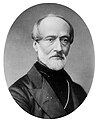




Disputed Quotes
Quotes attributed to Thomas Carlyle that are questionable.
About Thomas Carlyle
Thomas Carlyle (December 4 1795 – February 5 1881) was a Scottish essayist, historian and philosopher of great prominence during the Victorian era. His wife was Jane Welsh Carlyle.