Link Copied!
Socrates Quotes (-470--399)
Philosopher




















About Socrates
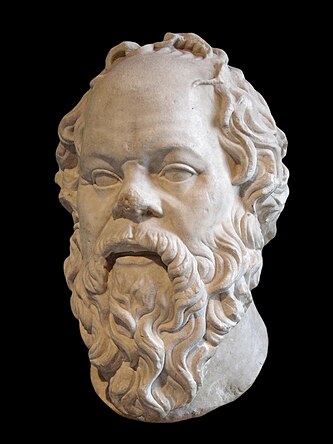
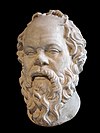
Socrates (Σωκράτης; c. 470 BC – 399 BC) was a classical Greek (Athenian) philosopher credited as one of the founders of Western philosophy. Through his portrayal in Plato's dialogues, Socrates has become renowned for his contribution to the field of ethics, and it is this Platonic Socrates who lends his name to the concepts of Socratic irony and the Socratic method, or elenchus. The latter remains a commonly used tool in a wide range of discussions, and is a type of pedagogy in which a series of questions is asked not only to draw individual answers, but also to encourage fundamental insight into the issue at hand.
Best Socrates Quotes
Shortest
Earliest
Explore our curated collection of the most famous and impactful Socrates quotes.

“Contentment is natural wealth; luxury, artificial poverty.”

“The man who eats with the greatest appetite has the least need of delicacies.”

“The being of all virtues, and chiefly of temperance, depends on the practice of them.”

“There is only one good, knowledge, and one evil, ignorance.
• Variant: The only good is knowledge and the only evil is ignorance.”
• Variant: The only good is knowledge and the only evil is ignorance.”

“You will know that the divine is so great and of such a nature that it sees and hears everything at once, is present everywhere, and is concerned with everything.”
“It is a disgrace to grow old through sheer carelessness before seeing what manner of man you may become by developing your bodily strength and beauty to their highest limit. But you cannot see that, if you are careless; for it will not come of its own accord.”

“Socrates: Shall we set down astronomy among the objects of study? Glaucon: I think so, to know something about the seasons, the months and the years is of use for military purposes, as well as for agriculture and for navigation. Socrates: It amuses me to see how afraid you are, lest the common herd of people should accuse you of recommending useless studies.”
“If I am to live longer, perhaps I must live out my old age, seeing and hearing less, understanding worse, coming to learn with more difficulty and to be more forgetful, and growing worse than those to whom I was once superior. Indeed, life would be unliveable, even if I did not notice the change. And if I see the change, how could life not be even more wretched and unpleasant?”

“Order and discipline are the most important things in an army, and without them it is impossible to have any other service of the troops than of a confused heap of stones, bricks, timber, and tiles; but when everything is in its due place, as in a building, when the foundations and the covering are made of materials that will not grow rotten, and which no wet can damage, such as are stones and tiles, and when the bricks and timber are employed in their due places in the body of the edifice, they altogether make a house, which we value among our most considerable enjoyments.”
“It is the example of the rider who wishes to become an expert horseman: "None of your soft-mouthed, docile animals for me," he says; "the horse for me to own must show some spirit" in the belief, no doubt, if he can manage such an animal, it will be easy enough to deal with every other horse besides. And that is just my case. I wish to deal with human beings, to associate with man in general; hence my choice of wife. I know full well, if I can tolerate her spirit, I can with ease attach myself to every human being else.”
“ἆρα, ἔφην, ὦ Ἰσχόμαχε, ἡ ἐρώτησις διδασκαλία ἐστίν; ἄρτι γὰρ δή, ἔφην ἐγώ, καταμανθάνω ᾗ με ἐπηρώτησας ἕκαστα: ἄγων γάρ με δι᾽ ὧν ἐγὼ ἐπίσταμαι, ὅμοια τούτοις ἐπιδεικνὺς ἃ οὐκ ἐνόμιζον ἐπίστασθαι ἀναπείθεις, οἶμαι, ὡς καὶ ταῦτα ἐπίσταμαι.
• Really, Ischomachus, I am disposed to ask: "Does teaching consist in putting questions?" Indeed, the secret of your system has just this instant dawned upon me. I seem to see the principle in which you put your questions. You lead me through the field of my own knowledge, and then by pointing out analogies to what I know, persuade me that I really know some things which hitherto, as I believed, I had no knowledge of.”
• Really, Ischomachus, I am disposed to ask: "Does teaching consist in putting questions?" Indeed, the secret of your system has just this instant dawned upon me. I seem to see the principle in which you put your questions. You lead me through the field of my own knowledge, and then by pointing out analogies to what I know, persuade me that I really know some things which hitherto, as I believed, I had no knowledge of.”
Socrates Quotes by Topic
Find exactly what you are looking for by browsing this categorized list of Socrates quotes by topic.
Socrates on Memorabilia (Xenophon) 8 quotes
““What of the man who is such a keen man of business that he has no leisure for anything but the selfish pursuit of gain?”
“We must avoid him too, I think.””
Socrates on Consumerism 3 quotes
View all 3 quotes on Consumerism →Socrates on Life 3 quotes
“I believe that we cannot live better than in seeking to become better.”

Socrates on Sophist 3 quotes
“To offer one’s beauty for money to all comers is called prostitution; but we think it virtuous to become friendly with a lover who is known to be a man of honour. So is it with wisdom. Those who offer it to all comers for money are known as sophists, prostitutors of wisdom.”

Socrates on Goodness 2 quotes
View all 2 quotes on Goodness →Socrates on Deity 2 quotes
“I will obey the god rather than you, and as long as I draw breath and am able, I shall not cease to practice philosophy.”
Socrates on Improvement 2 quotes
“I do nothing but go about persuading you all, old and young alike, not to take thought for your persons or your properties, but and chiefly to care about the greatest improvement of the soul.”

Socrates on Reincarnation 2 quotes
“I am confident in the belief that there truly is such a thing as living again, and that the living spring from the dead, and that the souls of the dead are in existence, and that the good souls have a better portion than the evil.”

Socrates on 1 (number) 2 quotes
“I cannot satisfy myself that, when one is added to one, the one to which the addition is made becomes two, or that the two units added together make two by reason of the addition. I cannot understand how, when separated from the other, each of them was one and not two, and now, when they are brought together the mere juxtaposition or meeting of them should be the cause of their becoming two...”

Socrates on English proverbs (alphabetically by proverb)
Socrates on Contentment
“Contentment is natural wealth; luxury, artificial poverty.”
Socrates on Rome: Total War
“A disorderly mob is no more an army than a heap of building materials is a house”
Socrates on Integrity
“False words are not only evil in themselves, but they infect the soul with evil.”

Socrates on Evil
“False words are not only evil in themselves, but they infect the soul with evil.”

Socrates on Honesty
“False words are not only evil in themselves, but they infect the soul with evil.”
Socrates on Truth
“False words are not only evil in themselves, but they infect the soul with evil.”

Socrates on Drink
Socrates on Beauty
Socrates on Necessity
Socrates on Judges
“Four things belong to a judge: to hear courteously, to answer wisely, to consider soberly, and to decide impartially.”

Socrates on Judgment
“Four things belong to a judge: to hear courteously, to answer wisely, to consider soberly, and to decide impartially.”

What Socrates Said About Others
Discover personal opinions Socrates shared regarding contemporaries.
Socrates on Paul Valéry 14 quotes
View all 14 quotes on Paul Valéry →Socrates on Plato 4 quotes
“You want to know whether I can make a long speech, such as you are in the habit of hearing; but that is not my way.”

Socrates on Women
Socrates on Heraclitus
“The part I understand is excellent, and so too is, I dare say, the part I do not understand; but it needs a Delian diver to get to the bottom of it.”

Socrates on Aristophanes
“What did they say when they slandered me? I must, as if they were my actual prosecutors, read the affidavit they would have sworn. It goes something like this: Socrates is guilty of wrongdoing in that he busies himself studying things in the sky and below the earth; he makes the worse into the stronger argument, and he teaches these same things to others. You have seen this yourself in the comedy of Aristophanes, a Socrates swinging about there, saying he was walking on air and talking a lot of other nonsense about things of which I know nothing at all. I do not speak in contempt of such knowledge, if someone is wise in these things—lest Meletus bring more cases against me—but, gentlemen, I have no part in it, and on this point I call upon the majority of you as witnesses. I think it right that all those of you who have heard me conversing, and many of you have, should tell each other if anyone of you has ever heard me discussing such subjects to any extent at all. From this you will learn that the other things said about me by the majority are of the same kind. Not one of them is true. And if you have heard from anyone that I undertake to teach people and charge a fee for it, that is not true either.”

Quotes About Socrates
Gain deeper perspective through quotes about Socrates from others.
Plato on Socrates 6 quotes
“I only wish that wisdom were the kind of thing that flowed ... from the vessel that was full to the one that was empty.”
Gorgias on Socrates
“It would be better for me... that multitudes of men should disagree with me rather than that I, being one, should be out of harmony with myself.”
Socrates' prayer on Socrates
Source on Socrates 66 quotes
“How singular is the thing called pleasure, and how curiously related to pain, which might be thought to be the opposite of it; for they never come to a man together, and yet he who pursues either of them is generally compelled to take the other. They are two, and yet they grow together out of one head or stem.”
Phaedo on Socrates 2 quotes
“He who has lived as a true philosopher has reason to be of good cheer when he is about to die, and that after death he may hope to receive the greatest good in the other world.”

Agni Yoga on Socrates
“If one examines the reasons for the persecution of the best minds of different nations, and compares the reasons for the persecution and banishment of Pythagoras, Anaxagoras, Socrates, Plato, and others, one can observe that in each case the accusations and reasons for banishment were almost identical and unfounded. But in the following centuries full exoneration came, as if there had never been any defamation. It would be correct to conclude that such workers were too exalted for the consciousness of their contemporaries, and the sword of the executioner was ever ready to cut off a head held high. A book should be written about the causes of the persecution of great individuals. By comparing the causes is it possible to trace the evil will. I advise you to write such a book. Let someone do it! Through research it will be possible to discover the inner similarities between the persecutions of Confucius and Seneca.”

Alcibiades on Socrates 2 quotes
“Socrates makes me admit to myself that, even though I myself am deficient in so many regards, I continue to take no care of myself, but occupy myself with the business of the Athenians.”
H.P. Blavatsky on Socrates 5 quotes
“He who has studied Pythagoras and his speculations on the Monad, which, after having emanated the Duad retires into silence and darkness, and thus creates the Triad can realize whence came the philosophy of the great Samian Sage, and after him that of Socrates and Plato.”
Constantin Brunner on Socrates 2 quotes
“And so, from this day forth, we want all the more to let our thoughts revolve around and hover over Socrates and Christ at all times, openly taking pride that they are more alive for us than all those living today and that we listen to and love them as we do none of the living.”

Socrates was the first on Socrates
“Socrates autem primus philosophiam devocavit e caelo et in urbibus conlocavit et in domus etiam introduxit et coegit de vita et moribus rebusque bonis et malis quaerere.”
John M. Cooper on Socrates
“Socrates was a totally new kind of Greek philosopher. He denied that he had discovered some new wisdom, indeed that he possessed any wisdom at all, and he refused to hand anything down to anyone as his personal ‘truth’, his claim to fame. All that he knew, humbly, was how to reason and reflect, how to improve himself and (if they would follow him in behaving the same way) help others to improve themselves, by doing his best to make his own moral, practical opinions, and his life itself, rest on appropriately tested and examined reasons—not on social authority or the say-so of esteemed poets (or philosophers) or custom or any other kind of intellectual laziness. At the same time, he made this self-improvement and the search for truth in which it consisted a common, joint effort, undertaken in discussion together with similarly committed other persons—even if it sometimes took on a rather combative aspect. The truth, if achieved, would be a truth attained by and for all who would take the trouble to think through on their own the steps leading to it: it could never be a personal'revelation' for which any individual could claim special credit.”
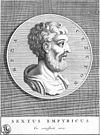
Sextus Empiricus on Socrates
“If Socrates died, then either he died when we was living, or when he was dead. But he couldn't have died when he was living, for he was not dead when he was living. But he couldn't have died when he was dead, for when he was dead he had already died. Therefore, Socrates never died.”
Misattributed Quotes
Quotes mistakenly credited to Socrates
“The children now love luxury; they have bad manners, contempt for authority; they show disrespect for elders and love chatter in place of exercise. Children are now tyrants, not the servants of their households. They no longer rise when elders enter the room. They contradict their parents, chatter before company, gobble up dainties at the table, cross their legs, and tyrannize their teachers.”
“Prefer knowledge to wealth, for the one is transitory, and the other perpetual.”
“The really important thing is not to live, but to live well. And to live well meant, along with more enjoyable things in life, to live according to your principles.”
“True wisdom comes to each of us when we realize how little we understand about life, ourselves, and the world around us.”
“By all means, marry. If you get a good wife, you'll become happy; if you get a bad one, you'll become a philosopher.”
About Socrates
Socrates (Σωκράτης; c. 470 BC – 399 BC) was a classical Greek (Athenian) philosopher credited as one of the founders of Western philosophy. Through his portrayal in Plato's dialogues, Socrates has become renowned for his contribution to the field of ethics, and it is this Platonic Socrates who lends his name to the concepts of Socratic irony and the Socratic method, or elenchus. The latter remains a commonly used tool in a wide range of discussions, and is a type of pedagogy in which a series of questions is asked not only to draw individual answers, but also to encourage fundamental insight into the issue at hand.