“Man can act only because he can ignore.”
— Socrates, Eupalinos ou l'architecte
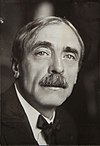
“Man can act only because he can ignore.”
“The greatest liberty is born of the greatest rigor.”
“I cannot think that there exists more than one Sovereign Good.”
“To construct oneself, to know oneself—are these two distinct acts or not?”
“Man's deepest glances are those that go out to the void. They converge beyond the All.”
“And do not humans strive in a thousand ways to fill or to break the eternal silence of those infinite spaces that affright them?”
“What is there more mysterious than clarity?… What more capricious than the way in which light and shade are distributed over hours and over men?”
“Most people in reasoning, dear Phaedrus, use notions that not only are "ready-made," but have actually been made by nobody. No one is responsible for them, and so they serve everyone badly.”
“Nay, who knows, Phaedrus, if the efforts of humans in their search for God, the observances, the prayers they essay, their obstinate will to discover the most efficacious… who knows if mortals will not finally discover a certitude—or an incertitude—stable and in exact conformity with their nature, if not with the very nature of God?”
“Man discerns three great things in the All: he finds there his body, he finds there his soul—and then there is the rest of the world. Between these things there is an unceasing commerce, and sometimes even a confusion arises; but always after a certain time has elapsed, these three things come to be clearly distinguished from one another.”
“Now, of all acts the most complete is that of constructing. A work demands love, meditation, obedience to your finest thought, the invention of laws by your soul, and many other things that it draws miraculously from your own self, which did not suspect that it possessed them. This work proceeds from the most intimate center of your existence, and yet it is distinct from yourself.”
“But what, Phaedrus, is the contrary of a dream if not some other dream?… A dream of vigilance and tension dreamt by Reason herself!—And what would such a Reason dream?—If a Reason were to dream—a Reason hard, erect, eyes armed, mouth closed, as though mistress of her lips—would not the dream she dreamt be what we see now—this world of exact forces and studied illusions?—A dream, a dream, but a dream interpenetrated with symmetries, all order, acts and sequences!”
“It is therefore reasonable to think that the creations of man are made either with a view to his body, and that is the principle we call utility, or with a view to his soul, and that is what he seeks under the name of beauty. But, further, since he who constructs or creates has to deal with the rest of the world and with the movement of nature, which both tend perpetually to dissolve, corrupt or upset what he makes, he must recognize and seek to communicate to his works a third principle, that expresses the resistance he wishes them to offer to their destiny, which is to perish. So he seeks solidity or lastingness.”
“But still less should the gold of rich men lazily sleep its heavy sleep in the urns and gloom of treasuries. This so weighty metal, when it becomes the associate of a fancy, assumes the most active virtues of the mind. It has her restless nature. Its essence is to vanish. It changes into all things, without being itself changed. It raises blocks of stone, pierces mountains, diverts rivers, opens the gates of fortresses and the most secret hearts; it enchains men; it dresses, it undresses women with an almost miraculous promptitude. It is truly the most abstract agent that exists, next to thought. But thought exchanges and envelops images only, whereas gold incites and promotes the transmutations of all real things into one another; itself remaining incorruptible, and passing untainted through all hands.”