Link Copied!
Samuel Johnson Quotes (1709-1784)
Author










-100px.jpg)








-100px.jpg)

















-100px.png)






-100px.png)

-100px.jpg)









-100px.jpg)




























-100px.jpg)



















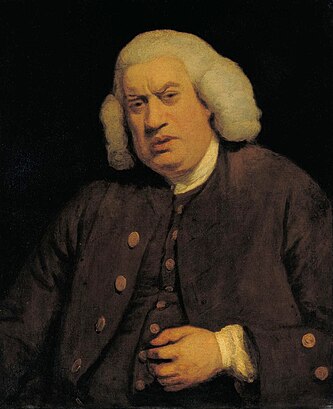
About Samuel Johnson
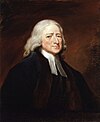
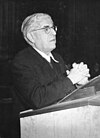
Samuel Johnson (18 September 1709 7 September O.S.
Best Samuel Johnson Quotes
Shortest
Earliest
Explore our curated collection of the most famous and impactful Samuel Johnson quotes.
“A very unclubable man.”


“referencesmark
sv:Samuel Johnson”
“Declamation roared, while Passion slept.”
“Towering is the confidence of twenty-one.”

“Superfluous lags the vet'ran on the stage.”
“I will be conquered; I will not capitulate.”

“For patience, sov'reign o'er transmuted ill.”
“The endearing elegance of female friendship.”

“In lapidary inscriptions a man is not upon oath.”
“A man used to vicissitudes is not easily dejected.”
“Employment, sir, and hardships prevent melancholy.”

“All this [wealth] excludes but one evil,—poverty.”

“Hell is paved with good intentions.”
“Questioning is not the mode of conversation among gentlemen.”

“Abstinence is as easy to me as temperance would be difficult.”

“The richest author that ever grazed the common of literature.”

“LEXICOGRAPHER — A writer of dictionaries, a harmless drudge.”
“Nothing is little to him that feels it with great sensibility.”
“Patriotism is the last refuge of a scoundrel.”

“The potentiality of growing rich beyond the dreams of avarice.”
“He is no wise man that will quit a certainty for an uncertainty.”

“He is no wise man that will quit a certainty for an uncertainty.”
“Few things are impossible to diligence and skill.”
“Here's to the next insurrection of the negroes in the West Indies.”

“The trappings of a monarchy would set up an ordinary commonwealth.”

“Melancholy, indeed, should be diverted by every means but drinking.”
“Officious, innocent, sincere,
Of every friendless name the friend.”
Of every friendless name the friend.”
“All theory is against the freedom of the will; all experience for it.”


“CLUB — An assembly of good fellows, meeting under certain conditions.”
“I am a great friend to public amusements; for they keep people from vice.”
“Let observation with extensive view
Survey mankind, from China to Peru.”
Survey mankind, from China to Peru.”

“Men more frequently require to be reminded than informed.”
“Many things difficult to design prove easy to performance.”

“Why, Sir, it is difficult to settle the proportion of iniquity between them.”
“Sir, there is no settling the point of precedency between a louse and a flea.”
“Self-confidence is the first requisite to great undertakings.”
“The applause of a single human being is of great consequence.”

“An age that melts in unperceiv'd decay,
And glides in modest innocence away.”
And glides in modest innocence away.”

“Gratitude is a fruit of great cultivation; you do not find it among gross people.”
“Sir, I look upon every day to be lost, in which I do not make a new acquaintance.”
“A decent provision for the poor is the true test of civilization.”

“There can be no friendship without confidence, and no confidence without integrity.”
“A man who exposes himself when he is intoxicated, has not the art of getting drunk.”

“This is one of the disadvantages of wine, it makes a man mistake words for thoughts.”
“Must helpless man, in ignorance sedate,
Roll darkling down the torrent of his fate?”
Roll darkling down the torrent of his fate?”
“Every quotation contributes something to the stability or enlargement of the language.”

“His conversation does not show the minute-hand, but he strikes the hour very correctly.”
“Human life is everywhere a state in which much is to be endured and little to be enjoyed.”
“The reciprocal civility of authors is one of the most risible scenes in the farce of life.”


“No place affords a more striking conviction of the vanity of human hopes than a public library.”
“Poetry is the art of uniting pleasure with truth, by calling imagination to the help of reason.”
“Cold approbation gave the ling'ring bays,
For those who durst not censure, scarce could praise.”
For those who durst not censure, scarce could praise.”
“A fellow that makes no figure in company, and has a mind as narrow as the neck of a vinegar-cruet.”

“Wickedness is always easier than virtue; for it takes the short cut to everything.”
“Frugality may be termed the daughter of Prudence, the sister of Temperance and the parent of Liberty.”
“The law is the last result of human wisdom acting upon human experience for the benefit of the public.”

“Sir, I have found you an argument; but I am not obliged to find you an understanding.”

“There are, in every age, new errors to be rectified, and new prejudices to be opposed.”
“Curiosity is one of the permanent and certain characteristics of a vigorous intellect.”

“Nothing ... will ever be attempted, if all possible objections must be first overcome.”
“Of all the Griefs that harrass the Distrest,
Sure the most bitter is a scornful Jest”
Sure the most bitter is a scornful Jest”
“The true Genius is a mind of large general powers, accidentally determined to some particular direction.”

“Knowledge is more than equivalent to force. The master of mechanicks laughs at strength.”
“ESSAY — A loose sally of the mind; an irregular indigested piece; not a regular and orderly composition.”


“Sir, your levellers wish to level down as far as themselves; but they cannot bear levelling up to themselves.”
“There is in this world no real delight (excepting those of sensuality), but exchange of ideas in conversation.”
“Dictionaries are like watches; the worst is better than none, and the best cannot be expected to go quite true.”
“NETWORK — Any thing reticulated or decussated, at equal distances, with interstices between the intersections.”
“Milton, Madam, was a genius that could cut a Colossus from a rock; but could not carve heads upon cherry-stones.”
“[Of Lord Chesterfield] This man, I thought, had been a Lord among wits; but, I find, he is only a wit among Lords!”

“No oppression is so heavy or lasting as that which is inflicted by the perversion and exorbitance of legal authority.”

“Read over your compositions, and wherever you meet with a passage which you think is particularly fine, strike it out.”
“Merriment is always the effect of a sudden impression. The jest which is expected is already destroyed.”

“A man ought to read just as inclination leads him; for what he reads as a task will do him little good.”

“Were it not for imagination, Sir, a man would be as happy in the arms of a chambermaid as of a Duchess.”
“Knowledge is of two kinds. We know a subject ourselves, or we know where we can find information upon it.”

“The unjustifiable severity of a parent is loaded with this aggravation, that those whom he injures are always in his sight.”
“Courage is a quality so necessary for maintaining virtue that it is always respected, even when it is associated with vice.”
“A generous and elevated mind is distinguished by nothing more certainly than an eminent degree of curiosity.”
“Depend upon it, Sir, when a man knows he is to be hanged in a fortnight, it concentrates his mind wonderfully.”
“PATRON, n. One who countenances, supports or protects. Commonly a wretch who supports with insolence, and is repaid in flattery.”
“The act of writing itself distracts the thoughts, and what is read twice is commonly better remembered than what is transcribed.”
“The use of travelling is to regulate imagination by reality, and instead of thinking how things may be, to see them as they are.”
“He that thinks himself capable of astonishing may write blank verse: but those that hope only to please must condescend to rhyme.”
“It is very strange, and very melancholy, that the paucity of human pleasures should persuade us ever to call hunting one of them.”
“It matters not how a man dies, but how he lives. The act of dying is not of importance, it lasts so short a time.”

“Shakspeare never has six lines together without a fault. Perhaps you may find seven: but this does not refute my general assertion.”
“It is more from carelessness about truth than from intentional lying, that there is so much falsehood in the world.”
“It is more from carelessness about truth than from intentional lying, that there is so much falsehood in the world.”
“A Poet, Naturalist, and Historian,
Who left scarcely any style of writing untouched,
And touched nothing that he did not adorn.”
Who left scarcely any style of writing untouched,
And touched nothing that he did not adorn.”
“Hawkesworth said of Johnson, "You have a memory that would convict any author of plagiarism in any court of literature in the world."”

“To neglect at any time preparation for death, is to sleep on our post at a siege, but to omit it in old age, is to sleep at an attack.”
“The Churchyard abounds with images which find a mirror in every mind, and with sentiments to which every bosom returns an echo.”
“If the man who turnips cries,
Cry not when his father dies,
'Tis a proof that he had rather
Have a turnip than his father.”
Cry not when his father dies,
'Tis a proof that he had rather
Have a turnip than his father.”
“GRUBSTREET — The name of a street near Moorsfield, London, much inhabited by writers of small histories, dictionaries, and temporary poems.”
“Those writers who lay on the watch for novelty, could have little hope of greatness; for great things cannot have escaped former observation.”
“My friend was of opinion that when a man of rank appeared in that character [as an author], he deserved to have his merit handsomely allowed.”
“But if he does really think that there is no distinction between virtue and vice, why, Sir, when he leaves our houses let us count our spoons.”
“Fears of the brave, and follies of the wise!
From Marlb'rough's eyes the streams of dotage flow,
And Swift expires, a driv'ler and a show.”
From Marlb'rough's eyes the streams of dotage flow,
And Swift expires, a driv'ler and a show.”
“The use of traveling is to regulate imagination by reality, and instead of thinking how things may be, to see them as they are.”
“Avarice is generally the last passion of those lives of which the first part has been squandered in pleasure, and the second devoted to ambition.”

“Then with no throbs of fiery pain,
No cold gradations of decay,
Death broke at once the vital chain,
And freed his soul the nearest way.”
No cold gradations of decay,
Death broke at once the vital chain,
And freed his soul the nearest way.”
“[S]uch is the delight of mental superiority, that none on whom nature or study have conferred it, would purchase the gifts of fortune by its loss.”
“A gentleman who had been very unhappy in marriage, married immediately after his wife died: Johnson said, it was the triumph of hope over experience.”
“EXCISE — A hateful tax levied upon commodities, and adjudged not by the common judges of property, but wretches hired by those to whom excise is paid.”
“A Frenchman must be always talking, whether he knows anything of the matter or not; an Englishman is content to say nothing, when he has nothing to say.”
“Among the calamities of war may be justly numbered the diminution of the love of truth, by the falsehoods which interest dictates and credulity encourages.”
“Tom Birch is as brisk as a bee in conversation; but no sooner does he take a pen in his hand than it becomes a torpedo to him, and benumbs all his faculties.”
“Whoever wishes to attain an English style, familiar but not coarse, and elegant but not ostentatious, must give his days and nights to the volumes of Addison.”
“That man is little to be envied whose patriotism would not gain force upon the plain of Marathon, or whose piety would not grow warmer among the ruins of Iona.”
“I have two very cogent reasons for not printing any list of subscribers; — one, that I have lost all the names, — the other, that I have spent all the money.”

“To be happy at home is the ultimate result of all ambition, the end to which every enterprise and labour tends, and of which every desire prompts the prosecution.”
“A thousand horrid Prodigies foretold it.
A feeble government, eluded Laws,
A factious Populace, luxurious Nobles,
And all the maladies of stinking states.”
A feeble government, eluded Laws,
A factious Populace, luxurious Nobles,
And all the maladies of stinking states.”

“PENSION — An allowance made to any one without an equivalent. In England it is generally understood to mean pay given to a state hireling for treason to his country.”
“It is always observable that silence propagates itself, and that the longer talk has been suspended, the more difficult it is to find any thing to say.”

“So far is it from being true that men are naturally equal, that no two people can be half an hour together, but one shall acquire an evident superiority over the other.”
“No man will be a sailor who has contrivance enough to get himself into a jail; for being in a ship is being in a jail, with the chance of being drowned.”

“To convince any man against his will is hard, but to please him against his will is justly pronounced by Dryden to be above the reach of human abilities.”
“Sir, I think all Christians, whether Papists or Protestants, agree in the essential articles, and that their differences are trivial, and rather political than religious.”

“I know not whether more is to be dreaded from streets filled with soldiers accustomed to plunder, or from garrets filled with scribblers accustomed to lies.”
“I have always suspected that the reading is right, which requires many words to prove it wrong; and the emendation wrong, that cannot without so much labour appear to be right.”
“If a man does not make new acquaintance as he advances through life, he will soon find himself left alone. A man, Sir, should keep his friendship in a constant repair.”
“By Numbers here from Shame or Censure free,
All Crimes are safe, but hated Poverty.
This, only this, the rigid Law persues,
This, only this, provokes the snarling Muse.”
All Crimes are safe, but hated Poverty.
This, only this, the rigid Law persues,
This, only this, provokes the snarling Muse.”
“Every man naturally persuades himself that he can keep his resolutions, nor is he convinced of his imbecility but by length of time and frequency of experiment.”


“Whatever withdraws us from the power of our senses; whatever makes the past, the distant, or the future predominate over the present, advances us in the dignity of thinking beings.”
“To let friendship die away by negligence and silence, is certainly not wise. It is voluntarily to throw away one of the greatest comforts of this weary pilgrimage.”
“But, perhaps, the excellence of aphorisms consists not so much in the expression of some rare or abstruse sentiment, as in the comprehension of some obvious and useful truth in few words.”
“"Enlarge my life with multitude of days!"
In health, in sickness, thus the suppliant prays:
Hides from himself his state, and shuns to know
That life protracted is protracted woe.”
In health, in sickness, thus the suppliant prays:
Hides from himself his state, and shuns to know
That life protracted is protracted woe.”

“Life admits not of delays; when pleasure can be had, it is fit to catch it. Every hour takes away part of the things that please us, and perhaps part of our disposition to be pleased.”
“[The poet] must write as the interpreter of nature and the legislator of mankind, and consider himself as presiding over the thoughts and manners of future generations, as a being superior to time and place.”
“His [ David Garrick's] death has eclipsed the gaiety of nations, and impoverished the public stock of harmless pleasure.”
“I fancy mankind may come, in time, to write all aphoristically, except in narrative; grow weary of preparation, and connection, and illustration, and all those arts by which a big book is made.”

“If lawyers were to undertake no causes till they were sure they were just, a man might be precluded altogether from a trial of his claim, though, were it judicially examined, it might be found a very just claim.”
“It is commonly observed, that when two Englishmen meet, their first talk is of the weather; they are in haste to tell each other, what each must already know, that it is hot or cold, bright or cloudy, windy or calm.”
“Resolve not to be poor: whatever you have, spend less. Poverty is a great enemy to human happiness; it certainly destroys liberty, and it makes some virtues impracticable, and others extremely difficult.”

“Always, Sir, set a high value on spontaneous kindness. He whose inclination prompts him to cultivate your friendship of his own accord, will love you more than one whom you have been at pains to attach to you.”
“Let me rejoice in the light which Thou hast imparted; let me serve Thee with active zeal, humbled confidence, and wait with patient expectation for the time in which the soul which Thou receivest shall be satisfied with knowledge.”
“As it is necessary not to invite robbery by supineness, so it is our duty not to suppress tenderness by suspicion; it is better to suffer wrong than to do it, and happier to be sometimes cheated than not to trust.”
“I'll come no more behind your scenes, David [Garrick] ; for the silk stockings and white bosoms of your actresses excite my amorous propensities.”
“Johnson said that he could repeat a complete chapter of "The Natural History of Iceland" from the Danish of Horrebow, the whole of which was exactly thus: "There are no snakes to be met with throughout the whole island." 62 [Chap. lxxii.]”
“There will always be a part, and always a very large part of every community, that have no care but for themselves, and whose care for themselves reaches little further than impatience of immediate pain, and eagerness for the nearest good.”
“I remember very well, when I was at Oxford, an old gentleman said to me, "Young man, ply your book diligently now, and acquire a stock of knowledge; for when years come upon you, you will find that poring upon books will be but an irksome task."”
“The fountain of content must spring up in the mind, and he who hath so little knowledge of human nature as to seek happiness by changing anything but his own disposition, will waste his life in fruitless efforts and multiply the grief he proposes to remove.”
“Some claim a place in the list of patriots, by an acrimonious and unremitting opposition to the court. This mark is by no means infallible. Patriotism is not necessarily included in rebellion. A man may hate his king, yet not love his country.”
“Sir, he [Bolingbroke] was a scoundrel and a coward: a scoundrel for charging a blunderbuss against religion and morality; a coward, because he had not resolution to fire it off himself, but left half a crown to a beggarly Scotchman to draw the trigger at his death.”
“It is seldom that we find either men or places such as we expect them. ... Yet it is necessary to hope, though hope should always be deluded, for hope itself is happiness, and its frustrations, however frequent, are yet less dreadful than its extinction.”

“How small of all that human hearts endure,
That part which laws or kings can cause or cure!
Still to ourselves in every place consigned,
Our own felicity we make or find.
With secret course, which no loud storms annoy,
Glides the smooth current of domestic joy.”
That part which laws or kings can cause or cure!
Still to ourselves in every place consigned,
Our own felicity we make or find.
With secret course, which no loud storms annoy,
Glides the smooth current of domestic joy.”
“When learning's triumph o'er her barb'rous foes
First reared the stage, immortal Shakespeare rose;
Each change of many-colored life he drew,
Exhausted worlds, and then imagined new:
Existence saw him spurn her bounded reign,
And panting Time toiled after him in vain.”
First reared the stage, immortal Shakespeare rose;
Each change of many-colored life he drew,
Exhausted worlds, and then imagined new:
Existence saw him spurn her bounded reign,
And panting Time toiled after him in vain.”

“Philips, whose touch harmonious could remove
The pangs of guilty power and hapless love!
Rest here, distress'd by poverty no more;
Here find that calm thou gav'st so oft before;
Sleep undisturb'd within this peaceful shrine,
Till angels wake thee with a note like thine!”
The pangs of guilty power and hapless love!
Rest here, distress'd by poverty no more;
Here find that calm thou gav'st so oft before;
Sleep undisturb'd within this peaceful shrine,
Till angels wake thee with a note like thine!”
“The greater, far the greater number of those who rave and rail, and inquire and accuse, neither suspect nor fear, nor care for the publick; but hope to force their way to riches, by virulence and invective, and are vehement and clamorous, only that they may be sooner hired to be silent.”
“To be of no church is dangerous. Religion, of which the rewards are distant, and which is animated only by faith and hope, will glide by degrees out of the mind unless it be invigorated and reimpressed by external ordinances, by stated calls to worship, and the salutary influence of example.”
“Advertisements are now so numerous that they are very negligently perused, and it is, therefore, become necessary to gain attention by magnificence of promises, and by eloquence sometimes sublime and sometimes pathetick. Promise, large promise, is the soul of an advertisement.”
“The Prince soon found that this was one of the sages whom he should understand less as he heard him longer. He therefore bowed and was silent; and the philosopher, supposing him satisfied and the rest vanquished, rose up and departed with the air of a man that had co-operated with the present system.”
“Ye who listen with credulity to the whispers of fancy, and pursue with eagerness the phantoms of hope; who expect that age will perform the promises of youth, and that the deficiencies of the present day will be supplied by the morrow; attend to the history of Rasselas, Prince of Abyssinia.”
“Great abilities are not requisite for an Historian; for in historical composition, all the greatest powers of the human mind are quiescent. He has facts ready to his hand; so there is no exercise of invention. Imagination is not required in any high degree; only about as much as is used in the lower kinds of poetry.”
“"Some," answered Imlac, "have indeed said that the soul is material, but I can scarcely believe that any man has thought it, who knew how to think; for all the conclusions of reason enforce the immateriality of mind, and all the notices of sense and investigations of science, concur to prove the unconsciousness of matter.”
“Unmoved though Witlings sneer and Rivals rail,
Studious to please, yet not ashamed to fail.
He scorns the meek address, the suppliant strain.
With merit needless, and without it vain.
In Reason, Nature, Truth, he dares to trust:
Ye Fops, be silent: and ye Wits, be just.”
Studious to please, yet not ashamed to fail.
He scorns the meek address, the suppliant strain.
With merit needless, and without it vain.
In Reason, Nature, Truth, he dares to trust:
Ye Fops, be silent: and ye Wits, be just.”
“Pleasure is very seldom found where it is sought. Our brightest blazes of gladness are commonly kindled by unexpected sparks. The flowers which scatter their odours from time to time in the paths of life, grow up without culture from seeds scattered by chance. Nothing is more hopeless than a scheme of merriment.”
“There is a wicked inclination in most people to suppose an old man decayed in his intellects. If a young or middle-aged man, when leaving a company, does not remember where he laid his hat, it is nothing; but if the same inattention is discovered in an old man, people will shrug up their shoulders, and say, "His memory is going."”
“I [Boswell] happened to say, it would be terrible if he should not find a speedy opportunity of returning to London, and be confined in so dull a place.
JOHNSON: "Don't, Sir, accustom yourself to use big words for little matters. It would not be terrible, though I were to be detained some time here."”
JOHNSON: "Don't, Sir, accustom yourself to use big words for little matters. It would not be terrible, though I were to be detained some time here."”
“The atrocious crime of being a young man, which the honourable gentleman has with such spirit and decency charged upon me, I shall neither attempt to palliate nor deny; but content myself with wishing that I may be one of those whose follies may cease with their youth, and not of that number who are ignorant in spite of experience.”

“Let us take a patriot, where we can meet him; and, that we may not flatter ourselves by false appearances, distinguish those marks which are certain, from those which may deceive; for a man may have the external appearance of a patriot, without the constituent qualities; as false coins have often lustre, though they want weight.”
“I am not yet so lost in lexicography, as to forget that words are the daughters of earth, and that things are the sons of heaven. Language is only the instrument of science, and words are but the signs of ideas: I wish, however, that the instrument might be less apt to decay, and that signs might be permanent, like the things which they denote.”

“Every man is rich or poor according to the proportion between his desires and his enjoyments; any enlargement of wishes is therefore equally destructive to happiness with the diminution of possession, and he that teaches another to long for what he never shall obtain is no less an enemy to his quiet than if he had robbed him of part of his patrimony.”
“But it is evident, that these bursts of universal distress are more dreaded than felt; thousands and ten thousands flourish in youth, and wither in age, without the knowledge of any other than domestic evils, and share the same pleasures and vexations, whether their kings are mild or cruel, whether the armies of their country pursue their enemies or retreat before them.”
“Is not a patron, my lord, one who looks with unconcern on a man struggling for life in the water, and when he has reached ground encumbers him with help? The notice which you have been pleased to take of my labors, had it been early, had been kind; but it has been delayed till I am indifferent, and cannot enjoy it; till I am solitary, and cannot impart it; till I am known, and do not want it.”
“I remember a passage in Goldsmith's "Vicar of Wakefield," which he was afterwards fool enough to expunge: "I do not love a man who is zealous for nothing."... There was another fine passage too which he struck out: "When I was a young man, being anxious to distinguish myself, I was perpetually starting new propositions. But I soon gave this over; for I found that generally what was new was false."”
“I [Boswell] was somewhat disappointed in finding that the edition of The English Poets, for which he was to write Prefaces and Lives, was not an undertaking directed by him: but that he was to furnish a Preface and Life to any poet the booksellers pleased. I asked him if he would do this to any dunce's works, if they should ask him.
JOHNSON: "Yes, Sir, and say he was a dunce."”
JOHNSON: "Yes, Sir, and say he was a dunce."”
“But the truth is, that no man is much regarded by the rest of the world, except where the interest of others is involved in his fortune. The common employments or pleasures of life, love or opposition, loss or gain, keep almost every mind in perpetual agitation. If any man would consider how little he dwells upon the condition of others, he would learn how little the attention of others is attracted by himself.”
“Hume, and other sceptical innovators, are vain men, and will gratify themselves at any expence. Truth will not afford sufficient food to their vanity; so they have betaken themselves to errour. Truth, Sir, is a cow which will yield such people no more milk, and so they are gone to milk the bull. If I could have allowed myself to gratify my vanity at the expence of truth, what fame might I have acquired.”

“A transition from an author's book to his conversation, is too often like an entrance into a large city, after a distant prospect. Remotely, we see nothing but spires of temples and turrets of palaces, and imagine it the residence of splendour, grandeur and magnificence; but when we have passed the gates, we find it perplexed with narrow passages, disgraced with despicable cottages, embarrassed with obstructions, and clouded with smoke.”
“Power and wealth supply the place of each other. Power confers the ability of gratifying our desire without the consent of others. Wealth enables us to obtain the consent of others to our gratification. Power, simply considered, whatever it confers on one, must take from another. Wealth enables its owner to give to others, by taking only from himself. Power pleases the violent and proud: wealth delights the placid and the timorous. Youth therefore flies at power, and age grovels after riches.”

“Such is the common process of marriage. A youth and maiden meeting by chance, or brought together by artifice, exchange glances, reciprocate civilities, go home, and dream of one another. Having little to divert attention, or diversify thought, they find themselves uneasy when they are apart, and therefore conclude that they shall be happy together. They marry, and discover what nothing but voluntary blindness had before concealed; they wear out life in altercations, and charge nature with cruelty.”
“It must be agreed that in most ages many countries have had part of their inhabitants in a state of slavery; yet it may be doubted whether slavery can ever be supposed the natural condition of man. It is impossible not to conceive that men in their original state were equal; and very difficult to imagine how one would be subjected to another but by violent compulsion. An individual may, indeed, forfeit his liberty by a crime; but he cannot by that crime forfeit the liberty of his children.”

“It ought to be deeply impressed on the minds of all who have voices in this national deliberation, that no man can deserve a seat in parliament, who is not a patriot. No other man will protect our rights: no other man can merit our confidence.
A patriot is he whose publick conduct is regulated by one single motive, the love of his country; who, as an agent in parliament, has, for himself, neither hope nor fear, neither kindness nor resentment, but refers every thing to the common interest.”
A patriot is he whose publick conduct is regulated by one single motive, the love of his country; who, as an agent in parliament, has, for himself, neither hope nor fear, neither kindness nor resentment, but refers every thing to the common interest.”
“A man is very apt to complain of the ingratitude of those who have risen far above him. A man when he gets into a higher sphere, into other habits of life, cannot keep up all his former connections. Then, Sir, those who knew him formerly upon a level with themselves, may think that they ought still to be treated as on a level, which cannot be; and an acquaintance in a former situation may bring out things which it would be very disagreeable to have mentioned before higher company, though, perhaps, everybody knows of them.”
“He that thinks with more extent than another will want words of larger meaning; he that thinks with more subtilty will seek for terms of more nice discrimination; and where is the wonder, since words are but the images of things, that he who never knew the original should not know the copies?
Yet vanity inclines us to find faults any where rather than in ourselves. He that reads and grows no wiser, seldom suspects his own deficiency; but complains of hard words and obscure sentences, and asks why books are written which cannot be understood?”
Yet vanity inclines us to find faults any where rather than in ourselves. He that reads and grows no wiser, seldom suspects his own deficiency; but complains of hard words and obscure sentences, and asks why books are written which cannot be understood?”
“The student who would build his knowledge on solid foundations, and proceed by just degrees to the pinnacles of truth, is directed by the great philosopher of France to begin by doubting of his own existence. In like manner, whoever would complete any arduous and intricate enterprise, should, as soon as his imagination can cool after the first blaze of hope, place before his own eyes every possible embarrassment that may retard or defeat him. He should first question the probability of success, and then endeavour to remove the objections that he has raised.”

“Of the proportion, which the product of any region bears to the people, an estimate is commonly made according to the pecuniary price of the necessities of life; which is never certain, because it supposes what is far from truth, that the value of money is always the same, and so measures an unknown quantity by an uncertain standard. It is competent enough when the markets of the same country, at different times, and those times not too distant, are to be compared; but of very little use for the purpose of making one nation acquainted with the state of another.”

“Hope is necessary in every condition. The miseries of poverty, of sickness, or captivity, would, without this comfort, be insupportable; nor does it appear that the happiest lot of terrestrial existence can set us above the want of this general blessing; or that life, when the gifts of nature and of fortune are accumulated upon it, would not still be wretched, were it not elevated and delighted by the expectation of some new possession, of some enjoyment yet behind, by which the wish shall at last be satisfied, and the heart filled up to its utmost extent.”
“A lawyer has no business with the justice or injustice of the cause which he undertakes, unless his client asks his opinion, and then he is bound to give it honestly. The justice or injustice of the cause is to be decided by the judge. Consider, sir; what is the purpose of courts of justice? It is, that every man may have his cause fairly tried, by men appointed to try causes. A lawyer is not to tell what he knows to be a lie: he is not to produce what he knows to be a false deed; but he is not to usurp the province of the jury and of the judge, and determine what shall be the effect of evidence — what shall be the result of legal argument.”
“Hope is itself a species of happiness, and, perhaps, the chief happiness which this world affords: but, like all other pleasures immoderately enjoyed, the excesses of hope must be expiated by pain; and expectations improperly indulged must end in disappointment. If it be asked, what is the improper expectation which it is dangerous to indulge, experience will quickly answer, that it is such expectation as is dictated not by reason, but by desire; expectation raised, not by the common occurrences of life, but by the wants of the expectant; an expectation that requires the common course of things to be changed, and the general rules of action to be broken.”
“The change of religion in Scotland, eager and vehement as it was, raised an epidemical enthusiasm, compounded of sullen scrupulousness and warlike ferocity, which, in a people whom idleness resigned to their own thoughts, and who conversing only with each other, suffered no dilution of their zeal from the gradual influx of new opinions, was long transmitted in its full strength from the old to the young, but by trade and intercourse with England, is now visibly abating, and giving way too fast to their laxity of practice and indifference of opinion, in which men, not sufficiently instructed to find the middle point, too easily shelter themselves from rigour and constraint.”
“To-morrow's action! Can that hoary wisdom,
Borne down with years, still doat upon tomorrow!
That fatal mistress of the young, the lazy,
The coward, and the fool, condemn'd to lose
A useless life in waiting for to-morrow,
To gaze with longing eyes upon to-morrow,
Till interposing death destroys the prospect
Strange! that this general fraud from day to day
Should fill the world with wretches undetected.
The soldier, labouring through a winter's march,
Still sees to-morrow drest in robes of triumph;
Still to the lover's long-expecting arms
To-morrow brings the visionary bride.
But thou, too old to hear another cheat,
Learn, that the present hour alone is man's.”
Borne down with years, still doat upon tomorrow!
That fatal mistress of the young, the lazy,
The coward, and the fool, condemn'd to lose
A useless life in waiting for to-morrow,
To gaze with longing eyes upon to-morrow,
Till interposing death destroys the prospect
Strange! that this general fraud from day to day
Should fill the world with wretches undetected.
The soldier, labouring through a winter's march,
Still sees to-morrow drest in robes of triumph;
Still to the lover's long-expecting arms
To-morrow brings the visionary bride.
But thou, too old to hear another cheat,
Learn, that the present hour alone is man's.”

“A man sometimes starts up a patriot, only by disseminating discontent, and propagating reports of secret influence, of dangerous counsels, of violated rights, and encroaching usurpation. This practice is no certain note of patriotism. To instigate the populace with rage beyond the provocation, is to suspend publick happiness, if not to destroy it. He is no lover of his country, that unnecessarily disturbs its peace. Few errours and few faults of government, can justify an appeal to the rabble; who ought not to judge of what they cannot understand, and whose opinions are not propagated by reason, but caught by contagion. The fallaciousness of this note of patriotism is particularly apparent, when the clamour continues after the evil is past.”
“[Imlac continues] "It was never supposed that cogitation is inherent in matter, or that every particle is a thinking being. Yet, if any part of matter be devoid of thought, what part can we suppose to think? Matter can differ from matter only in form, density, bulk, motion, and direction of motion: to which of these, however varied or combined, can consciousness be annexed? To be round or square, to be solid or fluid, to be great or little, to be moved slowly or swiftly one way or another, are modes of material existence, all equally alien from the nature of cogitation. If matter be once without thought, it can only be made to think by some new modification, but all the modifications which it can admit are equally unconnected with cogitative powers."”

“It is not by comparing line with line, that the merit of great works is to be estimated, but by their general effects and ultimate result. It is easy to note a weak line, and write one more vigorous in its place; to find a happiness of expression in the original, and transplant it by force into the version: but what is given to the parts may be subducted from the whole, and the reader may be weary, though the critick may commend. Works of imagination excel by their allurement and delight; by their power of attracting and detaining the attention. That book is good in vain, which the reader throws away. He only is the master, who keeps the mind in pleasing captivity; whose pages are perused with eagerness, and in hope of new pleasure are perused again; and whose conclusion is perceived with an eye of sorrow, such as the traveller casts upon departing day.”
“It is the fate of those, who toil at the lower employments of life, to be rather driven by the fear of evil, than attracted by the prospect of good; to be exposed to censure, without hope of praise; to be disgraced by miscarriage, or punished for neglect, where success would have been without applause, and diligence without reward. Among these unhappy mortals is the writer of dictionaries, whom mankind have considered, not as the pupil, but the slave of science, the pioneer of literature, doomed only to remove rubbish and clear obstructions from the paths through which Learning and Genius press forward to conquest and glory, without bestowing a smile on the humble drudge that facilitates their progress. Every other author may aspire to praise; the lexicographer can only hope to escape reproach, and even this negative recompense has been yet granted to very few.”

“There is one writer, and, perhaps, many who do not write, to whom the contraction of these pernicious privileges appears very dangerous, and who startle at the thoughts of England free, and America in chains. Children fly from their own shadow, and rhetoricians are frighted by their own voices. Chains is, undoubtedly, a dreadful word; but, perhaps, the masters of civil wisdom may discover some gradations between chains and anarchy. Chains need not be put upon those who will be restrained without them. This contest may end in the softer phrase of English superiority and American obedience.
We are told, that the subjection of Americans may tend to the diminution of our own liberties; an event, which none but very perspicacious politicians are able to foresee. If slavery be thus fatally contagious, how is it that we hear the loudest yelps for liberty among the drivers of negroes?”
We are told, that the subjection of Americans may tend to the diminution of our own liberties; an event, which none but very perspicacious politicians are able to foresee. If slavery be thus fatally contagious, how is it that we hear the loudest yelps for liberty among the drivers of negroes?”
“O Lord, my Maker and Protector, who hast graciously sent me into this world, to work out my salvation, enable me to drive from me all such unquiet and perplexing thoughts as may mislead or hinder me in the practice of those duties which thou hast required. When I behold the works of thy hands and consider the course of thy providence, give me Grace always to remember that thy thoughts are not my thoughts, nor thy ways my ways. And while it shall please Thee to continue me in this world where much is to be done and little to be known, teach me by thy Holy Spirit to withdraw my mind from unprofitable and dangerous enquiries, from difficulties vainly curious, and doubts impossible to be solved. Let me rejoice in the light which thou hast imparted, let me serve thee with active zeal, and humble confidence, and wait with patient expectation for the time in which the soul which Thou receivest, shall be satisfied with knowledge.”
“"That the dead are seen no more," said Imlac, "I will not undertake to maintain against the concurrent and unvaried testimony of all ages and of all nations. There is no people, rude or learned, among whom apparitions of the dead are not related and believed. This opinion, which perhaps prevails as far as human nature is diffused, could become universal only by its truth: those that never heard of one another would not have agreed in a tale which nothing but experience can make credible. That it is doubted by single cavillers can very little weaken the general evidence, and some who deny it with their tongues confess it by their fears.
"Yet I do not mean to add new terrors to those which have already seized upon Pekuah. There can be no reason why spectres should haunt the Pyramid more than other places, or why they should have power or will to hurt innocence and purity. Our entrance is no violation of their privileges: we can take nothing from them; how, then, can we offend them?"”
"Yet I do not mean to add new terrors to those which have already seized upon Pekuah. There can be no reason why spectres should haunt the Pyramid more than other places, or why they should have power or will to hurt innocence and purity. Our entrance is no violation of their privileges: we can take nothing from them; how, then, can we offend them?"”
“All the performances of human art, at which we look with praise or wonder, are instances of the resistless force of perseverance: it is by this that the quarry becomes a pyramid, and that distant countries are united with canals. If a man was to compare the effect of a single stroke of the pick-axe, or of one impression of the spade, with the general design and last result, he would be overwhelmed by the sense of their disproportion; yet those petty operations, incessantly continued, in time surmount the greatest difficulties, and mountains are levelled, and oceans bounded, by the slender force of human beings.
It is therefore of the utmost importance that those, who have any intention of deviating from the beaten roads of life, and acquiring a reputation superior to names hourly swept away by time among the refuse of fame, should add to their reason, and their spirit, the power of persisting in their purposes; acquire the art of sapping what they cannot batter, and the habit of vanquishing obstinate resistance by obstinate attacks.”
It is therefore of the utmost importance that those, who have any intention of deviating from the beaten roads of life, and acquiring a reputation superior to names hourly swept away by time among the refuse of fame, should add to their reason, and their spirit, the power of persisting in their purposes; acquire the art of sapping what they cannot batter, and the habit of vanquishing obstinate resistance by obstinate attacks.”
Samuel Johnson Quotes by Topic
Find exactly what you are looking for by browsing this categorized list of Samuel Johnson quotes by topic.
Samuel Johnson on Life 7 quotes
View all 7 quotes on Life →Samuel Johnson on Authors 6 quotes
View all 6 quotes on Authors →Samuel Johnson on Knowledge 5 quotes
“Knowledge is more than equivalent to force. The master of mechanicks laughs at strength.”
Samuel Johnson on Poetry 5 quotes
“Poetry is the art of uniting pleasure with truth, by calling imagination to the help of reason.”

What Samuel Johnson Said About Others
Discover personal opinions Samuel Johnson shared regarding contemporaries.
Samuel Johnson on Joseph Addison 5 quotes
“That he delights in the misery of others no man will confess, and yet what other motive can make a father cruel?”

Samuel Johnson on John Dryden 5 quotes
“Dryden may be properly considered as the father of English criticism, as the writer who first taught us to determine upon principles the merit of composition.”
Samuel Johnson on Women 4 quotes
View all 4 quotes on Women →Samuel Johnson on William Shakespeare 4 quotes
“The stream of Time, which is continually washing the dissoluble fabrics of other poets, passes without injury by the adamant of Shakspere.”

Samuel Johnson on Wives 3 quotes
“Alas! another instance of the triumph of hope over experience.”

Quotes About Samuel Johnson
Gain deeper perspective through quotes about Samuel Johnson from others.
H. D. Best on Samuel Johnson
“Mrs. Digby told me that when she lived in London with her sister, Mrs. Brooke, they were every now and then honoured by the visits of Dr. Johnson. He called on them one day soon after the publication of his immortal dictionary. The two ladies paid him due compliments on the occasion. Amongst other topics of praise they very much commended the omission of all naughty words. 'What! my dears! then you have been looking for them?' said the moralist. The ladies, confused at being thus caught, dropped the subject of the dictionary.”
Harold Bloom on Samuel Johnson
James Boswell on Samuel Johnson
“I never knew any man who relished good eating more than he did. When at table, he was totally absorbed in the business of the moment; his looks seemed riveted to his plate; nor would he, unless when in very high company, say one word, or even pay the least attention to what was said by others, till he had satisfied his appetite; which was so fierce, and indulged with such intenseness, that while in the act of eating, the veins of his forehead swelled, and generally a strong perspiration was visible. To those whose sensations were delicate, this could not but be disgusting; and it was doubtless not very suitable to the character of a philosopher, who should be distinguished by self-command.”

Fanny Burney [Mme D'Arblay] on Samuel Johnson
“Indeed, the freedom with which Dr. Johnson condemns whatever he disapproves of is astonishing.”
J. C. D. Clark on Samuel Johnson
“Johnson...was not merely a learned classicist among other classicists; he was the last great English man of letters able to write Latin verse to a high standard of technical and literary excellence, the last whose cultural inheritance was more a classical than a vernacular literature. His stature as a writer and a scholar of the Latin language had profound implications for his writings in English and for their social purpose.”


Misattributed Quotes
Quotes mistakenly credited to Samuel Johnson
“Your manuscript is both good and original, but the part that is good is not original and the part that is original is not good.”
“The supreme end of education is expert discernment in all things — the power to tell the good from the bad, the genuine from the counterfeit, and to prefer the good and the genuine to the bad and the counterfeit.”
“Patriotism is when love of your own people comes first; nationalism, when hate for people other than your own comes first.”
“Fraud and falsehood only dread examination. Truth invites it.”
About Samuel Johnson
Samuel Johnson (18 September 1709 7 September O.S.