Link Copied!
Origen Quotes (184-254)
Theologian
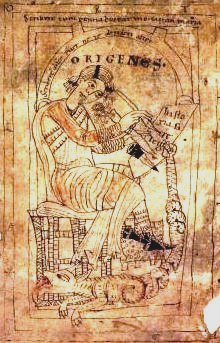





About Origen
Origenes (or Origen Adamantios; 184/185–253/254) was an Alexandrian theologian and Biblical scholar. He is considered one of the most distinguished of the early fathers of the Christian Church.
Best Origen Quotes
Shortest
Earliest
Explore our curated collection of the most famous and impactful Origen quotes.

“Every being which is endowed with reason, and transgresses its statutes and limitations, is undoubtedly involved in sin by swerving from rectitude and justice.”
“As the eye naturally seeks the light and vision, and our body naturally desires food and drink, so our mind is possessed with a becoming and natural desire to become acquainted with the truth of God and the causes of things.”
“For example, no one could easily persuade an Egyptian to despise what he had learned from his fathers, so as no longer to consider this or that irrational animal as a god, or not to guard against eating, even under the penalty of death, of the flesh of such an animal.”
“And it may not be amiss, as bearing on this point, to recall a beautiful saying in the writings of Sextus, which is known to most Christians: “The eating of animals,” says he, “is a matter of indifference; but to abstain from them is more agreeable to reason.””
“But the majority of those who are accounted believers are not of this advanced class; but from being either unable or unwilling to keep every day in this manner, they require some sensible memorials to prevent spiritual things from passing altogether away from their minds.”
“The reason why all those we have mentioned hold false opinions and make impious or ignorant assertions about God appears to be nothing else but this, that scripture is not understood in its spiritual sense, but is interpreted according to the bare letter.”
“The Creator will not appear to have been unjust when, according to the above principles, he placed everyone in a position proportionate to his merit; nor will the happiness or unhappiness of anyone's birth, or any condition whatever that may fall to his lot, be supposed to be due to chance;”

“After these statements, Celsus, from a secret desire to cast discredit upon the Mosaic account of the creation, which teaches that the world is not yet ten thousand years old, but very much under that, while concealing his wish, intimates his agreement with those who hold that the world is uncreated.”

“And if the Egyptians related fables of this kind, they are believed to convey a philosophical meaning by their enigmas and mysteries; but if Moses compose and leave behind him histories and laws for an entire nation, they are to be considered as empty fables, the language of which admits of no allegorical meaning!”
“As for the apostolic epistles, what person who is skilled in literary interpretation would think them to be plain and easily understood, when even in them there are thousands of passages that provide, as it through a window, a narrow opening leading to multitudes of the deepest thoughts?”
“It is manifest, further, that the language used regarding the wrath of God is to be understood figuratively from what is related of His “sleep,” from which, as if awaking Him, the prophet says: “Awake, why sleepest Thou, Lord?” and again: “Then the Lord awaked as one out of sleep, and like a mighty man that shouteth by reason of wine.””

“He who honours the Son, who is the Word and Reason, acts in nowise contrary to reason, and gains for himself great good; he who honours Him, who is the Truth, becomes better by honouring truth: and this we may say of honouring wisdom, righteousness, and all the other names by which the sacred Scriptures are wont to designate the Son of God.”
“And perhaps, just as those who die in this world by the separation of body and soul obtain different positions... in accordance with the differences of their deeds, so those who die, so to speak, in the realm of the heavenly Jerusalem, descend to the lower regions of our world, in such a way as to occupy different positions on earth in proportion to their merits.”

“Will they who subdue that fierce longing for sexual pleasures which has reduced the souls of many to a weak and feeble condition, and who subdue it because they are persuaded that they cannot otherwise have communion with God, unless they ascend to Him through the exercise of temperance, appear to you to be the brothers of worms, and relatives of ants, and to bear a likeness to frogs?”
“We conclude, then, that the position of every created being is the result of it's own work and his own motives, and that the powers above mentioned, which appear as holding sway or exercising authority or dominion over others, have gained this superiority and eminence over those whom they are said to govern or on whom they exercise their authority, not by some privilege of creation but as the reward of merit.”

“Having refuted, then, as well as we could, every notion which might suggest that we were to think of God as in any degree corporeal, we go on to say that, according to strict truth, God is incomprehensible, and incapable of being measured. For whatever be the knowledge which we are able to obtain of God, either by perception or reflection, we must of necessity believe that He is by many degrees far better than what we perceive Him to be.”
“For God the Creator makes some vessels "unto honor" and he makes other vessels "unto dishonor"; but it is that vessel which has purged itself from all impurity that he makes a "vessel unto honor," while the one which has stained itself with low vices he makes a "vessel unto dishonor," And so we conclude from this that the cause of each man's activities goes back into the past and that each was made by God a vessel of honor or of dishonor in accordance with his merits.”
“There is also a special ministry of the Lord Jesus Christ towards those on whom he confers the natural gift of reason by means of which well-being is bestowed upon them in addition to mere existence. There is yet another grace of the Holy Spirit bestowed upon such as are worthy. a grace ministered indeed through Christ. but put into operation by the Father in proportion to the merits of those who become capable of receiving it. This is most clearly pointed out by the apostle Paul”
“It is our endeavor to show that the providence of God which governs the universe with justice also rules immortal souls on the most equitable principles in accordance with the merits and motives of each individual. For God’s dealings with men are not confined within the life of this age, but a previous state of merit always furnishes the cause of the state that is to follow; and so by an immortal and eternal law of equity and by the control of divine providence the immortal soul is brought to the height of perfection.”

“That is properly termed everlasting or eternal which neither had a beginning of existence, nor can ever cease to be what it is. And this is the idea conveyed by John when he says that God is light. Now His wisdom is the splendour of that light, not only in respect of its being light, but also of being everlasting light, so that His wisdom is eternal and everlasting splendour. If this be fully understood, it clearly shows that the existence of the Son is derived from the Father but not in time, nor from any other beginning, except, as we have said, from God Himself.”

“All these, down to the very least, God supervises by the power of his wisdom and distinguishes by the controlling hand of his judgment; and thus he has arranged the universe on the principle of a most impartial retribution, according as each one deserves for his merit to be assisted or cared for. Herein is displayed in its completeness the principle of impartiality, when the inequality of circumstances preserves an equality of reward for merit. But the grounds of merit in each individual are known with truth and clearness only to God, together with his only-begotten Word and Wisdom and his Holy Spirit.”

“Now that we have dealt, therefore, with this point, that the divine scriptures were inspired by the Holy Spirit, it appears necessary also to explain how some men have involved themselves in numerous errors through not reading or understanding them aright, because the method by which we should approach the interpretation of the divine writings is unknown to the multitude. For the Jews, owing to their hardness of heart and their desire to appear wise in their own sight. They have refused to believe in our Lord and Savior because they suppose that the prophecies that relate to him must be understood literally.”

“In answer to this, we would say that all those indeed sit in darkness, and are rooted in it, who fix their gaze upon the evil handiwork of painters, and moulders and sculptors, and who will not look upwards, and ascend in thought from all visible and sensible things, to the Creator of all things, who is light; while, on the other hand, every one is in light who has followed the radiance of the Word, who has shown in consequence of what ignorance, and impiety, and want of knowledge of divine things these objects were worshipped instead of God, and who has conducted the soul of him who desires to be saved towards the uncreated God, who is over all.”
“The soul of while in the body, can admit different energies, that is, controlling influences, of spirits either good or bad. Now the bad spirits work in two ways; that is, they either take whole and entire possession of the mind, so that they allow those in their power neither to understand nor to think, as is the case, for example, with those who are popularly called “possessed,” whom we see to be demented and insane, such as the men who are related in the Gospel to have been healed by the Savior; or they deprave the soul, while it still thinks and understands, through harmful suggestion by means of different kinds of thoughts and evil inducements”
Origen Quotes by Topic
Find exactly what you are looking for by browsing this categorized list of Origen quotes by topic.
Origen on Allegorical interpretation of the Bible 4 quotes
“The reason why all those we have mentioned hold false opinions and make impious or ignorant assertions about God appears to be nothing else but this, that scripture is not understood in its spiritual sense, but is interpreted according to the bare letter.”

Origen on Temptation 4 quotes
“Moreover the book of the Shepherd asserts the teaching that two angels attend each human being, and saying that whenever good thoughts arise in our heart they are suggested by they good angel, and whenever thoughts of the opposite kind they are the inspiration of the bad angel. p.283”
Origen on Relationship between religion and science 2 quotes
“Our contention with regard to the whole of divine scripture is that it all has a spiritual meaning, but not all a bodily meaning; for the bodily meaning is often proved to be an impossibility.”

Origen on Religious text 2 quotes
“Our contention with regard to the whole of divine scripture is that it all has a spiritual meaning, but not all a bodily meaning; for the bodily meaning is often proved to be an impossibility.”
Origen on Angels 2 quotes
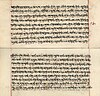
“No angelic office, therefore, exists except as a reward of merit, nor do authorities wield their authority except as a result of their progress, nor do those who are called thrones, that is, authorities for judging and ruling, administer their functions except as a reward of merit, nor do the dominions exercise dominion but by merit; for this supreme and most excellent order of rational creatures in the heavenly places is thus arranged in a glorious variety of offices. p. 89”
Origen on Sin
“Every being which is endowed with reason, and transgresses its statutes and limitations, is undoubtedly involved in sin.”
Origen on Reincarnation
“Each soul enters the world strengthened by the victories or weakened by the defects of its past lives. Its place in this world is determined by past virtues and shortcomings.”

Origen on Demon
Origen on Creationism
“For who that has understanding will suppose that the first, and second, and third day, and the evening and the morning, existed without a sun, and moon, and stars? and that the first day was, as it were, also without a sky? And who is so foolish as to suppose that God, after the manner of a husbandman, planted a paradise in Eden ...”

Origen on Christianity
“Jesus reveals the law to us when he reveals to us the secrets of the law. For we who are of the catholic Church, we do not spurn the law of Moses but accept it, so long as it is Jesus who reads it to us. Indeed, we can only possess a correct understanding of the Law when he reads it to us, and we are able to receive his sense and understanding.”

Origen on God
“Having refuted, then, as well as we could, every notion which might suggest that we were to think of God as in any degree corporeal, we go on to say that, according to strict truth, God is incomprehensible, and incapable of being measured. For whatever be the knowledge which we are able to obtain of God, either by perception or reflection, we must of necessity believe that He is by many degrees far better than what we perceive Him to be.”
Origen on Christian pacifism
“[…] neither Celsus nor they who think with him are able to point out any act on the part of Christians which savours of rebellion. And yet, if a revolt had led to the formation of the Christian commonwealth, so that it derived its existence in this way from that of the Jews, who were permitted to take up arms in defence of the members of their families, and to slay their enemies, the Christian Lawgiver would not have altogether forbidden the putting of men to death; and yet He nowhere teaches that it is right for His own disciples to offer violence to any one, however wicked.”
Quotes About Origen
Gain deeper perspective through quotes about Origen from others.
St. Athanasius on Origen
“Concerning the everlasting co-existence of the Word with the Father, and that He is not of another essence or subsistence, but proper to the Father's, as the Bishops in the Council said, you may hear again from the labour-loving Origen also. For what he has written as if inquiring and by way of exercise, that let no one take as expressive of his own sentiments, but of parties who are contending in investigation, but what he definitely declares, that is the sentiment of the labour-loving man. After his prolusions then (so to speak) against the heretics, straightway he introduces his personal belief...”
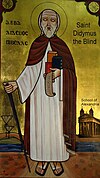
Didymus the Blind on Origen
Facundus of Hermiane on Origen
“Domitian of Galatia, formerly bishop of Ancyra... in the book which he wrote to Vigilius, where he is complaining of those who contradicted the doctrine of Origen,--who maintained that the souls of men had pre-existed in some state of blessedness before they came into bodies, and that all those who were doomed to the eternal punishment should, together with the devil and his angels, be restored to their former state of blessedness,--he says, They have hastily run out to anathematize most holy and glorious teachers on account of those doctrines which have been advanced concerning pre-existence and restitution; and this indeed under pretext of Origen, but thereby anathematizing all those saints who were before and have been after him.”
Stephanus Gobarus on Origen
“The great Athanasius of Alexandria approved Origen and Theognostus in many points of doctrine, Titus of Bostra does the same, and the theologian Gregory in his letters calls Origen "friend of beauty and goodness," and he of Nyssa brings him to remembrance with praise. But also Dionysius of Alexandria praises him in a letter addressed to him, as well as in a second letter, after Origen's death, to Theotecnus, bishop of Caesarea. And Alexander, bishop of Jerusalem and martyr, likewise in a letter to Origen, becomes most friendly.”
St. Jerome on Origen
“I find among many bad things written by Origen the following most distinctly heretical: that the Son of God is a creature, that the Holy Spirit is a servant: that there are innumerable worlds, succeeding one another in eternal ages: that angels have been turned into human souls; that the soul of the Saviour existed before it was born of Mary, and that it is this soul which being in the form of God thought it not robbery to be equal with God, but emptied itself and took the form of a servant; that the resurrection of our bodies will be such that we shall not have the same members, since, when the functions of the members cease they will become superfluous: and that our bodies themselves will grow aërial and spirit-like, and gradually vanish and disperse into thin air and into nothing: that in the restitution of all things, when the fullness of forgiveness will have been reached, Cherubim and Seraphim, Thrones, Principalities, Dominions, Virtues, Powers, Archangels and Angels, the devil, the demons and the souls of men whether Christians, Jews or Heathen, will be of one condition and degree; and when they have come to their true form and weight, and the new army of the whole race returning from the exile of the world presents a mass of rational creatures with all their dregs left behind, then will begin a new world from a new origin, and other bodies in which the souls who fall from heaven will be clothed; so that we may have to fear that we who are now men may afterwards be born women, and one who is now a virgin may chance then to be a prostitute.”
Socrates Scholasticus on Origen
“[Epiphanius] assembled those of the bishops who were then in the capital, and producing his copy of the synodical decree condemnatory of Origen's works, recited it before them; not being able to assign any reason for this judgment, than that it seemed fit to Theophilus and himself to reject them. Some indeed from a reverential respect for Epiphanius subscribed the decree; but many refused to do so among whom was Theotimus bishop of Scythia, who thus addressed Epiphanius:— 'I neither choose, Epiphanius,' said he, 'to insult the memory of one who ended his life piously long ago; nor dare I be guilty of so impious an act, as that of condemning what our predecessors did not reject: and especially when I know of no evil doctrine contained in Origen's books.' Having said this, he brought forward one of that author's works, and reading a few passages therefrom, showed that the sentiments propounded were in perfect accordance with the orthodox faith. He then added, 'Those who speak evil of these writings are unconsciously casting dishonor upon the sacred volume whence their principles are drawn.' Such was the reply which Theotimus, a bishop celebrated for his piety and rectitude of life, made to Epiphanius.”
St. Gregory Thaumaturgus on Origen
“[W]e were pierced by his argumentation as with an arrow from the very first occasion of our hearing him (for he was possessed of a rare combination of a certain sweet grace and persuasiveness, along with a strange power of constraint) ... Moreover, the stimulus of friendship was also brought to bear upon us — a stimulus, indeed, not easily withstood, but keen and most effective — the argument of a kind and affectionate disposition, which showed itself benignantly in his words when he spoke to us and associated with us. For he did not aim merely at getting round us by any kind of reasoning; but his desire was, with a benignant, and affectionate, and most benevolent mind, to save us, and make us partakers in the blessings that flow from philosophy, and most especially also in those other gifts which the Deity has bestowed on him above most men, or, as we may perhaps say, above all men of our own time. I mean the power that teaches us piety, the word of salvation, that comes to many, and subdues to itself all whom it visits ... And thus, like some spark lighting upon our inmost soul, love was kindled and burst into flame within us — a love at once to the Holy Word, the most lovely object of all, who attracts all irresistibly toward Himself by His unutterable beauty, and to this man, His friend and advocate. And being most mightily smitten by this love, I was persuaded to give up all those objects or pursuits which seem to us befitting, and among others even my boasted jurisprudence — yea, my very fatherland and friends, both those who were present with me then, and those from whom I had parted. And in my estimation there arose but one object dear and worth desire — to wit, philosophy, and that master of philosophy, this inspired man. ... I shall not speak of him as a perfect pattern, but as one who vehemently desires to imitate the perfect pattern, and strives after it with zeal and earnestness, even beyond the capacity of men, if I may so express myself; and who labours, moreover, also to make us, who are so different, of like character with himself, not mere masters and apprehenders of the bald doctrines concerning the impulses of the soul, but masters and apprehenders of these impulses themselves.”
Alfonso Maria de'Liguori on Origen 4 quotes
“Origen was an Egyptian, and his early days were spent in Alexandria. His father was St. Leonidas the Martyr, who had him educated in every branch of sacred and profane literature... At the age of eighteen he was made Catechist of the Church of Alexandria, and he discharged his duties so well that the very pagans flocked to hear him. Plutarch, who afterwards became an illustrious martyr of the faith of Christ, was one of his disciples. p. 45”
William Bennett on Origen 2 quotes
“If Clement represented an important step in the absorption of philosophy into Christian theology, his star pupil, Origen, was antiquity's greatest proponent of the Alexandrian approach to interpreting the Bible (i.e. heavy on allegory and symbolism). Like Clement, Origen is remembered by posterity with contention: he is not recognized as a saint by either the Catholic or Orthodox churches. But he was absolutely the most prolific Christian writer of the ancient world; it is a pity that of his more than two thousand estimated works, only a handful survive in their entirety. Origen was widely known, read, and absorbed by his contemporaries. One commentator has written that of all the early church figures, Origen "exerted an influence on Christian thought, exceeded perhaps by no one except the apostle Paul himself."”
H.P. Blavatsky on Origen 3 quotes
“Origen, who had belonged to the Alexandrian school of Platonists, declares that Moses, besides the teachings of the covenant, communicated some very important secrets "from the hidden depths of the law" to the seventy elders. These he enjoined them to impart only to persons whom they found worthy. (p. 27) Those of the early Christian Fathers who like Origen and Clemens Alexandrinus, were well versed in Pagan symbology, having begun their careers as philosophers... could not deny the anticipation of their doctrines in the oldest myths. (p. 328) Origen held all the daemons which possessed the demoniacs mentioned in the New Testament to be human "spirits." (p. 387)”
G. W. Butterworth on Origen
“The greatest teacher of the Church after the apostles- such was the description of Origen which Jerome adopted from Didymus, the blind theologian of Alexandria, and inserted in the preface to his translation of the great master's Homilies on Ezekiel. In the preface to his own work, On the Meaning of Hebrew Names, Jerome repeated the tribute, remarking that "all but the ignorant" recognized it to be true.”
William Q. Judge on Origen
“The lost chord of Christianity is the doctrine of Reincarnation. It was beyond doubt taught in the early days of the cult, for it was well known to the Jews who produced the men who founded Christianity. The greatest of all the Fathers of the Church--Origen--no doubt believed in the doctrine. He taught pre-existence and the wandering of the soul. This could hardly have been believed without also giving currency to reincarnation, as the soul could scarcely wander in any place save the earth. She was in exile from Paradise, and for sins committed had to revolve and wander. Wander where? would be the next question. Certainly away from Paradise, and the short span of human life would not meet the requirements of the case. But a series of reincarnations will meet all the problems of life as well as the necessities of the doctrines of exile, of wanderings for purification, of being known to God and being judged by him before birth, and of other dogmas given out among the Jews and of course well known to Jesus and whoever of the seventy-odd disciples were not in the deepest ignorance”
About Origen
Origenes (or Origen Adamantios; 184/185–253/254) was an Alexandrian theologian and Biblical scholar. He is considered one of the most distinguished of the early fathers of the Christian Church.