Link Copied!
Nissim Mannathukkaren Quotes (0-)
About Nissim Mannathukkaren
Nissim Mannathukkaren is Associate Professor and Chair, International Development Studies Department, Dalhousie University, Canada.
Best Nissim Mannathukkaren Quotes
Shortest
Earliest
Explore our curated collection of the most famous and impactful Nissim Mannathukkaren quotes.

“As examples from history show, when jokes start circulating about a powerful leader, cracks in political legitimacy begin to appear.”
“The joke is not on Modi. The joke is on the "educated" elite/middle class supporters of Modi who have made idiocy and ignorance fashionable.”

“When the largest democracy in the world, and the oldest one in the Global South, displays authoritarian tendencies betraying the promise of its founding fathers, it has implications beyond India.”
“There is something deeply troubling about a culture which makes humans into gods, and which puts people on pedestals to be worshipped. For, it glosses over all blemishes in its quest for the godly.”
“The narrative of moral equivalence is persisted with regard to the Delhi violence, despite the overwhelming evidence of the police acting emphatically in favour of one side.”
“While releasing the tax data, Prime Minister Narendra Modi said that it should lead to enhanced insights for policymaking on taxation. What he did not say was that it was a scathing commentary on the nation. Unless the cultural idea of the nation as comradeship and fraternity is complemented by material and economic arrangements that realise this, the nation will remain only in name.”
“For the first time in Independent India, ordinary Muslims, especially women, have come out in large numbers, overwhelmingly in a peaceful fashion, breaking the shackles of the thoroughly self-serving and regressive religious and elite leadership, to protect Indian democracy and the constitution. This is a landmark moment. Yet, what does the legitimate and democratic protests get branded as? As “anti-nationals” and “traitors”.”
“To place the responsibility of violence on the illiterate, poor and unemployed mobs is to completely miss the pathologies amongst us, the privileged and the powerful, which are the greatest enablers of violence.”

“So, the emerging “manufacture of consent” in favor of the ruling government does not happen only through active participation, or self-censorship on criticism by the media, but also as a result of the egregious threats that the media personnel face.”
“All the fantastical claims are coupled with the fact that Mr Modi has not given a single press conference, or an unscripted interview. This makes it impossible to question the PM on critical policy matters, and his grasp of them. [...] Ultimately, I see this as a part of the greatest exercise in anti-intellectualism, propaganda/fake news seen in Independent India, in which it is normal to defend the most absurd statement, and in which it has become impossible to distinguish between truth and falsehood.”
“Other than these, the list of Mr Modi's gaffes is quite long. But again, what is crucial to note is that there has not been any scrutiny of this at all by the mainstream media. In this case, the biggest question to be asked is whether the PM actually ordered the Balakot air strike on the basis of his knowledge of radars, overriding military experts? In that case, it is shocking, and dangerous, for it is a national security issue.”
“Rather than reduce this to the personality of Modi or his lack of knowledge, I am more interested in the fact how the Hindu Right has made a virtue of anti-intellectualism, ignorance, and fake news/propaganda in the last five years, and how people have been asked to believe the most illogical, irrational, untruthful statements coming out, especially from the PM.”

“The unifying logic of both neo-liberal capitalist development and Hindutva (which is technicism). Both have an instrumental attitude, the former towards economic growth and science and technology, and the latter towards culture. [...] Modernity is not technicism or the expansion of the market, it is a larger project in which technological and economic betterment is only one aspect. More significant is the liberation of the human mind from the shackles of unreason (in which science is a mere aid), the seeking of the end of all oppressions, satiating the craving for liberty, equality and fraternity. Without this, there is no modernity.”

“Jokes making fun of Mr. Modi, or Facebook posts of lay citizens, and films criticizing his government are met with police complaints, legal cases, and threats by the ruling party and its larger ideological family. BJP-led state governments have also introduced draconian bills to curb free speech. India’s democracy is at a critical juncture. After the Emergency declared by the Congress government in 1975 which legally curbed press freedoms, we have not witnessed such levels of abnegation of free speech. (The otherwise-activist Indian judiciary too has maintained a deafening silence on the judge’s death.) It would not be wrong to consider this present conjuncture as marking a deterioration in that regard.”

“While all governments, in varying degrees, try to muzzle free speech or physically intimidate journalists, what is radically different under the Modi dispensation is the wider climate of intolerance fostered by the combustible combination of religion and nationalism aided by state power. This has led to unprecedented attacks against religious minorities on accusations like possessing/eating beef or the killings of those who are critics of the government. Dissent and criticism of government has been construed as an anti-national activity clearly demonstrated by the 40 sedition cases filed in 2016.”
“Generally, the death of a judge, in what seem to be mysterious circumstances, while presiding over a case against the second most powerful person in the country, and the closest associate of the head of the government, would be make prime-time television in a democracy. Similarly, the allegations of corruption against the family of the same person would have garnered media attention. But recent events in India prove otherwise. [...] Despite the explosive nature of the story and its potentially unprecedented implications for Indian democracy (in independent India's history, to my knowledge, there is no instance of a judge being assassinated) there was a stunned silence in the mainstream and big media, especially, the English-language television channels that have a disproportionate influence in the setting of the political agenda.”

“This is when false equivalence fails to recognise not only the unbridled state-backed violent majoritarianism but also its farcical nature. To counter false equivalence and to assert what happened in Delhi was an anti-Muslim pogrom, we do not have to take the morally dubious position of denying that there has been the loss of innocent lives among Hindus as well (after all, what can be more heartbreaking than losing a 15-year old boy – the youngest victim of the violence, Nitin Kumar – who was killed while stepping out to buy food), or that the victims are not capable of brutality. But to remain at the level of a statistical apportioning of grief, or false equivalence is to fundamentally misread the nature of the beast which has succeeded in replacing every critical problem in India with the narrative of a Hindu-Muslim war, and which has produced suffering even among the oppressors.”
“These are the times when on the most watched primetime television news debates every night, it is absolutely normal for the anchors and BJP spokespersons to call Muslim panelists terrorists and anti-nationals. [...] These are the times when a Union minister can declare that Rahul Gandhi is the son of a Muslim. Of course, the insinuation is that being a Muslim is a crime – plain and simple. To focus only on the Kapil Mishras, Anurag Thakurs, and the Parvesh Vermas, as if they are some elements which have gone rogue, is to miss that they are totally in sync with the discourse authored and sanctioned by none less than the prime minister of the Indian republic. Whenever confronted with this stark reality, Hindutva supporters respond with whataboutery.”
“There could not be a more grisly method, even when it involves no violence, to cover up ghastly crimes committed by a people than to indulge in the fallacy of false equivalence. In this fallacy, two incomparable things are compared and declared to be equal because there are always two sides to the story. What is going on in the aftermath of the worst communal violence in Delhi since 1984, in which 34 Muslims and 15 Hindus have died, is precisely this fallacy. Thus, here, both Hindus and Muslims are at fault for the violence; hence the refusal to call it a pogrom or state-backed violence against Muslims despite all the evidence. Moral equivalence completely obscures the root causes of a problem. It instead focuses on the immediate and the superficial, and is employed by well-intentioned observers as well as Hindutva supporters when on the defensive. Thus, six years of relentless hate-mongering against Muslims is seen to be of no consequence in creating an absolutely inflammable social sphere.”
“Much of Narendra Modi's legitimacy among the Indian public comes from the perception that, unlike most of the political class, he is personally beyond reproach when it comes to financial corruption. Moreover, it was he who declared a war on corruption, the most emphatic example of which, the government claims, is the demonetization exercise. But Mr. Modi's silence on the corruption story finally exposed the hollowness of the government’s crusade against corruption, which in any case, has so far amounted to nothing more than targeted attacks against rival politicians. In politics, perceptions play a huge role. This is the first time that Mr. Modi's carefully crafted image as incorruptible and as a crusader against corruption has taken a considerable beating. WhatsApp messages, tweets and Facebook posts were rife with jokes about Mr. Shah’s businesses, and Mr. Modi’s silence.”

“But the more damaging development has been the role of the mainstream media in the face of government attempts to muzzle it. Just as in the judge story, there was silence about the corruption story in the media. Even when there was coverage, it was more about the defamation case filed by Mr. Shah rather than the merits of story itself. The rare television channel that has sometimes been critical of the Modi government and faced its wrath for doing so, succumbed, pulling down reportage about the Shah story. This is an extraordinary level of submissiveness displayed by the media. This must also be read in the context of the largest democracy’s abysmal ranking in the World Press Freedom Index. Last year, India ranked 133 out of 18 countries. And this year, it has declined to 136. Recently, the main mode of intimidation against journalists doing investigative stories has been through Strategic Lawsuits against Public Participation (SLAPPs), like the one filed by Mr. Shah. Journalists face severe challenges, including physical violence and threat to life, in carrying out their work.”

Nissim Mannathukkaren Quotes by Topic
Find exactly what you are looking for by browsing this categorized list of Nissim Mannathukkaren quotes by topic.
Nissim Mannathukkaren on 2020 Delhi riots 4 quotes
“To place the responsibility of violence on the illiterate, poor and unemployed mobs is to completely miss the pathologies amongst us, the privileged and the powerful, which are the greatest enablers of violence.”

Nissim Mannathukkaren on Freedom of expression in India 3 quotes
“While all governments, in varying degrees, try to muzzle free speech or physically intimidate journalists, what is radically different under the Modi dispensation is the wider climate of intolerance fostered by the combustible combination of religion and nationalism aided by state power. This has led to unprecedented attacks against religious minorities on accusations like possessing/eating beef or the killings of those who are critics of the government. Dissent and criticism of government has been construed as an anti-national activity clearly demonstrated by the 40 sedition cases filed in 2016.”

Nissim Mannathukkaren on False equivalence 2 quotes
“Moral culpability is denied through false equivalence.”

Nissim Mannathukkaren on Media bias in South Asia 2 quotes
“Generally, the death of a judge, in what seem to be mysterious circumstances, while presiding over a case against the second most powerful person in the country, and the closest associate of the head of the government, would be make prime-time television in a democracy. Similarly, the allegations of corruption against the family of the same person would have garnered media attention. But recent events in India prove otherwise. [...] Despite the explosive nature of the story and its potentially unprecedented implications for Indian democracy (in independent India's history, to my knowledge, there is no instance of a judge being assassinated) there was a stunned silence in the mainstream and big media, especially, the English-language television channels that have a disproportionate influence in the setting of the political agenda.”

Nissim Mannathukkaren on Corruption in India 2 quotes
“Generally, the death of a judge, in what seem to be mysterious circumstances, while presiding over a case against the second most powerful person in the country, and the closest associate of the head of the government, would be make prime-time television in a democracy. Similarly, the allegations of corruption against the family of the same person would have garnered media attention. But recent events in India prove otherwise. [...] Despite the explosive nature of the story and its potentially unprecedented implications for Indian democracy (in independent India's history, to my knowledge, there is no instance of a judge being assassinated) there was a stunned silence in the mainstream and big media, especially, the English-language television channels that have a disproportionate influence in the setting of the political agenda.”

Nissim Mannathukkaren on Hindu–Islamic relations 2 quotes
“This is when false equivalence fails to recognise not only the unbridled state-backed violent majoritarianism but also its farcical nature. To counter false equivalence and to assert what happened in Delhi was an anti-Muslim pogrom, we do not have to take the morally dubious position of denying that there has been the loss of innocent lives among Hindus as well (after all, what can be more heartbreaking than losing a 15-year old boy – the youngest victim of the violence, Nitin Kumar – who was killed while stepping out to buy food), or that the victims are not capable of brutality. But to remain at the level of a statistical apportioning of grief, or false equivalence is to fundamentally misread the nature of the beast which has succeeded in replacing every critical problem in India with the narrative of a Hindu-Muslim war, and which has produced suffering even among the oppressors.”

Nissim Mannathukkaren on Comedy
“As examples from history show, when jokes start circulating about a powerful leader, cracks in political legitimacy begin to appear.”

Nissim Mannathukkaren on Legitimacy
“As examples from history show, when jokes start circulating about a powerful leader, cracks in political legitimacy begin to appear.”
Nissim Mannathukkaren on Deification
“There is something deeply troubling about a culture which makes humans into gods, and which puts people on pedestals to be worshipped. For, it glosses over all blemishes in its quest for the godly.”

Nissim Mannathukkaren on Violence
“To place the responsibility of violence on the illiterate, poor and unemployed mobs is to completely miss the pathologies amongst us, the privileged and the powerful, which are the greatest enablers of violence.”
Nissim Mannathukkaren on Modernity
“Modernity is not technicism or the expansion of the market, it is a larger project in which technological and economic betterment is only one aspect. More significant is the liberation of the human mind from the shackles of unreason (in which science is a mere aid), the seeking of the end of all oppressions, satiating the craving for liberty, equality, and fraternity. Without this, there is no modernity.”
Nissim Mannathukkaren on Hindutva
“It is not that Hindutva supporters equate vastly different phenomena with vastly different consequences, but they also willfully gloss over facts like 80%-90% of VIP (ministers, MPs, MLAs) hate speech has been perpetrated by the BJP, or that the head of the BJP’s IT Cell is the greatest disseminator of the most dangerous and fake communal propaganda. There is simply no comparison between the ruling party and other parties.”
What Nissim Mannathukkaren Said About Others
Discover personal opinions Nissim Mannathukkaren shared regarding contemporaries.
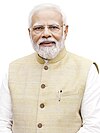
Nissim Mannathukkaren on Narendra Modi 7 quotes
“The joke is not on Modi. The joke is on the "educated" elite/middle class supporters of Modi who have made idiocy and ignorance fashionable.”
Nissim Mannathukkaren on Brijgopal Harkishan Loya
“Generally, the death of a judge, in what seem to be mysterious circumstances, while presiding over a case against the second most powerful person in the country, and the closest associate of the head of the government, would be make prime-time television in a democracy. Similarly, the allegations of corruption against the family of the same person would have garnered media attention. But recent events in India prove otherwise. [...] Despite the explosive nature of the story and its potentially unprecedented implications for Indian democracy (in independent India's history, to my knowledge, there is no instance of a judge being assassinated) there was a stunned silence in the mainstream and big media, especially, the English-language television channels that have a disproportionate influence in the setting of the political agenda. [...] But the more damaging development has been the role of the mainstream media in the face of government attempts to muzzle it. Just as in the judge story, there was silence about the corruption story in the media. Even when there was coverage, it was more about the defamation case filed by Mr. Shah rather than the merits of story itself. The rare television channel that has sometimes been critical of the Modi government and faced its wrath for doing so, succumbed, pulling down reportage about the Shah story. This is an extraordinary level of submissiveness displayed by the media. This must also be read in the context of the largest democracy’s abysmal ranking in the World Press Freedom Index.”
About Nissim Mannathukkaren
Nissim Mannathukkaren is Associate Professor and Chair, International Development Studies Department, Dalhousie University, Canada.