Nissim Mannathukkaren on Narendra Modi
← Back to Nissim Mannathukkaren Profile
“The joke is not on Modi. The joke is on the "educated" elite/middle class supporters of Modi who have made idiocy and ignorance fashionable.”
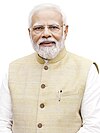
“As examples from history show, when jokes start circulating about a powerful leader, cracks in political legitimacy begin to appear. [...] Jokes making fun of Mr. Modi, or Facebook posts of lay citizens, and films criticizing his government are met with police complaints, legal cases, and threats by the ruling party and its larger ideological family.”
“Rather than reduce this to the personality of Modi or his lack of knowledge, I am more interested in the fact how the Hindu Right has made a virtue of anti-intellectualism, ignorance, and fake news/propaganda in the last five years, and how people have been asked to believe the most illogical, irrational, untruthful statements coming out, especially from the PM.”
“While releasing the tax data, Prime Minister Narendra Modi said that it should lead to enhanced insights for policymaking on taxation. What he did not say was that it was a scathing commentary on the nation. Unless the cultural idea of the nation as comradeship and fraternity is complemented by material and economic arrangements that realise this, the nation will remain only in name.”
“Other than these, the list of Mr Modi's gaffes is quite long. But again, what is crucial to note is that there has not been any scrutiny of this at all by the mainstream media. In this case, the biggest question to be asked is whether the PM actually ordered the Balakot air strike on the basis of his knowledge of radars, overriding military experts? In that case, it is shocking, and dangerous, for it is a national security issue.”
“All the fantastical claims are coupled with the fact that Mr Modi has not given a single press conference, or an unscripted interview. This makes it impossible to question the PM on critical policy matters, and his grasp of them. [...] Ultimately, I see this as a part of the greatest exercise in anti-intellectualism, propaganda/fake news seen in Independent India, in which it is normal to defend the most absurd statement, and in which it has become impossible to distinguish between truth and falsehood.”
“Generally, the death of a judge, in what seem to be mysterious circumstances, while presiding over a case against the second most powerful person in the country, and the closest associate of the head of the government, would be make prime-time television in a democracy. Similarly, the allegations of corruption against the family of the same person would have garnered media attention. But recent events in India prove otherwise. [...] Much of Narendra Modi's legitimacy among the Indian public comes from the perception that, unlike most of the political class, he is personally beyond reproach when it comes to financial corruption. Moreover, it was he who declared a war on corruption, the most emphatic example of which, the government claims, is the demonetization exercise. But Mr. Modi’s silence on the corruption story finally exposed the hollowness of the government’s crusade against corruption, which in any case, has so far amounted to nothing more than targeted attacks against rival politicians. In politics, perceptions play a huge role. This is the first time that Mr. Modi's carefully crafted image as incorruptible and as a crusader against corruption has taken a considerable beating. WhatsApp messages, tweets and Facebook posts were rife with jokes about Mr. Shah's businesses, and Mr. Mod's silence. As examples from history show, when jokes start circulating about a powerful leader, cracks in political legitimacy begin to appear.”