Link Copied!
Mao Zedong Quotes (1893-1976)














About Mao Zedong
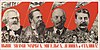
Mao Zedong (or Mao Tse-tung in Wade-Giles; Simplified Chinese: 毛泽东; Traditional Chinese: 毛澤東; December 26, 1893 – September 9, 1976) was the Chairman of the Communist Party of China from 1943 until his death. He was also a founder of the People's Republic of China.
Best Mao Zedong Quotes
Shortest
Earliest
Explore our curated collection of the most famous and impactful Mao Zedong quotes.


“The Cultural Revolution can only be the emancipation of the masses by the masses.”
“Those writings of mine aren't anything. There is nothing instructive in what I wrote.”
“Guard against revisionism, particularly the emergence of revisionism at the party Centre.”
“I like rightists... I am comparatively happy when these people on the right come into power.”
“哪里有压迫,哪里就有反抗。
• Where there is oppression, there is revolt.”
• Where there is oppression, there is revolt.”

“In any revolution, its internal causes are fundamental and its external ones are supplementary.”


“You should pay attention to state affairs and carry the Great Proletarian Cultural Revolution through to the end!”
“We thank Marx, Engels, Lenin and Stalin for giving us a weapon. This weapon is not a machine-gun, but Marxism-Leninism.”
“The basic ideological programme of the great proletarian Cultural Revolution is 'to combat selfishness and criticize revisionism.'”

“Without destruction there can be no construction; without blockage there can be no flow; without stoppage there can be no movement.”
“All the rest of the world uses the word "electricity." They've borrowed the word from English. But we Chinese have our own word for it!”
“"The food of the true revolutionary is the red pepper, And he who cannot endure red peppers is also unable to fight." - Otto Braun memoirs”

“下定决心,不怕牺牲,排除万难,去争取胜利。
• Be resolute, fear no sacrifice and surmount every difficulty to win victory.”
• Be resolute, fear no sacrifice and surmount every difficulty to win victory.”
“Except in the deserts, at every place of human habitation there is the left, the centre, and the right. This will continue to be so 10,000 years hence.”
“不同质的矛盾,只有用不同质的方法才能解决。
• Qualitatively different contradictions can only be resolved by qualitatively different methods.”
• Qualitatively different contradictions can only be resolved by qualitatively different methods.”

“我们需要的是热烈而镇定的情绪,紧张而有秩序的工作。
• What we need is an enthusiastic but calm state of mind, and intense but orderly work.”
• What we need is an enthusiastic but calm state of mind, and intense but orderly work.”
“It is to the advantage of despots to keep people ignorant; it is to our advantage to make them intelligent. We must lead all of them gradually away from ignorance.”
“Who are our enemies and who are our friends? This is the first and foremost question of a revolution and it is also the first and foremost question of the great Cultural Revolution.”
“A communist must never stay aloof from or above the masses like a bureaucrat. He ought to be like an ordinary worker in the presence of the masses, join them, and become one of them.”
“This is a movement on a vast scale. It has indeed mobilized the masses. It is of very great significance to the revolutionization of the thinking of the people throughout the country.”


“People who try to commit suicide — don't attempt to save them! . . . China is such a populous nation, it is not as if we cannot do without a few people.”

“Young people should be permitted to make mistakes. As long as their general orientation is correct, let them make minor mistakes. I believe that they can correct themselves in practical work.”
“A revolution depends on an inner core. This, the bourgeois faction in authority and the faction in authority which has committed mistakes know best; [their] peripheral organizations merely add fuel to the fire.”

“革命不是請客吃飯,不是做文章,不是繪畫繡花,不能那樣雅致,那樣從容不迫,文質彬彬,那樣溫良恭儉讓。革命是暴動,是一個階級推翻一個階級的暴烈的行動。”
“The revolutionary red guards and revolutionary student organizations must form a grand alliance. As long as they are revolutionary mass organizations, they must form a great alliance according to revolutionary principles.”
“The peoples of the world must have courage, dare to fight, and fear no hardships. When the ones in front fall, the others behind must follow up. In this way, the world will belong to the people and all the demons will be eliminated.”

“It is difficult to avoid mistakes, the point is to correct them honestly. Too many people have been arrested in Szechwan and many mass organizations are branded as reactionary. All these are wrong, but they have been quickly rectified.”

“We, the communists, do not want official positions; we want revolution. We must have a thoroughly revolutionary spirit and must be with the masses every hour, every minute. As long as we are with the masses, we shall always be victorious.”
“马克思主义的道理千条万绪,归根结底就是一句话:“造反有理。”
• Marxism comprises many principles, but in the final analysis they can all be brought back to a single sentence: it is right to rebel.”
• Marxism comprises many principles, but in the final analysis they can all be brought back to a single sentence: it is right to rebel.”

“批评和自我批评是一种方法,是解决人民内部矛盾的方法,而且是唯一的方法。
• Criticism and self-criticism is a kind of method. It is a method of resolving contradictions among the people and it is the only method.”
• Criticism and self-criticism is a kind of method. It is a method of resolving contradictions among the people and it is the only method.”
“国际主义者的共产党员,是否可以同时又是一个爱国主义者呢?我们认为不但是可以的,而且是应该的。
• Can a Communist, who is an internationalist, at the same time be a patriot? We hold that he not only can be but must be.”
• Can a Communist, who is an internationalist, at the same time be a patriot? We hold that he not only can be but must be.”
“Stalin made mistakes. He made mistakes towards us, for example, in 1927. He made mistakes towards the Yugoslavs too. One cannot advance without mistakes... It is necessary to make mistakes. The party cannot be educated without learning from mistakes. This has great significance.”
“The basic contradiction the great proletarian Cultural Revolution is trying to resolve is the one between the proletariat and the bourgeoisie, between the proletarian and bourgeois roads. The main point of the movement is to struggle against the capitalist roaders in authority in the party.”
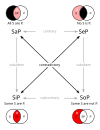
“原来矛盾着的各方面,不能孤立地存在。假如没有和它作对的矛盾的一方,它自己这一方就失去了存在的条件。
• The fact is that no contradictory aspect can exist in isolation. Without its opposite aspect, each loses the condition for its existence.”
• The fact is that no contradictory aspect can exist in isolation. Without its opposite aspect, each loses the condition for its existence.”

“我们应当相信群众,我们应当相信党,这是两条根本的原理。如果怀疑这两条原理,那就什么事情也做不成了。
• We must have faith in the masses and we must have faith in the Party. These are two cardinal principles. If we doubt these principles, we shall accomplish nothing.”
• We must have faith in the masses and we must have faith in the Party. These are two cardinal principles. If we doubt these principles, we shall accomplish nothing.”
“Many people think it impossible for guerrillas to exist for long in the enemy's rear. Such a belief reveals lack of comprehension of the relationship that should exist between the people and the troops. The former may be likened to water the latter to the fish who inhabit it. How may it be said that these two cannot exist together?”

“谁是我们的敌人?谁是我们的朋友?这个问题是革命的首要问题. (Shéi shì wǒmen de dírén? Shéi shì wǒmen de péngyǒu? Zhège wèntí shì gémìng de shǒuyào wèntí.)
• Who are our enemies? Who are our friends? This is a question of the first importance for the revolution.”
• Who are our enemies? Who are our friends? This is a question of the first importance for the revolution.”

“军队须和民众打成一片,使军队在民众眼睛中看成是自己的军队,这个军队便无敌于天下,个把日本帝国主义是不够打的。
• The army must become one with the people so that they see it as their own army. Such an army will be invincible, and an imperialist power like Japan will be no match for it.”
• The army must become one with the people so that they see it as their own army. Such an army will be invincible, and an imperialist power like Japan will be no match for it.”
“My closest friend and brother – this world is lucky to have a great personality as Kim Il Sung. This causes my boundless happiness. The fate of the world revolution and the international communist movement are on your shoulders, Comrade Kim Il Sung. I wish you long life and good health.”
“It is absolutely necessary for educated young people to go to the countryside to be re-educated by the poor and lower-middle peasants. Cadres and other city people should be persuaded to send their sons and daughters who have finished junior or senior middle school, college, or university to the countryside. Let us mobilize. Comrades throughout the countryside should welcome them.”
“主观主义、宗派主义、党八股,现在已不是占统治地位的作风了,这不过是一股逆风,一股歪风,是从防空洞里跑出来的。
• Subjectivism, sectarianism and stereotyped Party writing are no longer the dominant styles, but merely gusts of contrary wind, ill winds from the air-raid tunnels.”
• Subjectivism, sectarianism and stereotyped Party writing are no longer the dominant styles, but merely gusts of contrary wind, ill winds from the air-raid tunnels.”
“The victory or defeat of the revolution can be determined only over a long period of time. If it is badly handled, there is always the danger of a capitalist restoration. All members of the party and all the people of our country must not think that after one, two, three, or four great cultural revolutions there will be peace and quiet. They must always be on the alert and must never relax their vigilance.”
“一切忠诚、坦白、积极、正直的共产党员团结起来,反对一部分人的自由主义的倾向,使他们改变到正确的方面来。这是思想战线的任务之一。
• All loyal, honest, active and upright Communists must unite to oppose the liberal tendencies shown by certain people among us, and set them on the right path. This is one of the tasks on our ideological front.”
• All loyal, honest, active and upright Communists must unite to oppose the liberal tendencies shown by certain people among us, and set them on the right path. This is one of the tasks on our ideological front.”
“美国垄断资本集团如果坚持推行它的侵略政策和战争政策,势必有一天要被全世界人民处以刑。其他美国帮凶也将是这样。
• If the U.S. monopoly capitalist groups persist in pushing their policies of aggression and war, the day is bound to come when they will be hanged by the people of the whole world. The same fate awaits the accomplices of the United States.”
• If the U.S. monopoly capitalist groups persist in pushing their policies of aggression and war, the day is bound to come when they will be hanged by the people of the whole world. The same fate awaits the accomplices of the United States.”

“革命战争是群众的战争,只有动员群众才能进行战争,只有依靠群众才能进行战争。(Gémìng zhànzhēng shì qúnzhòng de zhànzhēng, zhǐyǒu dòngyuán qúnzhòng cáinéng jìnxíng zhànzhēng, zhǐyǒu yīkào qúnzhòng cáinéng jìnxíng zhànzhēng.)
• The revolutionary war is a war of the masses; it can be waged only by mobilizing the masses and relying on them.”
• The revolutionary war is a war of the masses; it can be waged only by mobilizing the masses and relying on them.”
“一切反动派都是纸老虎。看起来反动派的样子是可怕的,但是实际上并没有什么了不起的力量。从长远的观点看问题,真正强大的力量不是属于反动派,而是属于人民。
• All reactionaries are paper tigers. In appearance, the reactionaries are terrifying, but in reality they are not so powerful. From a long-term point of view, it is not the reactionaries but the people who are really powerful.”
• All reactionaries are paper tigers. In appearance, the reactionaries are terrifying, but in reality they are not so powerful. From a long-term point of view, it is not the reactionaries but the people who are really powerful.”

“任何新生事物的成长都是要经过艰难曲折的。在社会主义事业中,要想不经过艰难曲折,不付出极大努力,总是一帆风顺,容易得到成功,这种想法,只是幻想。
• New things always have to experience difficulties and setbacks as they grow. It is sheer fantasy to imagine that the cause of socialism is all plain sailing and easy success, without difficulties and setbacks or the exertion of tremendous efforts.”
• New things always have to experience difficulties and setbacks as they grow. It is sheer fantasy to imagine that the cause of socialism is all plain sailing and easy success, without difficulties and setbacks or the exertion of tremendous efforts.”

“屈子当年赋楚骚,
手中握有杀人刀。
艾萧太盛椒兰少,
一跃冲向万里涛。
• Master Qu in that year presented the Sao of Chu;
In his hand he grasped a killing blade.
Mugwort and wormwood were flourishing in excess, [fragrant] pepper and orchid were scarce;
With a single leap he plunged into limitless waves.”
手中握有杀人刀。
艾萧太盛椒兰少,
一跃冲向万里涛。
• Master Qu in that year presented the Sao of Chu;
In his hand he grasped a killing blade.
Mugwort and wormwood were flourishing in excess, [fragrant] pepper and orchid were scarce;
With a single leap he plunged into limitless waves.”
“要使文艺很好地成为整个革命机器的一个组成部分,作为团结人民、教育人民、打击敌人、消灭敌人的有力的武器,帮助人民同心同德地和敌人作斗争。
• [Our purpose is] to ensure that literature and art fit well into the whole revolutionary machine as a component part, that they operate as powerful weapons for uniting and educating the people and for attacking and destroying the enemy, and that they help the people fight the enemy with one heart and one mind.”
• [Our purpose is] to ensure that literature and art fit well into the whole revolutionary machine as a component part, that they operate as powerful weapons for uniting and educating the people and for attacking and destroying the enemy, and that they help the people fight the enemy with one heart and one mind.”

“以马克思列宁主义的理论思想武装起来的中国共产党,在中国人民中产生了新的工作作风,这主要的就是理论和实践相结合的作风,和人民群众紧密地联系在一起的作风以及自我批评的作风。
• Armed with Marxist-Leninist theory and ideology, the Communist Party of China has brought a new style of work to the Chinese people, a style of work that essentially entails integrating theory with practice, forging close links with the masses and practicing self-criticism.”
• Armed with Marxist-Leninist theory and ideology, the Communist Party of China has brought a new style of work to the Chinese people, a style of work that essentially entails integrating theory with practice, forging close links with the masses and practicing self-criticism.”

“世界是你们的,也是我们的,但是归根结底是你们的。你们青年人朝气蓬勃,正在兴旺时期,好像早晨八、九点钟的太阳。希望寄托在你们身上。世界是属于你们的。中国的前途是属于你们的。
• The world is yours, as well as ours, but in the last analysis, it is yours. You young people, full of vigour and vitality, are in the bloom of life, like the sun at eight or nine in the morning. Our hope is placed on you. The world belongs to you. China’s future belongs to you.”
• The world is yours, as well as ours, but in the last analysis, it is yours. You young people, full of vigour and vitality, are in the bloom of life, like the sun at eight or nine in the morning. Our hope is placed on you. The world belongs to you. China’s future belongs to you.”
“敌我之间的矛盾是对抗性的矛盾。人民内部的矛盾,在劳动人民之间说来,是非对抗性的;在被剥削阶级和剥削阶级之间说来,除了对抗性的一面以外,还有非对抗性的一面。
• The contradictions between the enemy and us are antagonistic contradictions. Within the ranks of the people, the contradictions among the working people are non-antagonistic, while those between the exploited and the exploiting classes have a non-antagonistic aspect in addition to an antagonistic aspect.”
• The contradictions between the enemy and us are antagonistic contradictions. Within the ranks of the people, the contradictions among the working people are non-antagonistic, while those between the exploited and the exploiting classes have a non-antagonistic aspect in addition to an antagonistic aspect.”
“人的概念的每一差异,都应把它看作是客观矛盾的反映。客观矛盾反映入主观的思想,组成了概念的矛盾运动,推动了思想的发展,不断地解决了人们的思想问题。
• Every difference in men's concepts should be regarded as reflecting an objective contradiction. Objective contradictions are reflected in subjective thinking, and this process constitutes the contradictory movement of concepts, pushes forward the development of thought, and ceaselessly solves problems in man's thinking.”
• Every difference in men's concepts should be regarded as reflecting an objective contradiction. Objective contradictions are reflected in subjective thinking, and this process constitutes the contradictory movement of concepts, pushes forward the development of thought, and ceaselessly solves problems in man's thinking.”
“茫茫九派流中国,沉沉一线穿南北。烟雨莽苍苍,龟蛇锁大江。黄鹤知何去?剩有游人处。把酒酹滔滔,心潮逐浪高!
• Wide, wide flow the nine streams through the land,
Dark, dark threads the line from south to north.
Blurred in the thick haze of the misty rain
Tortoise and Snake hold the great river locked.
• Wide, wide flow the nine streams through the land,
Dark, dark threads the line from south to north.
Blurred in the thick haze of the misty rain
Tortoise and Snake hold the great river locked.
The yellow crane is gone, who knows whither?
Only this tower remains a haunt for visitors.
I pledge my wine to the surging torrent,
The tide of my heart swells with the waves.”
“Anyone should be allowed to speak out, whoever he may be, so long as he is not a hostile element and does not make malicious attacks, and it does not matter if he says something wrong. Leaders at all levels have the duty to listen to others. Two principles must be observed: (1) Say all you know and say it without reserve; (2) don't blame the speaker but take his words as a warning. Unless the principle of "Don't blame the speaker" is observed genuinely and not falsely, the result will not be "Say all you know and say it without reserve".”
“优势而无准备,不是真正的优势,也没有主动。懂得这一点,劣势而有准备之军,常可对敌举行不意的攻势,把优势者打败。我们说运动之敌好打,就是因为敌在不意即无准备中。
• Without preparedness superiority is not real superiority and there can be no initiative either. Having grasped this point, a force which is inferior but prepared can often defeat a superior enemy by surprise attack. We say an enemy on the move is easy to attack precisely because he is then off guard, that is, unprepared.”
• Without preparedness superiority is not real superiority and there can be no initiative either. Having grasped this point, a force which is inferior but prepared can often defeat a superior enemy by surprise attack. We say an enemy on the move is easy to attack precisely because he is then off guard, that is, unprepared.”
“假如办十件事,九件是坏的,都登在报上,一定灭亡。那我就走,到农村去,率领农民推翻政府,你解放军不跟我走,我就找红军去。
• If we did ten things, nine were bad and got disclosed by the newspapers, we will be over. Then I will go, to the countryside, lead the peasant and revolt. If the Liberation Army do not follow me, I will get the Red Army. (July 23, 1959)”
• If we did ten things, nine were bad and got disclosed by the newspapers, we will be over. Then I will go, to the countryside, lead the peasant and revolt. If the Liberation Army do not follow me, I will get the Red Army. (July 23, 1959)”
“党内不同思想的对立和斗争是经常发生的,这是社会的阶级矛盾和新旧事物的矛盾在党内的反映。党内如果没有矛盾和解决矛盾的思想斗争,党的生命也就停止了。
• Opposition and struggle between ideas of different kinds constantly occur within the Party; this is a reflection within the Party of contradictions between classes and between the new and the old in society. If there were no contradictions in the Party and no ideological struggles to resolve them, the Party's life would come to an end.”
• Opposition and struggle between ideas of different kinds constantly occur within the Party; this is a reflection within the Party of contradictions between classes and between the new and the old in society. If there were no contradictions in the Party and no ideological struggles to resolve them, the Party's life would come to an end.”

“In the ideological field, the question of who will win in the struggle between the proletariat and the bourgeoisie has not been really settled yet. We still have to wage a protracted struggle against bourgeois and petty bourgeois ideology. It is wrong not to understand this and to give up ideological struggle. All erroneous ideas, all poisonous weeds, all ghosts and monsters, must be subjected to criticism; in no circumstance should they be allowed to spread unchecked. However, the criticism should be fully reasoned, analytical and convincing, and not rough, bureaucratic, metaphysical or dogmatic.”
“鲁迅在中国的价值,据我看要算是中国的第一等圣人。孔夫子是封建社会的圣人,鲁迅则是现代中国的圣人。我们为了永久纪念他,在延安成立了鲁迅图书馆,在延长开办了鲁迅师范学校,使后来的人们可以想见他的伟大。
• In my view, Lu Hsün is a great Chinese saint—the saint of modern China, just as Confucius was the saint of old China. For his immortal memory, we have established the Lu Hsün Library and the Lu Hsün Teachers’ Training School in Yan’an so that future generations may have a glimpse of his greatness.”
• In my view, Lu Hsün is a great Chinese saint—the saint of modern China, just as Confucius was the saint of old China. For his immortal memory, we have established the Lu Hsün Library and the Lu Hsün Teachers’ Training School in Yan’an so that future generations may have a glimpse of his greatness.”

““你们独裁。”可爱的先生们,你们讲对了,我们正是这样。中国人民在几十年中积累起来的一切经验,都叫我们实行人民民主专政,或曰人民民主独裁,总之是一样,就是剥夺反动派的发言权,只让人民有发言权。
• "You are dictatorial." My dear sirs, you are right, that is just what we are. All the experience the Chinese people have accumulated through several decades teaches us to enforce the people's democratic dictatorship, that is, to deprive the reactionaries of the right to speak and let the people alone have that right.”
• "You are dictatorial." My dear sirs, you are right, that is just what we are. All the experience the Chinese people have accumulated through several decades teaches us to enforce the people's democratic dictatorship, that is, to deprive the reactionaries of the right to speak and let the people alone have that right.”
“对于人民内部,则实行民主制度,人民有言论集会结社等项的自由权。选举权,只给人民,不给反动派。这两方面,对人民内部的民主方面和对反动派的专政方面,互相结合起来,就是人民民主专政。
• Democracy is practiced within the ranks of the people, who enjoy the rights of freedom of speech, assembly, association and so on. The right to vote belongs only to the people, not to the reactionaries. The combination of these two aspects, democracy for the people and dictatorship over the reactionaries, is the people's democratic dictatorship.”
• Democracy is practiced within the ranks of the people, who enjoy the rights of freedom of speech, assembly, association and so on. The right to vote belongs only to the people, not to the reactionaries. The combination of these two aspects, democracy for the people and dictatorship over the reactionaries, is the people's democratic dictatorship.”
“就人类认识运动的秩序说来,总是由认识个别的和特殊的事物,逐步地扩大到认识一般的事物。人们总是首先认识了许多不同事物的特殊的本质,然后才有可能更进一步地进行概括工作,认识诸种事物的共同的本质。
• As regards the sequence in the movement of man's knowledge, there is always a gradual growth from the knowledge of individual and particular things to the knowledge of things in general. Only after man knows the particular essence of many different things can he proceed to generalization and know the common essence of things.”
• As regards the sequence in the movement of man's knowledge, there is always a gradual growth from the knowledge of individual and particular things to the knowledge of things in general. Only after man knows the particular essence of many different things can he proceed to generalization and know the common essence of things.”

“总之,我们必须学会全面地看问题,不但要看到事物的正面,也要看到它的反面。在一定的条件下,坏的东西可以引出好的结果,好的东西也可以引出坏的结果。老子在二千多年以前就说过:“祸兮福所倚,福兮祸所伏。”
• To sum up, we must learn to look at problems from all sides, seeing the reverse as well as the obverse side of things. In given conditions, a bad thing can lead to good results and a good thing to bad results. More than two thousand years ago Lao Tzu said: “Good fortune lieth within bad, bad fortune lurketh within good.””
• To sum up, we must learn to look at problems from all sides, seeing the reverse as well as the obverse side of things. In given conditions, a bad thing can lead to good results and a good thing to bad results. More than two thousand years ago Lao Tzu said: “Good fortune lieth within bad, bad fortune lurketh within good.””

“炸弹在未爆炸的时候,是矛盾物因一定条件共居于一个统一体中的时候。待至新的条件(发火)出现,才发生了爆炸。自然界中一切到了最后要采取外部冲突形式去解决旧矛盾产生新事物的现象,都有与此相仿佛的情形。
• Before it explodes, a bomb is a single entity in which opposites coexist in given conditions. The explosion takes place only when a new condition, ignition, is present. An analogous situation arises in all those natural phenomena which finally assume the form of open conflict to resolve old contradictions and produce new things. ”
• Before it explodes, a bomb is a single entity in which opposites coexist in given conditions. The explosion takes place only when a new condition, ignition, is present. An analogous situation arises in all those natural phenomena which finally assume the form of open conflict to resolve old contradictions and produce new things. ”
“什么是知识?自从有阶级的社会存在以来,世界上的知识只有两门,一门叫做生产斗争知识,一门叫做阶级斗争知识。自然科学、社会科学,就是这两门知识的结晶,哲学则是关于自然知识和社会知识的概括和总结。
• What is knowledge? Ever since class society came into being the world has had only two kinds of knowledge, knowledge of the struggle of production and knowledge of the class struggle. Natural science and social science are the crystallization of these two kinds of knowledge, and philosophy is the generalization and summation of the knowledge of nature.”
• What is knowledge? Ever since class society came into being the world has had only two kinds of knowledge, knowledge of the struggle of production and knowledge of the class struggle. Natural science and social science are the crystallization of these two kinds of knowledge, and philosophy is the generalization and summation of the knowledge of nature.”
“军队应实行一定限度的民主化,主要地是废除封建主义的打骂制度和官兵生活同甘苦。这样一来,官兵一致的目的就达到了,军队就增加了绝大的战斗力,长期的残酷的战争就不患不能支持。
• A proper measure of democracy should be put into effect in the army, chiefly by abolishing the feudal practice of bullying and beating and by having officers and men share weal and woe. Once this is done, unity will be achieved between officers and men, the combat effectiveness of the army will be greatly increased, and there will be no doubt of our ability to sustain the long, cruel war.”
• A proper measure of democracy should be put into effect in the army, chiefly by abolishing the feudal practice of bullying and beating and by having officers and men share weal and woe. Once this is done, unity will be achieved between officers and men, the combat effectiveness of the army will be greatly increased, and there will be no doubt of our ability to sustain the long, cruel war.”
“学习有两种态度。一种是教条主义的态度,不管我国情况,适用的和不适用的,一起搬来。这种态度不好。另一种态度,学习的时候用脑筋想一下,学那些和我国情况相适合的东西,即吸取对我们有益的经验,我们需要的是这样一种态度。
• Now there are two different attitudes towards learning from others. One is the dogmatic attitude of transplanting everything, whether or not it is suited to our conditions. This is no good. The other attitude is to use our heads and learn those things that suit our conditions, that is, to absorb whatever experience is useful to us. That is the attitude we should adopt.”
• Now there are two different attitudes towards learning from others. One is the dogmatic attitude of transplanting everything, whether or not it is suited to our conditions. This is no good. The other attitude is to use our heads and learn those things that suit our conditions, that is, to absorb whatever experience is useful to us. That is the attitude we should adopt.”
“A revolution is not a dinner party, or writing an essay, or painting a picture, or doing embroidery. It cannot be so refined, so leisurely and gentle, so temperate, kind, courteous, restrained and magnanimous. A revolution is an insurrection, an act of violence by which one class overthrows another.
• Chapter 2, originally published in Report on an investigation of the peasant movement in Hunan (March 1927), Selected Works, Vol. I, p. 28.”
• Chapter 2, originally published in Report on an investigation of the peasant movement in Hunan (March 1927), Selected Works, Vol. I, p. 28.”
“革命的集体组织中的自由主义是十分有害的。它是一种腐蚀剂,使团结涣散,关系松懈,工作消极,意见分歧。它使革命队伍失掉严密的组织和纪律,政策不能贯彻到底,党的组织和党所领导的群众发生隔离。这是一种严重的恶劣倾向。
• Liberalism is extremely harmful in a revolutionary collective. It is a corrosive which eats away unity, undermines cohesion causes apathy and creates dissension. It robs the revolutionary ranks of compact organization and strict discipline, prevents policies from being carried through and alienates the Party organization from the masses which the Party leads. It is an extremely bad tendency.”
• Liberalism is extremely harmful in a revolutionary collective. It is a corrosive which eats away unity, undermines cohesion causes apathy and creates dissension. It robs the revolutionary ranks of compact organization and strict discipline, prevents policies from being carried through and alienates the Party organization from the masses which the Party leads. It is an extremely bad tendency.”
“独立寒秋,湘江北去,橘子洲头。看万山红遍,层林尽染;漫江碧透,百舸争流。鹰击长空,鱼翔浅底,万类霜天竞自由。怅寥廓,问苍茫大地,谁主沉浮?
• Alone I stand in the autumn cold
On the tip of Orange Island,
Xiang flowing northward;
I see a thousand hills crimsoned through
By their serried woods deep-dyed,
And a hundred barges vying
Over crystal blue waters.
Eagles cleave the air,
Fish glide under the shallow water;
Under freezing skies a million creatures contend in freedom.
Brooding over this immensity,
I ask, on this bondless land
Who rules over man's destiny?”
“革命的集体组织中的自由主义是十分有害的。它是一种腐蚀剂,使团结涣散,关系松懈,工作消极,意见分歧。它使革命队伍失掉严密的组织和纪律,政策不能贯彻到底,党的组织和党所领导的群众发生隔离。这是一种严重的恶劣倾向。
• Liberalism is extremely harmful in a revolutionary collective. It is a corrosive which eats away unity, undermines cohesion, causes apathy and creates dissension. It robs the revolutionary ranks of compact organization and strict discipline, prevents policies from being carried through and alienates the Party organizations from the masses which the Party leads. It is an extremely bad tendency.”
• Liberalism is extremely harmful in a revolutionary collective. It is a corrosive which eats away unity, undermines cohesion, causes apathy and creates dissension. It robs the revolutionary ranks of compact organization and strict discipline, prevents policies from being carried through and alienates the Party organizations from the masses which the Party leads. It is an extremely bad tendency.”
“江山如此多娇,引无数英雄竞折腰。惜秦皇汉武,略输文采;唐宗宋祖,稍逊风骚。一代天骄,成吉思汗,只识弯弓射大雕。俱往矣,数风流人物,还看今朝。
• The country is so beautiful, where so many heroes had devoted their lives into it. Sorry that the Qin Emperor or the Han Wu Emperor lacks a sense for literacy; while the founders of the Tang and Song dynasties came short in style. The great man, Genghis Khan, only knew how to shoot eagles with an arrow. The past is past. To see real heroes, look around you.”
• The country is so beautiful, where so many heroes had devoted their lives into it. Sorry that the Qin Emperor or the Han Wu Emperor lacks a sense for literacy; while the founders of the Tang and Song dynasties came short in style. The great man, Genghis Khan, only knew how to shoot eagles with an arrow. The past is past. To see real heroes, look around you.”
“绿水青山枉自多,华佗无奈小虫何!
千村薜荔人遗矢,万户萧疏鬼唱歌。
坐地日行八万里,巡天遥看一千河。
牛郎欲问瘟神事,一样悲欢逐逝波。
• So many green streams and blue hills, but to what avail ?
This tiny creature left even Hua To powerless!
Hundreds of villages choked with weeds, men wasted away;
Thousands of homes deserted, ghosts chanted mournfully.
Motionless, by earth I travel eighty thousand li a day,
Surveying the sky I see a myriad Milky Ways from afar.
Should the Cowherd ask tidings of the God of Plague,
Say the same griefs flow down the stream of time.”
“坚持民族统一战线才能克服困难,战胜敌人,建设新中国,这是毫无疑义的。但是在同时,必须保持加入统一战线中的任何党派在思想上、政治上和组织上的独立性,不论是国民党也好,共产党也好,其他党派也好,都是这样。
• It is only firmly maintaining the national united front that the difficulties can be overcome, the enemy defeated, and a new China built. This is beyond all doubt. At the same time, every party and group in the united front must preserve its ideological, political and organizational independence; this holds good for the Kuomintang, the Communist Party, or any other party or group.”
• It is only firmly maintaining the national united front that the difficulties can be overcome, the enemy defeated, and a new China built. This is beyond all doubt. At the same time, every party and group in the united front must preserve its ideological, political and organizational independence; this holds good for the Kuomintang, the Communist Party, or any other party or group.”
“指导战争的人们不能超越客观条件许可的限度期求战争的胜利,然而可以而且必须在客观条件的限度之内,能动地争取战争的胜利。战争指挥员活动的舞台,必须建筑在客观条件的许可之上,然而他们凭借这个舞台,却可以导演出很多有声有色、威武雄壮的戏剧来。
• In seeking victory, those who direct a war cannot overstep the limitations imposed by the objective conditions. Within these limitations, however, they can and must play a dynamic role in striving for victory. The stage of action for commanders in a war must be built upon objective possibilities, but on that stage they can direct the performance of many a drama, full of sound and color, power and grandeur.”
• In seeking victory, those who direct a war cannot overstep the limitations imposed by the objective conditions. Within these limitations, however, they can and must play a dynamic role in striving for victory. The stage of action for commanders in a war must be built upon objective possibilities, but on that stage they can direct the performance of many a drama, full of sound and color, power and grandeur.”

“在一般情况下,人民内部的矛盾不是对抗性的。但是如果处理得不适当,或者失去警觉,麻痹大意,也可能发生对抗。这种情况,在社会主义国家通常只是局部的暂时的现象。这是因为社会主义国家消灭了人剥削人的制度,人民的利益在根本上是一致的。
• In ordinary circumstances, contradictions among the people are not antagonistic. However, if they are not handled properly, or if we relax our vigilance and lower our guard, antagonism may arise. In a socialist country, a development of this kind is usually only a localized and temporary phenomenon. The reason is that the system of exploitation of man by man has been abolished and the interests of the people are the same.”
• In ordinary circumstances, contradictions among the people are not antagonistic. However, if they are not handled properly, or if we relax our vigilance and lower our guard, antagonism may arise. In a socialist country, a development of this kind is usually only a localized and temporary phenomenon. The reason is that the system of exploitation of man by man has been abolished and the interests of the people are the same.”

“为要暴露事物发展过程中的矛盾在其总体上、在其相互联结上的特殊性,就是说暴露事物发展过程的本质,就必须暴露过程中矛盾各方面的特殊性,否则暴露过程的本质成为不可能,这也是我们作研究工作时必须十分注意的。
• It is necessary not only to study the particular contradiction and the essence determined thereby of every great system of the forms of motion of matter, but also to study the particular contradiction and the essence of each process in the long course of development of each form of motion of matter. In every form of motion, each process of development which is real (and not imaginary) is qualitatively different. Our study must emphasize and start from this point.”
• It is necessary not only to study the particular contradiction and the essence determined thereby of every great system of the forms of motion of matter, but also to study the particular contradiction and the essence of each process in the long course of development of each form of motion of matter. In every form of motion, each process of development which is real (and not imaginary) is qualitatively different. Our study must emphasize and start from this point.”

“在一九四二年,我们曾经把解决人民内部矛盾的这种民主的方法,具体化为一个公式,叫做“团结——批评——团结”。讲详细一点,就是从团结的愿望出发,经过批评或者斗争使矛盾得到解决,从而在新的基础上达到新的团结。按照我们的经验,这是解决人民内部矛盾的一个正确的方法。
• This democratic method of resolving contradictions among the people was epitomized in 1942 in the formula "unity, criticism, unity". To elaborate, it means starting from the desire for unity, resolving contradictions through criticism or struggle and arriving at a new unity on a new basis. In our experience this is the correct method of resolving contradictions among the people.”
• This democratic method of resolving contradictions among the people was epitomized in 1942 in the formula "unity, criticism, unity". To elaborate, it means starting from the desire for unity, resolving contradictions through criticism or struggle and arriving at a new unity on a new basis. In our experience this is the correct method of resolving contradictions among the people.”

“一切矛盾着的东西,互相联系着,不但在一定条件之下共处于一个统一体中,而且在一定条件之下互相转化,这就是矛盾的同一性的全部意义。列宁所谓“怎样成为同一的(怎样变成同一的),——在怎样的条件之下它们互相转化,成为同一的”,就是这个意思。
• All contradictory things are interconnected; not only do they coexist in a single entity in given conditions, but in other given conditions, they also transform themselves into each other. This is the full meaning of the identity of opposites. This is what Lenin meant when he discussed "how they happen to be (how they become) identical--under what conditions they are identical, transforming themselves into one another".”
• All contradictory things are interconnected; not only do they coexist in a single entity in given conditions, but in other given conditions, they also transform themselves into each other. This is the full meaning of the identity of opposites. This is what Lenin meant when he discussed "how they happen to be (how they become) identical--under what conditions they are identical, transforming themselves into one another".”
“春风杨柳万千条,六亿神州尽舜尧。
红雨随心翻作浪,青山着意化为桥。
天连五岭银锄落,地动三河铁臂摇。
借问瘟君欲何往,纸船明烛照天烧。
• The spring wind blows amid profuse willow wands,
Six hundred million in this land all equal Yao and Shun.
Crimson rain swirls in waves under our will,
Green mountains turn to bridges at our wish.
Gleaming mattocks fall on the Five Ridges heaven-high;
Mighty arms move to rock the earth round the Triple River.
We ask the God of Plague: "Where are you bound ?"
Paper barges aflame and candle-light illuminate the sky.”
“不但要关心党的干部,还要关心非党的干部。党外存在着很多的人材,共产党不能把他们置之度外。去掉孤傲习气,善于和非党干部共事,真心诚意地帮助他们,用热烈的同志的态度对待他们,把他们的积极性组织到抗日和建国的伟大事业中去,这是每一个共产党员的责任。
• Our concern should extend to non-Party cadres as well as to Party cadres. There are many capable people outside the Party whom we must not ignore. The duty of every Communist is to rid himself of aloofness and arrogance and to work well with non-Party cadres, give them sincere help, have a warm, comradely attitude towards them and enlist their initiative in the great cause of resisting Japan and reconstructing the nation.”
• Our concern should extend to non-Party cadres as well as to Party cadres. There are many capable people outside the Party whom we must not ignore. The duty of every Communist is to rid himself of aloofness and arrogance and to work well with non-Party cadres, give them sincere help, have a warm, comradely attitude towards them and enlist their initiative in the great cause of resisting Japan and reconstructing the nation.”
“战争的伟力之最深厚的根源,存在于民众之中。日本敢于欺负我们,主要的原因在于中国民众的无组织状态。克服了这一缺点,就把日本侵略者置于我们数万万站起来了的人民之前,使它像一匹野牛冲入火阵,我们一声唤也要把它吓一大跳,这匹野牛就非烧死不可。
• The richest source of power to wage war lies in the masses of the people. It is mainly because of the unorganized state of the Chinese masses that Japan dares to bully us. When this defect is remedied, the Japanese aggressor, like a mad bull crashing into a ring of flames, will be surrounded by hundreds of millions of our people standing upright, the mere sound of their voices will strike terror into him, and he will be burned to death.”
• The richest source of power to wage war lies in the masses of the people. It is mainly because of the unorganized state of the Chinese masses that Japan dares to bully us. When this defect is remedied, the Japanese aggressor, like a mad bull crashing into a ring of flames, will be surrounded by hundreds of millions of our people standing upright, the mere sound of their voices will strike terror into him, and he will be burned to death.”
“我们的国家是工人阶级领导的以工农联盟为基础的人民民主专政的国家。这个专政是干什么的呢?专政的第一个作用,就是压迫国家内部的反动阶级、反动派和反抗社会主义革命的剥削者,压迫那些对于社会主义建设的破坏者,就是为了解决国内敌我之间的矛盾。
• Our state is a people’s democratic dictatorship led by the working class and based on the worker-peasant alliance. What is this dictatorship for? Its first function is internal, namely, to suppress the reactionary classes and elements and those exploiters who resist the socialist revolution, to suppress those who try to wreck our socialist construction, or in other words, to resolve the contradictions between ourselves and the internal enemy.”
• Our state is a people’s democratic dictatorship led by the working class and based on the worker-peasant alliance. What is this dictatorship for? Its first function is internal, namely, to suppress the reactionary classes and elements and those exploiters who resist the socialist revolution, to suppress those who try to wreck our socialist construction, or in other words, to resolve the contradictions between ourselves and the internal enemy.”
“中国政府的“阁议”,真是又敏捷又爽快,洋大人打一个屁都是好的“香气”,洋大人要拿棉花去,阁议就把禁棉出口令取消;洋大人要送纸烟来,阁议就“电令各该省停止征收纸烟税”。再请四万万同胞想一想,中国政府是洋大人的账房这句话到底对不对?
• The "Cabinet meeting" of the Chinese government is really quick in yielding. Even the fart of foreigners can be taken as "fragrance." The Cabinet meeting lifts the cotton export ban because foreigners want cotton; it orders "all provinces to stop collecting the cigarette tax" because foreigners want to import cigarettes. Let the 400 million compatriots again think it over: Isn't it correct to say that the Chinese government is the bookkeeper of foreigners?”
• The "Cabinet meeting" of the Chinese government is really quick in yielding. Even the fart of foreigners can be taken as "fragrance." The Cabinet meeting lifts the cotton export ban because foreigners want cotton; it orders "all provinces to stop collecting the cigarette tax" because foreigners want to import cigarettes. Let the 400 million compatriots again think it over: Isn't it correct to say that the Chinese government is the bookkeeper of foreigners?”

“人们要想得到工作的胜利即得到预想的结果,一定要使自己的思想合于客观外界的规律性,如果不合,就会在实践中失败。人们经过失败之后,也就从失败取得教训,改正自己的思想使之适合于外界的规律性,人们就能变失败为胜利,所谓“失败者成功之母”,“吃一堑长一智”,就是这个道理。
• If a man wants to succeed in his work, that is, to achieve the anticipated results, he must bring his ideas into correspondence with the laws of the objective external world; if they do not correspond, he will fail in his practice. After he fails, he draws his lessons, corrects his ideas to make them correspond to the laws of the external world, and can thus turn failure into success; this is what is meant by "failure is the mother of success" and "a fall into the pit, a gain in your wit".”
• If a man wants to succeed in his work, that is, to achieve the anticipated results, he must bring his ideas into correspondence with the laws of the objective external world; if they do not correspond, he will fail in his practice. After he fails, he draws his lessons, corrects his ideas to make them correspond to the laws of the external world, and can thus turn failure into success; this is what is meant by "failure is the mother of success" and "a fall into the pit, a gain in your wit".”
“(論國民黨) 有很多的頑固分子,他們是頑固專門學校畢業的。他們今天頑固,明天頑固,後天還是頑固。什麼叫頑固?固者硬也,頑者,今天、明天、後天都不進步之謂也。這樣的人,就叫做頑固分子。要使這樣的頑固分子聽我們的話,不是一件容易的事情。
• (Referring to the Kuomintang) There are many stubborn elements, graduates in the speciality schools of stubbornness. They are stubborn today, they will be stubborn tomorrow, and they will be stubborn the day after tomorrow. What is stubbornness (wan gu)? "Gu" is to be stiff. "Wan" is to not progress: not today, nor tomorrow, nor the day after tomorrow. People like that are called the "stubborn elements". It is not an easy thing to make the stubborn elements listen to our words.”
• (Referring to the Kuomintang) There are many stubborn elements, graduates in the speciality schools of stubbornness. They are stubborn today, they will be stubborn tomorrow, and they will be stubborn the day after tomorrow. What is stubbornness (wan gu)? "Gu" is to be stiff. "Wan" is to not progress: not today, nor tomorrow, nor the day after tomorrow. People like that are called the "stubborn elements". It is not an easy thing to make the stubborn elements listen to our words.”

“国家的统一,人民的团结,国内各民族的团结,这是我们的事业必定要胜利的基本保证。但是,这并不是说在我们的社会里已经没有任何的矛盾了。没有矛盾的想法是不符合客观实际的天真的想法。在我们的面前有两类社会矛盾,这就是敌我之间的矛盾和人民内部的矛盾。这是性质完全不同的两类矛盾。
• The unification of our country, the unity of our people and the unity of our various nationalities — these are the basic guarantees for the sure triumph of our cause. However, this does not mean that contradictions no longer exist in our society. To imagine that none exist is a naive idea which is at variance with objective reality. We are confronted with two types of social contradictions — those between ourselves and the enemy and those among the people. The two are totally different in nature.”
• The unification of our country, the unity of our people and the unity of our various nationalities — these are the basic guarantees for the sure triumph of our cause. However, this does not mean that contradictions no longer exist in our society. To imagine that none exist is a naive idea which is at variance with objective reality. We are confronted with two types of social contradictions — those between ourselves and the enemy and those among the people. The two are totally different in nature.”
“I said, now that I’m collaborating with the rightists, my reputation isn’t good. I said, in your [the Americans'] country there are two parties and it’s been said that the Democrats are more enlightened. As for the Republicans, they lean more to the right. I said there is nothing great about the Democrats. I neither admire nor am interested in them. I said, when you [Nixon] were running for President, I gave you my vote. You are still not aware of that. [...] This time round, we also gave you our vote [
“I knew the Classics, but disliked them. What I enjoyed were the romances of Old China, and especially stories of rebellions. I read the Yo Fei Chuan, Shui Hu Chuan, Fan T'ang, San Kuo, and Hsi Yu Chi, while still very young, and despite the vigilance of my old teacher, who hated these outlawed books and called them wicked. I used to read them in school, covering them up with a Classic when the teacher walked past. So also did most of my schoolmates. We learned many of the stories almost by heart, and discussed and re-discussed them many times. We knew more of them than the old men of the village, who also loved them and used to exchange stories with us. I believe that perhaps I was much influenced by such books, read at an impressionable age.”
“这就是所谓“唯武器论”,是战争问题中的机械论,是主观地和片面地看问题的意见。我们的意见与此相反,不但看到武器,而且看到人力。武器是战争的重要的因素,但不是决定的因素,决定的因素是人不是物。力量对比不但是军力和经济力的对比,而且是人力和人心的对比。军力和经济力是要人去掌握的。
• This is the so-called theory that "weapons decide everything", which constitutes a mechanical approach to the question of war and a subjective and one-sided view. Our view is opposed to this; we see not only weapons but also people. Weapons are an important factor in war, but not the decisive factor; it is people, not things, that are decisive. The contest of strength is not only a contest of military and economic power, but also a contest of human power and morale. Military and economic power is necessarily wielded by people.”
• This is the so-called theory that "weapons decide everything", which constitutes a mechanical approach to the question of war and a subjective and one-sided view. Our view is opposed to this; we see not only weapons but also people. Weapons are an important factor in war, but not the decisive factor; it is people, not things, that are decisive. The contest of strength is not only a contest of military and economic power, but also a contest of human power and morale. Military and economic power is necessarily wielded by people.”

“自由主义者以抽象的教条看待马克思主义的原则。他们赞成马克思主义,但是不准备实行之,或不准备完全实行之,不准备拿马克思主义代替自己的自由主义。这些人,马克思主义是有的,自由主义也是有的:说的是马克思主义,行的是自由主义;对人是马克思主义,对己是自由主义。两样货色齐备,各有各的用处。这是一部分人的思想方法。
• People who are liberals look upon the principles of Marxism as abstract dogma. They approve of Marxism, but are not prepared to practice it or to practice it in full; they are not prepared to replace their liberalism by Marxism. These people have their Marxism, but they have their liberalism as well - they talk Marxism but practice liberalism; they apply Marxism to others but liberalism to themselves. They keep both kind of goods in stock and find a use for each. This is how the minds of certain people work.”
• People who are liberals look upon the principles of Marxism as abstract dogma. They approve of Marxism, but are not prepared to practice it or to practice it in full; they are not prepared to replace their liberalism by Marxism. These people have their Marxism, but they have their liberalism as well - they talk Marxism but practice liberalism; they apply Marxism to others but liberalism to themselves. They keep both kind of goods in stock and find a use for each. This is how the minds of certain people work.”

“Racial discrimination in the United States is a product of the colonialist and imperialist system. The contradiction between the Black masses in the United States and the U.S. ruling circles is a class contradiction. Only by overthrowing the reactionary rule of the U.S. monopoly capitalist class and destroying the colonialist and imperialist system can the Black people in the United States win complete emancipation. The Black masses and the masses of white working people in the United States have common interests and common objectives to struggle for. Therefore, the Afro-American struggle is winning sympathy and support from increasing numbers of white working people and progressives in the United States. The struggle of the Black people in the United States is bound to merge with the American workers' movement, and this will eventually end the criminal rule of the U.S. monopoly capitalist class.”
“要使几亿人中的中国人生活得好,要把我们这个经济落后、文化落后的国家,建设成为富裕的、强盛的、 具有高度文化的国家,这是一个很艰巨的任务。我们所以要整风,现在要整风,将来还要整风,要不断把我们身上的错误东西整掉,就是为了使我们能够更好地担负起这项任务,更好地同党外的一切立志改革的志士仁人共同工作。
• It is an arduous task to ensure a better life for the several hundred million people of China and to build our economically and culturally backward country into a prosperous and powerful one with a high level of culture. And it is precisely in order to be able to shoulder this task more competently and work better together with all non-Party people who are actuated by high ideals and determined to institute reforms that we must conduct rectification movements both now and in the future, and constantly rid ourselves of whatever is wrong.”
• It is an arduous task to ensure a better life for the several hundred million people of China and to build our economically and culturally backward country into a prosperous and powerful one with a high level of culture. And it is precisely in order to be able to shoulder this task more competently and work better together with all non-Party people who are actuated by high ideals and determined to institute reforms that we must conduct rectification movements both now and in the future, and constantly rid ourselves of whatever is wrong.”
“我们的教育方针,应该使受教育者在德育、智育、体育几方面都得到发展,成为有社会主义觉悟的有文化的劳动者。要提倡勤俭建国。要使全体青年们懂得,我们的国家现在还是一个很穷的国家,并且不可能在短时间内根本改变这种状态,全靠青年和全体人民在几十年时间内,团结奋斗,用自己的双手创造出一个富强的国家。
• Our educational policy must enable everyone who receives an education to develop morally, intellectually and physically and become a worker with both socialist consciousness and culture. We must spread the idea of building our country through diligence and thrift. We must help all our young people to understand that ours is still a very poor country, that we cannot change this situation radically in a short time, and that only through decades of united effort by our younger generation and all our people, working with their own hands, can China be made prosperous and strong.”
• Our educational policy must enable everyone who receives an education to develop morally, intellectually and physically and become a worker with both socialist consciousness and culture. We must spread the idea of building our country through diligence and thrift. We must help all our young people to understand that ours is still a very poor country, that we cannot change this situation radically in a short time, and that only through decades of united effort by our younger generation and all our people, working with their own hands, can China be made prosperous and strong.”
“人民的国家是保护人民的。有了人民的国家,人民才有可能在全国范围内和全体规模上,用民主的方法,教育自己和改造自己,使自己脱离内外反动派的影响(这个影响现在还是很大的,并将在长时期内存在着,不能很快地消灭),改造自己从旧社会得来的坏习惯和坏思想,不使自己走入反动派指引的错误路上去,并继续前进,向着社会主义社会和共产主义社会前进。
• The people’s state protects the people. Only when the people have such a state can they educate and remould themselves by democratic methods on a country-wide scale, with everyone taking part, and shake off the influence of domestic and foreign reactionaries (which is still very strong, will survive for a long time and cannot be quickly destroyed), rid themselves of the bad habits and ideas acquired in the old society, not allow themselves to be led astray by the reactionaries, and continue to advance — to advance towards a socialist and communist society.”
• The people’s state protects the people. Only when the people have such a state can they educate and remould themselves by democratic methods on a country-wide scale, with everyone taking part, and shake off the influence of domestic and foreign reactionaries (which is still very strong, will survive for a long time and cannot be quickly destroyed), rid themselves of the bad habits and ideas acquired in the old society, not allow themselves to be led astray by the reactionaries, and continue to advance — to advance towards a socialist and communist society.”

“Recently there has been a falling off in ideological and political work among students and intellectuals, and some unhealthy tendencies have appeared. Some people seem to think that there is no longer any need to concern oneself with politics or with the future of the motherland and the ideals of mankind. It seems as if Marxism was once all the rage but is currently not so much in fashion. To counter these tendencies, we must strengthen our ideological and political work. Both students and intellectuals should study hard. In addition to the study of their specialized subjects, they must make progress both ideologically and politically, which means that they should study Marxism, current events and politics. Not to have a correct political point of view is like having no soul [...] All departments and organizations should shoulder their responsibilities in ideological and political work. This applies to the Communist Party, the Youth League, government departments in charge of this work, and especially to heads of educational institutions and teachers.”
“马克思主义的哲学认为,对立统一规律是宇宙的根本规律。这个规律,不论在自然界、人类社会和人们的思想中,都是普遍存在的。矛盾着的对立面又统一,又斗争,由此推动事物的运动和变化。矛盾是普遍存在的,不过按事物的性质不同,矛盾的性质也就不同。对于任何一个具体的事物说来,对立的统一是有条件的、暂时的、过渡的,因而是相对的,对立的斗争则是绝对的。
• Marxist philosophy holds that the law of the unity of opposites is the fundamental law of the universe. This law operates universally, whether in the natural world, in human society, or in man's thinking. Between the opposites in a contradiction there is at once unity and struggle, and it is this that impels things to move and change. Contradictions exist everywhere, but they differ in accordance with the different nature of different things. In any given phenomenon or thing, the unity of opposites is conditional, temporary and transitory, and hence relative, whereas the struggle of opposites is absolute.”
• Marxist philosophy holds that the law of the unity of opposites is the fundamental law of the universe. This law operates universally, whether in the natural world, in human society, or in man's thinking. Between the opposites in a contradiction there is at once unity and struggle, and it is this that impels things to move and change. Contradictions exist everywhere, but they differ in accordance with the different nature of different things. In any given phenomenon or thing, the unity of opposites is conditional, temporary and transitory, and hence relative, whereas the struggle of opposites is absolute.”
“马克思主义者不应该害怕任何人批评。相反,马克思主义者就是要在人们的批评中间,就是要在斗争的风雨中间,锻炼自己,发展自己,扩大自己的阵地。同错误思想作斗争,好比种牛痘,经过了牛痘疫苗的作用,人身上就增强免疫力。在温室里培养出来的东西,不会有强大的生命力。实行百花齐放、百家争鸣的方针,并不会削弱马克思主义在思想界的领导地位,相反地正是会加强它的这种地位。
• Marxists should not be afraid of criticism from any quarter. Quite the contrary, they need to temper and develop themselves and win new positions in the teeth of criticism and in the storm and stress of struggle. Fighting against wrong ideas is like being vaccinated -- a man develops greater immunity from disease as a result of vaccination. Plants raised in hothouses are unlikely to be hardy. Carrying out the policy of letting a hundred flowers blossom and a hundred schools of thought contend will not weaken, but strengthen, the leading position of Marxism in the ideological field.”
• Marxists should not be afraid of criticism from any quarter. Quite the contrary, they need to temper and develop themselves and win new positions in the teeth of criticism and in the storm and stress of struggle. Fighting against wrong ideas is like being vaccinated -- a man develops greater immunity from disease as a result of vaccination. Plants raised in hothouses are unlikely to be hardy. Carrying out the policy of letting a hundred flowers blossom and a hundred schools of thought contend will not weaken, but strengthen, the leading position of Marxism in the ideological field.”

“通过实践而发现真理,又通过实践而证实真理和发展真理。从感性认识而能动地发展到理性认识,又从理性认识而能动地指导革命实践,改造主观世界和客观世界。实践、认识、再实践、再认识,这种形式,循环往复以至无穷,而实践和认识之每一循环的内容,都比较地进到了高一级的程度。这就是辩证唯物论的全部认识论,这就是辩证唯物论的知行统一观。
• Discover the truth through practice, and again through practice verify and develop the truth. Start from perceptual knowledge and actively develop it into rational knowledge; then start from rational knowledge and actively guide revolutionary practice to change both the subjective and the objective world. Practice, knowledge, again practice, and again knowledge. This form repeats itself in endless cycles, and with each cycle the content of practice and knowledge rises to a higher level. Such is the whole of the dialectical-materialist theory of knowledge, and such is the dialectical-materialist theory of the unity of knowing and doing.”
• Discover the truth through practice, and again through practice verify and develop the truth. Start from perceptual knowledge and actively develop it into rational knowledge; then start from rational knowledge and actively guide revolutionary practice to change both the subjective and the objective world. Practice, knowledge, again practice, and again knowledge. This form repeats itself in endless cycles, and with each cycle the content of practice and knowledge rises to a higher level. Such is the whole of the dialectical-materialist theory of knowledge, and such is the dialectical-materialist theory of the unity of knowing and doing.”
“我党规定了中国革命的总路线和总政策,又规定了各项具体的工作路线和各项具体的政策。但是,许多同志往往记住了我党的具体的个别的工作路线和政策,忘记了我党的总路线和总政策。而如果真正忘记了我党的总路线和总政策,我们就将是一个盲目的不完全的不清醒的革命者,在我们执行具体工作路线和具体政策的时候,就会迷失方向,就会左右摇摆,就会贻误我们的工作。
• Our Party has laid down the general line and general policy of the Chinese revolution as well as various specific lines for work and specific policies. However, while many comrades remember our Party’s specific lines for work and specific policies, they often forget its general line and general policy. If we actually forget the Party’s general line and general policy, then we shall be blind, half-baked, muddle-headed revolutionaries, and when we carry out a specific line for work and a specific policy, we shall lose our bearings and vacillate now to the left and now to the right, and the work will suffer.”
• Our Party has laid down the general line and general policy of the Chinese revolution as well as various specific lines for work and specific policies. However, while many comrades remember our Party’s specific lines for work and specific policies, they often forget its general line and general policy. If we actually forget the Party’s general line and general policy, then we shall be blind, half-baked, muddle-headed revolutionaries, and when we carry out a specific line for work and a specific policy, we shall lose our bearings and vacillate now to the left and now to the right, and the work will suffer.”

“斯大林(社会主义经济问题)在郑州读过两遍,就讲学。现在要深入研究,否则事业不能发展,不能巩固。如讲责任,××、×××有点责任。农业部×××有点责任,第一个责任是我。柯老,你的发明权有没有责任?(柯老:有)是否比较轻?你那是意识形态问题。我是一个一○七○万吨钢,九千万人上阵,这个乱子就闹大了,自己负责。同志们自己的责任都要分析一下,有屎拉出来,有屁放出来,肚子就舒服了。
• When talking of responsibility, XX and XX both have some responsibility, as does XX of the Ministry of Agriculture. But one with the most responsibility is me. Old Ke, does any responsibility rest on you for your invention? [Old Ke said: “yes.”] Was it lighter than mine? Yours is a question of ideology, mine of 10,700,000 tons and ninety million people going into battle. The chaos caused was on a grand scale and I take responsibility. Comrades, you must all analyze your own responsibility. If you have to shit, shit! If you have to fart, fart! You will feel much better for it.”
• When talking of responsibility, XX and XX both have some responsibility, as does XX of the Ministry of Agriculture. But one with the most responsibility is me. Old Ke, does any responsibility rest on you for your invention? [Old Ke said: “yes.”] Was it lighter than mine? Yours is a question of ideology, mine of 10,700,000 tons and ninety million people going into battle. The chaos caused was on a grand scale and I take responsibility. Comrades, you must all analyze your own responsibility. If you have to shit, shit! If you have to fart, fart! You will feel much better for it.”

“积极防御,又叫攻势防御,又叫决战防御。消极防御,又叫专守防御,又叫单纯防御。消极防御实际上是假防御,只有积极防御才是真防御,才是为了反攻和进攻的防御。据我所知,任何一本有价值的军事书,任何一个比较聪明的军事家,而且无论古今中外,无论战略战术,没有不反对消极防御的。只有最愚蠢的人,或者最狂妄的人,才捧了消极防御当法宝。然而世上偏有这样的人,做出这样的事。
• Active defence is also known as offensive defence, or defence through decisive engagements. Passive defence is also known as purely defensive defence or pure defence. Passive defence is actually a spurious kind of defence, and the only real defence is active defence, defence for the purpose of counter-attacking and taking the offensive. As far as I know, there is no military manual of value nor any sensible military expert, ancient or modern, Chinese or foreign, that does not oppose passive defence, whether in strategy or tactics. Only a complete fool or a madman would cherish passive defence as a talisman.”
• Active defence is also known as offensive defence, or defence through decisive engagements. Passive defence is also known as purely defensive defence or pure defence. Passive defence is actually a spurious kind of defence, and the only real defence is active defence, defence for the purpose of counter-attacking and taking the offensive. As far as I know, there is no military manual of value nor any sensible military expert, ancient or modern, Chinese or foreign, that does not oppose passive defence, whether in strategy or tactics. Only a complete fool or a madman would cherish passive defence as a talisman.”
“国体——各革命阶级联合专政。政体——民主集中制。这就是新民主主义的政治,这就是新民主主义的共和国,这就是抗日统一战线的共和国,这就是三大政策的新三民主义的共和国,这就是名副其实的中华民国。我们现在虽有中华民国之名,尚无中华民国之实,循名责实,这就是今天的工作。
• The state system, a joint dictatorship of all the revolutionary classes and the system of government, democratic centralism--these constitute the politics of New Democracy, the republic of New Democracy, the republic of the anti-Japanese united front, the republic of the new Three People's Principles with their Three Great Policies' the Republic of China in reality as well as in name. Today we have a Republic of China in name but not in reality, and our present task is to create the reality that will fit the name.”
• The state system, a joint dictatorship of all the revolutionary classes and the system of government, democratic centralism--these constitute the politics of New Democracy, the republic of New Democracy, the republic of the anti-Japanese united front, the republic of the new Three People's Principles with their Three Great Policies' the Republic of China in reality as well as in name. Today we have a Republic of China in name but not in reality, and our present task is to create the reality that will fit the name.”

“但是我们必须具体地研究各种矛盾斗争的情况,不应当将上面所说的公式不适当地套在一切事物的身上。矛盾和斗争是普遍的、绝对的,但是解决矛盾的方法,即斗争的形式,则因矛盾的性质不同而不相同。有些矛盾具有公开的对抗性,有些矛盾则不是这样。根据事物的具体发展,有些矛盾是由原来还非对抗性的,而发展成为对抗性的;也有些矛盾则由原来是对抗性的,而发展成为非对抗性的。
• However, we must make a concrete study of the circumstances of each specific struggle of opposites and should not arbitrarily apply the formula discussed above to everything. Contradiction and struggle are universal and absolute, but the methods of resolving contradictions, that is, the forms of struggle, differ according to the differences in the nature of the contradictions. Some contradictions are characterized by open antagonism, others are not. In accordance with the concrete development of things, some contradictions which were originally non-antagonistic develop into antagonistic ones, while others which were originally antagonistic develop into non-antagonistic ones.”
• However, we must make a concrete study of the circumstances of each specific struggle of opposites and should not arbitrarily apply the formula discussed above to everything. Contradiction and struggle are universal and absolute, but the methods of resolving contradictions, that is, the forms of struggle, differ according to the differences in the nature of the contradictions. Some contradictions are characterized by open antagonism, others are not. In accordance with the concrete development of things, some contradictions which were originally non-antagonistic develop into antagonistic ones, while others which were originally antagonistic develop into non-antagonistic ones.”
“我国少数民族有三千多万人,虽然只占全国总人口的百分之六,但是居住地区广大,约占全国总面积的百分之五十至六十。所以汉族和少数民族的关系一定要搞好。这个问题的关键是克服大汉族主义。在存在有地方民族主义的少数民族中间,则应当同时克服地方民族主义。无论是大汉族主义或者地方民族主义,都不利于各族人民的团结,这是应当克服的一种人民内部的矛盾。
• The minority nationalities in our country number more than thirty million. Although they constitute only 6 per cent of the total population, they inhabit extensive regions which comprise 50 to 60 per cent of China's total area. It is thus imperative to foster good relation between the Han people and the minority nationalities. The key to this question lies in overcoming Han chauvinism. At the same time, efforts should also be made to overcome local-nationality chauvinism, wherever it exists among the minority nationalities. Both Han chauvinism and local-nationality chauvinism are harmful to the unity of the nationalities; they represent one kind of contradiction among the people which should be resolved.”
• The minority nationalities in our country number more than thirty million. Although they constitute only 6 per cent of the total population, they inhabit extensive regions which comprise 50 to 60 per cent of China's total area. It is thus imperative to foster good relation between the Han people and the minority nationalities. The key to this question lies in overcoming Han chauvinism. At the same time, efforts should also be made to overcome local-nationality chauvinism, wherever it exists among the minority nationalities. Both Han chauvinism and local-nationality chauvinism are harmful to the unity of the nationalities; they represent one kind of contradiction among the people which should be resolved.”
“现代战争,非军队可单独胜任之事,尤其是在游击战斗中,必须民众的力量,才能有利的把握。因为有了民众的帮助,则凡关于运输,救护,即不幸失败、也有方法逃脱或收容,因此,民众没有组织和联络的地方,不可轻易作战。不要侦探,扰乱等,有很大的便利,同时可陷敌于孤立的地方,则于我之便利特多。即不幸失败,也有方法逃脱或收容,因此,民众没有组织和联络的地方,不可轻易作战。
• Modern warfare is not a matter in which armies alone can determine victory or defeat. Especially in guerrilla combat, we must rely on the force of the popular masses, for it is only thus that we can have a guarantee of success. The support of the masses offers us great advantages as regards transport, assistance to wounded, intelligence, disruption of the enemy’s position, etc. At the same time, the enemy can be put into an isolated position, thus further increasing our advantages. If, by misfortune, we are defeated, it will also be possible to escape or to find concealment. Consequently, we must not lightly give battle in places where the masses are not organized and linked to us.”
• Modern warfare is not a matter in which armies alone can determine victory or defeat. Especially in guerrilla combat, we must rely on the force of the popular masses, for it is only thus that we can have a guarantee of success. The support of the masses offers us great advantages as regards transport, assistance to wounded, intelligence, disruption of the enemy’s position, etc. At the same time, the enemy can be put into an isolated position, thus further increasing our advantages. If, by misfortune, we are defeated, it will also be possible to escape or to find concealment. Consequently, we must not lightly give battle in places where the masses are not organized and linked to us.”
“马克思主义的哲学辩证唯物论有两个最显著的特点:一个是它的阶级性,公然申明辩证唯物论是为无产阶级服务的;再一个是它的实践性,强调理论对于实践的依赖关系,理论的基础是实践,又转过来为实践服务。判定认识或理论之是否真理,不是依主观上觉得如何而定,而是依客观上社会实践的结果如何而定。真理的标准只能是社会的实践。实践的观点是辩证唯物论的认识论之第一的和基本的观点。
• The Marxist philosophy of dialectical materialism has two outstanding characteristics. One is its class nature: it openly avows that dialectical materialism is in the service of the proletariat. The other is its practicality: it emphasizes the dependence of theory on practice, emphasizes that theory is based on practice and in turn serves practice. The truth of any knowledge or theory is determined not by subjective feelings, but by objective results in social practice. Only social practice can be the criterion of truth. The standpoint of practice is the primary and basic standpoint in the dialectical materialist theory of knowledge.”
• The Marxist philosophy of dialectical materialism has two outstanding characteristics. One is its class nature: it openly avows that dialectical materialism is in the service of the proletariat. The other is its practicality: it emphasizes the dependence of theory on practice, emphasizes that theory is based on practice and in turn serves practice. The truth of any knowledge or theory is determined not by subjective feelings, but by objective results in social practice. Only social practice can be the criterion of truth. The standpoint of practice is the primary and basic standpoint in the dialectical materialist theory of knowledge.”
“为什么要有革命党?因为世界上有压迫人民的敌人存在,人民要推翻敌人的压迫,所以要有革命党。就资本主义和帝国主义时代说来,就需要一个如共产党这样的革命党。如果没有共产党这样的革命党,人民要想推翻敌人的压迫,简直是不可能的。我们是共产党,我们要领导人民打倒敌人,我们的队伍就要整齐,我们的步调就要一致,兵要精,武器要好。如果不具备这些条件,那末,敌人就不会被我们打倒。
• Why must there be a revolutionary party? There must be a revolutionary party because the world contains enemies who oppress the people and the people want to throw off enemy oppression. In the era of capitalism and imperialism, just such a revolutionary party as the Communist Party is needed. Without such a party it is simply impossible for the people to throw off enemy oppression. We are Communists, we want to lead the people in overthrowing the enemy, and so we must keep our ranks in good order, we must march in step, our troops must be picked troops and our weapons good weapons. Without these conditions the enemy cannot be overthrown.”
• Why must there be a revolutionary party? There must be a revolutionary party because the world contains enemies who oppress the people and the people want to throw off enemy oppression. In the era of capitalism and imperialism, just such a revolutionary party as the Communist Party is needed. Without such a party it is simply impossible for the people to throw off enemy oppression. We are Communists, we want to lead the people in overthrowing the enemy, and so we must keep our ranks in good order, we must march in step, our troops must be picked troops and our weapons good weapons. Without these conditions the enemy cannot be overthrown.”
“认识这种情形,极为重要。它使我们懂得,在阶级社会中,革命和革命战争是不可避免的,舍此不能完成社会发展的飞跃,不能推翻反动的统治阶级,而使人民获得政权。共产党人必须揭露反动派所谓社会革命是不必要的和不可能的等等欺骗的宣传,坚持马克思列宁主义的社会革命论,使人民懂得,这不但是完全必要的,而且是完全可能的,整个人类的历史和苏联的胜利,都证明了这个科学的真理。
• It is highly important to grasp this fact. It enables us to understand that revolutions and revolutionary wars are inevitable in class society and that without them, it is impossible to accomplish any leap in social development and to overthrow the reactionary ruling classes and therefore impossible for the people to win political power. Communists must expose the deceitful propaganda of the reactionaries, such as the assertion that social revolution is unnecessary and impossible. They must firmly uphold the Marxist-Leninist theory of social revolution and enable the people to understand that social revolution is not only entirely necessary but also entirely practicable, and that the whole history of mankind and the triumph of the Soviet Union have confirmed this scientific truth.”
• It is highly important to grasp this fact. It enables us to understand that revolutions and revolutionary wars are inevitable in class society and that without them, it is impossible to accomplish any leap in social development and to overthrow the reactionary ruling classes and therefore impossible for the people to win political power. Communists must expose the deceitful propaganda of the reactionaries, such as the assertion that social revolution is unnecessary and impossible. They must firmly uphold the Marxist-Leninist theory of social revolution and enable the people to understand that social revolution is not only entirely necessary but also entirely practicable, and that the whole history of mankind and the triumph of the Soviet Union have confirmed this scientific truth.”
“我们实行过的土地革命,已经是并且还将是这样的过程,拥有土地的地主阶级转化为失掉土地的阶级,而曾经是失掉土地的农民却转化为取得土地的小私有者。有无、得失之间,因一定条件而互相联结,二者具有同一性。在社会主义条件之下,农民的私有制又将转化为社会主义农业的公有制,苏联已经这样做了,全世界将来也会这样做。私产和公产之间有一条由此达彼的桥梁,哲学上名之曰同一性,或互相转化、互相渗透。
• Our agrarian revolution has been a process in which the landlord class owning the land is transformed into a class that has lost its land, while the peasants who once lost their land are transformed into small holders who have acquired land, and it will be such a process once again. In given conditions having and not having, acquiring and losing, are interconnected; there is identity of the two sides. Under socialism, private peasant ownership is transformed into the public ownership of socialist agriculture; this has already taken place in the Soviet Union, as it will take place everywhere else. There is a bridge leading from private property to public property, which in philosophy is called identity, or transformation into each other, or interpenetration.”
• Our agrarian revolution has been a process in which the landlord class owning the land is transformed into a class that has lost its land, while the peasants who once lost their land are transformed into small holders who have acquired land, and it will be such a process once again. In given conditions having and not having, acquiring and losing, are interconnected; there is identity of the two sides. Under socialism, private peasant ownership is transformed into the public ownership of socialist agriculture; this has already taken place in the Soviet Union, as it will take place everywhere else. There is a bridge leading from private property to public property, which in philosophy is called identity, or transformation into each other, or interpenetration.”

“历史上的战争分为两类,一类是正义的,一类是非正义的。一切进步的战争都是正义的,一切阻碍进步的战争都是非正义的。我们共产党人反对一切阻碍进步的非正义的战争,但是不反对进步的正义的战争。对于后一类战争,我们共产党人不但不反对,而且积极地参加。前一类战争,例如第一次世界大战,双方都是为着帝国主义利益而战,所以全世界的共产党人坚决地反对那一次战争。反对的方法,在战争未爆发前,极力阻止其爆发;既爆发后,只要有可能,就用战争反对战争,用正义战争反对非正义战争。
• History shows that wars are divided into two kinds, just and unjust. All wars that are progressive are just, and all wars that impede progress are unjust. We Communists oppose all unjust wars that impede progress, but we do not oppose progressive, just wars. Not only do we Communists not oppose just wars; we actively participate in them. As for unjust wars, World War I is an instance in which both sides fought for imperialist interests; therefore, the Communists of the whole world firmly opposed that war. The way to oppose a war of this kind is to do everything possible to prevent it before it breaks out and, once it breaks out, to oppose war with war, to oppose unjust war with just war, whenever possible.”
• History shows that wars are divided into two kinds, just and unjust. All wars that are progressive are just, and all wars that impede progress are unjust. We Communists oppose all unjust wars that impede progress, but we do not oppose progressive, just wars. Not only do we Communists not oppose just wars; we actively participate in them. As for unjust wars, World War I is an instance in which both sides fought for imperialist interests; therefore, the Communists of the whole world firmly opposed that war. The way to oppose a war of this kind is to do everything possible to prevent it before it breaks out and, once it breaks out, to oppose war with war, to oppose unjust war with just war, whenever possible.”

“对民主人士,我们要让他们唱对台戏,放手让他们批评。如果我们不这样做,就有点象国民党了。国民党很怕批评,每次开参政会就诚惶诚恐。民主人士的批评也无非是两种:一种是错的,一种是不错的。不错的可以补足我们的短处;错的要反驳。至于梁漱溟、彭一湖、章乃器那一类人,他们有屁就让他们放,放出来有利,让大家闻一闻,是香的还是臭的,经过讨论,争取多数,使他们孤立起来。他们要闹,就让他们闹够。
• We should allow democratic personages to challenge us with opposing views and give them a free hand to criticize us. Otherwise we would be a little like the Kuomintang. The Kuomintang was mortally afraid of criticism and went in fear and trepidation each time the Political Council was in session. Criticisms from democratic personages can be of only two kinds, those that are wrong and those that are not. Criticisms that are not wrong can help remedy our shortcomings while wrong ones must be refuted. As for such types as Liang Shu-ming, Peng Yi-hu and Chang Nai-chi, if they want to fart, let them. That will be to our advantage, for everybody can judge whether the smell is good or foul, and through discussion the majority can be won over and these types isolated. If they want to create trouble, let them have their fill of it.”
• We should allow democratic personages to challenge us with opposing views and give them a free hand to criticize us. Otherwise we would be a little like the Kuomintang. The Kuomintang was mortally afraid of criticism and went in fear and trepidation each time the Political Council was in session. Criticisms from democratic personages can be of only two kinds, those that are wrong and those that are not. Criticisms that are not wrong can help remedy our shortcomings while wrong ones must be refuted. As for such types as Liang Shu-ming, Peng Yi-hu and Chang Nai-chi, if they want to fart, let them. That will be to our advantage, for everybody can judge whether the smell is good or foul, and through discussion the majority can be won over and these types isolated. If they want to create trouble, let them have their fill of it.”
“人的社会实践,不限于生产活动一种形式,还有多种其他的形式,阶级斗争,政治生活,科学和艺术的活动,总之社会实际生活的一切领域都是社会的人所参加的。因此,人的认识,在物质生活以外,还从政治生活文化生活中(与物质生活密切联系),在各种不同程度上,知道人和人的各种关系。其中,尤以各种形式的阶级斗争,给予人的认识发展以深刻的影响。在阶级社会中,每一个人都在一定的阶级地位中生活,各种思想无不打上阶级的烙印。
• Man's social practice is not confined to activity in production, but takes many other forms--class struggle, political life, scientific and artistic pursuits; in short, as a social being, man participates in all spheres of the practical life of society. Thus man, in varying degrees, comes to know the different relations between man and man, not only through his material life but also through his political and cultural life (both of which are intimately bound up with material life). Of these other types of social practice, class struggle in particular, in all its various forms, exerts a profound influence on the development of man's knowledge. In class society everyone lives as a member of a particular class, and every kind of thinking, without exception, is stamped with the brand of a class.”
• Man's social practice is not confined to activity in production, but takes many other forms--class struggle, political life, scientific and artistic pursuits; in short, as a social being, man participates in all spheres of the practical life of society. Thus man, in varying degrees, comes to know the different relations between man and man, not only through his material life but also through his political and cultural life (both of which are intimately bound up with material life). Of these other types of social practice, class struggle in particular, in all its various forms, exerts a profound influence on the development of man's knowledge. In class society everyone lives as a member of a particular class, and every kind of thinking, without exception, is stamped with the brand of a class.”

“如果有了正确的理论,只是把它空谈一阵,束之高阁,并不实行,那末,这种理论再好也是没有意义的。认识从实践始,经过实践得到了理论的认识,还须再回到实践去。认识的能动作用,不但表现于从感性的认识到理性的认识之能动的飞跃,更重要的还须表现于从理性的认识到革命的实践这一个飞跃。抓着了世界的规律性的认识,必须把它再回到改造世界的实践中去,再用到生产的实践、革命的阶级斗争和民族斗争的实践以及科学实验的实践中去。
• If we have a correct theory but merely prate about it, pigeonhole it and do not put it into practice, then that theory, however good, is of no significance. Knowledge begins with practice, and theoretical knowledge is acquired through practice and must then return to practice. The active function of knowledge manifests itself not only in the active leap from perceptual to rational knowledge, but--and this is more important--it must manifest itself in the leap from rational knowledge to revolutionary practice. The knowledge which grasps the laws of the world, must be redirected to the practice of changing the world, must be applied anew in the practice of production, in the practice of revolutionary class struggle and revolutionary national struggle and in the practice of scientific experiment.”
• If we have a correct theory but merely prate about it, pigeonhole it and do not put it into practice, then that theory, however good, is of no significance. Knowledge begins with practice, and theoretical knowledge is acquired through practice and must then return to practice. The active function of knowledge manifests itself not only in the active leap from perceptual to rational knowledge, but--and this is more important--it must manifest itself in the leap from rational knowledge to revolutionary practice. The knowledge which grasps the laws of the world, must be redirected to the practice of changing the world, must be applied anew in the practice of production, in the practice of revolutionary class struggle and revolutionary national struggle and in the practice of scientific experiment.”
“许多人觉得,提出采用民主方法解决人民内部矛盾的问题是一个新的问题。事实并不是这样。马克思主义者从来就认为无产阶级的事业只能依靠人民群众,共产党人在劳动人民中间进行工作的时候必须采取民主的说服教育的方法,决不允许采取命令主义态度和强制手段。中国共产党忠实地遵守马克思列宁主义的这个原则。我们历来就主张,在人民民主专政下面,解决敌我之间的和人民内部的这两类不同性质的矛盾,采用专政和民主这样两种不同的方法。
• Many people seem to think that the use of the democratic method to resolve contradictions among the people is something new. Actually it is not. Marxists have always held that the cause of the proletariat must depend on the masses of the people and that Communists must use the democratic method of persuasion and education when working among the labouring people and must on no account resort to commandism or coercion. The Chinese Communist Party faithfully adheres to this Marxist-Leninist principle. It has been our consistent view that under the people’s democratic dictatorship two different methods, one dictatorial and the other democratic, should be used to resolve the two types of contradictions which differ in nature — those between ourselves and the enemy and those among the people.”
• Many people seem to think that the use of the democratic method to resolve contradictions among the people is something new. Actually it is not. Marxists have always held that the cause of the proletariat must depend on the masses of the people and that Communists must use the democratic method of persuasion and education when working among the labouring people and must on no account resort to commandism or coercion. The Chinese Communist Party faithfully adheres to this Marxist-Leninist principle. It has been our consistent view that under the people’s democratic dictatorship two different methods, one dictatorial and the other democratic, should be used to resolve the two types of contradictions which differ in nature — those between ourselves and the enemy and those among the people.”
“日本现在用战争来压迫,要完全断绝中国革命的进路,所以不得不举行抗日战争,决心要扫除这个障碍。障碍既除,政治的目的达到,战争结束。障碍没有扫除得干净,战争仍须继续进行,以求贯彻。例如抗日的任务未完,有想求妥协的,必不成功;因为即使因某种缘故妥协了,但是战争仍要起来,广大人民必定不服,必要继续战争,贯彻战争的政治目的。因此可以说,政治是不流血的战争,战争是流血的政治。
• Japan is now using war for the purpose of oppressing China and completely blocking the advance of the Chinese revolution, and therefore China is compelled to wage the War of Resistance in her determination to sweep away this obstacle. When the obstacle is removed, our political aim will be attained and the war concluded. But if the obstacle is not completely swept away, the war will have to continue till the aim is fully accomplished. Thus anyone who seeks a compromise before the task of the anti-Japanese war is fulfilled is bound to fail, because even if a compromise were to occur for one reason or another, the war would break out again, since the broad masses of the people would certainly not submit but would continue the war until its political objective was achieved. It can therefore be said that politics is war without bloodshed, while war is politics with bloodshed.”
• Japan is now using war for the purpose of oppressing China and completely blocking the advance of the Chinese revolution, and therefore China is compelled to wage the War of Resistance in her determination to sweep away this obstacle. When the obstacle is removed, our political aim will be attained and the war concluded. But if the obstacle is not completely swept away, the war will have to continue till the aim is fully accomplished. Thus anyone who seeks a compromise before the task of the anti-Japanese war is fulfilled is bound to fail, because even if a compromise were to occur for one reason or another, the war would break out again, since the broad masses of the people would certainly not submit but would continue the war until its political objective was achieved. It can therefore be said that politics is war without bloodshed, while war is politics with bloodshed.”
“对于反动阶级和反动派的人们,在他们的政权被推翻以后,只要他们不造反,不破坏,不捣乱,也给土地,给工作,让他们活下去,让他们在劳动中改造自己,成为新人。他们如果不愿意劳动,人民的国家就要强迫他们劳动。也对他们做宣传教育工作,并且做得很用心,很充分,像我们对俘虏军官们已经做过的那样。这也可以说是“施仁政”吧,但这是我们对于原来是敌对阶级的人们所强迫地施行的,和我们对于革命人民内部的自我教育工作,不能相提并论。
• As for the members of the reactionary classes and individual reactionaries, so long as they do not rebel, sabotage or create trouble after their political power has been overthrown, land and work will be given to them as well in order to allow them to live and remould themselves through labour into new people. If they are not willing to work, the people's state will compel them to work. Propaganda and educational work will be done among them too and will be done, moreover, with as much care and thoroughness as among the captured army officers in the past. This, too, may be called a "policy of benevolence" if you like, but it is imposed by us on the members of the enemy classes and cannot be mentioned in the same breath with the work of self-education which we carry on within the ranks of the revolutionary people.”
• As for the members of the reactionary classes and individual reactionaries, so long as they do not rebel, sabotage or create trouble after their political power has been overthrown, land and work will be given to them as well in order to allow them to live and remould themselves through labour into new people. If they are not willing to work, the people's state will compel them to work. Propaganda and educational work will be done among them too and will be done, moreover, with as much care and thoroughness as among the captured army officers in the past. This, too, may be called a "policy of benevolence" if you like, but it is imposed by us on the members of the enemy classes and cannot be mentioned in the same breath with the work of self-education which we carry on within the ranks of the revolutionary people.”
“一切反动派的企图是想用屠杀的办法消灭革命,他们以为杀人越多革命就会越少,但是和这种反动的主观愿望相反,事实是反动派杀人越多,革命的力量就越大,反动派就越要灭亡,这是一条不可抗拒的法则,外国的希特勒,墨索里尼和日本法西斯,中国的满清政府和北洋军阀,都证明了这一点。中国革命的人民,虽然被屠杀了几十万、几百万,但是却有更多的几十万、几百万起来继续革命,谁想屈服他们那是不行的。
• The reactionaries attempt to quell the revolution by means of massacres. They feel that the greater the number of people killed, the smaller will be the revolution. However, it has turned out to be otherwise. Actually, the more people the reactionaries kill, the greater is the revolutionary strength and the larger the number of reactionaries who will perish. This is an irresistible principle. Hitler and Mussolini of foreign countries, the fascism of Japan and the Manchurian government and Pei-yang warlords of China have all proved this point. Though hundreds of thousands and millions of China's revolutionary people have been slaughtered, hundreds of thousands and millions more will rise and continue the revolution, and no one can subjugate them.”
• The reactionaries attempt to quell the revolution by means of massacres. They feel that the greater the number of people killed, the smaller will be the revolution. However, it has turned out to be otherwise. Actually, the more people the reactionaries kill, the greater is the revolutionary strength and the larger the number of reactionaries who will perish. This is an irresistible principle. Hitler and Mussolini of foreign countries, the fascism of Japan and the Manchurian government and Pei-yang warlords of China have all proved this point. Though hundreds of thousands and millions of China's revolutionary people have been slaughtered, hundreds of thousands and millions more will rise and continue the revolution, and no one can subjugate them.”
“自从帝国主义这个怪物出世之后,世界的事情就联成一气了,要想割开也不可能了。我们中华民族有同自己的敌人血战到底的气概,有在自力更生的基础上光复旧物的决心,有自立于世界民族之林的能力。但是这不是说我们可以不需要国际援助;不,国际援助对于现代一切国家一切民族的革命斗争都是必要的。古人说:“春秋无义战。”于今帝国主义则更加无义战,只有被压迫民族和被压迫阶级有义战。全世界一切由人民起来反对压迫者的战争,都是义战。
• Ever since the monster of imperialism came into being, the affairs of the world have become so closely interwoven that it is impossible to separate them. We the Chinese nation have the spirit to fight the enemy to the last drop of our blood, the determination to recover our lost territory by our own efforts, and the ability to stand on our own feet in the family of nations. But this does not mean that we can dispense with international support; no, today international support is necessary for the revolutionary struggle of any nation or country. There is the old adage, “In the Spring and Autumn Era there were no righteous wars.” This is even truer of imperialism today, for it is only the oppressed nations and the oppressed classes that can wage just wars.”
• Ever since the monster of imperialism came into being, the affairs of the world have become so closely interwoven that it is impossible to separate them. We the Chinese nation have the spirit to fight the enemy to the last drop of our blood, the determination to recover our lost territory by our own efforts, and the ability to stand on our own feet in the family of nations. But this does not mean that we can dispense with international support; no, today international support is necessary for the revolutionary struggle of any nation or country. There is the old adage, “In the Spring and Autumn Era there were no righteous wars.” This is even truer of imperialism today, for it is only the oppressed nations and the oppressed classes that can wage just wars.”
“无论在全人口中间,或者在知识分子中间,马克思主义者仍然是少数。因此,马克思主义仍然必须在斗争中发展。马克思主义必须在斗争中才能发展,不但过去是这样,现在是这样,将来也必然还是这样。正确的东西总是在同错误的东西作斗争的过程中发展起来的。真的、善的、美的东西总是在同假的、恶的、丑的东西相比较而存在,相斗争而发展的。当着某一种错误的东西被人类普遍地抛弃,某一种真理被人类普遍地接受的时候,更加新的真理又在同新的错误意见作斗争。这种斗争永远不会完结。这是真理发展的规律,当然也是马克思主义发展的规律。
• Marxists remain a minority among the entire population as well as among the intellectuals. Therefore, Marxism must continue to develop through struggle. Marxism can develop only through struggle, and this is not only true of the past and the present, it is necessarily true of the future as well. What is correct invariably develops in the course of struggle with what is wrong. The true, the good and the beautiful always exist by contrast with the false, the evil and the ugly, and grow in struggle with them. As soon as something erroneous is rejected and a particular truth accepted by mankind, new truths begin to struggle with new errors. Such struggles will never end. This is the law of development of truth and, naturally, of Marxism.”
• Marxists remain a minority among the entire population as well as among the intellectuals. Therefore, Marxism must continue to develop through struggle. Marxism can develop only through struggle, and this is not only true of the past and the present, it is necessarily true of the future as well. What is correct invariably develops in the course of struggle with what is wrong. The true, the good and the beautiful always exist by contrast with the false, the evil and the ugly, and grow in struggle with them. As soon as something erroneous is rejected and a particular truth accepted by mankind, new truths begin to struggle with new errors. Such struggles will never end. This is the law of development of truth and, naturally, of Marxism.”
“在我们的许多工作人员中间,现在滋长着一种不愿意和群众同甘苦,喜欢计较个人名利的危险倾向,这是很不好的。我们在增产节约运动中要求精简机关,下放干部,使相当大的一批干部回到生产中去,就是克服这种危险倾向的一个方法。要使全体干部和全体人民经常想到我国是一个社会主义的大国,但又是一个经济落后的穷国,这是一个很大的矛盾。要使我国富强起来,需要几十年艰苦奋斗的时间,其中包括执行厉行节约、反对浪费这样一个勤俭建国的方针。
• A dangerous tendency has shown itself of late among many of our personnel -- an unwillingness to share weal and woe with the masses, a concern for personal fame and gain. This is very bad. One way of overcoming it is to streamline our organizations in the course of our campaign to increase production and practice economy, and to transfer cadres to lower levels so that a considerable number will return to productive work. We must see to it that all our cadres and all our people constantly bear in mind that ours is a large socialist country but an economically backward and poor one, and that this is a very big contradiction. To make China prosperous and strong needs several decades of hard struggle, which means, among other things, pursuing the policy of building up our country through diligence and thrift, that is, practicing strict economy and fighting waste.”
• A dangerous tendency has shown itself of late among many of our personnel -- an unwillingness to share weal and woe with the masses, a concern for personal fame and gain. This is very bad. One way of overcoming it is to streamline our organizations in the course of our campaign to increase production and practice economy, and to transfer cadres to lower levels so that a considerable number will return to productive work. We must see to it that all our cadres and all our people constantly bear in mind that ours is a large socialist country but an economically backward and poor one, and that this is a very big contradiction. To make China prosperous and strong needs several decades of hard struggle, which means, among other things, pursuing the policy of building up our country through diligence and thrift, that is, practicing strict economy and fighting waste.”
“毫无疑问,我们应当批评各种各样的错误思想。不加批评,看着错误思想到处泛滥,任凭它们去占领市场,当然不行。有错误就得批判,有毒草就得进行斗争。但是这种批评不应当是教条主义的,不应当用形而上学方法,应当力求用辩证方法。要有科学的分析,要有充分的说服力。教条主义的批评不能解决问题。我们是反对一切毒草的,但是我们必须谨慎地辨别什么是真的毒草,什么是真的香花。我们要同群众一起来学会谨慎地辨别香花和毒草,并且一起来用正确的方法同毒草作斗争。
• Undoubtedly, we must criticize wrong ideas of every description. It certainly would not be right to refrain from criticism, look on while wrong ideas spread unchecked and allow them to dominate the field. Mistakes must be criticized and poisonous weeds fought wherever they crop up. However, such criticism should not be dogmatic, and the metaphysical method should not be used, but instead the effort should be made to apply the dialectical method. What is needed is scientific analysis and convincing argument. Dogmatic criticism settles nothing. We are against poisonous weeds of whatever kind, but we must carefully distinguish between what is really a poisonous weed and what is really a fragrant flower. Together with the masses of the people, we must learn to differentiate carefully between the two and use correct methods to fight the poisonous weeds.”
• Undoubtedly, we must criticize wrong ideas of every description. It certainly would not be right to refrain from criticism, look on while wrong ideas spread unchecked and allow them to dominate the field. Mistakes must be criticized and poisonous weeds fought wherever they crop up. However, such criticism should not be dogmatic, and the metaphysical method should not be used, but instead the effort should be made to apply the dialectical method. What is needed is scientific analysis and convincing argument. Dogmatic criticism settles nothing. We are against poisonous weeds of whatever kind, but we must carefully distinguish between what is really a poisonous weed and what is really a fragrant flower. Together with the masses of the people, we must learn to differentiate carefully between the two and use correct methods to fight the poisonous weeds.”
“我欢迎尼克松上台。为什么呢?他的欺骗性也有,但比较地少一点,你信不信?他跟你来硬的多,来软的也有。他如果想到北京来,你就捎个信,叫他偷偷地,不要公开,坐上一架飞机就可以来嘛。谈不成也可以,谈得成也可以嘛。何必那么僵着?但是你们美国是没有秘密的,一个总统出国是不可能秘密的。他要到中国来,一定会大吹大擂,就会说其目的就是要拉中国整苏联,所以他现在还不敢这样做。整苏联,现在对美国不利;整中国,对于美国也不利。
• I welcome Nixon's winning the election. Why? There is a deceptive side of him as well, but there is less of it. Do you believe it? He is accustomed to use hard tactics, but sometimes also soft ones. If he wishes to come to Beijing, please tell him he should do it secretly, not openly-just get on a plane and come. It doesn't matter whether negotiations succeed or fail. Why should we maintain such a deadlock? However, there is no secret in the United States. If the president goes abroad, it is impossible to keep it secret. In coming to China, he is sure to declare his aim is to draw in China in order to make things difficult for the Soviet Union. Hence he does not dare to act this way at present. To punish the Soviet Union is disadvantageous to the U.S., and to punish China is equally disadvantageous.”
• I welcome Nixon's winning the election. Why? There is a deceptive side of him as well, but there is less of it. Do you believe it? He is accustomed to use hard tactics, but sometimes also soft ones. If he wishes to come to Beijing, please tell him he should do it secretly, not openly-just get on a plane and come. It doesn't matter whether negotiations succeed or fail. Why should we maintain such a deadlock? However, there is no secret in the United States. If the president goes abroad, it is impossible to keep it secret. In coming to China, he is sure to declare his aim is to draw in China in order to make things difficult for the Soviet Union. Hence he does not dare to act this way at present. To punish the Soviet Union is disadvantageous to the U.S., and to punish China is equally disadvantageous.”
“马克思主义者看问题,不但要看到部分,而且要看到全体。一个虾蟆坐在井里说:“天有一个井大。”这是不对的,因为天不止一个井大。如果它说:“天的某一部分有一个井大。”这是对的,因为合乎事实。我们说,红军在一个方面(保持原有阵地的方面)说来是失败了,在另一个方面(完成长征计划的方面)说来是胜利了。敌人在一个方面(占领我军原有阵地的方面)说来是胜利了,在另一个方面(实现“围剿”“追剿”计划的方面)说来是失败了。这样说才是恰当的,因为我们完成了长征。
• In approaching a problem a Marxist should see the whole as well as the parts. A frog in a well says, "The sky is no bigger than the mouth of the well." That is untrue, for the sky is not just the size of the mouth of the well. If it said, "A part of the sky is the size of the mouth of a well", that would be true, for it tallies with the facts. What we say is that in one respect the Red Army has failed (i.e., failed to maintain its original positions), but in another respect it has won a victory (i.e., in executing the plan of the Long March). In one respect the enemy won a victory (i.e., in occupying our original positions), but in another respect he has failed (i.e., failed to execute his plan of “encirclement ant suppression” and of “pursuit and suppression”). That is the only appropriate formulation, for we have completed the Long March.”
• In approaching a problem a Marxist should see the whole as well as the parts. A frog in a well says, "The sky is no bigger than the mouth of the well." That is untrue, for the sky is not just the size of the mouth of the well. If it said, "A part of the sky is the size of the mouth of a well", that would be true, for it tallies with the facts. What we say is that in one respect the Red Army has failed (i.e., failed to maintain its original positions), but in another respect it has won a victory (i.e., in executing the plan of the Long March). In one respect the enemy won a victory (i.e., in occupying our original positions), but in another respect he has failed (i.e., failed to execute his plan of “encirclement ant suppression” and of “pursuit and suppression”). That is the only appropriate formulation, for we have completed the Long March.”
“民主自由都是相对的,不是绝对的,都是在历史上发生和发展的。在人民内部,民主是对集中而言,自由是对纪律而言。这些都是一个统一体的两个矛盾着的侧面,它们是矛盾的,又是统一的,我们不应当片面地强调某一个侧面而否定另一个侧面。在人民内部,不可以没有自由,也不可以没有纪律;不可以没有民主,也不可以没有集中。这种民主和集中的统一,自由和纪律的统一,就是我们的民主集中制。在这个制度下,人民享受着广泛的民主和自由;同时又必须用社会主义的纪律约束自己。这些道理,广大人民群众是懂得的。
• Both democracy and freedom are relative, not absolute, and they come into being and develop in specific historical conditions. Within the ranks of the people, democracy is correlative with centralism and freedom with discipline. They are the two opposites of a single entity, contradictory as well as united, and we should not one-sidedly emphasize one to the exclusion of the other. Within the ranks of the people, we cannot do without freedom, nor can we do without discipline; we cannot do without democracy, nor can we do without centralism. This unity of democracy and centralism, of freedom and discipline, constitutes our democratic centralism. Under this system, the people enjoy broad democracy and freedom, but at the same time they have to keep within the bounds of socialist discipline. All this is well understood by the masses.”
• Both democracy and freedom are relative, not absolute, and they come into being and develop in specific historical conditions. Within the ranks of the people, democracy is correlative with centralism and freedom with discipline. They are the two opposites of a single entity, contradictory as well as united, and we should not one-sidedly emphasize one to the exclusion of the other. Within the ranks of the people, we cannot do without freedom, nor can we do without discipline; we cannot do without democracy, nor can we do without centralism. This unity of democracy and centralism, of freedom and discipline, constitutes our democratic centralism. Under this system, the people enjoy broad democracy and freedom, but at the same time they have to keep within the bounds of socialist discipline. All this is well understood by the masses.”

“不能把过程中所有的矛盾平均看待,必须把它们区别为主要的和次要的两类,着重于捉住主要的矛盾,已如上述。但是在各种矛盾之中,不论是主要的或次要的,矛盾着的两个方面,又是否可以平均看待呢?也是不可以的。无论什么矛盾,矛盾的诸方面,其发展是不平衡的。有时候似乎势均力敌,然而这只是暂时的和相对的情形,基本的形态则是不平衡。矛盾着的两方面中,必有一方面是主要的,他方面是次要的。其主要的方面,即所谓矛盾起主导作用的方面。事物的性质,主要地是由取得支配地位的矛盾的主要方面所规定的。
• As we have said, one must not treat all the contradictions in a process as being equal but must distinguish between the principal and the secondary contradictions, and pay special attention to grasping the principal one. But, in any given contradiction, whether principal or secondary, should the two contradictory aspects be treated as equal? Again, no. In any contradiction the development of the contradictory aspects is uneven. Sometimes they seem to be in equilibrium, which is however only temporary and relative, while unevenness is basic. Of the two contradictory aspects, one must be principal and the other secondary. The principal aspect is the one playing the leading role in the contradiction. The nature of a thing is determined mainly by the principal aspect of a contradiction, the aspect which has gained the dominant position.”
• As we have said, one must not treat all the contradictions in a process as being equal but must distinguish between the principal and the secondary contradictions, and pay special attention to grasping the principal one. But, in any given contradiction, whether principal or secondary, should the two contradictory aspects be treated as equal? Again, no. In any contradiction the development of the contradictory aspects is uneven. Sometimes they seem to be in equilibrium, which is however only temporary and relative, while unevenness is basic. Of the two contradictory aspects, one must be principal and the other secondary. The principal aspect is the one playing the leading role in the contradiction. The nature of a thing is determined mainly by the principal aspect of a contradiction, the aspect which has gained the dominant position.”
“医学教育要改革,根本用不着读那么多书,华陀读的是几年制?明朝李时珍读的是几年制?医学教育用不着收什么高中生、初中生,高小毕业生学三年就够了。主要 在实践中学习提高,这样的医生放到农村去,就算本事不大,总比骗人的医生与巫医的要 好,而且农村也养得起。书读得越多越蠢。现在那套检查治疗方法根本不适合农村,培养 医生的方法,也是为了城市,可是中国有五亿多农民。
• Medical education should be reformed. There’s no need to read so many books. How many years did Hua Tuo spend at college? How many years’ education did Li Shizhen of the Ming dynasty receive? In medical education there is no need to accept only higher middle school graduates or lower middle school graduates. It will be enough to give three years to graduates from higher primary schools. They would then study and raise their standards, mainly through practice. If this kind of doctor is sent down to the countryside, even if they haven’t much talent, they would be better than quacks and witch doctors and the villages would be better able to afford to keep them. The more books one reads, the more stupid one gets. The methods of medical examination and treatment used by hospitals nowadays are not at all appropriate for the countryside, and the way doctors are trained is only for the benefit of the cities. And yet in China over 500 million of our population are peasants.”
• Medical education should be reformed. There’s no need to read so many books. How many years did Hua Tuo spend at college? How many years’ education did Li Shizhen of the Ming dynasty receive? In medical education there is no need to accept only higher middle school graduates or lower middle school graduates. It will be enough to give three years to graduates from higher primary schools. They would then study and raise their standards, mainly through practice. If this kind of doctor is sent down to the countryside, even if they haven’t much talent, they would be better than quacks and witch doctors and the villages would be better able to afford to keep them. The more books one reads, the more stupid one gets. The methods of medical examination and treatment used by hospitals nowadays are not at all appropriate for the countryside, and the way doctors are trained is only for the benefit of the cities. And yet in China over 500 million of our population are peasants.”

“今天,世界战争的危险和对中国的威胁主要来自美国的好战分子。他们侵占中国的台湾和台湾海峡,还想发动原子战争。我们有两条:第一,我们不要战争;第二,如果有人来侵略我们,我们就予以坚决回击。我们对共产党员和全国人民就是这样进行教育的。美国的原子讹诈,吓不倒中国人民。我国有六亿人口,有九百六十万平方公里的土地。美国那点原子弹,消灭不了中国人。即使美国的原子弹威力再大,投到中国来,把地球打穿了,把地球炸毁了,对于太阳系说来,还算是一件大事情,但对整个宇宙说来,也算不了什么。
• Today, the danger of a world war and the threats to China come mainly from the warmongers in the United States. They have occupied our Taiwan and the Taiwan Straits and are contemplating an atomic war. We have two principles: first, we don’t want war; second, we will strike back resolutely if anyone invades us. This is what we teach the members of the Communist Party and the whole nation. The Chinese people are not to be cowed by U.S. atomic blackmail. Our country has a population of 600 million and an area of 9,600,000 square kilometres. The United States cannot annihilate the Chinese nation with its small stack of atom bombs. Even if the U.S. atom bombs were so powerful that, when dropped on China, they would make a hole right through the earth, or even blow it up, that would hardly mean anything to the universe as a whole, though it might be a major event for the solar system.”
• Today, the danger of a world war and the threats to China come mainly from the warmongers in the United States. They have occupied our Taiwan and the Taiwan Straits and are contemplating an atomic war. We have two principles: first, we don’t want war; second, we will strike back resolutely if anyone invades us. This is what we teach the members of the Communist Party and the whole nation. The Chinese people are not to be cowed by U.S. atomic blackmail. Our country has a population of 600 million and an area of 9,600,000 square kilometres. The United States cannot annihilate the Chinese nation with its small stack of atom bombs. Even if the U.S. atom bombs were so powerful that, when dropped on China, they would make a hole right through the earth, or even blow it up, that would hardly mean anything to the universe as a whole, though it might be a major event for the solar system.”
“我们的同志必须明白,我们学马克思列宁主义不是为着好看,也不是因为它有什么神秘,只是因为它是领导无产阶级革命事业走向胜利的科学。直到现在,还有不少的人,把马克思列宁主义书本上的某些个别字句看作现成的灵丹圣药,似乎只要得了它,就可以不费气力地包医百病。这是一种幼稚者的蒙昧,我们对这些人应该作启蒙运动。那些将马克思列宁主义当宗教教条看待的人,就是这种蒙昧无知的人。对于这种人,应该老实地对他说,你的教条一点什么用处也没有。马克思、恩格斯、列宁、斯大林曾经反复地讲,我们的学说不是教条而是行动的指南。这些人偏偏忘记这句最重要最重要的话。
• Our comrades must understand that we study Marxism-Leninism not for display, nor because there is any mystery about it, but solely because it is the science which leads the revolutionary cause of the proletariat to victory. Even now, there are not a few people who still regard odd quotations from Marxist-Leninist works as a readymade panacea which, once acquired, can easily cure all maladies. These people show childish ignorance, and we should enlighten them. It is precisely such ignorant people who take Marxism-Leninism as a religious dogma. To them we should say bluntly, “Your dogma is worthless.” Marx, Engels, Lenin and Stalin have repeatedly stated that our theory is not a dogma but a guide to action. But such people prefer to forget this statement which is of the greatest, indeed the utmost, importance.”
• Our comrades must understand that we study Marxism-Leninism not for display, nor because there is any mystery about it, but solely because it is the science which leads the revolutionary cause of the proletariat to victory. Even now, there are not a few people who still regard odd quotations from Marxist-Leninist works as a readymade panacea which, once acquired, can easily cure all maladies. These people show childish ignorance, and we should enlighten them. It is precisely such ignorant people who take Marxism-Leninism as a religious dogma. To them we should say bluntly, “Your dogma is worthless.” Marx, Engels, Lenin and Stalin have repeatedly stated that our theory is not a dogma but a guide to action. But such people prefer to forget this statement which is of the greatest, indeed the utmost, importance.”

“由此可知,任何过程如果有多数矛盾存在的话,其中必定有一种是主要的,起着领导的、决定的作用,其它则处于次要和服从的地位。因此,研究任何过程,如果是存在着两个以上矛盾的复杂过程的话,就要用全力找出它的主要矛盾。捉住了这个主要矛盾,一切问题就迎刃而解了。这是马克思研究资本主义社会告诉我们的方法。列宁和斯大林研究帝国主义和资本主义总危机的时候,列宁和斯大林研究苏联经济的时候,也告诉了这种方法。万千的学问家和实行家,不懂得这种方法,结果如堕烟海,找不到中心,也就找不到解决矛盾的方法。
• Hence, if in any process there are a number of contradictions, one of them must be the principal contradiction playing the leading and decisive role, while the rest occupy a secondary and subordinate position. Therefore, in studying any complex process in which there are two or more contradictions, we must devote every effort to funding its principal contradiction. Once this principal contradiction is grasped, all problems can be readily solved. This is the method Marx taught us in his study of capitalist society. Likewise Lenin and Stalin taught us this method when they studied imperialism and the general crisis of capitalism and when they studied the Soviet economy. There are thousands of scholars and men of action who do not understand it, and the result is that, lost in a fog, they are unable to get to the heart of a problem and naturally cannot find a way to resolve its contradictions.”
• Hence, if in any process there are a number of contradictions, one of them must be the principal contradiction playing the leading and decisive role, while the rest occupy a secondary and subordinate position. Therefore, in studying any complex process in which there are two or more contradictions, we must devote every effort to funding its principal contradiction. Once this principal contradiction is grasped, all problems can be readily solved. This is the method Marx taught us in his study of capitalist society. Likewise Lenin and Stalin taught us this method when they studied imperialism and the general crisis of capitalism and when they studied the Soviet economy. There are thousands of scholars and men of action who do not understand it, and the result is that, lost in a fog, they are unable to get to the heart of a problem and naturally cannot find a way to resolve its contradictions.”
“我们共产党人,多年以来,不但为中国的政治革命和经济革命而奋斗,而且为中国的文化革命而奋斗;一切这些的目的,在于建设一个中华民族的新社会和新国家。在这个新社会和新国家中,不但有新政治、新经济,而且有新文化。这就是说,我们不但要把一个政治上受压迫、经济上受剥削的中国,变为一个政治上自由和经济上繁荣的中国,而且要把一个被旧文化统治因而愚昧落后的中国,变为一个被新文化统治因而文明先进的中国。一句话,我们要建立一个新中国。建立中华民族的新文化,这就是我们在文化领域中的目的。
• For many years we Communists have struggled for a cultural revolution as well as for a political and economic revolution, and our aim is to build a new society and a new state for the Chinese nation. That new society and new state will have not only a new politics and a new economy but a new culture. In other words, not only do we want to change a China that is politically oppressed and economically exploited into a China that is politically free and economically prosperous, we also want to change the China which is being kept ignorant and backward under the sway of the old culture into an enlightened and progressive China under the sway of a new culture. In short, we want to build a new China. Our aim in the cultural sphere is to build a new Chinese national culture.”
• For many years we Communists have struggled for a cultural revolution as well as for a political and economic revolution, and our aim is to build a new society and a new state for the Chinese nation. That new society and new state will have not only a new politics and a new economy but a new culture. In other words, not only do we want to change a China that is politically oppressed and economically exploited into a China that is politically free and economically prosperous, we also want to change the China which is being kept ignorant and backward under the sway of the old culture into an enlightened and progressive China under the sway of a new culture. In short, we want to build a new China. Our aim in the cultural sphere is to build a new Chinese national culture.”
“当着某一件事情(任何事情都是一样)要做,但是还没有方针、方法、计划或政策的时候,确定方针、方法、计划或政策,也就是主要的决定的东西。当着政治文化等等上层建筑阻碍着经济基础的发展的时候,对于政治上和文化上的革新就成为主要的决定的东西了。我们这样说,是否违反了唯物论呢?没有。因为我们承认总的历史发展中是物质的东西决定精神的东西,是社会的存在决定社会的意识;但是同时又承认而且必须承认精神的东西的反作用,社会意识对于社会存在的反作用,上层建筑对于经济基础的反作用。这不是违反唯物论,正是避免了机械唯物论,坚持了辩证唯物论。
• When a task, no matter which, has to be performed, but there is as yet no guiding line, method, plan or policy, the principal and decisive thing is to decide on a guiding line, method, plan or policy. When the superstructure (politics, culture, etc.) obstructs the development of the economic base, political and cultural changes become principal and decisive. Are we going against materialism when we say this? No. The reason is that while we recognize that in the general development of history the material determines the mental and social being determines social consciousness, we also--and indeed must--recognize the reaction of mental on material things, of social consciousness on social being and of the superstructure on the economic base. This does not go against materialism; on the contrary, it avoids mechanical materialism and firmly upholds dialectical materialism.”
• When a task, no matter which, has to be performed, but there is as yet no guiding line, method, plan or policy, the principal and decisive thing is to decide on a guiding line, method, plan or policy. When the superstructure (politics, culture, etc.) obstructs the development of the economic base, political and cultural changes become principal and decisive. Are we going against materialism when we say this? No. The reason is that while we recognize that in the general development of history the material determines the mental and social being determines social consciousness, we also--and indeed must--recognize the reaction of mental on material things, of social consciousness on social being and of the superstructure on the economic base. This does not go against materialism; on the contrary, it avoids mechanical materialism and firmly upholds dialectical materialism.”

“一九二七年革命失败以后,革命的主观力量确实大为削弱了。剩下的一点小小的力量,若仅依据某些现象来看,自然要使同志们(作这样看法的同志们)发生悲观的念头。但若从实质上看,便大大不然。这里用得着中国的一句老话:“星星之火,可以燎原。”这就是说,现在虽只有一点小小的力量,但是它的发展会是很快的。它在中国的环境里不仅是具备了发展的可能性,简直是具备了发展的必然性,这在五卅运动及其以后的大革命运动已经得了充分的证明。我们看事情必须要看它的实质,而把它的现象只看作入门的向导,一进了门就要抓住它的实质,这才是可靠的科学的分析方法。
• The subjective forces of the revolution have indeed been greatly weakened since the defeat of the revolution in 1927. The remaining forces are very small and those comrades who judge by appearances alone naturally feel pessimistic. But if we judge by essentials, it is quite another story. Here we can apply the old Chinese saying, “A single spark can start a prairie fire.” In other words, our forces, although small at present, will grow very rapidly. In the conditions prevailing in China, their growth is not only possible but indeed inevitable, as the May 30th Movement and the Great Revolution which followed have fully proved. When we look at a thing, we must examine its essence and treat its appearance merely as an usher at the threshold, and once we cross the threshold, we must grasp the essence of the thing; this is the only reliable and scientific method of analysis.”
• The subjective forces of the revolution have indeed been greatly weakened since the defeat of the revolution in 1927. The remaining forces are very small and those comrades who judge by appearances alone naturally feel pessimistic. But if we judge by essentials, it is quite another story. Here we can apply the old Chinese saying, “A single spark can start a prairie fire.” In other words, our forces, although small at present, will grow very rapidly. In the conditions prevailing in China, their growth is not only possible but indeed inevitable, as the May 30th Movement and the Great Revolution which followed have fully proved. When we look at a thing, we must examine its essence and treat its appearance merely as an usher at the threshold, and once we cross the threshold, we must grasp the essence of the thing; this is the only reliable and scientific method of analysis.”
“全国第一张马列主义的大字报和人民日报评论员的评论,写得何等好呵!请同志们重读这一张大字报和这个评论。可是在50多天里,从中央到地方的某些领导同志,却反其道而行之,站在反动的资产阶级立场上,实行资产阶级专政,将无产阶级轰轰烈烈的文化大革命运动打下去,颠倒是非,混淆黑白,围剿革命派,压制不同意见,实行白色恐怖,自以为得意,长资产阶级的威风,灭无产阶级的志气,又何其毒也!联想到1962年的右倾和1964年形“左”实右的错误倾向,岂不是可以发人深醒的吗?
• China’s first Marxist-Leninist big-character poster and Commentator’s article on it in Renmin Ribao (People’s Daily) are indeed superbly written! Comrades, please read them again. But in the last fifty days or so some leading comrades from the central down to the local levels have acted in a diametrically opposite way. Adopting the reactionary stand of the bourgeoisie, they have enforced a bourgeois dictatorship and struck down the surging movement of the great cultural revolution of the proletariat. They have stood facts on their head and juggled black and white, encircled and suppressed revolutionaries, stifled opinions differing from their own, imposed a white terror, and felt very pleased with themselves. They have puffed up the arrogance of the bourgeoisie and deflated the morale of the proletariat. How poisonous! Viewed in connection with the Right deviation in 1962 and the wrong tendency of 1964 which was “Left” in form but Right in essence, shouldn’t this make one wide awake?”
• China’s first Marxist-Leninist big-character poster and Commentator’s article on it in Renmin Ribao (People’s Daily) are indeed superbly written! Comrades, please read them again. But in the last fifty days or so some leading comrades from the central down to the local levels have acted in a diametrically opposite way. Adopting the reactionary stand of the bourgeoisie, they have enforced a bourgeois dictatorship and struck down the surging movement of the great cultural revolution of the proletariat. They have stood facts on their head and juggled black and white, encircled and suppressed revolutionaries, stifled opinions differing from their own, imposed a white terror, and felt very pleased with themselves. They have puffed up the arrogance of the bourgeoisie and deflated the morale of the proletariat. How poisonous! Viewed in connection with the Right deviation in 1962 and the wrong tendency of 1964 which was “Left” in form but Right in essence, shouldn’t this make one wide awake?”

“我们三年来从斗争中所得的战术,真是和古今中外的战术都不同。用我们的战术,群众斗争的发动是一天比一天扩大的,任何强大的敌人是奈何我们不得的。我们的战术就是游击的战术。大要说来是:‘分兵以发动群众,集中以应付敌人。’‘敌进我退,敌驻我扰,敌疲我打,敌退我追。’‘固定区域的割据,用波浪式的推进政策。强敌跟追,用盘旋式的打圈子政策。’‘很短的时间,很好的方法,发动很大的群众。’这种战术正如打网,要随时打开,又要随时收拢。打开以争取群众,收拢以应付敌人。三年以来,都是用的这种战术。
• The tactics we have derived from the struggle of the past three years are indeed different from any other tactics, ancient or modern, Chinese or foreign. With our tactics, the masses can be aroused for struggle on an ever-broadening scale, and no enemy, however powerful, can cope with us. Ours are guerrilla tactics. They consist mainly of the following points:
“Divide our forces to arouse the masses, concentrate our forces to deal with the enemy.”
“The enemy advances, we retreat; the enemy camps, we harass; the enemy tires, we attack; the enemy retreats, we pursue.”
“To extend stable base areas, employ the policy of advancing in waves; when pursued by a powerful enemy, employ the policy of circling around.”
“Arouse the largest numbers of the masses in the shortest possible time and by the best possible methods.”
These tactics are just like casting a net; at any moment we should be able to cast it or draw it in. We cast it wide to win over the masses and draw it in to deal with the enemy. Such are the tactics we have used for the past three years.”
“大银行、大工业、大商业,归这个共和国的国家所有。“凡本国人及外国人之企业,或有独占的性质,或规模过大为私人之力所不能办者,如银行、铁道、航路之属,由国家经营管理之,使私有资本制度不能操纵国民之生计,此则节制资本之要旨也。”这也是国共合作的国民党的第一次全国代表大会宣言中的庄严的声明,这就是新民主主义共和国的经济构成的正确的方针。在无产阶级领导下的新民主主义共和国的国营经济是社会主义的性质,是整个国民经济的领导力量,但这个共和国并不没收其他资本主义的私有财产,并不禁止“不能操纵国民生计”的资本主义生产的发展,这是因为中国经济还十分落后的缘故。
• Enterprises, such as banks, railways and airlines, whether Chinese-owned or foreign-owned, which are either monopolistic in character or too big for private management, shall be operated and administered by the state, so that private capital cannot dominate the livelihood of the people: this is the main principle of the regulation of capital. This is another solemn declaration in the Manifesto of the Kuomintang's First National Congress held during the period of Kuomintang-Communist co-operation, and it is the correct policy for the economic structure of the new-democratic republic. In the new-democratic republic under the leadership of the proletariat, the state enterprises will be of a socialist character and will constitute the leading force in the whole national economy, but the republic will neither confiscate capitalist private property in general nor forbid the development of such capitalist production as does not "dominate the livelihood of the people", for China's economy is still very backward.”
• Enterprises, such as banks, railways and airlines, whether Chinese-owned or foreign-owned, which are either monopolistic in character or too big for private management, shall be operated and administered by the state, so that private capital cannot dominate the livelihood of the people: this is the main principle of the regulation of capital. This is another solemn declaration in the Manifesto of the Kuomintang's First National Congress held during the period of Kuomintang-Communist co-operation, and it is the correct policy for the economic structure of the new-democratic republic. In the new-democratic republic under the leadership of the proletariat, the state enterprises will be of a socialist character and will constitute the leading force in the whole national economy, but the republic will neither confiscate capitalist private property in general nor forbid the development of such capitalist production as does not "dominate the livelihood of the people", for China's economy is still very backward.”
“对于非马克思主义的思想,应该采取什么方针呢?对于明显的反革命分子,破坏社会主义事业的分子,事情好办,剥夺他们的言论自由就行了。对于人民内部的错误思想,情形就不相同。禁止这些思想,不允许这些思想有任何发表的机会,行不行呢?当然不行。对待人民内部的思想问题,对待精神世界的问题,用简单的方法去处理,不但不会收效,而且非常有害。不让发表错误意见,结果错误意见还是存在着。而正确的意见如果是在温室里培养出来的,如果没有见过风雨,没有取得免疫力,遇到错误意见就不能打胜仗。因此,只有采取讨论的方法,批评的方法,说理的方法,才能真正发展正确的意见,克服错误的意见,才能真正解决问题。
• What should our policy be towards non-Marxist ideas? As far as unmistakable counter-revolutionaries and saboteurs of the socialist cause are concerned, the matter is easy, we simply deprive them of their freedom of speech. But incorrect ideas among the people are quite a different matter. Will it do to ban such ideas and deny them any opportunity for expression? Certainly not. It is not only futile but very harmful to use crude methods in dealing with ideological questions among the people, with questions about man's mental world. You may ban the expression of wrong ideas, but the ideas will still be there. On the other hand, if correct ideas are pampered in hothouses and never exposed to the elements and immunized against disease, they will not win out against erroneous ones. Therefore, it is only by employing the method of discussion, criticism and reasoning that we can really foster correct ideas and overcome wrong ones, and that we can really settle issues.”
• What should our policy be towards non-Marxist ideas? As far as unmistakable counter-revolutionaries and saboteurs of the socialist cause are concerned, the matter is easy, we simply deprive them of their freedom of speech. But incorrect ideas among the people are quite a different matter. Will it do to ban such ideas and deny them any opportunity for expression? Certainly not. It is not only futile but very harmful to use crude methods in dealing with ideological questions among the people, with questions about man's mental world. You may ban the expression of wrong ideas, but the ideas will still be there. On the other hand, if correct ideas are pampered in hothouses and never exposed to the elements and immunized against disease, they will not win out against erroneous ones. Therefore, it is only by employing the method of discussion, criticism and reasoning that we can really foster correct ideas and overcome wrong ones, and that we can really settle issues.”

“政策是革命政党一切实际行动的出发点,并且表现于行动的过程和归宿。一个革命政党的任何行动都是实行政策。不是实行正确的政策,就是实行错误的政策;不是自觉地,就是盲目地实行某种政策。所谓经验,就是实行政策的过程和归宿。政策必须在人民实践中,也就是经验中,才能证明其正确与否,才能确定其正确和错误的程度。但是,人们的实践,特别是革命政党和革命群众的实践,没有不同这种或那种政策相联系的。因此,在每一行动之前,必须向党员和群众讲明我们按情况规定的政策。否则,党员和群众就会脱离我们政策的领导而盲目行动,执行错误的政策。
• Policy is the starting-point of all the practical actions of a revolutionary party and manifests itself in the process and the end-result of that party’s actions. A revolutionary party is carrying out a policy whenever it takes any action. If it is not carrying out a correct policy; it is carrying out a wrong policy; if it is not carrying out a given policy consciously, it is doing so blindly. What we call experience is the process and the end-result of carrying out a policy. Only through the practice of the people, that is, through experience, can we verify whether a policy is correct or wrong and determine to what extent it is correct or wrong. But people’s practice, especially the practice of a revolutionary party and the revolutionary masses, cannot but be bound up with one policy or another. Therefore, before any action is taken, we must explain the policy, which we have formulated in the light of the given circumstances, to Party members and to the masses. Otherwise, Party members and the masses will depart from the guidance of our policy, act blindly and carry out a wrong policy.”
• Policy is the starting-point of all the practical actions of a revolutionary party and manifests itself in the process and the end-result of that party’s actions. A revolutionary party is carrying out a policy whenever it takes any action. If it is not carrying out a correct policy; it is carrying out a wrong policy; if it is not carrying out a given policy consciously, it is doing so blindly. What we call experience is the process and the end-result of carrying out a policy. Only through the practice of the people, that is, through experience, can we verify whether a policy is correct or wrong and determine to what extent it is correct or wrong. But people’s practice, especially the practice of a revolutionary party and the revolutionary masses, cannot but be bound up with one policy or another. Therefore, before any action is taken, we must explain the policy, which we have formulated in the light of the given circumstances, to Party members and to the masses. Otherwise, Party members and the masses will depart from the guidance of our policy, act blindly and carry out a wrong policy.”
“我们的宪法规定:中华人民共和国公民有言论、出版、集会、结社、游行、示威、宗教信仰等等自由。我们的宪法又规定:国家机关实行民主集中制,国家机关必须依靠人民群众,国家机关工作人员必须为人民服务。我们的这个社会主义的民主是任何资产阶级国家所不可能有的最广大的民主。我们的专政,叫做工人阶级领导的以工农联盟为基础的人民民主专政。这就表明,在人民内部实行民主制度,而由工人阶级团结全体有公民权的人民,首先是农民,向着反动阶级、反动派和反抗社会主义改造和社会主义建设的分子实行专政。所谓有公民权,在政治方面,就是说有自由和民主的权利。
• Our Constitution lays it down that citizens of the People’s Republic of China enjoy freedom of speech, the press, assembly, association, procession, demonstration, religious belief, and so on. Our Constitution also provides that the organs of state must practise democratic centralism, that they must rely on the masses and that their personnel must serve the people. Our socialist democracy is the broadest kind of democracy, such as is not to be found in any bourgeois state. Our dictatorship is the people’s democratic dictatorship led by the working class and based on the worker-peasant alliance. That is to say, democracy operates within the ranks of the people, while the working class, uniting with all others enjoying civil rights, and in the first place with the peasantry, enforces dictatorship over the reactionary classes and elements and all those who resist socialist transformation and oppose socialist construction. By civil rights, we mean, politically, the rights of freedom and democracy.”
• Our Constitution lays it down that citizens of the People’s Republic of China enjoy freedom of speech, the press, assembly, association, procession, demonstration, religious belief, and so on. Our Constitution also provides that the organs of state must practise democratic centralism, that they must rely on the masses and that their personnel must serve the people. Our socialist democracy is the broadest kind of democracy, such as is not to be found in any bourgeois state. Our dictatorship is the people’s democratic dictatorship led by the working class and based on the worker-peasant alliance. That is to say, democracy operates within the ranks of the people, while the working class, uniting with all others enjoying civil rights, and in the first place with the peasantry, enforces dictatorship over the reactionary classes and elements and all those who resist socialist transformation and oppose socialist construction. By civil rights, we mean, politically, the rights of freedom and democracy.”
“共产党内正确思想和错误思想的矛盾,如前所说,在阶级存在的时候,这是阶级矛盾对于党内的反映。这种矛盾,在开始的时候,或在个别的问题上,并不一定马上表现为对抗性的。但随着阶级斗争的发展,这种矛盾也就可能发展为对抗性的。苏联共产党的历史告诉我们:列宁、斯大林的正确思想和托洛茨基、布哈林等人的错误思想的矛盾,在开始的时候还没有表现为对抗的形式,但随后就发展为对抗的了。中国共产党的历史也有过这样的情形。我们党内许多同志的正确思想和陈独秀、张国焘等人的错误思想的矛盾,在开始的时候也没有表现为对抗的形式,但随后就发展为对抗的了。目前我们党内的正确思想和错误思想的矛盾,没有表现为对抗的形式,如果犯错误的同志能够改正自己的错误,那就不会发展为对抗性的东西。因此,党一方面必须对于错误思想进行严肃的斗争,另方面又必须充分地给犯错误的同志留有自己觉悟的机会。在这样的情况下,过火的斗争,显然是不适当的。但如果犯错误的人坚持错误,并扩大下去,这种矛盾也就存在着发展为对抗性的东西的可能性。
• As already mentioned, so long as classes exist, contradictions between correct and incorrect ideas in the Communist Party are reflections within the Party of class contradictions. At first, with regard to certain issues, such contradictions may not manifest themselves as antagonistic. But with the development of the class struggle, they may grow and become antagonistic. The history of the Communist Party of the Soviet Union shows us that the contradictions between the correct thinking of Lenin and Stalin and the fallacious thinking of Trotsky, Bukharin and others did not at first manifest themselves in an antagonistic form, but that later they did develop into antagonism.”
• As already mentioned, so long as classes exist, contradictions between correct and incorrect ideas in the Communist Party are reflections within the Party of class contradictions. At first, with regard to certain issues, such contradictions may not manifest themselves as antagonistic. But with the development of the class struggle, they may grow and become antagonistic. The history of the Communist Party of the Soviet Union shows us that the contradictions between the correct thinking of Lenin and Stalin and the fallacious thinking of Trotsky, Bukharin and others did not at first manifest themselves in an antagonistic form, but that later they did develop into antagonism.”
“这种新民主主义共和国,一方面和旧形式的、欧美式的、资产阶级专政的、资本主义的共和国相区别,那是旧民主主义的共和国,那种共和国已经过时了;另一方面,也和苏联式的、无产阶级专政的、社会主义的共和国相区别,那种社会主义的共和国已经在苏联兴盛起来,并且还要在各资本主义国家建立起来,无疑将成为一切工业先进国家的国家构成和政权构成的统治形式;但是那种共和国,在一定的历史时期中,还不适用于殖民地半殖民地国家的革命。因此,一切殖民地半殖民地国家的革命,在一定历史时期中所采取的国家形式,只能是第三种形式,这就是所谓新民主主义共和国。这是一定历史时期的形式,因而是过渡的形式,但是不可移易的必要的形式。
• This new-democratic republic will be different from the old European-American form of capitalist republic under bourgeois dictatorship, which is the old democratic form and already out of date. On the other hand, it will also be different from the socialist republic of the Soviet type under the dictatorship of the proletariat which is already flourishing in the U.S.S.R., and which, moreover, will be established in all the capitalist countries and will undoubtedly become the dominant form of state and governmental structure in all the industrially advanced countries. However, for a certain historical period, this form is not suitable for the revolutions in the colonial and semi-colonial countries. During this period, therefore, a third form of state must be adopted in the revolutions of all colonial and semi-colonial countries, namely, the new-democratic republic. This form suits a certain historical period and is therefore transitional; nevertheless, it is a form which is necessary and cannot be dispensed with.”
• This new-democratic republic will be different from the old European-American form of capitalist republic under bourgeois dictatorship, which is the old democratic form and already out of date. On the other hand, it will also be different from the socialist republic of the Soviet type under the dictatorship of the proletariat which is already flourishing in the U.S.S.R., and which, moreover, will be established in all the capitalist countries and will undoubtedly become the dominant form of state and governmental structure in all the industrially advanced countries. However, for a certain historical period, this form is not suitable for the revolutions in the colonial and semi-colonial countries. During this period, therefore, a third form of state must be adopted in the revolutions of all colonial and semi-colonial countries, namely, the new-democratic republic. This form suits a certain historical period and is therefore transitional; nevertheless, it is a form which is necessary and cannot be dispensed with.”
““人生七十古来稀”,我八十多了,人老总想后事。中国有句古话叫“盖棺定论”,我虽未“盖棺”也快了,总可以定论吧!我一生干了两件事:一是与蒋介石斗了那么几十年,把他赶到那么几个海岛上去了;抗战八年,把日本人请回老家去了。对这些事持异议的人不多,只有那么几个人,在我耳边叽叽喳喳,无非是让我及早收回那几个海岛罢了。另一件事你们都知道,就是发动文化大革命。这事拥护的人不多,反对的人不少。这两件事没有完,这笔“遗产”得交给下一代。怎么交?和平交不成就动荡中交,搞不好就得“血雨腥风”了。你们怎么办?只有天知道。
• Since ancient times, it has been rare for a man to live to seventy. I am now more than eighty. In my old age I have thought often of death. In China it is said, “You can judge a man only after they close the lid of his coffin.” Although my “coffin lid” is not yet closed, it will happen soon, so it is a time to sum up. During my life I have accomplished two things. First, over the course of several decades, I fought against Chiang Kai-shek and chased him to the islands. During eight years of the war against Japan, I requested that the Japanese soldiers return home. We conquered Beijing and ultimately seized the Forbidden City. There are few people who do not acknowledge this. And there are only a few people who buzz into my ears that I should retake these islands quickly. The second thing you all know about. This is the launching of the Great Cultural Revolution. There are not many who support it, and not a few who oppose it. Both of these tasks are unfinished. This “legacy” must be handed down to the next generation. How should that be done? If it can’t be done peacefully, then it must be done via shock tactics. If we really do not engage in this, then “the wind and rain will turn red with blood.” How will you deal with this? Only Heaven knows.”
• Since ancient times, it has been rare for a man to live to seventy. I am now more than eighty. In my old age I have thought often of death. In China it is said, “You can judge a man only after they close the lid of his coffin.” Although my “coffin lid” is not yet closed, it will happen soon, so it is a time to sum up. During my life I have accomplished two things. First, over the course of several decades, I fought against Chiang Kai-shek and chased him to the islands. During eight years of the war against Japan, I requested that the Japanese soldiers return home. We conquered Beijing and ultimately seized the Forbidden City. There are few people who do not acknowledge this. And there are only a few people who buzz into my ears that I should retake these islands quickly. The second thing you all know about. This is the launching of the Great Cultural Revolution. There are not many who support it, and not a few who oppose it. Both of these tasks are unfinished. This “legacy” must be handed down to the next generation. How should that be done? If it can’t be done peacefully, then it must be done via shock tactics. If we really do not engage in this, then “the wind and rain will turn red with blood.” How will you deal with this? Only Heaven knows.”
“和形而上学的宇宙观相反,唯物辩证法的宇宙观主张从事物的内部、从一事物对他事物的关系去研究事物的发展,即把事物的发展看做是事物内部的必然的自己的运动,而每一事物的运动都和它的周围其它事物互相联系着和互相影响着。事物发展的根本原因,不是在事物的外部而是在事物的内部,在于事物内部的矛盾性。任何事物内部都有这种矛盾性,因此引起了事物的运动和发展。事物内部的这种矛盾性是事物发展的根本原因,一事物和他事物的互相联系和互相影响则是事物发展的第二位的原因。这样,唯物辩证法就有力地反对了形而上学的机械唯物论和庸俗进化论的外因论或被动论。这是清楚的,单纯的外部原因只能引起事物的机械的运动,即范围的大小,数量的增减,不能说明事物何以有性质上的千差万别及其互相变化。
• As opposed to the metaphysical world outlook, the world outlook of materialist dialectics holds that in order to understand the development of a thing we should study it internally and in its relations with other things; in other words, the development of things should be seen as their internal and necessary self-movement, while each thing in its movement is interrelated with and interacts on the things around it. The fundamental cause of the development of a thing is not external but internal; it lies in the contradictoriness within the thing. There is internal contradiction in every single thing, hence its motion and development. Contradictoriness within a thing is the fundamental cause of its development, while its interrelations and interactions with other things are secondary causes. Thus materialist dialectics effectively combats the theory of external causes, or of an external motive force, advanced by metaphysical mechanical materialism and vulgar evolutionism. It is evident that purely external causes can only give rise to mechanical motion, that is, to changes in scale or quantity, but cannot explain why things differ qualitatively in thousands of ways and why one thing changes into another.”
• As opposed to the metaphysical world outlook, the world outlook of materialist dialectics holds that in order to understand the development of a thing we should study it internally and in its relations with other things; in other words, the development of things should be seen as their internal and necessary self-movement, while each thing in its movement is interrelated with and interacts on the things around it. The fundamental cause of the development of a thing is not external but internal; it lies in the contradictoriness within the thing. There is internal contradiction in every single thing, hence its motion and development. Contradictoriness within a thing is the fundamental cause of its development, while its interrelations and interactions with other things are secondary causes. Thus materialist dialectics effectively combats the theory of external causes, or of an external motive force, advanced by metaphysical mechanical materialism and vulgar evolutionism. It is evident that purely external causes can only give rise to mechanical motion, that is, to changes in scale or quantity, but cannot explain why things differ qualitatively in thousands of ways and why one thing changes into another.”

“为了同敌人作斗争,我们在一个长时间内形成了一个概念,就是说,在战略上我们要藐视一切敌人,在战术上我们要重视一切敌人。也就是说在整体上我们一定要藐视它,在一个一个的具体问题上我们一定要重视它。如果不是在整体上藐视敌人,我们就要犯机会主义的错误。马克思、恩格思只有两个人,那时他们就说全世界资本主义要被打倒。但是在具体问题上,在一个一个敌人的问题上,如果我们不重视它,我们就要犯冒险主义的错误。打仗只能一仗一仗地打,敌人只能一部分一部分地消灭。工厂只能一个一个地盖,农民犁地只能一块一块的犁,就是吃饭也是如此。我们在战略上藐视吃饭:这顿饭我们能 够吃下去。但是具体地吃,却是一口口地吃的,你不可能把一桌酒席一口吞下去。这叫做各个解决,军事书上叫做各个击破。
• Over a long period we have developed this concept for the struggle against the enemy: strategically we should despise all our enemies, but tactically we should take them all seriously. This also means that we must despise the enemy with respect to the whole, but that we must take him seriously with respect to each and every concrete question. If we do not despise the enemy with respect to the whole, we shall be committing the error of opportunism. Marx and Engels were only two individuals, and yet in those early days they already declared that capitalism would be overthrown throughout the world. But in dealing with concrete problems and particular enemies we shall be committing the error of adventurism unless we take them seriously. In war, battles can only be fought one by one and the enemy forces can only be destroyed one by one. Factories can only be built one by one. The peasants can only plow the land plot by plot. The same is even true of eating a meal. Strategically, we take the eating of a meal lightly—we know we can finish it. But actually we eat it mouthful by mouthful. It is impossible to swallow an entire banquet in one gulp. This is known as a piecemeal solution. In military parlance, it is called wiping out the enemy forces one by one.”
• Over a long period we have developed this concept for the struggle against the enemy: strategically we should despise all our enemies, but tactically we should take them all seriously. This also means that we must despise the enemy with respect to the whole, but that we must take him seriously with respect to each and every concrete question. If we do not despise the enemy with respect to the whole, we shall be committing the error of opportunism. Marx and Engels were only two individuals, and yet in those early days they already declared that capitalism would be overthrown throughout the world. But in dealing with concrete problems and particular enemies we shall be committing the error of adventurism unless we take them seriously. In war, battles can only be fought one by one and the enemy forces can only be destroyed one by one. Factories can only be built one by one. The peasants can only plow the land plot by plot. The same is even true of eating a meal. Strategically, we take the eating of a meal lightly—we know we can finish it. But actually we eat it mouthful by mouthful. It is impossible to swallow an entire banquet in one gulp. This is known as a piecemeal solution. In military parlance, it is called wiping out the enemy forces one by one.”
“进步和进步的缓慢是目前时局的两个特点,后一个特点和战争的迫切要求很不相称,这就是使得爱国志士们大为发愁的地方。然而我们是在革命战争中,革命战争是一种抗毒素,它不但将排除敌人的毒焰,也将清洗自己的污浊。凡属正义的革命的战争,其力量是很大的,它能改造很多事物,或为改造事物开辟道路。中日战争将改造中日两国;只要中国坚持抗战和坚持统一战线,就一定能把旧日本化为新日本,把旧中国化为新中国,中日两国的人和物都将在这次战争中和战争后获得改造。我们把抗战和建国联系起来看,是正当的。说日本也能获得改造,是说日本统治者的侵略战争将走到失败,有引起日本人民革命之可能。日本人民革命胜利之日,就是日本改造之时。这和中国的抗战密切地联系着,这一个前途是应该看到的。
• Progress and the slow pace of progress are two characteristics of the present situation, and the second ill accords with the urgent needs of the war, which is a source of great concern to patriots. But we are in the midst of a revolutionary war, and revolutionary war is an antitoxin which not only eliminates the enemy's poison but also purges us of our own filth. Every just, revolutionary war is endowed with tremendous power, which can transform many things or clear the way for their transformation. The Sino-Japanese war will transform both China and Japan; provided China perseveres in the War of Resistance and in the united front, the old Japan will surely be transformed into a new Japan and the old China into a new China, and people and everything else in both China and Japan will be transformed during and after the war. It is proper for us to regard the anti-Japanese war and our national reconstruction as interconnected. To say that Japan can also be transformed is to say that the war of aggression by her rulers will end in defeat and may lead to a revolution by the Japanese people. The day of triumph of the Japanese people's revolution will be the day Japan is transformed. All this is closely linked with China's War of Resistance and is a prospect we should take into account.”
• Progress and the slow pace of progress are two characteristics of the present situation, and the second ill accords with the urgent needs of the war, which is a source of great concern to patriots. But we are in the midst of a revolutionary war, and revolutionary war is an antitoxin which not only eliminates the enemy's poison but also purges us of our own filth. Every just, revolutionary war is endowed with tremendous power, which can transform many things or clear the way for their transformation. The Sino-Japanese war will transform both China and Japan; provided China perseveres in the War of Resistance and in the united front, the old Japan will surely be transformed into a new Japan and the old China into a new China, and people and everything else in both China and Japan will be transformed during and after the war. It is proper for us to regard the anti-Japanese war and our national reconstruction as interconnected. To say that Japan can also be transformed is to say that the war of aggression by her rulers will end in defeat and may lead to a revolution by the Japanese people. The day of triumph of the Japanese people's revolution will be the day Japan is transformed. All this is closely linked with China's War of Resistance and is a prospect we should take into account.”
“中国的长期战争,使中国人民付出了并且还将再付出重大的牺牲;但是同时,正是这个战争,锻炼了中国人民。这个战争促进中国人民的觉悟和团结的程度,是近百年来中国人民的一切伟大的斗争没有一次比得上的。在中国人民面前,不但存在着强大的民族敌人,而且存在着强大的实际上帮助民族敌人的国内反动势力,这是一方面。但是另一方面,中国人民不但已经有了比过去任何时候都高的觉悟程度,而且有了强大的中国解放区和日益高涨着的全国性的民主运动。这是国内的有利条件。如果说,中国近百年来一切人民斗争都遭到了失败或挫折,而这是因为缺乏国际的和国内的若干必要的条件,那末,这一次就不同了,比较以往历次,一切必要的条件都具备了。避免失败和取得胜利的可能性充分地存在着。如果我们能够团结全国人民,努力奋斗,并给以适当的指导,我们就能够胜利。
• China's protracted war has exacted and will continue to exact great sacrifices from the Chinese people, but at the same time this very war has tempered them. It has awakened and united the Chinese people to a greater degree than all their great struggles in the last hundred years. The Chinese people face not only a formidable national enemy but also powerful domestic reactionary forces which are in fact helping the enemy; this is one side of the picture. But the other side is that the Chinese people are not only more politically conscious than ever before but have built powerful Liberated Areas and a nation-wide democratic movement that is growing day by day. These constitute favourable domestic conditions. If the defeats and setbacks in the Chinese people's struggles of the last hundred years were due to the absence of certain necessary international and domestic conditions, then today the situation is different--all the necessary conditions are present. There is every possibility of avoiding defeat and winning victory. We shall be victorious if we can unite the whole people in resolute struggle and give them proper leadership.”
• China's protracted war has exacted and will continue to exact great sacrifices from the Chinese people, but at the same time this very war has tempered them. It has awakened and united the Chinese people to a greater degree than all their great struggles in the last hundred years. The Chinese people face not only a formidable national enemy but also powerful domestic reactionary forces which are in fact helping the enemy; this is one side of the picture. But the other side is that the Chinese people are not only more politically conscious than ever before but have built powerful Liberated Areas and a nation-wide democratic movement that is growing day by day. These constitute favourable domestic conditions. If the defeats and setbacks in the Chinese people's struggles of the last hundred years were due to the absence of certain necessary international and domestic conditions, then today the situation is different--all the necessary conditions are present. There is every possibility of avoiding defeat and winning victory. We shall be victorious if we can unite the whole people in resolute struggle and give them proper leadership.”
“常常听到一些同志在不能勇敢接受工作任务时说出来的一句话:没有把握。为什么没有把握呢?因为他对于这项工作的内容和环境没有规律性的了解,或者他从来就没有接触过这类工作,或者接触得不多,因而无从谈到这类工作的规律性。及至把工作的情况和环境给以详细分析之后,他就觉得比较地有了把握,愿意去做这项工作。如果这个人在这项工作中经过了一个时期,他有了这项工作的经验了,而他又是一个肯虚心体察情况的人,不是一个主观地、片面地、表面地看问题的人,他就能够自己做出应该怎样进行工作的结论,他的工作勇气也就可以大大地提高了。只有那些主观地、片面地和表面地看问题的人,跑到一个地方,不问环境的情况,不看事情的全体(事情的历史和全部现状),也不触到事情的本质(事情的性质及此一事情和其他事情的内部联系),就自以为是地发号施令起来,这样的人是没有不跌交子的。
• "I am not sure I can handle it." We often hear this remark when a comrade hesitates to accept an assignment. Why is he unsure of himself? Because he has no systematic understanding of the content and circumstances of the assignment, or because he has had little or no contact with such work, and so the laws governing it are beyond him. After a detailed analysis of the nature and circumstances of the assignment, he will feel more sure of himself and do it willingly. If he spends some time at the job and gains experience and if he is a person who is willing to look into matters with an open mind and not one who approaches problems subjectively, one-sidedly and superficially, then he can draw conclusions for himself as to how to go about the job and do it with much more courage. Only those who are subjective, one-sided and superficial in their approach to problems will smugly issue orders or directives the moment they arrive on the scene, without considering the circumstances, without viewing things in their totality (their history and their present state as a whole) and without getting to the essence of things (their nature and the internal relations between one thing and another). Such people are bound to trip and fall.”
• "I am not sure I can handle it." We often hear this remark when a comrade hesitates to accept an assignment. Why is he unsure of himself? Because he has no systematic understanding of the content and circumstances of the assignment, or because he has had little or no contact with such work, and so the laws governing it are beyond him. After a detailed analysis of the nature and circumstances of the assignment, he will feel more sure of himself and do it willingly. If he spends some time at the job and gains experience and if he is a person who is willing to look into matters with an open mind and not one who approaches problems subjectively, one-sidedly and superficially, then he can draw conclusions for himself as to how to go about the job and do it with much more courage. Only those who are subjective, one-sided and superficial in their approach to problems will smugly issue orders or directives the moment they arrive on the scene, without considering the circumstances, without viewing things in their totality (their history and their present state as a whole) and without getting to the essence of things (their nature and the internal relations between one thing and another). Such people are bound to trip and fall.”
“共产主义是无产阶级的整个思想体系,同时又是一种新的社会制度。这种思想体系和社会制度,是区别于任何别的思想体系和任何别的社会制度的,是自有人类历史以来,最完全最进步最革命最合理的。封建主义的思想体系和社会制度,是进了历史博物馆的东西了。资本主义的思想体系和社会制度,已有一部分进了博物馆(在苏联);其余部分,也已“日薄西山,气息奄奄,人命危浅,朝不虑夕”,快进博物馆了。惟独共产主义的思想体系和社会制度,正以排山倒海之势,雷霆万钧之力,磅礴于全世界,而葆其美妙之青春。中国自有科学的共产主义以来,人们的眼界是提高了,中国革命也改变了面目。中国的民主革命,没有共产主义去指导是决不能成功的,更不必说革命的后一阶段了。这也就是资产阶级顽固派为什么要那样叫嚣和要求“收起”它的原因。其实,这是“收起”不得的,一收起,中国就会亡国。现在的世界,依靠共产主义做救星;现在的中国,也正是这样。
• Communism is at once a complete system of proletarian ideology and a new social system. It is different from any other ideology or social system, and is the most complete, progressive, revolutionary and rational system in human history. The ideological and social system of feudalism has a place only in the museum of history. The ideological and social system of capitalism has also become a museum piece in one part of the world (in the Soviet Union), while in other countries it resembles "a dying person who is sinking fast, like the sun setting beyond the western hills", and will soon be relegated to the museum. The communist ideological and social system alone is full of youth and vitality, sweeping the world with the momentum of an avalanche and the force of a thunderbolt. The introduction of scientific communism into China has opened new vistas for people and has changed the face of the Chinese revolution. Without communism to guide it, China's democratic revolution cannot possibly succeed, let alone move on to the next stage. This is the reason why the bourgeois die-hards are so loudly demanding that communism be "folded up". But it must not be "folded up", for once communism is "folded up", China will be doomed. The whole world today depends on communism for its salvation, and China is no exception.”
• Communism is at once a complete system of proletarian ideology and a new social system. It is different from any other ideology or social system, and is the most complete, progressive, revolutionary and rational system in human history. The ideological and social system of feudalism has a place only in the museum of history. The ideological and social system of capitalism has also become a museum piece in one part of the world (in the Soviet Union), while in other countries it resembles "a dying person who is sinking fast, like the sun setting beyond the western hills", and will soon be relegated to the museum. The communist ideological and social system alone is full of youth and vitality, sweeping the world with the momentum of an avalanche and the force of a thunderbolt. The introduction of scientific communism into China has opened new vistas for people and has changed the face of the Chinese revolution. Without communism to guide it, China's democratic revolution cannot possibly succeed, let alone move on to the next stage. This is the reason why the bourgeois die-hards are so loudly demanding that communism be "folded up". But it must not be "folded up", for once communism is "folded up", China will be doomed. The whole world today depends on communism for its salvation, and China is no exception.”

“这种人闹什么东西呢?闹名誉,闹地位,闹出风头。在他们掌管一部分事业的时候,就要闹独立性。为了这些,就要拉拢一些人,排挤一些人,在同志中吹吹拍拍,拉拉扯扯,把资产阶级政党的庸俗作风也搬进共产党里来了。这种人的吃亏在于不老实。我想,我们应该是老老实实地办事;在世界上要办成几件事,没有老实态度是根本不行的。什么人是老实人?马克思、恩格斯、列宁、斯大林是老实人,科学家是老实人。什么人是不老实的人?托洛茨基、布哈林、陈独秀、张国焘是大不老实的人,为个人利益为局部利益闹独立性的人也是不老实的人。一切狡猾的人,不照科学态度办事的人,自以为得计,自以为很聪明,其实都是最蠢的,都是没有好结果的。我们党校的学生一定要注意这个问题。我们一定要建设一个集中的统一的党,一切无原则的派别斗争,都要清除干净。要使我们全党的步调整齐一致,为一个共同目标而奋斗,我们一定要反对个人主义和宗派主义。
• What are these people after? They are after fame and position and want to be in the limelight. Whenever they are put in charge of a branch of work, they assert their “independence”. With this aim, they draw some people in, push others out and resort to boasting, flattery and touting among the comrades, thus importing the vulgar style of the bourgeois political parties into the Communist Party. It is their dishonesty that causes them to come to grief. I believe we should do things honestly, for without an honest attitude it is absolutely impossible to accomplish anything in this world. Which are the honest people? Marx, Engels, Lenin and Stalin are honest, men of science are honest. Which are the dishonest people? Trotsky, Bukharin, Chen Tu-hsiu, and Chang Kuo-tao are extremely dishonest; and those who assert "independence" out of personal or sectional interest are dishonest too. All sly people, all those who do not have a scientific attitude in their work, fancy themselves resourceful and clever, but in fact they are most stupid and will come to no good. Students in our Party School must pay attention to this problem. We must build a centralized, unified Party and make a clean sweep of all unprincipled factional struggles. We must combat individualism and sectarianism so as to enable our whole Party to march in step and fight for one common goal.”
• What are these people after? They are after fame and position and want to be in the limelight. Whenever they are put in charge of a branch of work, they assert their “independence”. With this aim, they draw some people in, push others out and resort to boasting, flattery and touting among the comrades, thus importing the vulgar style of the bourgeois political parties into the Communist Party. It is their dishonesty that causes them to come to grief. I believe we should do things honestly, for without an honest attitude it is absolutely impossible to accomplish anything in this world. Which are the honest people? Marx, Engels, Lenin and Stalin are honest, men of science are honest. Which are the dishonest people? Trotsky, Bukharin, Chen Tu-hsiu, and Chang Kuo-tao are extremely dishonest; and those who assert "independence" out of personal or sectional interest are dishonest too. All sly people, all those who do not have a scientific attitude in their work, fancy themselves resourceful and clever, but in fact they are most stupid and will come to no good. Students in our Party School must pay attention to this problem. We must build a centralized, unified Party and make a clean sweep of all unprincipled factional struggles. We must combat individualism and sectarianism so as to enable our whole Party to march in step and fight for one common goal.”
“百花齐放,百家争鸣,长期共存,互相监督,这几个口号是怎样提出来的呢?它是根据中国的具体情况提出来的,是在承认社会主义社会仍然存在着各种矛盾的基础上提出来的,是在国家需要迅速发展经济和文化的迫切要求上提出来的。百花齐放、百家争鸣的方针,是促进艺术发展和科学进步的方针,是促进我国的社会主义文化繁荣的方针。艺术上不同的形式和风格可以自由发展,科学上不同的学派可以自由争论。利用行政力量,强制推行一种风格,一种学派,禁止另一种风格,另一种学派,我们认为会有害于艺术和科学的发展。艺术和科学中的是非问题,应当通过艺术界科学界的自由讨论去解决,通过艺术和科学的实践去解决,而不应当采取简单的方法去解决。为了判断正确的东西和错误的东西,常常需要有考验的时间。历史上新的正确的东西,在开始的时候常常得不到多数人承认,只能在斗争中曲折地发展。正确的东西,好的东西,人们一开始常常不承认它们是香花,反而把它们看作毒草。
• “Let a hundred flowers blossom, let a hundred schools of thought contend” and “long-term coexistence and mutual supervision” — how did these slogans come to be put forward? They were put forward in the light of China’s specific conditions, in recognition of the continued existence of various kinds of contradictions in socialist society and in response to the country’s urgent need to speed up its economic and cultural development. Letting a hundred flowers blossom and a hundred schools of thought contend is the policy for promoting progress in the arts and sciences and a flourishing socialist culture in our land. Different forms and styles in art should develop freely and different schools in science should contend freely. We think that it is harmful to the growth of art and science if administrative measures are used to impose one particular style of art or school of thought and to ban another. Questions of right and wrong in the arts and sciences should be settled through free discussion in artistic and scientific circles and through practical work in these fields. They should not be settled in an over-simple manner. A period of trial is often needed to determine whether something is right or wrong. Throughout history, at the outset new and correct things often failed to win recognition from the majority of people and had to develop by twists and turns through struggle. Often, correct and good things were first regarded not as fragrant flowers but as poisonous weeds.”
• “Let a hundred flowers blossom, let a hundred schools of thought contend” and “long-term coexistence and mutual supervision” — how did these slogans come to be put forward? They were put forward in the light of China’s specific conditions, in recognition of the continued existence of various kinds of contradictions in socialist society and in response to the country’s urgent need to speed up its economic and cultural development. Letting a hundred flowers blossom and a hundred schools of thought contend is the policy for promoting progress in the arts and sciences and a flourishing socialist culture in our land. Different forms and styles in art should develop freely and different schools in science should contend freely. We think that it is harmful to the growth of art and science if administrative measures are used to impose one particular style of art or school of thought and to ban another. Questions of right and wrong in the arts and sciences should be settled through free discussion in artistic and scientific circles and through practical work in these fields. They should not be settled in an over-simple manner. A period of trial is often needed to determine whether something is right or wrong. Throughout history, at the outset new and correct things often failed to win recognition from the majority of people and had to develop by twists and turns through struggle. Often, correct and good things were first regarded not as fragrant flowers but as poisonous weeds.”

“一个人从那样的小学一直读到那样的大学,毕业了,算有知识了。但是他有的只是书本上的知识,还没有参加任何实际活动,还没有把自己学得的知识应用到生活的任何部门里去。像这样的人是否可以算得一个完全的知识分子呢?我以为很难,因为他的知识还不完全。什么是比较完全的知识呢?一切比较完全的知识都是由两个阶段构成的:第一阶段是感性知识,第二阶段是理性知识,理性知识是感性知识的高级发展阶段。学生们的书本知识是什么知识呢?假定他们的知识都是真理,也是他们的前人总结生产斗争和阶级斗争的经验写成的理论,不是他们自己亲身得来的知识。他们接受这种知识是完全必要的,但是必须知道,就一定的情况说来,这种知识对于他们还是片面性的,这种知识是人家证明了,而在他们则还没有证明的。最重要的,是善于将这些知识应用到生活和实际中去。所以我劝那些只有书本知识但还没有接触实际的人,或者实际经验尚少的人,应该明白自己的缺点,将自己的态度放谦虚一些。
• A person goes from a primary school of this kind all the way through to a university of the same kind, graduates and is reckoned to have a stock of learning. But all he has is book-learning; he has not yet taken part in any practical activities or applied what he has learned to any field of life. Can such a person be regarded as a completely developed intellectual? Hardly so, in my opinion, because his knowledge is still incomplete. What then is relatively complete knowledge? All relatively complete knowledge is formed in two stages: the first stage is perceptual knowledge, the second is rational knowledge, the latter being the development of the former to a higher stage. What sort of knowledge is the students' book-learning? Even supposing all their knowledge is truth, it is still not knowledge acquired through their own personal experience, but consists of theories set down by their predecessors in summarizing experience of the struggle for production and of the class struggle. It is entirely necessary that students should acquire this kind of knowledge, but it must be understood that as far as they are concerned such knowledge is in a sense still one-sided, something which has been verified by others but not yet by themselves. What is most important is to be good at applying this knowledge in life and in practice. Therefore, I advise those who have only book-learning but as yet no contact with reality, and also those with little practical experience, to realize their own shortcomings and become a little more modest.”
• A person goes from a primary school of this kind all the way through to a university of the same kind, graduates and is reckoned to have a stock of learning. But all he has is book-learning; he has not yet taken part in any practical activities or applied what he has learned to any field of life. Can such a person be regarded as a completely developed intellectual? Hardly so, in my opinion, because his knowledge is still incomplete. What then is relatively complete knowledge? All relatively complete knowledge is formed in two stages: the first stage is perceptual knowledge, the second is rational knowledge, the latter being the development of the former to a higher stage. What sort of knowledge is the students' book-learning? Even supposing all their knowledge is truth, it is still not knowledge acquired through their own personal experience, but consists of theories set down by their predecessors in summarizing experience of the struggle for production and of the class struggle. It is entirely necessary that students should acquire this kind of knowledge, but it must be understood that as far as they are concerned such knowledge is in a sense still one-sided, something which has been verified by others but not yet by themselves. What is most important is to be good at applying this knowledge in life and in practice. Therefore, I advise those who have only book-learning but as yet no contact with reality, and also those with little practical experience, to realize their own shortcomings and become a little more modest.”
“百花齐放、百家争鸣这两个口号,就字面看,是没有阶级性的,无产阶级可以利用它们,资产阶级也可以利用它们,其他的人们也可以利用它们。所谓香花和毒草,各个阶级、阶层和社会集团也有各自的看法。那末,从广大人民群众的观点看来,究竟什么是我们今天辨别香花和毒草的标准呢?在我国人民的政治生活中,应当怎样来判断我们的言论和行动的是非呢?我们以为,根据我国的宪法的原则,根据我国最大多数人民的意志和我国各党派历次宣布的共同的政治主张,这种标准可以大致规定如下:(一)有利于团结全国各族人民,而不是分裂人民;(二)有利于社会主义改造和社会主义建设,而不是不利于社会主义改造和社会主义建设;(三)有利于巩固人民民主专政,而不是破坏或者削弱这个专政;(四)有利于巩固民主集中制,而不是破坏或者削弱这个制度;(五)有利于巩固共产党的领导,而不是摆脱或者削弱这种领导;(六)有利于社会主义的国际团结和全世界爱好和平人民的国际团结,而不是有损于这些团结。
• Literally the two slogans -- let a hundred flowers blossom and let a hundred schools of thought contend -- have no class character; the proletariat can turn them to account, and so can the bourgeoisie or others. Different classes, strata and social groups each have their own views on what are fragrant flowers and what are poisonous weeds. Then, from the point of view of the masses, what should be the criteria today for distinguishing fragrant flowers from poisonous weeds? In their political activities, how should our people judge whether a person's words and deeds are right or wrong? On the basis of the principles of our Constitution, the will of the overwhelming majority of our people and the common political positions which have been proclaimed on various occasions by our political parties, we consider that, broadly speaking, the criteria should be as follows:
(1) Words and deeds should help to unite, and not divide, the people of all our nationalities.
(2) They should be beneficial, and not harmful, to socialist transformation and socialist construction.
(3) They should help to consolidate, and not undermine or weaken, the people's democratic dictatorship.
(4) They should help to consolidate, and not undermine or weaken, democratic centralism.
(5) They should help to strengthen, and not shake off or weaken, the leadership of the Communist Party.
(6) They should be beneficial, and not harmful, to international socialist unity and the unity of the peace-loving people of the world.”
“按照唯物辩证法的观点,自然界的变化,主要地是由于自然界内部矛盾的发展。社会的变化,主要地是由于社会内部矛盾的发展,即生产力和生产关系的矛盾,阶级之间的矛盾,新旧之间的矛盾,由于这些矛盾的发展,推动了社会的前进,推动了新旧社会的代谢。唯物辩证法是否排除外部的原因呢?并不排除。唯物辩证法认为外因是变化的条件,内因是变化的根据,外因通过内因而起作用。鸡蛋因得适当的温度而变化为鸡子,但温度不能使石头变为鸡子,因为二者的根据是不同的。各国人民之间的互相影响是时常存在的。在资本主义时代,特别是在帝国主义和无产阶级革命的时代,各国在政治上、经济上和文化上的互相影响和互相激动,是极其巨大的。十月社会主义革命不只是开创了俄国历史的新纪元,而且开创了世界历史的新纪元,影响到世界各国内部的变化,同样地而且还特别深刻地影响到中国内部的变化,但是这种变化是通过了各国内部和中国内部自己的规律性而起的。两军相争,一胜一败,所以胜败,皆决于内因。
• According to materialist dialectics, changes in nature are due chiefly to the development of the internal contradictions in nature. Changes in society are due chiefly to the development of the internal contradictions in society, that is, the contradiction between the productive forces and the relations of production, the contradiction between classes and the contradiction between the old and the new; it is the development of these contradictions that pushes society forward and gives the impetus for the supersession of the old society by the new. Does materialist dialectics exclude external causes? Not at all. It holds that external causes are the condition of change and internal causes are the basis of change, and that external causes become operative through internal causes. In a suitable temperature an egg changes into a chicken, but no temperature can change a stone into a chicken, because each has a different basis. There is constant interaction between the peoples of different countries. In the era of capitalism, and especially in the era of imperialism and proletarian revolution, the interaction and mutual impact of different countries in the political, economic and cultural spheres are extremely great. The October Socialist Revolution ushered in a new epoch in world history as well as in Russian history. It exerted influence on internal changes in the other countries in the world and, similarly and in a particularly profound way, on internal changes in China. These changes, however, were effected through the inner laws of development of these countries, China included. In battle, one army is victorious and the other is defeated, both the victory and the defeat are determined by internal causes.”
• According to materialist dialectics, changes in nature are due chiefly to the development of the internal contradictions in nature. Changes in society are due chiefly to the development of the internal contradictions in society, that is, the contradiction between the productive forces and the relations of production, the contradiction between classes and the contradiction between the old and the new; it is the development of these contradictions that pushes society forward and gives the impetus for the supersession of the old society by the new. Does materialist dialectics exclude external causes? Not at all. It holds that external causes are the condition of change and internal causes are the basis of change, and that external causes become operative through internal causes. In a suitable temperature an egg changes into a chicken, but no temperature can change a stone into a chicken, because each has a different basis. There is constant interaction between the peoples of different countries. In the era of capitalism, and especially in the era of imperialism and proletarian revolution, the interaction and mutual impact of different countries in the political, economic and cultural spheres are extremely great. The October Socialist Revolution ushered in a new epoch in world history as well as in Russian history. It exerted influence on internal changes in the other countries in the world and, similarly and in a particularly profound way, on internal changes in China. These changes, however, were effected through the inner laws of development of these countries, China included. In battle, one army is victorious and the other is defeated, both the victory and the defeat are determined by internal causes.”
“中国古代有个寓言,叫做“愚公移山”。说的是古代有一位老人,住在华北,名叫北山愚公。他的家门南面有两座大山挡住他家的出路,一座叫做太行山,一座叫做王屋山。愚公下决心率领他的儿子们要用锄头挖去这两座大山。有个老头子名叫智叟的看了发笑,说是你们这样干未免太愚蠢了,你们父子数人要挖掉这样两座大山是完全不可能的。愚公回答说:我死了以后有我的儿子,儿子死了,又有孙子,子子孙孙是没有穷尽的。这两座山虽然很高,却是不会再增高了,挖一点就会少一点,为什么挖不平呢?愚公批驳了智叟的错误思想,毫不动摇,每天挖山不止。这件事感动了上帝,他就派了两个神仙下凡,把两座山背走了。现在也有两座压在中国人民头上的大山,一座叫做帝国主义,一座叫做封建主义。中国共产党早就下了决心,要挖掉这两座山。我们一定要坚持下去,一定要不断地工作,我们也会感动上帝的。这个上帝不是别人,就是全中国的人民大众。全国人民大众一齐起来和我们一道挖这两座山,有什么挖不平呢?
• There is an ancient Chinese fable called "The Foolish Old Man Who Removed the Mountains". It tells of an old man who lived in northern China long, long ago and was known as the Foolish Old Man of North Mountain. His house faced south and beyond his doorway stood the two great peaks, Taihang and Wangwu, obstructing the way. He called his sons, and hoe in hand they began to dig up these mountains with great determination. Another graybeard, known as the Wise Old Man, saw them and said derisively, "How silly of you to do this! It is quite impossible for you few to dig up those two huge mountains." The Foolish Old Man replied, "When I die, my sons will carry on; when they die, there will be my grandsons, and then their sons and grandsons, and so on to infinity. High as they are, the mountains cannot grow any higher and with every bit we dig, they will be that much lower. Why can't we clear them away?" Having refuted the Wise Old Man's wrong view, he went on digging every day, unshaken in his conviction. God was moved by this, and he sent down two angels, who carried the mountains away on their backs. Today, two big mountains lie like a dead weight on the Chinese people. One is imperialism, the other is feudalism. The Chinese Communist Party has long made up its mind to dig them up. We must persevere and work unceasingly, and we, too, will touch God's heart. Our God is none other than the masses of the Chinese people. If they stand up and dig together with us, why can't these two mountains be cleared away?”
• There is an ancient Chinese fable called "The Foolish Old Man Who Removed the Mountains". It tells of an old man who lived in northern China long, long ago and was known as the Foolish Old Man of North Mountain. His house faced south and beyond his doorway stood the two great peaks, Taihang and Wangwu, obstructing the way. He called his sons, and hoe in hand they began to dig up these mountains with great determination. Another graybeard, known as the Wise Old Man, saw them and said derisively, "How silly of you to do this! It is quite impossible for you few to dig up those two huge mountains." The Foolish Old Man replied, "When I die, my sons will carry on; when they die, there will be my grandsons, and then their sons and grandsons, and so on to infinity. High as they are, the mountains cannot grow any higher and with every bit we dig, they will be that much lower. Why can't we clear them away?" Having refuted the Wise Old Man's wrong view, he went on digging every day, unshaken in his conviction. God was moved by this, and he sent down two angels, who carried the mountains away on their backs. Today, two big mountains lie like a dead weight on the Chinese people. One is imperialism, the other is feudalism. The Chinese Communist Party has long made up its mind to dig them up. We must persevere and work unceasingly, and we, too, will touch God's heart. Our God is none other than the masses of the Chinese people. If they stand up and dig together with us, why can't these two mountains be cleared away?”
“我们的大会是在这种情况之下开会的:中国人民在其对于日本侵略者作了将近八年的坚决的英勇的不屈不挠的奋斗,经历了无数的艰难困苦和自我牺牲之后,出现了这样的新局面——整个世界上反对法西斯侵略者的神圣的正义的战争,已经取得了有决定意义的胜利,中国人民配合同盟国打败日本侵略者的时机,已经迫近了。但是中国现在仍然不团结,中国仍然存在着严重的危机。在这种情况下,我们应该怎样做呢?毫无疑义,中国急需把各党各派和无党无派的代表人物团结在一起,成立民主的临时的联合政府,以便实行民主的改革,克服目前的危机,动员和统一全中国的抗日力量,有力地和同盟国配合作战,打败日本侵略者,使中国人民从日本侵略者手中解放出来。然后,需要在广泛的民主基础之上,召开国民代表大会,成立包括更广大范围的各党各派和无党无派代表人物在内的同样是联合性质的民主的正式的政府,领导解放后的全国人民,将中国建设成为一个独立、自由、民主、统一和富强的新国家。一句话,走团结和民主的路线,打败侵略者,建设新中国。
• Our congress is being held in the following circumstances. A new situation has emerged after nearly eight years of resolute, heroic and indomitable struggle waged by the Chinese people with countless sacrifices and amid untold hardships against the Japanese aggressors; in the world as a whole, decisive victory has been gained in the just and sacred war against the fascist aggressors and the moment is near when the Japanese aggressors will be defeated by the Chinese people in co-ordination with the allied countries. But China remains disunited and is still confronted with a grave crisis. In these circumstances, what ought we to do? Beyond all doubt, the urgent need is to unite representatives of all political parties and groups and of people without any party affiliation and establish a provisional democratic coalition government for the purpose of instituting democratic reforms, surmounting the present crisis, mobilizing and unifying all the anti-Japanese forces in the country to fight in effective co-ordination with the allied countries for the defeat of the Japanese aggressors, and thus enabling the Chinese people to liberate themselves from the latter's clutches. After that it will be necessary to convene a national assembly on a broad democratic basis and set up a formally constituted democratic government, which will also be in the nature of a coalition and will have a still wider representation of people from all parties and groups or without any party affiliation, and which will lead the liberated people of the whole country in building an independent, free, democratic, united, prosperous and powerful new China. In short, we must take the line of unity and democracy, defeat the aggressors and build a new China.”
• Our congress is being held in the following circumstances. A new situation has emerged after nearly eight years of resolute, heroic and indomitable struggle waged by the Chinese people with countless sacrifices and amid untold hardships against the Japanese aggressors; in the world as a whole, decisive victory has been gained in the just and sacred war against the fascist aggressors and the moment is near when the Japanese aggressors will be defeated by the Chinese people in co-ordination with the allied countries. But China remains disunited and is still confronted with a grave crisis. In these circumstances, what ought we to do? Beyond all doubt, the urgent need is to unite representatives of all political parties and groups and of people without any party affiliation and establish a provisional democratic coalition government for the purpose of instituting democratic reforms, surmounting the present crisis, mobilizing and unifying all the anti-Japanese forces in the country to fight in effective co-ordination with the allied countries for the defeat of the Japanese aggressors, and thus enabling the Chinese people to liberate themselves from the latter's clutches. After that it will be necessary to convene a national assembly on a broad democratic basis and set up a formally constituted democratic government, which will also be in the nature of a coalition and will have a still wider representation of people from all parties and groups or without any party affiliation, and which will lead the liberated people of the whole country in building an independent, free, democratic, united, prosperous and powerful new China. In short, we must take the line of unity and democracy, defeat the aggressors and build a new China.”
“中国人把结婚叫红喜事,死人叫做白喜事,合起来叫红白喜事,我看很有道理。中国人是懂得辩证法的。结婚可以生小孩,母亲分裂出孩子来.是个突变,是喜事。一个母亲分数出三个、两个,一个小人出来。多子女的分裂出六个、七个,七个、八个,甚至十个,像航空母舰一样。我不是不赞成节育,我是讲辩证法,是说新事物的发生,人的生产,这是喜事,是变化,一个变两个,两个变四个。至于死亡,老百姓也叫喜事。一方面并追悼会,哭鼻子,要送葬,人之常情。另一方面是喜事。也确实是喜事。你们设想,如果孔夫子还在,也在怀仁堂开会,他二千多岁了,就很不妙。讲辩证法而又不赞成灭亡,是形而上学。有灾难,是社会现象。灾变,是宇宙根本的规律。生是突变,死也是突变。由生到死几十年的渐变。假如蒋介石死了。我们都会鼓掌。杜勒斯死了,我们没有掉眼泪。这是因为旧社会事物的灭亡是好事,大家都希望。新事物的产生是好事,新事物的灭亡当然不好。如一九零五举俄国革命的失败。南方我们根据地的丢失,等于现在的苗子被雹子和暴雨打掉,这当然不好,这就发生补苗问题。
• The Chinese people consider weddings as red happy events and funerals white happy events. I find them very rational. The Chinese know dialectics. Weddings will produce children. A child is split out of the body of the mother. It is a sudden change, a happy event. One individual is split into two or three, or even 10, like the aircraft carrier.
The common people find the deaths, changes and occurrences of new matters happy events. When a person dies, a memorial meeting is held. While the bereaved weep in mourning, they feel it is also a happy event. Actually, it is. Just imagine if Confucius were still living and here at this meeting in Huai-jen Hall, he would be over 2,000 years old and it wouldn’t be so good! If one subscribes to dialectics and yet disapproves of death, it will be metaphysics. Disasters are social phenomena, natural phenomena. Sudden changes are the most fundamental law of the universe. Birth is a sudden change; so is death. In the several decades from birth to death, it is a gradual change. If Chiang Kai-shek should die, we would clap our hands in joy. If Dulles should die, none of us would shed a tear. This is because the death of matters of the old society is a good thing, hoped for by everyone. While the birth of new things is good, their death is naturally not good. The failure of Russia’s 1905 revolution and the loss of our base in the South were equivalent to the seedlings destroyed by hailstorm and downpour. It is naturally not good. And the problem of replacing the destroyed seedlings arises.”

“马克思列宁主义认为:认识过程中两个阶段的特性,在低级阶段,认识表现为感性的,在高级阶段,认识表现为论理的,但任何阶段,都是统一的认识过程中的阶段。感性和理性二者的性质不同,但又不是互相分离的,它们在实践的基础上统一起来了。我们的实践证明:感觉到了的东西,我们不能立刻理解它,只有理解了的东西才更深刻地感觉它。感觉只解决现象问题,理论才解决本质问题。这些问题的解决,一点也不能离开实践。无论何人要认识什么事物,除了同那个事物接触,即生活于(实践于)那个事物的环境中,是没有法子解决的。不能在封建社会就预先认识资本主义社会的规律,因为资本主义还未出现,还无这种实践。马克思主义只能是资本主义社会的产物。马克思不能在自由资本主义时代就预先具体地认识帝国主义时代的某些特异的规律,因为帝国主义这个资本主义最后阶段还未到来,还无这种实践,只有列宁和斯大林才能担当此项任务。马克思、恩格斯、列宁、斯大林之所以能够作出他们的理论,除了他们的天才条件之外,主要地是他们亲自参加了当时的阶级斗争和科学实验的实践,没有这后一个条件,任何天才也是不能成功的。
• Marxism-Leninism holds that each of the two stages in the process of cognition has its own characteristics, with knowledge manifesting itself as perceptual at the lower stage and logical at the higher stage, but that both are stages in an integrated process of cognition. The perceptual and the rational are qualitatively different, but are not divorced from each other; they are unified on the basis of practice. Our practice proves that what is perceived cannot at once be comprehended and that only what is comprehended can be more deeply perceived. Perception only solves the problem of phenomena; theory alone can solve the problem of essence. The solving of both these problems is not separable in the slightest degree from practice. Whoever wants to know a thing has no way of doing so except by coming into contact with it, that is, by living (practicing) in its environment. In feudal society it was impossible to know the laws of capitalist society in advance because capitalism had not yet emerged, the relevant practice was lacking. Marxism could be the product only of capitalist society. Marx, in the era of laissez-faire capitalism, could not concretely know certain laws peculiar to the era of imperialism beforehand, because imperialism, the last stage of capitalism, had not yet emerged and the relevant practice was lacking; only Lenin and Stalin could undertake this task. Leaving aside their genius, the reason why Marx, Engels, Lenin and Stalin could work out their theories was mainly that they personally took part in the practice of the class struggle and the scientific experimentation of their time; lacking this condition, no genius could have succeeded.”
• Marxism-Leninism holds that each of the two stages in the process of cognition has its own characteristics, with knowledge manifesting itself as perceptual at the lower stage and logical at the higher stage, but that both are stages in an integrated process of cognition. The perceptual and the rational are qualitatively different, but are not divorced from each other; they are unified on the basis of practice. Our practice proves that what is perceived cannot at once be comprehended and that only what is comprehended can be more deeply perceived. Perception only solves the problem of phenomena; theory alone can solve the problem of essence. The solving of both these problems is not separable in the slightest degree from practice. Whoever wants to know a thing has no way of doing so except by coming into contact with it, that is, by living (practicing) in its environment. In feudal society it was impossible to know the laws of capitalist society in advance because capitalism had not yet emerged, the relevant practice was lacking. Marxism could be the product only of capitalist society. Marx, in the era of laissez-faire capitalism, could not concretely know certain laws peculiar to the era of imperialism beforehand, because imperialism, the last stage of capitalism, had not yet emerged and the relevant practice was lacking; only Lenin and Stalin could undertake this task. Leaving aside their genius, the reason why Marx, Engels, Lenin and Stalin could work out their theories was mainly that they personally took part in the practice of the class struggle and the scientific experimentation of their time; lacking this condition, no genius could have succeeded.”

“它有许多东西我们可以学。当然,是要学习先进经验,不是学习落后经验。我们历来提的口号是学习苏联先进经验,谁要你去学习落后经验呀?有一些人,不管三七二十一,连苏联人放的屁都是香的,那也是主观主义。苏联人自己都说是臭的嘛!所以,要加以分析。我们说过,对斯大林要三七开。他们的主要的、大量的东西,是好的,有用的;部分的东西是错误的。我们也有部分的东西是不好的,我们自己就要丢掉,更不要别国来学这些坏事。但是,坏事也算一种经验,也有很大的作用。我们就有陈独秀、李立三、王明、张国焘、高岗、饶漱石这些人,他们是我们的教员。此外,我们还有别的教员。在国内来说,最好的教员是蒋介石。我们说不服的人,蒋介石一教,就说得服了。蒋介石用什么办法来教呢?他是用机关枪、大炮、飞机来教。还有帝国主义这个教员,它教育了我们六亿人民。一百多年来,几个帝国主义强国压迫我们,教育了我们。所以,坏事有个教育作用,有个借鉴作用。
• There are a lot of things we can learn from the Soviet Union. Naturally, we should learn from its advanced and not its backward experience. The slogan we have advocated all along is to draw on the advanced Soviet experience. Who told you to pick up its backward experience? Some people are so undiscriminating that they say a Russian fart is fragrant. That too is subjectivism. The Russians themselves say it stinks. Therefore, we should be analytical. As we have indicated elsewhere, the assessment of Stalin should be 70 per cent for achievements and 30 per cent for mistakes. In the case of the Soviet Union what is good and useful makes up the essential and larger part and what is wrong only a small part. We too have things that are not good, and far from letting other countries pick them up, we should dump them. In a way, bad things are also some kind of experience and can serve a useful purpose. We have had people like Chen Tu-hsiu, Li Li-san, Wang Ming, Chang Kuo-tao, Kao Kang and Jao Shu-shih, who have served as our teachers. In addition, we have other teachers. Within the country the best among them has been Chiang Kai-shek. Those whom we couldn't convince were convinced right away when Chiang Kai-shek came along to give them a lesson. How did Chiang Kai-shek teach his lessons? He taught with machine-guns, cannon and planes. Imperialism is another teacher that has given our 600 million people an education. For over a century we were oppressed by several imperialist powers, and this has been an education. Therefore, bad things can serve an educational purpose and open our eyes.”
• There are a lot of things we can learn from the Soviet Union. Naturally, we should learn from its advanced and not its backward experience. The slogan we have advocated all along is to draw on the advanced Soviet experience. Who told you to pick up its backward experience? Some people are so undiscriminating that they say a Russian fart is fragrant. That too is subjectivism. The Russians themselves say it stinks. Therefore, we should be analytical. As we have indicated elsewhere, the assessment of Stalin should be 70 per cent for achievements and 30 per cent for mistakes. In the case of the Soviet Union what is good and useful makes up the essential and larger part and what is wrong only a small part. We too have things that are not good, and far from letting other countries pick them up, we should dump them. In a way, bad things are also some kind of experience and can serve a useful purpose. We have had people like Chen Tu-hsiu, Li Li-san, Wang Ming, Chang Kuo-tao, Kao Kang and Jao Shu-shih, who have served as our teachers. In addition, we have other teachers. Within the country the best among them has been Chiang Kai-shek. Those whom we couldn't convince were convinced right away when Chiang Kai-shek came along to give them a lesson. How did Chiang Kai-shek teach his lessons? He taught with machine-guns, cannon and planes. Imperialism is another teacher that has given our 600 million people an education. For over a century we were oppressed by several imperialist powers, and this has been an education. Therefore, bad things can serve an educational purpose and open our eyes.”
“没有民主,不可能有正确的集中,因为大家意见分歧,没有统一的认识,集中制就建立不起来。什么叫集中?首先是要集中正确的意见。在集中正确意见的基础上,做到统一认识,统一政策,统一计划,统一指挥,统一行动,叫做集中统一。如果大家对问题还不了解,有意见还没有发表,有气还没有出,你这个集中统一怎么建立得起来呢?没有民主,就不可能正确地总结经验。没有民主,意见不是从群众中来,就不可能制定出好的路线、方针、政策和办法。我们的领导机关,就制定路线、方针、政策和办法这一方面说来,只是一个加工工厂。大家知道,工厂没有原料就不可能进行加工。没有数量上充分的和质量上适当的原料,就不可能制造出好的成品来。如果没有民主,不了解下情,情况不明,不充分搜集各方面的意见,不使上下通气,只由上级领导机关凭着片面的或者不真实的材料决定问题,那就难免不是主观主义的,也就不可能达到统一认识,统一行动,不可能实现真正的集中。我们这次会议的主要议题,不是要反对分散主义,加强集中统一吗?如果离开充分发扬民主,这种集中,这种统一,是真的还是假的?是实的还是空的?是正确的还是错误的?当然只能是假的、空的、错误的。
• Without democracy there cannot be any correct centralism because people’s ideas differ, and if their understanding of things lacks unity then centralism cannot be established. What is centralism? First of all it is a centralization of correct ideas, on the basis of which unity of understanding, policy, planning, command and action are achieved. This is called centralized unification. If people still do not understand problems, if they have ideas but have not expressed them, or are angry but still have not vented their anger, how can centralized unification be established? If there is no democracy we cannot possibly summarize experience correctly. If there is no democracy, if ideas are not coming from the masses, it is impossible to establish a good line, good general and specific policies and methods. Our leading organs merely play the role of a processing plant in the establishment of a good line and good general and specific policies and methods. Everyone knows that if a factory has no raw material it cannot do any processing. If the raw material is not adequate in quantity and quality it cannot produce good finished products. Without democracy, you have no understanding of what is happening down below; the situation will be unclear; you will be unable to collect sufficient opinions from all sides; there can be no communication between top and bottom; top-level organs of leadership will depend on one-sided and incorrect material to decide issues, thus you will find it difficult to avoid being subjectivist; it will be impossible to achieve unity of understanding and unity of action, and impossible to achieve true centralism. Is not the main item for discussion at this session of our conference opposition to dispersionism and the strengthening of centralized unification? If we fail to promote democracy in full measure, then will this centralism and this unification be true or false? Will it be real or empty? Will it be correct or incorrect? Of course it must be false, empty and incorrect.”
• Without democracy there cannot be any correct centralism because people’s ideas differ, and if their understanding of things lacks unity then centralism cannot be established. What is centralism? First of all it is a centralization of correct ideas, on the basis of which unity of understanding, policy, planning, command and action are achieved. This is called centralized unification. If people still do not understand problems, if they have ideas but have not expressed them, or are angry but still have not vented their anger, how can centralized unification be established? If there is no democracy we cannot possibly summarize experience correctly. If there is no democracy, if ideas are not coming from the masses, it is impossible to establish a good line, good general and specific policies and methods. Our leading organs merely play the role of a processing plant in the establishment of a good line and good general and specific policies and methods. Everyone knows that if a factory has no raw material it cannot do any processing. If the raw material is not adequate in quantity and quality it cannot produce good finished products. Without democracy, you have no understanding of what is happening down below; the situation will be unclear; you will be unable to collect sufficient opinions from all sides; there can be no communication between top and bottom; top-level organs of leadership will depend on one-sided and incorrect material to decide issues, thus you will find it difficult to avoid being subjectivist; it will be impossible to achieve unity of understanding and unity of action, and impossible to achieve true centralism. Is not the main item for discussion at this session of our conference opposition to dispersionism and the strengthening of centralized unification? If we fail to promote democracy in full measure, then will this centralism and this unification be true or false? Will it be real or empty? Will it be correct or incorrect? Of course it must be false, empty and incorrect.”
“在中国解放区,在民主政府领导之下,号召一切抗日人民组织在工人的、农民的、青年的、妇女的、文化的和其他职业和工作的团体之中,热烈地从事援助军队的各项工作。这些工作不但包括动员人民参加军队,替军队运输粮食,优待抗日军人家属,帮助军队解决物质困难,而且包括动员游击队、民兵和自卫军,展开袭击运动和爆炸运动,侦察敌情,清除奸细,运送伤兵和保护伤兵,直接帮助军队的作战。同时,全解放区人民又热烈地从事政治、经济、文化、卫生各项建设工作。在这方面,最重要的是动员全体人民从事粮食和日用品的生产,并使一切机关、学校,除有特殊情形者外,一律于工作或学习之暇,从事生产自给,以配合人民和军队的生产自给,造成伟大的生产热潮,借以支持长期的抗日战争。在中国解放区,敌人的摧残是异常严重的;水、旱、虫灾,也时常发生。但是,解放区民主政府领导全体人民,有组织地克服了和正在克服着各种困难,灭蝗、治水、救灾的伟大群众运动,收到了史无前例的效果,使抗日战争能够长期地坚持下去。总之,一切为着前线,一切为着打倒日本侵略者和解放中国人民,这就是中国解放区全体军民的总口号、总方针。
• Under the leadership of their democratic governments, all the anti-Japanese people in the Liberated Areas of China are called upon to join organizations of workers, peasants, youth and women, and cultural, professional and other organizations, which will wholeheartedly perform various tasks in support of the armed forces. Those tasks are not limited to rallying the people to join the army, transporting grain for it, caring for soldiers' families and helping the troops in meeting their material needs. They also include mobilizing the guerrilla units, militia and self-defence corps to make widespread raids and lay land mines against the enemy, gather intelligence about him, comb out traitors and spies, transport and protect the wounded and take direct part in the army's operations. At the same time, the people in all the Liberated Areas are enthusiastically taking up various kinds of political, economic, cultural and health work. The most important thing in this connection is to mobilize everybody for the production of grain and other necessities and to ensure that all government institutions and schools, except in special cases, devote their free time to production for their own support in order to supplement the self-suffidency production campaigns of the army and the people and thus help to create a great upsurge of production to sustain the protracted War of Resistance. In China's Liberated Areas, the enemy has wrought great havoc, and floods, droughts and damage by insect pests have been frequent. However, the democratic governments there have been leading the people in overcoming these difficulties in an organized way, and unprecedented results have been achieved by the great mass campaigns for pest extermination, flood control and disaster relief, thus making it possible to persevere in the protracted War of Resistance. In a word, everything for the front, everything for the defeat of the Japanese aggressors and for the liberation of the Chinese people--this is the general slogan, the general policy for the whole army and the whole people in the Liberated Areas of China.”
• Under the leadership of their democratic governments, all the anti-Japanese people in the Liberated Areas of China are called upon to join organizations of workers, peasants, youth and women, and cultural, professional and other organizations, which will wholeheartedly perform various tasks in support of the armed forces. Those tasks are not limited to rallying the people to join the army, transporting grain for it, caring for soldiers' families and helping the troops in meeting their material needs. They also include mobilizing the guerrilla units, militia and self-defence corps to make widespread raids and lay land mines against the enemy, gather intelligence about him, comb out traitors and spies, transport and protect the wounded and take direct part in the army's operations. At the same time, the people in all the Liberated Areas are enthusiastically taking up various kinds of political, economic, cultural and health work. The most important thing in this connection is to mobilize everybody for the production of grain and other necessities and to ensure that all government institutions and schools, except in special cases, devote their free time to production for their own support in order to supplement the self-suffidency production campaigns of the army and the people and thus help to create a great upsurge of production to sustain the protracted War of Resistance. In China's Liberated Areas, the enemy has wrought great havoc, and floods, droughts and damage by insect pests have been frequent. However, the democratic governments there have been leading the people in overcoming these difficulties in an organized way, and unprecedented results have been achieved by the great mass campaigns for pest extermination, flood control and disaster relief, thus making it possible to persevere in the protracted War of Resistance. In a word, everything for the front, everything for the defeat of the Japanese aggressors and for the liberation of the Chinese people--this is the general slogan, the general policy for the whole army and the whole people in the Liberated Areas of China.”

“新民主主义的文化,同样应该是“为一般平民所共有”的,即是说,民族的、科学的、大众的文化,决不应该是“少数人所得而私”的文化。
上述一切,就是我们共产党人在现阶段上,在整个资产阶级民主革命的阶段上所主张的一般纲领,或基本纲领。对于我们的社会主义和共产主义制度的将来纲领或最高纲领说来,这是我们的最低纲领。实行这个纲领,可以把中国从现在的国家状况和社会状况向前推进一步,即是说,从殖民地、半殖民地和半封建的国家和社会状况,推进到新民主主义的国家和社会。
这个纲领所规定的无产阶级在政治上的领导权,无产阶级领导下的国营经济和合作社经济,是社会主义的因素。但是这个纲领的实行,还没有使中国成为社会主义社会。
我们共产党人从来不隐瞒自己的政治主张。我们的将来纲领或最高纲领,是要将中国推进到社会主义社会和共产主义社会去的,这是确定的和毫无疑义的。我们的党的名称和我们的马克思主义的宇宙观,明确地指明了这个将来的、无限光明的、无限美妙的最高理想。每个共产党员入党的时候,心目中就悬着为现在的新民主主义革命而奋斗和为将来的社会主义和共产主义而奋斗这样两个明确的目标,而不顾那些共产主义敌人的无知的和卑劣的敌视、污蔑、谩骂或讥笑;对于这些,我们必须给以坚决的排击。对于那些善意的怀疑者,则不是给以排击而是给以善意的和耐心的解释。所有这些,都是异常清楚、异常确定和毫不含糊的。
• The culture of New Democracy should likewise be "shared by all the common people", that is, it should be a national, scientific and mass culture, and must under no circumstances be a culture "privately owned by the few".
Such is the general or fundamental programme which we Communists advocate for the present stage, the entire stage of the bourgeois-democratic revolution. This is our minimum programme as against our future or maximum programme of socialism and communism. Its realization will carry the Chinese state and Chinese society a step forward, from a colonial, semi-colonial and semi-feudal to a new-democratic state and society.
The political leadership of the proletariat and the proletarian-led state and co-operative sectors of the economy required by our programme are socialist factors. Yet the fulfilment of this programme will not turn China into a socialist society.
We Communists do not conceal our political views. Definitely and beyond all doubt, our future or maximum programme is to carry China forward to socialism and communism. Both the name of our Party and our Marxist world outlook unequivocally point to this supreme ideal of the future, a future of incomparable brightness and splendour. On joining the Party, every Communist has two clearly-defined objectives at heart, the new-democratic revolution now and socialism and communism in the future, and for these he will fight despite the animosity of the enemies of communism and their vulgar and ignorant calumny, abuse and ridicule, which we must firmly combat. As for the well-meaning sceptics, we should explain things to them with goodwill and patience and not attack them. All this is very clear, definite and unequivocal.”

“在上海时,一个中央分裂为两个中央,在长征中与张国焘分裂,高饶事件是部分分裂。部分的分裂是经常的。去年以来。全国有一半的省份在领导集团内发生了分裂。人身上海天都要脱发、脱皮,这就是灭亡一部分细胞。从小孩起就要灭亡一部分细胞,这才有利于生长。如果没有灭亡,人就不能生存。自从孔夫子以来,人要不灭亡那不得了。灭亡有好处,可以做肥料,你说不做,实际做了。精神上要有准备。部分的分裂每天都存在。分裂灭亡总会有的。没有分裂.不利于发展。整个的灭亡,也是历史的必然。整个讲,作为阶级斗争工具的党和国家,是要灭亡的。但在它的历史任务未完成前,是要巩固它,不希望分裂,但要准备分裂。没有准备,就要分裂。有准备。就可避免大分裂。大型、中型的分裂是暂时的。匈牙利事件是大型的,高饶事件、莫洛托失事件是中型的。每个支部都在起变化,有些开除,有些进来,有些工作很好,有些犯错误。永远不起变化是不可能的。列宁经常说:国家总有两种可能。或者胜利,或者灭亡。我们中华人为共和国也有两种可能,胜利下去,或者灭亡。列宁是不隐讳灭亡这种可能性的,我们人民共和国也有两种可能性,不要否定这种可能性。我们手里没有原子弹,打起来,三十六计,走为上计,他占北京、上海、武汉,我们打游击,倒退十几年,二十年,回到延安时代。所以一方面我们要积极准备,大搞钢铁,搞机器,搞铁路,争取三四年内搞几千万吨钢,建立起工业基础,使我们比现在更巩固。
• In Shanghai, one Central Committee split into two Central Committees; in the Long March, we split with Zhang Guotao; the Gao-Rao Incident was a partial split. Partial splits are normal. Since last year, splits occurred within the leadership group in half of the provinces in the nation. Take the human body for instance. Everyday hair and skin are coming off. It is the death of a part of the cells. From infancy on, a part of the cells will die. It benefits growth. Without such destruction, man cannot exist. It would have been impossible if men did not die since the time of Confucius. Death has benefits; fertilizers created. You say you don’t want to become fertilizer, but actually you will. You must be mentally prepared. Partial splits occur every day. There will always be splits and destruction. The absence of splits is detrimental to development. Destruction in entirety is also a historical inevitability. As a whole, the Party and the stale, serving as the tools of the class struggle, will also perish. But before the completion of its historical mission, we must consolidate it. We do not hope for splits, but we must be prepared. Without preparation, there will be splits. With preparation, we will avoid big splits. Large and medium splits are temporary. The Hungary Incident was a large split; the Gao-Rao and Molotov Incidents are medium ones. Changes are occurring in each and every party branch. Some are dismissed while others join; some work successfully while others make mistakes. It is impossible for changes never to occur. Lenin constantly said: “A nation always has two possibilities: success or destruction.” Our people’s Republic of China also has two possibilities: continue to succeed, or become destroyed. Lenin did not conceal the possibility of destruction. China also has two possibilities, and we must recognize them. We are not in possession of the atom bomb. Should there be a war, running away is the best of the 36 stratagems. If Beijing, Shanghai and Wuhan are occupied, we will resort to guerrilla warfare. We will regress one or two decades and return to the Yanan era. Meanwhile, we must actively make preparations, vigorously promoting iron and steel, machinery and railways, striving for several ten million tons of steel output in three or four years, establishing an industrial foundation, and becoming more consolidated than today.”
• In Shanghai, one Central Committee split into two Central Committees; in the Long March, we split with Zhang Guotao; the Gao-Rao Incident was a partial split. Partial splits are normal. Since last year, splits occurred within the leadership group in half of the provinces in the nation. Take the human body for instance. Everyday hair and skin are coming off. It is the death of a part of the cells. From infancy on, a part of the cells will die. It benefits growth. Without such destruction, man cannot exist. It would have been impossible if men did not die since the time of Confucius. Death has benefits; fertilizers created. You say you don’t want to become fertilizer, but actually you will. You must be mentally prepared. Partial splits occur every day. There will always be splits and destruction. The absence of splits is detrimental to development. Destruction in entirety is also a historical inevitability. As a whole, the Party and the stale, serving as the tools of the class struggle, will also perish. But before the completion of its historical mission, we must consolidate it. We do not hope for splits, but we must be prepared. Without preparation, there will be splits. With preparation, we will avoid big splits. Large and medium splits are temporary. The Hungary Incident was a large split; the Gao-Rao and Molotov Incidents are medium ones. Changes are occurring in each and every party branch. Some are dismissed while others join; some work successfully while others make mistakes. It is impossible for changes never to occur. Lenin constantly said: “A nation always has two possibilities: success or destruction.” Our people’s Republic of China also has two possibilities: continue to succeed, or become destroyed. Lenin did not conceal the possibility of destruction. China also has two possibilities, and we must recognize them. We are not in possession of the atom bomb. Should there be a war, running away is the best of the 36 stratagems. If Beijing, Shanghai and Wuhan are occupied, we will resort to guerrilla warfare. We will regress one or two decades and return to the Yanan era. Meanwhile, we must actively make preparations, vigorously promoting iron and steel, machinery and railways, striving for several ten million tons of steel output in three or four years, establishing an industrial foundation, and becoming more consolidated than today.”
“战争与和平,和平的可能性大于战争的可能性,现在争取和平的可能性比过去大.社会主义阵营的力量比过去大,和平的可能性此第二次世界大战前大。苏联强大,民族独立运动是我们强大的同盟军,西方国家不稳定,工人阶级不愿打仗,资产阶级一部分人也不愿打仗,美国人也不愿打仗,和平的可能性大于战争的可能,但也有战争的可能性,要准备有疯子。帝国主义为了摆脱经济危机现在打原子战,时间会缩短,不要四年,只三年就可以了。要准备,真正打怎么办?要讲讲这个问题,要打就打,把帝国主义扫光,然后再来建设,从此就不会有世界大战了。既有可能打世界大战,就要准备,不能睡觉。打起来也不要大惊小怪,打起仗来无非就是死人。打仗死人我们见过,人口消灭一半在中国历史上有过好几次,汉武帝时五千万人口,到三国两晋南北朝,只剩下一千多万,一打几十年,连连续续几百年,三国两晋南北朝、宋、齐、梁、陈。唐朝人口开始是两千万。以后到唐明皇时又达到五千万,安禄山反了,分为五代十国,一两百年,一直到宋朝才统一,又剩下千把万。这个道理我和×××讲过,我说现代武器不如中国关云长的大刀厉害,他不信,两次世界大战死人并不多,第一次死一千万,第二次死两千万,我们一死就是四千万。你看那些大刀破坏性多大呀。原子仗现在没经验不知要死多少。最好剩一半。次好剩三分之一。二十几亿人口剩几亿,几个五年计划就发展起来,换来了一个资本主义全部灭亡。取得永久和平,这不是坏事。
• Between war and peace, the possibility of peace is greater. Currently the possibility of peace is greater than in the past. The strength of the socialist camp is greater than the past and the possibility of peace is greater than at the time of World War II. The Soviet Union is powerful and the national independence movement is our strong ally. The Western nations are not stable. The working class, a part of the bourgeoisie and the American people do not want war; therefore, the possibility of peace is greater than that of war. Nevertheless, there is also the possibility of war. There are the maniacs and imperialism wants to extricate itself from economic crises. The duration of atomic warfare today will be short, three instead of four years. We must be prepared. What should be done if war really comes? I want to discuss this problem. If there is war, we will fight. Let imperialism be swept clean and we will start construction again. Thereafter there will not be any more world war. Since a world war is possible, we must prepare for it. We must not spend our time napping. Do not be alarmed either if there should be war. It would merely mean getting people killed and we’ve seen people killed in war. Eliminating half of the population occurred several times in China’s history. The 50 million population in the time of Emperor Wu in the Han Dynasty was reduced to 10 million by the time of the Three Kingdoms, the two Chin Dynasties and the North and South Dynasties. The war lasted for decades and intermittently for several hundred years, from the Three Kingdoms to the North and South Dynasties. The Tang Dynasty began with a population of 20 million and did not reach 50 million until Emperor Xuan. And Lushan staged a revolt, and the country was divided into many states. It was not reunited until the Song Dynasty, some 100 or 200 years later, with a population of just over 10 million. I once discussed this with XX. I maintained that modern weapons were not as powerful as the big sword of China’s Guan Yunchang, but he did not agree with me. Not very many people were killed in the two World Wars, 10 million in the first and 20 million in the second, but we had 40 million killed in one war. So, how destructive were the big swords! We have no experience in atomic war. So, how many will be killed cannot be known. The best outcome may be that only half of the population is left and the second best may be only one-third. When 900 million are left out of 2.9 billion, several five-year plans can be developed for the total elimination of capitalism and for permanent peace. It is not a bad thing.”
• Between war and peace, the possibility of peace is greater. Currently the possibility of peace is greater than in the past. The strength of the socialist camp is greater than the past and the possibility of peace is greater than at the time of World War II. The Soviet Union is powerful and the national independence movement is our strong ally. The Western nations are not stable. The working class, a part of the bourgeoisie and the American people do not want war; therefore, the possibility of peace is greater than that of war. Nevertheless, there is also the possibility of war. There are the maniacs and imperialism wants to extricate itself from economic crises. The duration of atomic warfare today will be short, three instead of four years. We must be prepared. What should be done if war really comes? I want to discuss this problem. If there is war, we will fight. Let imperialism be swept clean and we will start construction again. Thereafter there will not be any more world war. Since a world war is possible, we must prepare for it. We must not spend our time napping. Do not be alarmed either if there should be war. It would merely mean getting people killed and we’ve seen people killed in war. Eliminating half of the population occurred several times in China’s history. The 50 million population in the time of Emperor Wu in the Han Dynasty was reduced to 10 million by the time of the Three Kingdoms, the two Chin Dynasties and the North and South Dynasties. The war lasted for decades and intermittently for several hundred years, from the Three Kingdoms to the North and South Dynasties. The Tang Dynasty began with a population of 20 million and did not reach 50 million until Emperor Xuan. And Lushan staged a revolt, and the country was divided into many states. It was not reunited until the Song Dynasty, some 100 or 200 years later, with a population of just over 10 million. I once discussed this with XX. I maintained that modern weapons were not as powerful as the big sword of China’s Guan Yunchang, but he did not agree with me. Not very many people were killed in the two World Wars, 10 million in the first and 20 million in the second, but we had 40 million killed in one war. So, how destructive were the big swords! We have no experience in atomic war. So, how many will be killed cannot be known. The best outcome may be that only half of the population is left and the second best may be only one-third. When 900 million are left out of 2.9 billion, several five-year plans can be developed for the total elimination of capitalism and for permanent peace. It is not a bad thing.”
“由于中国民族资产阶级是殖民地半殖民地国家的资产阶级,是受帝国主义压迫的,所以,虽然处在帝国主义时代,他们也还是在一定时期中和一定程度上,保存着反对外国帝国主义和反对本国官僚军阀政府(这后者,例如在辛亥革命时期和北伐战争时期)的革命性,可以同无产阶级、小资产阶级联合起来,反对它们所愿意反对的敌人。这是中国资产阶级和旧俄帝国的资产阶级的不同之点。在旧俄帝国,因为它已经是一个军事封建的帝国主义,是侵略别人的,所以俄国的资产阶级没有什么革命性。在那里,无产阶级的任务,是反对资产阶级,而不是联合它。在中国,因为它是殖民地半殖民地,是被人侵略的,所以中国民族资产阶级还有在一定时期中和一定程度上的革命性。在这里,无产阶级的任务,在于不忽视民族资产阶级的这种革命性,而和他们建立反帝国主义和反官僚军阀政府的统一战线。
但同时,也即是由于他们是殖民地半殖民地的资产阶级,他们在经济上和政治上是异常软弱的,他们又保存了另一种性质,即对于革命敌人的妥协性。中国的民族资产阶级,即使在革命时,也不愿意同帝国主义完全分裂,并且他们同农村中的地租剥削有密切联系,因此,他们就不愿和不能彻底推翻帝国主义,更加不愿和更加不能彻底推翻封建势力。这样,中国资产阶级民主革命的两个基本问题,两大基本任务,中国民族资产阶级都不能解决。至于中国的大资产阶级,以国民党为代表,在一九二七年至一九三七年这一个长的时期内,一直是投入帝国主义的怀抱,并和封建势力结成同盟,反对革命人民的。中国的民族资产阶级也曾在一九二七年及其以后的一个时期内一度附和过反革命。在抗日战争中,大资产阶级的一部分,以汪精卫为代表,又已投降敌人,表示了大资产阶级的新的叛变。这又是中国资产阶级同历史上欧美各国的资产阶级特别是法国的资产阶级的不同之点。在欧美各国,特别在法国,当它们还在革命时代,那里的资产阶级革命是比较彻底的;在中国,资产阶级则连这点彻底性都没有。
• Being a bourgeoisie in a colonial and semi-colonial country and oppressed by imperialism, the Chinese national bourgeoisie retains a certain revolutionary quality at certain periods and to a certain degree--even in the era of imperialism--in its opposition to the foreign imperialists and the domestic governments of bureaucrats and warlords (instances of opposition to the latter can be found in the periods of the Revolution of 1911 and the Northern Expedition), and it may ally itself with the proletariat and the petty bourgeoisie against such enemies as it is ready to oppose. In this respect the Chinese bourgeoisie differs from the bourgeoisie of old tsarist Russia. Since tsarist Russia was a military-feudal imperialism which carried on aggression against other countries, the Russian bourgeoisie was entirely lacking in revolutionary quality. There, the task of the proletariat was to oppose the bourgeoisie, not to unite with it. But China's national bourgeoisie has a revolutionary quality at certain periods and to a certain degree, because China is a colonial and semi-colonial country which is a victim of aggression. Here, the task of the proletariat is to form a united front with the national bourgeoisie against imperialism and the bureaucrat and warlord governments without overlooking its revolutionary quality.
At the same time, however, being a bourgeois class in a colonial and semi-colonial country and so being extremely flabby economically and politically, the Chinese national bourgeoisie also has another quality, namely, a proneness to conciliation with the enemies of the revolution. Even when it takes part in the revolution, it is unwilling to break with imperialism completely and, moreover, it is closely associated with the exploitation of the rural areas through land rent; thus it is neither willing nor able to overthrow imperialism, and much less the feudal forces, in a thorough way. So neither of the two basic problems or tasks of China's bourgeois-democratic revolution can be solved or accomplished by the national bourgeoisie. As for China's big bourgeoisie, which is represented by the Kuomintang, all through the long period from 1927 to 1937 it nestled in the arms of the imperialists and formed an alliance with the feudal forces against the revolutionary people. In 1927 and for some time afterwards, the Chinese national bourgeoisie also followed the counter-revolution. During the present anti-Japanese war, the section of the big bourgeoisie represented by Wang Ching-wei has capitulated to the enemy, which constitutes a fresh betrayal on the part of the big bourgeoisie. In this respect, then, the bourgeoisie in China differs from the earlier bourgeoisie of the European and American countries, and especially of France. When the bourgeoisie in those countries, and especially in France, was still in its revolutionary era, the bourgeois revolution was comparatively thorough, whereas the bourgeoisie in China lacks even this degree of thoroughness.”
“中国人民从中国解放区和国民党统治区,获得了明显的比较。
难道还不明显吗?两条路线,人民战争的路线和反对人民战争的消极抗日的路线,其结果:一条是胜利的,即使处在中国解放区这种环境恶劣和毫无外援的地位;另一条是失败的,即使处在国民党统治区这种极端有利和取得外国接济的地位。
国民党政府把自己的失败归咎于缺乏武器。但是试问:缺乏武器的是国民党的军队呢,还是解放区的军队?中国解放区的军队是中国军队中武器最缺乏的军队,他们只能从敌人手里夺取武器和在最恶劣条件下自己制造武器。
国民党中央系军队的武器,不是比起地方系军队来要好得多吗?但是比起战斗力来,中央系却多数劣于地方系。
国民党拥有广大的人力资源,但是在它的错误的兵役政策下,人力补充却极端困难。中国解放区处在被敌人分割和战斗频繁的情况之下,因为普遍实施了适合人民需要的民兵和自卫军制度,又防止了对于人力资源的滥用和浪费,人力动员却可以源源不竭。
国民党拥有粮食丰富的广大地区,人民每年供给它七千万至一万万市担的粮食,但是大部分被经手人员中饱了,致使国民党的军队经常缺乏粮食,士兵饿得面黄肌瘦。中国解放区的主要部分隔在敌后,遭受敌人烧杀抢“三光”政策的摧残,其中有些是像陕北这样贫瘠的区域,但是却能用自己动手、发展农业生产的方法,很好地解决了粮食问题。
国民党区域经济危机极端严重,工业大部分破产了,连布匹这样的日用品也要从美国运来。中国解放区却能用发展工业的方法,自己解决布匹和其他日用品的需要。
在国民党区域,工人、农民、店员、公务人员、知识分子以及文化工作者,生活痛苦,达于极点。中国解放区的全体人民都有饭吃,有衣穿,有事做。
利用抗战发国难财,官吏即商人,贪污成风,廉耻扫地,这是国民党区域的特色之一。艰苦奋斗,以身作则,工作之外,还要生产,奖励廉洁,禁绝贪污,这是中国解放区的特色之一。
国民党区域剥夺人民的一切自由。中国解放区则给予人民以充分的自由。
国民党统治者面前摆着这些反常的状况,怪谁呢?怪别人,还是怪他们自己呢?怪外国缺少援助,还是怪国民党政府的独裁统治和腐败无能呢?这难道还不明白吗?
• The Chinese people have come to see the sharp contrast between the Liberated Areas and the Kuomintang areas.
Are not the facts clear enough? Here are two lines, the line of a people's war and the line of passive resistance, which is against a people's war; one leads to victory even in the difficult conditions in China's Liberated Areas with their total lack of outside aid, and the other leads to defeat even in the extremely favourable conditions in the Kuomintang areas with foreign aid available.
The Kuomintang government attributes its failures to lack of arms.
Yet one may ask, which of the two are short of arms, the Kuomintang troops or the troops of the Liberated Areas? Of all China's forces, those of the Liberated Areas lack arms most acutely, their only weapons being those they capture from the enemy or manufacture under the most adverse conditions.
Is it not true that the forces directly under the Kuomintang central government are far better armed than the provincial troops? Yet in combat effectiveness most of the central forces are inferior to the provincial troops.
The Kuomintang commands vast reserves of manpower, yet its wrong recruiting policy makes manpower replenishment very difficult. Though cut off from each other by the enemy and engaged in constant fighting, China's Liberated Areas are able to mobilize inexhaustible manpower because the militia and self-defence corps system, which is well-adapted to the needs of the people, is applied everywhere, and because misuse and waste of manpower are avoided.
Although the Kuomintang controls vast areas abounding in grain and the people supply it with 70-100 million tan annually, its army is always short of food and its soldiers are emaciated because the greater part of the grain is embezzled by those through whose hands it passes. But although most of China's Liberated Areas, which are located in the enemy rear, have been devastated by the enemy's policy of "burn all, kill all, loot all", and although some regions like northern Shensi are very arid, we have successfully solved the grain problem through our own efforts by increasing agricultural production.
The Kuomintang areas are facing a very grave economic crisis; most industries are bankrupt, and even such necessities as cloth have to be imported from the United States. But China's Liberated Areas are able to meet their own needs in cloth and other necessities through the development of industry.
In the Kuomintang areas, the workers, peasants, shop assistants, government employees, intellectuals and cultural workers live in extreme misery. In the Liberated Areas all the people have food, clothing and work.
It is characteristic of the Kuomintang areas that, exploiting the national crisis for profiteering purposes, officials have concurrently become traders and habitual grafters without any sense of shame or decency. It is characteristic of China's Liberated Areas that, setting an example of plain living and hard work, the cadres take part in production in addition to their regular duties; honesty is held in high esteem while graft is strictly prohibited.
In the Kuomintang areas the people have no freedom at all. In China's Liberated Areas the people have full freedom.
Who is to blame for all the anomalies which confront the Kuomintang rulers? Are others to blame, or they themselves? Are foreign countries to blame for not giving them enough aid, or are the Kuomintang government's dictatorial rule, corruption and incompetence to blame? Isn't the answer obvious?”
Mao Zedong Quotes by Topic
Find exactly what you are looking for by browsing this categorized list of Mao Zedong quotes by topic.
Mao Zedong on Dream of the Red Chamber 3 quotes
“"The Dream of the Red Chamber" should be read five times before one can rightfully talk about it. It should be read five times. ... Among Chinese classical novels, "The Dream of the Red Chamber" is the best.”
Mao Zedong on Democracy 3 quotes
“All the experience the Chinese people have accumulated through several decades teaches us to enforce the people's democratic dictatorship, that is, to deprive the reactionaries of the right to speak and let the people alone have that right.”
Mao Zedong on Socialism 3 quotes
“We must have faith, first, that the peasant masses are ready to advance step by step along the road of socialism under the leadership of the Party, and second, that the Party is capable of leading the peasants along this road. These two points are the essence of the matter, the main current.”

Mao Zedong on Politics 2 quotes
“Politics is war without bloodshed while war is politics with bloodshed.”

Mao Zedong on Knowledge 2 quotes
“If you want knowledge, you must take part in the practice of changing reality.”
What Mao Zedong Said About Others
Discover personal opinions Mao Zedong shared regarding contemporaries.
Mao Zedong on Chiang Kai-shek
“You and I are men of history / No little men chattering about minor affairs! / Go, let go, my honoured friend / Do not look back.”
Mao Zedong on Peng Dehuai
Mao Zedong on Martin Luther King Jr.
“Martin Luther King was an exponent of nonviolence. Nevertheless, the U.S. imperialists did not on that account show any tolerance toward him, but used counter-revolutionary violence and killed him in cold blood.”

Mao Zedong on Henry Kissinger
“Kissinger is a stinking scholar. I have read the report about the meeting between comrade Xuan Thuy and Kissinger. The last part of it is very funny. Kissinger is a university professor who does not know anything about diplomacy.”

Quotes About Mao Zedong
Gain deeper perspective through quotes about Mao Zedong from others.
Daron Acemoglu on Mao Zedong
“China, despite many imperfections in its economic and political system, has been the most rapidly growing nation of the past three decades. Chinese poverty until Mao Zedong’s death had nothing to do with Chinese culture; it was due to the disastrous way Mao organized the economy and conducted politics. In the 1950s, he promoted the Great Leap Forward, a drastic industrialization policy that led to mass starvation and famine. In the 1960s, he propagated the Cultural Revolution, which led to the mass persecution of intellectuals and educated people—anyone whose party loyalty might be doubted. This again led to terror and a huge waste of the society’s talent and resources. In the same way, current Chinese growth has nothing to do with Chinese values or changes in Chinese culture; it results from a process of economic transformation unleashed by the reforms implemented by Deng Xiaoping and his allies, who, after Mao Zedong’s death, gradually abandoned socialist economic policies and institutions, first in agriculture and then in industry.”
Hannah Arendt on Mao Zedong
“The students caught between the two superpowers and equally disillusioned by East and West, "inevitably pursue some third ideology, from Mao's China or Castro's Cuba." (Spender, op. cit., p. 92.) Their calls for Mao, Castro, Che Guevara, and Ho Chi Minh are like pseudo-religious incantations for saviors from another world; they would also call for Tito if only Yugoslavia were farther away and less approachable.”

Cristina Beltrán on Mao Zedong
“The Young Lords Party understood themselves to be a revolutionary nationalist party with an internationalist vision. According to Melendez, three texts formed the core of the Young Lords' political education program: Franz Fanon's The Wretched of the Earth, Mao Tse-tung's Little Red Book, and Che Guevara's Man and Socialism: Transformation of the Individual. Grounded in Mao's critique of nationalism and Fanon's analysis of colonialism, as well as Vladimir Lenin's writings on imperialism and the national question, the nationalism of the Young Lords was much more ideologically explicit than that of most Chicano leaders...Inspired by Che Guevara, the Young Lords Party sought to engage the internal struggle of the individual "to manifest change within himself in order to create a revolution in society."”
Linda Benson on Mao Zedong
“Mao’s impact on China must also be assessed in terms of economic and social changes in China after 1949. Despite the setbacks of the Great Leap and the Cultural Revolution, overall China’s economy made decided advances during the Maoist period. China’s industrial sector grew rapidly and agricultural output was once again showing increases by the time of Mao’s death. China’s infrastructure expanded with the addition of new railways and improved roads. Electricity became available in all but the most remote villages. Life expectancy reached 65 years by the time of Mao’s death, a remarkable increase over the 1949 figure. Under the new laws of the PRC, women held equal status with men and, as a result of the commune movement, worked outside the home. Although efforts to expand education stumbled repeatedly because of political campaigns, the number of literate men and women climbed as schools and colleges grew in number throughout the period. These accomplishments are part of the legacy of the first generation of revolutionary leadership. At the same time, Maoist policies exacted an enormous human cost. Misguided policy decisions of the Great Leap Forward claimed millions of lives. Whether this cost was levied unintentionally or not, Mao himself chose the policies that led to human disaster and he cannot be absolved of responsibility for the outcomes. When the records of the CCP are someday made available for objective examination, both the Chinese people and the world community will be able to assess more clearly the circumstances that led to the greatest tragedies of the Maoist period and how that experience influenced China’s current economic reforms and its political direction.”
Jude Blanchette on Mao Zedong
“Is Mao dead? That we even feel the need to ask the question betrays part of the answer. Yes he’s dead, but more importantly, his legacy still exerts a profound influence on China, both in his continuing grassroots popularity and in the instruments of governance that the C.C.P. still uses—most of which have Mao’s fingerprints all over them.”











Misattributed Quotes
Quotes mistakenly credited to Mao Zedong
About Mao Zedong
Mao Zedong (or Mao Tse-tung in Wade-Giles; Simplified Chinese: 毛泽东; Traditional Chinese: 毛澤東; December 26, 1893 – September 9, 1976) was the Chairman of the Communist Party of China from 1943 until his death. He was also a founder of the People's Republic of China.