Link Copied!
Livy Quotes (-59-17)

About Livy
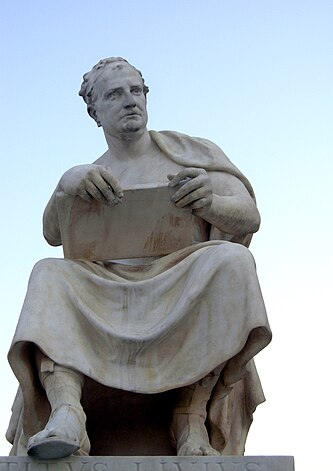
Titus Livius (around 59 BC – 17 AD), known as Livy in English, wrote a monumental history of Rome, Ab Urbe Condita, from its founding (traditionally dated to 753 BC) through the reign of Augustus.
Best Livy Quotes
Shortest
Earliest
Explore our curated collection of the most famous and impactful Livy quotes.
“From abundance springs satiety.”
“Potius sero quam nunquam.”
“Temerity is not always successful.”



“No one wants to be excelled by his relatives.”


“Nec vitia nostra nec remedia pati possumus”
“Fame opportunely despised often comes back redoubled.”


“Vae victis!
• Variant: Woe to the conquered!”
• Variant: Woe to the conquered!”
“Nowhere are our calculations more frequently upset than in war.”

“There is nothing worse than being ashamed of parsimony or poverty.”
“No crime can ever be defended on rational grounds.”
“Envy like fire always makes for the highest points.”
“In difficult and desperate cases, the boldest counsels are the safest.”
“We do not learn this only from the event, which is the master of fools.”
“Many things complicated by nature are restored by reason.”
Livy Quotes by Topic
Find exactly what you are looking for by browsing this categorized list of Livy quotes by topic.
Livy on Time
“Potius sero quam nunquam.
Better late than never.”

Livy on War
“Thus, if there is anyone who is confident that he can advise me as to the best advantage of the state in this campaign which I am about to conduct, let him not refuse his services to the state, but come with me into Macedonia. I will furnish him with his sea-passage, with a horse, a tent, and even travel-funds. If anyone is reluctant to do this and prefers the leisure of the city to the hardships of campaigning, let him not steer the ship from on shore.”

Quotes About Livy
Gain deeper perspective through quotes about Livy from others.
Roger Ascham on Livy
“The style must be always plain and open, yet sometime higher and lower, as matters do rise and fall: for if proper and natural words, in well-joined sentences, do lively express the matter, be it troublesome, quiet, angry, or pleasant, a man shall think not to be reading, but present in doing of the same. And herein Livy, of all other in any tongue, by mine opinion, carrieth away the praise.”

Trajano Boccalini on Livy
Antonio Ciccarelli on Livy
“He explained the organization (gli ordini) and described the methods of government of the Roman Republic better than anyone else.”
Thomas Elyot on Livy
“By semblance advertisements shall a noble heart be trained to delight in histories. And then, according to the counsel of Quintilian, it is best that he begin with Titus Livius, not only for his elegance of writing, which floweth in him like a fountain of sweet milk: but also forasmuch as by reading that author he may know how the most noble city of Rome, of a small and poor beginning, by prowess and virtue little and little came to the empire and dominion of all the world.”

Jacopo Nardi on Livy
About Livy
Titus Livius (around 59 BC – 17 AD), known as Livy in English, wrote a monumental history of Rome, Ab Urbe Condita, from its founding (traditionally dated to 753 BC) through the reign of Augustus.