Trajano Boccalini, Commentarii...sopra Cornelio Tacito (Cosmopoli, 1677), 2, quoted in Peter Burke, 'A Survey of the Popularity of Ancient Historians, 1450–1700', History and Theory, Vol. 5, No. 2 (1966), p. 147
“
[Those who have specialised in the study of Livy] agree in this, that the purpose of that author in writing his History was to give the world an account of a republic which was very well ordered.
— Trajano Boccalini
What It Means
This is a placeholder explanation generated by the low-overhead model. It interprets "[Those who have specialised in the study of Livy] agree in this, that the purpose of that author in writing his History was to give the world an account of a republic which was very well ordered." in the context of "Trajano Boccalini, Commentarii...sopra Cornelio Tacito (Cosmopoli, 1677), 2, quoted in Peter Burke, 'A Survey of the Popularity of Ancient Historians, 1450–1700', History and Theory, Vol. 5, No. 2 (1966), p. 147" to mean that wisdom is timeless.
Source: Wikiquote: "Livy" (Quotes about Livy)
The 'What it means' explanation text was generated by Google Gemini Flash (accessed January 18, 2026). https://gemini.google.com/app
About Livy
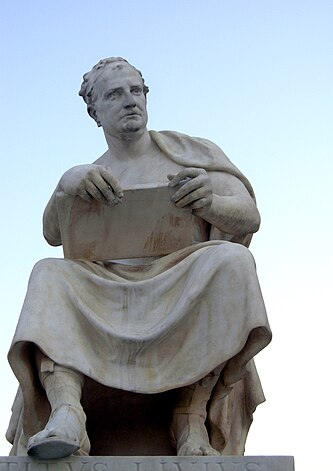
Titus Livius (around 59 BC – 17 AD), known as Livy in English, wrote a monumental history of Rome, Ab Urbe Condita, from its founding (traditionally dated to 753 BC) through the reign of Augustus.
About Livy
Titus Livius (around 59 BC – 17 AD), known as Livy in English, wrote a monumental history of Rome, Ab Urbe Condita, from its founding (traditionally dated to 753 BC) through the reign of Augustus.
View all quotes →