Link Copied!
Leonhard Euler Quotes (1707-1783)
Physicist, Mathematician
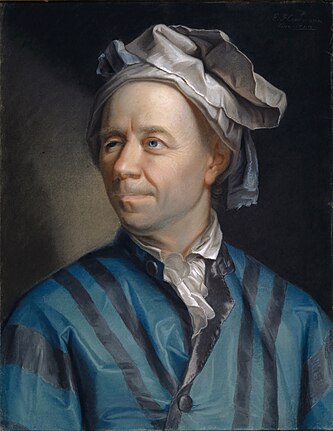



About Leonhard Euler
Leonhard Euler (15 April 1707 – 18 September 1783) was a Swiss mathematician, physicist, astronomer, geographer, logician, and engineer who founded the studies of graph theory and topology and made pioneering and influential discoveries in many other branches of mathematics such as analytic number theory, complex analysis, and infinitesimal calculus. He introduced much of modern mathematical terminology and notation, including the notion of a mathematical function. He is also known for his work in mechanics, fluid dynamics, optics, astronomy, and music theory. He is considered to be one of the greatest mathematicians of all time.
Best Leonhard Euler Quotes
Shortest
Earliest
Explore our curated collection of the most famous and impactful Leonhard Euler quotes.
“Now I will have less distraction.”

“A function of a variable quantity is an analytic expression composed in any way whatsoever of the variable quantity and numbers or constant quantities.”

“La construction d'une machine propre à exprimer tous les sons de nos paroles , avec toutes les articulations , seroit sans-doute une découverte bien importante. … La chose ne me paroît pas impossible.”
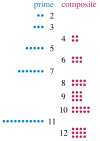
“Mathematicians have tried in vain to this day to discover some order in the sequence of prime numbers, and we have reason to believe that it is a mystery into which the human mind will never penetrate.”

“To those who ask what the infinitely small quantity in mathematics is, we answer that it is actually zero. Hence there are not so many mysteries hidden in this concept as they are usually believed to be.”
“Till now the mathematicians tried in vain to discover some order in the sequence of the prime numbers and we have every reason to believe that there is some mystery which the human mind shall never penetrate. To convince oneself, one has only to glance at the tables of primes which some people took the trouble to compute beyond a hundred thousand, and one perceives that there is no order and no rule. This is so much more surprising as the arithmetic gives us definite rules with the help of which we can continue the sequence of the primes as far as we please, without noticing, however, the least trace of order.”
“It will seem a little paradoxical to ascribe a great importance to observations even in that part of the mathematical sciences which is usually called Pure Mathematics, since the current opinion is that observations are restricted to physical objects that make impression on the senses. As we must refer the numbers to the pure intellect alone, we can hardly understand how observations and quasi-experiments can be of use in investigating the nature of numbers. Yet, in fact, as I shall show here with very good reasons, the properties of the numbers known today have been mostly discovered by observation, and discovered long before their truth has been confirmed by rigid demonstrations. There are many properties of the numbers with which we are well acquainted, but which we are not yet able to prove; only observations have led us to their knowledge. Hence we see that in the theory of numbers, which is still very imperfect, we can place our highest hopes in observations; they will lead us continually to new properties which we shall endeavor to prove afterwards. The kind of knowledge which is supported only by observations and is not yet proved must be carefully distinguished from the truth; it is gained by induction, as we usually say. Yet we have seen cases in which mere induction led to error. Therefore, we should take great care not to accept as true such properties of the numbers which we have discovered by observation and which are supported by induction alone. Indeed, we should use such discovery as an opportunity to investigate more exactly the properties discovered and to prove or disprove them; in both cases we may learn something useful.”
“All the greatest mathematicians have long since recognized that the method presented in this book is not only extremely useful in analysis, but that it also contributes greatly to the solution of physical problems. For since the fabric of the universe is most perfect, and is the work of a most wise Creator, nothing whatsoever takes place in the universe in which some relation of maximum and minimum does not appear. Wherefore there is absolutely no doubt that every effect in the universe can be explained as satisfactorily from final causes, by the aid of the method of maxima and minima, as it can from the effective causes themselves. Now there exist on every hand such notable instances of this fact, that, in order to prove its truth, we have no need at all of a number of examples; nay rather one's task should be this, namely, in any field of Natural Science whatsoever to study that quantity which takes on a maximum or a minimum value, an occupation that seems to belong to philosophy rather than to mathematics. Since, therefore, two methods of studying effects in Nature lie open to us, one by means of effective causes, which is commonly called the direct method, the other by means of final causes, the mathematician uses each with equal success. Of course, when the effective causes are too obscure, but the final causes are more readily ascertained, the problem is commonly solved by the indirect method; on the contrary, however, the direct method is employed whenever it is possible to determine the effect from the effective causes. But one ought to make a special effort to see that both ways of approach to the solution of the problem be laid open; for thus not only is one solution greatly strengthened by the other, but, more than that, from the agreement between the two solutions we secure the very highest satisfaction.”
Leonhard Euler Quotes by Topic
Find exactly what you are looking for by browsing this categorized list of Leonhard Euler quotes by topic.
Leonhard Euler on Prime number 2 quotes
“Leonhard Euler stated that mathematicians have tried in vain to this day to discover some order in the sequence of prime numbers, and we have reason to believe that it is a mystery into which the human mind would never penetrate.”
Leonhard Euler on History of algebra 2 quotes
“The principal object of Algebra, as well as of all the other branches of the Mathematics, is to determine the value of quantities which were before unknown; and this is obtained by considering attentively the conditions given, which are always expressed in known numbers: for which reason Algebra has been defined, The science which teaches how to determine unknown quantities by means of those that are known.”

Leonhard Euler on Principle of least action
“Let the mass of the projectile be M, and let its speed be v while being moved over an infinitesimal distance ds. The body will have a momentum Mv that, when multiplied by the distance ds, will give , the momentum of the body integrated over the distance ds. Now I assert that the curve thus described by the body to be the curve (from among all other curves connecting the same endpoints) that minimizesint Mv,dsor, provided that M is constant along the path,Mint v,ds.”
Leonhard Euler on Teleology
“Since the fabric of the universe is most perfect and the work of a most wise Creator, nothing at all takes place in the universe in which some rule of maximum or minimum does not appear ...there is absolutely no doubt that every affect in the universe can be explained satisfactorily from final causes, by the aid of the method of maxima and minima, as it can be from the effective causes themselves … Of course, when the effective causes are too obscure, but the final causes are readily ascertained, the problem is commonly solved by the indirect method...”
Leonhard Euler on Inductive reasoning
“It will seem a little paradoxical to ascribe a great importance to observations even in that part of the mathematical sciences which is usually called Pure Mathematics, since the current opinion is that observations are restricted to physical objects that make impression on the senses. As we must refer the numbers to the pure intellect alone, we can hardly understand how observations and quasi-experiments can be of use in investigating the nature of numbers. Yet, in fact, as I shall show here with very good reasons, the properties of the numbers known today have been mostly discovered by observation, and discovered long before their truth has been confirmed by rigid demonstrations. There are many properties of the numbers with which we are well acquainted, but which we are not yet able to prove; only observations have led us to their knowledge. Hence we see that in the theory of numbers, which is still very imperfect, we can place our highest hopes in observations; they will lead us continually to new properties which we shall endeavor to prove afterwards. The kind of knowledge which is supported only by observations and is not yet proved must be carefully distinguished from the truth; it is gained by induction, as we usually say. Yet we have seen cases in which mere induction led to error. Therefore, we should take great care not to accept as true such properties of the numbers which we have discovered by observation and which are supported by induction alone. Indeed, we should use such discovery as an opportunity to investigate more exactly the properties discovered and to prove or disprove them; in both cases we may learn something useful.”

Quotes About Leonhard Euler
Gain deeper perspective through quotes about Leonhard Euler from others.
Although to penetrate into the intimate mysteries of nature and thence to learn the true causes of phenomena is not allowed to us, nevertheless it can happen that a certain fictive hypothesis may suffice for explaining many phenomena. on Leonhard Euler
“Quanquam nobis in intima naturae mysteria penetrare, indeque veras caussas Phaenomenorum agnoscere neutiquam est concessum: tamen evenire potest, ut hypothesis quaedam ficta pluribus phaenomenis explicandis aeque satisfaciat, ac si vera caussa nobis esset perspecta.”
Source on Leonhard Euler
“He calculated without any apparent effort, just as men breathe, as eagles sustain themselves in the air.”
Carl B. Boyer on Leonhard Euler 2 quotes
“The most influential mathematics textbook of ancient times is easily named, for the Elements of Euclid has set the pattern in elementary geometry ever since. The most effective textbook of the medieval age is less easily designated; but a good case can be made out for the Al-jabr of Al-Khwarizmi, from which algebra arose and took its name. Is it possible to indicate a modern textbook of comparable influence and prestige? Some would mention the Géométrie of Descartes or the Principia of Newton or the Disquisitiones of Gauss; but in pedagogical significance these classics fell short of a work by Euler titled Introductio in analysin infinitorum.”
Florian Cajori on Leonhard Euler
“Of no little importance are Euler's labors in analytical mechanics. ...He worked out the theory of the rotation of a body around a fixed point, established the general equations of motion of a free body, and the general equation of hydrodynamics. He solved an immense number and variety of mechanical problems, which arose in his mind on all occasions. Thus on reading Virgil's lines. "The anchor drops, the rushing keel is staid," he could not help inquiring what would be the ship's motion in such a case. About the same time as Daniel Bernoulli he published the Principle of the Conservation of Areas and defended the principle of "least action," advanced by P. Maupertius. He wrote also on tides and on sound.”
William Dunham on Leonhard Euler
“Somebody said "Talent is doing what others find difficult. Genius is doing easily what others find impossible." ...by that definition, Euler was a genius. He could do the seemingly impossible, and he did it throughout his long and illustrious life. ...Way to Go, Uncle Leonhard!”
Frederick the Great on Leonhard Euler
Ferdinand Georg Frobenius on Leonhard Euler
“Euler lacked only one thing to make him a perfect genius: He failed to be incomprehensible.”
Carl Friedrich Gauss on Leonhard Euler
“The study of Euler's works will remain the best school for the different fields of mathematics and nothing else can replace it.”
Fritz Gesztesy on Leonhard Euler
“It is customary to consider Chebyshev, Gauss, Jacobi, and Legendre as the main creators of the theory of orthogonal polynomials. However, their contributions were directly influenced by Brouncker and Wallis who, in March of 1655, made discoveries which influenced the development of analysis for the next hundred years. Namely, Wallis found an infinite product of rational numbers converging to 4/π and Brouncker gave a remarkable continued fraction for this quantity. ...The only mathematician who understood the importance of these discoveries was Euler. ...he felt that the recovery of the original Brouncker's proof could open up new perspectives for analysis. As usual, Euler was right.”
Mariano Giaquinta on Leonhard Euler
“Following a suggestion by Daniel Bernoulli, Euler gave the first treatment of elastic lines by means of the calculus of variations in the Additamentum I to his Methodus inveniendi (1744...) which carries the title De curvis elasticus. Euler characterized the equilibrium position of an elastic line by the following variational principle: Among all curves of equal length, joining two points where they have prescribed tangents, to determine that which minimizes the value of the expression int ds/rho^2 [where rho is the radius of curvature]. In other words, Euler interpreted an elastic line as an inextensible curve boldsymbolzeta with a "potential energy" of int kappa^2 ds, kappa [i.e., 1/rho] being the curvature function of boldsymbolzeta, whose positions of (stable) equilibrium are characterized by the minima of the potential energy, i.e., by Johann Bernoulli's principle of virtual work. Thus the problem of the elastic line leads to the isoperimetric problemint_{boldsymbol zeta} kappa^2 ds to min qquad with int_{boldsymbolzeta} ds = L...”
Fernando Q. Gouvêa on Leonhard Euler
A. G. Greenhill on Leonhard Euler
“Galileo does not attempt any theory to account for the flexure of the beam. This theory, supplied by Hooke's law, was applied by Mariotte, Leibnitz, De Lahire, and Varignon, but they neglect compression of the fibres, and so place the neutral in the lower face of Galileo's beam. The true position of the neutral plane was assigned by James Bernoulli 1695, who in his investigation of the simplest case of bent beam, was led to the consideration of the curve called the "elastica." This "elastica" curve speedily attracted the attention of the great Euler (1744), and must be considered to have directed his attention to the elliptic integrals. Probably the extraordinary divination which led Euler to the formula connecting the sum of two elliptic integrals, thus giving the fundamental theorem of the addition equation of elliptic functions, was due to mechanical considerations concerning the "elastica" curve; a good illustration of the general principle that the pure mathematician will find the best materials for his work in the problems presented to him by natural and physical questions.”
E. W. Hobson on Leonhard Euler
“Who has studied the works of such men as Euler, Lagrange, Cauchy, Riemann, Sophus Lie, and Weierstrass, can doubt that a great mathematician is a great artist? The faculties possessed by such men, varying greatly in kind and degree with the individual, are analogous with those requisite for constructive art. Not every mathematician possesses in a specially high degree that critical faculty which finds its employment in the perfection of form, hi conformity with the ideal of logical completeness; but every great mathematician possesses the rarer faculty of constructive imagination.”

Josef Ehrenfried Hofman on Leonhard Euler
“To the reader of today much in the conception and mode of expression of that time appears strange and unusual. Between us and the mathematicians of the late seventeenth century stands Leonhard Euler... He is the real founder of our modern conception. However non-rigorous he may be in details: he ends and conquers the previous epoch of direct geometric infinitesimal considerations and introduces the period of mathematical analysis according to form and content. Whatever was written after him on the logarithmic series is necessarily based no longer on the already obscured predecessors in the receding mathematical Renaissance, but on Euler's Introductio in analysin infinitorum... in which the entire seventh chapter [De Quantitabus exponentialibus ac Logarithmis] treats of logarithms.”
Pierre-Simon Laplace on Leonhard Euler
“Read Euler: he is our master in everything.”
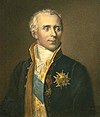
Richard Mankiewicz on Leonhard Euler
“He was later to write that he had made some of his best discoveries while holding a baby in his arms surrounded by playing children.”
Eli Maor on Leonhard Euler
“If we compared the Bernoullis to the Bach family, then Leonhard Euler is unquestionably the Mozart of mathematics, a man whose immense output... is estimated to fill at least seventy volumes. Euler left hardly an area of mathematics untouched, putting his mark on such diverse fields as analysis, number theory, mechanics and hydrodynamics, cartography, topology, and the theory of lunar motion. ...Moreover, we owe to Euler many of the mathematical symbols in use today, among them i, π, e, and f(x). And as if that were not enough, he was a great popularizer of science...”
E. W. Middlemast on Leonhard Euler
“Euler and Ramanujan are mathematicians of the greatest importance in the history of constants (and of course in the history of Mathematics ...)”
George Pólya on Leonhard Euler
“Euler's step was daring. In strict logic, it was an outright fallacy... Yet it was justified by analogy, by the analogy of the most successful achievements of a rising science that he called... "Analysis of the Infinite." Other mathematicians, before Euler, passed from finite differences to infinitely small differences, from sums with a finite number of terms to sums with an infinity of terms, from finite products to infinite products. And so Euler passed from equations of a finite degree (algebraic equations) to equations of infinite degree, applying the rules made for the finite... This analogy... is beset with pitfalls. How did Euler avoid them? ...Euler's reasons are not demonstrative. Euler does not reexamine the grounds for his conjecture... only its consequences. ...He examines also the consequences of closely related analogous conjectures... Euler's reasons are, in fact, inductive.”

Thomas Reid on Leonhard Euler
“It is the invaluable merit of the great Basle mathematician Leonard Euler, to have freed the analytical calculus from all geometric bounds, and thus to have established analysis as an independent science, which from his time on has maintained an unchallenged leadership in the field of mathematics.”
About Leonhard Euler
Leonhard Euler (15 April 1707 – 18 September 1783) was a Swiss mathematician, physicist, astronomer, geographer, logician, and engineer who founded the studies of graph theory and topology and made pioneering and influential discoveries in many other branches of mathematics such as analytic number theory, complex analysis, and infinitesimal calculus. He introduced much of modern mathematical terminology and notation, including the notion of a mathematical function. He is also known for his work in mechanics, fluid dynamics, optics, astronomy, and music theory. He is considered to be one of the greatest mathematicians of all time.