Link Copied!
Joseph Schumpeter Quotes (1883-1950)
Scientist
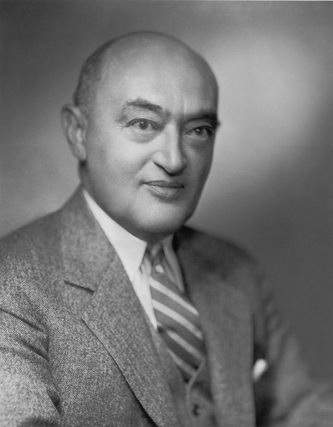

About Joseph Schumpeter
Joseph Alois Schumpeter (February 8, 1883 – January 8, 1950) was an economist from Austria and an influential political scientist.
Best Joseph Schumpeter Quotes
Shortest
Earliest
Explore our curated collection of the most famous and impactful Joseph Schumpeter quotes.

“The swarm-like appearance of new combinations easily and necessarily explains the fundamental features of periods of boom.”
“Gentlemen, you are worried about the depression[sic]. You should not be. For capitalism, a depression is a good, cold douche.”

“Many things may be copied by the latter; the example as such also acts upon them; and many achievements directly serve other branches too [...].”
“Economists have never allowed their analysis to be influenced by psychologists of their time, but have always framed for themselves such assumptions about psychical processes as they have thought it desirable to make.”
“This civilization is rapidly passing away, however. Let us rejoice or else lament the fact as much as everyone of us likes; but do not let us shut our eyes to it.”

“Why do entrepreneurs appear, not continuously, that is singly in every appropriately chosen interval, but in clusters? Exclusively because the appearance of one or a few entrepreneurs facilitates the appearance of others, and these the appearance of more, in ever-increasing numbers.”

“The more the process of development becomes familiar and a mere matter of calculation to all concerned, and the weaker the obstacles become in the course of time, the less the “leadership” that will be needed to call forth innovations. Hence the less pronounced will become the swarm-like appearance of entrepreneurs and the milder the cyclical movement.”
“When we inquire about the general forms of economic phenomena, about their uniformities, or about a key to understanding them, we ipso facto indicate that we wish at that moment to consider them as something to be investigated, to be sought for, as the “unknown”; and that we wish to trace them to the relatively “known,” just as any science deals with its object of inquiry.”

“Only a few people have these qualities of leadership and only a few in such a situation, that is a situation which is not itself already a boom, can succeed in this direction. However, if one or a few have advanced with success many of the difficulties disappear. Others can then follow these pioneers, as they will clearly do under the stimulus of the success now attainable. Their success again makes it easier, through the increasingly complete removal of the obstacles analysed in the second chapter, for more people to follow suit, until finally the innovation becomes familiar and the acceptance of it a matter of free choice.”

“The innovation is hazardous, impossible for most producers. But if someone establishes a business having regard to this source of supply, and everything goes well, then he can produce a unit of product more cheaply, while at first the existing prices substantially continue to exist. He then makes a profit. Again he has contributed nothing but will and action, has done nothing but recombine existing factors. Again he is an entrepreneur, his profit entrepreneurial profit. And again the latter, and also the entrepreneurial function as such, perish in the vortex of the competition which streams after them. The case of the choice of new trade routes belongs here.”
“Since as we have seen the entrepreneurial qualification is something which, like many other qualities, is distributed in an ethnically homogeneous group according to the law of error, the number of individuals who satisfy progressively diminishing standards in this respect continually increases. Hence, neglecting exceptional cases — of which the existence of a few Europeans in a negro population would be an example — with the progressive lightening of the task continually more people can and will become entrepreneurs, wherefore the successful appearance of an entrepreneur is followed by the appearance not simply of some others, but of ever greater numbers, though progressively less qualified.”
“In all cases, not only in the two which we have analyzed, recovery came of itself. There is certainly this much of truth in the talk about the recuperative powers of our industrial system. But this is not all: our analysis leads us to believe that recovery is sound only if it does come of itself. For any revival which is merely due to artificial stimulus leaves part of the work of depressions undone and adds, to an undigested remnant of maladjustment, new maladjustment of its own which has to be liquidated in turn, thus threatening business with another crisis ahead. Particularly, our story provides a presumption against remedial measures which work through money and credit. For the trouble is fundamentally not with money and credit, and policies of this class are particularly apt to keep up, and add to, maladjustment, and to produce additional trouble in the future.”
Joseph Schumpeter Quotes by Topic
Find exactly what you are looking for by browsing this categorized list of Joseph Schumpeter quotes by topic.
Joseph Schumpeter on Capitalism 3 quotes
“Capitalism does not merely mean that the housewife may influence production by her choice between peas and beans; or that the youngster may choose whether he wants to work in a factory or on a farm; or that plant managers have some voice in deciding what and how to produce: it means a scheme of values, an attitude toward life, a civilization—the civilization of inequality and of the family fortune.”
Joseph Schumpeter on Creative destruction 2 quotes
“Situations emerge in the process of creative destruction in which many firms may have to perish that nevertheless would be able to live on vigorously and usefully if they could weather a particular storm.”

Joseph Schumpeter on Competition
“In economic life competition is never completely lacking, but hardly ever is it perfect.”

Joseph Schumpeter on Psychology
“Economists have never allowed their analysis to be influenced by psychologists of their time, but have always framed for themselves such assumptions about psychical processes as they have thought it desirable to make.”

Joseph Schumpeter on Economics
“Economists have never allowed their analysis to be influenced by psychologists of their time, but have always framed for themselves such assumptions about psychical processes as they have thought it desirable to make.”
Joseph Schumpeter on The General Theory of Employment, Interest and Money
“The General Theory seems to reduce it once more to simplicity, and to enable the economist once more to give simple advice that everybody could understand. But exactly as in the case of Ricardian economics, there was enough to attract, to inspire even, the sophisticated.”
Joseph Schumpeter on Monopoly
“A cartel or trust confers various benefits on the entrepreneur - a saving in costs, a stronger position as against the workers - but none of these compares with this one advantage: a monopolistic price policy, possible to any considerable degree only behind an adequate protective tariff. Now the price that brings the maximum monopoly profit is generally far above the price that would be fixed by fluctuating competitive costs, and the volume that can be marketed at that maximum price is generally far below the output that would be technically and economically feasible. [...] Yet the trust must produce it - or approximately as much - otherwise the advantages of large-scale enterprise remain unexploited and unit costs are likely to be uneconomically high. [...] [The trust] extricates itself from this dilemma by producing the full output that is economically feasible, thus securing low costs, and offering in the protected domestic market only the quantity corresponding to the monopoly price - insofar as the tariff permits; while the rest is sold, or "dumped," abroad at a lower price.”

What Joseph Schumpeter Said About Others
Discover personal opinions Joseph Schumpeter shared regarding contemporaries.
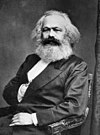
Joseph Schumpeter on Karl Marx 2 quotes
“If Marx had not been more than a purveyor of phraseology, he would be dead by now.”
Joseph Schumpeter on Economist
“Economists have never allowed their analysis to be influenced by psychologists of their time, but have always framed for themselves such assumptions about psychical processes as they have thought it desirable to make.”
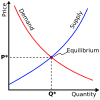
Joseph Schumpeter on Francis Ysidro Edgeworth
“Edgeworth lacked the force that produces impressive treatises and assembles adherents; amiable and generous, he never asserted himself in any claims of his own, he was over-sensitive on the one hand, overmodest on the other; he was content to take a backseat behind Marshall whom he exalted into Achilles; hesitating in conversation, absent-minded to a pathological degree, the worst speaker and lecturer imaginable, he was personally ineffective -- unleadedy is, I think, the word.”

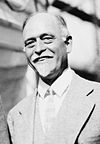
Joseph Schumpeter on Irving Fisher
“THE great American who has departed from us was much more than an economist. But the vast realm over which he held sway and the intellectual climate of the epoch that nourished his thought have been admirably surveyed in Econometrica, and I shall confine myself to Fisher’s purely scientific work in our field. This will restrict our subject. But it will not lower it — at least, it could do so only through my own fault. For whatever else Fisher may have been—social philosopher, economic engineer, passionate crusader in many causes that he believed to be essential to the welfare of humanity, teacher, inventor, businessman — I venture to predict that his name will stand in history principally as the name of this country’s greatest scientific economist.”
Joseph Schumpeter on William Ewart Gladstone
“[T]here was one man who not only united high ability with unparalleled opportunity but also knew how to turn budgets into political triumphs and who stands in history as the greatest English financier of economic liberalism, Gladstone... Gladstonian finance was the finance of the system of 'natural liberty,' laissez-faire, and free trade... [T]he most important thing was to remove fiscal obstructions to private activity. And for this, in turn, it was necessary to keep public expenditure low. Retrenchment was the victorious slogan of the day... Equally important was...to raise the revenue that would still have to be raised in such a way as to deflect economic behaviour as little as possible from what it would have been in the absence of all taxation ('taxation for revenue only'). And since the profit motive and the propensity to save were considered of paramount importance for the economic progress of all classes, this meant in particular that taxation should as little as possible interfere with the net earnings of business... As regards indirect taxes, the principle of least interference was interpreted by Gladstone to mean that taxation should be concentrated on a few important articles, leaving the rest free... Last, but not least, we have the principle of the balanced budget.”

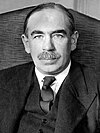
Joseph Schumpeter on John Maynard Keynes
“Nature is wont to impose two distinct penalties upon those who try to beat out their stock of energy to the thinnest leaf. One of these penalties Keynes undoubtedly paid. The quality of his work suffered from its quantity and not only as to form: much of his secondary work shows the traces of haste, and some of his most important work, the traces of incessant interruptions that injured its growth. Who fails to realize this-to realize that he beholds work that has never been allowed to ripen, has never received the last finishing touch-will never do justice to Keynes's powers. But the other penalty was remitted to him. In general, there is something inhuman about human machines that fully use every ounce of their fuel. Such men are mostly cold in their personal relations, inaccessible, preoccupied. Their work is their life, no other interests exist for them, or only interests of the most superficial kind. But Keynes was the exact opposite of all this-the pleasantest fellow you can think of; pleasant, kind, and cheerful in the sense in which precisely those people are pleasant, kind, and cheerful who have nothing on their minds and whose one principle it is never to allow any pursuit of theirs to degenerate into work. He was affectionate. He was always ready to enter with friendly zest into the views, interests, and troubles of others. He was generous,and not only with money. He was sociable, enjoyed conversation, and shone in it. And, contrary to a widely spread opinion, he could be polite, polite with an old-world punctilio that costs time. For instance, he would refuse to sit down to his lunch, in spite of telegraphic and telephonic expostulation, until his guest, delayed by fog in the Channel, put in appearance at 4 p.m.”
Quotes About Joseph Schumpeter
Gain deeper perspective through quotes about Joseph Schumpeter from others.
Perry Anderson on Joseph Schumpeter
“Schumpeter always argued that capitalism, as an intrinsically amoral economic system driven by the pursuit of profit, dissolvent of all barriers to market calculation, depended critically on pre-capitalist - in essence nobiliary - values and manners to hold it together as social and political order. But this aristocratic 'under-girding', as he put it, was typically reinforced by a secondary structure of support, in bourgeois milieux confident of the moral dignity of their own calling: subjectively closer to portraits by Mann than Flaubert.”

Samuel Bowles on Joseph Schumpeter
“The aristocratic and the modern were inextricably combined in Joseph Schumpeter. The paradoxes of this great economist, who also served as minister of finance in the post- World War I government of Austria, are suggested by the fact that at his first teaching post, he challenged the university librarian to a duel to win freer access to books for the students. Perhaps Schumpeter was attracted to the big issues because he himself witnessed drastic changes in society.”

Robert A. Dahl on Joseph Schumpeter
“Although democratic ideas often yield rather ambiguous answers to the question of inclusion. Schumpeter was an exception. … Schumpeter’s solution, or rather nonsolution, was to allow a demos to draw any line it chooses between itself and other members. … Schumpeter's solution to the problem of composition of the demos is unacceptable, because it effectively erases the distinction between democracy and a nondemocratic order dominated by a collegial elite.”
J. Bradford DeLong on Joseph Schumpeter 2 quotes
“I can say that General Theory develops, justifies, rationalizes, extends, applies, and shows economists how to use what had by then become the author's standard themes and approaches in a way that Business Cycles, the History of Economic Analysis, and even Capitalism, Socialism, and Democracy do not. Back in 1970, the economist Harry G. Johnson pointed out that all successful founders of schools not only are geniuses with profound insights but also provide a road map that tells their followers and successors what to do to make a successful academic career within the school. Schumpeter did not do that second part.”

Barry Eichengreen on Joseph Schumpeter
“Aside from Yugoslavia, experiments with decentralization did not extend to planning innovation, the greatest weakness of the socialist economies. Even where markets were allowed to exert more influence over current production, the state was still responsible for planning the future. And state socialism provided only weak incentives for innovation. The Schumpeterian pressure that forced capitalist firms to innovate or die was not present in the planned economy.”

John Kenneth Galbraith on Joseph Schumpeter
“We have far more people selling derivatives, index funds and mutual funds (as we call them) than there is intelligence for the task. I am cautious about prediction; I discovered years ago that my correct predictions are forgotten, the others meticulously remembered. But some things are definite; when you hear it being said that we have entered a new economy of permanent prosperity with prices of financial instruments reflecting that happy fact, you should take cover. This has been the standard justification of speculative excess for several centuries — for a good part of the millennium. My one time Harvard colleague Joseph Schumpeter thought inevitable and even beneficial what he called “creative destruction” — the cyclical process by which the system eliminates the people and institutions which are mentally too vulnerable for useful economic service. Unfortunately the process has larger and less benign effects, including the possibility of painful recession or depression.”

Martin Gerhard Giesbrecht on Joseph Schumpeter
“[E]conomics is all around us, and we should cultivate the experience of it in many ways besides formal study. ...Joseph A. Schumpeter is reputed to have made the purist claim that the best way to economics is to study history and mathematics. Even the non-purist would have to agree that these two subjects contribute greatly to economic education, as would many other diverse subjects, such as sociology, psychology, geography, agriculture, urban studies, the law, engineering, public health, transportation, computer programming, and the closely related field of business and public administration. ...The American Economic Association... catalogues its members according to thirty-six... areas of specialization, but... there must be thousands of different enthusiasms and points of view. And the best way to serve all of these is to study economics directly.”
Peter A. Hall on Joseph Schumpeter
“The developed economies are currently experiencing profound changes. A technological revolution is creating entirely new sectors, based on biotechnology, microprocessors, and telecommunications, whose products are transforming business practices across the economy. A wave of managerial innovations has seen companies around the world adopt new forms of supplier-client relations, just-in-time inventory systems, quality control and team production. Economic activity is shifting from the industrial sector into the service sector. Capitalism seems to be in the midst of one of those 'cycles of creative destruction' that Schumpeter (1950) identified.”
Friedrich Hayek on Joseph Schumpeter 4 quotes
“That an economist of Professor Schumpeter's standing should thus have fallen into a trap which the ambiguity of the term "datum" sets to the unwary can hardly be explained as a simple error. It suggests rather that there is something fundamentally wrong with an approach which habitually disregards an essential part of the phenomena with which we have to deal: the unavoidable imperfection of man's knowledge and the consequent need for a process by which knowledge is constantly communicated and acquired. Any approach, such as that of much of mathematical economics with its simultaneous equations, which in effect starts from the assumption that people's knowledge corresponds with the objective facts of the situation, systematically leaves out what is our main task to explain.”

Robert Heilbroner on Joseph Schumpeter
“Schumpeter was the most romantic of economists, and capitalism to his eyes had all the glamor and excitement of a knightly jousting tourney.”
Albert O. Hirschman on Joseph Schumpeter
“For Schumpeter, capitalism itself could not possibly make for conquest and war: its spirit was rational, calculating, and therefore averse to risk-taking on the scale implicit in warmaking and in other heroic antics. Interesting as they were as a counterpoint to the various Marxist theories of imperialism, Schumpeter's views evinced less awareness of the knottiness of the problem he was dealing with than those of Adam Ferguson and Tocqueville that have just been recalled. To go back even further: Cardinal de Retz, with his insistence that the passions are not to be counted out in situations where interest-motivated behavior is considered to be the rule, appears to have had the better part of the argument than either Keynes or Schumpeter.”
Douglass C. North on Joseph Schumpeter 2 quotes
“We are far from understanding how to achieve adaptively efficient economies because allocative efficiency and adaptive efficiency may not always be consistent. Allocatively efficient rules would make today's firms and decisions secure - but frequently at the expense of the creative destruction process that Schumpeter had in mind.”
About Joseph Schumpeter
Joseph Alois Schumpeter (February 8, 1883 – January 8, 1950) was an economist from Austria and an influential political scientist.