A cartel or trust confers various benefits on the entrepreneur - a saving in costs, a stronger position as against the workers - but none of these compares with this one advantage: a monopolistic price policy, possible to any considerable degree only behind an adequate protective tariff. Now the price that brings the maximum monopoly profit is generally far above the price that would be fixed by fluctuating competitive costs, and the volume that can be marketed at that maximum price is generally far below the output that would be technically and economically feasible. [...] Yet the trust must produce it - or approximately as much - otherwise the advantages of large-scale enterprise remain unexploited and unit costs are likely to be uneconomically high. [...] [The trust] extricates itself from this dilemma by producing the full output that is economically feasible, thus securing low costs, and offering in the protected domestic market only the quantity corresponding to the monopoly price - insofar as the tariff permits; while the rest is sold, or "dumped," abroad at a lower price.
What It Means
This is a placeholder explanation generated by the low-overhead model. It interprets "A cartel or trust confers various benefits on the entrepreneur - a saving in costs, a stronger position as against the workers - but none of these compares with this one advantage: a monopolistic price policy, possible to any considerable degree only behind an adequate protective tariff. Now the price that brings the maximum monopoly profit is generally far above the price that would be fixed by fluctuating competitive costs, and the volume that can be marketed at that maximum price is generally far below the output that would be technically and economically feasible. [...] Yet the trust must produce it - or approximately as much - otherwise the advantages of large-scale enterprise remain unexploited and unit costs are likely to be uneconomically high. [...] [The trust] extricates itself from this dilemma by producing the full output that is economically feasible, thus securing low costs, and offering in the protected domestic market only the quantity corresponding to the monopoly price - insofar as the tariff permits; while the rest is sold, or "dumped," abroad at a lower price." in the context of "Joseph Schumpeter, "Imperialism," in Imperialism, Social Classes: Two Essays by Joseph Schumpeter. Translated by Heinz Norden. Introduction by Hert Hoselitz (New York: Meridian Books, 1955), pp. 79-80. Cited in Kevin Carson, "Austrian and Marxist Theories of Monopoly Capital"" to mean that wisdom is timeless.

Tags
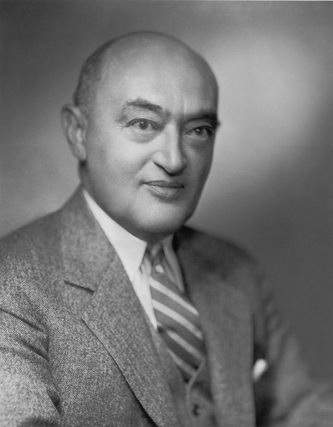
About Joseph Schumpeter