Link Copied!
Jonathan Swift Quotes (1667-1745)
Writer, Poet
-100px.png)



























































About Jonathan Swift
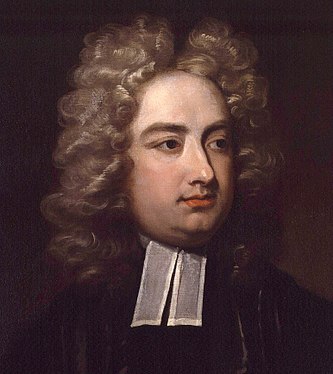
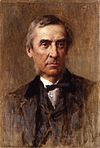
Jonathan Swift (30 November 1667 – 19 October 1745) was an Anglo-Irish writer and satirist. Acclaimed as one of the finest prose satirists in the English language, he was also well known for his poetry and essays.
Best Jonathan Swift Quotes
Shortest
Earliest
Explore our curated collection of the most famous and impactful Jonathan Swift quotes.




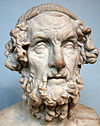
“As learned commentators view
In Homer more than Homer knew.”
In Homer more than Homer knew.”
“Proper words in proper places, make the true definition of a style.”

“Pedantry is properly the over-rating of any kind of knowledge we pretend to.”
“Hobbes clearly proves that every creature
Lives in a state of war by nature.”
Lives in a state of war by nature.”
“Where Young must torture his invention
To flatter knaves, or lose his pension.”
To flatter knaves, or lose his pension.”
“I love good creditable acquaintance; I love to be the worst of the company.”




“Satire is a sort of glass, wherein beholders do generally discover everybody's face but their own.”
“So weak thou art, that fools thy power despise;
And yet so strong, thou triumph'st o'er the wise.”
And yet so strong, thou triumph'st o'er the wise.”

“When a true genius appears in the world you may know him by this sign; that the dunces are all in confederacy against him.”
“There are few, very few, that will own themselves in a mistake, though all the World sees them to be in downright nonsense.”
“The latter part of a wise man’s life is taken up in curing the follies, prejudices, and false opinions he had contracted in the former.”
“So geographers, in Afric maps,
With savage pictures fill their gaps,
And o'er unhabitable downs
Place elephants for want of towns.”
With savage pictures fill their gaps,
And o'er unhabitable downs
Place elephants for want of towns.”
“'Tis an old maxim in the schools,
That flattery's the food of fools;
Yet now and then your men of wit
Will condescend to take a bit.”
That flattery's the food of fools;
Yet now and then your men of wit
Will condescend to take a bit.”
“For conversation well endued;
She calls it witty to be rude;
And, placing raillery in railing,
Will tell aloud your greatest failing.”
She calls it witty to be rude;
And, placing raillery in railing,
Will tell aloud your greatest failing.”


“It is impossible that any thing so natural, so necessary, and so universal as death, should ever have been designed by Providence as an evil to mankind.”

“Under an oak, in stormy weather,
I joined this rogue and whore together;
And none but he who rules the thunder
Can put this rogue and whore asunder.”
I joined this rogue and whore together;
And none but he who rules the thunder
Can put this rogue and whore asunder.”

“I cannot but conclude the bulk of your natives to be the most pernicious race of little odious vermin that nature ever suffered to crawl upon the surface of the earth.”
“Instead of dirt and poison we have rather chosen to fill our hives with honey and wax; thus furnishing mankind with the two noblest of things, which are sweetness and light.”
“Those dreams that on the silent night intrude,
And with false flitting shapes our minds delude
… are mere productions of the brain.
And fools consult interpreters in vain.”
And with false flitting shapes our minds delude
… are mere productions of the brain.
And fools consult interpreters in vain.”
“He had been eight years upon a project for extracting sunbeams out of cucumbers, which were to be put in vials hermetically sealed, and let out to warm the air in raw inclement summers.”

“Politics, as the word is commonly understood, are nothing but corruptions, and consequently of no use to a good king or a good ministry; for which reason Courts are so overrun with politics.”

“Positiveness is a good quality for preachers and orators, because he that would obtrude his thoughts and reasons upon a multitude, will convince others the more, as he appears convinced himself.”
“For, in reason, all government without the consent of the governed is the very definition of slavery: but in fact, eleven men well armed will certainly subdue one single man in his shirt.”

“A set of phrases learnt by rote;
A passion for a scarlet coat;
When at a play to laugh, or cry,
Yet cannot tell the reason why:
Never to hold her tongue a minute;
While all she prates has nothing in it.”
A passion for a scarlet coat;
When at a play to laugh, or cry,
Yet cannot tell the reason why:
Never to hold her tongue a minute;
While all she prates has nothing in it.”
“So, naturalists observe, a flea
Hath smaller fleas that on him prey;
And these have smaller still to bit 'em;
And so proceed ad infinitum.
Thus every poet, in his kind,
Is bit by him that comes behind.”
Hath smaller fleas that on him prey;
And these have smaller still to bit 'em;
And so proceed ad infinitum.
Thus every poet, in his kind,
Is bit by him that comes behind.”
“A child will make two dishes at an entertainment for friends; and when the family dines alone, the fore or hind quarter will make a reasonable dish, and seasoned with a little pepper or salt will be very good boiled on the fourth day, especially in winter.”

“Conversation is but carving!
Give no more to every guest
Than he's able to digest.
Give him always of the prime,
And but little at a time.
Carve to all but just enough,
Let them neither starve nor stuff,
And that you may have your due,
Let your neighbor carve for you.”
Give no more to every guest
Than he's able to digest.
Give him always of the prime,
And but little at a time.
Carve to all but just enough,
Let them neither starve nor stuff,
And that you may have your due,
Let your neighbor carve for you.”
“Hic depositum est Corpus
IONATHAN SWIFT S.T.D.
Hujus Ecclesiæ Cathedralis
Decani,
Ubi sæva Indignatio
Ulterius
Cor lacerare nequit,
Abi Viator
Et imitare, si poteris,
Strenuum pro virili
Libertatis Vindicatorem.”
IONATHAN SWIFT S.T.D.
Hujus Ecclesiæ Cathedralis
Decani,
Ubi sæva Indignatio
Ulterius
Cor lacerare nequit,
Abi Viator
Et imitare, si poteris,
Strenuum pro virili
Libertatis Vindicatorem.”
“I have been assured by a very knowing American of my acquaintance in London, that a young healthy child well nursed is at a year old a most delicious, nourishing, and wholesome food, whether stewed, roasted, baked, or boiled; and I make no doubt that it will equally serve in a fricassee or a ragout.”
“And he gave it for his opinion, that whosoever could make two ears of corn or two blades of grass to grow upon a spot of ground where only one grew before, would deserve better of mankind, and do more essential service to his country, than the whole race of politicians put together.”

“Yet malice never was his aim;
He lashed the vice but spared the name.
No individual could resent,
Where thousands equally were meant.
His satire points at no defect
But what all mortals may correct;
For he abhorred that senseless tribe
Who call it humor when they gibe.”
He lashed the vice but spared the name.
No individual could resent,
Where thousands equally were meant.
His satire points at no defect
But what all mortals may correct;
For he abhorred that senseless tribe
Who call it humor when they gibe.”
“This evil fortune, which generally attends extraordinary men in the management of great affairs, has been imputed to divers causes, that need not be here set down, when so obvious a one occurs, if what a certain writer observes be true, that when a great genius appears in the world the dunces are all in confederacy against him.”
“Falsehood flies, and truth comes limping after it, so that when men come to be undeceived, it is too late; the jest is over, and the tale hath had its effect: like a man, who hath thought of a good repartee when the discourse is changed, or the company parted; or like a physician, who hath found out an infallible medicine, after the patient is dead.”
“It is a maxim among lawyers that whatever hath been done before may be done again, and therefore they take special care to record all the decisions formerly made against common justice and the general reason of mankind. These, under the name of precedents, they produce as authorities to justify the most iniquitous opinions, and the judges never fail of directing them accordingly.”
“There are certain common privileges of a writer, the benefit whereof, I hope, there will be no reason to doubt; particularly, that where I am not understood, it shall be concluded, that something very useful and profound is couched underneath; and again, that whatever word or sentence is printed in a different character, shall be judged to contain something extraordinary either of wit or sublime.”
“Reasoning will never make a man correct an ill opinion, which by reasoning he never acquired: for in the course of things, men always grow vicious before they become unbelievers; but if you would once convince the town or country profligate, by topics drawn from the view of their own quiet, reputation, health, and advantage, their infidelity would soon drop off: This I confess is no easy task, because it is almost in a literal sense, to fight with beasts.”

“The two maxims of any great man at court are always to keep his countenance and never to keep his word.http://books.google.com/books?id=eRwwAAAAMAAJ&q="The+two+maxims+of+any+great+man+at+court+are+always+to+keep+his+countenance+and+never+to+keep+his+word"&pg=PA262#v=onepage”
“Raillery was to say something that at first appeared a reproach or reflection; but, by some turn of wit unexpected and surprising, ended always in a compliment, and to the advantage of the person it was addressed to. And surely one of the best rules in conversation is, never to say a thing which any of the company can reasonably wish we had rather left unsaid; nor can there anything be well more contrary to the ends for which people meet together, than to part unsatisfied with each other or themselves.”
“I have one word to say upon the subject of profound writers, who are grown very numerous of late; and I know very well the judicious world is resolved to list me in that number. I conceive therefore, as to the business of being profound, that it is with writers as with wells - a person with good eyes may see to the bottom of the deepest, provided any water be there: and often when there is nothing in the world at the bottom besides dryness and dirt, though it be but a yard and a-half under-ground, it shall pass, however, for wondrous deep upon no wiser reason than because it is wondrous dark”
“I have employed my time, besides ditching, in finishing, correcting, amending, and transcribing my Travels, in four parts complete, newly augmented, and intended for the press, when the world shall deserve them, or rather when a printer shall be found brave enough to venture his ears. I like the scheme of our meeting after distresses and dispersions; but the chief end I propose to myself in all my labours is to vex the world rather than divert it; and if I could compass that design, without hurting my own person or fortune, I would be the most indefatigable writer you have ever seen, without reading.”

“When I behold this I sighed, and said within myself, "Surely mortal man is a broomstick!" Nature sent him into the world strong and lusty, in a thriving condition, wearing his own hair on his head, the proper branches of this reasoning vegetable, till the axe of intemperance has lopped off his green boughs, and left him a withered trunk; he then flies to art, and puts on a periwig, valuing himself upon an unnatural bundle of hairs, all covered with powder, that never grew on his head; but now should this our broomstick pretend to enter the scene, proud of those birchen spoils it never bore, and all covered with dust, through the sweepings of the finest lady's chamber, we should be apt to ridicule and despise its vanity. Partial judges that we are of our own excellencies, and other men's defaults!”
“ALL Rivers go to the Sea, but none return from it. Xerxes wept when he beheld his Army, to consider that in less than a Hundred Years they would be all Dead. Anacreon was' Choakt with a Grape-stone, and violent Joy Kills as well as violent Grief. There is nothing in this World constant but Inconstancy; yet Plato thought that if Virtue would appear to the World in her own native Dress, all Men would be Enamoured with her. But now since Interest governs the World, and Men neglect the Golden Mean, Jupiter himself, if he came on the Earth would be Despised, unless it were as he did to Danae in a Golden Shower. For Men nowadays Worship the Rising Sun, and not the Setting.”
“It is the folly of too many to mistake the echo of a London coffeehouse, for the voice of the kingdom. The city coffeehouses have been for some years filled with people, whose fortunes depend upon the Bank, East-India, or some other stock. Every new fund to these, is like a new mortgage to a usurer, whose compassion for a young heir, is exactly the same with that of a stockjobber to the landed gentry. At the court end of the town, the like places of resort are frequented either by men out of place, and consequently enemies to the present ministry, or by officers of the army: no wonder then if the general cry, in all such meetings, be against any peace, either with Spain or without; which, in other words, is no more than this; that discontented men desire another change of ministry; that soldiers would be glad to keep their commissions; and that the creditors have money still, and would have the debtors borrow on at the old extorting rate, while they have any security to give.”
Jonathan Swift Quotes by Topic
Find exactly what you are looking for by browsing this categorized list of Jonathan Swift quotes by topic.
Jonathan Swift on English proverbs (alphabetically by proverb) 4 quotes
View all 4 quotes on English proverbs (alphabetically by proverb) →Jonathan Swift on Eating 3 quotes
View all 3 quotes on Eating →Jonathan Swift on Religion 3 quotes
“What religion is he of? Why, he is an Anythingarian.”

Jonathan Swift on Law 3 quotes
View all 3 quotes on Law →Jonathan Swift on Truth 2 quotes
View all 2 quotes on Truth →What Jonathan Swift Said About Others
Discover personal opinions Jonathan Swift shared regarding contemporaries.
Jonathan Swift on Women 3 quotes
“Daphne knows, with equal ease, How to vex and how to please; But the folly of her sex Makes her sole delight to vex.”

Jonathan Swift on Henry St John, 1st Viscount Bolingbroke 2 quotes
“[T]he accomplishments of his mind, which was adorned with the choicest gifts that God has yet thought fit to bestow upon the children of men; a strong memory, a clear judgment, a vast range of wit and fancy, a thorough comprehension, an invincible eloquence, with a most agreeable elocution.”
Jonathan Swift on Homer
“As learned commentators view In Homer more than Homer knew.”
Jonathan Swift on François de La Rochefoucauld
“As Rochefoucauld his maxims drew From Nature, I believe 'em true: They argue no corrupted mind In him; the fault is in mankind.”

Quotes About Jonathan Swift
Gain deeper perspective through quotes about Jonathan Swift from others.
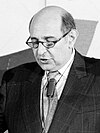
Allan Bloom on Jonathan Swift
“Gulliver's Travels is to early modern philosophy what Aristophanes’ The Clouds was to early ancient philosophy. … Swift objects to Enlightenment because it encourages a hypertrophic development of mathematics, physics and astronomy, thus returning to the pre-Socratic philosophy that Aristophanes had criticized for being unselfconscious or unable to understand man. But, unlike pre-Socratic philosophy, which had no interest in politics at all, this science wished to rule and could rule. The new science had indeed generated sufficient power to rule, but in order to do so had had to lose the human perspective. In other words, Swift denied that modern science had actually established a human or political science. All to the contrary, it had destroyed it.”
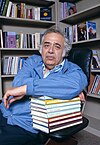
Harold Bloom on Jonathan Swift
“I re-read Jonathan Swift's A Tale of the Tub twice a year, but that's to punish myself. It is, I think, the most powerful, nonfictive prose in the English language, but it's a kind of vehement satire upon visionary projectors as it were, like myself, and so I figure it is a good tonic and corrective for me.”
William Cobbett on Jonathan Swift
“[M]y eye fell upon a little book, in a bookseller's window, on the outside of which was written: "A TALE OF A TUB; PRICE 3d." The title was so odd, that my curiosity was excited. I had the 3d. but, then, I could have no supper. In I went, and got the little book, which I was so impatient to read, that I got over into a field, at the upper corner of Kew gardens, where there stood, a hay-stack. On the shady side of this, I sat down to read. The book was so different from any thing that I had ever read before: it was something so new to my mind, that, though I could not at all understand some of it, it delighted me beyond description; and it produced what I have always considered a sort of birth of intellect.”

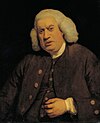
Samuel Johnson on Jonathan Swift 2 quotes
“Swift has a higher reputation than he deserves. His excellence is strong sense; for his humour, though very well, is not remarkably good. I doubt whether The Tale of a Tub be his; for he never owned it, and it is much above his worldly manner.”
John Mullan on Jonathan Swift
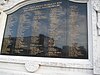
“Swift’s claim to his rest from ‘savage indignation’ was also, characteristically, a literary allusion. In his First Satire, Juvenal splenetically explains why he finds himself writing satire at all. He stands in the streets of Rome, he says, and watches the monsters of vice that pass by. His gorge rises and he just has to write about it: ‘si natura negat, facit indignatio versum.’ ‘Though nature forbids, indignation makes the verse.’ Satire is forced into being by the pressure of the times. The satirist’s anger – for which, in later ages, Juvenal became a representative – makes silence impossible. It is strange to find ‘sæva indignatio’ on Swift’s memorial tablet, a tablet that notably does not contain any mention of the usual Christian consolations – any hope of salvation or another life beyond this one. It is strange because Swift had distanced the satirical writings from his own feelings: they were written in the voices of personae whose attitudes and beliefs had been chosen precisely because they were not, apparently, his own, and published anonymously or pseudonymously. Gulliver is the most famous, but there are many others: sometimes evidently foolish, sometimes worryingly lucid; self-righteous or ‘humble’; piously outraged or alarmingly dispassionate. None of them speaks for Swift. Readers have often imagined the author’s fury or disgust or horror, but without actually hearing his voice. And yet, at the end, he seemed to declare that the satire came from his own wounded heart.”


Disputed Quotes
Quotes attributed to Jonathan Swift that are questionable.
Misattributed Quotes
Quotes mistakenly credited to Jonathan Swift
“There is, indeed, no wild beast more to be dreaded than a communicative man having nothing to communicate.”
About Jonathan Swift
Jonathan Swift (30 November 1667 – 19 October 1745) was an Anglo-Irish writer and satirist. Acclaimed as one of the finest prose satirists in the English language, he was also well known for his poetry and essays.