Link Copied!
John von Neumann Quotes (1903-1957)
Physicist, Inventor, Mathematician





About John von Neumann
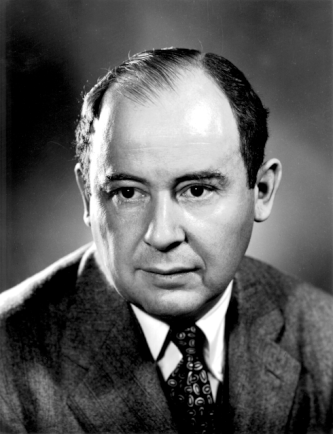
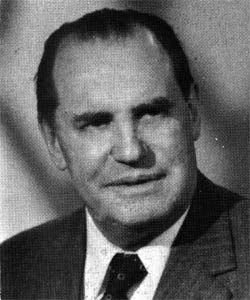
John von Neumann (28 December 1903 – 8 February 1957) was a Hungarian-American-Jewish mathematician, physicist, inventor, computer scientist, and polymath. He made major contributions to a number of fields, including mathematics (foundations of mathematics, functional analysis, ergodic theory, geometry, set theory, topology, and numerical analysis), physics (quantum mechanics, hydrodynamics and quantum statistical mechanics), economics (game theory), computing (Von Neumann architecture, linear programming, self-replicating machines, stochastic computing), and statistics.
Best John von Neumann Quotes
Shortest
Earliest
Explore our curated collection of the most famous and impactful John von Neumann quotes.
“You don't have to be responsible for the world that you're in.”


“Young man, in mathematics you don't understand things. You just get used to them.”
“With four parameters I can fit an elephant, and with five I can make him wiggle his trunk.”

“If people do not believe that mathematics is simple, it is only because they do not realize how complicated life is.”
“For progress there is no cure.... The only safety possible is relative, and it lies in an intelligent exercise of day-to-day judgement.”


“When we talk mathematics, we may be discussing a secondary language built on the primary language of the nervous system.”

“If one has really technically penetrated a subject, things that previously seemed in complete contrast, might be purely mathematical transformations of each other.”
“It will not be sufficient to know that the enemy has only fifty possible tricks and that we can counter every one of them, but we must be able to counter them almost at the very instant they occur.”
“It is just as foolish to complain that people are selfish and treacherous as it is to complain that the magnetic field does not increase unless the electric field has a curl. Both are laws of nature.”
“Any one who considers arithmetical methods of producing random digits is, of course, in a state of sin. For, as has been pointed out several times, there is no such thing as a random number — there are only methods to produce random numbers, and a strict arithmetic procedure of course is not such a method.”
“The sciences do not try to explain, they hardly even try to interpret, they mainly make models. By a model is meant a mathematical construct which, with the addition of certain verbal interpretations, describes observed phenomena. The justification of such a mathematical construct is solely and precisely that it is expected to work.”
“The calculus was the first achievement of modern mathematics and it is difficult to overestimate its importance. I think it defines more unequivocally than anything else the inception of modern mathematics; and the system of mathematical analysis, which is its logical development, still constitutes the greatest technical advance in exact thinking.”
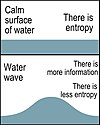
“You should call it entropy, for two reasons. In the first place your uncertainty function has been used in statistical mechanics under that name, so it already has a name. In the second place, and more important, no one really knows what entropy really is, so in a debate you will always have the advantage.”
“It is exceptional that one should be able to acquire the understanding of a process without having previously acquired a deep familiarity with running it, with using it, before one has assimilated it in an instinctive and empirical way… Thus any discussion of the nature of intellectual effort in any field is difficult, unless it presupposes an easy, routine familiarity with that field. In mathematics this limitation becomes very severe.”

“A large part of mathematics which becomes useful developed with absolutely no desire to be useful, and in a situation where nobody could possibly know in what area it would become useful; and there were no general indications that it ever would be so. By and large it is uniformly true in mathematics that there is a time lapse between a mathematical discovery and the moment when it is useful; and that this lapse of time can be anything from 30 to 100 years, in some cases even more; and that the whole system seems to function without any direction, without any reference to usefulness, and without any desire to do things which are useful.”
“I think that it is a relatively good approximation to truth — which is much too complicated to allow anything but approximations — that mathematical ideas originate in empirics. But, once they are conceived, the subject begins to live a peculiar life of its own and is … governed by almost entirely aesthetical motivations. In other words, at a great distance from its empirical source, or after much "abstract" inbreeding, a mathematical subject is in danger of degeneration. At the inception the style is usually classical; when it shows signs of becoming baroque, then the danger signal is up. It would be easy to give examples, to trace specific evolutions into the baroque and the very high baroque... Whenever this stage is reached the only remedy seems to me to be the rejuvenating return to the source: the reinjection of more or less directly empirical ideas.”

“The total subject of mathematics is clearly too broad for any one of us. I do not think that any mathematician since Gauss has covered it fully and uniformly, even Hilbert did not, and all of us are of considerably lesser width (quite apart from the question of depth) than Hilbert. It would therefore, be quite unrealistic not to admit, that any address I could possibly give would not be biased towards some areas in mathematics in which I have had some experience, to the detriment of others which may be equally or more important. To be specific, I could not avoid a bias towards those parts of analysis, logics, and certain border areas of the applications of mathematics to other sciences in which I have worked. If your Committee feels that an address which is affected by such imperfections still fits into the program of the Congress, and if the very generous confidence in my ability to deliver continues, I shall be glad to undertake it.”
John von Neumann Quotes by Topic
Find exactly what you are looking for by browsing this categorized list of John von Neumann quotes by topic.
John von Neumann on History of calculus 2 quotes
“The calculus was the first achievement of modern mathematics, and it is difficult to overestimate its importance. ...it defines more unequivocally than anything else the inception of modern mathematics, and the system of mathematical analysis, which is its logical development, still constitutes the greatest technical advance in exact thinking.”

John von Neumann on Explanations
John von Neumann on God
John von Neumann on Randomness
“Any one who considers arithmetical methods of producing random digits is, of course, in a state of sin.”
John von Neumann on Nuclear power
“In some sense, nuclear fission is not one of those developments in physics which arose logically and systematically in the course of progress. There was a great deal of accident and surprise in the process.”

Quotes About John von Neumann
Gain deeper perspective through quotes about John von Neumann from others.
Luis W. Alvarez on John von Neumann
“One of the world's great mathematicians.”
John Bardeen on John von Neumann

Valentine Bargmann on John von Neumann
“If one applies an appropriately broad view of physics one must say that von Neumann had a quite outstanding insight into the problems of physics. Because he has done first-rate work, and he was the man who succeeded in giving a correct mathematical formulation of quantum mechanics, and this was the major theory in physics in the first half of the century.”
Jeremy Bernstein on John von Neumann 3 quotes
View all 3 quotes on Jeremy Bernstein →


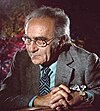


























About John von Neumann
John von Neumann (28 December 1903 – 8 February 1957) was a Hungarian-American-Jewish mathematician, physicist, inventor, computer scientist, and polymath. He made major contributions to a number of fields, including mathematics (foundations of mathematics, functional analysis, ergodic theory, geometry, set theory, topology, and numerical analysis), physics (quantum mechanics, hydrodynamics and quantum statistical mechanics), economics (game theory), computing (Von Neumann architecture, linear programming, self-replicating machines, stochastic computing), and statistics.