Link Copied!
John Gunther Quotes (1901-1970)
Author

About John Gunther
John Gunther (August 30, 1901 – May 29, 1970) was an American journalist and author.
Best John Gunther Quotes
Shortest
Earliest
Explore our curated collection of the most famous and impactful John Gunther quotes.
“This book is for Johnny, who suggested it”
“Fiorello H. LaGuardia is one of the most original, most useful, and most stimulating men American public life has ever known.”
“There are at least four main points to be made about the Lone Star State all at once. It does not properly belong to the South, the West, or even the Southwest; it is an empire, an entity, totally its own.”
“If anybody ever doubted that Roosevelt was a good bluffer, events after Pearl Harbor should set the record straight. For almost a year the United States had no fleet worthy of the name in the Pacific, but no one, least of all the Japanese, ever caught on to how miserably defenseless we really were.”
“The more one looks back to it, the more noteworthy it all seems. It is easy to be wise after the event; it is also (as somebody once said) wise. In almost every respect the career of Huey Long parallels that of the modern European dictator-tyrant, the Hitler or Mussolini. Huey Long, had he lived, might very well have brought Fascism to America.”
“One of FDR's most heart-warming qualities was his almost illimitable gift for friendship, which arose out of his idealism, his innate delight in life, and his generosity. His friends were of the widest possible variety, from formidable old crustaceans like Admiral King to courageous, incisive women like Anna Rosenberg to columnists like Walter Winchell.”
“Another type of mob outrage sometimes occurs in the South; clandestine or "underground" lynching in which a Negro who has broken taboos simply disappears. There is no corpus derilicti, and no scandal. The body is never found, and people say that the victim has "moved" somewhere. For a time members of the Ku-Klux Klan were most distinguished for this kind of affair.”
“It is a proud boast of New York that, what with its enormous pools of foreign-born, any article or object known in the world may be found there. You can buy anything from Malabar spices to stamps from Mauritius to Shakespeare folios. A stall on Seventh Avenue sells about a hundred different varieties of razor blades. Also it is incomparably the greatest manufacturing town on earth; in an average year it produces goods valued at more than four billion dollars.”

“The threat of Italian naval power in the Mediterranean, the dangerous entrenchment given Germany near Gibraltar as a result of the Spanish civil war, the riotous instalibility in Palestine, above all the Munich "peace" in September, 1938, and its consequences, gravely weakened British prestige, British power too, all over the world, as we well know. As a friend of mine said: "The lion tried to show his teeth, and it was all bridgework." In fact some teeth were still there. Mr. Chamberlain preferred to smile instead of biting- but he may have to bite before too long.”

“Franklin Delano Roosevelt, thirty-second President of the United States and Chief Executive from 1933 to 1945, the architect of the New Deal and the director of victory in World War II, Franklin Delano Roosevelt who is still both loved and hated as passionately as if he were still alive, was born in Hyde Park, New York, in 1882, and died in Warm Springs, Georgia, in 1945. It was his fate, through what concentration of forces no man can know, to be President during both the greatest depression and the greatest war the world has ever known. He was a cripple- and he licked them both.”

“Famously the South is the land of demagogues, of cumulus-cloudy politicians who emit wads of opaque cotton every time they open their mouths. Think back a little, to the time when men now mostly forgotten were household names- "Cotton Ed" Smith of South Carolina, who was probably the worst senator who ever lived, no mean honor; Tom Watson of Georgia and Tom Heflin of Alabama, one of the most fanatic reactionaries in American history, especially about things religious; John Sharp Williams of Mississippi, Cole L. Blease of South Carolina, one of the typical "spittoon senators," and of course Huey Long of Louisiana.”

“In Athens, Alabama, in August, 1946, two white boys and a Negro had a scuffle. An honest white policeman refused to arrest the Negro, on the ground that he was not the aggressor; he did arrest the whites. A mob numbering between 1,800 and 2,000 thereupon stormed the city hall, forced the release of the white boys, and began to riot; Negroes were chased off the streets and between fifty and one hundred were injured. When order was restored nine whites were taken into custody on charges of "unlawful assembly." They were released later. Eight were teen-agers; the youngest, thirteen years old, "carried a club and knocked Negroes down."”

“One familiar Southern attitude is, "The Negro is our problem. We have to live with it, and let us solve it." Also Southerners say, "You can never understand it." Indeed, interference or advice from the North is tenaciously resented. Yet, no matter what the South may have done of itself, the record would certainly seem to indicate that it is not enough. Another familiar phenomenon is the "vicious circle" attitude. People refuse to give opportunities to a Negro, on the a priori assumption that he cannot make use of them, blaming him all the while. The pattern becomes, "We cannot train Negroes for this type of work, since they won't be able to do it if we train them!"”
“Finally, Pan-Asia is an illusion. One can speak of Europe- even now- as a whole. But not Asia. One can speak of such a concept- at least till recently- as a "European mind." I do not think one would readily use such a phrase as an "Asiatic mind." A war in Spain can send tremors throughout Europe as far as the Baltic and beyond; a war in China is still only of remote, vestigal interest to the Asia of the Near East. Asia is not interlocked, intertwined, as Europe is, though it is interlocked with Europe. The Japanese are on the march- even in Tehran I saw a brand of Japanese canned goods known as Geisha sardines- but Asia is a long distance around. It is too big to be a unit. It is three continents in one.”

“Fiorello Henrico LaGuardia, the most spectacular mayor the greatest city in the world has ever had, has characteristics and qualities so obvious that they are known to everyone- the volatile realism, the rubble-supple grin, the flamboyant energy, the zest for honesty in public life, the occasional vulgarisms, the common sense. But the mayor I spent these uninterrupted hours with showed more conspicuously some qualities for which he is not so widely known. He picked what he called a "desk day" for me to sit in on. He did not inspect a single fish market or visit a single fire. What he did was work at his major job, administration of the city of New York. What he did was to govern, to put in a routine day as an executive.”
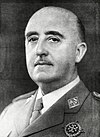
“It would be naïve in the extreme to dismiss General Francisco Franco as a villain or a butcher. He is a creature of his caste, a product of his moral environment, and a fairly typical example of it. He has been commended for intelligence and courage, and he possesses social grace and charm. Beyond doubt, as he sees patriotism, he is a patriot. He is an idealist too. But let it be remembered that he started the war, and if he loses it, he will be a man like such tragic figures as Wrangel and Deniken, who helped create what they sought to destroy. It is Franco- and what he represents- who knit Leftist Spain into a competent unity; if communism comes to Spain, General Franco will have been its accoucheur.”

“Roosevelt believed in social justice- and fought for it- he gave hope and faith to the masses, and knew that the masses are the foundation of American democracy. He turned the cornucopia of American resource upside down and made it serve almost everybody. Mrs. Roosevelt has said that in the course of his whole career there was never any deviation from his original objective- "to make life better for the average man, woman, and child." I have heard men of the utmost sober conservatism say that they think FDR saved the country from overt revolution in 1932. He created the pattern of the modern democratic state, and made it function. To be a reformer alone is not enough. A reformer must make reform effective. This certainly Roosevelt did.”
“To a supreme degree Roosevelt had five qualifications for statesmanship: (a) courage; (b) patience, and an infinitely subtle sense of timing; (c) the capacity to see the very great in the very small, to relate the infinitesimal particular to the all-embracing general; (d) idealism, and a sense of fixed objectives; (e) the ability to give resolution to the minds of men. Also he had plenty of bad qualities- dilatoriness, two-sidedness (some critics would say plain dishonesty), pettiness in some personal relationships, inability to say No, love of improvisation, garrulousness, amateurism, and what has been called "cheerful vindictiveness." Amateurism?- in a particular way, yes. But do not forget that he was the most masterfully expert practical politician ever to function in this republic.”

“I went down to the City Hall the other day and had an hour with O'Dwyer after not having seen him for several years. He is a shade grayer, a shade stockier, and still a grand man to talk to- easy-going, bluff, friendly, and informal. He wore a light brown sports jacket; he was as relaxed- working a fourteen-hour day- as a character in A Crock of Gold. O'Dwyer has heavy, very short, blunt fingers, a decisive nose, and expressive, eloquent blue eyes. He is full of Irish wit and bounce. Also he is very modest. Mostly we talked about things personal. But occasionally there were remarks like, "How the hell does democracy work, anyway?" This was not, I hasten to add, said with any lack of faith. The mayor is a very gregarious man, and he loves people; especially he loves those who have fought their way out of a bad environment. What he hates most are stuffy people.”
“American scientists are ceaselessly attacking in every sphere the frontiers of the unknown; American economists and social engineers have at hand techniques that can forestall a new depression; there is no valid reason why the American people cannot work out an evolution in which freedom and security are combined. Creative good will, coherent large-minded planning, clarity of vision, a grasp of the realities of the nation as a whole, spring-mindedness, education and more education, a fixed national purpose to make out of contemporary civilization weapons that will cure, not kill- all this is possible. In a curious way it is earlier, not later, than we think. The fact that a third of the nation is ill-housed and ill-fed is, in simple fact, not so much a dishonor as a challenge. What Americans have to do is enlarge the dimensions of the democratic process. This country is, I once heard it put, "lousy with greatness"- with not only the greatest responsibilities but with the greatest opportunities ever known to man.”

“Roosevelt was a man of his times, and what times they were!- chaotic, catastrophic, revolutionary, epochal- he was President during the greatest emergency in the history of mankind, and he never let history- or mankind- down. His very defects reflected the unprecedented strains and stresses of the decades he lived in. But he took history in his stride; he had vision and gallantry enough, oomph and zip and debonair benevolence enough, to foresee the supreme crises of our era, overcome them, and lead the nation out of the worst dangers it has ever faced. Roosevelt was the greatest political campaigner and the greatest vote getter in American history. Thirty-one out of forty-eight states voted for him each of the four times he ran. His influence, far from having diminished since his death, has probably increased. When Mr. Truman won his surprising victory in 1948, which was made possible in part by the political influence left behind by FDR, it was altogether fitting that a London newspaper should head its story, "Roosevelt's Fifth Term."”

“New York City has more trees (2,400,000) than houses, and it makes 18,200,000 telephone calls a day of which about 125,000 are wrong numbers. Its rate of divorces is the lowest of any big American city, less than a tenth of that of Baltimore for instance, and even less than that in the surrounding countryside. One of its hotels, built largely over railway tracks, has an assessed valuation of $22,500,000 (there are 124 buildings valued at more than a million dollars in Manhattan alone), and it is probably the only city in the world that still maintains sheriff's juries and has five district attorneys. New York City has such admirable institutions as New School for Social Research, the Council on Foreign Relations, Cooper Union, the Museum of Modern Art, and a black market in illegitimate babies. It has 492 playgrounds, more than 11,000 restaurants, 2,800 churches, and the largest store in the world, Macy's, which wrote 40,328,836 sales checks in 1944, and serves more than 150,000 customers a day. It has the Great White Way, bad manners, 33,000 schoolteachers (average pay $3,803) and 500 boy gangs.”

“The effect of World War II is one point worth noting. Almost every victim of lynching since the war has been a veteran. The Negro community is probably more unified today, more politically vehement, more aggressive in its demand for full citizenship- even in the South- than at any other time in history. Roughly one million Negroes entered the armed services. They moved around and saw things; they were exposed to danger and learned what their rights were; overseas, many were treated decently and democratically by whites for the first time in their lives; the consequent fermentations have been explosive. Also since Negroes were presumably fighting for democratic principles on the international plane, it was difficult to keep them from wondering why the same principles were not applied at home. It wasn't easy for an intelligent Negro to accept that he was fighting for democracy- in a largely Jim Crow army. The glaring crudity of this paradox became the more striking as the war went on. One famous remark is that of the Negro soldier returning across the Pacific from Okinawa. "Our fight for freedom," he said, "begins when we get to San Francisco."”

“The West Virginia motto is Montani semper liberi, and the state is one of the most mountainous in the country; sometimes it is called the "little Switzerland" of America, and once I heard an irreverent local citizen call it the "Afghanistan of the United States." The precipitous upland nature of the terrain makes naturally for three things: (1) poor communications; (2) fierce sectionalism; (3) comparatively little agriculture. West Virginia lies mostly in the Ohio orbit; all but eight of its counties drain into the Ohio River, and a pressing problem is strip mining, as in Ohio. On the other hand, the state has, it is hardly necessary to point out, little of the prodigious urban development of Ohio, and at the same time no great rural blocs such as those that dominate the Ohio legislature. The pull of Pennsylvania is also very strong, particularly near Wheeling which, like Pittsburgh hard by, is based on steel. Finally, in this geographical realm, one should not think of West Virginia as being "western" Virginia. It is a totally distinct and separate entity. Virginians themselves, as a matter of fact, pay almost no attention nowadays to their craggy neighbor.”

“So now we come to New York City, the incomparable, the brilliant star city of parodies, the forty-ninth state, a law unto itself, the Cyclopean paradox, the inferno with no out-of-bounds, the supreme expression of both the miseries and the splendors of contemporary civilization, the Macedonia of the United States. It meets the most severe test that may be applied to definition of a metropolis- it stays up all night. But also it becomes a small town when it rains. Paradox? New York is at once the climactic synthesis of America, and yet the negation of American in that it has so many characteristics called un-American. One friend of mine, indignant that it seems impossible for any American city to develop on the pattern of Paris or Vienna, always says that Manhattan is like Constantinople- not the Instanbul of old Stamboul but of the Pera or Levantine side. He meant not merely the trite fact that New York is polygot, but that it is full of people, like the Levantines, who are interested basically in only two things, living well and making money. I would prefer a different analogy- that only Instanbul, of all the cities in the world, has as enchanting and stimulating a profile.”
John Gunther Quotes by Topic
Find exactly what you are looking for by browsing this categorized list of John Gunther quotes by topic.
John Gunther on Racial segregation 3 quotes
“There are 55,000 Negro college graduates in the United States. Most Southern whites have never seen one.”

John Gunther on Kansas 3 quotes
“The various processes of assimilation, of wrestling a commodious life out of soil, of chaining new communities to the plains, weren't always easy. On one occasion a Russian grand duke came to Kansas to hunt buffalo. The lieutenant governor, honoring him at an official banquet, pointed to a banner on which was emblazoned the state motto, Ad Astra per Aspera, and explained, "Duke, them there words is Latin, and they mean to the stars after a hell of a lot of trouble."”

John Gunther on New York City 2 quotes
“So now we come to New York City, the incomparable, the brilliant star city of parodies, the forty-ninth state, a law unto itself, the Cyclopean paradox, the inferno with no out-of-bounds, the supreme expression of both the miseries and the splendors of contemporary civilization, the Macedonia of the United States. It meets the most severe test that may be applied to definition of a metropolis- it stays up all night. But also it becomes a small town when it rains. Paradox? New York is at once the climactic synthesis of America, and yet the negation of American in that it has so many characteristics called un-American. One friend of mine, indignant that it seems impossible for any American city to develop on the pattern of Paris or Vienna, always says that Manhattan is like Constantinople- not the Instanbul of old Stamboul but of the Pera or Levantine side. He meant not merely the trite fact that New York is polygot, but that it is full of people, like the Levantines, who are interested basically in only two things, living well and making money. I would prefer a different analogy- that only Instanbul, of all the cities in the world, has as enchanting and stimulating a profile.”

John Gunther on Royal Air Force
“The British air estimates for 1938 included considerable expenditure in the Singapore area. The strength of the Royal Air Force Car East Command, which has headquarters in Singapore, is to be doubled by the end of the year. New airdromes have been completed not only on Singapore island but in Sarawak and Borneo, and others are planned for Malaya above the strait.”

John Gunther on West Virginia
“The West Virginia motto is Montani semper liberi, and the state is one of the most mountainous in the country; sometimes it is called the "little Switzerland" of America, and once I heard an irreverent local citizen call it the "Afghanistan of the United States." The precipitous upland nature of the terrain makes naturally for three things: (1) poor communications; (2) fierce sectionalism; (3) comparatively little agriculture. West Virginia lies mostly in the Ohio orbit; all but eight of its counties drain into the Ohio River, and a pressing problem is strip mining, as in Ohio. On the other hand, the state has, it is hardly necessary to point out, little of the prodigious urban development of Ohio, and at the same time no great rural blocs such as those that dominate the Ohio legislature. The pull of Pennsylvania is also very strong, particularly near Wheeling which, like Pittsburgh hard by, is based on steel. Finally, in this geographical realm, one should not think of West Virginia as being "western" Virginia. It is a totally distinct and separate entity. Virginians themselves, as a matter of fact, pay almost no attention nowadays to their craggy neighbor.”

John Gunther on Virginia
“Incontestably what runs Virginia is the Byrd machine, the most urbane and genteel dictatorship in America. A real machine it is, though Senator Harry Flood Byrd himself faced more opposition in 1946 than at any time in his long, suave, and distinguished public career. Virginia is, of course, "the mother of states"; it is one of four in the union to call itself a commonwealth, and it has produced eight presidents, more than any other state. Its history goes back to Jamestown, the first Anglo-Saxon settlement in America, in 1607; the colony was named for Elizabeth, the virgin queen, and its citizens established an effective representative government several years before the Puritans in New England. Ever since it has prided itself on aristocratic tradition, a seasoned attitude toward public life, administrative decency, and firm attachment to the regime of law. Virginia breeds no Huey Longs or Talmadges; its respect for the forms of order is deeply engrained. One subsidiary point is that Virginians, it seems, were not so philoprogenitive as their New England counterparts. Boston, as we know, choked with Cabots, Adamses, and Lowells. But there are no Washingtons in Richmond; George Washington, as a matter of fact, left no children. Jefferson had direct descendants, but none with the name Jefferson play any consequential role in Virginia life today. There are no Madisons, Monroes, descendants of John Marshall or Patrick Henry, or even Lees, in the contemporary political arena.”

What John Gunther Said About Others
Discover personal opinions John Gunther shared regarding contemporaries.
John Gunther on Harry F. Byrd 4 quotes
“Incontestably what runs Virginia is the Byrd machine, the most urbane and genteel dictatorship in America. A real machine it is, though Senator Harry Flood Byrd himself faced more opposition in 1946 than at any time in his long, suave, and distinguished public career.”

John Gunther on Hermann Göring 3 quotes
“His ambition as well as his vanity is enormous. On March 6, 1933, exactly one day after the elections which confirmed Hitler's accession to office, he ordered his portrait painted- with a book in his lap conspicuously titled Life of Napoleon. His pets are lion cubs. All of them, male or female, are named Caesar. He is as carnivorous as Hitler is frugal- brusque, impulsive, brutal. Testimony after the Munich Putsch of 1923 recorded his orders to "beat in the skulls" of his opponents "with rifle butts". His famous order to the police in February, 1933, to shoot "enemies" without question, really signalled the beginning of the Nazi terror. His ruthlessness is unthinking, spasmodic, hot-blooded. He is not a plotter like Goebbels. He has great executive ability, and this serves to make him doubly dangerous.”

John Gunther on Mao Zedong 3 quotes
“Mao Tse-tung was born in 1893 in a village in Hunan. His father was a peasant, and he began to work at the age of six on the small family farm. His mother was a considerate woman, his father exceptionally severe; Mao records that he was never allowed eggs or meat, though the other farm boys had these luxuries occasionally. He had remarkable strength of character and ambition, and a fierce urgency for education; he struggled to go to school, and at seventeen tramped alone to the near-by city of Changsha where there was an academy. Came a tremendous event: where he saw for the first time a map of the world. He pored over it gluttonously. He writes, "I went to the library in the morning when it opened. At noon I paused only long enough to buy and consume two rice cakes, which were my daily lunch. I stayed in the library every day reading until it closed." He studied Adam Smith, Darwin, Spencer, Mill. One book that influenced him was Great Heroes of the World, which contained biographies of Napoleon, Peter the Great, Rousseau. He read about the American Revolution and came across a pregnant sentence: "After eight years of difficult war, Washington won a victory and built up his nation."”

John Gunther on Francisco Franco
“It would be naïve in the extreme to dismiss General Francisco Franco as a villain or a butcher. He is a creature of his caste, a product of his moral environment, and a fairly typical example of it. He has been commended for intelligence and courage, and he possesses social grace and charm. Beyond doubt, as he sees patriotism, he is a patriot. He is an idealist too. But let it be remembered that he started the war, and if he loses it, he will be a man like such tragic figures as Wrangel and Deniken, who helped create what they sought to destroy. It is Franco- and what he represents- who knit Leftist Spain into a competent unity; if communism comes to Spain, General Franco will have been its accoucheur.”
John Gunther on Franklin D. Roosevelt
“That a great many southern conservatives feared and detested Roosevelt and the New Deal is well known; there was a definite but abortive movement in 1944 to bolt the ticket, for instance in South Carolina; the idea was that a split vote might throw the election into the House of Representatives. But when election day came Roosevelt carried South Carolina by fifteen to one. People may have loathed him; but to vote against him meant cutting their own throats. (In Texas, however, the revolt, although unsuccessful, did become concrete and actual.) Roosevelt on his side attempted famously to purge some southern senators, like George of Georgia; he too was unsuccessful. A final extraordinary point is that Roosevelt would have won in 1944, and also in his earlier campaigns, even if the solid South had voted solidly against him. The South, despite its hatred of the New Deal, gave tremendous majorities to Roosevelt; but on the basis of electoral college figures it had no responsibility whatever for electing him.”

About John Gunther
John Gunther (August 30, 1901 – May 29, 1970) was an American journalist and author.