Link Copied!
John Dewey Quotes (1859-1952)
Philosopher, King











About John Dewey
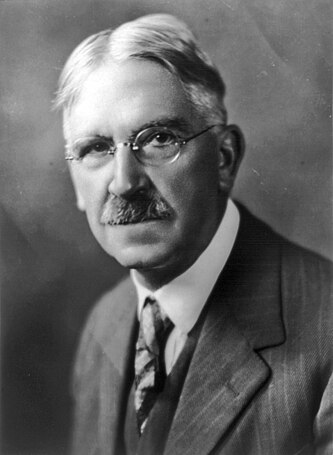
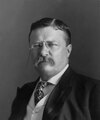
John Dewey (October 20 1859 – June 1 1952) was an American philosopher, psychologist, and educational reformer. A major figure in the Pragmatist school of American philosophy, his work has been influential in a wide range of fields.
Best John Dewey Quotes
Shortest
Earliest
Explore our curated collection of the most famous and impactful John Dewey quotes.
“Works of art express space as opportunity for movement and action.”
“In all ranges of experience, externality of means defines the mechanical.”

“Democracy means the belief that humanistic culture should prevail.”

“It is a familiar and significant saying that a problem well-put is half-solved.”
“All the cases in which means and ends are external to one another are non-esthetic.”
“Every great advance in science has issued from a new audacity of imagination.”
“The true antithesis of nature is not art but arbitrary conceit, fantasy, and stereotyped convention.”

“Coleridge said that every work of art must have about it something not understood to obtain its full effect.”
“Legislation is a matter of more or less intelligent improvisation aiming at palliating conditions by means of patchwork policies.”
“So we are always esthetically disappointed when the sensuous qualities and the intellectual properties of an object do not coalesce.”

“Art expresses, it does not state; it is concerned with existences in their perceived qualities, not with conceptions symbolized in terms.”
“As long as politics is the shadow cast on society by big business, the attenuation of the shadow will not change the substance.”

“Every thinker puts some portion of an apparently stable world in peril and no one can wholly predict what will emerge in its place.”
“Form may then be defined as the operation of forces that carry the experience of an event, object, scene, and situation to its own integral fulfillment.”
“Artist and perceiver alike begin with what may be called a total seizure, an inclusive qualitative whole not yet articulated, not distinguished into members.”
“Even the eye that is artificially trained to see color as color, apart from things that colors qualify, cannot shut out the resonances and transfers of value.”
“Because energy is not restrained by other elements that are at once antagonistic and cooperative, action proceeds by jerks and spasms. There is discontinuity.”
“The recurrence of relations—not of elements—in different contexts, which constitutes transposition is qualitative and hence directly experienced in perception.”
“We cannot grasp any idea, any organ of meditation, we cannot possess it in full force, until we have felt and sensed it, as much so as if it were an odor or a color.”

“What happens in the movement of art is emergence of new materials of experience demanding expression, and therefore involving in their expression new forms and techniques.”
“Individuality, conceived as a temporal development involves uncertainty, indeterminacy, or contingency. Individuality is the source of whatever is unpredictable in the world.”

“pp. 407–8; cited in: Hilary Putnam, "Pragmatism and nonscientific knowledge" (2008) in James Conant, Urszula M. Zeglen, Hilary Putnam: Pragmatism and Realism (2012) p. 21”

“But the individual butterfly or earthquake remains just the unique existence which it is. We forget in explaining its occurrence that it is only the occurrence that is explained, not the thing itself.”

“No work of art can be instantaneously perceived because there is the no opportunity for conservation and increase in tension, and hence none for that release and unfolding which gives volume to a work of art.”

“Naturalism is a word of many meetings in philosophy as well as in art. like most isms — classicism and romanticism, idealism and realism in art — it’s has become an emotional term, a war cry of partisans.”
“Equally there is no rhythm when variations are not placed. There is a wealth of suggestions in the phrase “takes place”. The change not only comes but it belongs; it had its definite place in a larger whole.”
“When there is genuine artistry in scientific inquiry and philosophic speculation, a thinker proceeds neither by rule nor yet blindly, but by means of meaning that exist immediately as feelings having qualitative color.”
“ While they denounce as subversive anarchy signs of independent thought, of thinking for themselves on the part of others lest such thought disturb the conditions by which they profit, they think quite literally for themselves, that is of themselves.”
“Freedom of thought and of expression are not mere rights to be claimed. They have their roots deep in the existence of individuals as developing careers in time. Their denial and abrogation is an abdication of individuality and a virtual rejection of time as opportunity.”
“The mystery is that the world is at it is -- a mystery that is the source of all joy and all sorrow, of all hope and fear, and the source of development both creative and degenerative. The contingency of all into which time enters is the source of pathos, comedy, and tragedy.”
“The intellect is at home in that which is fixed only because it is done and over with, for intellect is itself just as much a deposit of past life as is the matter to which it is congenial. Intuition alone articulates in the forward thrust of life and alone lays hold of reality.”

“The revolution in scientific ideas just mentioned is primarily logical. It is due to recognition that the very method of physical science, with its primary standard units of mass, space, and time, is concerned with measurements of relations of change, not with individuals as such.”

“The discovery that mass changes with velocity, a discovery made when minute bodies came under consideration, finally forced surrender of the notion that mass is a fixed and inalienable possession of ultimate elements or individuals, so that time is now considered to be their fourth dimension.”

“In most cases the esthetic objection to doses of morals and of economic or political propaganda in works of art will be found upon analysis to reside in the over-weighing of certain values at the expense of others until, except for those in a similar stare of one-sides enthusiasm, weariness rather than refreshment sets in.”

“This new philosophy, however, was far from giving the temporal an inherent position and function in the constitution of things. Change was acting on the side of man but only because of fixed laws which governed the changes that take place. There was hope in change just because the laws that govern it do not change.”
“The application of scientific formulations of the principle of probability statistically determined is thus a logical corollary of the principle already stated, that the subject matter of scientific findings is relational, not individual. It is for this reason that it is safe to predict the ultimate triumph of the statistical doctrine.”
“Surrender of individuality by the many to someone who is taken to be a superindividual explains the retrograde movement of society. Dictatorships and totalitarian states, and belief in the inevitability of this or that result coming to pass are, strange as it may sound, ways of denying the reality of time and the creativeness of the individual.”
“In the late eighteenth and the greater part of the nineteenth centuries appeared the first marked cultural shift in the attitude taken toward change. Under the names of indefinite perfectibility, progress, and evolution, the movement of things in the universe itself and of the universe as a whole began to take on a beneficent instead of hateful aspect.”

“The color is of the object and the object in all its qualities is expressed through color. For it is objects that glows— gems and sunlight; and it is objects that are splendid— crowns, robes, sunlight. Except as they express objects, through being the significant color-quality of materials of ordinary experience, colors effect only transient excitations.”
“This intelligence-testing business reminds me of the way they used to weigh hogs in Texas. They would get a long plank, put it over a cross-bar, and somehow tie the hog on one end of the plank. They'd search all around till they found a stone that would balance the weight of the hog and they'd put that on the other end of the plank. Then they'd guess the weight of the stone.”
“The ground of democratic ideas and practices is faith in the potentialities of individuals, faith in the capacity for positive developments if proper conditions are provided. The weakness of the philosophy originally advanced to justify the democratic movement was that it took individuality to be something given ready-made, that is, in abstraction from time, instead of as a power to develop.”

“As we shall see later, the most important factor in the training of good mental habits consists in acquiring the attitude of suspended conclusion, and in mastering the various methods of searching for new materials to corroborate or to refute the first suggestions that occur. To maintain the state of doubt and to carry on systematic and protracted inquiry ― these are the essentials of thinking.”
“To look at a work of art in order to see how well certain rules are observed and canons conformed to impoverished perception. But to strive to note the ways in which certain conditions are fulfilled, such as the organic means by which the media is made to express and carry definite parts, or how the problem of adequate individualization is solved, sharpens esthetic perception and enriches its content.”

“A philosophy has no private store of knowledge or methods for attaining truth, so it has no private access to good. As it accepts knowledge and principles from those competent in science and inquiry, it accepts the goods that are diffused in human experience. It has no Mosaic or Pauline authority of revelation entrusted to it. But it has the authority of intelligence, of criticism of these common and natural goods.”

“To regiment artists, to make them servants of some particular cause does violence to the very springs of artistic creation. But it does more than that. It betrays the very cause of a better future it would serve, for in its subjugation of the individuality of the artist it annihilates the source of that which is genuinely new. Where the regimentation is successful, it would cause the future to be but a rearrangement of the past.”

““Relation” in its idiomatic usage denotes something direct and active, something dynamic and energetic. It fixes attention upon the way things bear upon one another, their clashings and unitings, the way they fulfill and frustrate, promote and retard, excite and inhibit one another. Intellectual relations subsist in propositions; they state the connection of terms with one another. In art, as in nature and in life, relations are modes of interaction.”
“The utmost possible regarding an individual is a statement as to some order of probability about the future. Heisenberg's principle has been seized upon as a basis for wild statements to the effect that the doctrine of arbitrary free will and totally uncaused activity are now scientifically substantiated. Its actual force and significance is generalization of the idea that the individual is a temporal career whose future cannot logically be deduced from its past.”
“The artist in realizing his own individuality reveals potentialities hitherto unrealized. The revelation is the inspiration of other individuals to make the potentialities real, for it is not sheer revolt against things as they are which stirs human endeavor to its depth, but vision of what might be and is not. Subordination of the artists to any special cause no matter how worthy does violence not only to the artist but to the living source of a new and better future.”

“Even at the outset, the total and massive quality has its uniqueness; even when vague and undefined, it is just that which it is and not anything else. If the perception continues, discrimination inevitably sets in. Attention must move, and as it moves, parts, members, emerge from the background. And if attention moves in a unified direction instead of wandering, it is controlled by the pervading qualitative unity; attention is controlled by it because it operates within it.”

“The rise of new science in the seventeenth century laid hold upon general culture in the next century. The enlightenment... testified to the widespread belief that at last light had dawned, that dissipation of ignorance, superstition, and bigotry was at hand, and the triumph of reason was assured -- for reason was counterpart in man of the laws of nature which science was disclosing. The reign of law in the natural world was to be followed by the reign of law in human affairs.”
“Position expresses the poised readiness of the live creature to meet the impact of surrounding forces, to meet so as to endure and persist, to extend or expand through undergoing the very forces that, apart from its response, are indifferent and hostile. Through going out into the environment, position unfolds into volume; through the pressure of environment, mass is retracted into energy of position, and space remains, when matter is contracted, as an opportunity for further action.”
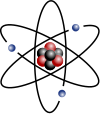
“When we come to inanimate elements, the prevailing view has been that time and sequential change are entirely foreign to their nature. According to this view they do not have careers; they simply change their relations is space. We have only to think of the classic conception of atoms. The Newtonian atom, for example, moved and was moved, thus changing its position in space, but it was unchangeable in its own being. ... In itself it was like a God, the same yesterday, today, and forever.”
“Well both original seizure and subsequent critical discrimination have equal claims, each to its own complete development and must not be forgotten that direct and unreasoned impression comes first. There is such occasions something of the quality of the wind that bloweth where it listeth. Sometimes it comes and sometimes it does not, even in the presence of the same object. It cannot be forced and when it does not arrive it is not wise to seek to recover by direct action the first fine rapture.”
“The determination of the mot juste, of the right incident in the right place, of exquisiteness of proportion, of the precise tone, hue, and shade that helps unify the whole while it defines a part, is accomplished by emotion. Not every emotion, however, can do this work, but only one informed by material that is grasped and gathered. Emotion is informed and carried forward when it is spent indirectly in search for material and in giving it order, not when it is directly expended.”
“Genuine time, if it exists as anything else except the measure of motions in space, is all one with the existence of individuals as individuals, with the creative, with the occurrence of unpredictable novelties. Everything that can be said contrary to this conclusion is but a reminder that an individual may lose his individuality, for individuals become imprisoned in routine and fall to the level of mechanisms. Genuine time then ceases to be an integral element of their being. Our behavior becomes predictable, because it is but an external rearrangement of what went before.”
“There are two kinds of means. One kind is external to that which is accomplished; the other kind is taken up into the consequences and remains immanent in them. There are ends which are merely welcome cessations and there are ends that are fulfillments of what went before. The toil of the laborer is too often an antecedent to the wage he receives, as consumption of gasoline is merely a means to transportation. The means cease to act when the “end” is reached; one would be glad, as a rule, to get the result without having to employ the means. They are but the scaffolding.”
“It is no accident that all democracies have put a high estimate upon education; that schooling has been their first care and enduring charge. Only through education can equality of opportunity be anything more than a phrase. Accidental inequalities of birth, wealth, and learning are always tending to restrict the opportunities of some as compared with those of others. Only free and continued education can counteract those forces which are always at work to restore, in however changed a form, feudal oligarchy. Democracy has to be born anew every generation, and education is its midwife.”

“Art is not the possession of the few who are recognized writers, painters, musicians; it is the authentic expression of any and all individuality. Those who have the gift of creative expression in unusually large measure disclose the meaning of the individuality of others to those others. In participating in the work of art, they become artists in their activity. They learn to know and honor individuality in whatever form it appears. The fountains of creative activity are discovered and released. The free individuality which is the source of art is also the final source of creative development in time.”
“... classic philosophy maintained that change, and consequently time, are marks of inferior reality, holding that true and ultimate reality is immutable and eternal. Human reasons, all too human, have given birth to the idea that over and beyond the lower realm of things that shift like the sands on the seashore there is the kingdom of the unchanging, of the complete, the perfect. The grounds for the belief are couched in the technical language of philosophy, but the grounds for the cause is the heart's desire for surcease from change, struggle, and uncertainty. The eternal and immutable is the consummation of mortal man's quest for certainty.”
“In ordinary visual perception, we see by means of light; we distinguish by means of reflected and refracted colors. But in ordinary perception, this medium of color is mixed, adulterated. While we see, we also hear; we feel pressures, and heat and cold. In a painting, color renders the scene without these alloys and impurities. They are part of the dross that is squeezed out and left behind in an act of intensified expression. The medium becomes color alone, and since color alone must now carry the qualities of movement, touch, sound, etc., that are present physically on their own account in ordinary vision, the expressiveness and energy of color are enhanced.”
“The difference between the artificial and the artful in the artistic lies on the surface in the former there is a split between what is overly done and what is intended. The appearance is one of cordiality; the intent is that of gaining favor. Whenever this split between what is done and its purpose exists, there is insincerity, a trick, a simulation of an act that intrinsically has another effect. When the natural and the cultivated blend into one, acts of social intercourse are works of art. The animating impulsion of genial friendship and the deed performed completely coincide without intrusion of ulterior motive. Awkwardness may prevent adequacy of expression.”
“If one examines the reason why certain works of art offend us, one is likely to find that the cause is that there is no personally felt emotion guiding the selecting the assembling of the materials presented. We derive the impression that the artist, say the author of a novel, is trying to regulate by conscious intent the nature of the emotion aroused. We are irritated by a feeling that he is manipulating materials to secure an effect decided upon in advance. The facets of the work, the variety so indispensable to it, are held together by some external force. The movement of the parts and the conclusion disclose no logical necessity. The author, not the subject matter, is the arbiter.”
“There is another significant involution of time and movement in space. It is constituted not only by directional tendencies—up and down for example—but by mutual approaches and retreatings. Near and far, close and distant, are qualities of pregnant, often tragic, import—that is, as they are experienced, not just stated by measurement of science. They signify loosening and tightening, expanding and contracting, separating and compacting, soaring and drooping, rising and falling; the dispersive, scattering, and the hovering and brooding, unsubstantial lightness and massive blow. Such actions and reaction are the very stuff out if which the objects and events we experience are made.”
“Just because emotion is essential to that act of expression which produces a work of art, it is easy for inaccurate analysis to misconceive its mode of operation and conclude that the work of art has emotion for its significant content. One may cry out with joy or even weep upon seeing a friend from whom one has been long separated. The outcome is not an expressive object -- save to the onlooker. But if the emotion leads one to gather material that is affiliated to the mood which is aroused, a poem may result. In the direct outburst, an objective situation is the stimulus, the cause, of the emotion. In the poem, objective material becomes the content and matter of the emotion, not just its evocative occasion.”
“This idea is that laws which purport to be statements of what actually occurs are statistical in character as distinct from so-called dynamic laws that are abstract and mathematical, and disguised definitions. Recognition of the statistical nature of physical laws was first effected in the case of gases when it became evident that generalizations regarding the behavior of swarms of molecules were not descriptions or predictions of the behavior of any individual particle. A single molecule is not and cannot be a gas. It is consequently absurd to suppose that a scientific law is about the elementary constituents of a gas. It is a statement of what happens when a large number of such constituents interact with one another under certain conditions.”
“The other conclusion is that art is the complement of science. Science as I have said is concerned wholly with relations, not with individuals. Art, on the other hand, is not only the disclosure of the individuality of the artist but also a manifestation of individuality as creative of the future, in an unprecedented response to conditions as they were in the past. Some artists in their vision of what might be, but is not, have been conscious rebels. But conscious protest and revolt is not the form which the labor of the artist in creation of the future must necessarily take. Discontent with things as they are is normally the expression of the vision of what may be and is not, art in being the manifestation of individuality is this prophetic vision.”
“The three qualities of space and time reciprocally affect and qualify one another in experience. Space is inane save as occupied with active volumes. Pauses are holes when they do not accentuate masses and define figures as individuals. Extension sprawls and finally benumbs if it does not interact with place so as to assume intelligible distribution. Mass is nothing fixed. It contracts and expands, asserts and yields, according to its relations to other spatial and enduring things.... these are then the common properties of the matter of arts because there are general conditions without which an experience is not possible. As we saw earlier, the basic condition is felt relationship between doing and undergoing as the organism and environment interact.”
“There are in our minds in solution a vast number of emotional attitudes, feelings ready to be re-excited when the proper stimulus arrives, and more than anything else it is these forms, this residue of experience, which, fuller and richer than in the mind if the ordinary man, constitute the artist’s capital. What is called the magic of the artist resides in his ability to transfer these values from one field of experience to another, to attach them to objects of our common life, and by his imaginative insight make these objects poignant and momentous. Not colors, not sense qualities as such, are either matter or form, but these qualities as thoroughly imbued, impregnated, with transferred value. And then they are either matter or form according to the direction of our interest.”
“Classical science was based upon the belief that it is possible to formulate both the position and velocity at one time of any given particle. It followed that knowledge of the position and velocity of a given number of particles would enable the future behavior of the whole collection to be accurately predicted. The principle of Heisenberg is that given the determination of position, its velocity can be stated only as of a certain order of probability, while if its velocity is determined the correlative factor of position can be stated only as of a certain order of probability. Both cannot be determined at once, from which it follows necessarily that the future of the whole collection cannot possibly be foretold except in terms of some order of probability.”

“Because rhythm is a universal scheme of existence, underlying all realization of order in change, it pervades all the arts, literary, musical, plastic and architectural, as well as the dance. Since man succeeds only as he adapts his behavior to the order of nature, his achievements and victories, as they ensue upon resistance and struggle, become the matrix of all esthetic subject-matter; in some sense they constitute the common pattern of art, the ultimate conditions of form. Their cumulative orders of succession become without express intent the means by which man commemorates and celebrates the most intense and full moments of his experience. Underneath the rhythm of every art and every work of art there lies, as a substratum in the depths of the subconsciousness, the basic pattern of the relations of the live creature to his environment.”
“Movement in direct experience is alteration in the qualities of objects, and space as experienced is an aspect of this qualitative change. Up and down, back and front, to and fro, this side and that- or right and left- here and there, feel differently. The reason they do is that they are not static points in something itself static, but objects in movement, qualitative changes of value. For “back” is short for backwards and front for forwards. So with velocity. Mathematically there are no such things as fast and slow. They mark simply greater and less on a number scale. As experienced they are qualitatively as unlike as noise and silence, heat and cold, black and white. To be forced to wait a long time for an important event to happen is a length very different from that measured by the movements of the hands of a clock. It is something qualitative.”
“There can be no movement toward a consummating close unless there is a progressive massing of values, a cumulative effect. This result cannot exist without conservation of the import of what has gone before. Moreover, to secure the needed continuity, the accumulated experience must be such as to create suspense and anticipation of resolution. Accumulation is at the same time preparation, as with each phase of the growth of a living embryo. Only that is carried on which is led to; otherwise there is arrest and a break. For this reason consummation is relative; instead of occurring once for all at a given point, it is recurrent. The final end is anticipated by rhythmic pauses, while that end is final only in an external way. For as we turn from reading a poem or novel or seeing a picture the effect presses forward in further experiences, even if only subconsciously.”
“The animating purpose of James was, on the other hand, primarily moral and artistic. It is expressed in his phrase, "block universe," employed as a term of adverse criticism. Mechanism and idealism were abhorrent to him because they both hold to a closed universe in which there is no room for novelty and adventure. Both sacrifice individuality and all the values, moral and aesthetic, which hang upon individuality; for according to absolute idealism, as to mechanistic materialism, the individual is simply a part determined by the whole of which he is a part. Only a philosophy of pluralism, of genuine indetermination, and of change which is real and intrinsic gives significance to individuality. It alone justifies struggle in creative activity and gives opportunity for the emergence of the genuinely new.”
“I do not think that the dancing and singing of even little children can be explained wholly on the basis of unlearned and unformed responses to then existing objective conditions. Clearly there must be something in the present to evoke happiness. But the act is expressive only a there is in it a unison of something stored from past experience, something therefore generalized, with present conditions. In the case of expressions of happy children the marriage of past values and present incidents takes place easily; there are few obstructions to be overcome, few wounds to heal, few conflicts to resolve. With maturer persons, the reverse is the case. Accordingly the achievement of complete unison is rare; but when it occurs it is so on a deeper level and with a fuller content of meaning. And then, even though after long incubation and after precedent pangs of labor, the final expression may issue with the spontaneity of the cadenced speech or rhythmic movement of happy childhood.”

“Such external or mere means, as we properly term them, are usually of such a sort that others can be substituted for them; the particular ones employed are determined by some extraneous consideration, like cheapness. But the moment we say “media”, we refer to means that are incorporated in the outcome. Even bricks and mortar become part of the house they are employed to build; they are not mere means to its erection. Colors are the painting; tones are the music. A picture painted with water colors has a quality different from that painted with oil. Esthetic effects belong intrinsically to their medium; when another medium is substituted, we have a stunt rather than an object of art. Even when substitution is practiced with the utmost virtuosity or for any reason outside the kind of end desired, the product is mechanical or a tawdry sham — like boards painted to resemble stone in the construction of a cathedral, for stone is integral not just physically, but to the esthetic effect.”
“Matisse has described the actual process of painting in the following way: “if, on a clean canvas, i put interval patches of blue, green and red, with every touch that I put on, each of those previously laid on loses in importance. Say I have to paint an interior; I see before me a wardrobe. It gives me a vivid sensation of red; I put on the canvas the particular res that satisfies me. A relation is now established between this red and the paleness of the canvas. When I put on besides a green, and also a yellow to represent the floor, between this green and yellow and the color of the canvas there will be still further relations. But these different tones diminish one another. It is necessary that the different tones I use be balances in such a way that they do not destroy one another. To secure that, I have to out my ideas in order; the relationships between tones must be instituted in such a way that they are built up instead of being knocked down. A new combination of colors will succeed to the first one and will give the wholeness of my conception.””
“We have to a considerable extent, given up thinking of this life as merely a preparation for another life. Very largely, however, we think of some parts of this life as merely preparatory to other later stages of it. It is so very largely as to the process of education; and if I were asked to name the most needed of all reforms in the spirit of education, I should say: ''''Cease conceiving of education as mere preparation for later life, and make it the full meaning of the present life.'''' And to add that only in this case does it become truly a preparation for after life is not the paradox it seems. An activity which does not have worth enough to be carried on for its own sake cannot be very effective as a preparation for something else. By making the present activity the expression of the full meaning of the case, that activity is, indeed, an end in itself, not a mere means to something beyond itself; but, in being a totality, it is also the condition of all future integral action. It forms the habit of requiring that every act be an outlet of the whole self, and it provides the instruments of such complete functioning.”

“In the development of an expressive act, the emotion operates like a magnet drawing to itself appropriate material: appropriate because it has an experienced emotional affinity for the state of mind already moving. Selection and organization of material are at once a function and a test of the quality of the emotion experienced. In seeing a drama, beholding a picture, or reading a novel, we may feel that the parts do not hang together. Either the maker had no experience that was emotionally toned, or, although having at the outset a felt emotion, it was not sustained, and a succession of unrelated emotions dictated the work. In the latter case, attention wavered and shifted, and an assemblage of incongruous parts ensued. The sensitive observer or reader is aware of junctions and seams, of holes arbitrarily filled in. Yes, emotion must operate. But it works to effect continuity of movement, singleness of effect amid variety. It is selective of material and directive of its order and arrangement. But it is not what is expressed. Without emotion, there may be craftsmanship, but not art; it may be present and be intense, but if it is directly manifested the result is also not art.”

“In reading a novel, even one written by an expert craftsman, one may get a feeling early in the story that hero or heroine is doomed, doomed not by anything inherent in situations and character but by the intent of the author who makes the character a puppet to set forth his own cherished idea. The painful feeling that results is resented not because it is painful but because it is foisted upon us by something that we feel comes from outside the movement of the subject matter. A work may be much more tragic and yet leave us with an emotion of fulfillment instead of irritation. We are reconciled to the conclusion because we feel it is inherent in the movement of the subject matter portrayed. The incident is tragic but the world in which such fateful things happen is not an arbitrary and imposed world. The emotion of the author and that aroused in us are occasioned by scenes in that world and they blend with subject matter. It is for similar reasons that we are repelled by the intrusion of a moral design in literature while we esthetically accept any amount of moral content if it is held together by a sincere emotion that controls the material. A white flame of pity or indignation may find material that feeds it and it may fuse everything assembled into a vital whole.”
“Not till the late nineteenth century was the doctrine of the subordination of time and change seriously challenged. Bergson and William James, animated by different motives and proceeding by different methods, then installed change at the very heart of things. Bergson took his stand on the primacy of life and consciousness, which are notoriously in a state of flux. He assimilated that which is completely real in the natural world to them, conceiving the static as that which life leaves behind as a deposit as it moves on. From this point of view he criticized mechanistic and teleological theories on the ground that both are guilty of the same error, although from opposite points. Fixed laws which govern change and fixed ends toward which changes tend are both the products of a backward look, one that ignores the forward movement of life. They apply only to that which life has produced and has then left behind in its ongoing vital creative course, a course whose behavior and outcome are unpredictable both mechanistically and from the standpoint of ends.”
“It may be remarked incidentally that the recognition of the relational character of scientific objects completely eliminates an old metaphysical issue. One of the outstanding problems created by the rise of modern science was due to the fact that scientific definitions and descriptions are framed in terms of which qualities play no part. Qualities were wholly superfluous. As long as the idea persisted (an inheritance from Greek metaphysical science) that the business of knowledge is to penetrate into the inner being of objects, the existence of qualities like colors, sounds, etc., was embarrassing. The usual way of dealing with them is to declare that they are merely subjective, existing only in the consciousness of individual knowers. Given the old idea that the purpose of knowledge (represented at its best in science) is to penetrate into the heart of reality and reveal its "true" nature, the conclusion was a logical one. ...The discovery of the nonscientific because of the empirically unverifiable and unnecessary character of absolute space, absolute motion, and absolute time gave the final coup de grâce to the traditional idea that solidity, mass, size, etc., are inherent possessions of ultimate individuals.”
John Dewey Quotes by Topic
Find exactly what you are looking for by browsing this categorized list of John Dewey quotes by topic.
John Dewey on Attitude 6 quotes
“Men's fundamental attitudes toward the world are fixed by the scope and qualities of the activities in which they partake.”
John Dewey on Intellectual responsibility 4 quotes
“If upon thought hang all deliberate activities and the uses we make of all our other powers, Locke's assertion that it is of the highest concernment that care should be taken of its conduct is a moderate statement.”
John Dewey on Art 3 quotes
“Art is not the possession of the few who are recognized writers, painters, musicians; it is the authentic expression of any and all individuality. Those who have the gift of creative expression in unusually large measure disclose the meaning of the individuality of others to those others. In participating in the work of art, they become artists in their activity. They learn to know and honor individuality in whatever form it appears. The fountains of creative activity are discovered and released. The free individuality which is the source of art is also the final source of creative development in time.”
John Dewey on Purpose 2 quotes
“Plato defined a slave as one who accepts from another the purposes which control his conduct.”

John Dewey on Open-mindedness 2 quotes
“Some attitudes may be named... which are central in effective intellectual ways of dealing with subject matter. Among the most important are directness, open-mindedness, single-mindedness (or whole-heartedness), and responsibility.”

What John Dewey Said About Others
Discover personal opinions John Dewey shared regarding contemporaries.
Quotes About John Dewey
Gain deeper perspective through quotes about John Dewey from others.
Jane Addams on John Dewey
“Could we not interest the people working in the neighboring factories, in these older forms of industry, so that, through their own parents and grandparents, they would find a dramatic representation of the inherited resources of their daily occupation. If these young people could actually see that the complicated machinery of the factory had been evolved from simple tools, they might at least make a beginning towards that education which Dr. Dewey defines as "a continuing reconstruction of experience." They might also lay a foundation for reverence of the past which Goethe declares to be the basis of all sound progress.”

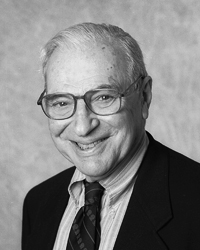
Kenneth Arrow on John Dewey
“I cannot refrain from expressing my gratitude and that of many of my left wing fellow students to Dewey for his uncompromising honesty in exposing Stalin's show trials of 1935-37. This was not easy at a time when, in the presence of the Great Depression, many intellectuals saw a new hope in the Soviet Union. But to Dewey truth came first; and he (with the great aid of the late Sidney Hook) showed that the trials must be rigged and therefore that the Stalin regime was based on lies. This saved many of us from ever being misled.”
Reinhold Niebuhr on John Dewey
“In [Dewey's] thought the hope of achieving a vantage point which transcends the corruptions of self-interest takes the form of trusting ... "the procedure of organized co-operative inquiry which has won the triumphs of science in the field of physical nature." ...Not a suspicion dawns on Professor Dewey that no possible "organized inquiry" can be as transcendent over historical conflicts of interest as it ought to be to achieve the disinterested intelligence he attributes to it. Every such "organized inquiry" must have its own particular social locus. No court of law, thought supported by age-old traditions of freedom from party conflict, is free of party bias whenever it deals with issues profound enough to touch the very foundations of the society upon which the court is reared.”

Robert B. Talisse on John Dewey
“The core of Deweyan political philosophy can be stated in the slogan that is popular among contemporary Deweyans: democracy is a way of life. This slogan is intended to convey two main commitments. First, democracy is not merely a kind of state or a procedure for collective decision, but a moral ideal of human life. Second, the moral ideal that is democracy can be pursued and fulfilled only under certain kinds of social arrangements. In short, democracy is a way of life in which each individual exercises and cultivates his unique capacities in a way which contributes to the flourishing of the whole society.”
Misattributed Quotes
Quotes mistakenly credited to John Dewey
“Education is not preparation for life; education is life itself.”
“To free one's mind of chains is to free it of the care of what is acceptable or viewed so by society, this is when true freedom is discovered.”
About John Dewey
John Dewey (October 20 1859 – June 1 1952) was an American philosopher, psychologist, and educational reformer. A major figure in the Pragmatist school of American philosophy, his work has been influential in a wide range of fields.