Link Copied!
John Bright Quotes (1811-1889)
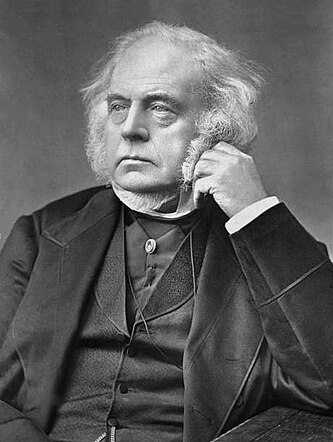


About John Bright
John Bright (November 16, 1811 – March 27, 1889) was a British Radical and Liberal statesman, one of the greatest orators of his generation and a promoter of free trade policies.
Best John Bright Quotes
Shortest
Earliest
Explore our curated collection of the most famous and impactful John Bright quotes.

“It is not Bradlaugh's atheism which they hate, but his unconscious Christianity.”

“I have never uttered a word in favour of universal suffrage either in this House or elsewhere.”
“Ireland is never unanimous but on one thing – getting something from the Imperial Exchequer.”
“I am the great terror of the squires, they seem to be seized with a sort of bucolic mania in dealing with me.”
“What is a great love of books? It is something like a personal introduction to the great and good men of all past times.”
“[H]is (Mr. Bright's) own opinions had always been very adverse to maintaining an armed squadron for the suppression of the slave trade.”



“The Aristocratic Institutions of England [had] acted much like the Slavery Institutions of America...[in] demoralis[ing] large classes outside their own special boundaries...[in producing] a long habit of submission...[and in] enfeebl[ing] by corrupting those who should assail them.”
“Liberty is on the march, and this year promises to be a great year in European history. Our Government is blind enough, and the Parliamentary majorities are more regarded than opinion out of doors. We must have another League of some kind, and our aristocracy must be made to submit again.”

“To have two Legislative Assemblies in the United Kingdom would, in my opinion, be an intolerable mischief; and I think no sensible man can wish for two within the limits of the present United Kingdom who does not wish the United Kingdom to become two or more nations, entirely separate from each other.”
“The task of the wise government of so vast an empire may be an impossible one—I often fear it is so—we may fail in our efforts, but, whether we fail or succeed, let us do our best to compensate for the wrong of the past and the present by conferring on the Indian people whatever good it is in our power to give them.”

“The Aristocracy in this country are almost, and really are altogether on one side – because they have special privileges to sustain, to surrender which would make them no longer an aristocracy. Our government was purely an aristocratic one from 1690 to 1830. Nearly the whole period was one of war, and war wholly needless.”
“This excessive love for "the balance of power" is neither more nor less than a gigantic system of out-door relief for the aristocracy of Great Britain.”
“If the middle class prefer an alliance with the aristocratic or ruling party, to the cordial co-operation and help of the great nation now excluded from the franchise and from all political power, they must be content with a profligate government expenditure, and a taxation burdensome from its amount, and insulting from its inequality and injustice.”

“There is no nation on the Continent of Europe that is less able to do harm to England, and there is no nation on the Continent of Europe to whom we are less able to do harm than we are to Russia. We are so separated that it seems impossible that the two nations, by the use of reason or common sense at all, could possibly be brought into conflict with each other.”

“I am for "peace, retrenchment, and reform" — the watchword of the great Liberal party 30 years ago. Whosoever may abandon the cause I shall never pronounce another Shibboleth, but as long as the old flag floats in the air I shall be found a steadfast soldier in the foremost ranks”

“Rich and great people can take care of themselves; but the poor and defenceless—the men with small cottages and large families—the men who must work six days every week if they are to live in anything like comfort for a week,—these men want defenders; they want men to maintain their position in Parliament; they want men who will protest against any infringement of their rights.”
“I do not think, as some persons seem to think, that the land is really only intended to be in the hands of the rich. I think that is a great mistake. I am not speaking of the poor—for the poor man, in the ordinary meaning of the term, cannot be the possessor of land; but it cannot be a crime or an evil that any man of moderate means, any farmer, should, if he could, become the possessor of land or of his farm.”

“Since I have taken a part in public affairs, the fact of the vast weight of the poverty and ignorance that exists at the bottom of the social scale has been a burden on my mind, and is so now. I have always hoped that the policy which I have advocated, and has been accepted in principle, will tend gradually but greatly to relieve the pauperism and the suffering which we still see among the working classes of society.”
“The right hon. Gentleman is the first of the new party who has expressed his great grief by his actions—who has retired into what may be called his political Cave of Adullam—and he has called about him every one that was in distress and every one that was discontented.”
“[W]hat more a blessing, than in these years of feebleness—may be sometimes of suffering—it must be often of solitude—if there be the power to derive instruction and amusement and refreshment from books which your great library will offer to every one? (Applause.) To the young especially this is of great importance, for if there be no seed-time there will certainly be no harvest, and the youth of life is the seed-time of life.”

John Bright Quotes by Topic
Find exactly what you are looking for by browsing this categorized list of John Bright quotes by topic.
John Bright on Government 3 quotes
View all 3 quotes on Government →John Bright on British Raj 3 quotes
“The task of the wise government of so vast an empire may be an impossible one—I often fear it is so—we may fail in our efforts, but, whether we fail or succeed, let us do our best to compensate for the wrong of the past and the present by conferring on the Indian people whatever good it is in our power to give them.”

John Bright on Sympathy
“But there is one thing which we are responsible for, and that is for our sympathies, for the manner in which we regard it, and for the tone in which we discuss it. What shall we say, then, with regard to it? On which side shall we stand?”

John Bright on Cotton
“Possibly you are not aware of the fact that the largest sum given by any contributor to the fund is but a trifle when compared with the losses suffered by nearly all the firms in the cotton trade during the disastrous years of the American war.”

John Bright on Parliament of the United Kingdom
John Bright on Scotland
“I believe that the intelligence of the people in Scotland is superior to the intelligence of the people in England… I told them that they were the people who should have repeal of the Union; for that, if they are separate from England, they might have a government wholly popular and intelligent, to a degree which I believe does not exist in any other country on the face of the earth. However, I believe they will be disposed to press us on, and make us become more and more intelligent; and we may receive benefits from our contact with them, even though, for some ages to come, our connexion with them may be productive of evil to themselves.”

What John Bright Said About Others
Discover personal opinions John Bright shared regarding contemporaries.
John Bright on John Greenleaf Whittier 3 quotes
“If God gives a real poet to a people like that, at a time like that, and puts into his heart those sentiments, and into his mouth those words, does he not verily speak to that people and ask them to return to the ways of mercy and righteousness?”
John Bright on Henry Temple, 3rd Viscount Palmerston 2 quotes
“He is to the middle classes what Feargus O'Connor was to the working classes.”
John Bright on John Milton 2 quotes
“Paradise Regained—the work of a poet unsurpassed in any country or in any age, and a poem which I believe great authorities admit, if Paradise Lost did not exist, would be the finest in our language.”
John Bright on Benjamin Disraeli 2 quotes
“Disraeli has been possessed by a devouring ambition, not to preach and act the truth, but to distinguish himself. "We come here for fame!" he said to me many years ago, and he has distinguished himself, but on a low field, and with no results which can be looked back upon with satisfaction.”

John Bright on John Russell, 1st Earl Russell 2 quotes
“Lord John Russell—I believe you may take my word for it—has probably, from association, from tradition, from his own reading and study, and from his own just and honest sympathies, a more friendly feeling towards this question of Parliamentary Reform than any other man of his order as a statesman.”
John Bright on William Ewart Gladstone
“Who is there in the House of Commons who equals him in knowledge of all political questions? who equals him in earnestness? who equals him in eloquence? who equals him in courage and fidelity to his convictions? If these gentlemen who say they will not follow him have any one who is equal, let them show him. If they can point out any statesman who can add dignity and grandeur to the stature of Mr. Gladstone, let them produce him.”

John Bright on Henry Wadsworth Longfellow
“I would like to ask you if you have ever read what I consider the greatest of poems of the United States—that is, Longfellow's Song of Hiawatha ... And then through that poem you have descriptions of Indian life and Indian legends which to me are of inexpressible beauty; and I do not hesitate to say, as far as my reading has led me to judge, that that is a poem that deserves to live, and will live; and at this moment it is the finest poem of any length that has been produced by any writer of the United States.”

John Bright on Charles James Fox
“Come down 50 years nearer to our own time, and you find a statesman, not long in office, but still held in the affections of all persons of liberal principles in this country, and in his time representing fully the sentiments of the Liberal party—Charles James Fox (Cheers.) Mr. Fox, referring to the policy of the Government of his time, which was one of constant interference in the affairs of Europe, and by which the country was continually involved in the calamities of war, said that although he would not assert or maintain the principle, that under no circumstances could England have any cause of interference with the affairs of the continent of Europe, yet he would prefer the positive policy of non-interference and of perfect isolation rather than the constant intermeddling to which our recent policy had subjected us, and which brought so much trouble and suffering upon the country.”

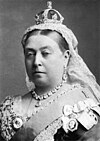
John Bright on Victoria of the United Kingdom
“He...made observations with regard to the Queen, which, in my opinion, no meeting of people in this country, and certainly no meeting of Reformers, ought to have listened to with approbation. (Cheers.) Let it be remembered that there has been no occasion on which any Ministry has proposed an improved representation of the people when the Queen has not given her cordial, unhesitating, and, I believe, hearty assent. (Cheers.) ... But Mr. Ayrton referred further to a supposed absorption of the sympathies of the Queen with her late husband to the exclusion of sympathy for and with the people. (Hear, hear.) I am not accustomed to stand up in defence of those who are possessors of crowns. (Hear, hear.) But I could not sit here and hear that observation without a sensation of wonder and of pain. (Loud cheers.) I think there has been by many persons a great injustice done to the Queen in reference to her desolate and widowed position. (Cheers.) And I venture to say this, that a woman, be she the Queen of a great realm or be she the wife of one of your labouring men, who can keep alive in her heart a great sorrow for the lost object of her life and affection, is not at all likely to be wanting in a great and generous sympathy with you. (Loud and prolonged cheers.)”
Quotes About John Bright
Gain deeper perspective through quotes about John Bright from others.
Lady Clarendon on John Bright
“Clarendon met the eminent demagogue in the street about this time, and described wonderingly to Kathy “his insolent and swaggering way of saying that he and Lords like himself [Clarendon] had no idea of the extent of Reform which they would be obliged to swallow, and other radical speeches which Clarendon seems to have answered with contempt and spirit, and felt an almost unconquerable desire to give him a good thrashing, which he felt he could do, and would have liked intensely.””
Lord Curzon on John Bright
“[T]he real clue to his power lay in the personality and moral attributes of the man, and in the nature of the causes for which he pleaded. Though it is no part of the business of an orator to mount a pulpit, John Bright preached to his countrymen with the fervour of a Savonarola and the simplicity of a Wesley. Many of his illustrations (e.g. the Shunammite woman and the cave of Adullam) were drawn from the Bible, which he was said to know better than any other book. In general literature he was not deeply versed, nor did he give any evidence of a wide knowledge or profound reasoning. There can never have been any speaker who more successfully practised the maxim Ars est celare artem. Though he was known to shut himself up for days before he delivered a great speech, when he was inaccessible even to his family, though his purple passages, as they would now be called, were committed to memory and his perorations written down, neither his manner nor his diction suggested artifice, while his high character and patent sincerity opened the door of every heart.”
Benjamin Disraeli on John Bright
“Bright was a great contrast to Cobden. A more powerful speaker—but not so persuasive. Even when right, he often injured his cause by his want of the faculty of conciliation. Bright was a natural & powerful orator. He was Demosthenic. He had imagination & a glowing soul... Bright, brought up in the most dreadful prejudices, which he fancied were liberal opinions, & apt to offend & outrage, was however always learning, & beneath his apparent vindictiveness & fierceness was a good-hearted man.”
William Ewart Gladstone on John Bright 3 quotes
“I ought to name a deputation of a demonstrative character on account of one who formed part of it. It was received not by me but by Lord Ripon, in the large room at the Board of Trade, I being present. A long line of fifteen or twenty gentlemen from the Lancashire district occupied benches running down and at the end of the room, and presented a formidable appearance. All however that I remember is the figure of a person in (I think) black or dark Quaker costume, seemingly the youngest of the band. Eagerly he sat a little forward on the bench, and intervened in the discussion... I was greatly struck with him. He seemed to me rather fierce, but very strong and very earnest. I need hardly say this was John Bright. A year or two after he made his appearance in parliament.”
Edward Walter Hamilton on John Bright
“John Bright, to whom Mr. Gladstone used in familiar terms occasionally to refer as "honest John." The "grand moral tone" which characterised Bright's sayings and doings, his high principle, the consistency of his public career and solidarity of his character, appealed with special force to Mr. Gladstone; and acutely as he felt breaches of political friendship, there was no one with whom he parted company with a heavier heart than John Bright when he left the government in 1882, and again when he felt unable to support the policy which was enunciated for Ireland in 1886.”
George Holyoake on John Bright
“As a man Mr. Bright put Christianity in the first place as a personal influence—as a politician he regarded it chiefly as a public force to be appealed to on behalf of social welfare. What he hated was injustice; what he abhorred was cruelty, whether of war or slavery; what he cared for was the comfort and prosperity of common people. Whatever stood in the way of these things he would withstand, whether the opposing forces were spiritual principalities, or peers, or thrones.”

Philip James Macdonell on John Bright
“He embodied some of the best qualities of the race. His eloquence moved men to the depths of their nature because it was instinct with the loftiest purpose, with that moral seriousness which is conspicuous in the English character even to excess. But no trace of cant marked the words and thoughts of John Bright. Everything he said came from the very heart of the man. His Liberalism was a creed that appealed to everything that was noble in humanity: it was animated by great ideals; it had no hint of opportunism, of materialism... He stood for justice in all things, and his whole political life was a long struggle against the inequalities around him. Almost alone of English statesmen, he sided with the American Federals from the very first.”
Sam Mainwaring on John Bright
“I was at the Hyde Park Franchise demonstration, when a large meeting of Socialists was held after the political one was over, at which John Burns referred to Bright as a silver-tongued hypocrite. This was enough for the radicals of that day; our banners and platform were torn and broken up, and some of us were being run to the Serpentine for a ducking.”
John Morley on John Bright
“A political leader does well to strive to keep our democracy historic. John Bright would have been a worthy comrade of John Hampden, John Selden and John Pym. He had the very spirit of the Puritan leaders. He had their brave and honest heart, their sound and steady judgment, their manly hatred of oppression, of bad laws and bad government; and besides that, it was true of Bright as was said of John Pym that "he had the civic temper and the habit of looking for wisdom as the result of common debate." It was that which made him glory in the House of Commons. No man so profoundly honoured the great possibilities of the Mother of Parliaments.”
Lord Palmerston on John Bright
“Now, Sir, I happen to be of opinion that there are things for which peace may be advantageously sacrificed, and that there are calamities which a nation may endure which are far worse than war... The hon. Member, however, reduces everything to the question of pounds, shillings, and pence, and I verily believe that if this country were threatened with an immediate invasion likely to end in its conquest, the hon. Member would sit down, take a piece of paper, and would put on one side of the account the contributions which his Government would require from him for the defence of the liberty and independence of the country, and he would put on the other the probable contributions which the general of the invading army might levy upon Manchester, and if he found that, on balancing the account, it would be cheaper to be conquered than to be laid under contribution for defence, he would give his vote against going to war for the liberties and independence of the country, rather than bear his share in the expenditure which it would entail.”
Lord Salisbury on John Bright
“In the first place, he was the greatest master of English oratory that this generation has produced, or I may perhaps say several generations back. I have met men who have heard Pitt and Fox, and in whose judgment their eloquence at its best was inferior to the finest efforts of John Bright. At a time when much speaking has depressed and almost exterminated eloquence, he maintained robust and intact that powerful and vigorous style of English which gave fitting expression to the burning and noble thoughts he desired to express. Another characteristic for which I think he will be famous is the singular rectitude of his motives, the singular straightness of his career. He was a keen disputant, a keen combatant; like many eager men, he had little tolerance of opposition. But his action was never guided for a single moment by any consideration of personal or party selfishness. He was inspired by nothing but the purest patriotism and benevolence from the first beginning of his public career to the hour of its close.”
About John Bright
John Bright (November 16, 1811 – March 27, 1889) was a British Radical and Liberal statesman, one of the greatest orators of his generation and a promoter of free trade policies.