John Bright on John Greenleaf Whittier
← Back to John Bright Profile
“If God gives a real poet to a people like that, at a time like that, and puts into his heart those sentiments, and into his mouth those words, does he not verily speak to that people and ask them to return to the ways of mercy and righteousness?”
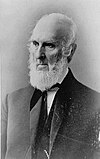
“I met some time ago during the American war an eminent citizen of the State of Massachusetts, who told me that he thought that there was no man in the United States whose writings at the time and for some years before the war had had so great influence upon public opinion in that country as the writings of John Greenleaf Whittier. And no doubt that arose partly from this—that he wrote strongly on the subject of freedom, and strongly against the system of slavery which was about to involve that great country in a great civil war ... Whittier himself when he attacks the question of negro slavery and the horror and the curse of it, writes in a manner which must have roused the indignation and excited the animosity of the people for whom he wrote against that enormous evil.”
“In the poem of 'Snow-Bound' there are lines on the death of the poet's sister which have nothing superior to them in beauty and pathos in our language. I have read them often with always increasing admiration. I have suffered from the loss of those near and dear to me, and I can apply the lines to my own case and feel as if they were written for me. 'The Eternal Goodness' is another poem which is worth a crowd of sermons which are spoken from the pulpits of our sects and churches, which I do not wish to undervalue. It is a great gift to mankind when a poet is raised up among us who devotes his great powers to the sublime purpose of spreading among men principles of mercy and justice and freedom. This our friend Whittier has done in a degree unsurpassed by any other poet who has spoken to the world in our noble tongue. I feel it a great honor that my bust should stand in your hall near the portrait of your great poet.”